Explore the topics that were covered at last year’s conference, informed by key data and analytics challenges and emerging trends.

Gartner Data & Analytics Summit 2027
Join us to uncover the latest data and analytics insights and solutions with analysts, data and analytics peers and service providers to accelerate your business.
Conference topics
AI, GenAI and Agentic AI
Get practical guidance for building and scaling AI, generative AI and AI agents. Learn to optimize costs, manage risk and deliver business value from your AI investments.
Articulating Business Value
Learn how to communicate and prove the value of data and analytics. Discover ways to build business cases, measure ROI and show D&A’s impact on business goals.
Data, Analytics and AI Governance
Explore frameworks and best practices for data, analytics and AI governance. Sessions cover risk, privacy, ethics and building a culture of trust and accountability.
Outcomes that speak for themselves. Build and diversify your network by meeting forward-thinking CDAOs, heads of AI, data and analytics leaders to enable faster, smarter decisions.
95%+
of attendees refined their D&A strategy through peer engagement
89%+
of attendees strengthened leadership skills to deliver results
88%+
of attendees evolved their D&A strategy to be more AI-ready
Special programs
Enhance your conference experience with specialized programs.

The CDAO Circle Program
Designed exclusively for chief data and analytics officers and Heads of AI, we offer an exclusive experience to help you accelerate your data and analytics strategy and operating model to increase business value. An application is required.
AI Leadership
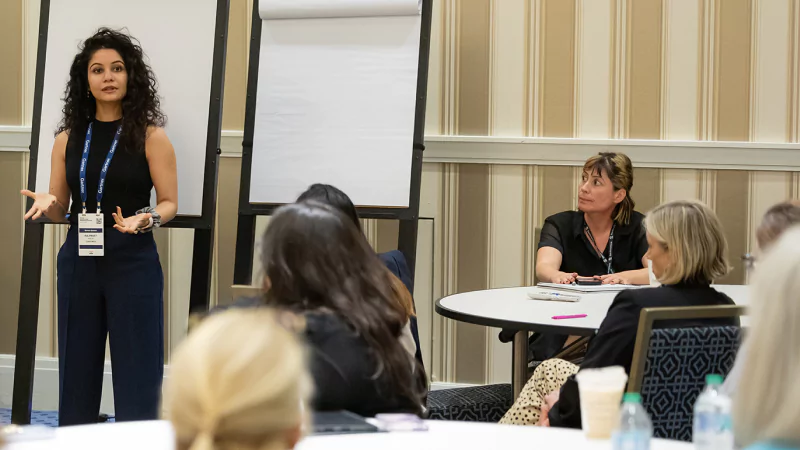
Get access to Gartner insights, proven frameworks and practical case studies tailored for data and analytics executives and AI leaders. Discover how top organizations leverage AI and collaborate with Gartner analysts to dive into the impact and opportunities of AI for your business.

New To CDAO Role Sessions
Gartner Data & Analytics Summit in London offers focused New To CDAO Role sessions to help you chart a clear path, accelerate your impact and avoid common pitfalls. Join peers and industry experts that will sharpen your strategy and leadership skills from Day 1.
Conference Venue
ExCel London

Prepare for your trip with venue details, accommodation options and transportation information.
Ready to join us in London?
Register now to unlock a world of insights, networking and expertise at Gartner Data & Analytics Summit 2027.
Frequently asked questions
Have questions? We’ve got answers.
What can I expect as a first-time attendee?
How to prepare as a first-time attendee:
Before you arrive, build your agenda using Gartner Conference Navigator (on your desktop or through our mobile app).
Make sure your profile is complete to get the best from our profile match feature. Share information about your interests and priorities to discover the sessions that are the best fit for you.
Be sure to register in advance for any roundtables, Gartner one-on-one meeting or workshops you’d like to attend. We also have networking breakfasts and breaks running throughout the conference to help you expand your network.
Join us in the Exhibit Showcase during daily receptions so you can meet with the technology leaders in the space and find the solutions you need.
Keep an eye out for emails from the Conferences team, with key updates, tips and tricks to getting the most out of your experience.
About the Gartner Conference Navigator app:
Gartner Conference Navigator is your hub for the conference. Here you can view and filter sessions, build your agenda, register for interactive experiences, schedule your meeting and more. We recommend using the app for an optimal conference experience. Search “Gartner Conference Navigator” in your app store to download. The app allows you to view and update your agenda, network with other end users, receive important notifications and more.
Is my attendance limited if I am not currently a Gartner client?
Absolutely not! As long as you have fully paid your registration fee, you have access to all conference activities, along with Gartner session documentation. If you’re interested in becoming a Gartner client, you can visit the Gartner Showcase to better understand the benefits you’ll receive.
Signing up for limited seating sessions:
You will need to sign up in advance for some sessions, such as workshops, Meetups and roundtables. If you try to register for a session and it is listed as “full” or “closed,” there is still a possibility you can attend. Once at the conference, find the room for that session and arrive there about 15 minutes prior to the session start to have your name added to the waiting list. Spaces will be allocated on a first-come, first-served basis.
Suggested dress code:
We suggest comfortable shoes — you’ll be doing a lot of walking from your hotel room to the conference space, from session to session and navigating the show floor. Business casual dress is what most attendees opt for, but we also recommend that you dress in layers as the conference rooms can get chilly.
How do I secure time on-site with a Gartner analyst?
See the list of featured Gartner analyst speakers:
Please check our Speakers page.
How to sign up for a Gartner analyst one-on-one meeting:
Gartner one-on-ones are available exclusively to paid registered full conference attendees. They are not available to exhibitors or exhibitor conference session passholders. Preregistration for One-on-One meetings and small-group sessions are available through Gartner Conference Navigator, our online agenda-building tool.
How a Gartner analyst will be assigned to your meeting:
All registered attendees have the exclusive opportunity to speak directly with a Gartner analyst in a private 30-minute one-on-one meeting. Because of the high demand for particular analysts, speaker selection is on a first-come, first-served basis.
The registration process for roundtables, workshops and other sessions requiring preregistration:
Interactive sessions such as roundtables, workshops and Meetups are available exclusively to paid registered conference attendees, excluding exhibitors and exhibitor conference session passholders. Because of high demand and limited availability, we recommend that you register in advance for these unique sessions. Preregistration will be available through Gartner Conference Navigator, our online agenda-building tool.
Access to a list of Gartner analyst attending the conference:
A Gartner analysts guide will be available soon and will include a complete list of available analysts, as well as their area of expertise. Please check our Speakers page.
Restrictions for Gartner analyst one-on-ones:
Gartner analyst one-on-ones are not available for solution provider briefings or product demonstrations with analysts. The analyst reserves the right to stop the meeting if this occurs. Gartner clients interested in briefing analysts may contact the Vendor Relations department by emailing vendor.briefings@gartner.com to schedule a meeting following the conference.
How is Gartner creating an environment of inclusion at its conferences?
Gartner cultivates an inclusive experience for all attendees:
The Gartner Conferences team is committed to creating a respectful, friendly and inclusive experience for all participants. Inclusion and respect are core components of Gartner culture, and we take pride in bringing together a community that is welcoming and thoughtful of others. Gartner conferences include elements such as accessibility ambassadors, prayer/meditation rooms, and parent/mother rooms to help foster a deeper sense of inclusion and further enable attendees to bring their whole selves to the conference.
Addressing accessibility needs:
We are committed to providing a welcoming and inclusive conference experience for all participants. If you have an accessibility-related need for a conference, please let us know in your registration profile or email us directly at GlobalConferences@gartner.com, ideally at least three weeks prior to the conference. Once we receive your request, one of our accessibility ambassadors will contact you.
Please email GlobalConferences@gartner.com with any additional questions or feedback on accessibility.
Share your feedback on how we can further improve inclusivity at the conference:
Gartner is committed to hearing all voices. Being inclusive and respectful are critical across all aspects of our business. Help us, challenge us, inspire us and share your thoughts, ideas and suggestions for how we can make our conference experience a more inclusive one. Please email GlobalConferences@gartner.com to share your feedback.
How does Gartner approach health and safety at conferences?
Gartner cares about the health and safety of our community. If you are feeling unwell, please refrain from attending the conference.
At this time, Gartner does not have any health-related requirements in place for attendance. Should this change, we will follow up with updated guidance.
How do I become an exhibitor?
Please contact the Gartner Exhibitor Sales team for exhibitor opportunities.