A Journey Guide to Manage AI Governance, Trust, Risk and Security

3 March 2026 - ID G00821153 - 21 min read
By Deepak Seth, Svetlana Sicular,  and 3 more
Successfully managing AI governance, trust, risk and security is key to realizing value from AI investments. This guide enables AI leaders to assess their maturity and execute strategic actions that drive AI success.

Strategic Planning Assumptions


  • By 2027, AI governance will become a requirement of all sovereign AI laws and regulations worldwide.
  • Through 2027, most AI projects will fail to meet expectations due to their failure to focus on data governance.
  • By 2027, AI governance and responsible AI capabilities will be part of 75% of AI platforms, making them the main area of competition.
  • By 2028, 60% of CPOs will fail to realize the anticipated value of advanced analytics due to poor D&A governance.

Analysis


Gartner’s Journey Guides for data and analytics (D&A) leaders offer step-by-step insights and recommendations to help them address challenges facing them. These guides adapt to varying factors, such as tenure, influence and organizations’ D&A culture. To reflect latest guidance, tools and recommended content, these guides are refreshed every quarter. Revisit regularly to stay aligned with evolving trends and opportunities.
Updates in this release:
  • Newer recommended readings across steps
Note: Some recommended content may not be available as part of your current Gartner subscription.
AI governance is a significant challenge for leaders responsible for AI (CDAO, AI leader, etc.) due to its rapidly evolving nature and potential to amplify human biases. Beyond governance, leaders responsible for AI must tackle critical risks, such as AI’s lack of transparency, privacy concerns, security vulnerabilities, environmental sustainability and the unpredictability of AI-related operational costs.1 Addressing these multifaceted risks is essential for maximizing AI benefits while minimizing potential downsides. Effective AI governance, trust and risk management are thus crucial for realizing value from AI investments.
A successful governance framework balances enforcement, enablement and engagement in governance. This journey guide outlines the critical steps on the AI governance journey: gaining foresight, building the value case, executing strategies and scaling to maximize value.
The steps outlined in Table 1 ensure your organization is on the right path to transparent, accountable, compliant, secure, sustainable and ethical AI deployment, aligning with societal demands while facilitating progress of AI use cases. Use the links in the sections below to navigate the questions on the AI governance journey path.
While this journey is presented as a sequential set of steps, it is iterative. You can begin navigating this journey guide from any step based on your organization’s current state and future ambition.

AI Governance, Trust, Risk and Security Management Journey Steps

Step 1:
Gain Foresight and Get Grounded
Step 2:
Build the Value Case and Gain Executive Buy-In
Step 3:
Execute and Implement
Step 4:
Scale Up and Manage Change
Source: Gartner

Research Highlights


Some recommended content may not be available as part of your current Gartner subscription.

Step 1: Gain Foresight and Get Grounded

The journey begins with gaining foresight and grounding your organization in the fundamentals of AI governance. This includes understanding how to get started, identifying the dimensions of AI governance, and discussing AI risk, trust and governance imperatives with the council.

What is required to manage AI governance, trust, risk and security?

Effectively managing AI governance, trust, risk and security requires a structured approach to ensure that the organization’s strategic AI ambitions are aligned to the organization’s responsible AI policy and addresses secure deployment using trust, risk and security management (TRiSM) controls. Without such a structure, organizations risk mismanaging AI initiatives and exposing themselves to security vulnerabilities.
Key steps include:
  • Establish an AI council: Form an AI council under the supervision of an AI leader that aligns with C-suite executives’ priorities and includes members with expertise in business strategy, data, AI, risk, ethics and IT.
  • Develop foundational security: Ensure foundational security in cloud, data and applications before implementing AI-specific controls.
  • Implement AI-specific controls: Use tools like AI governance platforms and AI usage control that implement AI TRiSM controls to support trusted and secure use of AI.
  • Secure AI application use: Block unapproved apps and use guardrails to secure and protect AI application inputs and outputs.
  • Deploy and monitor security controls: Implement practical security and trust controls, such as sensitive prompt filtering and content safety filters, and stay updated on academic research and evolving trust and security measures.
Analyst Take: Beyond the Hype: Navigating the Realities of AI Implementation

The journey begins with gaining foresight and grounding your organization in the fundamentals of AI governance. This includes understanding how to get started, identifying the dimensions of AI governance and discussing AI risk, trust and governance imperatives with the council.

How do I build an AI governance framework?

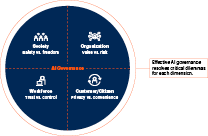
Effective AI governance hinges on the ability to ask and answer critical questions across various dimensions. Without this capability, organizations may struggle to make informed decisions, leading to misaligned AI initiatives and potential risks.
Establishing effective AI governance involves three key steps:
  • Identify dimension owners: Assign owners to organizational, societal, customer-facing and employee-facing AI dimensions.
  • Differentiate decision rights: Leverage the unique expertise and perspectives of these owners to differentiate their decision rights.
  • Address key dilemmas: Align each governance decision with the expertise needed to resolve the underlying dilemma.

How do I identify and mitigate top AI risks based on use cases?

AI reshapes enterprise risk landscapes and transforms operations, necessitating swift adoption of technical and operational controls. Without proactive risk management, organizations face sanctions, immediate financial damage and significant reputational risks.
Identifying and mitigating top AI risks based on use cases involves the following steps:
  • Adopt a proactive AI risk management framework: Account for the evolving AI regulations, which demand a framework to prevent harm to people and individuals.
  • Identify key risks: Focus on behavioral risks (accuracy, bias, outdated information), transparency risks (explainability, disclosure), and security and data risks (privacy, misuse).
  • Anchor projects in core principles: Uphold fairness, transparency, explainability, reliability, privacy and security in AI projects.
  • Align AI governance with use cases: Categorize use cases based on cost, complexity, risk, value and competitive impact, tailoring governance levels to each category’s risk profile.
Recommendations:
  • Assemble diverse stakeholders to form an AI council under an AI leader for strategic direction.
  • Develop a security framework to protect data and ensure system integrity.
  • Create tailored controls to address unique AI risks and ensure fairness.
  • Integrate security practices throughout the AI life cycle.
  • Use automated tools and regular reviews for continuous security updates.
  • Assign ownership based on expertise to ensure informed decisions.
  • Foster collaboration and knowledge sharing for comprehensive decision making.
  • Implement proactive risk identification and mitigation.
  • Prioritize critical risk areas.
  • Embed transparency and fairness into policies.
  • Customize governance to manage specific use-case risks effectively.

Step 2: Build the Value Case and Gain Executive Buy-In
Next, build the value case for AI governance and secure executive buy‑in by linking trust to AI value realization and tying risk‑mitigation needs to specific use cases.

How do I discuss AI governance, risk, trust and security-related regulatory imperatives with the executive council?

Educating the executive council on evolving AI regulations and the importance of robust governance is crucial for managing risks and ensuring compliance. Without this understanding, organizations risk falling behind regulatory requirements.
Key steps to discuss AI governance, risk, trust and security regulatory imperatives with the executive council include:
  • Educate the council on evolving regulations: Inform council members about the geographic approaches to AI regulation and policy taken by 29 countries across the U.S., European Union and China to ensure that you’re not lagging AI value creation amid these geopolitical and policy shifts.
  • Facilitate compliance strategy discussions: Engage the council in discussions to either develop or revise your compliance strategies.
  • Stress the importance of robust governance: Emphasize the need for a strong AI governance foundation based on common principles to manage risks effectively.
  • Highlight business outcomes: Explain how effective data and AI governance enhances oversight and drives better information asset behaviors and business outcomes.

How do I establish an AI council, and what are its roles and responsibilities?

Enterprises need an AI council, led by an AI leader, to navigate multidisciplinary AI-related challenges, drive value and mitigate risk. Without such a council, organizations may struggle to align AI initiatives with strategic goals and manage associated risks.
Establishing an AI council involves several key steps:
  • Define the council’s scope: Align it with C-suite executives’ priorities and enterprise strategy.
  • Select council members: Include members with expertise in business strategy, data and analytics, risk analysis, operational execution, ethics and IT.
  • Synthesize stakeholder priorities: Account for stakeholder priorities and orchestrate business strategies.
  • Manage AI-related risks: Ensure the council manages AI-related risks, aligning them with enterprise goals.
  • Maximize return on investment: Focus on maximizing ROI through strategic alignment and risk management.
  • Appoint an AI leader: Mandate a need for AI leadership that is holistic, integrated, empowered and resourced.

How can trust be linked to AI value realization?

Organizations must balance D&A and AI value with risk reduction by building strong relationships with legal counsel and enhancing their legal knowledge. Without this balance, organizations risk legal complications and missed opportunities. Key steps include:
  • Establish collaborative relationships with legal counsel: Align business growth with legal guidance to ensure mutual understanding.
  • Enhance legal literacy: Learn key legal concepts and create visual tools that align initiatives with business outcomes while addressing legal risks.
  • Co-develop a comprehensive risk management strategy: Work with legal counsel to differentiate development and usage risks for key executives.
  • Optimize decision making: Leverage legal counsel to avoid overly risk-averse decisions and maximize financial returns from D&A and AI investments.
Recommendations:
  • Educate the executive council on evolving AI regulations.
  • Highlight business outcomes of effective governance.
  • Present financial benefits of improved governance maturity.
  • Stress the importance of robust AI governance.
  • Facilitate compliance strategy discussions.
  • Define the scope of an AI council.
  • Select diverse members for the AI council.
  • Appoint an AI leader to orchestrate cross‑organizational AI efforts.
  • Synthesize stakeholder priorities.
  • Foster strong legal partnerships.
  • Enhance legal literacy within the organization.
  • Co‑develop risk management strategies.
  • Manage AI‑related risks.
  • Ensure alignment with enterprise goals to drive value and mitigate risk.
  • Optimize decision‑making to balance business growth with legal compliance.

Step 3: Execute and Implement

Execution is the third step: designing effective AI governance operation models and security policies, adopting technology approaches to manage risks, and identifying and mitigating top AI risks.

How do I design an effective AI governance operating model?

Integrating AI technologies within organizations necessitates a robust governance operating model to manage risks, accelerate value realization and optimize resources. Organizations risk mismanaging AI initiatives without an effective governance framework, leading to inefficiencies and potential ethical breaches.
Designing an effective AI governance operating model involves the following critical steps:
  • Mitigate risks and accelerate value realization: Implement AI governance to balance AI value and risks across the enterprise.
  • Incorporate trust, transparency and diversity: Embed these principles into your AI governance strategy to enhance effectiveness and safety.
  • Prioritize governance for generative AI (GenAI): Focus on GenAI to amplify its positive impact on broader AI initiatives.
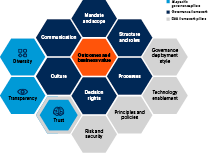
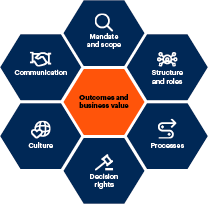
  • Adopt and extend Gartner’s D&A governance model: Integrate AI-specific pillars and map them to key AI components based on business priorities and ethics.
  • Establish a specific AI operating model: Embrace the core enterprise business strategy and coordinate with multiple functions to capture, enable and sustain value from AI.
  • Develop an effective policy: Prioritize outlining risk tolerance, use cases, restrictions, decision rights and disclosure obligations when formulating policies.

What are the top AI-related security threats and risks, and how do I mitigate them?

The rapid adoption of AI technologies exposes organizations to a range of security threats and risks, which, if not properly managed, can lead to significant vulnerabilities and operational disruptions. To mitigate these risks and leverage the benefits of AI, it is essential to design a comprehensive AI trust, risk and security policy.
Key steps include:
  • Define the policy’s purpose: Articulate the policy’s aim to mitigate risks and maximize AI benefits.
  • Specify the scope and include a glossary: Define the scope of the policy and include a glossary of AI terms to ensure clarity.
  • Develop comprehensive policy statements: Create detailed policy statements for application and data security.
  • Establish an AI advisory council: Form a council with diverse stakeholders to oversee compliance and guide policy implementation.
  • Assign dedicated owners for AI tools: Ensure each AI tool has a dedicated owner responsible for its security and compliance.
  • Require detailed business cases: Mandate comprehensive business cases for the deployment of AI tools.
  • Implement stringent data management protocols: Enforce robust data management practices to safeguard data integrity and confidentiality.
  • Expand cybersecurity controls: Adapt and extend existing cybersecurity controls to address AI-specific risks.
  • Ensure accountability: Define roles, responsibilities and consequences for noncompliance.
  • Maintain a revision history and schedule reviews: Keep the policy current by maintaining a revision history and scheduling regular reviews.

How do I translate AI policy into model risk controls?

Translating AI policy into actionable governance requires bridging the gap between high‑level principles and enforceable controls. Without this translation, organizations risk relying on manual processes, inconsistent oversight, and unverifiable model behavior. This involves the following steps:
  • Translate policy principles into standardized documentation controls: Create AI impact assessments, model cards and data sheets as mandatory artifacts for every model.
  • Embed technical controls into system design using “policy‑as‑code”: Embed automated validation checks into data pipelines and continuous integration/continuous delivery (CI/CD) workflows.
  • Tailor technical controls by model type and architecture: Ensure policy adherence with architecture‑specific controls despite varying technical risk surfaces.
  • Establish continuous post‑deployment controls for ongoing governance: Enforce adaptive controls that detect early failure signals and trigger remediation actions.
  • Strengthen traceability with centralized governance registry: Create a single source of truth connecting policies, documentation, model versions, ownership and risk assessments.

How do I establish scalable, ethical and responsible AI practices?

As AI adoption increases, so do the opportunities — and the challenges of ensuring ethical and responsible use. Without scalable practices, organizations risk deploying AI that may cause harm, violate societal values or fail to comply with regulations. Establishing scalable ethical and responsible AI practices requires a comprehensive approach that integrates both operational and moral guidelines, which comprises the following steps:
  • Translate ethical principles into design requirements: Define specific ethics-based user stories and scenarios for testing during AI implementation.
  • Prioritize user stories: Use impact assessments, harm modeling and empathy mapping to prioritize user stories.
  • Increase awareness of data and model risks: Specify known limitations in data and model cards to enhance transparency.
  • Develop emotional intelligence and human-centered design skills: Equip teams with the skills to assess better AI system harms.

How does data governance need to change to support AI?

The rapid integration of AI technologies is transformational, but traditional data governance frameworks struggle to keep pace. This misalignment leads to regulatory noncompliance, ethical breaches, and operational inefficiencies that weaken AI initiatives. Data governance must evolve to effectively support AI by adopting a common framework that integrates AI-specific considerations into its pillars. The five steps listed below help achieve this:
  • Prioritize critical AI use cases: Establish clear accountability across business, technical and ethical dimensions.
  • Balance value and risk: Initiate early discussions to ensure compliance with emerging regulations.
  • Engage diverse stakeholders: Involve various stakeholders in governance decisions and monitor progress to adapt to changing needs.
  • Enhance productivity and user experience: Integrate GenAI capabilities into data governance platforms.
  • Implement training and escalation mechanisms: Develop comprehensive training programs and robust escalation mechanisms to equip governance personnel, especially data stewards, with the skills to manage GenAI outputs effectively.
Recommendations:
  • Integrate risk management, trust and transparency into data and AI governance practices, including derived assets like data products, AI models and agents.
  • Align and extend governance frameworks and operating models across the enterprise, incorporating AI-specific considerations and shared outcomes.
  • Build a human-AI partnership for stewardship, emphasizing emotional intelligence, human-centered design and equipping personnel with necessary AI-related skills.
  • Translate policies and ethical principles into actionable design requirements and code using DataGovOps practices.
  • Balance risk and value in AI governance, prioritizing critical use cases and GenAI.
  • Define clear policy purposes and establish comprehensive, adaptive security measures to address AI-related threats, ensuring accountability and transparency around data and model limitations.
  • Engage stakeholders in the governance process and enhance productivity through effective governance.

Step 4: Scale Up and Manage Change

Finally, scale and realize value by managing AI risk at scale. Prepare for regulatory risks, establish scalable AI ethics and responsible AI practices, and set up an AI council led by an AI leader with defined roles and responsibilities. Additionally, adapt your D&A governance to support AI and leverage AI literacy programs to bolster AI governance.

What technology approaches, practices and tools are emerging to manage AI risks?

Organizations are increasingly adopting AI technologies, but with this adoption comes the challenge of managing associated risks effectively. Without a structured approach to managing AI risks, organizations face issues such as ethical breaches, security vulnerabilities and misaligned AI initiatives that could undermine the overall success of their AI strategies.
To manage AI risks effectively, organizations must take a multifaceted approach:
  • Strategic alignment and vision: Begin by understanding your strategic context and defining your AI vision and success measures.
  • Governance and principles: Establish AI principles and governance frameworks to ensure alignment between business and AI capabilities.
  • Technology reference model (TRM): Build an AI TRM to guide the deployment and integration of AI technologies.
  • Capability roadmap: Design a tailored AI capability roadmap to outline the steps needed to achieve your AI vision.
  • Ethical standards: Set responsible and ethical standards to guide AI development and deployment.
In addition, enforce these principles and frameworks:
  • Tech stack implementation: Deploy the necessary technology stack to support AI initiatives.
  • AI TRiSM: Implement AI TRiSM technology to enforce enterprise AI policies.
  • Decision-making framework: Use Gartner’s five-phase approach to create an AI decision tree, guiding stakeholders through consistent and informed decision making.
Finally, scale and realize value by managing AI risk at scale. Prepare for regulatory risks, establish scalable AI ethics and responsible AI practices, and set up an AI council led by an AI leader with defined roles and responsibilities. Additionally, adapt your D&A governance to support AI and leverage AI literacy programs to bolster AI governance.

How can AI literacy programs be used to support AI governance?

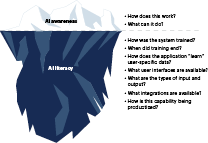
Leveraging AI literacy programs to educate and train stakeholders on AI fundamentals, benefits, risks and the importance of responsible and ethical use is essential for robust AI governance. Without such programs, organizations risk misinformed use of AI systems, leading to potential ethical and operational issues.
Key steps include:
  • Introduce AI literacy programs: Educate stakeholders on AI fundamentals, benefits, risks and the importance of responsible and ethical use.
  • Comply with regulatory requirements: Address Article 4 of the EU AI Act, which mandates AI literacy given users’ ability to instruct AI systems conversationally.
  • Introduce the AI governance framework: Detail personas based on roles and responsibilities and provide training on AI-specific technology and data policies, such as data security, bias mitigation and model accuracy.
  • Use hands-on workshops and case studies: Demonstrate practical applications through interactive sessions.
  • Establish ongoing initiatives: Keep stakeholders updated on AI advancements and regulatory changes through continuous education efforts.
Recommendations:
  • Drive strategic alignment in managing AI risks.
  • Implement robust AI governance.
  • Uphold ethical standards in AI practices.
  • Establish a solid technological foundation.
  • Develop comprehensive risk management frameworks.
  • Provide comprehensive education on AI fundamentals.
  • Secure compliance with regulatory requirements.
  • Offer detailed governance training.
  • Conduct practical workshops on AI.
  • Maintain ongoing initiatives for workforce AI literacy.
  • Support robust and responsible AI governance through education.

Evidence