When to Use or Not to Use AI Agents
25 June 2025 - ID G00827372 - 19 min read
By Pieter den Hamer, Leinar Ramos, and 1 more
AI agents hold great promise for all organizations, bringing AI and automation to the next level. Yet agentic AI still has limitations and is not a miracle cure for all use cases. AI leaders can use this research and the associated assessment framework to demystify AI agents and determine when to use them.
Overview
Key Findings
- There is confusion in the market about what AI agents are. Moreover, the phrase “agentic AI” is used in many different ways. Vendors use it to agent-wash many offerings that are not really AI agents. In contrast, others argue that agentic AI is only about more advanced AI agents or multiagent systems.
- AI agents can be powerful as they bring more flexibility, adaptability and higher levels of automation. But where are those traits really needed? For most organizations, it is a challenge to determine which use cases AI agents make sense for.
- AI agents may also have disadvantages, like limited reliability and transparency or high costs. For some use cases, AI agents may not be good enough, while for others, they may be overkill.
Recommendations
- Assess the capabilities of vendor-provided or self-made solutions to determine if they truly qualify as AI agents or agentic AI, and can actually deliver the expected benefits using the Gartner AI agent definitions and AI Agent Assessment Framework. This should also help reduce misunderstandings about the meaning of terminology like agentic AI.
- To determine the extent to which AI agent capabilities are needed, apply criteria regarding the complexity, dynamics and other relevant characteristics of each use case.
- Evaluate and keep an open mind about alternative delivery approaches — such as conventional workflow automation or robotic process automation (RPA) — to avoid using AI agents in use cases where they are not the best solution.
Introduction
AI agents and agentic AI are at the peak of the Hype Cycle and have great momentum in the current market. Standing on the shoulders of generative AI and other AI practices, agentic AI heralds yet another wave of progress. AI agents hold the promise to create great value for organizations, in particular by moving the needle of automation even further. Where conventional automation approaches — including workflow automation and RPA — could not go before, AI agents open the door to automation that is less brittle and uniform, and more resilient and contextual. An increasing number of complex processes and human tasks can now be (semi)autonomously carried out by AI agents.
No wonder that many vendors have lately accelerated the introduction of AI agents. However, they are often “agent washing” existing products or are inconsistently using “agentic AI” in their marketing. Many seem to narrowly associate AI agents with the use of large language models (LLMs), which appears advantageous, but also brings limitations. Consequently, organizations may be underwhelmed with what an agent can do, causing disappointment and dismissal, while others could greatly underestimate the cost and complexity of deploying AI agents purpose-built for a given scenario. Overhyped expectations are countered by objectively assessing the capabilities required and solution alternatives, as well as by not treating AI agents as a cure-all.
So what are AI agents, really? And what about related terminology, like agentic AI, multiagent systems or AI assistants? Where does their use make sense, and where not? To answer these questions, Gartner has introduced a framework to assess the capabilities of AI agents and to identify to what extent these capabilities correspond with what is required in specific business contexts (see Figure 1).
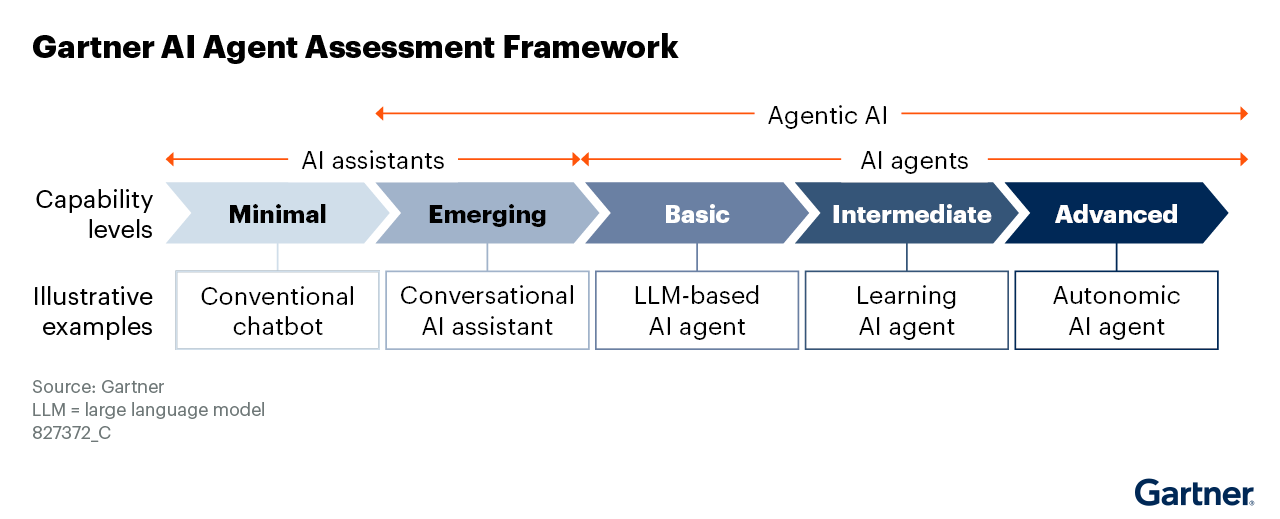
The framework recognizes that agency and other capabilities are not all-or-nothing properties. Instead there exists a spectrum of agent capability levels: from minimal to advanced. AI agents — as defined here — should be at least at the “basic” level, while agentic AI — as defined here — should be at least at the “emerging” level.
See the framework for further information: Tool: Gartner AI Agent Assessment Framework
Organizations can use this tool to do their own assessment of new or existing AI agents, either those offered by vendors or self-developed. The framework can also be used to determine the characteristics of the agent’s operating environment in order to determine which level of agent capabilities is required. This, in turn, will help organizations to decide whether the use of agentic AI or AI agents is needed at all, or if other nonagentic approaches may make more sense.
Analysis
What Are AI Agents and What Is Agentic AI?
To improve clarity about applicability and to reduce confusion, it is recommended to use well-defined terminology consistently in communication. This offers a more solid foundation for investment, buy-or-build decisions, and the design and engineering of AI agents or related approaches.
AI Agent
AI agents are autonomous or semiautonomous software entities that use AI techniques to perceive, make decisions, take actions, and achieve goals in their digital or physical environments.
According to the Gartner AI Agent Assessment Framework, all capabilities of AI agents should be at least at the basic level. In other words, AI agents relate to the spectrum from the basic to the advanced level and are, therefore, a subset of the agentic AI spectrum.
Agentic AI
Agentic AI is an approach to building AI solutions based on the use of one or multiple software entities that are classified, completely or at least partially, as AI agents.
According to the Gartner AI Agent Assessment Framework, all capabilities of agentic AI solutions should be at least at the emerging level. In other words, agentic AI relates to the spectrum from the emerging to the advanced level.
AI Assistant
AI assistants are specialized applications or modules in a wider system that incorporate AI techniques to support or carry out tasks as requested, specified and led by external (human) actors through an (conversational) interface.
According to the Gartner AI Agent Assessment Framework, at least one capability of AI assistants should be at the emerging level. AI assistants are a subset of agentic AI only if all capabilities are at least at the emerging level. In case of the latter, they’re also known as agentic AI assistants, to distinguish them from nonagentic AI assistants.
Agentic AI, as defined here, refers to a wider spectrum than that used for AI agents, reflecting the current market conditions in which agentic AI is confusingly used in different ways, going from very loosely used to very strictly used. On one end, agentic AI is loosely used to describe a wide category of solutions or approaches that do not always fully meet the AI agency or agentic AI assistant definitions. On the other end, agentic AI is more strictly used by others to describe more advanced AI agents or multiagent systems (see Top Strategic Technology Trends for 2025: Agentic AI).
Given the important distinctions between AI agents, AI assistants and agentic AI, it is highly advised to adhere to naming conventions (see Note 1), while also taking context and roles into account. These naming conventions aim at establishing a common understanding across the organization (and market) to reduce confusion, manage expectations and invest appropriately.
To operate effectively, agents in general — and AI agents as (semi)autonomous software entities specifically — require a number of capabilities: perception, decisioning, actioning, agency, adaptability and knowledge. For each of these capabilities, the Gartner AI Agent Assessment Framework offers characterizations to determine its level of sophistication on the spectrum from minimal to advanced (see Figure 2).
For more details, please see Tool: Gartner AI Agent Assessment Framework.
For more details, please see Tool: Gartner AI Agent Assessment Framework.
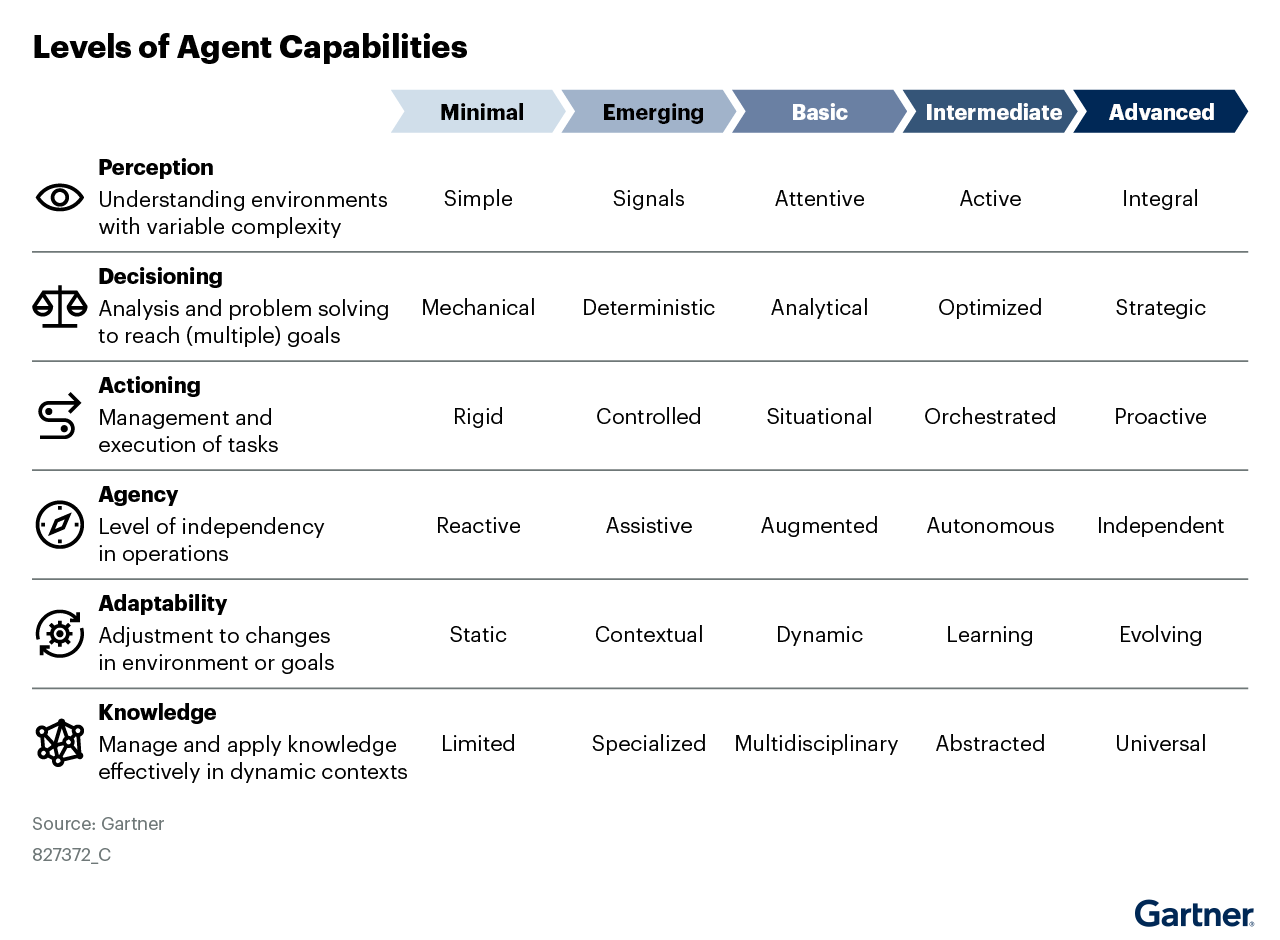
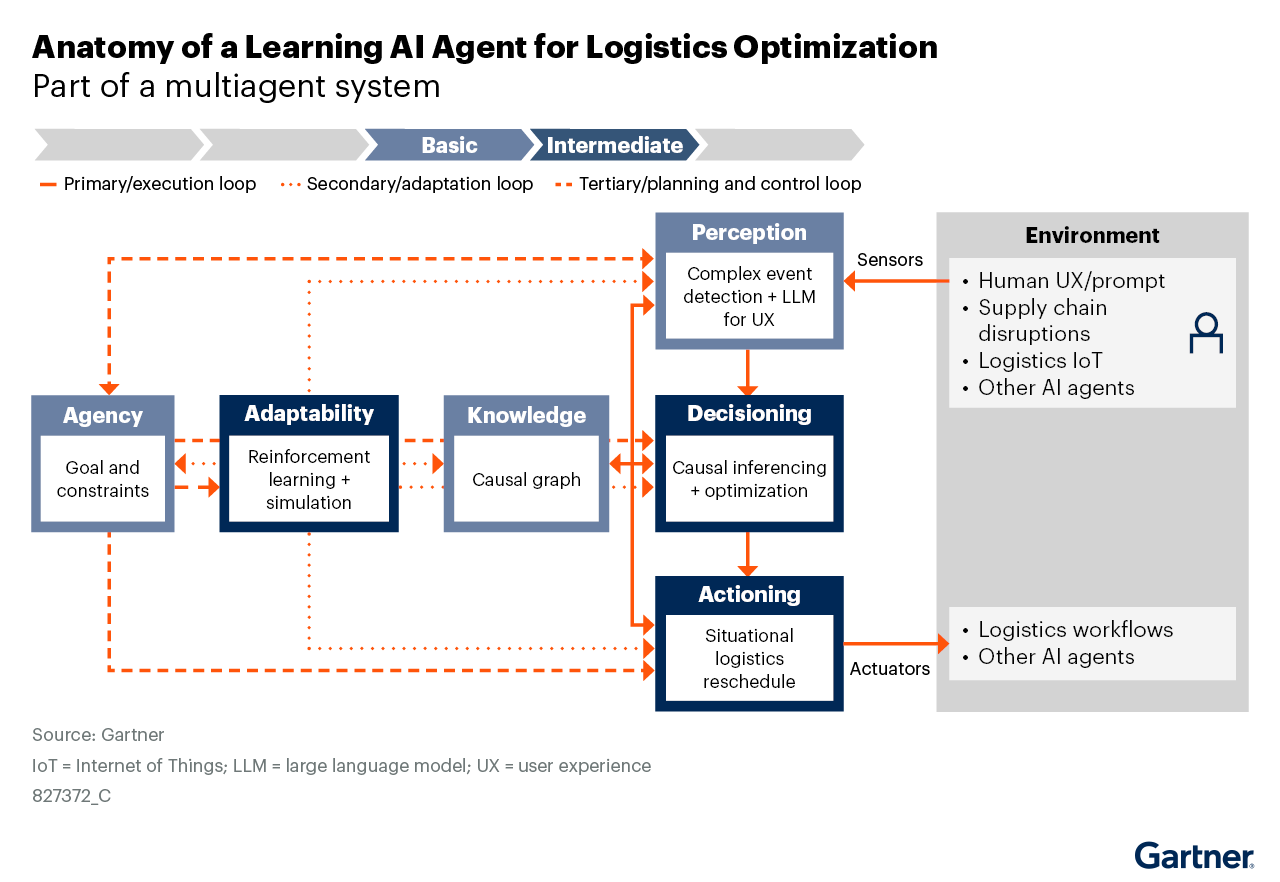
Together, these capabilities make up the anatomy of agents.1 Figure 3 shows an example of an AI agent that operates using an LLM, retrieval-augmented generation (RAG) and external tools. Figure 4 shows an example of an AI agent that works together with other AI agents in a multiagent system, without using any generative AI models. These agent anatomies are conceptual depictions of how capabilities work together in different processes, based on insights from cognitive science. Optionally, agent anatomies may include components or other elements related to their engineering. However, we should note that agent anatomies and the terminology used therein tend to be more generic and technology agnostic, and hence, are not necessarily the same terminology as what’s used for architectures or patterns for technical implementation (see Emerging Patterns for Building LLM-Based AI Agents).
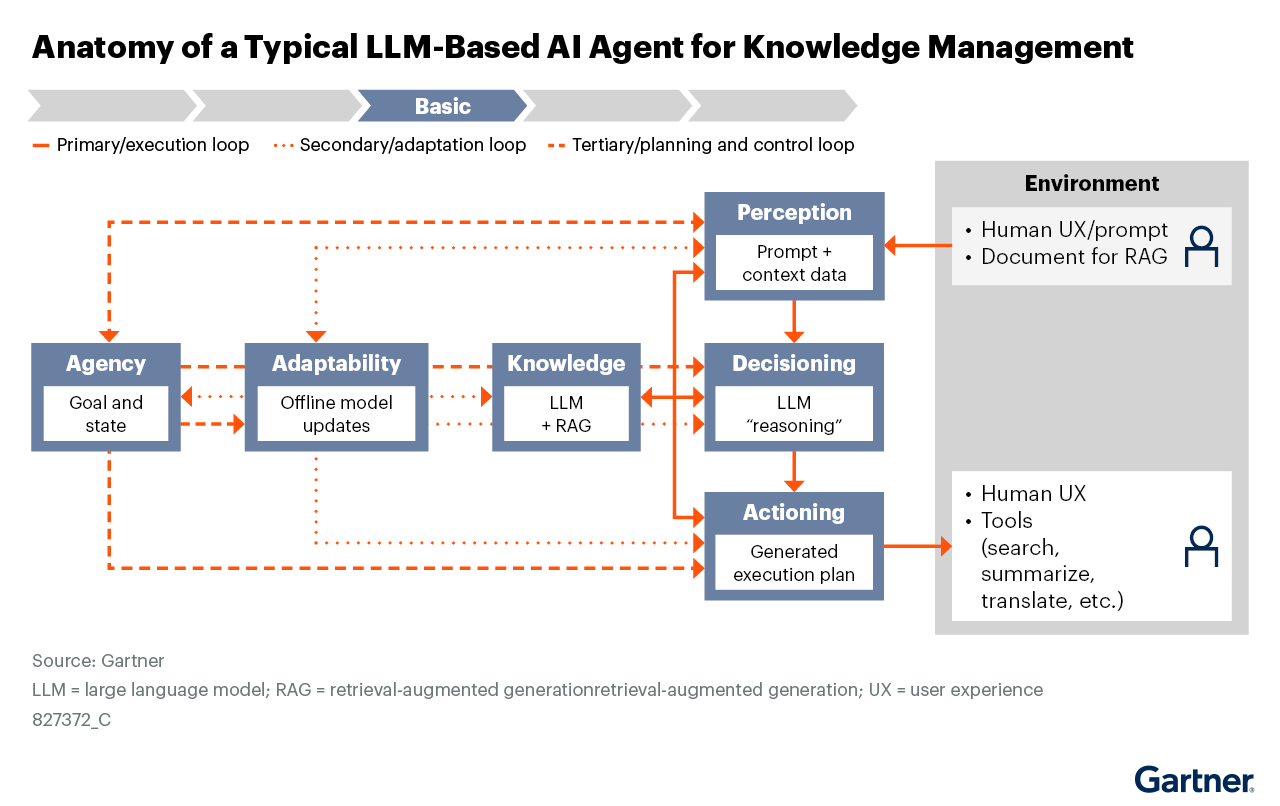
Figure 4 shows the anatomy of an agent that is part of a multiagent system to optimize logistics. Among other things, this agent is able to detect planning deviations and uses causal AI to find the best intervention, like rescheduling shipments, to minimize the impact of the deviation. It also uses simulations and human feedback to identify improved interventions.
When Should Organizations Use AI Agents?
Organizations that seek to reap the benefits of AI agents are challenged with the question: “is it sensible for us to use AI agents for this particular business context and use case?” This is complicated by the fact that each AI agent has its own capability levels; no AI agent is the same, and every business context is different, meaning that there is no one-size-fits-all approach here. Although AI agents have become and will continue to become more powerful, they can’t be used for each and every business use case.
If an AI agent can and should be used — and if so, which capabilities that specific AI agent needs to have — depends largely on the requirements of the business context and use case at hand. These requirements are listed in Figure 5,2 each one corresponding with each of the key agent capabilities.
See Tool: Gartner AI Agent Assessment Framework for further details.
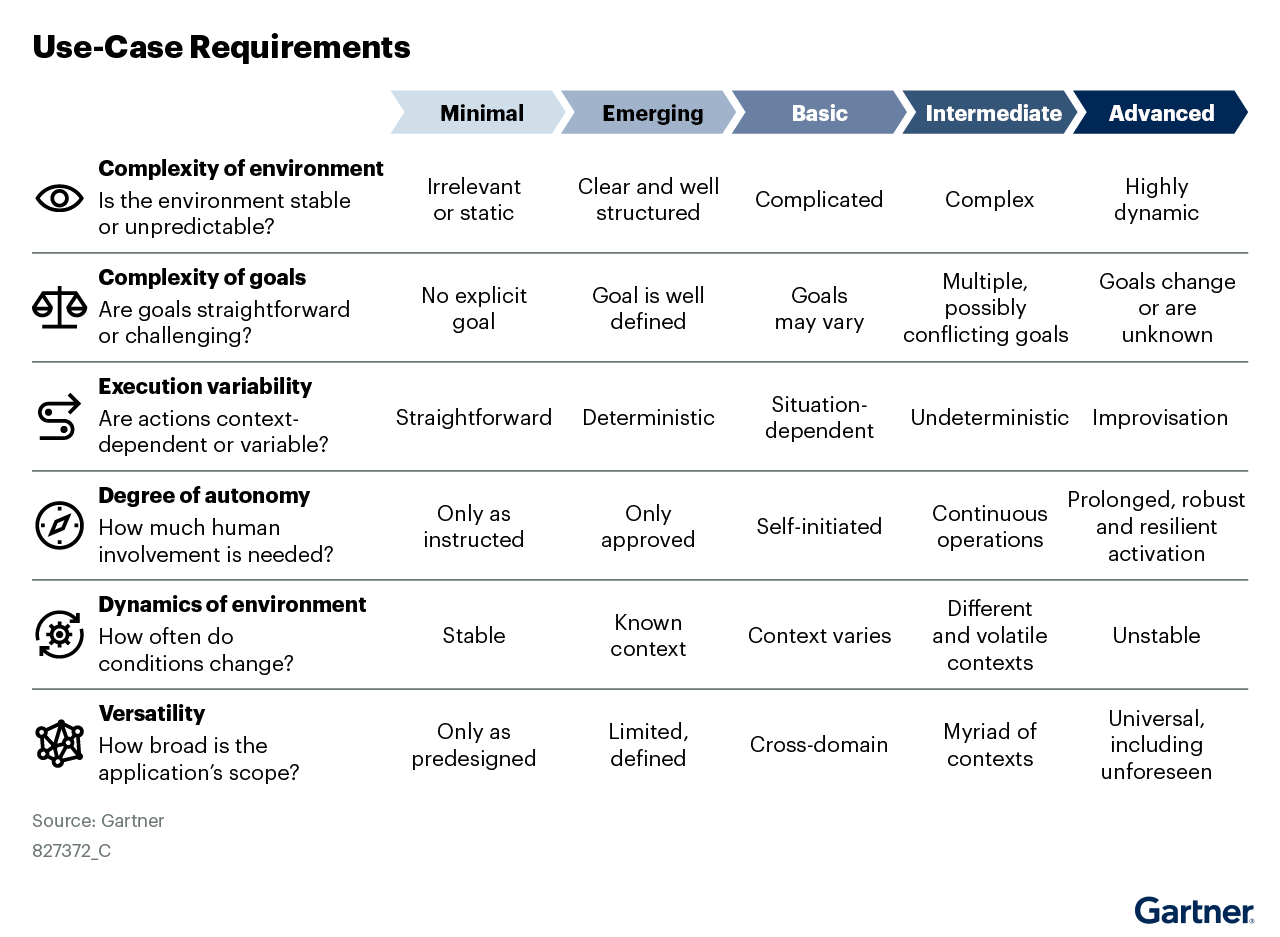
Please see the Tool: Gartner AI Agent Assessment Framework for further details, which provides organizations with an interactive version to determine requirements for their own business contexts and use cases. Table 1 offers an example use case and its requirements.
Requirements for Use-Case Travel Booking
Requirement | Description | Level needed | Agent capability |
Complexity of environment |
| Level 2 — Attentive (Basic) | Perception |
Complexity of goals |
| Level 3 — Optimized (Intermediate) | Decisioning |
Execution variability |
| Level 2 — Situational (Basic) | Actioning |
Degree of autonomy |
| Level 2 — Augmented (Basic) | Agency |
Dynamics of environment |
| Level 3 — Learning (Intermediate) | Adaptability |
Versatility |
| Level 2 — Multidisciplinary (Basic) | Knowledge |
This example is about a use case to book travel and accommodation for an employee as automatic as possible, after scheduling a calendar meeting at a remote location. Based on these requirements, it can be concluded that an AI agent or agentic AI is required, as all capabilities are at least at Level 2 (basic). | |||
Source: Gartner (June 2025)
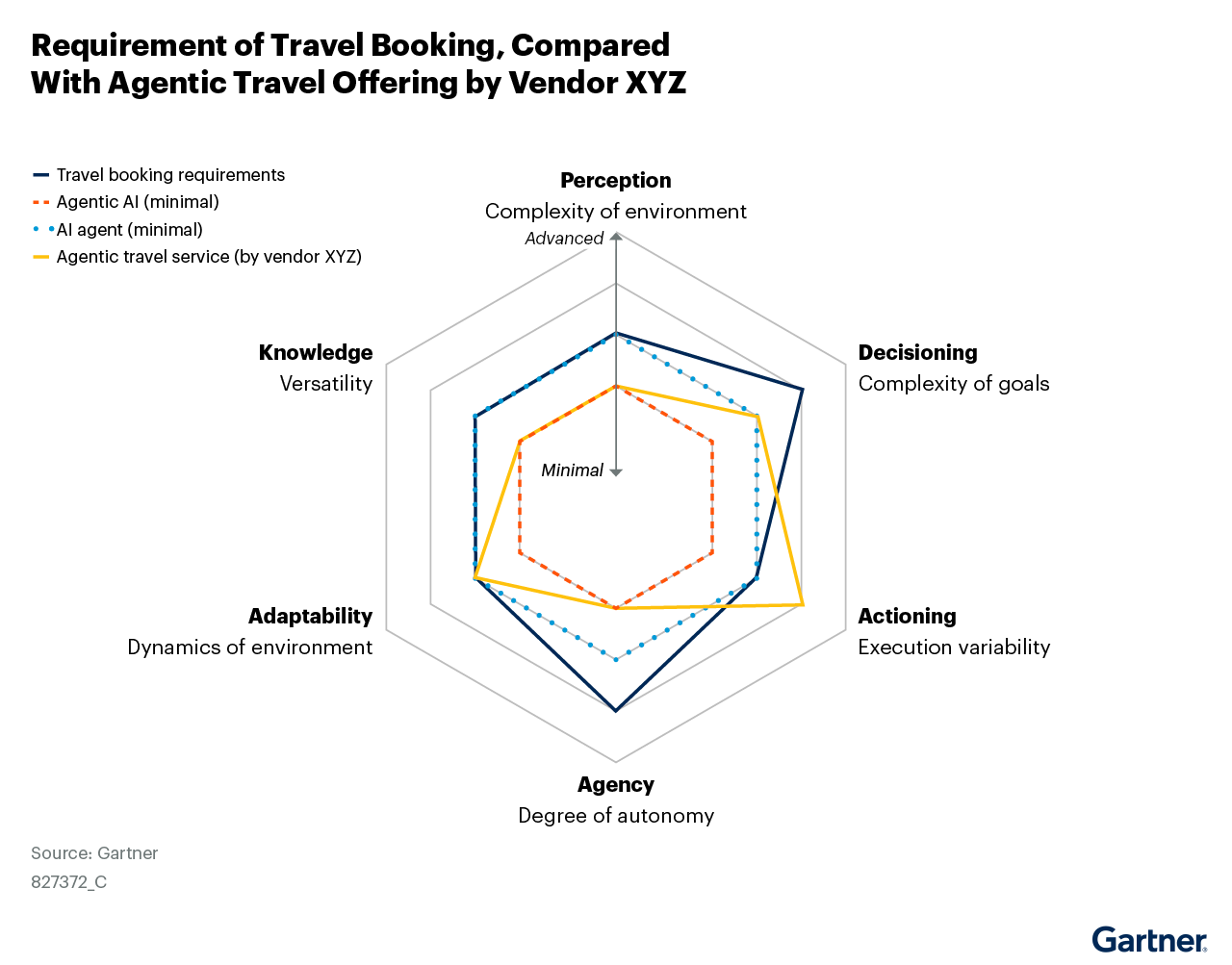
Figure 6 compares the example requirements with the capabilities of a fictitious agentic travel service of “Vendor XYZ.” This offering meets the requirements for adaptability and exceeds the requirements for actioning, but falls short for the other capabilities.
Single or Multiagent?
A multiagent system (MAS) is a system composed of multiple independent, interacting AI agents. Multiagent systems can have different architectures and control structures, from deterministically orchestrated by a central AI agent to decentralized structures in which AI agents are undeterministically interacting and collaborating in response to events or contextual changes. There are a number of criteria that should be evaluated to see if a MAS may be better suited than applying a single AI agent, including:
- Requirements: The higher the need for more sophisticated capability levels, the harder it becomes to meet all requirements with a single AI agent. In general, higher levels of complexity and dynamics in the environment, goals or execution are indicative of the need for the more distributed and less deterministic characteristics of multiagent systems.
- Robustness and resilience: When compared to a single AI agent, a collective of AI agents may be better able to continue operating in the face of external disruptions or internal malfunctions. AI agents may stand in or compensate for each other or may be able to reconfigure their collaboration to adapt to changes.
- Reliability: Multiagent systems may apply different AI agents for the same task, comparing their results before execution. This serves to increase accuracy or confidence of the system as a whole.
- Reuse: Instead of creating more generalist AI agents, multiagent systems typically incorporate AI agents that are more specialized in certain capabilities, tasks or actions. This allows the reuse of AI agents by recombining them to realize different goals that may overlap in terms of required capabilities or actions.
- Rearchitect: Future IT architectures may become fully agent-centric. This means that all tools, workflows or other functions of new and existing applications will be replaced by AI agents, regardless if full AI agent capabilities are actually needed for each AI agent. A less extreme vision is that all user interaction may happen through AI agents, which in turn — through AI orchestration agents — integrate with tools and workflows of existing enterprise applications. Ultimately, this approach envisions multiagent systems at the process or enterprise level to enable autonomous business operations.
When Should Organizations Not Use AI Agents?
Just like any other technology, AI agents are not a miracle cure for each and every business context and use case. In fact, there are several circumstances where their use is unnecessary or even disadvantageous:
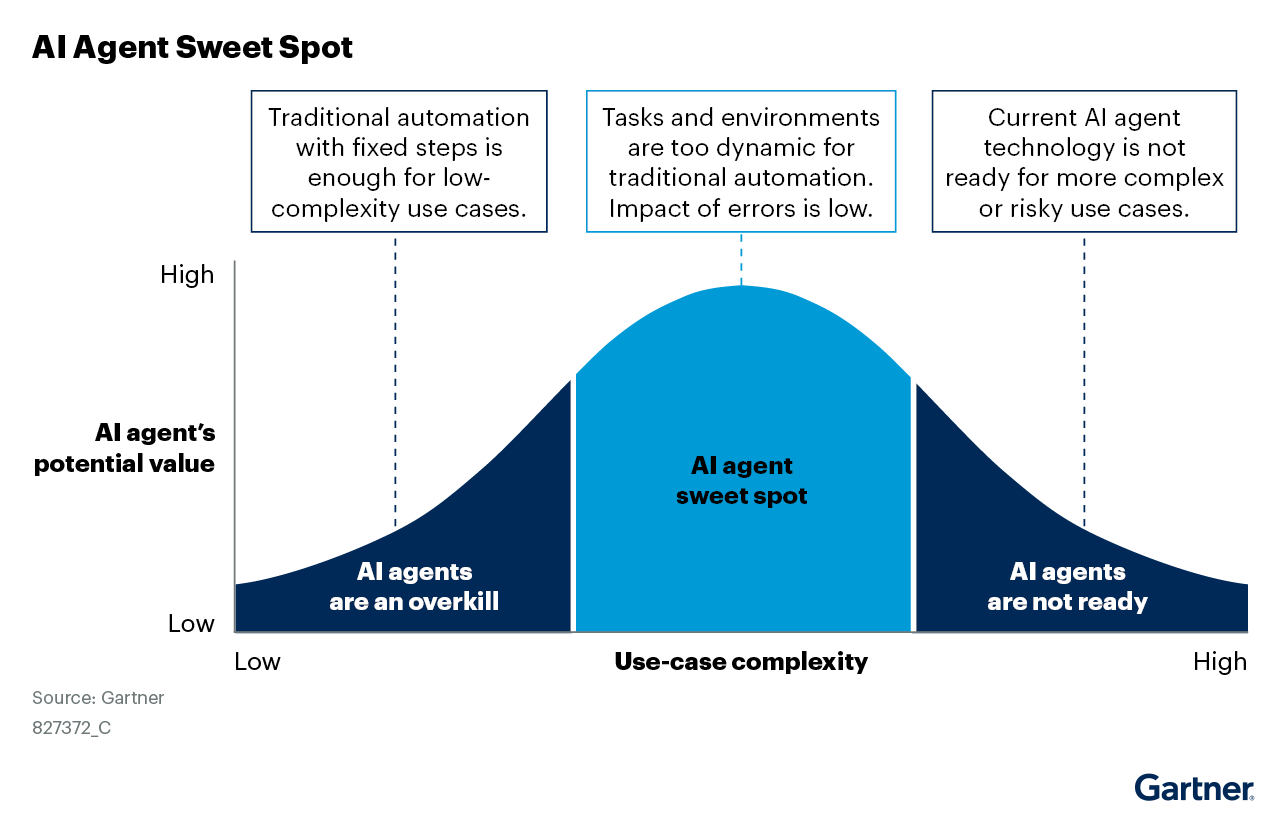
- When AI agents are overkill: This is applicable when use case requirements are low with respect to agent capability levels. In such circumstances, conventional automation solutions like RPA or workflow automation — as separate solutions or incorporated in enterprise applications — may be a better choice. Indicators for this include:
- Stable, structured operating environment
- Static, well-defined goals and conditions
- Deterministic, routine execution
- Predefined tasks or processes with limited deviations or exceptions
- When AI agents are not ready: Despite progress, AI and AI agents are not expected to become a cure-all anytime soon. In practice, there exists only a limited number of AI agents that have advanced capabilities, as described in the first section of this research. Examples of at least partially advanced AI agents are embodied in autonomous vehicles or drones operating in harsh and very dynamic conditions, particularly for military purposes. However, there are still operating conditions that are too demanding for even the most advanced AI agents. In general, goals, tasks or context may be so complex or risky that AI agents are not feasible and where humans are still very much needed.
As AI agents are not suitable when requirements are either too low or too high, there is a “sweet spot” for their application, as indicated in Figure 7.
Other criteria to determine when AI agents are not suitable include:
- Costs: Vendor-provided AI agents are often charged on a pay-per-use basis. In addition, there may be other costs (also for custom-built AI agents) including token-based pricing for the use of LLMs, if applicable. As AI agents are typically supposed to be frequently used at scale, this means that costs may increase rapidly. Clearly, in the case of unknown or limited benefits and value, this may result in a negative business case for the use of AI agents.
- Need for human touch: Even tasks that might seem moderately complex could still be ill-suited for AI agents due to their lack of inherently more human qualities like creativity, judgment, empathy, deep contextual understanding or emotional intelligence.
- Unreliability: In the current market, many AI agents use probabilistic models like LLMs, which can be incorrect or “hallucinate,” especially with uncommon tasks. Grounding, fine-tuning or guardrails can mitigate these risks. Yet residual unreliability may still impact fairness, security or safety, particularly in sensitive areas like customer service, machine operations, self-driving vehicles, healthcare or HR. Cascading failures can occur in complex systems without robust error handling and rollback mechanisms. If LLM risks are too high, consider using more reliable non-LLM techniques or reducing AI autonomy with human oversight; for example, by using execution plan templates. If these do not resolve the reliability issues, AI agents may not be suitable.
- Real-time performance: AI agents that rely on complex multistep reasoning or other approaches that introduce significant latency may be unsuitable for real-time applications with minimal tolerance for lag. Examples include instant fraud detection, real-time autonomous vehicle navigation and industrial control systems, noting that traditional software is optimized for speed and predictability in these scenarios.
- Responsible AI: Many AI agents utilize LLMs or other AI models that offer no or limited transparency. However, depending on the region or industry, regulations may apply that require decision making to be fully transparent and explainable to stakeholders. But also without regulation, transparency is needed to mitigate risks with respect to bias, toxicity, privacy and trustworthiness. If this is the case, then only AI agents utilizing models that are not opaque, like knowledge graphs or rules, can be applied.
- Sustainability: Concerns about the environmental footprint associated with AI agents that utilize LLMs or other energy-hungry and water-thirsty AI models may inhibit their adoption.
- Organizational readiness: Depending on the business context of the use cases — like a specific business process or team — experience and skills may be lacking to implement AI agents effectively, including business change management. In addition, just like for any other (AI) technology, a governance structure should be in place.
- Technical and data readiness: Organizations may lack the resources or skills to enable AI agents with robust technical infrastructure (such as cloud, on-premises and edge) and integrate with other systems, internal or external, through APIs. In addition, just like many other approaches, AI agents require proper data management and sufficient data quality.
- Vendor readiness: Although AI agent technology tends to be generally applicable, certain use cases may still require specific techniques. Vendors’ experience or their provided AI agent products or platforms may not be suitably mature for deployment.
1 S. Russell and P. Norvig, “Artificial Intelligence: A Modern Approach,” Fourth Edition, Pearson, 2020.
2 The New Dynamics of Strategy: Sense-Making in a Complex and Complicated World, Institute of Electrical and Electronics Engineers (IEEE) Xplore.
Acronym Key and Glossary Terms
| Agentic AI | Agentic AI is an approach to building AI solutions based on the use of one or multiple software entities that are classified, completely or at least partially, as AI agents. AI agents are autonomous or semiautonomous software entities that use AI techniques to perceive, make decisions, take actions and achieve goals in their digital or physical environments.According to the Gartner AI Agent Assessment Framework, all capabilities of agentic AI solutions should be at least at the “emerging” level. In other words, agentic AI relates to the spectrum from the emerging to the “advanced” level. |
| AI agent | AI agents are autonomous or semiautonomous software entities that use AI techniques to perceive, make decisions, take actions, and achieve goals in their digital or physical environments.According to the Gartner AI Agent Assessment Framework, all capabilities of AI agents should be at least at the basic level. In other words, AI agents relate to the spectrum from the basic to the advanced level and are, therefore, a subset of the agentic AI spectrum. |
| AI assistant | AI assistants are specialized applications or modules in a wider system that incorporate AI techniques to support or carry out tasks as requested, specified and led by external (human) actorsthrough an (conversational) interface. According to the Gartner AI Agent Assessment Framework, at least one capability of AI assistants should be at the emerging level. AI assistants are a subset of agentic AI only if all capabilities are at least emerging. In case of the latter, they’re also known as agentic AI assistants, to distinguish them from nonagentic AI assistants. |
Note 1: Naming Conventions
Based on the above definitions and capability levels, existing or new vendor offerings or self-made agents should be assessed to see if they meet the criteria for their naming. Clearly, not all agents are the same, also because they may be used in different roles and contexts. See Table 2 for Gartner recommended naming conventions to reduce misunderstandings and noise in communication.
Recommended Naming Conventions
Level | Naming convention | Examples |
Minimal (at least one capability) | Anything that does not include the word “agentic” or the combination of “AI” together with “assistant” or “agent” |
|
Emerging (at least one capability) | [<modifier>] AI [<role>] Assistant [for <context>] |
|
Emerging (or higher) (all capabilities) | Agentic AI [for <context>] OR Agentic <context> |
|
Basic (or higher) (all capabilities) | [<modifier>] AI [<role>] Agent [for <context>] |
|
[ ] = Optional, <> = Variable wording | ||
Source: Gartner (June 2025)
Following these naming conventions and definitions, examples of wrong naming include:
- AI Assistant for a chatbot that only uses, for example, keyword-based task recognition (perception = minimal) and only follows fixed procedures to carry out tasks (actioning = minimal), while all other capabilities are also at minimal level
- Agentic AI for an AI assistant that is able, for example, to break down a task into specific steps (actioning = emerging) and uses an LLM with user prompting (perception = basic), but acts the same regardless of context (adaptability = minimal) or has other capabilities at minimal level
- AI agent for Agentic AI in which, for example, mathematical optimization is applied (decisioning = intermediate), but where nothing happens without human initiation and instructions (agency = emerging)