Innovation Insight: AI Agent Development Frameworks
27 August 2025 - ID G00833674 - 14 min read
By Tigran Egiazarov, Arun Batchu, and 4 more
AI agent development frameworks are an accelerator toward the top priority among software engineering leaders: building AI capabilities into applications. It is crucial to actively monitor the advancements in these frameworks to effectively adopt and construct sophisticated AI agent systems.
Overview
Key Findings
- AI agent development frameworks streamline the building of AI agents and agentic applications. They offer a diverse set of capabilities and integrations that make AI agent development easier.
- Innovations in large language models (LLMs), increased context window introduction, and the rapid increase in popularity of Model Context Protocol (MCP) and Agent2Agent (A2A) protocols create a strong foundation for AI agents.
- AI agent development frameworks are evolving rapidly. When coupled with challenges like the nondeterminism of LLMs, a lack of established guardrails, and increased security and compliance risks, the demand for these frameworks requires new development practices and skills to gain trust in AI agents.
- The wide array of AI agent development frameworks presents a challenge for software engineering teams as they must carefully choose the most suitable AI agent development frameworks to address specific use cases effectively and deliver business value.
- While many AI agent development frameworks are currently open source, competitive pressures are leading them to shift toward a commercial licensing model and commercial extensions.
Recommendations
- Start by focusing on well-scoped, low-risk, internal software engineering use cases to gain valuable experience in AI agent development.
- Select frameworks by considering specific criteria — like ecosystem access, tool coverage, memory requirements, ease of use, multiagent support and code execution capabilities — relevant to your need. Use a combination of multiple frameworks to achieve the desired results.
- Build and manage secure AI agent systems by investing in new AI-specific development practices and skills, such as prompt engineering, core Python knowledge and API security, within your teams.
- Enforce AI agent security by establishing comprehensive evaluation, security, governance, and monitoring capabilities at both the LLM and AI agent levels.
Strategic Planning Assumption
By 2028, 80% of organizations will report that AI agents consume the majority of their APIs, rather than developers.
Introduction
The field of artificial intelligence is undergoing a significant transformation with the rise of AI agents. AI agents, often powered by LLMs, are designed to autonomously understand goals, plan actions, and interact with their environment to complete complex tasks with minimal human intervention.
The 2025 Gartner AI in Software Engineering Survey reveals that software engineering teams in top-performing organizations are significantly more likely to take full ownership of building AI agents compared to those in lower-performing organizations.1
Developing such sophisticated systems from scratch can be highly complex, involving intricate orchestration of models, memory, tools and decision-making logic. AI agent development frameworks have emerged to address this challenge, providing structured approaches and abstractions that streamline the creation, orchestration, and deployment of AI applications and AI agents.
Description
Definition
AI agents are autonomous or semiautonomous software entities that use AI techniques to perceive, make decisions, take actions, and achieve goals in their digital or physical environments.
AI agent development frameworks are designed to accelerate the creation of AI agents and AI-powered applications capable of autonomously performing complex tasks by providing high-level abstractions for orchestration based on AI models, while also offering low-level control over agent logic (prompts, context, orchestration), memory, planning, and API access. Key capabilities abstracted by these frameworks include planning and reasoning (breaking down goals into steps), memory management (maintaining context and accessing knowledge), tool use (interacting with external systems), managing the action/observation loop (the core cycle of agent operation), and coordinating multiple agents (mainly within a single codebase).
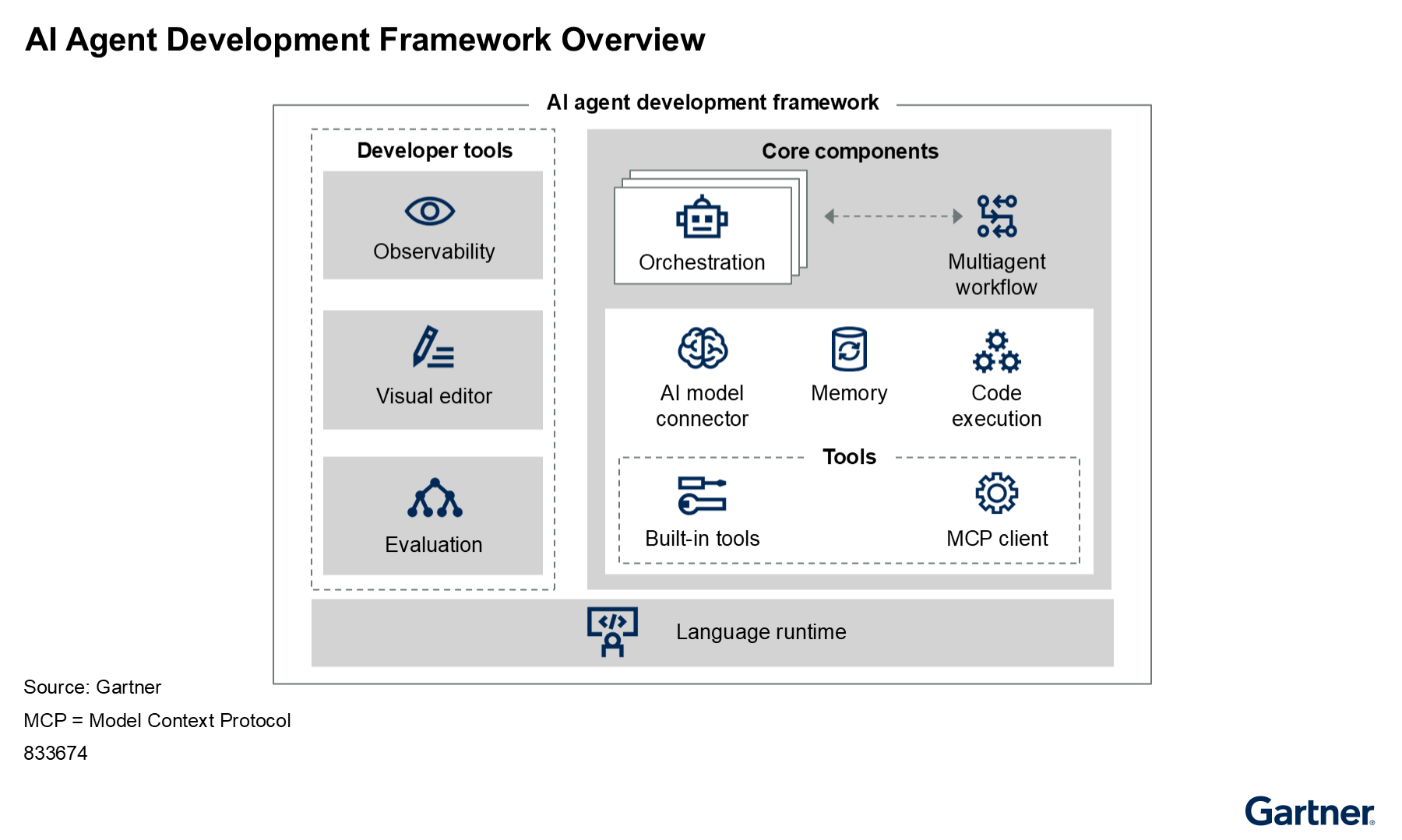
Figure 1 outlines the main components of the AI agent development framework.
Core Components
Core components of AI agent development frameworks include:
- Orchestration: The orchestration system uses LLMs and tools to call APIs, access memory, and collaborate with other agents. It manages session state, sends prompts, parses responses and executes API calls as needed to execute the tasks within the boundaries of the agent-defined goal.
- Multiagent workflow: These frameworks provide mechanisms to define and manage the sequence and flow of actions or interactions between agents or components to achieve a goal. The framework defines how agents or components communicate and interact. Some frameworks, such as AutoGen, support event-driven and synchronous communications, while LangGraph manages the communication between agents via the underlying graph. Moreover, some frameworks support a low-code integrated development environment (IDE) (e.g., AugoGen Studio, LangGraph Studio), allowing for fast experimentation.
- Built-in tools: These tools are a critical component, enabling agents to interact with the external world, access information or perform specific tasks. Agents can choose from a range of tools that provide access to data or enable actions, helping to guide their next steps. These tools allow integration with retrieval-augmented generation (RAG) pipelines and external APIs to enhance agent capabilities.
- MCP client: These frameworks provide integration with MCP servers. Many frameworks enhance their integration capabilities by offering MCP support through existing tools (see Innovation Insight: Model Context Protocol).
- Memory: Ensuring memory retention is crucial for agents to understand context and recall previous interactions or workflow progress. AI agent development frameworks facilitate seamless context propagation across various steps or sessions. For long-term memory, frameworks may offer integration capabilities with vector datastores, like Pinecone and MongoDB Atlas Vector Search, as well as other external memory tools, such as Mem0 and Zep.
- Model integration/LLM connector: Frameworks provide integration with LLMs, offering the flexibility of choosing one or multiple LLMs for orchestration. Some frameworks, such as Google Agent Development Kit and OpenAI Agents SDK, are optimized for certain model families, while other frameworks support a broader range of AI models. One of the advantages of open-source agent development frameworks is their ability to use offline LLMs deployed via tools like Ollama and LM Studio.
- Code execution: This allows AI agents to execute code locally or externally, which extends the basic capabilities of AI agents to adjust to new requests by generating code on the fly.
- Language runtime: Ensure framework compatibility for major software development languages and frameworks like Python, JavaScript, .NET and Java. Some frameworks provide low-code orchestration options for streamlined development, while others offer native language-level customization to empower developers with more control and flexibility.
Developer Tools
The following are optional components that provide developers with additional tools for building AI agents:
- Visual editor: Allows developers to visually construct multiagent systems and define AI agent architecture patterns to streamline development.
- Observability and monitoring: Observability equips developers with insights to enhance their agents’ internal functions, which is crucial for reliability, cost management and AI safety. This allows developers to detect and navigate challenges associated with AI agent activity tracking, external tools invocations and the ability to reproduce the issue.
- Evaluation (testing): Many frameworks offer both built-in capabilities and integration with external AI agent evaluation tools, such AutoGenBench, LangSmith and OpenEvals, to perform testing and track performance of the AI agents and run experiments (see Improve Generative AI Agent and Application Quality Using EDD).
Note: Not all of these core components and developer tools have to come from the same vendor or framework.
Benefits and Uses
Benefits of AI Agent Development Frameworks
AI agent development frameworks offer distinct advantages, including:
- Simplification and abstraction: AI agent development frameworks streamline the process of building sophisticated AI systems. They abstract details like AI model interaction, memory management and workflow orchestration, allowing developers to focus on core functionality of the AI agent. Many of the existing frameworks have evolved from simpler LLM orchestration libraries to support features like multiagent modularity, long-term memory and common reasoning patterns.
- Flexibility and control: Compared to low-code AI agent platforms and no-code agent builders, AI agent development frameworks provide the full flexibility of pro-code development — allowing for the creation of stand-alone AI agents or complex multiagent systems. These frameworks maintain low-level control over agent logic, memory, planning and API access.
- Enhanced developer productivity: Adopting a unified framework for building AI agents offers numerous benefits, including reduced boilerplate code and standardized practices across software engineering teams. This approach streamlines development processes and enhances collaboration, minimizing the risks associated with delivering AI-powered solutions across the organization. While it may impose some limitations on creativity and innovation, the trade-off is a more reliable and efficient pathway to successful AI agent deployment across the organization.
- Integration: To autonomously execute complex tasks, AI agents require integration with different tools, such as image-to-text tools, website scrapping, code interpreters and other AI agents. Many AI agent development frameworks offer a broad set of tools, which agents can select autonomously during task execution.
Uses of AI Agent Development Frameworks
AI agent development frameworks support a variety of use cases, including:
- Building single AI agents: Single AI agents are designed to handle tasks of simple to medium complexity. Frameworks that enable multistep workflows and support solo-agent architecture with a linear flow, such as Langchain, would be the most efficient choice for this type of AI agent.
- Building multiagent orchestration: Multiagents are designed to handle tasks of medium to high complexity. Each agent operates as an independent application or service, typically containerized and deployed on a cloud-native application platform or container management system, or as a multiagent orchestration within the framework. Agents communicate with one another using agent-to-agent protocols, such as the open-source A2A protocol developed by Google and donated to the Linux Foundation.2 An agent mainly offers an API-first service, sometimes also providing a UI for interactions and configuration. However, AI agent development frameworks generally do not support UI components. As a result, developers who require UIs should consider using UI-ready frameworks like Flask or Django for simplicity, or consider implementing a decoupled web UI using frameworks like React JS or Angular for accessing AI agents via their APIs.
- Embedding AI agents into existing applications: AI agent development frameworks help transform static applications into intelligent ones with contextual reasoning and dynamic task execution capabilities. Many existing software development frameworks, such as Spring Boot and .NET Core (via AutoGen), already offer the ability to build AI agents. However, it is important to follow the best practices architecture principles; embedding AI agents into the monolithic application is not always the best solution. Instead, consider composable application architecture. For more details, see Use AI-Ready Data With Composable Architecture to Deliver Intelligent Applications.
For more details on the benefits and uses of AI agent development frameworks, see How to Choose the Right Architecture to Build AI Agents and Emerging Patterns for Building LLM-Based AI Agents.
Risks
AI agent development frameworks also come with certain considerations:
- Technology thrivability: The rapid growth and nascent stage of AI agent development can result in an unstable open-source community for AI agent frameworks. Most frameworks remain below version 1.0 and are evolving rapidly, which may introduce breaking changes. Consequently, this instability may cause a decline in interest among community members, prompting them to shift their focus to other frameworks. Furthermore, although the leading AI agent development frameworks are currently open source, competitive pressures are already driving a transition toward building on enterprise capabilities under a commercial licensing model, which can reduce their breadth of adoption.
- Language limitations: Frameworks are mainly written in Python, which requires companies to invest in Python development skills. Integrating these systems with enterprise applications that have built-in languages other than Python will require solid API-based integration and a distributed architecture.
- Easy-gained technical debt: AI agent development frameworks continue to evolve rapidly, with new AI agent development frameworks emerging almost every month. Software engineering teams are challenged to keep pace with the rate of change, resulting in rebuilding obsolete frameworks’ features and refactoring the existing code. At the same time, many developer AI agents are still in the pilot or prototype stage and have short life cycles, which, for now, helps maintain the technical debt balance.
- Security threats: Agents interacting with external tools or data sources can be vulnerable to risks like prompt injection attacks and data exposure. Many AI agent development frameworks lack built-in guardrails, requiring developers to manually implement crucial evaluation, fallback and safety mechanisms (see Use These Tools to Accelerate LLM-Based Application Development).
- Malicious user or upstream input: AI agents can also be targeted by malicious payloads sent directly by users or upstream applications invoking or triggering the agent.
- Nondeterministic nature: AI agents are inherently unpredictable, making them risky replacements for traditional applications and core systems. This unpredictability increases the chance of errors and complicates compliance, as many frameworks lack strong debugging and observability tools. As a result, developers must build extensive monitoring solutions. The main risks are deploying agents that are too unpredictable for their purpose and investing in agents that can never meet reliability or compliance requirements.
Adoption Rate
According to the 2025 Gartner AI in Software Engineering Survey, AI agent frameworks
ranked among the top three platforms and tools used to build AI agents.1
Alternatives
- Low-code agent development platforms: These platforms simplify AI agent development by minimizing coding needs. They feature prebuilt components and visual editors, reducing programming needs and architectural complexity by abstracting orchestration, LLM integration and memory management. This enables faster development and easier maintenance. Additionally, they allow custom component creation through low-code scripting and can integrate with a customer’s preferred foundation model. For more details, see How to Choose the Right Technology to Build LLM-Based AI Agents.
- No-code agent builders: These are SaaS-delivered products that offer an integrated environment to build, publish and manage AI-powered agents without using any coding. They are used primarily by business technologists, such as citizen developers and citizen data scientists. For more details, see Innovation Insight: No-Code Agent Builders.
- Robotic process automation (RPA) and workflow automation: Whether stand-alone or integrated into enterprise apps, RPA and workflow automation are often more effective and reliable when the execution environment is stable, goals are clear, processes are routine, and tasks are well-defined with few exceptions. These traditional methods deliver efficiency and consistency without the complexity of advanced agent-based systems.
Recommendations
- Start small: Start by building and deploying single-agent solutions for well-defined, low-risk tasks (such as document summarization and back-office customer support). These initial implementations allow for manageable experimentation and learning. Avoid limiting yourself to frameworks that only support distributed multiagent systems — these systems are few, complex and rarely necessary for initial use cases.
- Choose strategically: Opt for frameworks that offer a robust ecosystem, comprehensive tool coverage and memory capabilities.
- Treat advanced features as optional: Advanced capabilities (such as distributed agent coordination and autonomous code execution) add significant complexity and security risks. Only adopt these if your use case clearly requires them and your team has the necessary expertise and controls.
- Build a strong foundation: Invest in composable application architecture with an API-first approach and AI-ready data, ModelOps, and sound data governance. These elements are crucial for supporting adaptable agent behavior and integration into your application architecture.
- Develop new skills: Address skill gaps in software engineering teams and enhance security knowledge by investing in AI-specific development practices, such as prompt engineering and understanding AI workflows. While those skills are evolving and need continuous uptraining, they should be scalable across teams. Be mindful of the complexity and potential cost implications associated with intricate, distributed multiagent systems.
Representative Providers
Table 1 includes a sample set of AI agent development frameworks and their vendors.
Examples of AI Agent Development Frameworks and Vendors
Vendor | Product |
CrewAI | CrewAI |
FoundationAgents | MetaGPT |
Google | Google ADK |
Huggingface | smolagents |
kagent | kagent |
LangChain | LangGraph |
Microsoft | AutoGen |
Solace | Solace Agent Mesh |
Note: The vendors appearing in this table do not imply an exhaustive list. This section is intended to provide a snapshot understanding of the market and its offerings. | |
Source: Gartner (August 2025)
Balance Agent Control With Agency, LangChain.
1 2025 Gartner AI in Software Engineering Survey: This study was conducted to explore the adoption of AI within software engineering functions, focusing on two key areas: the use of AI tools (e.g., AI code assistants, AI code agents) throughout the software engineering life cycle (SDLC); and the development of AI-powered solutions (or AI engineering) within software engineering functions, along with their contribution to business outcomes. The research was conducted online from 29 April through 25 June 2025 among 299 respondents from North America (n = 150), EMEA (n = 104) and Asia/Pacific (n = 45). Quotas were established for company sizes and for industries to ensure a good representation across the sample. Organizations were required to be either piloting or using AI tools in SDLC for less than four years, and either piloting or having built AI solutions in their software engineering functions. Respondents included both leaders and individual contributors from software engineering functions, each with at least one year of tenure at their current organization. All respondents were involved in decision making or directly engaged in using AI tools or building AI solutions within their software engineering functions. Disclaimer: The results of this survey do not represent global findings or the market as a whole, but reflect the sentiments of the respondents and companies surveyed.
2 Google Cloud Donates A2A to Linux Foundation, Google for Developers.