Magic Quadrant for Finance Transformation Strategy Consulting
10 November 2025 - ID G00825886 - 45 min read
By Geraldine Garaud, Marco D'Ascoli, and 1 more
A well-defined finance transformation strategy is essential for shaping strategic objectives and roadmaps that align data, delivery models, talent, technology and process enhancements. CFOs can use this research to identify service providers that offer strategic insights and help build future-ready finance operating models.
Market Definition/Description
Gartner defines the finance transformation strategy consulting market as services that assist CFOs and their finance organizations in crafting strategies and finance transformation roadmaps for various business-aligned, forward-looking initiatives. These engagements use dedicated external finance subject matter experts and transformation delivery assets with the aim of increasing the value that finance provides to the organization, while maximizing functional efficiency through appropriate organizational design, data, people, technology and process improvements. This market differs from finance transformation implementation consulting, which helps CFOs enhance operations and management practices through project delivery capabilities in areas like process improvement and technology implementation.
CFOs face increasing complexity in their finance transformation ambitions, requiring diverse external strategy support. They must evaluate improvement opportunities across finance’s data, delivery models, processes, technology and people to effectively prioritize and integrate the most impactful innovation opportunities into their finance transformation strategies.
Finance transformation strategy consulting engagements provide critical support to CFOs through several key activities:
- Conduct thorough research to uncover and cultivate transformative ideas that reshape CFOs’ perspectives on the future of their finance operations, ensuring they remain at the forefront of function advancements.
- Perform detailed assessments to identify discrepancies between current performance levels and optimal outcomes within the finance organization, enabling targeted improvements.
- Develop a strategic roadmap that delineates the optimal finance function’s operations to ensure maximal organizational value.
- Provide guidance on the selection, prioritization and sequencing of finance transformation initiatives.
- Deliver tailored executive briefings, incorporating change management support, that align with the specific objectives and constraints of the client’s organization, facilitating smooth transitions and adaptations.
Mandatory Features
The mandatory features for this market include:
- Finance-transformation-specific advisory expertise — Ability to demonstrate finance transformation acumen via dedicated subject matter experts who have previous experience in the finance field.
- Transformation delivery assets — Ability to define strategies and finance-evolution roadmaps across multiple business-aligned, forward-looking initiatives using proprietary assets.
Common Features
A common feature for this market is:
- Current-state assessment and future-state design: Evaluate current finance function performance to identify gaps and design a target operating model defining the desired future state in terms of financial data, processes, technology and talent capabilities.
Magic Quadrant
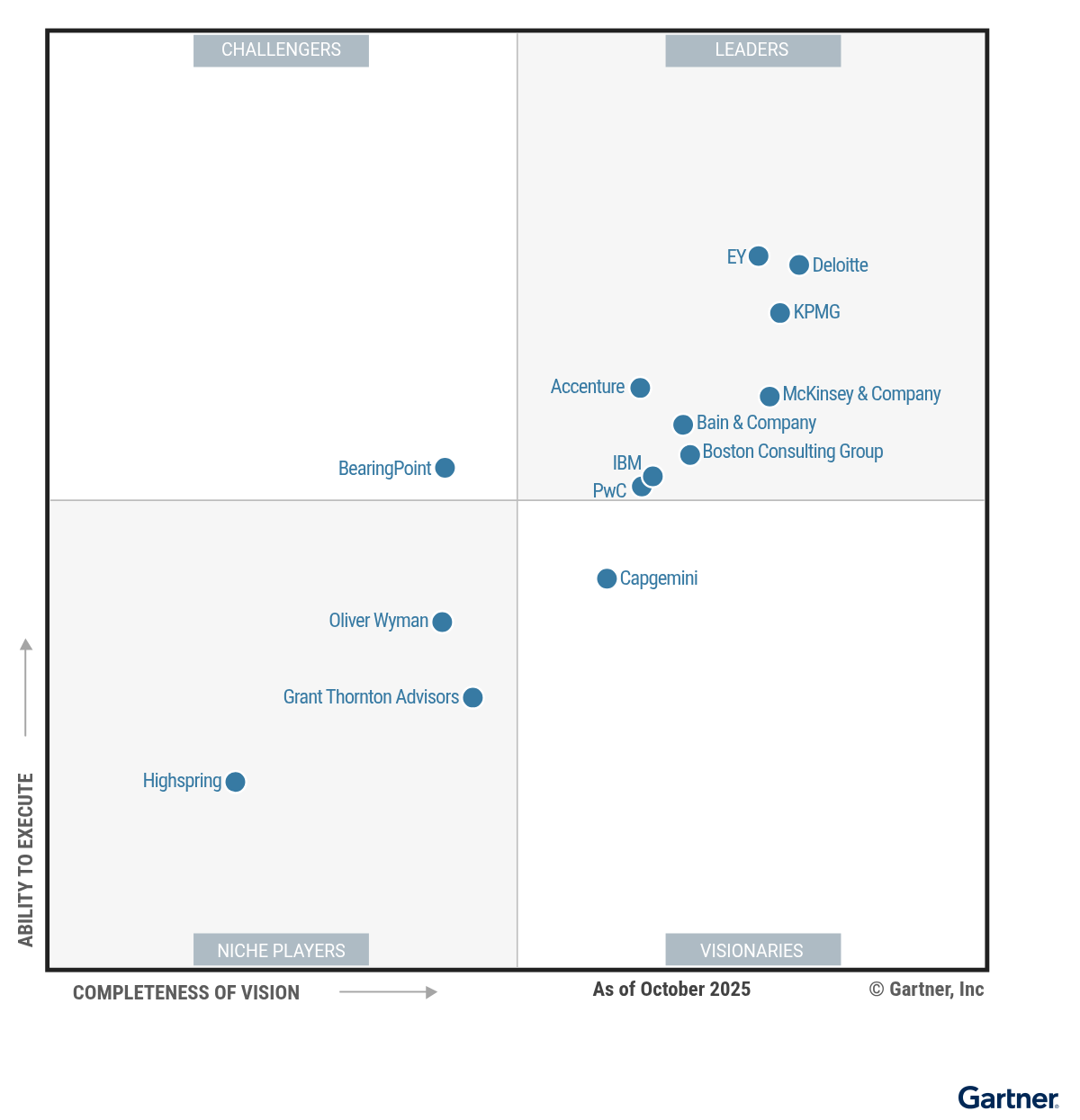
Vendor Strengths and Cautions
Accenture
Accenture is a Leader in the finance transformation strategy consulting (FTSC) Magic Quadrant. Its FTSC service leverages AI-driven tools, such as Process Value Explorer and Transformation GPS, to guide CFOs in defining and prioritizing their transformation roadmaps.
Accenture recently launched its Digital Twin platform, which allows clients to simulate multiple future-state finance operating models. In 2026, it plans to introduce agentic AI modules that autonomously generate and evaluate scenarios related to discrete transformation pathways to support finance targer operating model recommendations.
- AI-enabled toolkit: Accenture’s toolkit equips CFOs with a data-driven lens to identify high-impact transformation opportunities. Tools like Process Value Explorer use AI to uncover process and technology interdependencies, while Transformation GPS assesses organizational readiness and adoption risks.
- Collaborative approach: Accenture’s co-creation model leverages a global network of Innovation Centers and on-site pop-up labs, enabling clients to collaboratively test and refine strategies in real time using proprietary tools. This approach delivers finance transformation blueprints tailored to each organization’s culture, risk appetite and strategic priorities.
- Talent strategy: AI-powered platforms like Skills.AI and talent engine provide real-time visibility into workforce capabilities and gaps with actionable upskilling recommendations. Clients can adjust role design and talent strategy as new data emerges, ensuring alignment with the future finance operating model and the overall transformation roadmap.
- Product innovation: Accenture’s recent tool releases have delivered incremental enhancements to existing modeling and mapping functionalities. However, clients seeking more transformative outcomes such as substantial reductions in engagement timelines should evaluate these capabilities against other Leaders in this Magic Quadrant.
- Change management: Accenture’s approach emphasizes leadership sponsorship and enablement through process and technology. Compared with other Magic Quadrant Leaders, it lacks reinforcement mechanisms like embedded change agents and digital change platforms, making sustained engagement in complex, multiregion transformations more challenging.
- Pricing structure: Accenture emphasizes fee structure flexibility and outcome-based pricing models, but clients may encounter limited transparency regarding the application of these structures and associated itemizations. CFOs should seek clarity on tool access, pricing components and deliverables to ensure alignment with strategic outcomes.
Bain & Company
Bain & Company is a Leader in the finance transformation strategy consulting (FTSC) Magic Quadrant. Its FTSC service helps CFOs shape finance transformation strategies by integrating process redesign, technology enablement, advanced analytics and change management through tools such as Results360 that assess organizational readiness and inform leadership-driven blueprints.
Bain recently partnered with Palantir’s Foundry to build digital twins of clients’ finance data environments — creating unified sandboxes where agentic AI can be trained on realistic scenarios. This capability enhances the strategic planning phase by enabling CFOs to simulate transformation pathways, test assumptions and reduce risk before committing to execution. In 2026, it plans to accelerate the deployment of industry-specific agentic AI solutions, enabling clients to better model capital-allocation trade-offs and stress-test target operating-model hypotheses.
- Organization design: Bain combines its Aster visualization and organization design solution with its RAPID decision-making framework to craft organizational transformation blueprints. This enables clients to collaborate on and visualize potential future states of the organization and accelerate critical redesign decisions, including the establishment of new roles or reporting lines.
- Delivery model: Bain’s approach weaves diagnostics and change management into a seamless, nonlinear framework — enabling clients to generate insights and autonomously drive targeted interventions. Tools like Aura workforce analytics platform operate within this cohesive framework, supported by continuous feedback and milestone-based governance.
- Accountability focus: Bain aligns key strategic milestones with client leadership incentives — ensuring CFOs have a direct stake in the blueprint’s success. Its Results360 framework provides visibility into strategic KPIs from the outset, helping CFOs design transformation plans that reinforce accountability, enable behavior change and align with long-term business outcomes.
- Client experience: Bain’s client feedback processes are primarily manual and engagement specific, lacking a centralized, technology-enabled system for aggregating and analyzing insights across projects. This may limit Bain’s ability to systematically identify trends and drive continuous improvement in client experience at scale.
- Talent strategy: Bain provides limited visibility into its internal finance transformation talent development approach. This can make it challenging for clients to evaluate how the firm attracts, cultivates and retains specialized expertise. Clients should conduct their due diligence to ensure the provider’s consultant profiles and credentials align with their transformation goals.
- Pricing transparency: Bain’s pricing model relies on fixed-price contracts for 60% of engagements plus outcome-linked “at-risk” fees. While fixed-cost pricing provides predictability, it may not directly reward the delivery of incremental transformational impact. Clients should pressure-test proposals to clarify what is included and fully assess scope and value.
BearingPoint
BearingPoint is a Challenger in the finance transformation strategy consulting (FTSC) Magic Quadrant. Its FTSC service combines process expertise with digital capabilities to help clients modernize core finance workflows, optimize end-to-end process health and build internal readiness for automation and analytics via its Business Process Master List.
BearingPoint’s Apps Maturity tool delivers a rapid, data-driven assessment that highlights gaps in process efficiency, automation and data quality. In 2026, BearingPoint will offer its AI Use-Case Navigator as an integrated solution — moving beyond one-off use-case identification to ongoing collaboration, pilot support and knowledge sharing. CFOs will gain visibility over which AI solutions are most relevant to their finance strategy and a clearer path to embedding them effectively.
BearingPoint declined requests for supplemental information. Gartner’s analysis is therefore based on other credible sources.
- Talent strategy: BearingPoint is committed to developing its talent with ongoing investments in training and leadership programs, particularly in AI, digital skills and emerging finance technologies. Clients benefit from access to teams with up-to-date technological and finance transformation management expertise.
- Accountability focus: BearingPoint maintains high standards of engagement quality through comprehensive quality control and governance processes, ensuring transparency, accountability and consistent service delivery across finance transformation projects. This provides clients with greater confidence in project outcomes, reduced risk and reliable execution.
- Pricing structure: BearingPoint offers outcome-linked pricing and modular “buy-as-you-go” engagement packs, giving clients control over investment levels and the ability to scale services up or down without heavy upfront commitments.
- Advanced analytics: BearingPoint’s AI-driven benchmarking and predictive modeling offerings offer less granularity and customization than those of other companies in this Magic Quadrant, which limits clients’ ability to tailor analyses to their unique needs and to pinpoint specific areas for performance improvement.
- Thought leadership: BearingPoint publishes fewer future of finance and sector-specific insights than other service providers in this market. This gap may limit clients’ ability to anticipate and respond to emerging trends in the future of finance, where rapid innovation and evolving market dynamics demand timely, forward-looking insights.
- Geographic presence: BearingPoint’s emphasis on mid-market clients and its leaner regional footprint may limit rapid, on-the-ground support for large, multicountry finance transformations. In complex, global engagements — where local regulatory know-how, cultural nuance and real-time collaboration across time zones are critical — clients should verify BearingPoint’s local resourcing plans and contingency staffing models to ensure program momentum is maintained.
Boston Consulting Group
Boston Consulting Group (BCG) is a Leader in the finance transformation strategy consulting (FTSC) Magic Quadrant. Its FTSC services help CFOs align finance strategy with broader business objectives, linking transformation efforts to enterprise value creation. BCG uses proprietary tools such as the CFO Excellence Index, Finance Process Library and Lighthouse for data-driven diagnostics, process optimization frameworks and AI-powered forecasting capabilities that sharpen strategic clarity and empower CFOs to craft transformation strategies that are structured, data informed and aligned with organizational goals.
BCG grew its CFO Excellence Panel and digital benchmarking tools to add AI readiness assessments, identify AI capability gaps and recommend high-impact AI use cases. In 2026, it plans to expand its Finance Insights Agent, a GenAI tool that leverages driver-based logic for real-time, dynamic scenario modeling. CFOs can rapidly generate customized scenarios to assess the impact of various variables and external factors on their company’s performance.
- Market intelligence: BCG’s solutions address key CFO priorities, including agility and digital innovation. Its CFO Excellence Panel — drawing on data from over 1,300 companies — reveals industry trends, evolving priorities and unmet needs. These insights are delivered via a self-service platform, providing tailored recommendations to guide finance strategy.
- Service suite: BCG offers a wide array of proprietary tools and strategy frameworks for finance transformation strategy development, from diagnostics to AI-driven accelerators. Solutions like the OrgBuilder, AI-based workforce diagnostics, Digital Finance Health Check and Finance Process Library help CFOs diagnose structural inefficiencies, workforce gaps and process maturity to inform transformation priorities.
- Collaborative approach: BCG adopts a client-centric, co-creation approach to empower clients in owning their finance AI transformations strategies. It offers AI readiness assessments, tailored maturity diagnostics and AI at scale playbooks to guide clients from use case selection to full finance function transformation strategy.
- Talent strategy: BCG’s digital skills development for staff emphasizes experiential, on-the-job training, with limited breadth in formal digital training programs. CFOs should ensure that those shaping technology-driven transformation strategies possess a foundational understanding with practical experience of the technologies involved.
- Sales execution: Relative to other Leaders in this Magic Quadrant, BCG’s approach to business generation incorporates fewer data-driven methodologies and is less reliant on structured tracking tools for their finance transformation go-to-market campaigns. As a result, CFOs may wish to evaluate the extent to which BCG’s recommendations are backed by the same level of market presence as some of its peers.
- Industry accelerators: BCG does not offer distinct industry accelerator tools, such as process maps or operating model frameworks, which may limit its ability to deliver rapid, sector-specific assessments compared with other Leaders in this Magic Quadrant. This may result in longer transformation development timelines and reduced agility relative to providers with more mature industry specific solutions.
Capgemini
Capgemini is a Visionary in the finance transformation strategy consulting (FTSC) Magic Quadrant. Its FTSC service emphasizes operational excellence and strategic value creation, leveraging a toolkit-based, modular approach and proprietary tools like ESOAR (Eliminate, Standardize, Optimize, Automate, Robotize), Gen Garage and frogThink ® Toolkit, which support collaborative strategy development and ideation, helping CFOs rapidly prototype transformation strategies.
Capgemini recently launched its resilient enterprise strategy to enable CFOs to assess readiness for evolving regulations and Data Powered Maturity Assessment for roadmap acceleration. In 2026, it plans to launch a future of CFO offering to help integrate AI-driven analytics, automation and scenario planning into TOMs for greater agility and insight.
- Market intelligence: Capgemini leverages proprietary research, including TechnoVision and World Reports, real-time market sensing and structured client feedback mechanisms to remain aligned with evolving client expectations and respond to emerging trends, such as the growing adoption of Agentic AI by translating insights into targeted recommendations.
- Strategy offering: Capgemini’s “now/new/next” Framework balances current foundational capabilities with co-investment in emerging technologies and long-term innovation through academic research. This approach helps CFOs address immediate transformation strategy needs while preparing for future AI, data and operating models shifts.
- Client interaction model: Capgemini uses structured lead qualification, CRM integration and feedback mechanisms to support transparency and data-informed engagement. Its growing calendar of webinars, roundtables and forums boosts visibility while creating meaningful touchpoints for CFOs exploring finance transformation trends.
- Product innovation: Capgemini’s product portfolio in finance transformation is narrower than that of its peers, with few examples of disruptive or diversified innovation. Clients seeking advanced digital or AI-driven approaches may find fewer leading-edge, industry-shaping solutions.
- Decision support: Capgemini’s finance transformation offering emphasizes diagnostics and end-to-end process optimization. While its current approach can enhance efficiency and control, its ability to deliver strategic advice across broader dimensions in finance transformation — such as talent strategy and target operating model design — appears less developed compared with peers.
- Pricing structure: Capgemini’s flexible pricing model lacks transparency around additional costs, optional services and billing practices. This can make it difficult for clients to fully assess total engagement costs and ensure alignment between fees paid and outcomes delivered.
Deloitte
Deloitte is a Leader in the finance transformation strategy consulting (FTSC) Magic Quadrant. Its FTSC service is centered on delivering technology-enabled transformation outcomes that align finance functions with evolving business needs. To support this approach, Deloitte leverages a suite of proprietary tools — including Finance Digital Twin and Finance Function SelfAssess Tool — that enable rapid diagnostics, scenario modeling and real-time analytics to pinpoint finance transformation opportunities.
Deloitte launched Zora AI, which identifies automation and efficiency opportunities and delivers real-time analytics and transformation scenario modeling where CFOs can compare different future strategies. In 2026, it will expand its Intelligent Delivery Platform with a capability impact module that uses GenAI to help clients quantify transformation benefits and prioritize investments.
- Innovation focus: Deloitte embeds AI automation throughout its finance strategy transformation engagements, combining Zora AI for real-time analytics and scenario modeling, a process assessment tool to redesign processes and Tailwind’s GenAI simulations to build and prioritize roadmaps. CFOs benefit from accelerated strategy development and data-driven insights for decision making.
- Client experience: Deloitte’s The Voice of the Customer insights are embedded into its global capability-building programs and tool development cycles to ensure continuous alignment with evolving client needs. Client feedback drives both engagement-level refinements and firmwide enhancements — examples include new AI features in Zora AI to improve predictive accuracy and user experience, as well as updated industry benchmarks in Deloitte Enterprise Consciousness to ensure more relevant, sector-specific insights.
- Benchmarking capabilities: Deloitte’s proprietary database of over 50,000 finance process metrics and 20,000 industry- and region-specific benchmarks enables clients to compare their performance against highly customizable, sector-relevant standards. This allows organizations to identify precise improvement opportunities to inform strategy and roadmap prioritization.
- Agentic offering: Compared with other Leaders in this Magic Quadrant who embed agentic AI offerings into their finance transformation strategies toolkits, Deloitte’s current public-facing FTSC approach places greater emphasis on analyzing AI’s impact on human roles and organizational dynamics.
- Tool integration: Deloitte’s extensive portfolio of proprietary tools can introduce integration overhead and governance complexity when orchestrating finance transformation efforts. Clients should identify which tools are essential and establish clear governance early to ensure efficient execution and consistent delivery quality.
- Pricing structure: Deloitte primarily uses traditional fixed-fee and time-and-materials models, with less emphasis on innovative or value-based pricing structures. The limited transparency regarding cost breakdowns, optional services and billing practices may not fully align with CFO expectations for outcome-driven and performance-linked finance transformation partnerships.
EY
EY is a Leader in the finance transformation strategy consulting (FTSC) Magic Quadrant. Its FTSC service focuses on delivering a highly structured and platform-enabled approach. These solutions, such as EY Workforce Platform, are AI augmented, enabling CFOs to receive an integrated view of structural, process-level and skills- and roles-based improvement opportunities.
EY recently introduced the EY.ai Agentic Platform, developed in collaboration with NVIDIA AI, to demonstrate innovative finance technology solutions and provide clients with sector-specific insights and automation opportunities. In 2026, EY plans to continue the rollout of EY AI Catalyst, a platform designed to accelerate AI adoption strategies among clients across discrete AI ideation stages.
- Innovation centers: EY continues to invest in its global EY wavespace centers, which serve as think-tank-style environments for collaborative strategy design, and expand its portfolio of proprietary tools — such as the EY.ai Workforce platform — to enable rapid diagnostics and solution design across organizational structure and talent strategy, supporting scalable and tech-enabled transformation planning.
- Thought leadership: EY’s market insights span key areas such as data-driven finance, organizational design, efficiency and process optimization, supported by a robust digital talent platform and global finance curriculum. CFOs benefit from future-ready guidance that supports the development of informed finance transformation strategies aligned with evolving finance function TOM and technology landscapes.
- AI-enabled toolkit: EY equips CFOs with a structured, AI-powered approach to finance transformation strategy. Tools like EYQ Agent Builder help design personalized strategic roadmaps; Intelligence Process Discovery delivers rapid diagnostics and process insights; and EY Modern Finance supports next-generation operating models aligned to the firm’s future of finance vision.
- Client feedback loop: EY shows responsiveness to client needs, including through the provision of tailored, sector-specific tools. However, its feedback integration mechanisms appear less formalized compared with other Leaders in the Magic Quadrant. CFOs may want to seek clarity on how EY systematically operationalizes captured client feedback.
- Product offering: EY’s use of AI for the analysis of unstructured or written information in FTSC engagements is currently lower than most of the other Leaders in this Magic Quadrant. This may affect the pace and efficiency of certain engagement activities, and clients may wish to understand how this could influence delivery timelines or outcomes.
- Pricing structure: EY offers fixed- and variable-cost pricing. While these pricing models are simple and clear, the added value of transformation strategy recommendations is not incentivized as in other pricing models, such as value-based pricing.
Grant Thornton Advisors
Grant Thornton Advisors is a Niche Player in the finance transformation strategy consulting (FTSC) Magic Quadrant. Its FTSC services focus on methodology and cross-functional collaboration. It leverages proprietary and third-party benchmarks and its operating model with over 10 digital accelerators and more than 5,000 practice assets across 15 industries to enable specific operational and strategic needs of the finance function.
Grant Thornton introduced Whole Ledger Analytics and Microsoft Power BI dashboards for general ledger insights, along with AP rapid analysis dashboards to identify process inefficiencies. In 2026, it plans to evolve industry-specific frameworks and form new strategic alliances to accelerate consulting engagement and delivery, as well as embed AI more deeply into strategic planning processes.
- Structured governance: Grant Thornton maintains operational client engagement rigor through structured governance, including formal quality checkpoints and peer reviews. This approach supports early issue detection, enhancing engagement transparency and risk management.
- Industry alignment: Eighty-two percent of Grant Thornton’s FTSC revenue is generated from five key verticals: insurance, technology, banking, healthcare and manufacturing. For CFOs in those industries, this means access to tailored playbooks and benchmarking that reflect sector-specific regulatory, operational and transformation needs, helping accelerate finance transformation strategies.
- Market understanding: Grant Thornton demonstrates insight into market gaps by identifying underserved client needs that go beyond finance transformation technology strategies. Leveraging its quarterly CFO surveys, it provides timely, market-level insights into executive priorities such as strategic misalignment, future-state planning uncertainty and organizational resistance to change. This enables CFOs to gain a broader, actionable perspective for addressing complex challenges.
- Proprietary tools: Grant Thornton’s offerings, such as the finance transformation playbook, are seen as less innovative than peers in this Magic Quadrant with branded platforms. This may lead to services that feel less differentiated and more reliant on traditional methods. CFOs should assess whether this approach aligns with their transformation and innovation goals.
- Thought leadership: Grant Thornton’s published finance transformation thought leadership is limited in volume and depth. CFOs, who increasingly look for forward-looking insights, innovation frameworks and strategic guidance, may find the firm’s contribution to the future of finance less robust compared with peers in this Magic Quadrant with a stronger innovation narrative and intellectual leadership.
- Pricing structure: Grant Thornton predominantly offers variable pricing, with 85% of clients engaged in this model. While this pricing model provides flexibility and scalability based on the scope of work, it does not directly incentivize high-value transformation strategy recommendations in the same way that models like value-based pricing might.
Highspring
Highspring, formerly known as MorganFranklin Consulting, is a Niche Player in the finance transformation strategy consulting (FTSC) Magic Quadrant. Its FTSC service uses six core dimensions: people and organizational structure; business processes; service delivery model; data and reporting; governance and control; and technology enablement to help CFOs identify structural inefficiencies and align finance capabilities.
Highspring recently launched Highspring Labs to help finance functions design operating models by blending research, technology tools augmented with AI and collaborative activities. In 2026, it plans to enhance its proprietary framework, the Agility Index, by introducing a calculator that allows CFOs to self assess and measure functional agility, identify gaps and align improvement initiatives with business objectives.
- Service agility: Highspring applies agile methods in client engagements to flex strategy development approaches to client needs. It adapts communications to individual client preferences and emphasizes the importance of developing more agility when building strategies for finance department redesign.
- Market understanding: Highspring identifies emerging technology trends shaping finance transformation strategies, including the changing nature of finance architecture and clients’ desire for incremental technology enhancements. This enables it to pursue investments such as the Agility Index, which helps CFOs quantify how well an organization can adapt in moments of change.
- Pricing structure: Highspring offers variable and outcomes-based pricing solutions that enable clients to feel confident in the services and quality that will be delivered for the fees incurred.
- Offering strategy: Highspring’s offerings rely on established methods and frameworks. Implementation plans for newer capabilities remain limited compared with peers, which may constrain its ability to support more advanced clients seeking disruptive solutions to shape their finance transformation strategy.
- Market reach: Seventy-five percent of Highspring’s FTSC revenue is generated from existing clients, with operations anchored across seven primary U.S. markets. While it continues to expand its delivery footprint, CFOs requiring global or highly distributed models should assess alignment with Highspring’s current scale and ongoing expansion plans.
- Talent strategy: Highspring’s talent strategy is less developed than that of service providers in this Magic Quadrant. While it fosters an agile team, its centralized model and limited upskilling investments may restrict its ability to deliver the specialized expertise required for complex, global finance transformations.
IBM
IBM is a Leader in the finance transformation strategy consulting (FTSC) Magic Quadrant. Its FTSC service focuses on AI-powered, asset-based delivery. It uses proprietary tools like IBM Consulting Advantage and its CFO playbook framework of principles to deliver real-time insights, enable faster decision making and ensure accelerated completion of finance transformation strategies.
IBM recently launched the IBM Consulting Advantage platform, which includes a suite of AI assistants designed to help consultants identify client pain points during roadmap creation. In 2026, IBM plans to launch a new finance transformation operating model and modular offerings frameworks to enhance alignment between FTSC engagements and individual clients’ maturity and ambitions.
- Technology adoption: IBM’s approach to AI-enabled delivery is to first embed solutions in its own finance transformation — the Client Zero program — before applying successful solutions to support client engagements. This method has been used to introduce and quickly scale service offerings, including automated stakeholder engagement tools.
- Collaborative approach: IBM integrates client feedback into the evolution of its proprietary tools through an agile, iterative and outcome-focused development approach. Using IBM Garage, it co-creates with clients through sprint, retrospectives and postengagement reviews to refine, improve and deliver value-adding, intuitive products.
- Network strategy: IBM uses its partner ecosystem to enhance its delivery capabilities and drive better outcomes for finance transformation clients. A recent example includes co-developing AI-driven governance solutions using IBM watsonx to enable clients to build confidence in their data, models, processes and technology transformation strategies.
- Product-led model: IBM takes a product-driven approach to evolving its offering strategy. While this results in asset-driven service delivery efficiencies, advisory investments are less pronounced relative to other Leaders in this Magic Quadrant.
- Talent strategy: IBM offers limited visibility into structured, career-linked training or certifications for internal finance transformation talent. CFOs should conduct due diligence to ensure that project-specific consulting talent proposals align with transformation goals.
- Client base: IBM reports a relatively low number of finance transformation engagements compared with other Leaders in this Magic Quadrant. CFOs considering a partnership should assess whether IBM has the relevant experience to address their specific transformation challenges.
KPMG
KPMG is a Leader in the finance transformation strategy consulting (FTSC) Magic Quadrant. Its FTSC service emphasizes GenAI leadership — demonstrated through its ability to embed GenAI into all its core finance transformation strategy frameworks — and sector-specific strategy expertise. It uses AI-enabled transformation assets such as the Genesis Transformation Future of Finance Toolkit to conduct assessments and create tailored transformation roadmaps.
KPMG recently launched KPMG Velocity, an AI-enabled transformation platform designed to integrate KPMG’s thinking, methods, assets and tools to accelerate both consulting engagement delivery and insights on the future of finance. In 2026, it plans to develop more client-ready GenAI and agentic AI solutions to automatically highlight key insights and deliver proactive transformation recommendations while improving its internal processes.
- Proprietary platforms: KPMG uses proprietary tools, including Velocity, Genesis and the KPMG Digital Finance Academy, in its FTSC service, enabling CFOs to achieve faster, more consistent engagement execution. These platforms provide tailored transformation journeys, structured assessments, collaborative solution and capability development, supporting innovation and client-centric delivery.
- Innovation centers: KPMG’s global network of 28 Ignition centers provides immersive environments for finance transformation, facilitating co-creation, design thinking and digital visualization. These centers are used for interactive client experience days, where clients can actively participate in and visualize their transformation plans.
- AI-enabled engagements: KPMG leverages AI and GenAI agents and tools like Qualtrics Qualtrics and ARIS journey mapping to capture and integrate client sentiment into benchmarking during the diagnostics phase. This approach blends data, dialogue and design, enabling CFOs to co-create transformation strategies in real time.
- Talent strategy: KPMG uses the 70:20:10 learning model, with 70% learning occurring on the job. While this supports experiential growth, it may not provide sufficiently tailored, role-specific training for specialized functions. This could lead to talent depth and readiness inconsistencies, affecting delivery quality and strategic alignment.
- Client experience: KPMG’s client feedback processes reflect organizational discipline and quality assurance. However, the emphasis appears on compliance and risk mitigation rather than on fostering internal process improvement. This may limit KPMG’s ability to systematically identify trends and drive continuous improvement in client experience at scale.
- Pricing structure: KPMG primarily utilizes traditional fixed and variable pricing models with limited adoption of value-based approaches. The limited transparency regarding cost breakdowns, optional services and billing practices may not fully align with CFO expectations for outcome-driven and performance-linked finance transformation partnerships.
McKinsey & Company
McKinsey & Company is a Leader in the finance transformation strategy consulting (FTSC) Magic Quadrant. Its FTSC service is focused on helping CFOs accelerate GenAI and agentic AI innovation in their finance transformation strategies through a growing ecosystem of vendor partnerships and internal capabilities, including its McKinsey value map and QuantumBlack Labs innovation hub. CFOs benefit from solutions and expertise designed to evolve with emerging technologies, supporting scalable, future-ready finance strategies.
McKinsey recently launched Lilli, an AI assistant designed to improve assigned consultants’ work through rapid analyses of internal data, research and expertise. In 2026, it plans to embed agentic AI applications into key milestones to benchmark finance transformation progress while investing in capabilities like Datamorph by Kwartile to enhance its diagnostic precision during client assessments.
- AI-enabled innovation: McKinsey’s AI investments are raising clients’ confidence in the quality of data used to validate FTSC insights and the speed with which improvement opportunities get identified. Solutions used to enable these outcomes include automation 360, DataMorph and process mining tools.
- Business model: McKinsey is proactively adapting its consulting delivery model in response to GenAI and agentic AI by transforming its internal workforce and automating junior-level tasks. For CFOs, these changes may result in more efficient and strategic service delivery, reduced costs and stronger alignment with GenAI-enabled finance transformation objectives.
- Market responsiveness: McKinsey applies client feedback received through various mechanisms to enable internal teams’ design thinking methodologies for continuously refining its tools, playbooks and thought leadership for CFOs on evolving macroeconomic issues and emerging finance functional priorities.
- Product offering: McKinsey’s use of AI in FTSC engagements — specifically for process mapping/detection and analysis of unstructured or written information — is currently among the lowest of the Leaders in this Magic Quadrant. Clients may find fewer examples of AI-centric innovations, such as AI readiness assessments, being applied in prior FTSC engagements.
- Transformation value measurement: McKinsey’s approach to finance transformation value measurement leans on qualitative assessment through its Wave tool. While this approach provides valuable insights into the overall trajectory of the transformation, there is an opportunity to further strengthen value measurement at the strategy phase by consistently incorporating qualitative operational metrics and client satisfaction measures.
- Pricing structure: McKinsey emphasizes fee structure flexibility and outcome-based pricing models, but clients may encounter limited transparency regarding the application of these structures and associated itemizations. This lack of clarity can result in unexpected costs, which may deter organizations with constrained budgets.
Oliver Wyman
Oliver Wyman is a Niche Player in the finance transformation strategy consulting (FTSC) Magic Quadrant. Its FTSC service incorporates a set of proprietary accelerators and offerings, such as OW Horizon, designed to support CFOs with data-driven analytics and digital transformation strategies through TOM scenario modeling and strategic planning tools.
Oliver Wyman recently introduced Quotient — AI by Oliver Wyman, a unified global offering that consolidates its AI expertise and tools. In 2026, it plans to incorporate advanced AI capabilities across all service lines and expand the OW Horizon modules to increase analytical capacity and efficiency, as well as streamlining project delivery.
Oliver Wyman declined requests for supplemental information or to review the draft contents of this document. Gartner’s analysis is therefore based on other credible sources.
- Change management: Oliver Wyman’s TrueView digital platform leverages data-driven, AI-enabled methodologies grounded in behavioral psychology for organizational change. CFOs can assess readiness and identify areas of support or resistance through tailored diagnostics, facilitating more informed planning and development of finance transformation strategies.
- Modular approach: Oliver Wyman applies iterative, business-led strategies to finance transformation as an alternative to large-scale, rigid overhauls. CFOs can leverage its Net Technology Investment Value methodology to make sustainable funding decisions for technology initiatives in alignment with overall finance transformation strategy objectives.
- Pricing structure: Oliver Wyman offers multiple pricing models, including outcome-based pricing, which aligns fees with the achievement of defined results. This approach provides an alternative to conventional fixed-price and time-and-materials arrangements commonly used in the market.
- Governance framework: Oliver Wyman’s quality assurance approach relies on assigned project partners to address escalations on an ad hoc basis, rather than through a formal, continuous oversight mechanism. Clients should seek clarification on escalation protocols that will be applied to ensure timely and effective issue resolution during engagements.
- Operational shifts: Oliver Wyman recently implemented organizational changes aimed at consolidating capabilities and streamlining its structure. Clients are encouraged to seek clarity on how the new structure supports consistent service delivery and access to relevant expertise.
- Industry accelerators: Oliver Wyman’s lack of clearly packaged industry accelerators may limit its ability to deliver rapid, sector-specific strategic assessments. This gap can slow transformation timelines and reduce agility, especially compared to competitors with existing industry accelerators.
PwC
PwC is a Leader in the finance transformation strategy consulting (FTSC) Magic Quadrant. Its FTSC service emphasizes AI orchestration, immersive learning and strategic organizational design, leveraging proprietary assets such as PwC’s agent OS, ModelOrg and the Future of Work Task Analyzer to provide a fact-based case for strategy blueprints.
PwC recently launched Agent Powered Performance, embedding GenAI into finance strategy and Target Operating Model design for faster, ROI-based insights to aid CFOs’ prioritization trade-offs. In 2026, it plans to expand PwC’s agent OS 3.0 with industry-specific templates and governance, aiming to provide clients with a robust GenAI deployment framework, reduced risk and faster time to value.
- Innovation centers: PwC operates a global network of innovation centers that apply its Business, Experience, Technology (BXT) methodology through collaborative workshops. These centers support bold thinking, enabling stakeholders to co-create solutions and accelerate the design of transformation strategies.
- AI strategy: PwC has recently invested in proprietary platforms, strategic alliances and talent development initiatives that have led to solutions such as AI-driven process mapping, analysis of unstructured data and chatbots that support consultants with data gathering. These investments enhance clients’ confidence in the fact base used to determine finance transformation strategy recommendations.
- Service suite: PwC’s Agent Powered Performance approach integrates AI and automation into TOM design, reducing discovery time and ensuring transparent initiative prioritization. Tools like the Future of Work Task Analyzer and sector-specific playbooks support practical, data-driven decision making for finance organizations.
- Industry accelerators: PwC’s lack of clearly packaged industry accelerators may limit its ability to deliver rapid, sector-specific strategic assessments. This gap can slow transformation timelines and reduce agility, especially compared with other service providers in this Magic Quadrant with mature, platform-driven, industry solutions.
- Offering strategy: PwC’s finance transformation offering strategy focuses on process enablement and AI implementation, but clients may find its longer term strategic vision as less distinctive or forward-looking than that of other Leaders in this Magic Quadrant. CFOs should assess whether PwC’s recommendations align with their organization’s appetite for innovation and long-term transformation.
- Client feedback: PwC employs a range of mechanisms to gather client input, primarily aimed at improving engagement-level delivery and satisfaction. Compared with other Leaders in this Magic Quadrant, the use of feedback to inform broader product or service innovation is less evident.
Vendors Added and Dropped
We review and adjust our inclusion criteria for Magic Quadrants as markets change. As a result of these adjustments, the mix of vendors in any Magic Quadrant may change over time. A vendor's appearance in a Magic Quadrant one year and not the next does not necessarily indicate that we have changed our opinion of that vendor. It may be a reflection of a change in the market and, therefore, changed evaluation criteria, or of a change of focus by that vendor.
Added
Capgemini, Grant Thornton and IBM have been added to this year’s Magic Quadrant, reflecting their evolving capabilities and market presence.
Dropped
No vendors were dropped in this Magic Quadrant.
Inclusion and Exclusion Criteria
To qualify for inclusion, service providers need to meet all the following criteria:
Service Capabilities
- Ability to provide finance transformation strategy consulting (FTSC) services via all three of the following delivery models: in-person, remote and hybrid consulting.
- Actively market and sell FTSC services on a stand-alone basis as of 1 January 2024, without the requirement to bundle these services with other services including, but not limited to, broader finance transformation implementation engagements, or recurring revenue or managed-services contracts.
Market Presence
- Actively market and sell FTSC services to organizations, with at least 20% of customers having annual revenue above $1 billion in calendar year 2024.
- Have, in the calendar year 2024, started and completed at least 20 FTSC engagements with unique customer entities, with at least three of these being net-new customers.
- Rank among the Top 20 service providers in Gartner’s Customer Interest Indicator (CII) as defined by Gartner Secondary Research Service for the market in March 2025. CII was calculated using a weighted mix of internal and external inputs reflecting Gartner client interest, client engagement and client sentiment from January 2024 to March 2025.
Honorable Mentions
The Berkeley Partnership is a management consulting company with offices in London and New York. The company specializes in strategy and transformation and embeds experienced professionals to act as transformation leaders and the interface between the client organization, stakeholders and contributors.
The Berkeley Partnership deploys fixed and variable pricing models and cites quality-based consultant incentives and independence from other service providers as its key differentiators. The service provider delivers to clients spanning a range of sectors, with 90% of work coming from repeat business and referrals.
The Berkeley Partnership does not qualify for inclusion in this Magic Quadrant. In calendar year 2024, it did not start and complete at least 20 FTSC engagements with unique customer entities, with at least three of these being net-new customers.
Evaluation Criteria
Ability to Execute
Gartner evaluates each service provider’s Ability to Execute by assessing its product’s services, sales and marketing execution, market responsiveness, customer experience, overall viability and operations. Analysts evaluate how these criteria enable the service providers to be competitive and effective in the market, support their ability to retain and satisfy clients, create a positive perception and help them adequately respond to market changes.
The service, market responsiveness/record and operations criteria are particularly important in this Magic Quadrant. They speak to the service provider’s ability to provide a high-quality product through a finalized finance transformation strategy and roadmap that outlines clients’ most critical improvement opportunities — and associated action plans.
While sales and marketing execution may play a secondary role in this market, it remains essential that service providers have sufficient strategic influence and stakeholder engagement capabilities to support the change leadership required in finance transformation strategy development. This is done via appropriate networks of direct and indirect services to extend the scope and depth of market reach, skills, expertise and technologies, while assuring clients receive a fair price for the value of the end product.
Ability to Execute Evaluation Criteria
| Evaluation Criteria | Weighting |
|---|---|
Product or Service | High |
Overall Viability | Low |
Sales Execution/Pricing | Medium |
Market Responsiveness/Record | High |
Marketing Execution | Medium |
Customer Experience | Low |
Operations | High |
Source: Gartner (November 2025)
Completeness of Vision
Gartner assesses service providers’ Completeness of Vision by evaluating their ability to articulate their perspectives on the market’s current and future direction, anticipate clients’ needs and technology trends and address competitive forces. Analysts also evaluate the Completeness of Vision by gauging service providers’ understanding and articulation of how they exploit market forces to create new opportunities for themselves and their clients.
Market understanding, offering (product) strategy and innovation are particularly important in this Magic Quadrant. They speak to the service provider’s ability to anticipate and influence client requirements, while using that information to improve their offering and drive differentiation in the market.
The business model and industry strategy, which are slightly less critical in this market, ensure that service providers can support their clients’ current needs and deliver value to organizations of different sizes across industries.
Completeness of Vision Evaluation Criteria
| Evaluation Criteria | Weighting |
|---|---|
Market Understanding | High |
Marketing Strategy | Low |
Sales Strategy | Low |
Offering (Product) Strategy | High |
Business Model | Medium |
Vertical/Industry Strategy | Medium |
Innovation | High |
Geographic Strategy | Low |
Source: Gartner (November 2025)
Quadrant Descriptions
Leaders
Leaders in the FTSC market consistently demonstrate a forward-looking vision, proactively aligning solutions with emerging CFO priorities as AI operationalization becomes the norm in finance. They exhibit strong capabilities across all core transformation pillars — process optimization, delivery model innovation, talent strategy, technology enablement and data management — while also addressing emerging imperatives such as enhancing organizational agility by transforming finance ways of working.
By scaling AI and GenAI capabilities into strategic engagements, Leaders accelerate delivery timelines across diagnostics, scenario modeling and transformation planning. Their proprietary platforms enable real-time simulation, such as a digital twin and advanced analytics, to deliver insights that enhance the speed and precision of — and confidence in — finance transformation strategy recommendations.
Leaders’ integrated frameworks unify diagnostics, process redesign, enablement and change management into a cohesive delivery model, which promotes stronger adoption and sustained performance improvement.
Their collaborative methodologies — such as innovation labs, interactive workshops and immersive environments — empower clients to co-create transformation strategies, fostering internal ownership and long-term success. Robust governance structures, milestone-based tracking and continuous feedback mechanisms ensure transparency, accountability and adaptability throughout the engagement life cycle.
With expansive global delivery networks and strategic alliances, Leaders are positioned to support complex transformation initiatives at the scale and sophistication required by large, global, multiindustry clients. They also shape the evolution of the FTSC market through thought leadership, research publications, industry events and academic partnerships, setting benchmarks for best practices and future finance trends.
While Leaders provide broad and innovative capabilities, clients should be prepared that these offerings often come at a premium, and pricing transparency remains a persistent challenge in this market. For those with focused priorities or a preference for more tailored engagement, alternative providers may offer better alignment and clarity.
Challengers
Challengers demonstrate credibility and market recognition through their delivery of FTSC services. They demonstrate a practical understanding of clients’ most critical finance function priorities and have a proven track record of responding effectively to those needs.
These firms incorporate robust quality-control and feedback mechanisms, ensuring that outputs align with predefined service delivery scope and quality expectations. Challengers develop finance strategies informed by practical experience and access to growing networks of expertise, supported by ongoing client engagement and delivery activity.
While Challengers maintain strong execution capabilities and reliably meet client requirements, their approach to thought leadership and innovation is typically more incremental compared to Leaders. Although they offer personalized client engagement and flexible pricing structures, they may be slower to anticipate market shifts or introduce new offerings in response to emerging trends. Marketing strategies may also be less developed, with limited publication of finance transformation insights and case studies.
Challengers are well suited for organizations that possess a clear vision for their future-state finance function but require expert support in translating that vision into actionable execution plans. Clients are advised to assess Challengers based on their delivery capabilities, while pressure-testing for innovation gaps, to determine how these factors may impact the achievement of long-term transformation objectives.
A Challenger can move to the Leader quadrant by showing a more forward-thinking perspective on market evolution while maintaining strong execution. Conversely, a Challenger may shift to Visionary or Niche Player status by prioritizing specialized innovation or segment-specific capabilities over broader expansion.
Visionaries
Visionaries in the FTSC market distinguish themselves by articulating a differentiated perspective and a future-focused strategy for finance transformation. They demonstrate a strong awareness of emerging trends, such as agentic AI, composable finance architectures and the evolving role of the CFO, and actively invest in innovation to help clients anticipate and prepare for future shifts in the finance landscape.
Visionaries are particularly adept at market awareness, leveraging proprietary research, structured client feedback and real-time market sensing to stay aligned with changing client expectations and regulatory requirements. They excel in strategic foresight and innovation investment — particularly in areas such as AI integration and digital maturity assessments.
Yet, their execution maturity often lags behind Leaders in this Magic Quadrant. They tend to exhibit limitations in the maturity of their products, platforms and operational models. Their offerings may be less robust or scalable compared to Leaders and their innovation is frequently more conceptual than fully realized in practice. Additionally, public-facing thought leadership and transparency around pricing or value realization may be less developed.
Visionaries are best-suited for organizations that prioritize strategic foresight and innovation in finance transformation strategy engagements over operational maturity. They represent a compelling option for clients seeking to future-proof their finance function and engage in collaborative, forward-thinking strategy development.
A Visionary can move to the Leader quadrant by strengthening execution and demonstrating sustained growth through impactful innovation. Conversely, Visionaries may shift to Niche Player status if their strategic vision falls behind market expectations or fails to evolve in line with client needs.
Niche Players
Niche Players in the FTSC market distinguish themselves by delivering highly tailored solutions within specific segments, industries or geographies. Their core strength lies in providing personalized, agile services that closely align with the unique needs of their clients, often prioritizing customization and hands-on engagement over standardized approaches.
By focusing on select verticals or regions, Niche Players bring domain expertise and contextual awareness to strategy development, enabling them to address sector-specific challenges with precision and relevance.
While Niche Players often demonstrate innovation and agility within their chosen domains, they may lack the broader vision and cross-industry expertise required to keep pace with market leaders. Their ability to replicate success across all key sectors requiring FTSC support is typically limited, and their approach to emerging technologies and AI tends to be narrower and more reactive than proactive.
They typically offer flexible pricing structures, including variable or value-based models that accommodate a range of budget levels and project scopes — an approach well-suited to midsized organizations or those with constrained resources.
Niche Players may not offer the scale or breadth of services found in other quadrants, but they remain a strong fit for organizations seeking highly personalized support, deep vertical expertise and agile delivery models tailored to their transformation journey.
Niche Players can move to the Visionary quadrant by developing a compelling innovation roadmap or into Challengers by expanding execution and product capabilities. Their advancement in the market depends on their ability to either broaden their vision by embracing trends such as agentic AI or to scale operational excellence.
Context
FTSC providers are increasingly enhancing their offerings by integrating proprietary and third-party technology platforms into their strategy development processes. They focus on helping clients build future-ready finance functions through strategic clarity, operational agility and data-driven decision making.
This is achieved through the use of advanced technologies such as AI, GenAI and predictive analytics, which enable faster diagnostics, scenario modeling and transformation planning. As a result, both providers and clients are placing greater emphasis on maintaining dynamic transformation roadmaps and managing the supporting technology ecosystem effectively.
The following recommendations will support in identifying the FTSC provider best suited to meet the needs of your organization:
- Align delivery models with technology enablement. As AI and automation increasingly shape finance operating models, clients should ensure that providers can adapt their delivery approach accordingly. This includes evaluating how providers reskill their teams, embed AI into strategy development and support clients in transitioning from traditional models to digitally enabled finance functions.
- Evaluate providers’ ability to drive strategic maturity. Clients should assess how providers support innovation through co-creation workshops, benchmarking tools and scenario planning platforms. Establishing mechanisms for continuous feedback and roadmap refinement will help ensure that strategy outputs remain relevant and actionable as market conditions shift.
- Ensure alignment between strategy design and execution readiness. Clients should assess how providers tailor transformation strategies to their current operating model maturity, talent capabilities and technology landscape. Service providers that embed transformation change readiness into strategy design are better positioned to help organizations move confidently, with strategies that are both actionable and enduring.
Market Overview
The FTSC market is undergoing significant evolution, marked by a 7% compound annual growth rate. Traditionally focused on operational efficiency and cost reduction, consulting firms are now pivoting toward helping clients harness advanced technologies, such as AI and data analytics, to drive strategic insights and innovation.
Rising volatility, uncertainty, complexity and ambiguity (VUCA) in the business environment has heightened demand for consulting services that can deliver resilient, adaptive strategies. Finance organizations are seeking partners capable of navigating this complexity to support sustainable transformation in an unpredictable landscape (see Maximize Your Finance Transformation Strategy Consulting Engagements).
Market Trends
Complexity and Demand for Strategic Alignment
Finance transformation is becoming increasingly complex — spanning processes, technology, data, talent and operating models — at a time when CFOs are under pressure to accelerate change, integrate emerging technologies like AI and deliver strategic impact amid ongoing business demands. Finance organizations are increasingly challenged by the demands of transformation, particularly when attempting to align new strategic initiatives with ongoing operational commitments, which can cause inefficiencies and delays in realizing transformation outcomes.
As a result, there is a growing emphasis on selecting consulting partners who can facilitate seamless integration between finance transformation projects and broader business objectives, ensuring that initiatives deliver cohesive and impactful results.
Talent and Capability Gaps
As finance functions increasingly adopt digital technologies, the expectations placed on finance talent are shifting. Employees are now expected to possess not only traditional finance skills but also digital competencies. This rapid evolution exposes significant talent and skill gaps within finance transformation strategies. There is a heightened need for professionals who possess the multifaceted skill sets required for effective strategy engagements, particularly those involving advanced technologies and cross-functional collaboration.
Consulting firms are responding by amplifying investments in their own talent development and upskilling to provide clients with on-demand access to expertise that can bridge capability gaps and shape high-impact transformation strategies.
Shift Toward Innovation and Technology Enablement
In today’s environment, consulting firms can’t rely solely on traditional process expertise — without advanced technology capabilities, they risk falling short of CFO expectations for speed, insight and strategic relevance. As the market matures, the criteria for evaluating consulting providers have shifted from focusing on traditional operational improvements to delivering newsworthy strategic insights and innovation recommendations. CFOs increasingly prioritize consulting partners who can embed advanced technologies, such as AI and analytics, into finance transformation strategy engagements to accelerate decision making and enable smarter, data-driven strategies.
The ability to deliver future-ready solutions that address VUCA challenges and support long-term, sustainable growth has become a key differentiator in the market, driving demand for comprehensive and adaptive consulting offerings.
Acronym Key and Glossary Terms
| AI | Artificial intelligence |
| CFO | Chief financial officer |
| CRM | Customer relationship management |
| FT | Finance transformation |
| FTSC | Finance transformation strategy consulting |
| GenAI | Generative artificial intelligence |
| M&A | Mergers and acquisitions |
| ROI | Return on investment |
| TOM | Target operating model |
| VUCA | Volatility, uncertainty, complexity and ambiguity |
Ability to Execute
Product/Service: Core goods and services offered by the vendor for the defined market. This includes current product/service capabilities, quality, feature sets, skills and so on, whether offered natively or through OEM agreements/partnerships as defined in the market definition and detailed in the subcriteria.
Overall Viability: Viability includes an assessment of the overall organization's financial health, the financial and practical success of the business unit, and the likelihood that the individual business unit will continue investing in the product, will continue offering the product and will advance the state of the art within the organization's portfolio of products.
Sales Execution/Pricing: The vendor's capabilities in all presales activities and the structure that supports them. This includes deal management, pricing and negotiation, presales support, and the overall effectiveness of the sales channel.
Market Responsiveness/Record: Ability to respond, change direction, be flexible and achieve competitive success as opportunities develop, competitors act, customer needs evolve and market dynamics change. This criterion also considers the vendor's history of responsiveness.
Marketing Execution: The clarity, quality, creativity and efficacy of programs designed to deliver the organization's message to influence the market, promote the brand and business, increase awareness of the products, and establish a positive identification with the product/brand and organization in the minds of buyers. This "mind share" can be driven by a combination of publicity, promotional initiatives, thought leadership, word of mouth and sales activities.
Customer Experience: Relationships, products and services/programs that enable clients to be successful with the products evaluated. Specifically, this includes the ways customers receive technical support or account support. This can also include ancillary tools, customer support programs (and the quality thereof), availability of user groups, service-level agreements and so on.
Operations: The ability of the organization to meet its goals and commitments. Factors include the quality of the organizational structure, including skills, experiences, programs, systems and other vehicles that enable the organization to operate effectively and efficiently on an ongoing basis.
Completeness of Vision
Market Understanding: Ability of the vendor to understand buyers' wants and needs and to translate those into products and services. Vendors that show the highest degree of vision listen to and understand buyers' wants and needs, and can shape or enhance those with their added vision.
Marketing Strategy: A clear, differentiated set of messages consistently communicated throughout the organization and externalized through the website, advertising, customer programs and positioning statements.
Sales Strategy: The strategy for selling products that uses the appropriate network of direct and indirect sales, marketing, service, and communication affiliates that extend the scope and depth of market reach, skills, expertise, technologies, services and the customer base.
Offering (Product) Strategy: The vendor's approach to product development and delivery that emphasizes differentiation, functionality, methodology and feature sets as they map to current and future requirements.
Business Model: The soundness and logic of the vendor's underlying business proposition.
Vertical/Industry Strategy: The vendor's strategy to direct resources, skills and offerings to meet the specific needs of individual market segments, including vertical markets.
Innovation: Direct, related, complementary and synergistic layouts of resources, expertise or capital for investment, consolidation, defensive or pre-emptive purposes.
Geographic Strategy: The vendor's strategy to direct resources, skills and offerings to meet the specific needs of geographies outside the "home" or native geography, either directly or through partners, channels and subsidiaries as appropriate for that geography and market.