Magic Quadrant for Digital Experience Services
29 October 2025 - ID G00827852 - 54 min read
By Brett Sparks, Irada Veliyeva, and 2 more
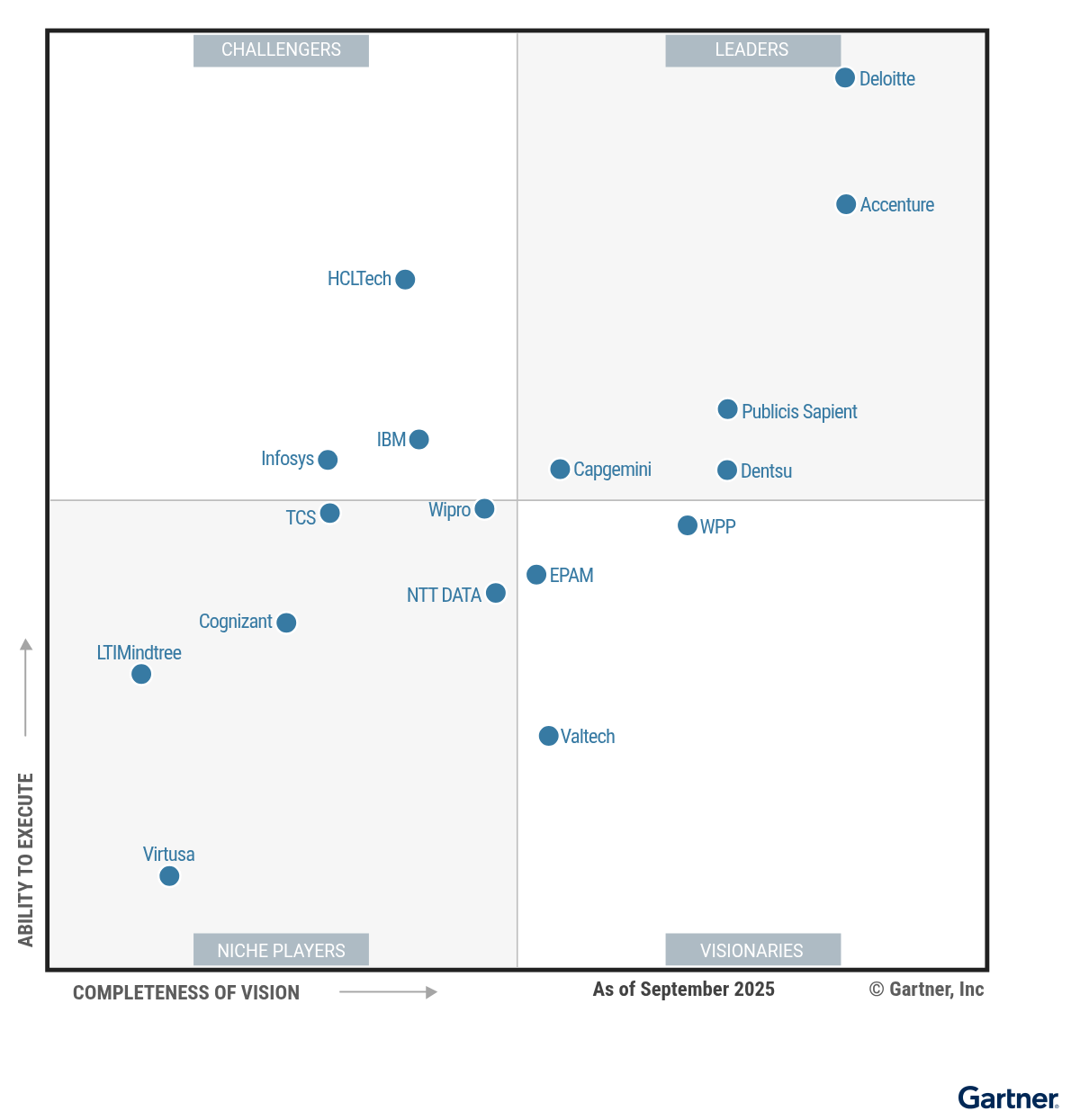
Digital experience service providers implement DX technology platforms to design, build, and enhance user experiences for both internal and external stakeholders. This Magic Quadrant assesses 17 providers with capabilities in delivering end-to-end DX services for organizations’ advisory, implementation, and continuous optimization needs.
Market Definition/Description
Gartner defines digital experience (DX) services as those services that design, deliver and optimize digital experiences across customer, employee and citizen journeys using technology solutions. The services involve design, solution implementation, content management services, marketing services and ongoing operations. The digital experience solution is delivered through a combination of technologies and services working together to deliver the desired experience outcomes.
Digital experience services are focused on creating the optimal user experience, to better sell to, market to, inform and manage the target user (customer, partner, citizen or employee). The services include advisory on what the experience should be, implementation services to create the experience, and operational services to evolve and manage the ongoing experience. These services are not just technical services, but also include creative, content and marketing operations, historically served by digital marketing agencies but now offered by a range of providers, including consulting firms, systems integrators (SIs) and agencies.
Buyers of digital experience services will engage with service providers for one or more of the following use cases.
- Experience design: This use case supports the buying organization in defining their brand, product and service experience strategy, marketing strategy, content strategy, customer growth strategy, new product/service launch, technology strategy, and their information and service architectures.
- Experience solution implementation: This use case supports the client organization in implementing, migrating, composing, creating and developing digital experience solutions using a platform or a combination of products.
- Experience solution operation and evolution: This use case includes services that are focused on keeping the already-implemented experience solution current through technical evolution services, ongoing content and creative services, and marketing services.
- Content and creative services: This use case supports the creation and management of digital experiences for the purpose of collaboration, communication, commerce and marketing.
- Marketing services: This use case supports the digital marketing and advertising operations of client products and services.
Mandatory Features
The mandatory features for this market include:
- Digital transformation consulting: The provider’s ability to understand the client’s experience transformation needs and priorities, and to articulate their desired experience and business outcomes. Some of the core capabilities include expertise in: design; brand, product and services strategy; technology roadmap creation; and platform/product selection (if able to be technology-independent).
- Technology platform implementation: The provider’s ability to compose a digital experience solution using best-of-breed platforms and products, and/or build integrations or custom solutions.
- Experience evolution: The provider’s ability to deliver evolution and support services that not only keep the overall digital experience solution (technology and creative and marketing services) current, but also keep pace with changing business demand. In digital experience, the implementation never ends.
- Content creation and management expertise: The provider’s ability to support clients with creation and management of digital content.
- Marketing execution expertise: The provider’s ability to run marketing operations and execute marketing campaigns.
Optional Features
The optional features for this market include:
- Ecosystem orchestration: The service provider’s ability to engage an ecosystem of software/platform vendors and other service providers. This enables the provider to prioritize their clients’ use cases with software and platform vendors, drive co-investments and co-create solutions with other service providers.
- AI & generative AI (GenAI) capabilities: The provider’s ability to embed AI technologies (including GenAI) as part of a digital experience service. For example, digital experience services could involve realizing AI capabilities offered by the platform, building AI-based extensions and customizations, or leveraging GenAI for content generation and campaign automation.
- Business outcome commitment: The service provider’s ability to offer business-outcome-based engagement models. In such models, a percentage of the deal revenue is contingent upon achieving the client’s business objectives.
- Customer insight analytics: The ability of the service provider to adopt a data-driven approach for advisory, design, creative and content, and digital marketing services.
- Industry expertise: The provider’s ability to understand the client’s business issues and operations specific to the client’s industry, and to articulate desired business outcomes. An understanding of the client’s particular industry is important in ensuring that the content and creative services, as well as the marketing services, are contextual and incorporate industry best practices.
- Functional expertise: The ability of the service provider to give advice and guidance related to the marketing, sales and digital commerce functions. It will require deep knowledge of digital experience practices across functional areas in a wide range of industries.
Magic Quadrant
Vendor Strengths and Cautions
Accenture
Accenture is a Leader in this Magic Quadrant, recognized for its full-service provider capabilities and extra-large DX services practice. Headquartered in Dublin, Ireland, Accenture reported DX services revenue growth of 9.5% from 2023 through 2024, with 81% of revenue from existing clients and 19% from new business.
The provider’s revenue sources are geographically diverse: 48% from North America, 34% from EMEA, 15% from APAC, and 3% from LATAM. The top three industries for which Accenture provides DX services are: banking and financial services; communications and media; and automotive.
- End-to-end DX services: Accenture Song, one of the largest tech-powered creative groups, offers a wide spectrum of DX services, from design to implementation. It includes a broad portfolio across design, digital products, marketing, sales, and service, as well as a customer growth strategy. With AI tools such as SynOps, Accenture Song also helps clients automate tasks, standardize customer-facing processes, and drive increased cross-team collaboration.
- Global reach: With offices and teams on every continent, Accenture offers extensive reach and cultural insight, balancing global consistency with local nuances in 120 countries and among 121,270 DX services practitioners. Accenture uses a global creative production network of 24 studios and production hubs, with over 2,000 creative professionals and 27,000 DX technology implementation professionals.
- Intellectual property and research and development: Accenture invests in developing intellectual property (IP) across its DX offerings, backed by $1.2 billion in research and development (R&D) in 2024. It holds 1,450 patents and patents pending worldwide. This substantial IP portfolio underpins Accenture’s ability to deliver differentiated solutions, accelerate innovation, and drive competitive advantage.
- SMB relevance: Accenture has focused on serving larger clients with transformative needs, and this is true for the DX services space. While the company has developed a midmarket strategy, it only piloted this approach in 2025 and is scaling it in 2026, making it a newer area of focus. This may only be of limited relevance to small and midsize businesses (SMBs).
- Structure and integration: Accenture’s introduction of Reinvention Services could add a layer of complexity, potentially diluting its creative identity and making it harder for clients to understand its unique value proposition. Clients engaging with Accenture Song should seek clarity on the integration roadmap and the delineation of service offerings within Accenture’s broader Reinvention Services portfolio.
- Team expertise: Sixty-eight percent of Accenture’s full-time employees have less than five years’ experience. SMB clients seeking one-off services may find it challenging to negotiate competitive outcomes and may not get the most experienced team members on small engagements. They should therefore clarify expectations during contract negotiations.
Capgemini
Capgemini is a Leader in this Magic Quadrant, recognized for its technology provider capabilities and large DX services practice. Headquartered in Paris, France, Capgemini reported DX services revenue growth of less than 1% from 2023 through 2024, with 95% of revenue from existing clients and 5% from new business.
The provider’s revenue sources are geographically diverse: 31% from North America, 60% from EMEA, 7% from APAC, and 2% from LATAM. The top three industries for which Capgemini provides DX services are: government; communication, media and services; and banking and financial services.
- DX platform implementation: Capgemini demonstrates strong capacity and capability in platforms such as SAP, Adobe, Shopify, Salesforce, Optimizely, Oracle, and Sitecore, evidenced by a high certification density among its workforce. It reported 97% of its Salesforce full-time employees as certified, a high proportion compared with competitors.
- Industry specialization: Capgemini possesses deep, hands-on experience across various industries, supported by dedicated leaders aligned with its industry teams. It co-develops with key solution platform vendors such as Salesforce and Microsoft to create unique industry capabilities and generative AI (GenAI) visions. Its strategic work supports complex transitions in life sciences and consumer goods.
- Design studio expertise: Capgemini has consolidated its agency and design studio capabilities under Capgemini Invent, with frog providing core capabilities in advising clients on business, brand, and experience transformation. frog, leading the creative consultancy arm of Capgemini Invent, operates 35 on-site creative studios worldwide, fostering collaborative idea generation with clients.
- SMB relevance: Capgemini is typically less interested in commodity or highly specialized resource augmentation, preferring engagements that involve end-to-end global transformations or advisory, consulting, and DX design services. Small and midsize business (SMB) clients should clearly articulate their long-term goals to ensure alignment and maximize value.
- Europe market focus: Europe remains Capgemini’s most successful market for DX services. In 2024, 8% of its DX services resources were located in North America, 4% in LATAM, and only 1% in the Middle East and Africa. Clients outside of Europe should validate Capgemini’s resourcing capabilities to mitigate project risks.
- DX services growth: Capgemini had less than 1% year-over-year DX services growth in 2024, which is below the average of 6% for other vendors in this research. Clients engaging for an ongoing optimization partnership should seek assurances regarding future investments in innovation and establish performance benchmarks via effective vendor governance frameworks.
Cognizant
Cognizant is a Niche Player in this Magic Quadrant, recognized for its full-service provider capabilities and large DX services practice. Headquartered in Teaneck, New Jersey, U.S., Cognizant reported 9.7% DX services revenue growth from 2023 through 2024, with 95% of revenue from existing clients and 5% from new business.
The provider’s revenue sources are geographically diverse, with 69% from North America, 26% from EMEA, and 5% from APAC. The top three industries for which Cognizant provides DX services are: healthcare and life sciences; banking and financial services; and manufacturing and natural resources.
- Service portfolio: Cognizant has strengthened its DX services through targeted acquisitions. These include: Thirdera, an Elite ServiceNow partner that enhances advisory and implementation solutions; and Mobica, which adds expertise in embedded software engineering crucial for DX solutions in the technology and automotive industries. Once integrated, these strategic acquisitions will deepen and broaden Cognizant’s comprehensive service offerings.
- Outcome-based engagement: Cognizant is increasingly adopting outcome-based engagement models, willing to tie a percentage of its fees to clients’ achievement of business objectives. Clients can leverage these models to share risk and drive value from engagements, with measurable results such as revenue uplift and improved conversion rates.
- Global delivery scale: Cognizant offers a vast global talent pool of over 6,200 design thinking experts, more than 15,000 AI engineers, and over 9,000 Salesforce associates. It also has a three-shore delivery model (on-site, nearshore, offshore). It offers support for complex global transformations through specialized studios and delivery centers. Clients with large-scale needs may benefit from flexible, cross-functional innovation and rapid execution.
- Engagement scope: Cognizant is not an ideal fit for certain market segments and engagement types, including some stand-alone technology implementations, transactional staffing, U.S. government work, small businesses, and projects focused on cost extraction. Clients should confirm alignment with the provider’s preference for end-to-end, growth-focused partnerships.
- Strategic and creative expertise: Cognizant Moment’s capabilities in complex marketing and branding operations are less developed than some competitors. Clients seeking advanced agency-level expertise in these areas should validate capabilities and seek relevant references.
- Certification density: Despite large platform teams, Cognizant’s proportion of certified professionals for Adobe and Salesforce is lower than that of some competitors. For instance, 49% of Cognizant’s professionals are certified for Adobe and 94% for Salesforce, compared with some competitors in this Magic Quadrant that achieve 65% and 97%, respectively. Clients should assess team certifications to ensure required expertise availability for critical technologies.
Deloitte
Deloitte is a Leader in this Magic Quadrant, recognized for its full-service provider capabilities and extra-large DX services practice. Headquartered in London, U.K., Gartner estimates that Deloitte’s DX services grew by an estimated 13% from 2023 through 2024, with approximately 80% to 85% of revenue from existing clients and 15% to 20% from new business.
Deloitte’s DX services revenue breakdown in rank order is North America, EMEA, APAC, and LATAM. The top three industries for which Deloitte provides DX services are: government; life sciences and healthcare; and technology/media.
- Industry-specific solutions: Deloitte leverages deep industry experience across diverse sectors. Its IndustryAdvantage approach brings industry-specific experience to engagements. Along with assets such as GovConnect for government and public services, and InvestAcceleration for financial services industries, investments per vertical demonstrate results in fan acquisition, revenue growth, and value generation, delivering measurable business outcomes in complex industries.
- Global integrated delivery: Deloitte provides comprehensive DX services globally through its Advise, Implement, and Operate (A-I-O) offerings, a holistic approach for complex, multiregional transformations, and simplifying vendor management. Its integrated service model helps streamline digital transformation initiatives for clients with global or multiregional needs.
- AI-driven innovation: Deloitte strategically invests in AI-powered IP — for instance, Converge by Deloitte and CreativEdge for content production and media/campaign management. These tools for creative business transformation blend advanced technologies and creativity to address core business challenges, providing forward-thinking, agentic marketing and customer engagement strategies.
- LATAM geographic strategy: While globally present, Deloitte’s geographic strategy shows a limited presence in LATAM compared with the cohort average; however, it is currently investing for growth in the region. Clients with significant business or expansion plans in Latin America should carefully inquire about Deloitte’s localized support and market penetration to ensure adequate support for regional initiatives.
- Low awareness of experience evolution and outcome commitment: While Deloitte has the ability to deliver measurable business outcomes, this is not always apparent to clients. Clients partnering for ongoing optimization may require more explicit demonstrations of continuous innovation and concrete outcome-based results to meet their expectations.
- Lower interest in isolated DX projects: With its strategic focus on end-to-end DX delivery and long-term experience evolution, Deloitte may not be the best fit for clients seeking pureplay outsourcing of specific DX products or point solution implementation projects.
Dentsu
Dentsu, parent company of Merkle, is a Leader in this Magic Quadrant, recognized for its agency provider capabilities and large DX services practice. Headquartered in Tokyo, Japan, Dentsu reported DX services revenue growth of just under 2% from 2023 through 2024, with 65% of revenue from existing clients and 35% from new business.
The provider’s revenue sources are geographically diverse, with 41% from North America, 26% from EMEA, 31% from APAC, and 2% from LATAM. The top three industries for which Dentsu provides DX services are: communications and media; manufacturing and natural resources; and retail.
- End-to-end transformation: Dentsu offers extensive transformation services through Merkle, its global consultancy for DX. It includes a comprehensive suite of capabilities, spanning experience design, solution implementation, managed operations, and loyalty programs, enabling significant business outcomes such as increased revenue and efficiency.
- Marketing and creative expertise: Dentsu demonstrates robust marketing and creative expertise, evidenced by its numerous industry awards and investments in ventures like Adobe GenStudio dentsu+. These initiatives enhance its ability to deliver dynamic content optimization, scaled content production, and AI-accelerated creative services.
- Advanced data analytics: Dentsu’s proprietary Merkury identity platform provides advanced insight analytics, serving as a transparent and advanced customer data repository for identity resolution and personalization. Supported by over 3,000 data scientists and analysts, Merkury drives informed decision making and optimizes global e-commerce revenue for leading brands.
- Technical depth: Dentsu’s proposals may lack detailed communication addressing technical capabilities, which may require clients to seek further clarification on specific technical expertise, such as Shopify implementation or detailed platform certifications. This can be a concern for organizations seeking comprehensive technical guidance in digital transformation projects.
- Market scale: Dentsu is still developing scale in certain high-growth and high-potential markets — for example, LATAM, Eastern Europe, and the Middle East and Africa. Its presence in these areas may not yet fully capture emerging market opportunities. Clients with expansion plans in these regions should carefully assess Dentsu’s local delivery capacity and market experience.
- Japan visibility focus: Outside of Japan, the Dentsu brand is not consistently associated with broad business consulting or digital transformation. It is primarily recognized for its experience and marketing-led services. Clients seeking comprehensive, IT-led business transformation may perceive this as a narrower focus compared with traditional system integrators.
EPAM
EPAM is a Visionary in this Magic Quadrant, recognized for its technology provider capabilities with a medium-sized DX services practice. Headquartered in Newtown, Pennsylvania, U.S., EPAM reported 3% growth year-over-year in DX services revenue from 2023 through 2024, with 90% of revenue from existing clients and 10% from new business.
The provider’s revenue sources are geographically diverse, with 58% from North America, 40% from EMEA, 2% from APAC. The top three industries for which EPAM provides DX services are: education; banking and financial services; and healthcare and life sciences.
- End-to-end integration: EPAM’s integrated approach combines technology and business for DX transformation, executing AI-native, end-to-end solutions that drive measurable business outcomes. Empathy Lab — an AI-native agency — blends technology with human-centered creativity, integrating experience strategy, design, and engineering into a continuous value stream. This ensures EPAM connects brands with customers.
- Capability expansion: EPAM demonstrates increasing capabilities and strong market commitment, fueled by strategic investment, including 11,300 DX full-time employees (FTEs) and $1,450 million DX services revenue in 2024. Along with the launch of Empathy Lab, it is developing proprietary IP — such as Humanique and AI-driven Media Planner Assistant — to enhance delivery and quality and to scale experience-led transformations.
- Proprietary frameworks and accelerators: EPAM leverages proprietary frameworks like Humanique and DIAL 3.0, alongside accelerators such as B2B eCommerce Booster. These tools operationalize AI and data, significantly reducing time to value in DX initiatives and enhancing delivery efficiencies.
- Resource concentration: EPAM’s operational model relies heavily on Eastern European resources, with 45% of DX FTEs based in this region as of 2025. This geographic concentration may pose risks related to geopolitical stability or lead to talent limitations. Clients should evaluate if this aligns with their operational, risk, and delivery requirements and global needs.
- Delivery approach: EPAM’s outcome-based DX services revenue was only 5% of total DX services revenue in 2024, below the 12% peer average, with a continued preference for time and materials contracts. Clients seeking measurable business outcomes should evaluate EPAM’s contractual models and mechanisms for outcome commitment.
- Creative and marketing scale: EPAM allocates only 1% of DX FTEs to creative services and 2% to marketing, well below market averages. This may limit large-scale creative content and campaign execution. Clients with advanced creative or marketing needs, such as multinational organizations, should validate EPAM’s staffing and delivery capacity for these services.
HCLTech
HCLTech is a Challenger in this Magic Quadrant, recognized for its full-service provider capabilities and DX services practice. Headquartered in Noida, India, HCLTech reported DX services revenue growth of 11% from 2023 through 2024, with 88% of its revenue from existing clients and 12% from new business.
The provider’s revenue sources are geographically diverse: 54% from North America, 35% from EMEA, 10% from APAC, and 1% from LATAM. The top three industries for which HCLTech provides DX services are: banking and financial services; insurance; and healthcare and life sciences.
- DX services growth: HCLTech’s DX services make up 15% of its total revenue and have grown by an impressive 11% year-over-year — outpacing the average DX services revenue growth of 6%. This highlights HCLTech’s growing market presence and ongoing investment in DX solutions. For clients, it means access to a wider range of enhanced offerings and deep expertise.
- Predictive support solutions: HCLTech’s ASM 2.0 framework for application support emphasizes experience-level agreement (XLA)-driven business outcomes over traditional service-level agreements (SLAs), integrating AI, DevSecOps, and BizDevOps for predictive and self-healing capabilities. This translates into results such as increased feature throughput, assured compliance, and improved customer satisfaction, impacting key business indicators like revenue and customer retention.
- Platform investment: HCLTech’s extensive platform investments and use of reusable APIs enable seamless integration with major ecosystems (such as Adobe, Salesforce, SAP, Microsoft, and Oracle), partners (like Contentful, OpenAI, and Optimizely), and leading cloud providers (including AWS, Google Cloud, and Microsoft Azure). This accelerates time to market for digital solutions and underscores HCLTech’s commitment to delivering exceptional experience solution implementations, which account for 40% of its DX services revenue.
- Talent distribution: HCLTech’s DX services talent is concentrated in the APAC region, accounting for 56% of its total DX full-time employees (FTEs). This is above the average of 32% for other vendors in this Magic Quadrant. This may present challenges for clients prioritizing nearshore or onshore delivery in other key regions, such as North America or Western Europe, where HCLTech has a lower proportion of DX FTEs.
- Client acquisition: While HCLTech has a strong base of existing clients, it has a low new client acquisition rate compared with peers in this Magic Quadrant. This could indicate a limited market appeal or reduced ability to resonate with companies seeking new or different DX solutions.
- Strategic advisory capabilities: HCLTech’s capabilities in brand and experience transformation advisory are still developing, which may not fully meet the needs of clients primarily seeking high-level strategic guidance on brand identity or overarching experience strategy.
IBM
IBM is a Challenger in this Magic Quadrant, recognized for its technology provider capabilities and extra-large DX services practice. Headquartered in Armonk, New York, U.S., IBM reported DX services revenue growth as flat from 2023 through 2024, with Gartner estimates of 90% revenue from existing clients and 10% from new business.
The provider’s revenue sources are geographically diverse, with Gartner estimates of 50% from North America, 30% from EMEA, 15% from APAC, and 5% from LATAM. The top three industries for which IBM provides DX services are: banking and financial services; insurance; and manufacturing and natural resources.
- Implementation and orchestration: IBM has strong capabilities in experience implementation and orchestration, particularly in aggregating enterprise solutions like SAP to deliver cohesive digital experiences. Clients may benefit from its multiple platform partnerships with hyperscalers such as Google and AWS, and its ability to integrate multiple technologies.
- Experience design framework: IBM offers a consolidated framework that includes the Golden Thread, Service Design Roadmap, Value Orchestration, and Experience Blueprint. This aligns strategy with execution, integrates personas, harmonizes technologies, and leverages data for user-centric outcomes.
- AI integration and watsonx: IBM differentiates by integrating proprietary AI — such as watsonx — with partner products, applying decades of expertise in cognitive computing. Solutions such as AskIBM and IBM Garage streamline processes and drive transformation. IBM offers clients value-focused AI adoption and advanced automation capabilities.
- Marketing services scope: IBM’s digital marketing capabilities do not cover traditional, above-the-line advertising campaigns, media planning and buying services, public relations, or trade marketing. Clients seeking a full suite of traditional marketing agency functions will likely receive additional specific services from IBM’s ecosystem partners.
- Smaller project suitability: IBM primarily targets large enterprises with asset-driven models that may not align with smaller, one-off DX projects. Clients with limited project scope should determine whether IBM’s approach matches their needs, as its methodologies, pricing, and resource allocation are often optimized for more complex, long-term engagements.
- DX marketing headcount: Gartner estimates that IBM’s DX services marketing unit comprises a noticeably smaller percentage of total dedicated full-time employees at 4%, compared with the cohort average of 10%. This limited headcount may raise questions about its capacity to scale for complex DX marketing projects, though IBM has been developing GenAI and digital labor delivery practices throughout the year, which may be reflected in future research.
Infosys
Infosys is a Challenger in this Magic Quadrant, recognized for its technology provider capabilities and extra-large DX services practice. Headquartered in Bengaluru, India, Infosys reported DX services revenue growth of 13% from 2023 through 2024, with 91% of revenue from existing clients and 9% from new business.
The provider’s revenue sources are geographically diverse: 66% from North America, 18% from EMEA, 12% from APAC, and 4% from LATAM. The top three industries for which Infosys provides DX services are: communications and media; banking and financial services; and healthcare and life sciences.
- End-to-end DX services offerings: Infosys provides a spectrum of DX services, including experience design, solution implementation, solution operations, creative services, and marketing services globally. Infosys Aster, the AI-amplified marketing suite, enables full-stack marketing transformation across customer experience (CX), data, content, technology, and performance, guiding clients through multiyear transformation journeys.
- Creative and technology capabilities: Infosys provides a wide range of DX services and large-scale transformations for private and public sector clients, from creative services delivered by WongDoody, to tech services for large global BFSIs and telecommunications organizations. Since 2020, all digital agency capabilities within Infosys have been merged under the single WongDoody brand, operating globally with approximately 2,000 people across 22 studios.
- Ecosystem partnerships: Infosys maintains strategic alliances with platforms such as Adobe, Sitecore, and Microsoft Dynamics 365, enabling end-to-end experience solutions that integrate marketing, commerce, and customer data. Infosys and Adobe have partnered to co-develop AI-driven solutions and execute joint go-to-market strategies.
- Delivery integration: Infosys’ acquisitions continue, with some not yet fully integrated into its DX delivery model, which can create a fragmented and inconsistent client experience. Of Infosys’ 323,788 full-time employees (FTEs), 2,000 are dedicated to creative and marketing DX services. Clients requiring longer-term, consistent expertise in complex creative and marketing campaigns should confirm key resources during contract execution.
- Offshore delivery reliance: Infosys’ delivery model relies on offshore resources, accounting for 55% to 65% of FTEs, depending on the use case. Clients with requirements for onshore presence or regulatory compliance should assess Infosys’ ability to customize delivery models and ensure operational alignment.
- North America client concentration: Approximately 61% of Infosys’ clients are in North America, limiting its ability to rapidly scale its DX services portfolio in emerging markets like LATAM or the Middle East and Africa. Clients with global or emerging market operations should evaluate the provider’s regional delivery capabilities and request tailored engagement models to mitigate potential service disruptions or limitations.
LTIMindtree
LTIMindtree is a Niche Player in this Magic Quadrant, recognized for its technology provider capabilities and large DX services practice. Headquartered in Mumbai, India, LTIMindtree reported DX services revenue growth of 5% from 2023 through 2024, with 82% of revenue from existing clients and 18% from new business.
The provider’s revenue sources are geographically diverse, with 72% from North America, 23% from EMEA, 4% from APAC, and 1% from LATAM. The top three industries for which LTIMindtree provides DX services are: banking and financial services; insurance; and retail.
- Midsize focus: LTIMindtree is notably well-suited for midsize clients. It combines a large DX services practice with an AI-led, experience-first approach to deliver personalized and impactful solutions. Midsize clients may benefit from tailored engagement models and scalable digital transformation support.
- Incumbent client base: LTIMindtree derives 82% of its DX services revenue from existing clients, enabling effective cross-selling and expansion within sectors such as banking and financial services, insurance, retail, high-tech, and manufacturing. Clients can leverage LTIMindtree’s sector knowledge and established relationships for integrated DX growth.
- Platform implementation expertise: LTIMindtree dedicates 57% of its DX full-time employees (16,947 resources) to solution implementation, supported by significant certified talent, including 4,135 Salesforce and 422 Oracle professionals. Clients with complex technical needs benefit from proven expertise in large-scale DX platform deployments.
- Technical orientation: LTIMindtree often emphasizes technology-enabled, AI-led, experience-first solutions for platform builds and process reengineering, rather than the traditional agency approach of customer-centric design and persona mapping. This may limit creative innovation and proactive process refinement. Clients seeking strong design thinking or innovation should clarify expectations for customer-centric approaches.
- Creative and marketing innovation: LTIMindtree’s solutions are typically aligned with client requests, with limited proactive creative and marketing innovation. The provider allocates only 1% of its resources to creative services and 10% to marketing services. Clients prioritizing nontechnology-led content strategy or campaign strategy and design should assess LTIMindtree’s ability in this space.
- Geographic workforce revenue: While LTIMindtree has a global presence with multiple onshore and nearshore delivery centers (78 offices and 25 delivery centers in the Americas and Europe), 74% of its DX services workforce is concentrated in APAC, while 95% of its revenue originates from North America and Europe. Clients seeking local or same-time-zone resources for collaborative engagements should assess this capability prior to starting engagements.
NTT DATA
NTT DATA is a Niche Player in this Magic Quadrant, recognized for its technology provider capabilities and medium-sized DX services practice. Headquartered in Tokyo, Japan, NTT DATA reported DX services revenue growth as flat from 2023 through 2024, with 80% of revenue from existing clients and 20% from new business.
The provider’s revenue sources are geographically diverse, with 32% from North America, 23% from EMEA, 33% from APAC, and 12% from LATAM. The top three industries for which NTT Data provides DX services are: retail; banking and financial services; and government.
- End-to-end capability: NTT DATA offers a comprehensive, end-to-end portfolio for DX services, spanning strategy, creativity, design, implementation, and operations. Its Syntphony asset platform and engineering expertise facilitate rapid, composable DX solutions, transforming customer operations across the full spectrum of digital interactions, from front end to back end.
- APAC market capability: NTT DATA demonstrates robust capabilities and market understanding in the APAC region. With 2,775 DX full-time employees and between 13% and 18% of its DX services revenue derived from APAC, NTT DATA leverages strategic partnerships and IT expertise for demand chain transformation and scalable consulting, supporting global expansion in consumer-centric markets.
- Design and CX approach: NTT DATA employs a comprehensive, ethical, inclusive, and sustainable methodology for customer experience (CX) and design, guided by sustainability, inclusivity, ethics, and new tech. It equips professionals with the necessary skills to navigate complex modern challenges and deliver meaningful business concepts to clients.
- Tech-centric delivery: NTT DATA often exhibits an overly technical orientation, primarily concentrating on platform builds and process reengineering. This emphasis may limit proactive creative innovation and a holistic focus on the entire customer journey, sometimes overshadowing deeper customer-centric design and persona mapping in client engagements.
- Delivery model adaptation: NTT DATA is in an active phase of adapting its global delivery model, with ongoing efforts to streamline operations and optimize resource allocation. This large-scale organizational transformation may lead to temporary disruptions and inefficiencies during the transition to achieve peak operational efficiency.
- Brand visibility: A lack of widespread brand recognition challenges NTT DATA’s market presence, which may affect its ability to significantly influence the market and achieve greater mind share among potential clients. Clients should consider NTT DATA’s reputation and market influence when evaluating long-term partnership potential.
Publicis Sapient
Publicis Sapient is a Leader in this Magic Quadrant, recognized for its full-service provider capabilities and medium-sized DX services practice. Headquartered in Boston, Massachusetts, U.S., Publicis Sapient reported DX services revenue growth as flat from 2023 through 2024, with 70% of revenue from existing clients and 30% from new business.
The provider’s revenue sources are geographically diverse, with Gartner estimates of 40% from North America, 47% from EMEA, 10% from APAC, and 3% from LATAM. The top three industries for which Publicis Sapient provides DX services are: banking and financial services; communications and media; and transportation.
- Client engagement model: Publicis Sapient leverages the “Power of One” model as part of Publicis Groupe, integrating media, creative, and transformation services. This offers clients end-to-end solutions and total brand experiences across digital and traditional channels. It also drives sales with new “Power of One” clients who are already customers of other Publicis Groupe entities.
- Customer insights: Publicis Sapient utilizes proprietary data assets such as the Publicis ID, which reaches 91% of adults on the internet globally, to find and activate high-value growth audiences. It also uses AI-powered research synthesis and generative ideation to define new offerings and anticipate client needs. As a result, clients may benefit from richer audience insights and more effective, data-driven growth strategies.
- Outcome-based commercial models: Publicis Sapient is willing to participate in risk and upside sharing with clients, tying financial incentives — such as bonuses or penalties — to the achievement of specific project milestones or business metrics. This approach ensures that compensation is directly aligned with measurable results, sharing both risks and rewards for successful project delivery.
- SMB relevance: Publicis Sapient’s business model is primarily built to support medium-sized global organizations, with over 85% of its DX services clients having more than 10,000 employees. Small and midsize business (SMB) clients should clearly define their project scope, budget, and expectations upfront, and request a dedicated agency contact to ensure alignment and support.
- Regional delivery variability: Although Publicis Sapient’s delivery excellence is strong in North America, clients in other regions may experience inconsistencies in talent availability or delivery maturity. These clients should assess regional capabilities and establish specific delivery team details before engagement.
- Implementation and operations orientation: Compared with other providers in this research, a lower percentage of Publicis Sapient’s resources are dedicated to solution implementation and ongoing operations. Clients should evaluate the cost and support model for operational handoff to ensure long-term solution management and total cost of ownership sustainability.
TCS
Tata Consultancy Services (TCS) is a Niche Player in this Magic Quadrant, recognized for its full-service provider capabilities and large DX services practice. Headquartered in Mumbai, India, TCS reported DX services revenue growth of 5% from 2023 through 2024, with 95% of revenue from existing clients and 5% from new business.
The provider’s revenue sources are geographically diverse: 46% from North America, 35% from EMEA, 17% from APAC, and 2% from LATAM. The top three industries for which TCS provides DX services are: banking and financial services; retail; and healthcare and life sciences.
- Global reach: TCS’s global footprint in 46 countries supports a 35,000-person DX services practice that generates $3 billion in revenue, with North America and EMEA accounting for over 80% of that business. It has over 20 design studios and innovation labs and over 16,000 full-time employees (FTEs) in the APAC region. Clients may leverage this coverage and delivery capacity for seamless global projects.
- Technical delivery capabilities: TCS’s partnerships with Salesforce, Adobe, and SAP offer global scale for complex platform implementations. Its large pool of certified experts and numerous innovation labs ensure robust technical execution for large enterprises. Clients may benefit from reliable, enterprise-grade implementation and access to the latest platform advancements.
- Experienced workforce: A significant portion of TCS’s DX services workforce is experienced, with 65% of DX services FTEs having five or more years of experience in this market. This depth of expertise can contribute to higher-quality outcomes and smoother project execution. Thus, clients may gain from TCS’s ability to manage challenging DX engagements.
- Agency capabilities: TCS is less proactive in bringing groundbreaking creative and strategic ideas to engagements than some of its peers. Its DX technical implementation team accounts for 74% of its FTEs, while creative (4%) and marketing services (11%) represent smaller portions. Clients engaging TCS for experience optimization should validate its ability to innovate beyond predefined requirements.
- Offshore delivery: TCS’s delivery model relies significantly on offshore resources, which account for 70% to 85% of FTEs, depending on the use case. Clients of collaborative design and marketing engagements that require deep cultural context should validate the availability of experienced local, same-time-zone resources.
- Large enterprise focus: TCS’s operating model is geared toward large and extra-large enterprises. Ninety-five percent of its DX services revenue comes from clients with over 2,500 employees. Its revenue is concentrated in large-scale deals, with 70% derived from engagements valued at over $1 million. Smaller organizations or those with tactical, one-off projects may find it difficult to secure competitive pricing or access to top-tier talent.
Valtech
Valtech, a new entrant to this Magic Quadrant, is a Visionary, recognized for its full-service provider capabilities and small DX services practice. Headquartered in London, U.K., Valtech reported DX services revenue growth of 24.5% from 2023 through 2024, with 80% of revenue from existing clients and 20% from new business.
The provider’s revenue sources are geographically diverse: 33% from North America, 56% from EMEA, 6% from APAC, and 5% from LATAM. The top three industries for which Valtech provides DX services are: automotive; banking and financial services; and retail.
- AI-driven experience innovation: Valtech significantly invests in agentic AI and autonomous design, as shown by its proprietary Future Frame process and AI Concierge for Lexus Europe. These innovations deliver dynamic and personalized digital experiences, and clients can benefit from advanced AI capabilities that enable tailored, impactful customer interactions with Valtech One and Cre8 accelerators.
- Integrated service delivery: Valtech utilizes a “Smart Shoring” model and multidisciplinary teams to optimize talent. It also offers advanced content orchestration with multiple generative models, enhancing efficiency in content production and ensuring brand consistency. Clients can gain access to scalable delivery models and streamlined content management across regions.
- Client engagement: Valtech uses effective “partnership value” strategies and diverse pricing, including business-outcome models, as demonstrated by collaborations such as the U.K. government’s Blue Badge for disabled services. This approach drives measurable impact and fosters strong client relationships, as clients can benefit from these outcome-focused engagement approaches.
- Lower ratio of creative and marketing expertise: Valtech’s percentage of creative and marketing resources is roughly half that of the overall provider average in this research. Clients seeking large-scale, complex global marketing and campaign resources should validate that Valtech can effectively staff for their needs.
- DX services scale: Valtech’s DX services practice is small compared with many market leaders. This smaller scale might present challenges in resourcing large-scale, complex international DX engagements. Clients planning major global engagements should evaluate Valtech’s capacity for large-scale delivery.
- Workforce composition: Valtech reports that 86% of its company full-time employees are dedicated to DX services, indicating a highly specialized workforce. However, it is structured differently from many of its peers, which may affect service breadth and resource allocation. Clients should seek clarity on how this workforce composition may impact project delivery and support.
Virtusa
Virtusa, a new entrant to this Magic Quadrant, is a Niche Player, recognized for its technology provider capabilities and medium-sized DX services practice. Headquartered in Southborough, Massachusetts, U.S., Virtusa reported DX revenue growth of 5% from 2023 through 2024, with 82% of revenue from existing clients and 18% from new business.
The provider’s revenue sources are geographically diverse: 73% come from North America, 14% from EMEA, and 13% from APAC. The top three industries for which Virtusa provides DX services are: banking and financial services; healthcare and life sciences; and communications and media.
- Technical platform implementation: Virtusa offers robust technical platform implementation expertise, supported by over 5,000 full-time employees, more than 3,000 certifications across major platforms like Salesforce, Adobe, and SAP, and the addition of creative agency Factor Creative in 2023. This includes accelerating innovation and transforming customer experiences with complex integrations.
- Customer experience: Virtusa’s experience-led engineering approach prioritizes customer experience in technology stack design, delivering personalized digital experiences that drive measurable business outcomes and brand differentiation through strategic insight and user-centered design. These offerings can also lead to improved engagement.
- Outcomes-driven methodology: Virtusa drives outcome-driven value through its insights and optimization methodology, focusing on measurable client KPIs such as conversion, loyalty, and operational efficiency. Its engagement models aim for predictable results, reducing reliance on custom builds. With this approach, clients may gain greater transparency and consistency in project outcomes.
- Small enterprise relevance: Virtusa may not be the ideal fit for small enterprises, as offerings and engagement models may be less tailored or cost-effective for this scale. Clients in this category should evaluate whether Virtusa’s approach aligns with their needs and budget.
- Line-of-business expansion: Virtusa identifies expansion into domains like retail and consumer goods as a focus area, reflecting a need for improvement in these spaces. Clients in these specific sectors should evaluate Virtusa’s specialized industry expertise and past project credentials to ensure sufficient depth and experience.
- T&M contracts: Many recent Virtusa engagements have involved time and materials (T&M) and hybrid (T&M and fixed price) pricing models, which can introduce variability in project costs and outcomes. Clients prioritizing fixed-price or outcome-based contracts should ensure explicit agreements and clarify expectations before project initiation.
Wipro
Wipro is a Niche Player in this Magic Quadrant, recognized for its technology provider capabilities and very large DX services practice. Headquartered in Bengaluru, Karnataka, India, Wipro reported DX services revenue growth of 41.5% from 2023 through 2024, with 75% of revenue from existing clients and 25% from new business.
The provider’s revenue sources are geographically diverse: 49% from North America, 41% from EMEA, 9% from APAC, and 1% from LATAM. The top three industries for which Wipro provides DX services are: automotive; retail; and insurance.
- AI and generative AI (GenAI) investment: Wipro has invested over $1 billion in AI and GenAI initiatives, launching proprietary platforms such as WeGA Studio. Backed by over 620 AI and machine learning patents, Wipro’s agentic AI approach drives autonomous, context-aware digital experiences, enabling rapid and large language model (LLM) agnosticism, delivering clients tailored recommendations to optimize operations.
- Team expertise: Wipro has a very large DX services practice, with more than 65,000 full-time employees (FTEs) in 2024, offering notable capabilities in technical implementation. Wipro states that all professionals working across key platforms such as Salesforce, SAP, Oracle, and Adobe are certified on those platforms. This technical talent and extensive global network of 18+ design studios enable the delivery of complex DX engagements.
- Measurable business outcomes: Wipro delivers tangible business outcomes for its target large global enterprise clients, particularly for deals exceeding $5 million in scope. It has a high rate of repeat business and proven successes, such as 30% faster claims processing for large insurance companies through its AI-driven solutions.
- Creative services integration: The proportion of Wipro’s DX FTEs dedicated to creative services (6%) is below the market average of 9%. Clients looking for deep creative capabilities at a global scale should assess the provider’s capacity carefully and potentially work with an agency organization familiar with their industry.
- SMB relevance: Wipro explicitly defines its most suitable clients as large global enterprises with deal sizes exceeding $5 million. Conversely, it identifies small and midsize businesses (SMBs) as not suitable, indicating that this segment is not its primary focus or optimally served by its current DX offerings. SMB clients should consider whether Wipro’s offerings and engagement models align with their needs.
- Geographic footprint: Wipro’s DX FTE distribution shows a significant concentration in the APAC region, accounting for nearly 80% of its total DX FTEs, with less presence in North America, EMEA, and APAC. Clients with requirements for local delivery or innovation hubs should evaluate its regional capabilities and plans for geographic expansion.
WPP
WPP, parent company of VML, is a Visionary in this Magic Quadrant, recognized for its technology provider capabilities and large DX services practice. Headquartered in London, U.K., Gartner estimates that WPP’s DX services revenue grew by 3% from 2023 through 2024, with 70% coming from existing clients and 30% from new business.
The provider’s revenue sources are geographically diverse: 49% from North America, 41% from EMEA, 9% from APAC, and 1% from LATAM. The top three industries for which WPP provides DX services are: healthcare and life sciences; automotive; and retail.
- Marketing and creative expertise: WPP’s agency heritage positions it as a strong creative overall solution development partner for DX initiatives, combining trusted creative skills with growing technical capabilities. Clients may benefit from this integrated creative and technical support for comprehensive DX projects.
- End-to-end digital services: WPP delivers a full range of digital growth services through alliances with MACH Alliance, VTEX, Optimizely, and Braze, supported by agile, journey-driven development. Clients with ambitious growth goals and risk aversion can leverage WPP’s structured approach to align business KPIs and achieve safe, feasible transformation roadmaps.
- Shopify and SAP specialization: WPP has a global reach in terms of resources and capabilities. It has high-level expertise, with a market-leading number of certified professionals supporting global clients for Shopify (125) and SAP (650). This enables WPP to provide deep technical expertise to its clients using these platforms.
- Technology and IP-based: WPP’s resources dedicated to technology orchestration, ongoing evolution, and operational support are less extensive than competitors, highlighting an area for growth in complex DX initiatives. Efforts to deepen talent and intellectual property (IP) in these domains have not yet reached maturity. Clients with advanced technology needs should assess WPP’s capabilities for ongoing support and innovation.
- Technology concentration: WPP has more full-time employees (FTEs) dedicated to Adobe (58% of certified DX FTEs) than the total number of FTEs allocated to all other technologies combined. Clients requiring large-scale expertise in other platforms should confirm WPP’s ability to provide adequate resources for optimal solutions.
- T&M cost models: Sixty percent of WPP’s DX services contracts use time and materials (T&M) pricing, with less emphasis on outcome-based proposals. This approach can introduce variability in project costs and accountability for deliverables. Clients with clear milestones or outcome requirements may need to negotiate contract terms to ensure alignment with their objectives.
Vendors Added and Dropped
We review and adjust our inclusion criteria for Magic Quadrants as markets change. As a result of these adjustments, the mix of vendors in any Magic Quadrant may change over time. A vendor's appearance in a Magic Quadrant one year and not the next does not necessarily indicate that we have changed our opinion of that vendor. It may be a reflection of a change in the market and, therefore, changed evaluation criteria, or of a change of focus by that vendor.
Added
The following vendors were added to this Magic Quadrant:
- Valtech
- Virtusa
Dropped
No vendors were dropped from last year.
Inclusion and Exclusion Criteria
The following criteria represent the specific attributes that Gartner deems necessary for inclusion in this Magic Quadrant:
- A minimum revenue of USD $750 million for calendar year 2024 in digital experience (DX) services consulting, implementation and ongoing support service revenue, as defined in the Market Definition.
- This includes DX strategy consulting, solution design, DX implementation, and ongoing services and support for the DX ecosystem and managed services (marketing, design and content, and sales/lead generation).
- This specifically excludes revenue from software, DX software maintenance/support (licensing), and contact center infrastructure integration.
- At least 15% of the provider’s total revenue must have been realized through DX services during the measurement period or the provider’s fiscal year in review. For large vendors, if the analysts believe that the vendor will be of interest to clients and the minimum revenue criteria are met, this criterion may be reduced to 5%.
- A provider must have no more than 75% of this revenue generated from within a single region.
- Each provider must have clients headquartered in at least three of the five major regions — North America (NA), Latin America (LATAM), Europe, the Middle East, and Africa (MEA), Asia/Pacific (APAC).
- A provider must have capability across at least three of the five segments (experience design, experience solution implementation, experience solution operations, creative services, and marketing services).
- One of these segments must be either creative and/or marketing services, with those services amounting to at least 10% of the provider’s reported 2024 DX revenue.
- Provide design and delivery services within at least three of the following seven platforms: Adobe, Optimizely, Oracle, Salesforce, SAP, Shopify, Sitecore.
Honorable Mentions
Tech Mahindra: Tech Mahindra is a global consulting service and system integrator operating in more than 90 countries. The vendor offers a full spectrum of services in the DX space, including consulting, experience design, custom and product-based development, content creation, marketing operations, and support services. However, Tech Mahindra did not meet the DX services revenue cut-off criteria for inclusion in this research.
Evaluation Criteria
Ability to Execute
Product/Service
These are the capabilities, features, and overall quality of the core goods and services that compete in and/or serve the defined market. They include performance on critical capabilities, methodologies and processes, and tools and accelerators used to simplify and speed up implementations and evolution.
Overall Viability
This is the organization’s overall financial health, as well as the financial and practical success of the relevant business unit. This includes the likelihood that the organization can continue to offer and invest in the product, as well as the product’s position in the organization’s portfolio. It also includes year-over-year growth, market-specific revenue growth and retention, and strategic alignment of these services within the overall organization.
Sales Execution/Pricing
This is the organization’s capabilities in all presales activities and the structures that support these activities. It includes deal management, pricing and negotiation, presales support, and the overall effectiveness of the sales channel. It also includes pricing models and contract flexibility, analyst perception of value provided, and a focus on business outcome contracts and client success.
Market Responsiveness and Track Record
This is the ability to respond, change direction, be flexible, and achieve competitive success as opportunities develop, competitors act, customer needs evolve, and market dynamics change. It includes the provider’s history of responsiveness to changing market demands. It also includes mechanisms for monitoring and responding to customer needs, examples of delivery against business outcomes, and analyst perceptions of roadmap promises being met.
Marketing Execution
This is the ability to deliver clear, high-quality, creative, and effective messaging via publicity, promotional activity, thought leadership, social media, referrals, and sales activities. This includes the organization’s ability to influence the market, promote the brand, increase awareness of products, and establish a positive reputation among customers. It also includes brand name recognition and customer familiarity with the vendor, tailoring of marketing messages by industry, enterprise, and geography, and leadership and vision demonstrated in publicity.
Customer Experience
This is the degree to which a vendor’s products, services, and programs enable customers to achieve their desired results. It includes the quality of supplier and buyer interactions, technical support or account support, as well as ancillary tools, customer support programs, availability of user groups, and service-level agreements. It also includes overall customer satisfaction with the provider’s capabilities and delivery, customer and employee retention, and reference feedback.
Operations
This is the ability of the organization to meet its goals and commitments. This includes the quality of its organizational structure, skills, experiences, programs, and systems that enable the organization to operate effectively and efficiently. It also includes global and regional delivery capabilities, effective resource management that provides high-quality skills when needed, ethics and transparency mandates and standards, and continuity of staff, attrition, and certification rates.
Ability to Execute Evaluation Criteria
| Evaluation Criteria | Weighting |
|---|---|
Product or Service | High |
Overall Viability | Low |
Sales Execution/Pricing | Medium |
Market Responsiveness/Record | Medium |
Marketing Execution | Medium |
Customer Experience | High |
Operations | High |
Source: Gartner (October 2025)
Completeness of Vision
Market Understanding
This is the ability to understand customer needs and translate that understanding into products and services. Vendors with a clear vision of the market listen to and understand customer demands, and can shape or enhance market changes with their vision. This includes vision and strategic focus, competitive differentiators, intellectual property (IP) investments, and knowledge of digital experience trends.
Marketing Strategy
This is the ability to clearly communicate differentiated messaging, both internally and externally, through social media, advertising, customer programs, and positioning statements. It includes the go-to-market approach, market visibility, and reference responses.
Sales Strategy
This is the ability to create a sound selling strategy that uses the appropriate networks, including direct and indirect sales, marketing, service, and communication. It includes partnerships that extend the scope and depth of a provider’s market reach, expertise, technologies, services, and customer base. It also includes customer acquisition strategy effectiveness, incentive plans for existing clients, and reference response information.
Offering (Product) Strategy
This is the ability to approach product development and delivery in a way that meets current and future requirements, with an emphasis on market differentiation, functionality, methodology, and features. It includes product portfolio breadth and depth, investment levels in critical capabilities, new delivery models, and proprietary IP that delivers value in this market.
Business Model
This is the design, logic, and execution of the organization’s business proposition. It includes the significance and alignment of the Magic Quadrant market to the overall business, establishment and support of long-term customer relationships, sustainability, and willingness to implement different commercial models.
Vertical/Industry Strategy
This is the ability to strategically direct resources (sales, product, development), skills, and products to meet the specific needs of verticals and market segments. It includes clear and consistent vertical focus, vertical and industry-specific investment, and industry knowledge.
Innovation
This is the marshaling of resources, expertise, or capital for competitive advantage, investment, consolidation, or defense against acquisition. It includes proprietary innovation platforms, commitment to innovation, use of AI and automation, and innovation use cases.
Geographic Strategy
This is the ability to direct resources, skills, and offerings to meet the specific needs of regions outside the providers’ home region, either directly or through partners, channels, and subsidiaries. It includes a clear and consistent region focus, region-specific partnerships and ecosystems, and widespread availability of in-country resources for functional work.
Completeness of Vision Evaluation Criteria
| Evaluation Criteria | Weighting |
|---|---|
Market Understanding | High |
Marketing Strategy | Low |
Sales Strategy | Low |
Offering (Product) Strategy | High |
Business Model | Medium |
Vertical/Industry Strategy | Medium |
Innovation | High |
Geographic Strategy | Medium |
Source: Gartner (October 2025)
Quadrant Descriptions
Leaders
Leaders are performing well in all aspects of DX services — from DX design and platform implementation, to content creation and marketing. They are gaining traction in agency and technical services, as well as increasing awareness and mind share. Leaders have a clear vision of market evolution and are actively building competencies and assets to sustain their leadership position in this market.
Challengers
Challengers are currently executing well in their chosen disciplines and segments of work. However, they have a less well-defined or comprehensive understanding of the market’s evolution compared with Leaders. Consequently, Challengers may be positioned to push into a Leader spot in the future or may lack the decisiveness and confidence needed to invest strategically in preparation for future market direction.
Visionaries
Visionaries articulate important trends, direction, and potential evolutionary aspects of this market. However, they have not yet demonstrated a position to fully deliver and consistently execute on that vision at scale and with increasing DX expectations. Visionaries need to improve their experience and agency service delivery, or increase their Ability to Execute from a wider set of technologies and platforms.
Niche Players
Niche Players focus on particular segments of this market, mainly technology platforms, client size, and geography. They may also target specific personas such as consumer, employee, citizen, or student. Their Ability to Execute is limited to those areas of focus. Niche Players’ ability to evolve a comprehensive market vision may be affected by selective focus or investment priorities in other areas. However, many of the providers in this segment receive positive client feedback, and many can be considered leading players within their niche market focus.
Context
This Magic Quadrant addresses the digital experience service capabilities of 17 providers that meet Gartner’s inclusion criteria. It is a point-in-time analysis, with the status of all provider profiles reflected as of July 2025. Quantitative data was collected for a 12-month period ending 31 July 2025. As part of the research, the analyst team generated over 1,000 separate data points that collectively determined the placement of the dots on the Magic Quadrant graphic.
When considering DX services, clients are advised not to simply select service providers in the Leaders quadrant. A provider may appear in a particular quadrant based on Gartner’s extensive analysis across the full-service life cycle in many industries and other criteria. However, for any given deal, a client company’s selection criteria will be narrower and more specific to the scope of work or use case they wish to engage the provider to deliver. Consequently, providers in the Challengers, Visionaries, or Niche Players quadrants may prove to be more appropriate for the engagement.
Critical Capabilities for Digital Experience Services provides a more detailed analysis of the service providers’ capabilities, with scoring based on different use cases.
Additionally, because the inclusion criteria in the Magic Quadrant result in the analysis of a subset of providers in the DX services market, clients should not disqualify any potential competitors simply because they do not appear in this research. Other IT service providers not evaluated in this Magic Quadrant may present better alternatives for your business requirements. Consider using a “sweet-spot” analysis to ensure you have the optimal basis and evaluation criteria for selecting the most suitable providers. A Gartner analyst can help with a shortlist of the most suitable candidates based on client requirements.
Market Overview
Digital experience (DX) services help businesses remain competitive by focusing on creating engaging and seamless experiences for their customers, employees, or citizens. Positive digital experiences for both internal and external users build stronger relationships, increase awareness and loyalty, and drive growth.
Vendors in this market provide advisory, design, implementation, and operational services. These services focus on creating optimal user experiences by designing and evolving digital experiences. They also include technical services and, more importantly, creative, content, and marketing operations.
Based on estimates from the 17 service providers in this Magic Quadrant, they collectively received $90 billion in revenue for their DX services engagements in 2024. Overall, these 17 providers posted total revenue of just under $378 billion for the same period, with an average of 34% focused on the DX market. Note that this market is currently undergoing significant change, as digital agencies, business consultancies and technology system integrators (SIs) are all looking to expand to provide a full service (technology, design, creative, and marketing) of DX services.
As the market evolves toward full-service providers, all the vendors are developing new capabilities to address their areas of weakness. The large agencies are adding technology capabilities, while the SIs are acquiring smaller digital agencies or recruiting design and creative staff. Across the 17 service providers evaluated, staff allocated to these services range from 5,600 to 150,000, with an average of 46,000.
Gartner has identified five use cases to cover the full range of services: design, solution implementation, solution operation, creative services, and marketing services. Each vendor type has strengths in different use cases. Among the over 780,000 full-time employees (FTEs) across the 17 vendors that provide DX services included in this research, 43% are engaged in technical implementation; 21% in design, creative, and marketing; and the remaining 36% in ongoing services, supporting the martech platforms (technology and content).
Gartner’s analysis in this Magic Quadrant is based on sources that include:
- Vendor briefings covering differentiation, customer use cases, and product roadmaps.
- An extensive RFI questionnaire exploring how each vendor delivers the specific features that constitute the eight critical capabilities defined for this market.
- Gartner analysts’ opinions of vendors, based on thousands of inquiries and contract and proposal reviews in the DX services market.
- Customers’ perceptions of vendors’ strengths and challenges, drawn from identity verification-related inquiries received by Gartner.
- Gartner Peer Insights data.
Note 1: Organization and DX Services Sizing Decode
Size definitions within this research are based on the number of aggregated resources used in that category:
DX services market practice sizing:
- Small: 1,000 or fewer FTEs or resources
- Medium: 1,001 to 10,000
- Large: 10,001 to 30,000
- Very large: 30,001 to 60,000
- Extra large: More than 60,000
Organization sizing:
- Small: 1,000 or fewer
- Medium: 1,001 to 10,000
- Large: 10,001 to 100,000
- Very large: 100,001 to 500,000
- Extra large: More than 500,000
For this research, the vendors were questioned on their capabilities for the following technologies. There are more options (see Magic Quadrant for Digital Experience Platforms), but the vendor assessments are based on the following seven technologies:
- Adobe
- Optimizely
- Oracle
- Salesforce
- SAP
- Shopify
- Sitecore
Note 2: Industries
This Magic Quadrant addresses the capabilities of the included providers in the following industries:
- Banking and financial services
- Communications and media: Includes telecommunications; information technology services and software; entertainment; broadcasting and cable; technical and consumer services
- Government: Includes national, international, local, and regional government
- Healthcare and life sciences: Includes physicians, hospitals, and health insurance (payer)
- Insurance: Includes life, property, and casualty insurance
- Manufacturing and natural resources: Includes industrial; discrete; chemicals; metals; equipment; construction; natural resources; textiles and apparel; paper; agriculture
- Other: Includes aerospace and defense; automotive; education; high tech; wholesale goods included in retail.
- Retail: Includes general retailers, grocery, quick-service restaurants, consumer packaged goods, specialty hard and soft lines
- Transportation: Includes air transport, motor freight, rail and water, warehousing, couriers, and support services
Ability to Execute
Product/Service: Core goods and services offered by the vendor for the defined market. This includes current product/service capabilities, quality, feature sets, skills and so on, whether offered natively or through OEM agreements/partnerships as defined in the market definition and detailed in the subcriteria.
Overall Viability: Viability includes an assessment of the overall organization's financial health, the financial and practical success of the business unit, and the likelihood that the individual business unit will continue investing in the product, will continue offering the product and will advance the state of the art within the organization's portfolio of products.
Sales Execution/Pricing: The vendor's capabilities in all presales activities and the structure that supports them. This includes deal management, pricing and negotiation, presales support, and the overall effectiveness of the sales channel.
Market Responsiveness/Record: Ability to respond, change direction, be flexible and achieve competitive success as opportunities develop, competitors act, customer needs evolve and market dynamics change. This criterion also considers the vendor's history of responsiveness.
Marketing Execution: The clarity, quality, creativity and efficacy of programs designed to deliver the organization's message to influence the market, promote the brand and business, increase awareness of the products, and establish a positive identification with the product/brand and organization in the minds of buyers. This "mind share" can be driven by a combination of publicity, promotional initiatives, thought leadership, word of mouth and sales activities.
Customer Experience: Relationships, products and services/programs that enable clients to be successful with the products evaluated. Specifically, this includes the ways customers receive technical support or account support. This can also include ancillary tools, customer support programs (and the quality thereof), availability of user groups, service-level agreements and so on.
Operations: The ability of the organization to meet its goals and commitments. Factors include the quality of the organizational structure, including skills, experiences, programs, systems and other vehicles that enable the organization to operate effectively and efficiently on an ongoing basis.
Completeness of Vision
Market Understanding: Ability of the vendor to understand buyers' wants and needs and to translate those into products and services. Vendors that show the highest degree of vision listen to and understand buyers' wants and needs, and can shape or enhance those with their added vision.
Marketing Strategy: A clear, differentiated set of messages consistently communicated throughout the organization and externalized through the website, advertising, customer programs and positioning statements.
Sales Strategy: The strategy for selling products that uses the appropriate network of direct and indirect sales, marketing, service, and communication affiliates that extend the scope and depth of market reach, skills, expertise, technologies, services and the customer base.
Offering (Product) Strategy: The vendor's approach to product development and delivery that emphasizes differentiation, functionality, methodology and feature sets as they map to current and future requirements.
Business Model: The soundness and logic of the vendor's underlying business proposition.
Vertical/Industry Strategy: The vendor's strategy to direct resources, skills and offerings to meet the specific needs of individual market segments, including vertical markets.
Innovation: Direct, related, complementary and synergistic layouts of resources, expertise or capital for investment, consolidation, defensive or pre-emptive purposes.
Geographic Strategy: The vendor's strategy to direct resources, skills and offerings to meet the specific needs of geographies outside the "home" or native geography, either directly or through partners, channels and subsidiaries as appropriate for that geography and market.