Magic Quadrant for Outsourced Digital Workplace Services
10 November 2025 - ID G00833558 - 59 min read
By Karl Rosander, Katja Ruud, and 3 more
Buyers of ODWS continue to value workplace experience, innovation and value-based deals over pure cost savings deals from their service providers. Gartner’s review of 18 providers will help IT sourcing leaders make decisions that match their desired outcomes.
Market Definition/Description
Gartner defines the outsourced digital workplace services market as the services performed by providers to deliver consulting, implementation and support for enhancing the digital employee experience of end users who depend on endpoint virtual and physical devices and applications to conduct business.
Services offered by ODWS vendors include integrated digital workplace (DW) services that work to increase employee engagement, enhance employee experience and productivity, and improve digital dexterity in support of the organization’s business strategy.
Mandatory Features
- Service desk: Remote, multichannel and persona-based support to end users and their devices 24 hours a day, seven days a week (24/7), 365 days a year. This also includes managing user accounts, devices and peripherals, applications, content, email and collaboration systems, and any associated services. Contact channels span phone, web, email, chat and self-service support. Tailored support distinguishes various end-user personas and their specific support needs. Examples include hybrid, fully remote and in-office workers, in addition to VIP, frontline, back-office and task workers.
- Virtualization support: Dedicated virtual desktop infrastructure (VDI) and application virtualization solutions and varying cloud-based desktop as a service (DaaS) offerings that increasingly adhere to utility and elastic consumption models.
- Field and depot services: Traditional deskside support for issues that could not be resolved remotely or using automation, as well as on-site support for locations without other types of IT or walk-up support.
- IT service and process management: Structured workflows and best practices for delivering IT services, usually following an industry-accepted IT service management framework (such as ITIL). It includes incident, service request, change, problem management and service provisioning.
- SaaS application support: SaaS is now a default delivery model for many applications. Most service providers have developed capabilities to support and manage mainstream SaaS applications, such as Microsoft 365, Google Workspace, workstream collaboration and some line-of-business applications (such as Salesforce or Workday).
- Unified communications: Support of voice and video conferencing and calling services to end users in both a cloud-based “as a service” model (unified communications as a service [UCaaS]) and on-premises solution.
- Endpoint management: Tasks to provision, configure, deploy, update, patch, protect and repair end-user PCs and mobile devices. It also includes packaging, deploying, patching and managing the life cycle of end-user applications, operating systems and agents. It may include administration of various endpoints, experience and security tools, as well as redeployment and second-life (IT asset disposition [ITAD]) services for cost savings and sustainability compliance.
Optional Features
Optional services offered beyond those considered mandatory for this market may include:
- Experience-level agreements (XLAs): XLAs help drive a better digital employee experience (DEX) by leveraging digital experience monitoring (DEM) and DEX tools, sentiment analysis and traditional service-level metrics that monitor the timeliness and effectiveness of supporting processes. XLAs measure the total experience (TX) for employees that consume IT services. XLAs and DEX enable proactive services that improve workforce productivity and engagement.
- Data privacy and security: This includes device security — such as antivirus, VPN and firewalls — as well as device backup and recovery services. The ability to demonstrate compliance to industry standards and laws regarding data privacy and security through certifications or audits is essential. Some examples are the General Data Protection Regulation (GDPR), ISO 27001 and SOC 2 Type II.
- Walk-up support and self-service: Walk-up support includes locations staffed with agents who possess both technical and interpersonal skills. End users can turn in their devices for service, address “how to” questions and offer troubleshooting services through scheduled appointments or ad hoc requests. Self-service is delivered through a centralized portal where users access services that include, but are not limited to, automated scripts, a knowledge management portal, known issues, how-to videos and peer support.
- Expanded service desk capabilities: This includes capabilities beyond the basic service desk end-user support offering. Expanded capabilities usually include basic automated tasks and AI — such as workflow automation, password reset, knowledge management and self-service request fulfillment. It also includes multilingual capabilities in support of clients that have a global presence or complex linguistic needs.
- Virtual personal assistants: AI or machine learning (ML)-powered virtual assistants that use natural language processing to go beyond answering simple questions and engage in an active dialogue and make recommendations.
Advanced and emerging services may include:
- Employee enablement and organizational change management (OCM): Employee enablement seeks to improve workforce digital dexterity, the adoption of technology and new ways of working. Enablement is delivered by a combination of transformational consulting, ongoing OCM, and continual service and technical improvements. Organizational change may encompass a communications strategy, training, end-user adoption assistance and process optimization.
- Intelligent automation services: Services are implemented through autonomous endpoint management (AEM) or unified endpoint management (UEM), DEX, digital platform conductor (DPC) and other automation tools or bots. These tools are increasingly powered by AI/ML technology, which accelerates efforts to identify, determine the root cause of and self-heal or otherwise remediate common requests and issues.
- Peripheral vending, smart lockers and support kiosks: Technology is leveraged that enables contactless support methods and accelerates employees’ abilities to acquire common IT goods and services.
- Smart workplaces: Internet of Things (IoT) sensors and devices that automatically control workplace heating, lighting, air conditioning and other capabilities based on usage. This may also include workspace booking, nonstandard endpoints (wearables), smart conference rooms and other workplace IoT. Environmental savings and performance tracking may also be included.
- Knowledge management: The use of AI/ML and advanced analytics to capture knowledge from structured and unstructured data sources. These capabilities are normally delivered from self-service portals and chatbots, and they can adapt support based on the end-user context, while building end-user and AI-agent accessible knowledge bases.
- Industry-specific workplace solutions: Demonstrated use cases of customized solutions that meet an industry or vertical specific business outcome. These solutions would not be common solutions across multiple industries. An example would be solutions that enable healthcare workers to streamline care in order to see more patients every year.
- Generative AI (GenAI) and agentic AI solutions: These solutions are still emerging and are already too numerous to list. Some of the more advanced solutions include:
- A newer generation of AI virtual assistants that use large language models (LLMs)
- Auto self-repair and self-healing of endpoints, operating systems and applications
- Predictive analysis for outcome and SLA achievements
- Omnichannel, real-time multilingual language recognition and translation
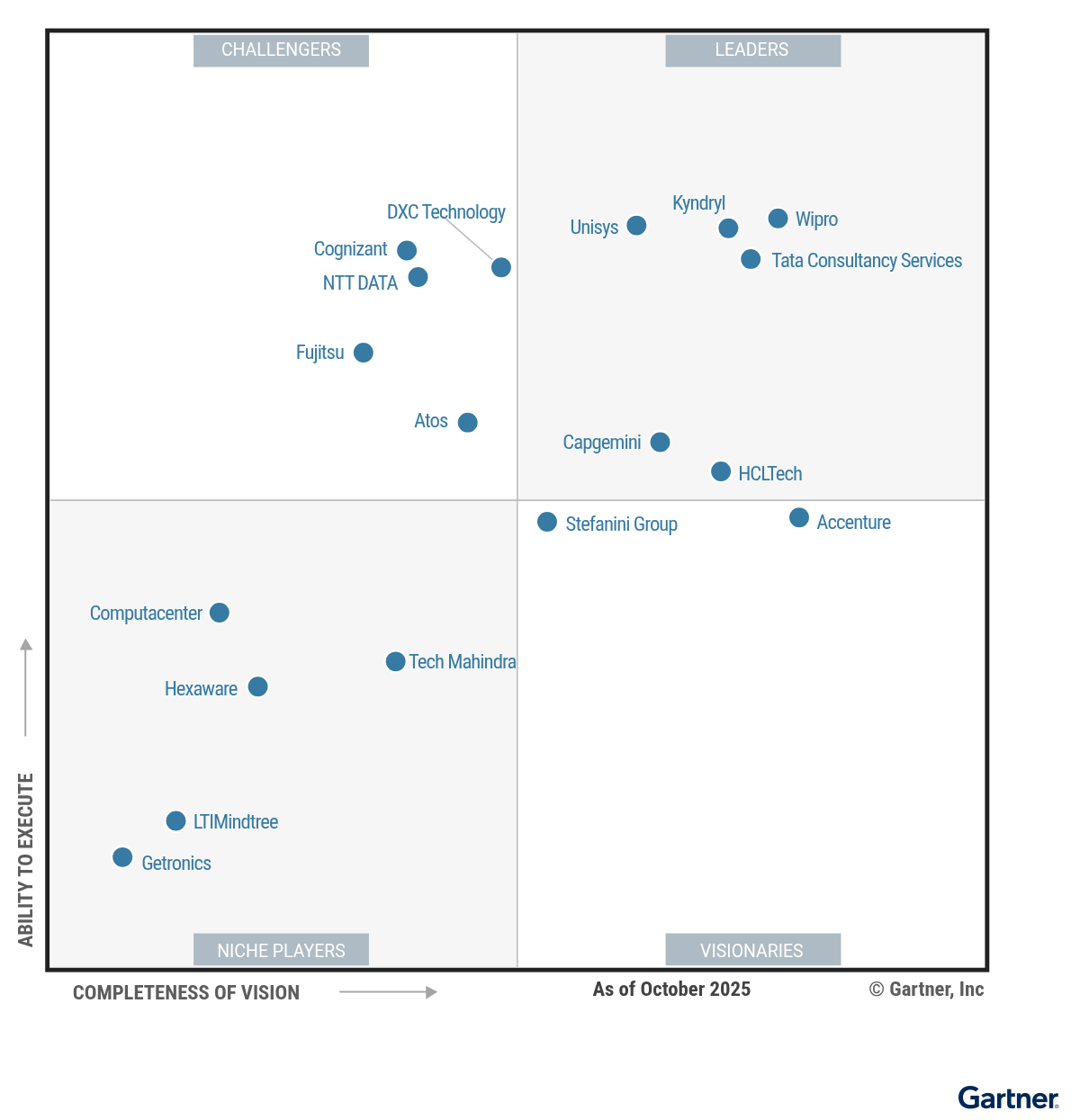
Magic Quadrant
Vendor Strengths and Cautions
Accenture
Accenture is a Visionary in this Magic Quadrant and is headquartered in Ireland. It has an estimated 313 ODWS clients and delivers to primarily large and very large enterprises across most industries. Accenture is focused on strategic geographic consolidation to enhance global consistency, while leveraging its consulting-led approach to deliver digital workplace solutions.
Accenture declined requests for supplemental information. Gartner’s analysis is therefore based on other credible sources.
- Integrated service delivery: Accenture delivers a comprehensive set of applications and infrastructure managed services, enabling clients to streamline operations and improve efficiency. Managing these interconnected services through a single provider supports more consistent service levels and integrated problem resolution across the technology environment.
- Global consistency: The company is streamlining global consistency by condensing its market units, such as moving Latin America from “Growth Markets” to its North America unit to create a unified Americas market. A more unified global market structure leads to more consistent service delivery.
- Consulting-led approach: Accenture’s consulting-led approach to ODWS solutions helps redefine service management processes and technology to achieve business results, making it a strong choice for clients seeking strategic transformation.
- Proportionally small ODWS portfolio: ODWS represents only a small portion of Accenture’s overall business (Gartner estimates around 1%), which may limit the level of focus and investment dedicated to its development. As such, Accenture may not have the same desire or incentive to continue building upon the ODWS platform or to offer new services beyond consulting to customers.
- Contract complexity: As a consulting provider for ODWS in large transformational programs, the complexity of Accenture’s ODWS service offerings and contract structures can result in longer onboarding periods and necessitates clients thoroughly evaluating the value versus cost. Clients may need to allocate additional time and resources to review contract details to ensure clarity of terms.
- Limited modern device management: The company’s focus remains on traditional device management, with a small percentage of its managed endpoints being modern devices like VDI, DaaS and IoT (Gartner estimates 5% of devices globally). Organizations planning a significant workplace transformation focused on endpoints like VDI or IoT should carefully evaluate whether Accenture’s current capabilities can fully support their future-state vision.
Atos
Atos is a Challenger in this Magic Quadrant and is headquartered in France. It has approximately 770 ODWS clients. Atos primarily delivers to large enterprise organizations, specifically in the manufacturing, banking, financial services and insurance, and pharmaceuticals, biotechnology, and life sciences verticals. Atos delivers its digital workplace services through offerings that include AI innovations, sustainability, global delivery and accessibility.
- Financial and strategic restructuring: Atos has completed a financial restructuring, resulting in an upgraded credit rating and new leadership, which may reduce immediate concerns for clients regarding a disruption in services.
- Consultative outcome-based engagements: Atos has shifted its sales model to better align with market trends, with a majority of new deals featuring flexible pricing and most competitive bids shifting from traditional RFPs to modern approaches like agile sourcing. Consultancy engagements have also increased across all regions to help clients prepare for advanced AI technologies.
- Accessibility offerings: The company embeds accessibility into its core strategy, creating IT environments that are inclusive for all users. Its Accessibility as a Service delivers a comprehensive catalog of assistive technologies and dashboards to maximize tool utilization. It also offers an accessibility advisor, maturity assessments and accessibility testing to ensure compliance and optimal usability.
- Recent business decline: Atos’s ODWS revenue has declined globally. Additionally, its staffing numbers have dropped, and attrition rates are currently higher than industry averages for this market. This decline has persisted for the past two years and may affect its ability to deliver competitive ODWS solutions for clients.
- Limited geographic and market reach: Atos’ regional strategy is heavily concentrated in Europe (60.8%) and the Americas (36.1%), with a minimal presence in the Asia/Pacific (APAC) growth market (3.1%). Additionally, its focus remains primarily on large clients, with limited penetration in the midsize enterprise sector.
- Low adoption of contractual experience metrics: Although Atos promotes experience-level agreements (XLAs), adoption rates are relatively low, with approximately 28% of clients having contractual XLA commitments. Furthermore, just 4% of ODWS contracts include formal, binding commitments to business outcomes.
Capgemini
Capgemini is a Leader in this Magic Quadrant and is headquartered in France. It has approximately 360 ODWS clients and delivers to large, midsize and small enterprises across all industries. Capgemini invests in its PRiSM platform to enhance mature operations through advanced automation and AI, positioning itself as a strategic partner for large enterprises seeking innovation, operational efficiency and environmental, social and governance (ESG) alignment.
- Reported market growth: Capgemini reports strong market execution through 11% annual revenue growth and a 43% increase in bookings for its digital workplace services, supported by a 92% client retention rate and notable competitive wins in large enterprise accounts.
- Integrated sustainability offerings: Capgemini integrates sustainability directly into its workplace solutions, offering real-time tracking of employee behaviors and circular device life cycle management that enables clients to reduce e-waste and enhance ESG reporting with validated data, setting it apart in environmental responsibility.
- Proactive employee experience management: Managed by a dedicated experience management office (XMO), with initiatives like the “silent sufferer program” addressing unreported employee technology issues. This proactive focus has driven measurable improvements in DEX scores, enhancing workforce productivity and satisfaction for clients.
- Emerging GenAI platform maturity: Capgemini’s PRiSM GenAI platform is central to its strategic vision, but there is limited evidence of its operational effectiveness in client environments and its operational impact. With no detailed client case studies available and a commercial launch in 3Q25, the platform remains in early deployment stages.
- Incomplete XLA model: Capgemini’s approach to XLAs still does not align with Gartner’s recommended framework, as its standard offer includes only two to six experience-level indicators (XLIs) by default. This number may not fully capture the breadth of employee experience across all relevant touchpoints. Although Capgemini is moving toward more experience-based metrics in its contracts, its XLA model is not yet fully developed or comprehensive.
- High reliance on subcontractors: Capgemini’s reliance on subcontractors, primarily for on-site services resourcing, for 26% of its ODWS workforce is more than twice the industry average. This can lead to potential challenges with maintaining consistent service quality, managing costs and ensuring clear vendor accountability for clients. These factors may limit the effectiveness of on-site services transformation projects, as variability in delivery and oversight can reduce agility, slow implementation and impact overall project outcomes.
Cognizant
Cognizant is a Challenger in this Magic Quadrant and is headquartered in the U.S. It has approximately 794 ODWS clients and delivers to organizations of all sizes, specifically in the retail, banking, financial services and insurance (BFSI), and manufacturing verticals. Cognizant focuses on delivering transformation-led digital workplace services, with user experience and business outcomes supported by its WorkNEXT and IndustryNEXT platforms.
- Integrated AI strategy: The company’s “AI-first” strategy is deeply integrated across engagements via its flexible, tech-agnostic WorkNEXT platform. This multiagent AI suite enables autonomous IT operations, while AI advisory and AI change management services are embedded within contracts. Clients can leverage Cognizant’s embedded AI capabilities to accelerate automation and adoption, with integrated support.
- Industry-specific solutions: Through its IndustryNEXT platform, Cognizant offers tailored solutions for sectors like retail, healthcare, and manufacturing. These offerings use AI, AR and automation to solve specific business problems with solutions like StoreNEXT for retail, HealthNEXT for healthcare and PlantNEXT for manufacturing. This approach ensures that clients can take advantage of solutions preconfigured to address their industry-specific business challenges.
- Experience-centric vision: Cognizant’s vision centers on improving workforce and business experiences, moving beyond traditional transaction-based SLAs to focus on genuine user sentiment and business performance. Its TRUE Experience Framework and “people first” approach utilize AI to deliver user-friendly, resilient IT environments that help clients meet business objectives. Clients seeking transformation in employee experience will find Cognizant’s approach well-aligned with their strategic goals.
- Focus on transformational deals: With 97% of its ODWS deals being transformation-led, Cognizant’s approach is geared toward strategic change rather than pure operational efficiency. This may not align well with clients primarily focused on cost savings without a major transformation component.
- Portfolio complexity remains: The large number of functionalities in Cognizant’s portfolio continues to be complex for clients to navigate. Additionally, the new variety of AI agent interfaces used by support associates may require additional effort to train and consume the platform for effective outcomes and to avoid support delays. Clients must be prepared to invest time in understanding Cognizant’s portfolio to avoid confusion or underutilization.
- Lack of business outcome-based commercial models: Despite a clear focus on transformation and business outcomes, Cognizant’s most common pricing models do not typically include gain-sharing or business outcome-based terms. Additionally, there is a lack of granular, specific evidence linking its transformation-led contracts directly to business outcomes beyond general claims of cost savings. Clients preferring these types of commercial models may struggle to secure them with Cognizant.
Computacenter
Computacenter is a Niche Player in this Magic Quadrant and is headquartered in the U.K. It has approximately 345 ODWS clients and delivers primarily to larger organizations in the public sector and the banking and financial services, manufacturing, and pharmaceutical sectors. Computacenter has pivoted from reactive to self-service or proactive support in several areas, including predictive device failure.
- Intelligent automation and AI vision: Computacenter’s automation approach is central to its service improvement strategy. It leverages its AI Orchestration Platform, along with GenAI and agentic AI, to power predictive routing, agent copilots and virtual assistants, which aims to help clients reduce reactive manual support interactions to under 5% by 2030. This is complemented by its development of a small language model to create deeper integrations with IT service management (ITSM) tools like BMC and ServiceNow.
- Customer-centric tooling and experience management: The vendor provides transparency into experience management through its use of tools and dashboards. It effectively addresses ODWS issues with detailed tooling and incorporates improvement plans to enhance end-user experience. This focus on experience is supported by a solid awareness of macroeconomic and technological challenges faced by customers, allowing for customized solutions across industries and personas.
- Organizational focus and service delivery: ODWS is a strategic priority for Computacenter, representing nearly 40% of its total IT services revenue. The company reports a very low reliance on subcontractors for ODWS delivery, which suggests a focus on direct accountability for service quality and user experience.
- Limited geographic footprint: At over 80% of its ODWS revenue, Europe remains Computacenter’s primary concentration for services. Its presence and capabilities in North America and APAC are significantly smaller and still developing. Organizations requiring a vendor with an equally strong and established global footprint may find this a limitation.
- Limited contractual XLA adoption: While Computacenter has an experience management framework, the number of clients with contractually delivered XLAs is low compared to the market average. Customers who prioritize contractually guaranteed XLAs as a key component of their service agreement should carefully evaluate the provider’s current adoption rates.
- Unclear business outcome alignment: Some of Computacenter’s strategies may not fully align with client demands for business outcomes. Incorporating more business-oriented outcomes earlier in its maturity model will enable it to meet the demands of clients seeking this type of partnership.
DXC Technology
DXC Technology is a Challenger in this Magic Quadrant and is headquartered in the U.S. It has approximately 438 ODWS clients and delivers to large organizations, specifically in the manufacturing and BFSI verticals. DXC has built two distinct layers of agentic AI, one focused on intelligent operations and the other tailored to address unique client needs, which are delivered through an offering success team.
- Industry-specific solutions: DXC delivers customized ODWS tailored for specific industries. It provides specialized solutions such as FinDesk for banking, StatDesk for healthcare, and others for manufacturing and education, which are designed to meet strict regulatory, security and operational requirements.
- AI platform enhancements: DXC continues its vision for AI solutions centered on its UPtime and future Intelligent Operations AI platforms. It provides autonomous, zero-touch services through an intelligent operations layer and a separate business-specific AI layer, enhancing workforce productivity and delivering data-driven insights. UPtime is a foundational AI platform available across all verticals that delivers tailored, industry-specific solutions.
- Commitment to sustainability transformation: Sustainability is integrated into DXC’s ODWS solutions, utilizing AI to extend device life cycles and reduce carbon emissions. Its Evergreen program and data-driven consulting help clients track and advance their ESG goals, while remote support further minimizes environmental impact. DXC guides clients through ESG focused transformations, using a structured continual service improvement program with contractual commitments.
- ODWS definition mismatch: When reporting capabilities through automation of contact resolution, DXC’s definitions match neither Gartner’s nor other vendors in this research for industry standards. When engaging DXC as a potential vendor for ODWS, it is important for clients to investigate how DXC defines these metrics to ensure alignment with expectations.
- Business instability: DXC is experiencing business headwinds, including a global ODWS revenue decline of approximately 6% year over year (YoY). The company also reported losing service desk clients and seeing a drop in client numbers in North America and APAC, alongside a relatively high staff attrition rate of 15%. Clients face a higher risk of service disruption, declining support quality or changes in strategic direction.
- Organizational restructuring risks: Ongoing organizational changes, including the merger of DXC’s modern workplace unit into Global Infrastructure Services, introduce potential risks. As it aligns its internal structure, clients should be vigilant for any changes in strategic direction.
Fujitsu
Fujitsu is a Challenger in this Magic Quadrant and is headquartered in Japan. It has approximately 1,500 ODWS clients and delivers to both midsize and large enterprises, predominantly in the government, financial services and retail sectors. During the assessment year, Fujitsu established the Global Uvance Wayfinders Business Group, a dedicated consulting unit, to drive outcome-led transformation through a consultative sales approach focused on sustainable workplaces and adoption of new technologies and work methods.
- Consultancy-led transformation: Fujitsu’s consulting-led transformation for digital workplace services delivers tailored solutions to address complex business challenges. By leveraging strong expertise in AI and data, Fujitsu prioritizes outcome-led transformation and strategic change management, ensuring that technology is effectively aligned with organizational goals. This approach delivers measurable business impact and positions Fujitsu as a strong partner for organizations navigating digital transformation.
- AI and automation integration: Fujitsu uses its proprietary AI platform, Kozuchi, along with automation technology partners across its services to improve efficiency. It has demonstrated success by resolving 36% of contacts through intelligent automation and achieving a 99% reduction in service desk fulfillment time using GenAI. It also has Azure AI natural language integration in over 100 languages.
- Focus on sustainability: Fujitsu continues its focus in sustainability solutions to lower the carbon footprint of its digital services, check product designs for environmental impact and provide clients with carbon modeling tools. Additionally, it prioritizes accessibility by designing digital channels to meet Web Content Accessibility Guidelines standards and creating hardware with features like Braille keypads and wheelchair-accessible lockers.
- Declining business footprint: Fujitsu’s ODWS revenue has declined globally. It has also experienced a reduction in clients, particularly in Europe, and a 41% decrease in its ODWS staff, which may raise concerns about its service capacity and scale. Fujitsu attributes these declines to an intentional shift in business strategy and portfolio mix that includes AI-enabled services.
- Unclear Uvance messaging: The Uvance framework is complex and may be difficult for clients to understand in the context of ODWS deals. Its branding is applied broadly across all products and services, which can create a lack of clarity about how it relates specifically to workplace services.
- Slow XLA adoption: Only 6% of Fujitsu’s clients use XLAs. This figure is notably low compared to Fujitsu’s peers and indicates slow progress in shifting its customers from traditional metrics to experience-based outcomes.
Getronics
Getronics is a Niche Player in this Magic Quadrant and is headquartered in the Netherlands. It has approximately 488 ODWS clients and delivers to both large and midsize enterprises, specifically in the BFSI, manufacturing and retail industries. Getronics is revitalizing its ODWS portfolio with new leadership and a strong focus on security practices.
- Flexible commercial engagement models: Getronics distinguishes itself through adaptable contracting and pricing structures along with outcome-based agreements. Its co-creation engagement approach offers clients an alternative to traditional RFP-driven processes. It enables organizations of varying sizes to tailor services and commercial terms to their evolving needs, fostering greater alignment between IT solutions and business objectives.
- Automation and efficiency: Getronics achieves notable operational efficiency through AI automations and self service options for up to 70% of its support interactions. This is accomplished through advanced self-healing technologies and guided self-service, resulting in faster issue resolution and reduced reliance on manual interventions.
- Strategic portfolio refresh: With a renewed focus on digital transformation, AI and user experience, Getronics has overhauled its ODWS portfolio. This year, the company dedicated a 24-month investment plan to underscore its commitment to innovation and ongoing modernization of its workplace solutions.
- Undeveloped experience metrics: Getronics approach to XLAs is still evolving and does not fully align with Gartner’s standards. The company often relies on repurposed traditional SLA metrics such as first contact resolution (FCR) and mean time to resolution (MTTR) for experience metrics, which may not accurately reflect business outcomes or user satisfaction.
- Reliance on third parties: Getronics’ delivery model, anchored by the Global Workspace Alliance (GWA), relies on third-party partners, particularly for field services and frontline support in regions outside its core European markets. While this approach enables broad geographic coverage and local expertise, it introduces potential risks around service consistency, quality control and accountability.
- Limited North American presence: North America remains a challenging market for Getronics, accounting for only 7% of its revenue. Clients with significant operations in this region should assess whether Getronics has the necessary scale and presence to meet their needs. It is essential to thoroughly assess Getronics’ partner network and service commitments in this region to ensure that they align with business needs and expectations.
HCLTech
HCLTech is a Leader in this Magic Quadrant and is headquartered in India. It has approximately 480 ODWS clients and delivers to organizations of all sizes, covering all industry verticals. HCLTech’s approach to achieving the benefits of AI include the integration of AI and GenAI into its digital workplace services to transform, rather than reduce, its workforce.
- Broad, industry-specific portfolio: HCLTech continues to develop new industry-specific solutions and demonstrated offerings in a wide range of digital workplace solutions tailored for various industries, including energy, telecom, manufacturing and healthcare, using its FLUID WISE model. This is supported by proven, large-scale deployments, such as managing secure endpoints for over 90,000 ATMs globally.
- Commitment to sustainability: Sustainability solutions have improved for HCLTech and is a core component of HCLTech’s vision, featuring AI-powered solutions to reduce energy consumption and a circular device life cycle program for e-waste. The company also gathers sustainability data from its meeting-room-as-a-service offering. Clients with sustainability goals in the workplace may find a potential match in HCLTech’s offering.
- Focus on talent development: HCLTech uses AI-driven platforms for workforce planning and has structured initiatives like “TechBee” to build an early-career talent pipeline. The company is also making a significant investment in certifying over 50,000 employees in GenAI and agentic AI.
- Variable service delivery: Gartner’s clients report fragmented service delivery, inefficient team handoffs and delays in achieving innovations. HCLTech reports that it has a quality assurance program that clients should take more advantage of in order to avoid these or other quality issues.
- Contractual expectation mismatch: Clients should be aware that there can be a mismatch between customer expectations and contractual terms due to complexity and hybrid commercial models that can be difficult to navigate. While HCLTech reports high adoption of XLAs, Gartner’s analysis shows relatively lower adoption, and those clients that have XLAs do not have meaningful financial accountability.
- Focus on large enterprises: HCLTech’s primary focus is on large enterprises with over $1 billion in annual revenue. Midsize enterprises may receive less priority for R&D and innovation, with offerings that may simply be scaled-down versions of enterprise solutions.
Hexaware
Hexaware is a Niche Player in this Magic Quadrant and is headquartered in India. It has 110 ODWS clients and delivers to both large and midsize enterprises, specifically in the manufacturing, BFSI and life sciences verticals. Hexaware established a dedicated AI Enablement Office to govern and scale GenAI and agentic AI solutions, reinforcing its commitment to an AI-first strategy by achieving L1 certification in AI/GenAI for 99% of its technology employees.
- Automation platform: Hexaware’s Tensai platform delivers automation capabilities within ODWS, functioning as a core workplace service enabler. Tensai integrates voice copilots, chatbots and automated ticket analysis to streamline IT operations and service desk workflow. Its digital resolver layer provides proactive monitoring and autohealing, while multiagent system integration supports efficient ticket management and user authentication.
- Industry-specific solutions: Hexaware provides tailored solutions and preconfigured service desk frameworks for specific industries, such as healthcare, manufacturing, travel and logistics. It demonstrates a strong ability to understand client business needs and develop technology initiatives that align with business outcomes.
- MSE market offerings: Hexaware demonstrates a balanced client portfolio, serving both large and midsize enterprises. The company actively targets the MSE market with a model aimed to deliver rapid, cost-effective workplace services via dedicated PODs, automation and GenAI for improved user experience and lean IT teams.
- Limited global presence: Hexaware’s revenue is heavily concentrated in North America and Europe, with a limited presence in APAC and Latin America. Clients with global support needs should carefully evaluate Hexaware’s capabilities in these regions.
- Experience measurement limitations: In Gartner’s evaluation, Hexaware’s experience management framework primarily focuses on its own services. It has less emphasis on incorporating external factors that influence the total user experience, which is a limitation for clients looking for comprehensive XLAs that measure TX.
- Modern device support gap: The company supports a very small percentage of cloud DaaS devices relative to its total managed devices. This low adoption of modern device management indicates a gap in addressing current client needs and market trends.
Kyndryl
Kyndryl is a Leader in this Magic Quadrant and is headquartered in the U.S. It has approximately 550 ODWS clients and targets larger enterprise clients in the industrial, financial services and distribution industries. Kyndryl’s vision includes a commitment to experience, security and sustainability that will resonate with many client priorities.
- Experience-focused vision: Kyndryl continues to enhance its vision, which is clearly articulated through its Connected Experience framework. It focuses on delivering enhanced employee and customer experiences through personalization, managed observability and agentic workflow orchestration. This is supported by its co-creation approach with clients to design custom outcome-based solutions.
- Consulting-led execution: Kyndryl demonstrates strong growth in its ODWS consulting practice, which increased by almost 50% over the past year. This advisory-led strategy helps clients adopt transformative technologies like GenAI and agentic AI by focusing on industry outcomes and contextualizing XLAs at a role-specific level.
- Integrated AI platform: Kyndryl Bridge, an AI-powered platform, is a standard part of its offerings and is used by a majority of its DWS customers. It continues to lead in this market as the most advanced AI platform Gartner has evaluated. It aggregates millions of data points to enable proactive automations and continuous improvements, serving as a core component of Kyndryl’s service delivery.
- Limited contractual accountability: Despite a focus on co-creation for business outcomes, only a small fraction of Kyndryl’s deals include such contractual commitments. Clients should challenge Kyndryl to include more accountability in its contract to ensure that it follows through on its commitment to achieve business outcomes.
- Potential for vendor lock-in: Clients should be aware of potential vendor lock-in due to Kyndryl’s inclusion of proprietary tools integrated with its platform. While these tools offer advanced AI and integration benefits, their unique nature could create long-term dependencies, which would make a future transition to another provider or back in-house difficult.
- Low client retention: Kyndryl’s retention rate for its ODWS clients is 70%, which is among the lowest rates of the providers included in this research. While some of this can be attributed to selective restructuring of contracts, prospective clients should ensure that long-term contracts include mutually beneficial termination and exit clauses.
LTIMindtree
LTIMindtree is a Niche Player in this Magic Quadrant and is headquartered in India. It has approximately 110 clients and focuses on large enterprises, especially from the BFSI, manufacturing and technology industries. LTIMindtree supports a wide range of endpoints, primarily notebooks, desktops and smartphones.
- Advanced AI voice capabilities: The provider has deployed noteworthy AI voice support capabilities into practical use, demonstrating strengths in multilingual virtual agents; natural voice services for IT, HR and sales functions; and conversational support through platforms like Voicing.AI.
- Outcome-focused frameworks: LTIMindtree’s vision explicitly prioritizes a shift from traditional SLAs to outcome-based measures, achieving almost 50% of ODWS deals, including business-outcome-specific commitments. Clients more focused on outcomes than on transactional metrics may find LTIMindtree’s approach matches their expectations.
- Growth and geographic expansion: LTIMindtree’s ODWS business has grown about 15% for the second year in a row, driven by significant growth in North America and Europe. It has also established new delivery centers in Italy, the U.S. and Brazil, expanding its global service capabilities.
- XLA framework maturity: While LTIMindtree has an outcome-based framework for business outcomes, its XLAs still rely heavily on traditional SLA metrics versus a mature experience-based model. Prospective clients should carefully review LTIMindtree’s XLA structure to ensure it aligns with industry best practices for experience-based outcomes.
- AI-first workplace strategy: LTIMindtree has an AI-first strategy to address experience and efficiencies in the workplace. While many clients may benefit from a technology solution to improve productivity, this AI-first strategy differs from the approach most other providers bring, which is an experience-first strategy that offers new ways of working and transformative business solutions.
- Decline in clients for consulting: While the market share and demand from buyers is increasing for ODWS consulting in the industry, LTIMindtree’s client base has declined globally YoY for these engagements. LTIMindtree will need to continue to build trust and confidence in prospective customers to catch up with its peers in addressing the ODWS consulting market.
NTT DATA
NTT DATA is a Challenger in this Magic Quadrant and is headquartered in Japan. It has approximately 505 ODWS clients and primarily focuses on large and midsize enterprises, serving all industries including manufacturing, public sector and healthcare. NTT DATA reports over 5,000 ODWS-dedicated internal staff. It continues to support a sustainable balance of traditional and modern device management services to include both traditional and modern endpoint device options.
- Industry-specific solutions: NTT DATA has developed several industry-specific solutions, such as Classroom in a Box, Clinical Service Desk and Smart Factory. These tailored offerings address the unique contexts and technological needs of frontline and deskless users in various sectors.
- Experience management framework: NTT DATA continues to emphasize a user-focused approach with its Experience-as-a-Service (EXPaaS) and XLA framework. It uses a structured “Four-in-the-Box” delivery model with dedicated executive, delivery, CTO and CISO roles to support continuous improvement. Clients seeking more governance and accountability from their ODWS vendors may find NTT DATA meets their requirements.
- Sustainability focus: NTT DATA embeds environmental responsibility into its offerings through initiatives like Sustainable Device-as-a-Service (SDaaS) and ESG@Workplace. The SDaaS solution uses AI-driven models to optimize device refresh cycles, which can reduce e-waste and CO2 emissions while delivering cost savings up to 32%.
- Vision clarity and differentiation: The vendor’s vision for a “first-class total workplace experience” can be perceived as broad and lacking details on what it includes or how it differs from competitors. While ambitious, the execution roadmaps and market impact are less tangible compared to top peers.
- Low new client acquisition: NTT DATA has onboarded 13 net-new ODWS clients globally this reporting period, one of the lowest figures among its industry peers. This could indicate challenges in expanding its customer base, which could impact future growth momentum relative to competitors.
- Lower average automation: NTT DATA’s automation average for contact resolution is around 41%, which is lower than the average among other providers in this evaluation. Clients should carefully review NTT DATA’s roadmap with AI and automation as it continues to evolve its capabilities.
Stefanini Group
Stefanini Group is a Visionary in this Magic Quadrant and is headquartered in Brazil. It has approximately 500 ODWS clients and delivers to midsize and large organizations, plus some smaller organizations, specifically in the manufacturing, healthcare and consumer product sectors. Stefanini has matured its AI platform, SophieX, which now showcases improved voice-based AI workflows, contextual interactions, and practical applications like multifactor authentication for password resets.
- Investing in AI solutions: Stefanini demonstrates a strong commitment to AI by reinvesting 6.5% of its revenue into AI and analytics initiatives. This investment supports proprietary platforms like its multilingual virtual assistant, SophieX 2.0, and the Stefanini AI Library, which provides employees and customers with access to over 70 integrated GenAI models.
- Clear vision for workplace empowerment: Stefanini’s “AI-first ecosystem” vision is designed to optimize operations and service intake through a mature blueprint. This vision extends beyond technology to emphasize workplace empowerment through change management and digital coaching capabilities, helping enhance organizational digital dexterity and adoption.
- Demonstrated business growth and ROI: The ODWS segment is a crucial part of Stefanini’s business, representing 46% of its IT services revenue and showing 10.3% revenue growth with a 94% client retention rate. Stefanini has demonstrated tangible client benefits, such as cost reductions through AI integration and regional standardization.
- Limited focus on business transformation: Stefanini’s delivery models are perceived to primarily enhance traditional operations with technology rather than drive fundamental business process transformation. Clients who are looking for a more transformational maturity model should align expectations and jointly define outcomes and roadmaps.
- High employee attrition rate: At 20%, Stefanini’s attrition rate is among the highest reported in this assessment. End-user clients should require senior-level engagement and commitment in the relationship governance from Stefanini to mitigate potential risks associated with high staff turnover.
- Potential challenges in scaling and execution: The company’s focus on customized, nonstandard proposals may be resource-intensive and could limit its ability to achieve economies of scale. Furthermore, ensuring the accuracy and utility of its AI recommendations across diverse client data sources requires continuous oversight and validation.
Tata Consultancy Services
Tata Consultancy Services (TCS) is a Leader in this Magic Quadrant and is headquartered in India. It has approximately 685 ODWS clients and delivers to organizations of varying sizes, specifically in the healthcare and retail verticals. TCS has shifted its client engagement model to favor agile co-creation workshops, aligning its AI-first vision with a more collaboration-focused execution strategy.
- Integrated AI-first vision: The company’s vision centers on an AI-first mindset that integrates AI and GenAI at the core of its digital workplace offerings to enable transformation and better align to business objectives. This is structured around a comprehensive framework underpinned by AI, an intelligence fabric, and an experience engine to deliver personalized, measurable IT experiences. Clients can leverage TCS’s investment in AI to modernize their own digital workplace.
- Proven execution with automation: TCS demonstrates strong execution in automation with tangible results, such as achieving 30% to 35% FTE savings. Its Cognix and WisdomNext platforms provide a structured approach to rapidly deploying AI agents and other automation technologies. Clients seeking efficiency gains through targeted automation should investigate TCS’s offerings.
- Flexible sourcing engagement: Approximately 70% of TCS deals are conducted using an agile, workshop-based sourcing model, enabling quicker and more efficient results than traditional procurement processes. TCS’s ODWS sourcing methodology is structured to prioritize direct delivery and flexible engagement.
- Inconsistent service quality: For a third year in a row, Gartner clients have provided feedback regarding recurring concerns with TCS’s service quality, technical expertise and responsiveness. Issues cited include inconsistent deliverables, high staff turnover, slow implementation and process rigidity. A contrast has been observed between its stated capabilities in proposals and its actual contractual commitments to innovation and transformation.
- Reliance on traditional support models: While TCS is reducing its depot presence for device provisioning, its large number of walk-in support sites may point to a continued reliance on traditional support models. Additionally, its direct-to-end-user delivery for mobile devices is a capability that leading providers already have in place, suggesting TCS is trying to catch up in this area.
- Potential for scaled adoption challenges: Feedback from TCS clients indicate they often get stuck in pilot purgatory with AI projects, which could present a challenge to translating its ambitious AI vision into widespread, scaled adoption. Furthermore, clients may find it difficult to match the AI-specific upskilling efforts that TCS makes internally. Clients must be prepared to co-invest in training and adoption programs to avoid AI projects stalling at the pilot stage.
Tech Mahindra
Tech Mahindra is a Niche Player in this Magic Quadrant and is headquartered in India. It has approximately 147 ODWS clients globally and delivers to midsize and large organizations, specifically in the BFSI, healthcare and manufacturing verticals. Tech Mahindra’s outsourced digital workplace services are delivered through its FLEX framework, which is modular and focuses on AI-driven, experience-centric solutions.
- Industry-specific solutions: Tech Mahindra provides verticalized digital workplace solutions for sectors like BFSI, healthcare and manufacturing. Leveraging deep domain expertise, it delivers tailored offerings such as U.S. Health Insurance Portability and Accountability Act (HIPAA)-compliant healthcare support and IoT-enabled manufacturing solutions. This industry-focused approach ensures technology alignment, regulatory compliance and operational efficiency, enabling Tech Mahindra to address complex client needs and deliver measurable business impact across regulated environments.
- Continuous platform evolution: Tech Mahindra’s FLEX digital workplace services (FLEX DWP) is updated annually to address changing market and client needs. Its flexible, experience-driven framework integrates new technologies and verticalized solutions, ensuring service delivery remains adaptive and aligned with industry advancements. A prime example is TechM Orion, which enables scalable, responsible enterprise transformation through advanced automation and governance.
- Focus on transformation consultancy: While Tech Mahindra had moderate growth in its ODWS business overall, it especially increased its consultancy business for helping clients transform the workplace. With a 12% increase in consultancy revenue, and adding 21% in its client base for transformation engagements, Tech Mahindra is addressing the trends and demands from ODWS buyers.
- Continued low client retention: Tech Mahindra’s client retention rate stands at 60%, which is notably lower than its peers, whose average retention rate is 84%. This continued low rate YoY raises concerns about long-term client satisfaction and stability, suggesting potential challenges in sustaining relationships and delivering consistent value over time compared to other leading vendors in the market.
- High subcontractor reliance: The vendor’s reliance on subcontractors is higher than the peer average, with third parties making up 25% of its ODWS staff and contributing an estimated 32% of revenue. Client feedback indicates that, in general, higher utilization of subcontractors by ODWS providers introduces quality issues in service delivery.
- Limited self-service options: Tech Mahindra reports a low rate of self-service options for issue resolution (at a 9% rate across all contacts resolved), as it primarily focuses on AI and automation (59%) and human-led support (32%), which may not align with preferences for more user-driven support models. Visionaries and Leaders in the ODWS market average less than 25% need for manual contact resolutions.
Unisys
Unisys is a Leader in this Magic Quadrant and is headquartered in the U.S. It has approximately 772 ODWS clients and delivers to large and midsize enterprises, specifically in the public, BFSI and tech sectors. Unisys’ automation-driven initiatives aim to deliver strategic value for organizations seeking transformative digital workplace outcomes.
- Experience-led transformation: Unisys embeds XLAs in more than one-third of client contracts, ensuring that service delivery is measured by user sentiment and tangible business outcomes rather than relying solely on traditional operational metrics. This approach drives higher employee satisfaction and aligns IT performance with strategic business goals. Unisys’ passion for enhancing digital employee experience is evident in its solutions, investments and commitments.
- Expanded consulting capability: With a 44% increase in its transformation consultancy workforce, Unisys demonstrates a strong commitment to advisory-led engagements. This enables clients to leverage expert guidance for complex digital workplace projects, ensuring they are AI-ready, with technology initiatives that are tightly integrated with broader business objectives.
- AI-driven support efficiency: Between self-service capabilities and AI/automation functions, Unisys achieves nearly 80% of automated contact resolution, relying on only 20% manual processing. This high level of automation not only accelerates issue resolution, but also reduces operational costs, allowing clients to redeploy resources to more strategic initiatives. Unisys’s automated support services have the potential to reduce service desk costs by more than 40%.
- Limited YoY growth: Unisys’s selective focus on high-value contracts has resulted in flat global growth of just 0.5% YoY. While this strengthens profitability and strategic alignment, it limits the company’s ability to compete in traditional, volume-driven service segments. Clients who are not yet ready for transformation and experience-led approaches for their ODWS deals may not be the right fit for Unisys.
- Subcontractor reliance: Approximately 29% of Unisys’s service delivery is managed by subcontractors. As noted in the previous Magic Quadrant, this remains an ongoing concern and may introduce variability in service quality and consistency. Prospective customers will want to ensure they understand how and when Unisys will use subcontractors for delivery, and how it will still retain full accountability for committed outcomes.
- Technology platform dependency: Unisys’s automation and AI capabilities are observed to be heavily dependent on the ServiceNow platform. Clients with investments in alternative platforms should assess potential integration challenges and clarify Unisys’s ability to deliver platform-agnostic solutions.
Wipro
Wipro is a Leader in this Magic Quadrant and is headquartered in India. It has approximately 300 ODWS clients and delivers to mid- to large size organizations, specifically in the banking and financial services, healthcare and manufacturing segments. Wipro has strengthened its focus on AI, transformation, and business outcomes exemplified by its AI SuperWorker Suite, NeuraDesk, and outcome-based contracts.
- AI-led innovation: Wipro’s commitment to proactive innovation is demonstrated through strategic investments in advanced AI, GenAI foundries and co-innovation hubs. Initiatives like the AI Live Workspace, NeuraDesk autonomous AI system and AI SuperWorker Suite with specialized agents enhance operational efficiency and deliver personalized employee experiences.
- Transformation and value focus: Wipro excels in high-value, strategic engagements, with 78% of its contracts being transformation-led. The company’s focus on operating in the “value zone” is supported by an agnostic approach to architecting solutions and a commitment to outcome-based models that align directly with business value.
- Strong market traction: Wipro has demonstrated robust execution by securing significant new client wins and major renewals with large enterprises. This market performance is backed by a substantial 172% YoY surge in AI revenue within its ODWS practice.
- Selective client engagement: Wipro is concentrating on profitability by optimizing its account portfolio, which involves disengaging from low-profit accounts and selectively targeting high-margin, transformative partnerships. Clients primarily seeking cost-driven solutions may find Wipro’s engagement model less suitable for their needs.
- Talent attrition risk: Wipro’s global ODWS staffing attrition rate remains at 15% which is still higher than the average among its peers evaluated in this context. This continues to pose a potential challenge to retaining the specialized talent required to sustain its innovation agenda and execute complex transformation initiatives effectively.
- Complex solution portfolio: Wipro’s wide array of platforms, AI solutions and branded offerings, while providing tailored options, can create confusion for clients. Overlapping nomenclature and specialized solutions may make it challenging for clients to navigate the portfolio and identify the most suitable solution without significant guidance.
Vendors Added and Dropped
We review and adjust our inclusion criteria for Magic Quadrants as markets change. As a result of these adjustments, the mix of vendors in any Magic Quadrant may change over time. A vendor's appearance in a Magic Quadrant one year and not the next does not necessarily indicate that we have changed our opinion of that vendor. It may be a reflection of a change in the market and, therefore, changed evaluation criteria, or of a change of focus by that vendor.
Added
Hexaware
Dropped
Ricoh: Ricoh is a technology and IT services company headquartered in Japan. It provides traditional outsourced digital workplace services to both large and midsize enterprises. Ricoh was dropped from this year’s ODWS Magic Quadrant because it declined requests for supplemental information and could not attest to meeting all of the inclusion criteria for multilingual service desk, end-user device support, field service end-user support, or one net new customer logo signed in the last 12 months, nor could this information be independently verified by Gartner.
Inclusion and Exclusion Criteria
This Magic Quadrant uses the same inclusion criteria as the companion Critical Capabilities for Outsourced Digital Workplace Services.
To be included in this Magic Quadrant, each service provider must meet the following criteria.
It must have a dedicated business practice to deliver the following core outsourced digital workplace services (ODWS) as part of outsourcing engagements that include:
- Minimum of one year providing a 24/7 multilingual service desk w/remote support to end users through a minimum of three channels (voice, chat, email).
- Service desk functions must be delivered by a minimum of 80% FTE and a maximum of 20% that are subcontractors, temporary employees or third parties.
- Minimum of one year providing end-user device support of all top-tier OEMs, including application packaging, patching, break-fix and RMA support.
- End-user device support must be delivered by a minimum of 70% FTE and a maximum of 30% that are subcontractors, temporary employees or third parties.
- Minimum of one year providing field services end-user support such as dispatch, on-site and depot services.
- Field services must be delivered by a minimum of 30% FTE and a maximum of 70% that are subcontractors, temporary employees or third parties.
- Minimum of one year providing PC provisioning for both physical and virtual devices, including asset/inventory management, imaging, deployment, new user onboarding, device requests/replacement and inventory refresh.
- Minimum of one year providing consulting, advisory and professional services to scope, design, implement and manage an integrated digital workplace solution.
Have signed at least one net new customer logo (signed in the last 12 months) that does not include the sale or use of an OEM’s own workplace products (hardware or software) in each major region (North America, Europe and Asia/Pacific) for all core outsourced digital workplace services (as “core” is defined in the first five bullets above). These customers should include provisioned sites in a minimum of three of six regions (North America, Latin America, Europe, the Middle East, Africa and Asia/Pacific).
Ability to demonstrate that it has provided ODWS as a core business for a minimum of one year with no more than 40% subcontracting across all ODWS services. In other words, each provider needs to use at least 60% of internal, full-time resources (FTE, not subcontracted or contingent resources) to deliver its ODWS.
Staffing services are excluded from the ODWS market and no staffing revenue or services offered may be considered as part of the inclusion in this market.
For the purposes of clarity and for the ODWS MQ, definitions for staffing services include the following:
- Direct staffing — Assisting clients with finding IT talent for direct hire as FTE into that client’s organization, usually for a fee.
- Augmented (or supplemental) staffing — Providing clients with temporary, part-time or full-time IT technical resources to assist that client with their IT needs. These resources would be managed by the client for their day-to-day tasks as opposed to being part of a shared or dedicated managed services team assigned to that client, or for any other fixed scope managed services agreement or other fixed or time-and-materials-scoped IT project.
- Examples of augmented staffing can include:
- Assigned on-site technical resources at client locations on a fixed schedule to perform tasks as requested/required by the client, separate from a managed services engagement.
- Assigned technical resources for an IT project that the client is managing and needs additional staff to help supplement their own teams, remotely or physically on-site.
- Any IT resources assigned to a client that have general duties defined, but where the provider bears no responsibility or accountability to SLA’s or outcomes from those duties performed.
As part of its core ODWS business offerings, it must offer the following advanced and transformative solutions:
- Offering of contractually committed XLAs.
- Use of AI-based automation, GenAI/agentic-AI, automated workflows, AI personal assistance, machine learning, self-healing/self-repair and predictive maintenance.
- Support both on-premises and SaaS-based collaboration, as well as productivity and business applications delivered to end users.
- Leverage intelligent automation, IT kiosks, IoT devices, smart lockers, remote support and self-service.
- Support of cloud collaboration tools (Google Workspace, M365, Microsoft Teams).
- Digital workspace integration services, including mobile apps, teleconferencing, and the ability to work from any device, at any time, from anywhere.
- Desktop and application virtualization services (including VDI and cloud DaaS).
- Unified communications end-user support.
- Workplace security for data protection and regulatory compliance.
- Organizational change management consulting and functions for adoption of transformational technologies and workplace practices.
- ITSM platform (e.g., ServiceNow) consulting and management to include workflow improvements, reporting, app integrations, metric tracking and IT asset configuration management database (CMDB).
- Industry-specific workplace solutions that include business outcomes and new ways of work to improve productivity and overall workplace experience.
- Demonstrate data privacy and security processes through holding certifications such as ISO 27001, HIPAA, PCI, etc.
- Demonstrate IT system and process management through holding certifications in one or more IT system Management frameworks, such as ITIL, Six Sigma, ISO 20000, etc.
Must support a minimum of four global clients for each of the core ODWS services (as defined in the first 5 bullets above), that span multiple (two or more) regions.
Must realize a minimum of the following annual revenue of ODWS in at least two regions, excluding revenue through direct, augmented or supplemental staffing, or from the sale or resale of products (hardware and software):
- $80 million in the Americas
- $50 million in Europe
- $30 million in Asia/Pacific
For ODWS capabilities in the Americas, each service provider must:
- Have at least 50% of ODWS revenue from clients in the U.S.
- Have ODWS revenue from clients in at least two other countries (besides the U.S.) in the Americas.
For the scope of this study, we define the Americas as the U.S., Canada, Mexico, Chile, Colombia, Peru and Argentina. Brazil is excluded from this analysis, because it exhibits different characteristics as a market for outsourcing and is treated separately by most buyers.
For ODWS capabilities in Europe, each service provider must:
- Not have more than 50% of its total European ODWS revenue from clients based in a single country.
- Have a minimum of 20% of its total European ODWS revenue in at least three European countries.
For the purposes of this study, Gartner considers the following European countries:
- Western Europe: Austria, Belgium, Denmark, Finland, France, Germany, Greece, Ireland, Italy, the Netherlands, Norway, Portugal, Spain, Sweden, Switzerland and the United Kingdom.
- Eastern Europe: Albania, Belarus, Bosnia and Herzegovina, Bulgaria, Czech Republic, Croatia, Estonia, Hungary, Latvia, Lithuania, Macedonia, Moldova, Montenegro, Poland, Romania, Russia, Serbia, Slovakia, Slovenia, Türkiye, and Ukraine.
For ODWS capabilities in the APAC region, each service provider must:
- Not have more than 80% of its total APAC ODWS service revenue from clients based in a single country.
- Have a minimum of 10% of its total APAC ODWS service revenue in at least two APAC countries.
For the scope of this study, we define APAC as the sum of mature Asia/Pacific, emerging Asia/Pacific and Greater China. Japan and The Chinese mainland are excluded from this analysis because they exhibit different characteristics as a market for outsourcing and are treated separately by most buyers. The specific countries included are:
- China: Hong Kong and Taiwan
- Mature APAC: Australia, New Zealand, Singapore, South Korea
- Emerging APAC: India, Indonesia, Malaysia, Thailand
- Rest of APAC: Bangladesh, Pakistan, Philippines, Sri Lanka, Vietnam
Customer Interest Index: Vendor must rank among the Top 25 for the Customer Interest Indicator (CII) as defined by Gartner. CII was calculated using a weighted mix of internal and external inputs that reflect Gartner client interest, vendor customer engagement, and vendor customer sentiment from 1 July 2024 through 30 June 2025.
Note: Each criterion above constitutes a separate and distinct criterion. All criteria must be met to qualify for participation.
Honorable Mentions
Infosys: Infosys is an IT services and consulting company headquartered in India. It offers a full complement of outsourced digital workplace services, primarily focusing on large enterprise customers. Infosys narrowly missed participating in this Magic Quadrant because its ratio of FTE to subcontracted engineers used for field services delivery did not meet the inclusion criteria, which requires providers to use no more than 70% third-party delivery.
Evaluation Criteria
Ability to Execute
Gartner evaluates an ODWS vendor’s Ability to Execute by assessing its offering’s services, viability, pricing, customer experience and overall operations. We evaluate how these criteria enable the vendor to be competitive and effective in the market. We also evaluate the vendor’s ability to retain and satisfy customers, create positive perception and respond to market changes.
In this Magic Quadrant, the product or service, customer experience and operations criteria each have a “high” weighting. This is because the ability to provide global ODWS depends highly on the vendor’s core goods and services quality and operational capability, and ultimately, customer experience is crucial in a services market. Market responsiveness, overall viability and pricing criteria each has a “medium” weighting. This is because, for a single buyer of ODWS, the dynamic changes to the market, the sales performance and the overall viability of the company, as well as how the service is organized, come second in relevance when selecting an ODWS vendor. Marketing execution is weighted low because, in managed services, it has little relevance.
Ability to Execute Evaluation Criteria
| Evaluation Criteria | Weighting |
|---|---|
Product or Service | High |
Overall Viability | Medium |
Sales Execution/Pricing | Medium |
Market Responsiveness/Record | Medium |
Marketing Execution | Low |
Customer Experience | High |
Operations | High |
As of October 2025 | |
Source: Gartner (November 2025)
Completeness of Vision
Gartner evaluates an ODWS vendor’s Completeness of Vision by assessing multiple criteria that show its ability to understand current market trends, properly direct investments in innovation and respond to customer needs and competitive forces — as Gartner views them.
Having the proper market understanding and industry and vertical-specific solutions and investment in the right innovation will make or break the ability to deliver modern global ODWS. Gartner has given these criteria the highest weighting. Business model and geographic strategy have a medium weighting because they are ancillary capabilities that will not necessarily lead to the best ODWS solutions. Marketing and sales strategy are rated low because they have very little influence on the actual quality of ODWS delivery but still may indicate overall viability.
Completeness of Vision Evaluation Criteria
| Evaluation Criteria | Weighting |
|---|---|
Market Understanding | High |
Marketing Strategy | Low |
Sales Strategy | Low |
Offering (Product) Strategy | High |
Business Model | Medium |
Vertical/Industry Strategy | High |
Innovation | High |
Geographic Strategy | Medium |
As of October 2025 | |
Source: Gartner (November 2025)
Quadrant Descriptions
Leaders
Leaders deliver their service solutions skillfully, have a clear vision of the direction of the service market, and are actively building and improving their competencies to sustain their leadership positions. The Leaders quadrant indicates the direction of the ODWS market. Leaders have demonstrated their expertise and track record in delivering ODWS globally and understand the requirements to successfully deliver these services. They have proven their Ability to Execute and their Completeness of Vision.
Challengers
Challengers execute well but have less well-defined views of the market’s direction. Some are poised to join the Leaders, while others may not (yet) be preparing aggressively for the future. Challengers have demonstrated that they have a solid base of clients that are satisfied with the services they provide. Challengers’ proximity to the Leaders quadrant indicates that their vision of the ODWS market is still maturing or not keeping up with market demand. They have the potential to move into the Leaders quadrant if they can advance their strategic visions, solidify and expand their service offerings, and deliver services consistently in all the regions covered by this Magic Quadrant.
Visionaries
Visionaries have a clear vision of the market’s direction and are focused on preparing for it; however, they could improve or scale their service delivery capabilities. Providers in the Visionaries quadrant have an effective vision of the ODWS market; however, they have neither invested in nor delivered on that vision enough in the global market to emerge as Leaders at this time.
Niche Players
Niche Players focus on a segment and/or region of the market, as defined by characteristics such as size, vertical focus and selective ODWS offerings. Providers in the Niche Players category can be a perfect fit for some organizations because they focus on a specific area of the market. However, this narrow focus affects a niche provider’s ability to deliver the full spectrum of ODWS globally.
Context
This Magic Quadrant assesses the Ability to Execute and Completeness of Vision of 18 ODWS providers. This information and analysis can help CPOs; CIOs; sourcing, procurement and vendor management leaders; and infrastructure and operations leaders who are selecting a provider for midrange to long-term ODWS contracts that support critical functions and business objectives with appropriate regional capabilities.
Sourcing, procurement and vendor management leaders looking for a sourcing initiative in a specific geographic region can leverage Critical Capabilities for Outsourced Digital Workplace Services. This document contains use cases for three main regions — North America, Europe and Asia/Pacific — where they can assess a set of capabilities to discern which providers are stronger in what regions. This Magic Quadrant and the companion Critical Capabilities are produced with a single methodology by collaborating research teams.
Clients should not disqualify a provider simply because it is not in this Magic Quadrant. Gartner’s inclusion criteria result in analyzing the most established providers in the ODWS market, but other regional or local IT service providers may present better alternatives for your business requirements. A Gartner expert can help shortlist the most suitable candidates for specific client requirements and assist with an analysis of shortlisted candidates.
Market Overview
Overall trends and best practices in this market continue this year to have an emphasis on workplace and employee experience, innovations in automation and AI, and device management that include modern endpoints like cloud DaaS. Buyers of ODWS are seeking deals that are based on value versus cost with an emphasis on more outcomes and industry-specific solutions. Providers are expected to have a clear vision of the current market and may help shape its future direction. Each provider’s focus on growth and strategic investments in their ODWS business helps clients understand their viability, strategies and execution on client business priorities.
We continue to see an overall year-over-year decrease in pricing for multiyear ODWS deals that include accountabilities for automation and other innovations. ODWS providers continue to invest heavily in new technologies to enable automated resolution and decrease service delivery costs. Service providers relying on traditional delivery methods and legacy device support do not address the growing client demand for transformation.
SLA-based contracts continue to decrease, replaced by XLAs and deals that require accountability beyond hard metrics that do not map to business outcomes. While all ODWS providers in this research claim to include XLAs in customer contracts, Gartner has noted a distinct difference in provider approaches to what they are calling “XLAs”. Clients must seek to understand how to get started with XLAs (see 5 Steps for a Simple Start to Implement XLAs) and how to mature them (see Drive Valuable IT Services Outcomes with a Standardized XLA Framework). True measures of workplace experience require proper digital employee experience tools and mapping the user journey with persona-based technology for service delivery solutions. This approach helps address inequities and dispels the assumption that a “one-size-fits-all” solution can meet a client’s needs.
Return-to-office (RTO) mandates continue to be a concern for many clients as they seek assistance from providers in developing innovative solutions for hybrid, remote and on-site work that bridges gaps in collaboration, social connections and organizational culture. These RTO mandates clearly impact the overall experience of both individual workers and their leaders (see Executive Pulse: A Third of Leaders Could Leave Their Organization If Forced Back to the Office), as well as cause concerns of attrition and productivity (see Sustaining Employee Productivity During Return-to-Office). Therefore, it continues to be imperative to measure the DEX and sentiment of all employees for real-time analysis that turns into actions to help stave off attrition.
The trends and best practices mentioned earlier are explained in more detail here to help clients understand what to expect when negotiating an ODWS deal with their providers:
- Innovation to support transformation: Advancements in GenAI and agentic AI have dominated most providers’ focus for innovation and are their largest investments. Automation remains an essential part of offerings while clients continue to look for a competitive edge, along with innovative models to increase productivity and provide a transformative experience to their end users. Accountability is being built into ODWS deal constructs and providers are expected to deliver continuous innovative ideas that support business outcomes.
- XLA and experience-focused solution maturity in a handful of providers: Resolving user-related issues to address first contact resolution and MTTR is no longer the desired standard to measure ODWS delivery quality. Client organizations expect ODWS providers to help them improve the employee experience and take contractual liability for achieving such results. Demands to include XLAs continue to grow YoY, with approximately 42% of all contracts including them. However, it should be noted that not all provider XLAs meet the definitions Gartner has developed through research and interactions with clients. Sentiment gathered outside of traditional CSAT and NPS must be analyzed across the entire user journey as a critical component to determine where technology and services have an impact on an employee experience.
- Value-based deals trump cost savings: More contracts now include accountability to outcomes than ever before, averaging 50% of all ODWS deals. Constructing deals based on the solutions businesses need, including industry-specific solutions and tangible results, now predominates over legacy transactional contracts. Clients seek providers that will craft solutions that help them achieve their objectives, work with them on how to measure the results, and offer competitive pricing that allows sourcing, procurement and vendor management and IT leaders to easily articulate the values that their outsourcers bring.
The evaluation of providers’ capabilities for this Magic Quadrant research and the related Critical Capabilities research came from both primary and secondary research carried out by Gartner. The primary research used for this Magic Quadrant includes:
- Teams or recorded briefings with participating service providers on their global ODWS capabilities.
- A detailed provider survey covering multiple ODWS data points, from a 12-month period covering July 2024 through June 2025 with comparison to the same data from a similar period for the prior year. The gathered data included geographic capabilities, revenue, staffing, scale and operations of service desk offerings, scale and operations of desktop, laptop and mobility offerings, and scale and nature of digital workplace transformation capabilities.
Secondary research used for this research includes the following, all taken from the same 12 month period:
- Client inquiries taken by Gartner on a provider’s ODWS capabilities.
- Client satisfaction and verbatim comments on the performance of individual providers taken from client reviews on Gartner Peer Insights.
- Insight from other Gartner analysts who have spoken with the providers, or have spoken to clients of the providers about their ODWS offerings.
- Briefings delivered by providers to Gartner outside of the Magic Quadrant and Critical Capabilities processes on aspects of the providers’ ODWS capabilities.
- Press releases and publicly available information, including company websites and financial reports.
- Views and comments provided by other Gartner analysts as part of the peer review process.
Ability to Execute
Product/Service: Core goods and services offered by the vendor for the defined market. This includes current product/service capabilities, quality, feature sets, skills and so on, whether offered natively or through OEM agreements/partnerships as defined in the market definition and detailed in the subcriteria.
Overall Viability: Viability includes an assessment of the overall organization's financial health, the financial and practical success of the business unit, and the likelihood that the individual business unit will continue investing in the product, will continue offering the product and will advance the state of the art within the organization's portfolio of products.
Sales Execution/Pricing: The vendor's capabilities in all presales activities and the structure that supports them. This includes deal management, pricing and negotiation, presales support, and the overall effectiveness of the sales channel.
Market Responsiveness/Record: Ability to respond, change direction, be flexible and achieve competitive success as opportunities develop, competitors act, customer needs evolve and market dynamics change. This criterion also considers the vendor's history of responsiveness.
Marketing Execution: The clarity, quality, creativity and efficacy of programs designed to deliver the organization's message to influence the market, promote the brand and business, increase awareness of the products, and establish a positive identification with the product/brand and organization in the minds of buyers. This "mind share" can be driven by a combination of publicity, promotional initiatives, thought leadership, word of mouth and sales activities.
Customer Experience: Relationships, products and services/programs that enable clients to be successful with the products evaluated. Specifically, this includes the ways customers receive technical support or account support. This can also include ancillary tools, customer support programs (and the quality thereof), availability of user groups, service-level agreements and so on.
Operations: The ability of the organization to meet its goals and commitments. Factors include the quality of the organizational structure, including skills, experiences, programs, systems and other vehicles that enable the organization to operate effectively and efficiently on an ongoing basis.
Completeness of Vision
Market Understanding: Ability of the vendor to understand buyers' wants and needs and to translate those into products and services. Vendors that show the highest degree of vision listen to and understand buyers' wants and needs, and can shape or enhance those with their added vision.
Marketing Strategy: A clear, differentiated set of messages consistently communicated throughout the organization and externalized through the website, advertising, customer programs and positioning statements.
Sales Strategy: The strategy for selling products that uses the appropriate network of direct and indirect sales, marketing, service, and communication affiliates that extend the scope and depth of market reach, skills, expertise, technologies, services and the customer base.
Offering (Product) Strategy: The vendor's approach to product development and delivery that emphasizes differentiation, functionality, methodology and feature sets as they map to current and future requirements.
Business Model: The soundness and logic of the vendor's underlying business proposition.
Vertical/Industry Strategy: The vendor's strategy to direct resources, skills and offerings to meet the specific needs of individual market segments, including vertical markets.
Innovation: Direct, related, complementary and synergistic layouts of resources, expertise or capital for investment, consolidation, defensive or pre-emptive purposes.
Geographic Strategy: The vendor's strategy to direct resources, skills and offerings to meet the specific needs of geographies outside the "home" or native geography, either directly or through partners, channels and subsidiaries as appropriate for that geography and market.