2026 Strategic Roadmap for Storage
29 September 2025 - ID G00835860 - 19 min read
By Jeff Vogel, Julia Palmer, and 1 more
Enterprise storage is undergoing a profound transformation, driven by data proliferation, AI, cyberthreats, and infrastructure platform consumption services. Heads of I&O must modernize data storage environments by integrating business-aligned SLA outcomes, cyberstorage, and autonomous storage.
Overview
Key Findings
- Heads of I&O are shifting away from sourcing and managing storage by technical features alone to outcome-based, predefined service-level assurances (SLAs).
- Heads of I&O have embraced advanced cyberstorage resilience capabilities to safeguard data operations against cyberthreats and business exposure.
- AI automation streamlines the complexity of IT operations and reduces overall administration overhead and costs.
Recommendations
Heads of I&O must modernize their data storage environments to deliver maximum business value by taking the following actions:
- Implement SLA-based directives to develop a modern infrastructure platform consumption services strategy that is aligned with desired business outcomes, such as productivity and asset management.
- Eliminate cyberthreat exposure in the data storage environment by mandating non-negotiable cyber resilience SLAs that provide accountable outcomes.
- Refocus IT teams on managing SLA outcomes rather than discrete hardware issues by mandating the use of AI-based threshold events with autonomous capabilities to achieve operational efficiencies and productivity gains.
Strategic Planning Assumptions
- By 2028, 33% of enterprise storage administration tasks will be governed by IT SLA outcomes and automated, policy-driven management, up from <5% in 2025.
- By 2029, 100% of enterprise storage products will include cyberstorage capabilities focused on active defense beyond recovery from cyber events, up from 20% in early 2025.
- By 2028, 20% of I&O leaders will deploy agentic AI-based autonomous storage infrastructure, up from <1% in 2025.
Introduction
This strategic roadmap for storage offers heads of I&O crucial insights into modern storage platform initiatives, methods, and vendor investments designed to facilitate rapid adaptation to IT infrastructure changes, foster innovation, and derisk operations. It provides an overarching plan, topic-based technology strategies and a timeline to drive innovation and counter those factors that could disrupt IT operations. This guidance is especially vital within the evolving landscape of democratizing storage AI capabilities to drive growth.
Infrastructure platform consumption services and automation will power the next decade of storage strategies toward a more productive, resilient and sustainable platform in support of data-intensive applications.
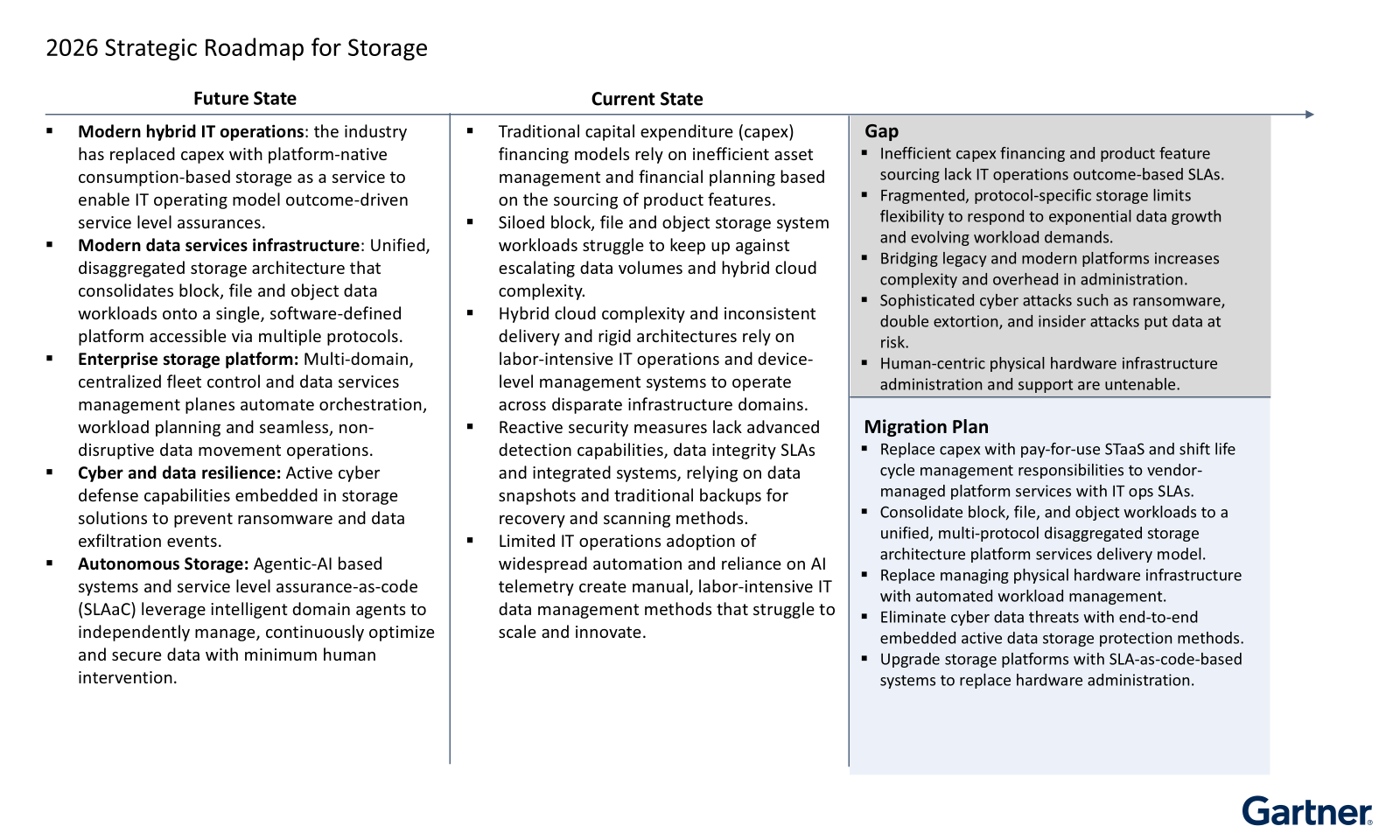
Figure 1 identifies the current and future state of the enterprise data storage landscape. This Strategic Roadmap covers the key gaps between the current and future state, and provides short-, medium- and long-term action plans to invest.
Future State
Table 1 outlines future-state developments, which are detailed in this section.
Future-State Storage Developments
Future-State Developments | ||
Modern Hybrid IT Operations Platform
| Modern Data Infrastructure
| Enterprise Storage Platforms
|
Cyber and Data Resilience
| Autonomous Storage
| |
Source: Gartner (September 2025)
Heads of I&O should evaluate each of the future state sections below and integrate them into a hybrid platform strategy as outlined in the roadmap. They need to lead an internal effort among constituents to shift to metric-based SLAs that favor IT operating model outcomes. After decades of managing product attributes and features, such as performance and capacity efficiencies, future storage initiatives must deliver modern IT operations built on simplicity, agility and flexible software-defined, workload-elastic infrastructure.
Modern Hybrid IT Operations Platform
Modern hybrid IT operations platforms fundamentally represent a significant shift in how organizations approach the management and control of their IT infrastructure, particularly storage, in order to effectively meet business demands. It is unequivocally defined by a shift toward an infrastructure platform cloud operating model, which inherently prioritizes highly automated and resilient infrastructure designed for agility, security, and superior user experiences. Like public cloud, hybrid IT infrastructure is now expected to scale instantly and operate seamlessly across global and sovereign geographies, a critical capability that empowers organizations to respond in real time to dynamic business demands.
CIOs are under significant pressure to reduce IT operating costs, optimize spending through technical debt reduction, and clearly articulate the inherent business value of IT investments to critical stakeholders and the C-suite. It is imperative to define concrete business outcome metrics that demonstrably show business value, thereby proactively delivering high levels of return on investment (ROI) from digital initiatives, including AI. This strategic area focuses on leveraging the distinct strengths of an on-premises robust cloud operating model to not only achieve greater business value from IT operations but also to foster value-based IT innovation and concurrently establish a comprehensive framework for ITOps-as-a-service with self-governing platforms.
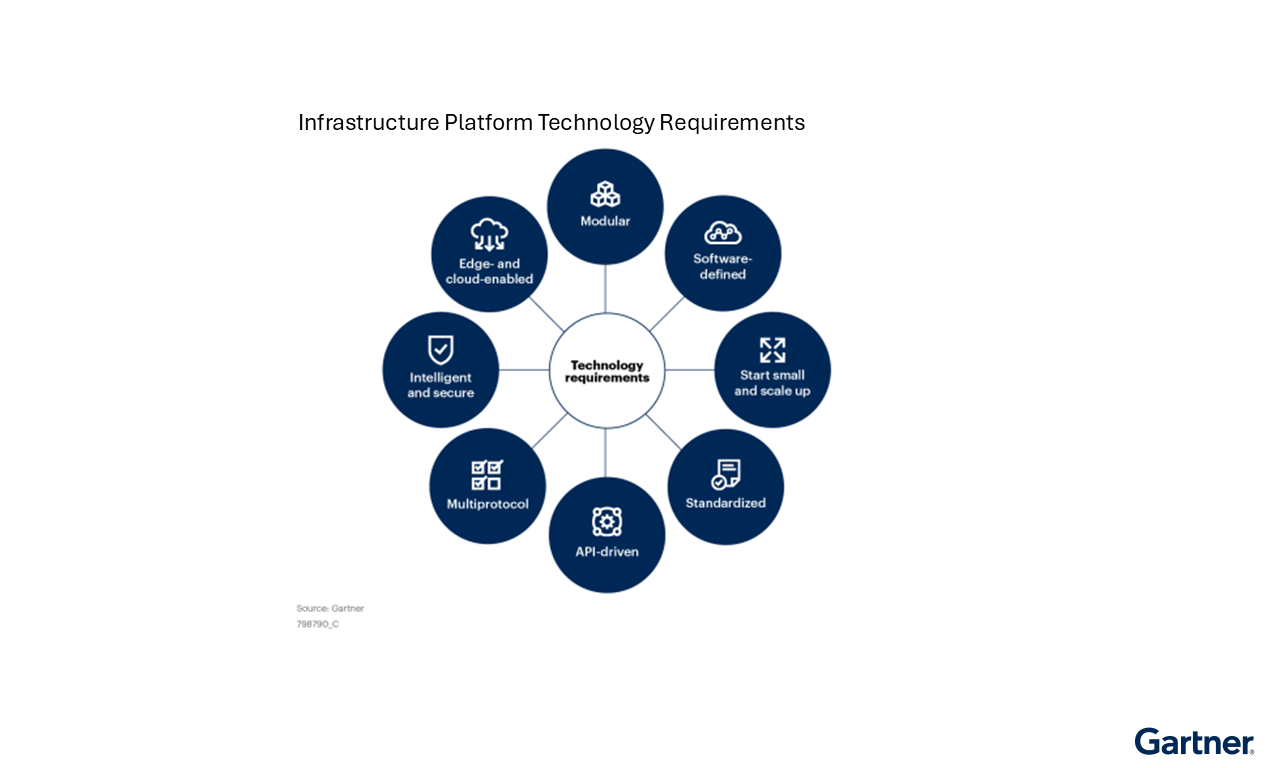
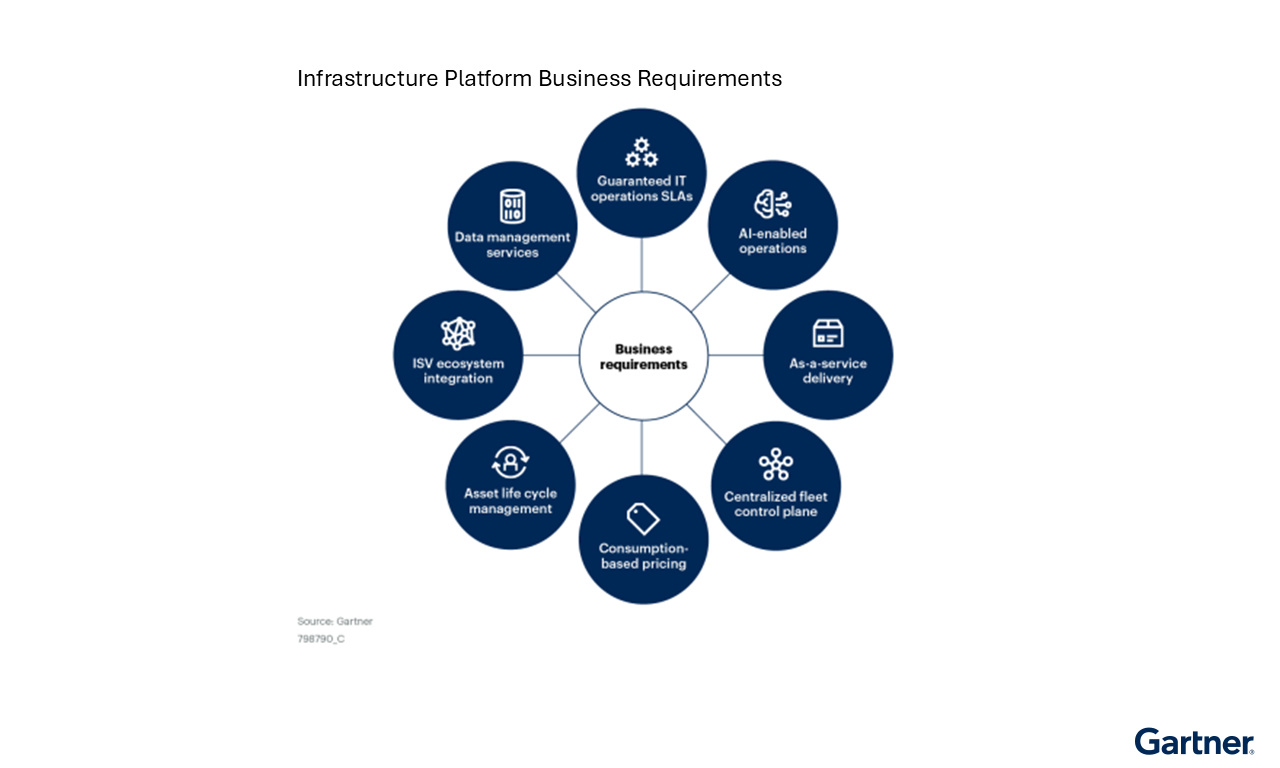
As specifically illustrated in Figure 2 and Figure 3, infrastructure platform consumption services (IPCS) serve as a foundation for on-premises modern hybrid IT operations, enabling a cloud operating model to deliver a true consumption services experience firmly anchored in enterprise-class storage, compute, and networking capabilities. The core platform business and technology principles that form the foundation of IPCS are extensively detailed in the Stop Buying Storage, Embrace Platforms Instead insights.
To enable modern hybrid IT operations, SLA thresholds are programmed to drive specific outcome-driven operations’ commitments, which are rigorously enforced and meticulously managed through the sophisticated storage platform’s controller runtime operating system. This groundbreaking approach fundamentally changes how storage resources are dynamically provisioned, administered, continuously optimized, and robustly protected. These embedded SLAs are no longer merely contractual obligations; instead, they are fully operationalized within the platform itself, facilitating real-time adjustments to maintain metric-based performance and compliance. The advanced storage controllers manage storage resources declaratively, vigilantly enforce their desired state, continuously optimize performance, and possess the ability to handle numerous complex storage actions simultaneously. Consequently, the entire storage environment and data services effectively evolve in direct alignment with dynamic business requirements, all seamlessly underpinned by autonomous storage capabilities.
Modern Data Infrastructure
Modern data infrastructure is fundamentally transforming IT, moving from fragmented systems to unified, multiworkload, intelligent, and automated platforms. The adoption of software-defined storage (SDS) and disaggregated controller-storage architectures is complementing the transformation. SDS abstracts hardware from the main controller operating system, providing enhanced flexibility, scalability, and efficiency in terms of cost performance. This enables the use of commodity hardware to lower hardware costs, along with increased flexibility and mitigating vendor lock-in across proprietary infrastructure. Crucially, SDS is foundational for cost-effective, independent scaling of compute and storage resources in disaggregated architectures. SDS shifts IT’s focus from managing physical infrastructure attributes to workload-centric application requirements, thereby abstracting complexity and allowing applications to dynamically consume resources through autonomous storage actions.
Intensifying global regulations necessitate a rethinking of data governance and infrastructure resilience strategies, encompassing data privacy and sovereignty. This requires advanced platform governance models and continuous compliance monitoring in accordance with regulatory demands. Organizations are investing in unified management platforms that provide end-to-end visibility, policy enforcement, and auditability across storage domains, integrating risk-based governance into the operational fabric. Heads of I&O are also exploring scenario planning for potential policy changes in accordance with supply chain changes to allow for repatriation of workloads on-premises, where it aligns with risk and cost objectives.
As illustrated in Figure 4, on-premises IPCS provides heads of I&O with an IT operations model framework and core infrastructure essentials to guide and execute a modern data services infrastructure strategy. IPCS transforms IT from managing tech debt to a self-directed services platform that enables rapid innovation and business outcomes. It enhances infrastructure economics by replacing traditional product sourcing and disruptive hardware refreshes with SLA-based outcomes aligned with C-level priorities.
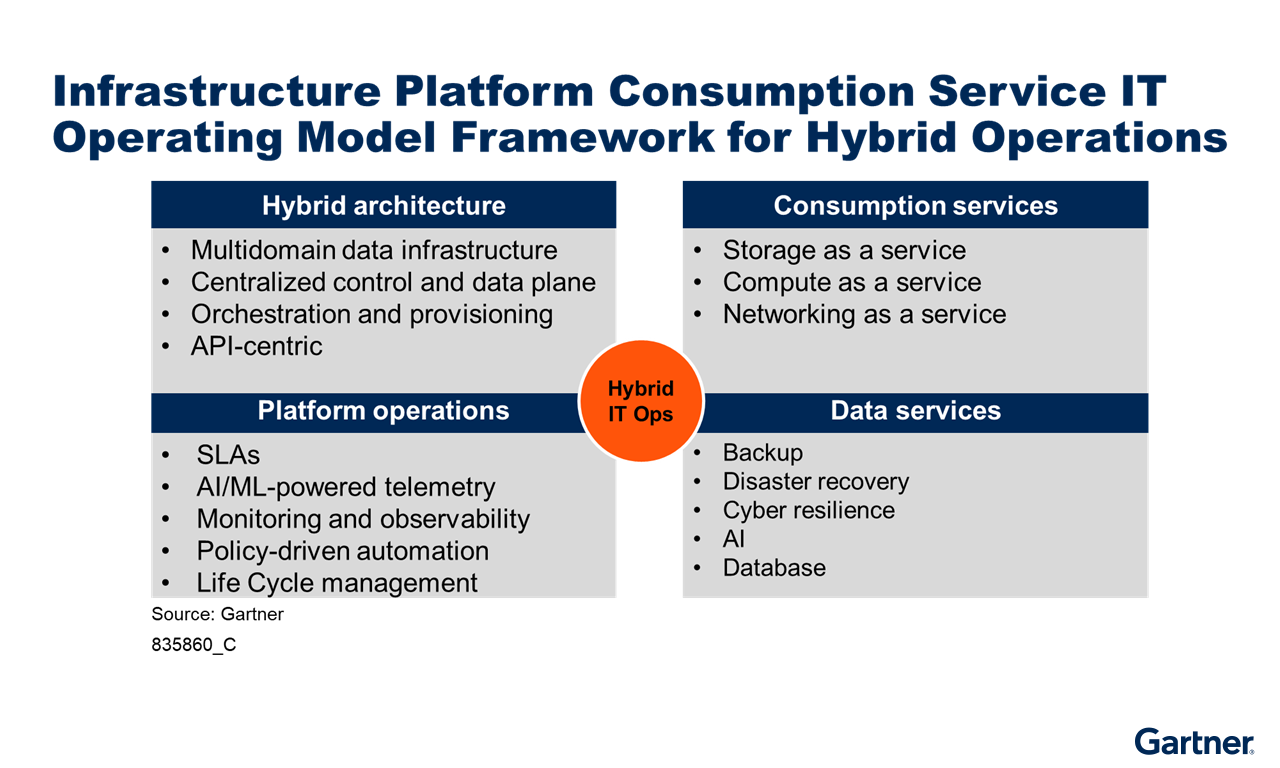
To manage these sophisticated environments, a centralized platform control plane is essential, providing life cycle management (LCM) technology and lifetime platform services value. The control plane acts as a hybrid infrastructure management plane, enabling orchestration, provisioning, and fleetwide management across platform stack resources and data services in hybrid, multidomain environments (on-premises, public cloud, edge, colocation). The unified management and control plane enables nondisruptive workload placement and portability, ensuring seamless execution and resource allocation with little to no manual intervention. A complementary data plane focuses on seamless data movement and governance, encompassing integrated services like backup, disaster recovery, ransomware protection, and policy enforcement. This includes automated governance mechanisms to enforce data sovereignty and compliance policies, leveraging AI/ML techniques for data classification, governance, and risk mitigation.
Enterprise Storage Platforms
Enterprise storage platforms (see Magic Quadrant for Enterprise Storage Platforms) serve as modular, software-defined, scalable, and programmable solutions designed to provide multiple types of data services and accommodate diverse workloads. Made up of structured data applications (block) and unstructured data applications (file and object), they are often siloed, complex and expensive to manage. A variety of feature-specific enterprise storage workload requirements — from virtual machines and containers to AI and analytics — has led to isolated infrastructure, each with its own discrete operating, management systems and tools. This approach causes infrastructure sprawl as separate storage systems, servers and cloud environments are provisioned to meet these narrowly defined requirements. The negative effects are significant, leading to:
- Increased total cost of ownership.
- Operations management complexity.
- Lack of control and visibility.
- Inefficient use of resources.
- Escalating compliance risks.
- The inability or slowed response to business demands.
- The restriction of abilities in leveraging modern analytics and business intelligence.
The goal is to transition from these disparate, fragmented systems to unified, enterprise storage platform architectures, offering multiworkload and protocol support for various access types such as network file system (NFS), block (whether Fibre Channel or NVMe-oF), and object storage. This consolidation simplifies operational complexity and better management by escalating unstructured data volumes and moving toward a future where file and object data are managed on a single, software-defined platform without disruptively ripping out the hardware layer.
A key principle driving these modern platforms is the shift to workload-based management, enabling improved agility and responsiveness to changing business demands, continuous cost optimization, and higher levels of resilience. This involves a fundamental shift for IT from managing physical infrastructure specifications to managing workload attributes that support application requirements. Workload attributes describe how the platform manages, processes and optimizes workloads at a platform level through resource allocations, policy enforcement and resilience factors. By leveraging intelligent infrastructure and AI for storage-enabled functions into a centralized control plane, these platforms automate infrastructure provisioning in line with application consumption, analyze telemetry and events to identify patterns or anomalies, and support proactive responses to mitigate risks.
This evolution encompasses the entire spectrum of externally connected storage for on-premises, cloud and edge workloads, transcending the traditional physical appliance paradigm to embrace software-defined and cloud-based STaaS. Block storage, typically associated with storage area networks (SANs) for high-performance applications like databases, and file systems and unstructured data via network-attached storage (NAS) or object storage, are no longer viewed as isolated infrastructure and workload entities but as integrated within these modern-day unified platforms. These platforms are designed to seamlessly integrate and operate within hybrid and multicloud deployment scenarios, allowing for standardized data services and data workflows between edge, core, and public cloud environments.
Cyber and Data Resilience
Cybersecurity is paramount for the majority of heads of I&O, requiring robust and proactive monitoring and effective response systems within the I&O stack. At the heart of protecting data is storage. Future cyberstorage protection aims to counter sophisticated threats such as AI-powered cyberattacks and quantum-driven threats, shifting focus to securing the data itself and understanding threat behavior. Crucially, storage systems are now the last line of defense against compromised data, including data exfiltration. Heads of I&O recognize that a layered platform approach is essential for defending and protecting against advanced cyberthreats.
Next-generation methods must go further to combat sophisticated AI or quantum computing attacks by actively working to prevent attacks from reaching the data. This involves advanced techniques like fully homomorphic encryption (FHE). This groundbreaking capability allows computations to be performed directly on encrypted data without decryption. FHE significantly enhances data resilience, privacy, confidentiality, and integrity, broadening “trustless systems”. It’s especially crucial for heavily regulated sectors like finance and healthcare. Hardened encryption techniques beyond Advanced Encryption Standard 256 (AES-256) are essential for both data at rest and in transit in a quantum computing era.
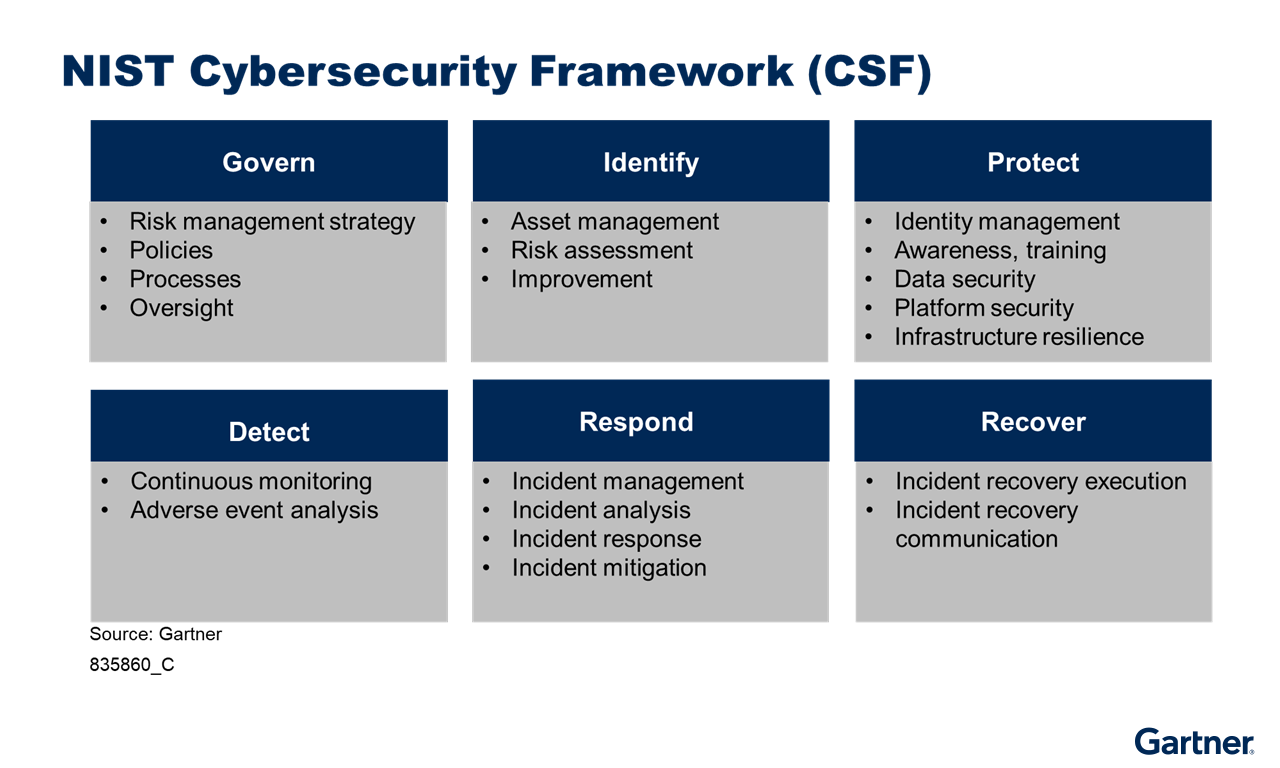
As illustrated in Figure 5, the NIST cybersecurity framework (CSF) is a voluntary set of guidance and best practices from the National Institute of Standards and Technology that helps organizations manage cybersecurity risk. For the data storage environment, the framework underscores how infrastructure platform leaders are leveraging cyberstorage capabilities to actively protect against cyberthreats. Safeguarding against future cyberthreats beyond ransomware requires a layered approach to address crucial vulnerabilities in your data storage infrastructure and future cyberthreats. Traditionally, efforts have been focused on protecting the network perimeter, applications and endpoints. However, attackers are increasingly focusing on data storage, often exploiting vulnerabilities through ransomware, malware, AI data poisoning and data exfiltration. The concept of cyberstorage is about actively defending storage systems by preventing attacks, detecting breaches early and blocking attacks as they happen. It also supports capabilities such as analytics, forensic analysis and intelligent recovery. This proactive approach minimizes the overall impact of a breach.
In the near future, a pivotal transition for heads of I&O will involve embracing autonomic, AI-powered storage platform operations that feature data protection capabilities rather than merely backing up immutable copies for recovery purposes. This forms the foundation for advanced actions such as continuous threat simulation and real-time monitoring techniques that mimic real-world attack scenarios to identify vulnerabilities, prioritize risks and validate security controls. A platform-centric approach mandates an integrated, intelligence-driven security posture coupled with cross-platform visibility across the entire data environment. The strategic use of AI to contextualize and prioritize risks is an essential operational imperative to thwart attacks, including those involving insider malfeasance. To achieve a holistic security approach, cyberstorage capabilities must be integrated with existing security information and event management (SIEM) and user and entity behavior analytics (UEBA) solutions.
Behavioral context-aware analytics is emerging as a cornerstone of cyber data resilience. This sophisticated approach provides a more comprehensive threat picture by using AI-powered multimodal and contextual data analysis to correlate diverse data types. High-fidelity detection models are crucial, powering learning systems through continuous threat modeling and simulations, thereby improving accuracy and lowering false positives. These models ingest and correlate data across the platform stack for rapid identification of complex threats. It enables adaptive defense mechanisms by delivering context-rich insights and actionable intelligence. By analyzing behaviors related to data access and manipulation, next-generation behavioral analytics can identify suspicious activities or abnormal data transfers originating from storage systems. This effectively pushes malicious threat detection down to the granular level of data classification and usage, based on the type of data and its risk profile.
Every cyberattack typically follows a distinct life cycle pattern. By leveraging AI and machine learning systems in conjunction with autonomous methods, heads of I&O can establish dynamic baselines of normal user and system behavior. These baselines, combined with an understanding of the anatomy of a cyberattack and the implementation of contextual, risk-adaptive responses, enable systems to anticipate and contain potential disruptions across vast data sets. This adaptive capability significantly surpasses static, rule-based systems. The focus for containment shifts to data resilience, providing tools that can flag subtle, sophisticated threats that would otherwise evade detection at the system level. Future developments also include postquantum cryptography (PQC) with cryptographic algorithms designed to withstand quantum computer-generated threats and privacy-preserving machine learning (PPML) for AI models processing sensitive data without exposure.
Next-generation autonomous solutions are pivotal in creating continuous threat evaluation capabilities across all phases of the cyber incident life cycle. A data-centric resilient platform provides a more robust cyber-resilient defense, notably through the innovative use of autonomous storage that embeds SLA events that are codified into the runtime environment to execute real-time actions against detected threats.
Autonomous Storage Infrastructure
Autonomous storage infrastructure (ASI) represents a modern class of storage platforms that are designed to self-manage, self-optimize, and self-heal with minimal to no human intervention. ASI is powered by AI/ML learning systems and agentic AI capabilities. AI, particularly generative AI (GenAI), and agentic AI, is presented as a central strategic and operational imperative that is fundamentally shifting IT’s role to managing SLA outcomes. This is achieved by leveraging AI capabilities, in conjunction with embedded SLA policy-driven automation, to transform traditional storage into an intelligent, self-operating platform utility. This shift toward ASI-enabled operations is a key element in addressing modern IT operations, intractable IT issues, and escalating costs from increased data volume and separate data sources. ASI, in combination with service-level assurance as code (SLAaC), bridges the trust gap between autonomous outcomes and platform operations. SLAaC is service-level assurances codified as executable code within storage runtime environments that enable autonomous outcomes based on predefined threshold events.
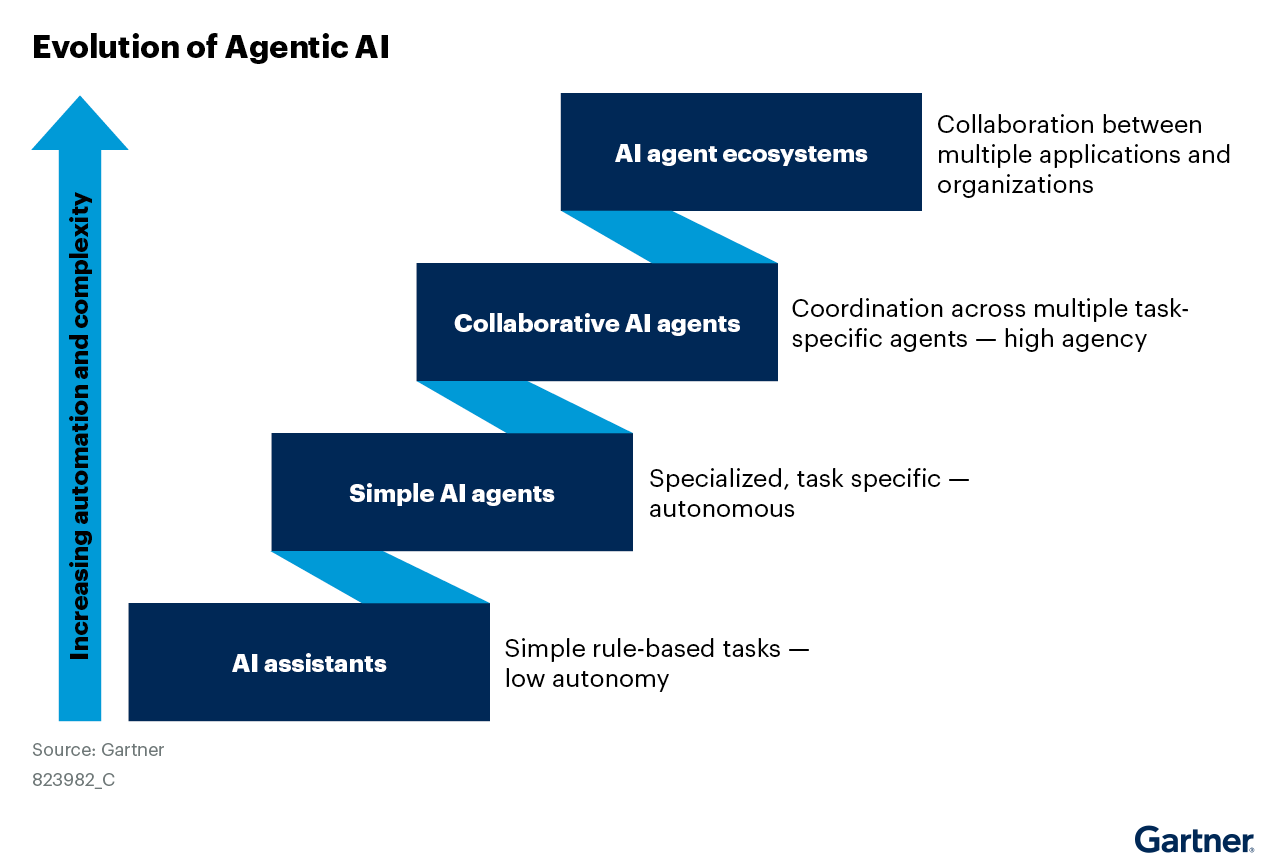
Agentic AI and multiagentic agents are already transforming the landscape of AI-powered ASI, enabling storage platforms to operate with unprecedented levels of independence, adaptability and intelligence. Agentic AI empowers storage platforms to act as an autonomous utility that can set goals, plan, execute and adapt threshold events in real time and with high agency. As illustrated in Figure 6, the evolution of agentic AI from deterministic rule-based tasks to multiagent collaborative workload actions can solve complex, interconnected platform demands. Multiagent storage workload systems leverage collections of autonomous agents to collaboratively manage, balance and optimize data storage infrastructure. These systems break down complex infrastructure activities — such as balancing load, ensuring uptime and enabling responsive data access — by distributing operations across agents that collaborate in real-time. The agents communicate directly or through a shared data layer to orchestrate workflows.
Vendors are actively investing in automation and AI to autonomize storage environments, targeting simplified management and bending cost curves in favor of a more efficacious platform. The adoption of autonomous storage and SLA outcomes is expected to streamline labor-intensive processes and contribute to operational excellence by automating tasks that currently consume a significant portion of IT teams’ efforts, such as managing alerts, support and refresh/renewal cycles. The overall impact is a significant improvement in workforce productivity and operational efficiency, helping to manage the escalating data proliferation and complexity across hybrid cloud and edge environments.
Current State
Organizations have endured a volatile, uncertain, complex and ambiguous (VUCA) period over the preceding year, and all indicators suggest these challenging conditions will persist and possibly intensify. VUCA accurately describes the business and technology landscape where rapid, unpredictable changes, interconnected global events and unclear outcomes have become the norm. IT operations has faced several challenges and obstacles, including inflation-related economic headwinds, a catastrophic rise in cyberthreats driving vulnerabilities and pressure to implement new GenAI projects, while managing the proliferation of unstructured data everywhere. The only path forward is for IT operations to survive and thrive through infrastructure platform consumption services, based on the modernization of IT operations and adoption of next-generation platform technologies.
Storage infrastructure is siloed, complex to manage, labor-intensive and rigidly inflexible to workload demands. The focus on managing physical hardware infrastructure compromises IT investments in innovation, leaving organizations exposed to missed opportunities and critical risks, including:
- Slow innovation — time and resources to move through each stage of innovation.
- Increased operational costs — lack of continuous cost optimization strategies, lack of widespread use of automation, and reliance on capex.
- Limited scalability and flexibility — rigid, monolithic storage architectures unable to handle exponential data volumes and diverse, hybrid workloads.
- Cyberthreats — predominantly reactive, focused on recovery and inadequate scanning methods against data repositories.
- Talent drain and skills gaps — lack of widespread use of AI for storage and SLA management methods to replace labor-intensive IT hardware operations, support and upgrade/renewal processes.
- Growth — absence of business-aligned platform-specific workload initiatives.
In 2026:
- GenAI will rapidly evolve from a novel research area to a transformative technology.
- Cyberstorage will emerge as a critical component of modern data infrastructure.
- Over 45% of storage refresh/renewal capacity will be converted to STaaS to take advantage of new SLAs.
- Hybrid and multicloud storage will be used for tiering or backing up to the public cloud and long-term retention.
- SDS will transform the storage landscape by decoupling storage from the underlying hardware.
- Automation with AI-powered AI for storage will emerge as a transformative force in IT operations.
- Object storage will become a foundational technology for exponential unstructured data growth.
- Data sovereignty and governance will become a core concern for enterprises and governments.
Gap Analysis and Interdependencies
Heads of I&O should conduct a comprehensive assessment of current IT processes, methodologies and key activities to guide infrastructure modernization initiatives, and inventory those gaps that need to be addressed to future-proof the data storage environment. Specifically:
- Replace five- to seven-year storage renewal/refresh activities with managed STaaS and extend asset usage life up to 10 years, commensurate with nondisruptive technology LCM programs — with ironclad non-negotiable platform SLAs and KPIs to contractually underscore life cycle commitments.
- Upgrade on-premises storage systems with infrastructure platform consumption services capabilities that include an integrated data management services architecture to deliver consumption-based as-a-service SLA benefits that favor IT operations, such as productivity, cyber resilience and intelligent asset-managed systems.
- Integrate advanced automation capabilities to offset hardware administration, support costs and labor-intensive processes that provide a solid foundation for rapid innovation.
- Replace proprietary hardware-centric storage appliances with SDS infrastructure based on disaggregated storage architectures that can scale simply and flexibly across hybrid infrastructure.
- Consolidate structured and unstructured storage workloads to a unified, multiworkload access platform architecture.
Migration Plan
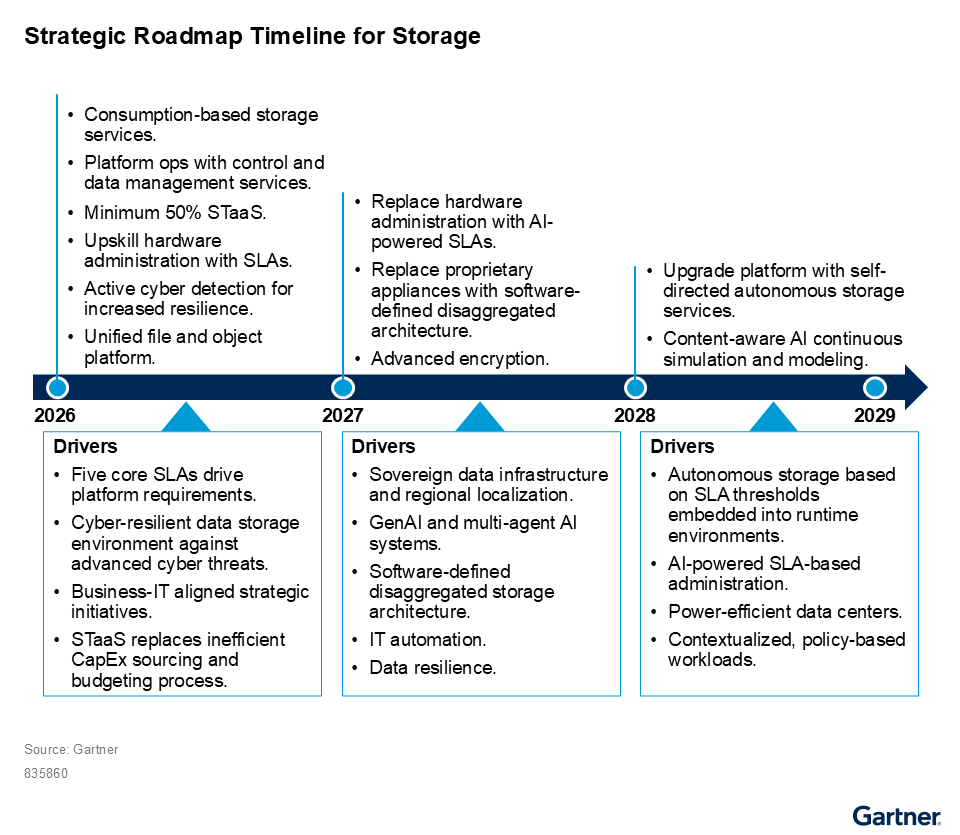
Figure 7 illustrates our recommended migration plan for enterprise data storage. This plan will help heads of I&O to develop an agile services-based, infrastructure platform-native IT operating model that will scale with business demands, accelerate IT innovation and remove technological barriers. In return, heads of I&O will see a significant improvement in higher levels of productivity, a more efficient use of IT budget and a more resilient infrastructure to withstand the critical issues, such as ransomware, that businesses face.
Higher Priority
Identify resources and timeline to:
- Develop a hybrid infrastructure platform consumption services strategy to drive multicloud initiatives. Avoid the zero-sum trap of on-premises vs. public cloud.
- Identify candidate workloads to replace with STaaS and SLA commitments at refresh or upgrade.
- Augment subject matter expertise skills with SLA management to include hardware administration and support with vendor-managed AI for storage tools. Map them to critical resources, and collaborate with vendors to continuously develop AI capabilities in support of platform SLA initiatives.
- Enhance cyber storage ransomware protection and recovery capabilities with a proactive defense system that considers the cyberthreat life cycle.
- Avoid deploying separate file and object storage systems for those unstructured data use cases that are ideally suited to a single, multiprotocol common file and object store solution.
Medium Priority
Identify resources and timeline to:
- Replace hardware administration with AI-powered SLAs.
- Replace proprietary hardware systems with disaggregated storage architecture.
- Implement workload attribute-based intelligent systems.
- Integrate behavior analytics into cyber resilience systems.
Lower Priority
Identify possible near-term and future technologies and deployment methods for workloads such as:
- Upgrade the platform with self-directed autonomous storage thresholds.
- Deploy context-aware AI continuous simulation and modeling services management.
- Over 1,000 client inquiries
- Gartner insights (included and/or referenced)
- Voice of CIO