Critical Capabilities for 4G and 5G Private Mobile Network Services
10 March 2026 - ID G00828052 - 52 min read
By Pablo Arriandiaga, Mohini Dukes, and 5 more
Private mobile network services based on 4G and 5G are evolving into AI-driven services and platforms for dedicated industrial, campus, hybrid and neutral-host use cases. CIOs should leverage these leading opex-based offerings for secure IT/OT unification, reliable ultra-low latency and seamless roaming.
Overview
Key Findings
- Enterprises in mining, ports and manufacturing deploy ruggedized, geo-redundant private 5G with local breakout to guarantee sub-20ms latency for autonomous machinery and worker safety. In healthcare and higher education, campus environments complement unreliable Wi-Fi with centrally orchestrated, multisite networks that secure high-density clinical and student workflows while integrating seamlessly with enterprise IT.
- Logistics and utility firms use hybrid private 5G (shared radio access network [RAN]/multioperator core network [MOCN]) with smart-SIM logic to enable seamless roaming between private cores and public macro networks for mobile assets. Large venues and hospitals implement neutral-host models to deliver multicarrier indoor coverage on shared infrastructure while logically isolating critical operational traffic.
- Vendors offer zero-touch provisioning (ZTP) to reduce node initialization from days to under 30 minutes and integrate unified dashboards that manage private 5G, Wi-Fi and switching through a single pane of glass. These platforms leverage AIOps for predictive maintenance, enabling generalist IT teams to detect “silent” anomalies early, reduce service-level agreement (SLA) breaches and enforce zero-trust data sovereignty.
- Industrial and logistics sites leverage static 5G slicing with dedicated resource reservation alongside hybrid (shared RAN) models using smart-SIM logic. This approach maintains private-network SLAs while enabling seamless roaming onto public carriers for extended coverage.
Recommendations
CIOs responsible for developing strategy and selection criteria for 4G/5G private mobile network (PMN) services to support digital transformation should:
- Secure mission-critical resilience and data sovereignty by mandating ruggedized, redundant architectures with local breakout (local user plane function [UPF]) in RFPs to guarantee sub-20 ms latency for automation and ensure sensitive data never leaves the premises.
- Maximize asset mobility and infrastructure ROI by adopting hybrid (shared RAN/MOCN) models with smart-SIM logic (e.g., multi-International Mobile Subscriber Identity [IMSI]) for seamless public-private roaming and neutral-host architectures that support multicarrier access while strictly isolating critical traffic.
- Accelerate deployment and unify operations by validating vendor ZTP claims for sub-30-minute node initialization and by leveraging AIOps baselines to detect anomalies across 5G and Wi-Fi via a single pane of glass.
- Guarantee deterministic SLAs on shared networks by enforcing static 5G slicing with dedicated resource block reservation for critical operational technology (OT) traffic in contracts, ensuring isolation from congestion on cost-effective shared RAN infrastructures.
What You Need to Know
The private 4G and 5G services market has evolved from custom-made engineering pilots into scalable, service-based solutions delivered mainly through operational expenditure (OPEX) models. For CIOs, this shift means cellular connectivity is no longer a stand-alone OT silo but is now an integral part of the enterprise IT fabric — programmable and accessible via APIs for greater automation and integration. Modern platforms now allow IT teams to apply zero-trust security policies and cloud-native orchestration — traditionally used in the corporate LAN — to mission-critical industrial environments. The integration of generative AI and AIOps has democratized operations, enabling generalist IT staff to use natural-language queries to troubleshoot complex radio issues and predict hardware failures before they disrupt production. We recommend organizations use this research in conjunction with the companion Magic Quadrant for 4G and 5G Private Mobile Network Services, Gartner Peer Insights, inquiries with Gartner analysts, and other Gartner research to comprehensively evaluate their requirements and select solutions that best match their needs.
CIOs should use this report to map their needs for use cases and specific operational risks to validate vendor use-case architectures and service capabilities. The 2026 analysis integrates 5G network slicing and neutral-host networks (NHN), as market data confirms these have matured from theoretical concepts to essential cost-optimization tools. Leverage the comparative analysis to identify vendors that deliver genuine single-pane-of-glass convergence for both Wi-Fi and cellular network management, as well as platforms that employ agentic AI to automate Day 2 life cycle operations. Additionally, the evolution of service management and support toward autonomous Level 1 and Level 2 support is a trajectory that several vendors featured in this research have already initiated. This enables organizations to balance the strict isolation required for safety systems with the economic flexibility of shared infrastructure, ensuring informed, future-ready vendor selection.
Analysis
Critical Capabilities Use-Case Graphics
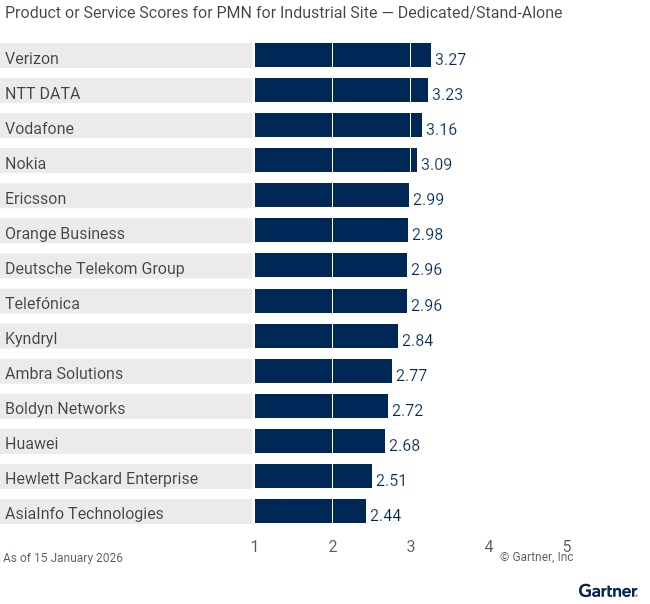
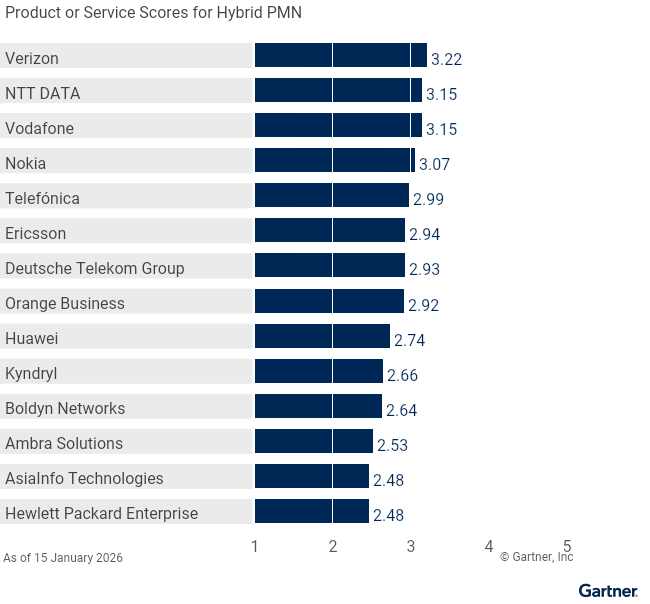
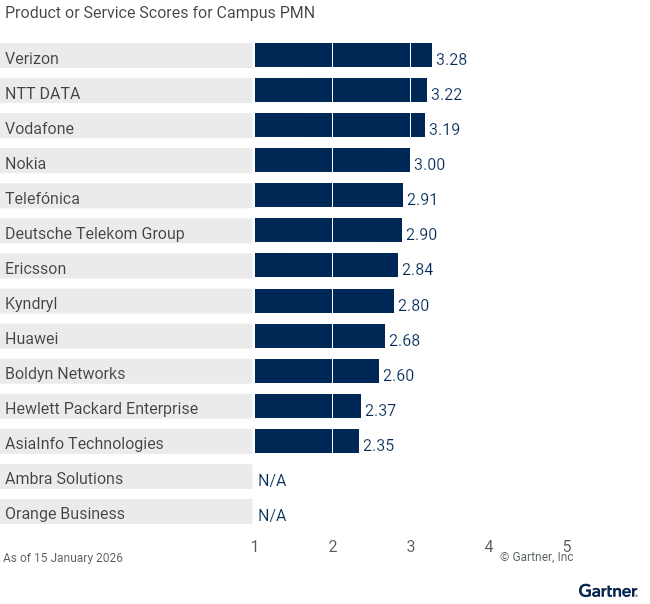
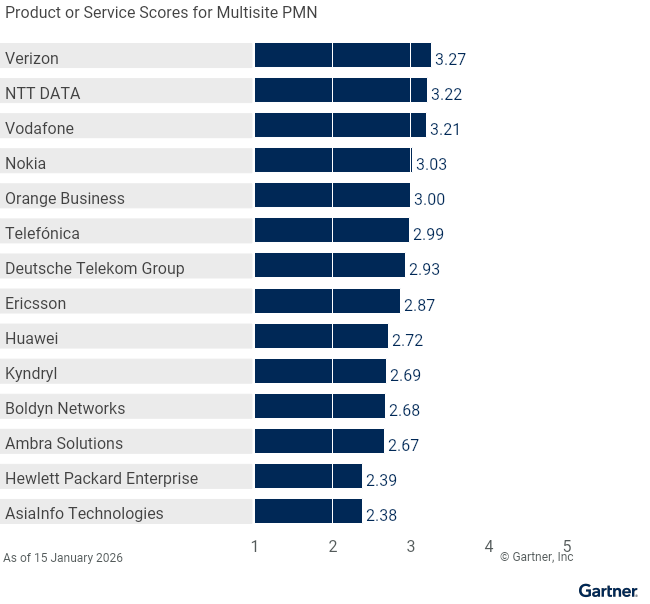
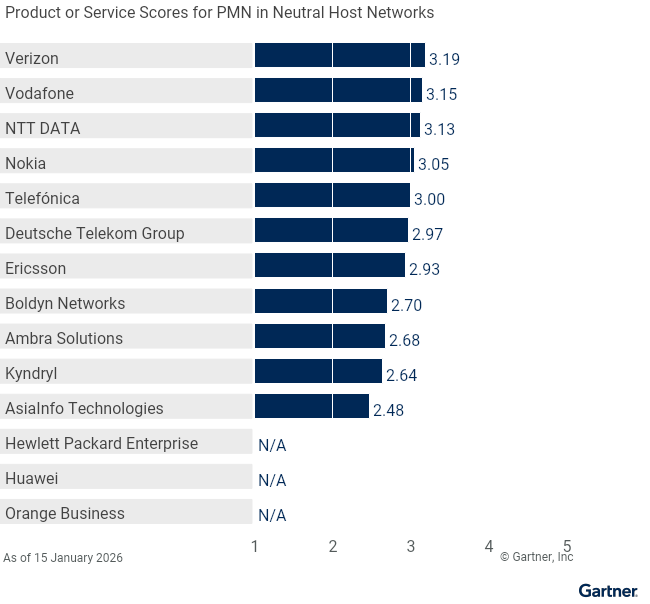
Vendors
Ambra Solutions
Ambra Solutions provides turnkey private 4G and 5G mobile networks engineered specifically for mission-critical industrial operations in harsh environments. Operating as a vendor-agnostic service provider, Ambra leverages industry-leading RAN and core network technologies from principal partners Ericsson, HPE and Nokia to deliver carrier-grade reliability and performance. A recent major feature launch includes an embedded SIM (eSIM) captive portal, enabling visitors at industrial sites to securely connect to the private network via QR code. This approach provides a secure and streamlined alternative to traditional guest Wi-Fi access methods.
The solution is best suited for private mobile networks for industrial sites (OT Focus), particularly within the underground mining and heavy industrial sectors. This use case highlights the vendor’s core strength in network design, as all site surveys, architecture and radio planning are performed in-house to overcome technical obstacles, such as metal-walled “Faraday cage” buildings and underground radio frequency (RF) propagation. By maintaining complete internal control over the design process, Ambra Solutions ensures 100% coverage for mission-critical applications, including remote machinery operation and real-time personnel tracking. Ambra supports all use cases defined in this research except Campus.
A standout capability is implementation and integration, characterized by a rigorous factory acceptance testing (FAT) protocol. This capability is reinforced by an optional device logistics and management service, where the vendor manufactures proprietary, vibration-compatible IP67 devices — including rugged modems and products such as Smartload mini modems or cap lamps — to ensure hardware reliability in high-vibration environments where off-the-shelf components frequently fail. Ambra Solutions also utilizes a vendor-agnostic, end-to-end sourcing strategy tailored for complex, mission-critical industrial environments. Ambra Solutions distinguishes itself by stepping in as a manufacturer when market offerings do not meet the stringent requirements of its clients, ensuring optimal performance and reliability in every deployment.
The most significant gap in the current offering is the lack of support for the campus IT use case, including the absence of production-ready 5G network slicing and standard edge computing services (though custom-made requirements can be supported). Both capabilities are currently listed as not offered or not applicable in existing deployments. The lack of production-ready 5G network slicing and standard edge computing limits traffic isolation and segmentation capabilities, reducing support for hybrid environments where slicing is required to securely separate client information and local edge processing is essential for advanced industrial use cases.
AsiaInfo Technologies
AsiaInfo Technologies delivers end-to-end 5G private mobile network services, software-defined network appliances and industrial AI integration, focusing on programmable connectivity for heavy industries. Its offering is built on the AISWare AgileNet portfolio, integrated with general-purpose hardware from partners such as Intel, and is primarily deployed in energy, nuclear power, wind power and manufacturing.
Recent enhancements include integration of 5G with industrial digital twin applications, expansion of the 5G All-in-One base station portfolio, and upgrades to the multiaccess edge computing (MEC) platform to support third-party industrial applications for local data processing.
AsiaInfo’s services are best suited for industrial environments needing secure, resilient and programmable connectivity, especially in nuclear power, wind energy and manufacturing. These deployments highlight strengths in network design, spectrum management and industrial AI integration. AsiaInfo’s AI-RAN and agentic AI architecture embeds intelligence in the network core, enabling predictive fault detection and self-healing for mission-critical operations.
A key differentiator is AsiaInfo’s advanced 5G network slicing, delivered as a dynamic, software-driven service. AsiaInfo enables automated life cycle management of network resources and offers network slicing as a service, allowing clients to create secure, high-performance private slices from public carrier networks. The AISWare AgileNet platform further enhances efficiency, using AI to bridge physical network data with industrial digital twins for optimized performance. Security is reinforced through architecture-driven measures, focusing on strict physical and logical isolation for high-stakes environments. Reliability is ensured through hard slicing techniques that dedicate compute resources to specific security zones, a critical capability for nuclear sector clients. AsiaInfo supports all use cases defined in this research.
AsiaInfo’s spectrum management is advisory-based. Without owning spectrum assets, AsiaInfo partners with communications service providers (CSPs) such as China Mobile to help enterprises obtain legitimate spectrum or assists enterprises or apply for dedicated industrial spectrum where permitted.
The main area for improvement is AsiaInfo’s operational support model and native device logistics. Although global coverage is available through a remote 24/7 Global Network Operations Center (NOC) operated from China, the vendor’s deployment footprint remains heavily concentrated in the Asia/Pacific region. Ongoing field operations in other regions rely primarily on a network of local partners, which may limit support for multinational enterprises requiring seamless, consistent on-site field services. Additionally, while the self-service portals provide strong slice visibility, they are designed for technically mature clients and lack the over-the-air (OTA) software and firmware management workflows commonly found in global device management platforms.
Boldyn Networks
Boldyn Networks delivers vendor-agnostic 4G/5G private mobile networks services, with over 130 deployments across the U.S., U.K. and Europe. Leveraging key technology partners such as Nokia and HPE, and expanding with Druid Software and Airspan, Boldyn ensures resilience and flexibility in sourcing and network design. Operations are supported by geographically distributed NOCs in the U.K., Finland, Germany and the U.S., alongside a dedicated 24/7 security operations center in Europe. Architectures are engineered for high availability and geo-redundancy, targeting 99.99%+ uptime, and have demonstrated reliability in extreme conditions, from arctic environments to deep mining operations. Boldyn’s platform supports a range of sectors, including mining, energy (notably nuclear power plants), transport hubs, manufacturing, healthcare, education and entertainment venues.
For hybrid and campus environments, Boldyn integrates 4G/5G — including Citizens Broadband Radio Service (CBRS) in the U.S. and multiple bands across Europe — with neutral host distributed antenna system (DAS), utilizing a modular design and geo-redundant 5G cores for orchestration, mobility management and policy control. The platform enables seamless mobility between 5G NR and Wi-Fi through non-3rd Generation Partnership Project (3GPP) interworking functions, with encrypted traffic and extensible authentication protocol (EAP)-5G authentication. SmartSIM technology allows dynamic roaming between private networks and public CSPs, while the proprietary Edge Video Orchestration (EVO) platform achieves ultra-low-latency video for critical applications such as remote driving and advanced surveillance. Commercially, Boldyn offers Private 5G as a Service (P5GaaS) with a four-tier, opex-based model, as well as a design-build-run option for CAPEX/O&M flexibility. Boldyn supports all use cases defined in this research.
Boldyn’s strongest capability lies in its comprehensive, vendor-agnostic network management and orchestration, featuring real-time dashboards, proactive monitoring and incident response, supported by regional innovation labs and test facilities. The solution delivers end-to-end 5G framed routing and native Layer-2 services, supporting traffic flows incompatible with NAT and enabling direct L2 applications. Differentiated quality of service (QoS) for VoLTE and VoNR, and precise indoor/outdoor positioning via BLE, UWB and 5G enhance operational value. Secure device management is enabled through MDM, and mission-critical push-to-talk and video (MCPTx/v) support frontline communications.
For Boldyn, improved integration and automation of device logistics and management — especially for large, multivendor fleets — would enhance the client experience. As IoT and edge device volumes grow, expanding automation and self-service within the management portal will become increasingly important for enterprises seeking scalable solutions across multiple sites..
Deutsche Telekom Group
Deutsche Telekom (DT) Group delivers end-to-end private mobile network services through T-Mobile for Business (TFB) in the U.S., Telekom Deutschland (TDG) in Germany, and DT EU in Austria, Croatia, the Czech Republic, Greece, Hungary, Poland and Slovakia. The current portfolio is based on 5G stand-alone (SA) infrastructure and is marketed as 5G Campus Networks (S, M, L and Private) in Europe and 5G Advanced Network Solutions (ANS) (Public, Hybrid, Private) in the U.S. These offerings leverage scalable control and user planes, virtualized network functions, and support for low-latency, high-bandwidth industrial IoT and MEC. Recent capability enhancements include 5G mmWave (26 GHz) for multigigabit industrial robotics and 5G indoor positioning with improved accuracy via API. Management is centralized through the T-Platform, providing a unified interface for application monitoring, SIM identity management across domains and workflow automation across the connectivity portfolio. The portfolio’s core network and RAN infrastructure is sourced primarily from global OEM partners Ericsson and Nokia, with Huawei utilized for RAN and packet core in select European markets. Additional radio partners in North America include Airspan, Harmon and Commscope, while Mavenir is engaged for specific 5G core and Access Traffic Steering, Switching and Splitting (ATSSS) capabilities.
DT is particularly effective for large industrial campuses and high-density venues requiring high-performance connectivity, data sovereignty and seamless public network integration. In the media sector, RTL Deutschland utilizes a private 5G SA network with remote baseband architecture for flexible, broadcast-quality video production across multiple locations. DT supports all use cases defined in this research.
A strong capability is DT’s network slicing and edge control, enabling enterprises to prioritize mission-critical data and isolate sensitive traffic without dedicated physical infrastructure. In the U.S., T-Mobile for Business’ T-Priority network slice reserves capacity and ensures end-to-end encryption for U.S.-based first responder communications, while Edge Control routes user traffic to on-premises edge servers for secure, localized processing and real-time AI analytics. These capabilities are supported by significant spectrum flexibility, with licensed T-Mobile spectrum in the U.S. and operator-owned or 3.7 to 3.8 GHz industrial spectrum in Germany and Europe.
Harmonizing the U.S. and European portfolios remains a challenge. Despite the unified T-Platform, clients must still adapt to differing service tiers, spectrum strategies and delivery models across regions. While DT offers standardized connectivity tiers, implementing complex Industry 4.0 use cases still depends on custom-made professional services and multivendor coordination. Clients seeking a fully productized, preintegrated industrial application catalog may find integration with diverse third-party OT systems requires significant custom engineering, as DT currently lacks a native, “click-to-deploy” application ecosystem comparable to some competitors.
Ericsson
Ericsson Private 5G is a fully converged dual-mode 4G/5G private mobile service engineered for secure, high-performance industrial, business and mission-critical connectivity. A major recent evolution focuses on architectural resilience and multisite scalability. In its latest release, Ericsson introduced a centralized core deployment model that allows enterprises to distribute only the RAN to remote locations while managing them as a single network. This architecture is bolstered by new geo-redundancy and session continuity features, ensuring that user devices do not drop sessions or need to reauthenticate during network controller failovers, effectively safeguarding business-critical operations across distributed sites.
The product is best suited for medium to large-scale industrial deployments in manufacturing, ports, mining, airports, energy, and logistics operations that require deterministic performance for OT. This use case highlights the vendor’s expertise in network design, as the solution utilizes configuration capabilities to ensure optimal radio propagation and system performance. For example, Toyota Material Handling utilized these design capabilities to replace an unreliable Wi-Fi system with a dedicated 5G network, effectively eliminating data latency for handheld scanners and increasing production efficiency. Ericsson supports all use cases defined in this research.
A standout capability is service management and support, characterized by the provision of guaranteed SLAs. Ericsson offers legally binding system availability guarantees of greater than 99.95%, which are backed by financial penalties and proactive monitoring via global network operations centers. This capability is critical for potential clients because it ensures that high-stakes applications, such as autonomous material movement or real-time line automation, maintain the predictability and reliability required to avoid costly production stoppages.
A significant limitation exists in both radio and core hardware flexibility and device management. Ericsson only provides services based on its own RAN and core. Additionally, device logistics and management are hardware-dependent; while the connectivity management portal tracks basic SIM status for all attached devices, advanced health diagnostics and analytics are only fully accessible for Ericsson Cradlepoint-branded routers. Enterprises deploying diverse third-party IoT endpoints, such as sensors or actuators, lack the same level of granular oversight and automated troubleshooting available for native hardware. Expanding these diagnostic capabilities and multivendor RAN support would allow clients to manage heterogeneous radio and device fleets with greater consistency.
Ericsson declined requests for supplemental information. Gartner’s analysis is therefore based on other credible sources.
Ericsson declined requests for supplemental information. Gartner’s analysis is therefore based on other credible sources.
Hewlett Packard Enterprise
Hewlett Packard Enterprise (HPE) provides both cloud-managed and on-premises private 4G/5G services. The cloud-managed service is delivered as an as-a-service platform for orchestration, monitoring, troubleshooting and configuration across the PMN. The solution is built on HPE’s 4G/5G core software, which was originally acquired in the 2023 Athonet acquisition. The cloud-managed service, introduced in North America, bundles the mobile core with HPE 4G/5G small cells and SAS integration for CBRS, and includes automation wizards for subscriber management and QoS configuration, to speed provisioning. The cloud-managed service is currently limited to the U.S. Outside the U.S., HPE provides the on-premises service, sourcing HPE core software and integrating third-party radios. To support this, HPE signed a global radio resell agreement with Nokia. Another major enhancement is Network Federation, which replicates provisioning data across multiple independent networks, enabling logical grouping and seamless multisite management.
The solution is best suited for campus (IT-focused) and multisite enterprise environments, reflecting HPE’s strategic focus to integrate private cellular with enterprise IT and Wi-Fi. The recent Shared Identity feature allows Wi-Fi devices to authenticate with private cellular credentials, enabling seamless device movement between Wi-Fi and private cellular networks using a single credential, improving efficiency and reducing risk. For multisite scenarios, Network Federation allows independent networks to share SIMs, service profiles, and PLMNs, ensuring users can move between distributed sites without traditional roaming complexity. HPE supports all use cases defined in this research except NHN.
A strong capability is implementation and integration simplicity, driven by ZTP and wizard-based network design tools. The dashboard streamlines complex 3GPP configuration tasks (N2/S1 interface setup, SBI/diameter routing, data network name [DNN]/access point name [APN] segregation) into a seven-step wizard. The on-premises core appliance uses ZTP to automatically connect and download its configuration in minutes, enabling IT staff to deploy and manage private 5G without deep telco expertise, reducing deployment time, complexity and reliance on specialized integrators.
The main area for improvement is the lack of advanced dynamic 5G network slicing orchestration and native PMN inter-site connection fabrics. HPE supports only basic static slicing and does not offer end-to-end dynamic slicing orchestration. There is no native inter-site connectivity such as SD-WAN/MPLS overlays or QoS engineering, relying instead on customer-provided BGP routing. HPE does not offer spectrum acquisition or liaison services, leaving this responsibility to the customer, and lacking device logistics and life cycle management capabilities.
Huawei
Huawei’s 5G to Business (5GtoB) private mobile network service provides a foundation for deterministic networks designed to meet stringent industrial application requirements. The current offering integrates 5G SA and 5.5G (5G-Advanced) infrastructure, including specialized RAN elements such as industrial-grade base stations and the XMN solution for isolated underground environments. The architecture utilizes decentralized core deployment with UPF sinking and MEC to ensure data sovereignty and low latency. Current capabilities include integrated communication-sensing base stations, RedCap support for energy-efficient connectivity, and high-density terminal access supporting over 2,000 devices per base station. Management is unified via the industry network visualization platform and the M+ self-service operation platform, providing both business and network topology visualization and real-time SLA monitoring.
The solution is most suitable for complex, asset-intensive industrial sites requiring high-performance core production connectivity, reflecting Huawei’s ability to deliver tiered SLAs — Platinum, Gold and Basic tiers — for environments needing ultra-large uplink capacity and stable, ultra-reliable low-latency communications (URLLC). It is well-suited for scenarios such as remote control of heavy machinery, autonomous logistics, and large-scale industrial IoT, offering the high availability necessary for mission-critical operations. These capabilities enable the network to penetrate deep into core production processes where traditional wireless technologies often fail due to interference or latency fluctuations. Huawei supports all use cases defined in this research except NHN.
A standout capability is Huawei’s Service and Network Synergy, and SLA precision tools. Through platforms like NetLIVE CoNET for planning and TwinNET for network resilience and reliability simulation, the solution provides business profiling, service simulation, planning and testing, and resilience evaluation, allowing enterprises to plan for specific outcomes such as air interface latency under 10ms. Multinetwork integration is also provided, coordinating 5G, Wi-Fi 6 and optical IP/Fifth-Generation Fixed Network (F5G) into a single domain for unified management of mobile and fixed assets. This is supported by SLA planner simulation platforms that accurately model deployment parameters in complex environments like container-stacked ports.
The primary area for improvement is the high dependency on service-intensive integration models. While the tiered integration service packages deliver high performance, they rely on custom-made professional services, detailed business profiling, and terminal-level optimization to reach full SLA compliance. This service-heavy approach increases the complexity of Day 0 to Day 2 operations for enterprises seeking a standardized multicountry, plug-and-play product that can be managed independently without continuous engagement with specialized vendor technical teams.
Kyndryl
Kyndryl offers 4G/5G private mobile network services through a portfolio that includes the Nokia Digital Automation Cloud (NDAC), a multivendor solution combining the HPE Mobile Core with radios from Airspan or Nokia, and the Nokia Modular Private Wireless Core. Customers can choose between three service models: fully managed by Kyndryl, self-managed or co-managed. Kyndryl can also build and operate the network initially, then transfer operational control to customers following the necessary training.
The solution integrates with the Kyndryl Bridge platform, enabling AI-powered operations, observability, and orchestration across multiple OEM vendors. It provides multisite management, network digital twin integration and SIM visibility. Kyndryl Bridge also integrates network telemetry and feeds insights directly into IT service management (ITSM) systems such as ServiceNow, delivering a unified AIOps dashboard for automated ticketing, anomaly detection, and single pane of glass visibility across multiple vendors and sites.
Kyndryl’s strengths are in PMN deployments for industrial sites — dedicated or stand-alone (OT focus) — with over 50 active industrial sites, primarily in the energy, petrochemical and manufacturing sectors. The company supports mission-critical Zone 1 and Zone 2 live OT production environments, addressing requirements such as connected worker, employee safety and connected transport. In 2025, Kyndryl added multivendor support, enabling radio diversity, NHN capabilities for the U.S. market, and advanced industrial applications such as Nokia Teams Comms (push-to-talk/video), Network Digital Twin and High Accuracy Indoor Positioning. Kyndryl supports all use cases defined in this research.
Kyndryl provides a comprehensive set of services, including network architecture and design, capacity and RF planning, end-to-end sourcing, inventory management, spectrum liaison, acquisition and support, and device logistics and management. Customers can choose between a packaged PMN technical solution or Kyndryl Vital, an advisory engagement model for designing custom solutions. The company delivers 24/7 NOC Levels 1 and 2 support for proactive monitoring and incident resolution, while Levels 3 and 4 technical issues are escalated to the OEM vendor. Standard SLAs for response and resolution times are provided, based on incident severity.
While Kyndryl supports hybrid PMN, campus-IT use cases and 5G network slicing in its portfolio, there are currently no active production deployments for these scenarios. Similarly, the PMN with NHN solution has been launched, but no active deployments exist. For inter-site connectivity, Kyndryl relies on client-provided transport networks, though it can source and provide IP-MPLS or SD-WAN solutions directly. To bridge private and public environments, Kyndryl recently introduced unified SIM and MOCN support, enabling devices and IoT assets to dynamically roam between the PMN and public communications service provider networks.
Nokia
Nokia provides a comprehensive 4G/5G private mobile network service portfolio centered on the Nokia One Platform for Industrial Digitalization, integrating 4.9G/LTE, 5G and Wi-Fi with on-premises edge computing and ruggedized devices. Core offerings include Nokia NDAC, a plug-and-play as-a-service solution and modular private wireless (MPW), a customizable variant for complex, mission-critical environments. Recent enhancements include DAC Private Wireless Compact for small to midsize sites, MX Grid for distributed AI compute at the far edge, and MX Workmate, an OT-compliant generative AI assistant for industrial workers. The platform is anchored by MX Industrial Edge (MXIE), a high-capacity OT edge system hosting the core network and a catalog of “click-to-deploy” industrial applications.
Nokia’s solution is best suited for asset-intensive, mission-critical industrial environments such as manufacturing, mining, ports, and power utilities, where connectivity failure has significant economic or safety consequences. Recent device innovations, such as Visual Positioning and Object Detection (VPOD) for tagless AI-based tracking and industrial 5G, 360-degree cameras, further enhance operational visibility. In maritime logistics, Nokia’s deployment at the Port of Jebel Ali improved cargo efficiency by 40%, while its network at BASF Antwerp provides coverage across six square kilometers of industrial premises. Security is strengthened by SaaS-based NetGuard Cybersecurity Dome, which uses AI trained on telecom topologies to protect critical infrastructure. Nokia has also advanced 5G network slicing, achieving industry milestones such as cross-border 5G stand-alone slice handover for defense. Nokia supports all use cases defined in this research.
A standout capability is Nokia’s “Value Beyond Connectivity” strategy, realized through integration of network infrastructure with an ecosystem-neutral application catalog. Clients can deploy Industry 4.0 applications — such as high-accuracy indoor positioning, video analytics, and drone control — directly onto the MXIE edge platform with a single click. MX Boost, Nokia’s patented technology, aggregates private wireless with Wi-Fi or other radio technologies for optimized throughput and reliability. Nokia also offers strong spectrum flexibility, supporting licensed, shared (CBRS), and unlicensed (MulteFire) bands, maintaining a unique capability to deploy private wireless globally.
The main area for improvement is Nokia’s narrow vertical and single vendor focus, as the vendor prioritizes direct engagement with OT-centric segments like manufacturing and energy. Enterprises in non-OT verticals, such as retail or hospitality, are often managed via channel partners. While NDAC is effective for rapid, standardized deployments, it is less suited for organizations needing extensive customization. Clients with unique architectural demands may be directed to the Modular Private Wireless variant, which involves a higher degree of local management and technical complexity.
Nokia declined requests for supplemental information. Gartner’s analysis is therefore based on other credible sources.
NTT DATA
NTT DATA provides an end-to-end 4G/5G private mobile network service, leveraging solutions from Celona, Cisco, Nokia and Ericsson. The company collaborates with RAN vendors, including Airspan, BTI Wireless, GXC and Lekha Wireless, partners with Palo Alto Networks for PMN security, and works with Dell, HPE, Lanner and Schneider Electric for edge computing infrastructure, including GPUaaS and edge AI. For edge AI, NTT DATA works with Tulip, Litmus and Archetype.
NTT DATA’s Edge Services team consults and supports clients in PMN spectrum application processes, and acquires global PLMN ID (901-xx) to enable native network access for consumer handsets. Furthermore, new zero-touch provisioning and a cloud-hosted “Edgeless Architecture” simplify remote PMN site deployments.
NTT DATA supports all five use cases, demonstrating strength in the industrial site — dedicated or stand-alone (OT focus) — use case. This is underscored by its deployment footprint (the vast majority of its live sites), as well as its support for OT requirements, including industrial protocols, location-certified hardware, and SLAs for mission-critical uptime. Edge compute and edge AI commissioning are offered through an OEM partner delivery model for edge AI use cases, primarily in industrial environments. The NTT Spektra Edge AI platform facilitates local OT data aggregation, and the integration of PMN and edge capabilities enables efficient data pipeline management for edge AI applications.
The company has introduced a Proactive Anomaly Detection tool as part of its AI-based network operations portfolio. NTT DATA supports NHN offerings based on the MOCN to improve on-site coverage and applies an OEM PMN partner-agnostic ecosystem strategy. Support for PMN solutions is delivered via a fully managed services model, including remote monitoring, multitiered technical support and on-site field services. NTT DATA provides 24/7 global support through NOCs and service desks, as well as RF planning and design. Spectrum license liaison, acquisition and management is offered in over 30 countries. Security design encompasses integration with single sign-on, policy enforcement based on physical device identity, MicroSlicing technology, traffic segmentation and enhanced endpoint visibility.
NTT DATA customer portal, the proprietary management platform, oversees operations, network status, incident management, device health and service workflows. It integrates with customers’ service management and ticketing platforms, offering network and device life cycle control, usage analytics and live network troubleshooting. Although NTT DATA positions the portal for network operations and device life cycle management, broader multivendor equipment procurement is handled through separate systems. Native ordering, however, is supported for certain optimized partners, such as Celona. There are currently no active deployments for the hybrid PMN use case.
Orange Business
Orange Business offers end-to-end managed 4G/5G private mobile network service with a portfolio spanning stand-alone, hybrid and virtual deployment models, primarily utilizing Nokia and Ericsson technology. Leveraging its capabilities as both a mobile operator and a system integrator, Orange Business employs a holistic “consulting, think, build, run” approach to manage the entire PMN value chain and simplify the customer procurement process. To accelerate enterprise adoption, Orange recently introduced an all-in-one “MPN 5G Starter Pack” that bundles preconfigured equipment with managed services, supported globally by a transversal organization that unifies expertise across its B2B divisions, R&D innovation centers, and local mobile network operator affiliates.
The most suitable use case for Orange Business is PMN for industrial sites, which aligns with Orange’s strategy centered on OT digitization in core verticals such as manufacturing, transport (ports and airports), logistics, media and events. This is supported by Orange’s combination of integrator and mobile operator skills, delivering professional and managed services across the consult, design, build and run phases. A major differentiator in the design phase is Orange’s expertise in advanced 3D propagation modeling using proprietary tools that accurately simulate diffraction and reflection in challenging, metallic environments like seaports and refineries. Orange also excels in device logistics and management where it leverages its recently launched Frontline Worker suite, which bundles connectivity with application profiles for ruggedized devices such as Zebra and Crosscall. Orange recently introduced a localized containerized Customer Edge offering with GPU support for low-latency use cases like computer vision. Orange supports all use cases defined in this research except Campus and NHN.
Orange Business’ security management capability is reinforced by deeply integrated OT industrial security services delivered through Orange Cyberdefense. These services provide security auditing, penetration testing and protection tailored for mission-critical industrial environments, helping to ensure compliance and resilience.
Opportunities for improvement include reducing management fragmentation, particularly between PMN solutions and traditional Wi-Fi networks in campus environments. Orange relies on multiple internal platforms and vendor-embedded portals for device and network operations, resulting in a lack of a single pane-of-glass connectivity portal for unified management. While Orange is advancing in edge computing, its edge orchestration capabilities remain exploratory, lacking an integrated “orchestrator of orchestrators” for seamless multisolution management. Additionally, Orange relies heavily on its internal consulting arm (Sofrecom) for spectrum acquisition and regulatory approvals rather than utilizing highly automated, API-driven systems. Orange Business has not yet deployed solutions combining PMN and NHN.
Telefónica
Telefónica offers comprehensive 4G/5G private mobile network services encompassing devices, connectivity, platforms, analytics, and maintenance services. These are delivered over public networks with guaranteed QoS, hybrid networks or fully on-premises deployments. Telefónica integrates technologies from a best-of-breed ecosystem — including Nokia, Ericsson, AWS, and Cisco — serving sectors such as manufacturing, ports, utilities, mining and education.
Telefónica’s strongest capabilities lie in multisite management, 5G network slicing and spectrum support. Its customized private network platform enables centralized orchestration and automated fleet management across distributed deployments, using a multitenant model for secure, segmented control. The vendor provides live 5G network slicing for critical utilities and emergency services. Telefónica leverages flexible spectrum options, highlighted by a major 78.8 MHz acquisition across four bands by its U.K. subsidiary, Virgin Media O2, to significantly increase dedicated enterprise capacity. Telefónica’s solutions are well-matched to hybrid and campus PMN use cases. It leverages the Kite Platform for security and for managing complex device roaming between private and public networks. The management strategy relies on unified abstraction to address multivendor complexity and edge deployments, which are natively supported through the partnership with Nearby Computing. The NOC platform serves as a single pane of glass for multivendor orchestration, real-time metrics, automated SIM status changes and API integrations. Spectrum management leverages licensed assets, enterprise spectrum and 5G stand-alone network slicing to guarantee performance.
Security management is mature, applying a “security-in-a-box” model using SDN, Kite Security, secure VPN/APNs, automated audits, and integrations with partners such as Microsoft, Fortinet, Check Point and Palo Alto Networks. Reliability is supported by global 24/7 NOCs and security operations centers (SOCs), with tiered support (Gold, Silver, Bronze) offering aggressive SLAs for mission-critical sites. Flexible pricing includes capex/opex and network-as-a-service (NaaS) models. Telefónica uses different unit and integration testing tools to validate network performance prior to deployment.
Supported use cases include Tactical 5G Bubbles for rapid emergency deployment, remote robotics, drones, video, telemetry and IT/OT integration. The ThinX, Telefónica’s open lab in Madrid, Spain, validates device interoperability and coverage in realistic end-to-end environments prior to deployment. Recent enhancements include deploying a private network core on an AWS Snowball Edge, live commercial 5G slicing for the water industry, and industrial 5G slices with Siemens in Germany. Telefónica supports all use cases defined in this research.
A key area for improvement is SIM and subscription management. Remote management for eSIM, integrated SIM (iSIM), and multi-IMSI profile switching are currently not offered as a standard feature in dedicated environments.
Verizon
Verizon offers private wireless networks, NHN and combined architectures (NHN plus private networks). It also provides temporary networks as a service to deliver rapid, on-demand coverage for events or to bridge deployment gaps. The portfolio supports multivendor configurations with Celona, Ericsson and Nokia, based on enterprise size, use case and RAN/packet core needs. In the U.S., Verizon leverages all three OEMs; internationally, it primarily uses Nokia and Ericsson in a few selected countries.
Verizon delivers end-to-end management across design, multisupplier sourcing, implementation and integration. Operations run 24/365 through five geo-redundant command centers with proactive monitoring and service-level objectives (SLO). On-Site Network Dashboard (OSND) is a vendor-neutral single pane of glass that manages radio nodes, packet cores and user devices, fully integrated with Ericsson and Nokia. Recent enhancements include multisite management, Wi-Fi and DAS integration, active directory synchronization for automated permissions, integration with ThingSpace IoT, expanded eSIM support in licensed spectrum and proactive fault detection. Verizon supports all use cases defined in this research.
Verizon’s PMN can be bundled with 5G Edge, managed IoT connectivity and end-to-end solutions. Verizon Sensor Insights enables outcomes such as condition monitoring, asset tracking, safety and quality detection. 5G Video Insights supports use cases like foot traffic pattern identification, occupancy volume monitoring, worker safety and perimeter detection. OSND centralizes edge management and monitoring of resources such as AWS Outposts. Verizon automates deployment and scaling of containerized applications using AWS CodePipeline and Amazon ECS, enforces security and governance via CloudTrail, and optimizes resources with CloudFormation templates.
Verizon’s 5G Acceleration team acts as a strategic partner for digital transformation using PMN and edge services. Active Directory synchronization allows enterprise IT teams to seamlessly manage authentication and access to their private network from their enterprise directory. Through innovation labs, executive briefing centers and the experience program in the U.S. and Europe, partners and clients can test and validate solutions in production-grade environments.
Although Verizon demonstrates robust capabilities across its portfolio, 3GPP-based network slicing is not supported, while live slicing is currently available only on the public core. Other potential areas for improvement include network end-to-end sourcing, where the vendor has recently focused on solidifying existing partnerships rather than onboarding new ones, as well as spectrum acquisition and support. These reflect the inherent complexities of navigating varied global and regional spectrum regulations.
Vodafone
Vodafone offers end-to-end managed private mobile network services spanning dedicated, hybrid (MOCN/MORAN) and segregated (network slice) models, including local UPF. The service provider utilizes a multivendor strategy, primarily integrating solutions from HPE, Nokia and Ericsson. Recent investments include commercial readiness for a full eSIM solution and multi-IMSI capabilities. Vodafone has also productized its shared RAN blueprint and standardized the use of its secure MPLS network for on-site backhaul.
For campus networks, Vodafone offers a combination of PMN and software-defined LAN (SD-LAN)/Wi-Fi services, with managed services leveraging Cisco, Meraki and Juniper Mist technology. However, Vodafone lacks deep integration between the 3GPP PMN and Wi-Fi in campus use cases, which clients must manage separately. Additionally, Vodafone has not yet deployed a PMN solution as part of its own NHN capability.
A standout capability is Vodafone’s proprietary Management Plane Console (MPC), a unified, self-service dashboard that simplifies management by providing visibility into performance metrics, SIM life cycle control, and asset inventory across multivendor, multisite environments. Recent enhancements include expanded device management, improved automation for SIM provisioning and inventory tracking, and an interactive network topology map for faster troubleshooting. The portal integrates active probes for real-time latency monitoring and self-service controls, such as SIM-to-International Mobile Equipment Identity (IMEI) locking and autonomous device assignment to network slices.
Vodafone is also advancing next-generation SIM technology, having commercially launched PMN eSIMs for consumer and enterprise non-IoT devices to eliminate the need for physical SIMs in campus deployments. The proprietary Private Roamer SIM (prSIM) applet supports multi-IMSI, securely holding both private and public profiles for seamless roaming when devices leave the private campus. For multinational enterprises, Vodafone’s global “off-footprint” sourcing model leverages local operator agreements and assembly partners to offer end-to-end managed PMN services even outside its native network footprint.
Vodafone’s most suitable use case is PMN for industrial sites with an OT focus. This reflects Vodafone’s operational strength in industrial verticals such as manufacturing, energy and ports, and the provider’s ability to leverage dedicated or shared licensed spectrum (MOCN/MORAN) for high-availability and low-latency requirements. Vodafone supports all use cases defined in this research.
A key area for improvement is integration between PMN and Wi-Fi platforms in campus environments, as clients must currently manage these networks separately. Additionally, the absence of active NHN deployments limits Vodafone’s offering for enterprises seeking seamless neutral host solutions.
Context
This analysis provides a comparative assessment of vendor capabilities for delivering end-to-end 4G and 5G private mobile network services across a broad spectrum of use cases, including dedicated industrial, campus, hybrid, multisite and neutral-host environments. Vendors are selected from our Magic Quadrant for 4G and 5G Private Mobile Network Services and evaluated across critical capabilities such as network design, network implementation, service management, SIM and device logistics, security, spectrum support, network slicing, edge computing, and multisite management.
The research is designed to help CIOs and enterprise decision makers align vendor strengths and differentiators with specific operational requirements, sourcing strategies and use-case priorities. By providing a detailed, use-case-driven evaluation, this report supports strategic, risk-aware selection and deployment of private 4G/5G infrastructure and services.
Market Definition
4G and 5G private mobile network services encompass the complete life cycle of private wireless networks — from design and deployment to operation and management. They are for the exclusive use of a given organization and provide dedicated connectivity for the people and assets of an enterprise setting. 4G and 5G PMN services are delivered as an end-to-end service, with either fully dedicated or a mix of shared assets, such as spectrum or core network.
Enterprises deploy private mobile networks (PMNs) for wireless connectivity in enterprise locations such as factories, warehouses, ports, airports and mines to provide:
- Improved coverage
- Better reliability than other wireless options
- Simplified wireless network architecture
- Better network control compared to public networks
- Enhanced data privacy protection from better surface attack management
- Isolation from public cellular networks
- Stronger authentication mechanisms than in Wi-Fi networks
- Operational efficiencies by simplifying overall network management and consolidating multiple pre-existing connectivity technologies into one PMN
- Data collection and analysis that enable real-time insights into various operations, allowing enterprises to optimize processes, improve efficiency and make data-driven decisions.
- Better scalability compared to Wi-Fi (such as the number of endpoints and use cases)
- Assets’ connections across private and public mobile networks
- High-performance networking for demanding use cases, such as computer vision
Mandatory Features
These capabilities must be supported by the PMN service providers:
- Network end-to-end sourcing — Sourcing the full scope of network elements for the PMN. This includes hardware or software elements such as radios, packet core and transport that are either vendor-owned or sourced from a third party, possibly from multiple providers. Vendors should be able to act as an agent on behalf of a customer with these third-party providers. These providers could be third-party equipment vendors, network operators, independent software vendors (ISVs), Internet of Things (IoT) device manufacturers and resellers.
- Network design — Includes all the activities necessary to plan and design a solution for the specific enterprise locations for which the vendor is responsible. Network design comprises:
- Creating project requirements and site surveys
- Selecting for most suitable technology (such as 4G and 5G)
- Creating the network architecture design
- Performing radio and capacity planning to support the desired number of endpoints, users and applications
- Designing network security
- Determining all costs
- Identifying all required approvals, permits and regulatory approvals
- Implementation and integration — Includes commissioning of individual network elements, installation, integration testing between network elements and final acceptance test of the end-to-end network. It can include several deployment options (for example, scalable proof of concept [POC], dedicated on-site, hybrid, hyperscaler partner and sliced network).
- Service management and support — This feature comprises all of the following:
- The systems and services to track and manage private 4G/5G contracts, network usage patterns, related assets and service elements.
- End-to-end operations, maintenance and optimization of enterprise private mobile networks. This capability provides remote and on-site management, including proactive monitoring, fault detection and resolution, with tiered support (Levels 1, 2 and 3) and escalation procedures to ensure rapid incident response and service continuity.
- Project management to orchestrate transition and transformation activities — overseeing technology migrations, site rollouts and process realignment to ensure timely delivery and alignment with business objectives.
- Service management to act as an agent for the enterprise, coordinating with third-party vendors, network operators and device manufacturers to support multivendor environments under a single pane of glass and ensure seamless integration. Life cycle management covers network upgrades (such as 4G to 5G), technology migrations and ongoing maintenance, including warranty and device management.
- Comprehensive performance and availability management through auditing, logging and analytics, enabling alignment with negotiated SLAs and continuous service optimization. Transparent governance models define clear roles and responsibilities between the provider and client, supported by integrated service desks, security operations centers (SOCs) and network operations centers (NOCs).
- Robust asset and usage management, delivering actionable insights for operational efficiency and billing management.
- SIM and subscription management — This capability covers any asset or device that connects (directly) to the PMN and includes the systems and services that make connectivity information visible. It also covers over-the-air (OTA) SIM management capabilities to manage single SIM, multi-IMSI SIMs, eSIM (eUiCC) and iSIM (“soft” SIM or virtual eUiCC). This capability also covers the vendor’s ability to integrate clients’ public connectivity agreements and leverage preintegrated agreements with local mobile network providers.
Optional Features
Enterprise clients increasingly expect the following additional capabilities to be included as part of end-to-end PMN service vendors’ scope, supported by vendors to varying degrees to add differentiation:
- Connectivity management portal — This capability includes the systems to administer and manage operational functions for device acquisition; provisioning and activation; ordering and provisioning capabilities across multiple vendors under a single pane of glass; inventory management; change, incident and problem management; and network performance. These portals monitor real-time utilization and asset status, generating alerts that trigger automatic actions against SIM cards or other connectivity assets in real time (for example, changing SIM status). These portals can expose APIs that are integrated with third-party systems. It also includes private 4G/5G and public network life cycle management under a single pane of glass.
- Device logistics and management — This capability includes the systems and services that make connected endpoints and managed asset information visible. It also applies health diagnostics to measure connectivity and edge device performance and manages connection options. This capability also includes processing activities and management tasks that are performed at the edge, aggregating several edge devices and filtering the information that needs to be sent to the device management platforms. It also offers analytics and reporting related to the edge device and software parameters. This device management capability may be transversal or focused on specific industry use cases, such as automotive, global asset tracking or manufacturing.
- Security management — This capability includes the systems and services to administer and enforce policies relating to identity and data access, data transmission and encryption, and the secure consumption of business services linked to PMN and PMN-connected assets. Included in this capability are private 4G/5G networks and the mechanisms that seamlessly support the transition from private networks to public cellular networks and integration with OT security policies and systems.
- Spectrum acquisition and support — This includes provision of spectrum assets for the PMN project if the supplier is already a licensed spectrum holder (typically, this would be a communications service provider [CSP]) or assistance in the application process for unlicensed/industrial spectrum as required by the enterprise client.
- 5G network slicing — Network capabilities may include 5G network slicing. This capability may be offered under a single management interface, which is preferred, or implemented via different systems.
- Edge computing services — Edge computing deployment and operation, management and orchestration, as part of the PMN infrastructure. This edge can be part of the initial project or be a later addition.
- Multisite management — Delivers a purpose-built management and orchestration framework for environments spanning multiple PMN sites, enabling centralized oversight and coordination of deployments involving different vendors and technologies under a unified systems and management model.
- PMN site connection — Provides for the interconnection of PMN site(s) where applicable.
Product/Service Trends
Private mobile network services for 4G and 5G consist of an end-to-end service provision and cover the necessary network infrastructure, design, implementation, operations and additional relevant services. They are supplied by a vendor that acts as the sole, direct contractor with the enterprise, using partners as applicable.
Enterprises seek tailored solutions from their primary PMN service provider. As a result, siloed PMN connectivity offers are evolving into a scalable end-to-end service solution. This integrates various services and deliverables into a comprehensive service, and reduces procurement and vendor management overhead for the enterprise.
Providers are gradually organizing their offerings around a few packages that focus on the PMN service client’s footprint size and location, and aligning different partner vendors’ solutions to each offering based on their ability to support larger or smaller implementations, use cases and prices. This approach appears to be more adaptable, potentially reducing the amount of custom project work for each new PMN service contract, and providing a more manageable and scalable approach.
Critical Capabilities Definition
Network End-to-End Sourcing
This capability encompasses sourcing the full scope of network elements for the PMN. It includes elements such as radios, packet core and transport that are either vendor-owned or sourced from a third party, possibly from multiple providers.
Vendors should be able to act as an agent on behalf of a customer with these third-party providers. These providers could be third-party equipment vendors, network operators, independent software vendors (ISVs), IoT device manufacturers and resellers.
Network Design
This capability includes all the activities necessary to plan, design and implement a solution for the enterprise setting.
Vendors should be responsible for:
- Conducting project requirements and site surveys
- Selecting the most suitable technology (for example, LTE and 5G)
- Designing the network architecture design
- Performing radio and capacity planning to support the desired number of endpoints, users and applications
- Designing network security
- Determining all associated costs
- Identifying all required permits, regulatory approvals, and other necessary authorizations
Implementation and Integration
This capability includes installation and commissioning of individual network elements, integration testing between network elements, and final end-to-end network testing.
It also includes several deployment options (for example, scalable PoC, dedicated on-site, hybrid, hyperscaler partner and sliced network).
Service Management and Support
This capability efficiently manages and maintains network services, including remote management, fault support, service outage resolution and performance issue management. It tracks network usage, manages assets, SLAs and ensures ongoing and project-based services.
Automation and auditing optimize tasks like scaling and provisioning, while governance models define responsibilities and escalation procedures. This capability encompasses service desk, security and network operations centers, and may include on-site support and professional services. It acts as an agent for customers with third-party providers, covering ongoing services, warranty management and life cycle upgrades like LTE to 5G migration.
SIM and Subscription Management
This capability includes the systems and services that make connectivity information visible. It also covers OTA SIM management capabilities to manage single SIM, multi-IMSI SIMs, eSIMs (also called eUiCC) and iSIM (“soft” SIM or virtual eUiCC).
Connectivity Management Portal
This capability includes the systems to administer and manage operational functions for device acquisition; provisioning and activation; ordering and provisioning capabilities; inventory management; change, incident and problem management; and network performance.
Networks may include 5G network slicing.
This capability may be offered under a single management interface, which is preferred, or implemented via different systems. These portals monitor real-time utilization and asset status, generating alerts that trigger automatic actions against SIM cards or other connectivity assets in real time (for example, changing SIM status). These portals can expose APIs that are integrated with third-party systems.
Device Logistics and Management
This capability includes the systems and services that make connected endpoints and managed asset information visible. It also applies health diagnostics to measure connectivity and edge device performance and manages connection options.
This capability also includes processing activities and management tasks that are performed at the edge, aggregating several edge devices and filtering information sent to the device management platforms. It also offers analytics and reporting related to the edge device and software parameters. This device management capability may be transversal or focused on specific industry use cases, such as automotive, global asset tracking or manufacturing.
Security Management
This capability includes the systems and services to administer and enforce policies relating to identity and data access, data transmission and encryption, and secure consumption of business services linked to PMN and PMN-connected assets.
Included in this capability are private LTE/5G networks and the mechanisms that seamlessly support the transition from private networks to public cellular networks and integration with OT security policies and systems.
Spectrum Acquisition and Support
This capability includes the provision of spectrum assets for the PMN project if the supplier is already a licensed spectrum holder (typically this would be a CSP); or assistance in the application process for unlicensed or industrial spectrum as required by the enterprise client.
5G Network Slicing
This capability refers to the creation of logically isolated, virtual networks (slices) on a shared 5G infrastructure, each tailored with specific quality-of-service, security and resource attributes to meet distinct enterprise or application requirements.
Unlike public network slicing, in private 5G the slice is dedicated to a single organization, enabling customizable, isolated connectivity for critical workloads within that enterprise and not shared among multiple clients or tenants.
Edge Service Management
This capability comprises edge computing deployment and operation, management and orchestration, as part of the PMN infrastructure. This edge can be part of the initial project or be a later addition.
Multisite Management
This capability delivers a purpose-built management and orchestration framework for environments spanning multiple PMN sites, enabling centralized oversight and coordination of deployments involving different vendors and technologies under a unified systems-management model.
PMN Site Connection
This capability provides connectivity from the PMN to the outside of the PMN domain, including between several PMNs located at different sites.
Use Cases
PMN for Industrial Site — Dedicated/Stand-Alone
This use case refers to an on-site, stand-alone private 4G/5G network deployed, operated and managed exclusively for a single enterprise at an industrial location.
These locations include a factory, warehouse, port or mine, using 3GPP-based technologies with all enterprise data remaining local. This use case is characterized by enterprise-controlled spectrum, robust end-to-end service scope (including design, deployment, and life cycle management), and specialized engineering to meet the performance, reliability and security requirements of demanding industrial environments and applications.
Hybrid PMN
This use case refers to a model of dedicated physical private network elements.
These elements include on-premises RAN or core components, are installed at the enterprise site, while select network functions or infrastructure elements (e.g., the public packet core or shared public RAN) are leveraged from a public or shared operator network. In this architecture, enterprise customer data remains securely on-site, ensuring privacy and compliance while the integration with public network resources provides operational flexibility and scalability; importantly, the network resources and slices dedicated to the enterprise are logically isolated and not shared among multiple clients or tenants.
Campus PMN
This use case refers to a stand-alone, single-site deployment that delivers exclusive 4G/5G services to an enterprise at a specific location.
It features dedicated 3GPP radios or core functions installed on-premises, independent from the public mobile network. This use case is distinguished by a high level of integration with Wi-Fi, enabling unified operational control, seamless device handoff, consistent QoS and authentication across cellular and WLAN domains, and consolidated life cycle management for devices and subscriptions regardless of access technology.
Multisite PMN
This use case refers to an enterprise deployment that delivers private 4G/5G services across multiple physical locations.
These locations include factories, campuses, warehouses, or ports under a unified program, with end-to-end PMN elements deployed at each site. This use case features centralized life cycle management, the ability to replicate configurations across sites, support for diverse spectrum and topology options, integrated edge computing, and multivendor connectivity management portals to streamline operations and device management enterprisewide.
PMN in Neutral Host Networks
This use case enables seamless, secure wireless connectivity for enterprises in venues.
These venues include airports, stadiums or large campuses, where multiple mobile network operators (MNOs) and private enterprise services must coexist. In this scenario, the private 4G/5G network provides dedicated, high-performance connectivity for the enterprise’s critical applications, while the neutral host network architecture allows public MNO subscribers to access cellular services over the same shared infrastructure, optimization of spectrum utilization and reduction on deployment costs.
Vendors Added and Dropped
We review and adjust our inclusion criteria for Critical Capabilities as markets change. As a result of these adjustments, the mix of vendors in any Critical Capabilities may change over time. A vendor’s appearance in a Critical Capabilities one year and not the next does not necessarily indicate that we have changed our opinion of that vendor. It may be a reflection of a change in the market and, therefore, changed evaluation criteria, or of a change of focus by that vendor.
Added
- AsiaInfo Technologies
- Huawei
Dropped
- Fujitsu
- Tech Mahindra
Inclusion Criteria
To be included in this Critical Capabilities assessment, vendors had to meet all of the following criteria by 30 June 2025 (the cutoff date):
- At least 25 direct, deployed commercial contracts or 25 direct, deployed commercial sites (excluding POCs) for 4G and 5G private mobile network services are managed by the vendor, where it is the prime contractor with the enterprise (end user) — in other words, sourcing directly (not through a third party).
- At least 25% of commercial contracts (excluding POCs) for 4G and 5G private mobile network services are managed by the vendor, where it is the prime contractor with the enterprise (end user) — in other words, sourcing directly (not through a third party).
- If the vendor has less than 25% direct contracts, it must have at least 50 direct contracts (excluding POCs).
- Commercial contracts in two or more regions where the vendor is the prime contractor (excluding POCs) for 4G and 5G private mobile network services provided by the vendor. Regions are defined as follows:
- North America
- Latin America
- Europe
- Asia/Pacific
- Middle East and Africa
- New business won where the vendor is the prime contractor (excluding POCs), for 4G and 5G private mobile network services managed by the vendor in the last 15 months (1 April 2024 to 30 June 2025).
- Either: at least three new commercial contracts won
- Or: new contracts resulting in at least three new facilities
- Provide the following capabilities defined in this Critical Capabilities, as the prime contractor (first-party or through a third party):
- Network end-to-end sourcing
- Network design
- Implementation and integration
- Service management and support
- SIM and subscription management
Weighting for Critical Capabilities in Use Cases
| Critical Capabilities | PMN for Industrial Site — Dedicated/Stand-Alone | Hybrid PMN | Campus PMN | Multisite PMN | PMN in Neutral Host Networks |
|---|---|---|---|---|---|
Network End-to-End Sourcing | 10% | 8% | 5% | 8% | 10% |
Network Design | 12% | 9% | 6% | 8% | 12% |
Implementation and Integration | 12% | 10% | 5% | 7% | 12% |
Service Management and Support | 10% | 9% | 15% | 11% | 6% |
SIM and Subscription Management | 8% | 8% | 5% | 6% | 6% |
Connectivity Management Portal | 6% | 11% | 20% | 12% | 5% |
Device Logistics and Management | 8% | 5% | 15% | 9% | 7% |
Security Management | 12% | 10% | 8% | 8% | 8% |
Spectrum Acquisition and Support | 8% | 5% | 5% | 5% | 10% |
5G Network Slicing | 4% | 12% | 5% | 3% | 10% |
Edge Service Management | 10% | 8% | 6% | 6% | 6% |
Multisite Management | 0% | 0% | 0% | 10% | 4% |
PMN Site Connection | 0% | 5% | 5% | 7% | 4% |
As of 15 January 2026 | |||||
Source: Gartner (March 2026)
This methodology requires analysts to identify the critical capabilities for a class of products/services. Each capability is then weighted in terms of its relative importance for specific product/service use cases.
Critical Capabilities Rating
Each of the products/services that meet our inclusion criteria has been evaluated on the critical capabilities on a scale from 1.0 to 5.0.
Product/Service Rating on Critical Capabilities
| Critical Capabilities | Ambra Solutions | AsiaInfo Technologies | Boldyn Networks | Deutsche Telekom Group | Ericsson | Hewlett Packard Enterprise | Huawei | Kyndryl | Nokia | NTT DATA | Orange Business | Telefónica | Verizon | Vodafone |
|---|---|---|---|---|---|---|---|---|---|---|---|---|---|---|
Network End-to-End Sourcing | 3.3 | 2.3 | 2.6 | 2.8 | 2.8 | 2.6 | 2.5 | 2.9 | 2.8 | 3.3 | 2.9 | 2.9 | 3.1 | 3.3 |
Network Design | 3.5 | 2.6 | 3.0 | 3.1 | 3.8 | 2.9 | 3.0 | 3.0 | 3.9 | 2.9 | 2.7 | 3.2 | 3.3 | 3.1 |
Implementation and Integration | 3.4 | 2.5 | 2.9 | 3.0 | 3.4 | 2.9 | 3.2 | 2.9 | 3.5 | 3.3 | 3.1 | 3.1 | 3.0 | 3.1 |
Service Management and Support | 2.8 | 1.9 | 2.9 | 3.1 | 3.0 | 2.6 | 2.8 | 2.9 | 3.0 | 3.2 | 3.2 | 3.1 | 3.2 | 3.4 |
SIM and Subscription Management | 2.2 | 2.2 | 2.3 | 2.7 | 2.5 | 2.6 | 2.2 | 2.6 | 2.6 | 3.0 | 2.5 | 2.7 | 3.3 | 3.3 |
Connectivity Management Portal | 2.1 | 2.1 | 2.2 | 2.5 | 2.9 | 2.9 | 3.0 | 2.7 | 3.0 | 3.1 | 2.8 | 3.0 | 3.4 | 3.3 |
Device Logistics and Management | 2.5 | 2.2 | 2.5 | 3.0 | 2.4 | 1.0 | 2.2 | 3.5 | 2.8 | 3.6 | 3.5 | 2.3 | 3.4 | 3.1 |
Security Management | 3.1 | 3.0 | 3.1 | 3.0 | 3.1 | 3.0 | 2.8 | 3.0 | 3.2 | 3.7 | 3.2 | 3.1 | 3.6 | 3.0 |
Spectrum Acquisition and Support | 2.7 | 2.3 | 2.7 | 3.1 | 2.1 | 2.0 | 2.0 | 2.0 | 2.1 | 2.6 | 3.2 | 3.0 | 2.9 | 3.1 |
5G Network Slicing | 1.0 | 3.0 | 2.5 | 3.1 | 3.0 | 2.0 | 3.1 | 1.5 | 3.0 | 2.5 | 2.6 | 3.2 | 2.7 | 3.0 |
Edge Service Management | 2.0 | 2.6 | 2.6 | 3.0 | 3.2 | 2.3 | 2.5 | 3.2 | 3.4 | 3.7 | 2.8 | 2.8 | 3.7 | 3.1 |
Multisite Management | 3.0 | 2.2 | 3.1 | 3.1 | 3.0 | 2.0 | 3.2 | 2.0 | 3.0 | 3.3 | 3.1 | 3.4 | 3.3 | 3.5 |
PMN Site Connection | 2.0 | 2.7 | 2.2 | 2.8 | 1.8 | 1.8 | 2.5 | 1.8 | 2.8 | 3.0 | 3.0 | 3.0 | 3.1 | 3.0 |
As of 15 January 2026 | ||||||||||||||
Source: Gartner (March 2026)
Table 3 shows the product/service scores for each use case. The scores, which are generated by multiplying the use-case weightings by the product/service ratings, summarize how well the critical capabilities are met for each use case.
Product Score in Use Cases
| Use Cases | Ambra Solutions | AsiaInfo Technologies | Boldyn Networks | Deutsche Telekom Group | Ericsson | Hewlett Packard Enterprise | Huawei | Kyndryl | Nokia | NTT DATA | Orange Business | Telefónica | Verizon | Vodafone |
|---|---|---|---|---|---|---|---|---|---|---|---|---|---|---|
PMN for Industrial Site — Dedicated/Stand-Alone | 2.77 | 2.44 | 2.72 | 2.96 | 2.99 | 2.51 | 2.68 | 2.84 | 3.09 | 3.23 | 2.98 | 2.96 | 3.27 | 3.16 |
Hybrid PMN | 2.53 | 2.48 | 2.64 | 2.93 | 2.94 | 2.48 | 2.74 | 2.66 | 3.07 | 3.15 | 2.92 | 2.99 | 3.22 | 3.15 |
Campus PMN | N/A | 2.35 | 2.60 | 2.90 | 2.84 | 2.37 | 2.68 | 2.80 | 3.00 | 3.22 | N/A | 2.91 | 3.28 | 3.19 |
Multisite PMN | 2.67 | 2.38 | 2.68 | 2.93 | 2.87 | 2.39 | 2.72 | 2.69 | 3.03 | 3.22 | 3.00 | 2.99 | 3.27 | 3.21 |
PMN in Neutral Host Networks | 2.68 | 2.48 | 2.70 | 2.97 | 2.93 | N/A | N/A | 2.64 | 3.05 | 3.13 | N/A | 3.00 | 3.19 | 3.15 |
As of 15 January 2026 | ||||||||||||||
Source: Gartner (March 2026)
To determine an overall score for each product/service in the use cases, multiply the ratings in Table 2 by the weightings shown in Table 1.
Critical Capabilities Methodology
This methodology requires analysts to identify the critical capabilities for a class of products or services. Each capability is then weighted in terms of its relative importance for specific product or service use cases. Next, products/services are rated in terms of how well they achieve each of the critical capabilities. A score that summarizes how well they meet the critical capabilities for each use case is then calculated for each product/service.
"Critical capabilities" are attributes that differentiate products/services in a class in terms of their quality and performance. Gartner recommends that users consider the set of critical capabilities as some of the most important criteria for acquisition decisions.
In defining the product/service category for evaluation, the analyst first identifies the leading uses for the products/services in this market. What needs are end-users looking to fulfill, when considering products/services in this market? Use cases should match common client deployment scenarios. These distinct client scenarios define the Use Cases.
The analyst then identifies the critical capabilities. These capabilities are generalized groups of features commonly required by this class of products/services. Each capability is assigned a level of importance in fulfilling that particular need; some sets of features are more important than others, depending on the use case being evaluated.
Each vendor’s product or service is evaluated in terms of how well it delivers each capability, on a five-point scale. These ratings are displayed side-by-side for all vendors, allowing easy comparisons between the different sets of features.
Ratings and summary scores range from 1.0 to 5.0:
1 = Poor or Absent: most or all defined requirements for a capability are not achieved
2 = Fair: some requirements are not achieved
3 = Good: meets requirements
4 = Excellent: meets or exceeds some requirements
5 = Outstanding: significantly exceeds requirements
To determine an overall score for each product in the use cases, the product ratings are multiplied by the weightings to come up with the product score in use cases.
The critical capabilities Gartner has selected do not represent all capabilities for any product; therefore, may not represent those most important for a specific use situation or business objective. Clients should use a critical capabilities analysis as one of several sources of input about a product before making a product/service decision.