Emerging Tech: Tech Innovators in Domain-Specific Models for Agentic Workflow Automation
14 April 2026 - ID G00842689 - 12 min read
By Roberta Cozza, Annette Zimmermann, and 3 more
Domain models drive workflow automation by leveraging deep expertise in enterprise data and unique business processes, areas where generic LLMs fall short. To capture this shift, product leaders must integrate domain reasoning and multiagent orchestration to deliver reliable workflow automation.
Overview
Key Findings
- C-level execs must decide when to invest and upgrade their model architecture and governance frameworks as the future of domain AI belongs to specialized multimodel networks orchestrating the best model and technique for microtasks of a workflow.
- The rise of dynamic, agent-driven workflows powered by domain-specific models will unleash high-stakes, expert agentic automation — redefining compliance and decision making in regulated industries such as finance, legal, and healthcare where failure is not an option.
- DSLMs integrating proprietary knowledge, domain-specific reasoning, and process logic IP will set organizations apart by enabling accurate and reliable “sovereign workflows,” establishing a new standard for differentiated workflow automation.
Recommendations
- Fend off liability and grow trust by upgrading product governance capabilities to include observability, auditability, policy enforcement, and human-in-the-loop controls
- Modernize workflow automation by investing in multiagent architectures powered by a network of smaller domain models to enable adaptive, intelligent automation that responds dynamically to changing business needs and more complex tasks.
- Position AI workflow automation at the forefront of your strategic differentiation initiatives by prioritizing the adoption of domain models that incorporate proprietary organizational knowledge of the job to be done alongside proprietary expert-led advanced domain reasoning.
Strategic Planning Assumption
By 2028, LLMs will no longer be the dominant architecture of generative AI adopted by enterprises, conceding to domain-specific models.
Analysis
Technology Description
A domain-specific language model (DSLM) is a language model that is fine-tuned to perform well-defined tasks dictated by purpose and/or use case. DSLMs are designed to address the limitations of generic large language models (LLMs) in specialized situations. DSLMs focus on curated quality domain data for training and have several advantages in enabling more efficient and cost-effective fine-tuned small models. These facilitate secure on-premises deployments and ownership by enterprises and are becoming critical for sovereign AI initiatives (see Emerging Tech: AI Vendor Race — The Multibillion-Dollar Mistake: One-Size-Fits-All LLMs Are Failing Tech Providers).
Tech innovators here show that competitive advantage will come from leveraging domain models and mastering domain process logic of how a job is done with agentic orchestration on top. DSLMs here transform proprietary process IP into governed, repeatable, and auditable workflows. The tech innovators featured in this report use multidomain model architectures that route tasks to the most effective engine available. For example, legal drafting queries can be handled by models optimized for extended reasoning and contextual accuracy, while jurisdiction-specific inquiries are directed to models pretrained on regional legal data.
Innovators are integrating DSLMs and agentic layers with their highly specialized domain knowledge and proprietary customer content and reasoning layers. A domain agent or multiagents for marketing professionals can plan a multistep workflow leveraging multiple DSLMs. These simultaneously cross-reference and orchestrate brand voice, product specs and target persona to go from raw product concept to drafting a multichannel campaign, even without a human in the loop at every stage (see Figure 1).
Competitive advantage will not come from simply automating tasks or deploying advanced models, but from owning, orchestrating and mastering the blueprint for how work gets done, the domain process logic and governance — transforming proprietary workflows into strategic, repeatable, and auditable outcomes.
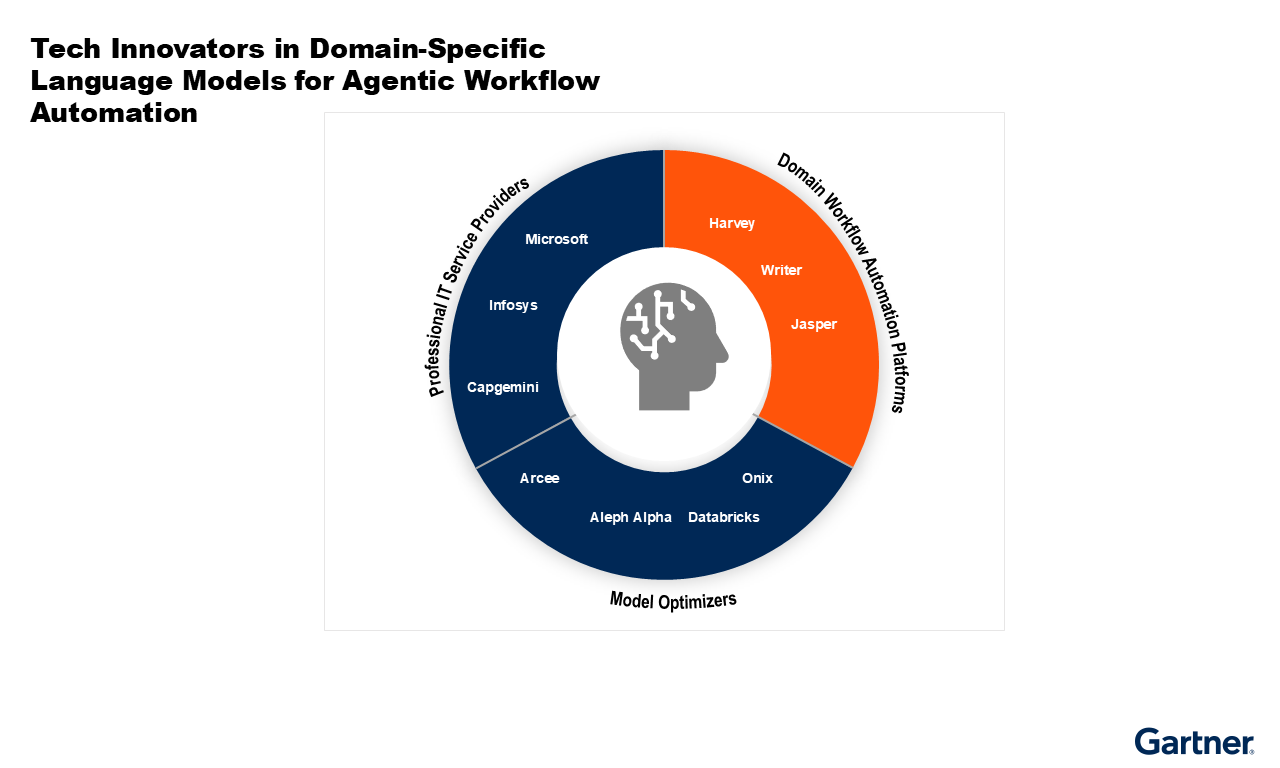
Table 1 lists the tech innovators profiled in this research and indicates which of their capabilities merit inclusion on this list. They may have strengths in other areas as well, but in Table 1 we highlight what we consider to be their strongest one or two points.
Tech Innovators in Domain-Specific Language Models — Workflow Automation
Name | Innovation | Market impact |
Harvey | Developed model context layers to redefine legal AI from simple text generation to multistep “agentic” workflows. | Domain-specific knowledge and reasoning will improve agentic workflow automation accuracy and reliability. |
Jasper | Developed a multimodal AI platform with domain vision models to deliver brand consistency and scale for enterprise marketing. | Multimodal model network systems that dynamically select best AI model for each task in the workflow ensure quality specialized results. |
WRITER | Developed AI platform featuring proprietary, enterprise-grade models and agentic AI layers for finance and healthcare workflows. | DSLMs improve accuracy in multistep workflows, enabling the next generation of industry expert agents. |
Source: Gartner (April 2026)
Harvey Advances Legal Intelligence Through Expert-Guided Context Layers for Domain Reasoning
Nature of Innovation
Harvey’s core innovation lies in using model customization to redefine legal AI from simple text generation to autonomous, multistep “agentic” workflows that mirror the complex reasoning and processes of legal professionals. Unlike generic AI tools, Harvey leverages proprietary “process data” mapped by a dedicated team of in-house product lawyers and contract attorneys that evaluates and benchmarks model performance across various legal tasks. Harvey decomposes complex legal requests into specialized agents (retrieval, comparison, synthesis), executes each step autonomously, and then integrates results for the user. This enables advanced, multistep reasoning while maintaining a simple user interface.
Harvey builds unique datasets by hiring legal experts. AI models are trained to replicate expert reasoning, not just generate text, ensuring accuracy and domain precision. Harvey uses reinforcement learning to improve explainability by enabling a specialized chain of thought behind legal tasks. Partnerships with Microsoft Azure and LexisNexis ensure enterprise security and access to proprietary legal data, meeting strict confidentiality standards.
Adopter Case Study
The tax, legal, deals, and HR teams at PwC U.K., a global professional services leader, were navigating an increasingly complex business environment that demanded faster, deeper, and more personalized client insights. Existing workflows have made it difficult for professionals to keep pace with the volume and complexity of client needs, limiting the time available for higher-value work. By partnering with Harvey, PwC U.K. gained access to Harvey’s AI platform across its tax, legal, and deals practices. The partnership went beyond a standard deployment. PwC and Harvey formed a strategic alliance to jointly develop domain-specific AI models tailored to PwC’s practice areas, with the goal of accelerating complex knowledge work and delivering richer, more customized client insights. PwC’s global network of professionals across 60+ countries is being equipped with generative AI capabilities to deliver more effective, technology-enabled advisory services. The collaboration is enabling over 5,000 tax, legal, and deals professionals to identify solutions faster, generate more comprehensive research, and produce customized client content at scale. PwC also plans to bring Harvey’s platform to market to help clients optimize their own internal legal operations, and is developing proprietary AI models for both internal use and client-facing offerings.
Implications for Product Leaders
Success in the use case hinged on Harvey AI’s ability to address highly specialized legal, compliance, and regulatory workflows. This means to achieve meaningful differentiation and competitive advantage it will be critical to develop solutions tailored to the nuanced requirements, language, and compliance standards of a target industry. It will be critical to engage domain experts, compliance officers, and data scientists in the design and oversight of model selection and governance, ensuring the system meets both technical and business requirements. By automating repetitive tasks, Harvey AI allowed legal professionals to focus on higher-value work, supporting job satisfaction and retention. Investment in onboarding, education, and support to facilitate smooth adoption and maximize user engagement and trust above all when interacting with new agent-driven domain solutions.
Recommended Actions for the Next Six Through 18 Months
- Work closely with industry experts to customize third-party models, embedding domain-specific reasoning layers and compliance requirements into your AI workflows. Involve data scientists and compliance officers as key stakeholders.
- Integrate AI capabilities directly into the daily tools and processes used by professionals in your target industry. This ensures your solution becomes an indispensable part of the broader workflow, increasing adoption and stickiness.
Jasper Empowers Marketers as Strategic Orchestrators of Content Supply Chains
Nature of Innovation
Jasper innovation stems from the Jasper IQ, a proprietary knowledge and context layer that sits between the user and underlying LLMs. Its primary purpose is to ensure that AI-generated outputs are highly customized, domain-specific, and strictly compliant with a company’s brand guidelines. In addition, Jasper has expanded beyond text into proprietary domain vision models, largely coming from its acquisition of ClipDrop. Proprietary domain vision models enable on-brand image generation and editing capabilities. For example, shadow generation for product imagery, background replacement that maintains product integrity, and visual guidelines to check generated images for brand alignment. Jasper has developed an agentic layer and no-code platform (Jasper Studio) to execute complex tasks autonomously within marketing workflows. Specialized agents such as the personalization agent adapt messaging for segments, the optimization agent analyzes SEO data and improves rankings, and the research agent aggregates competitor and market data. Jasper allows users to deploy specialized agents to automatically score generated pieces of content at scale. This creates an iterative feedback loop that brings the outputs closer to the desired compliance.
Adopter Case Study
A Fortune 500 home goods e-commerce company was challenged with inconsistent product imagery and high outsourcing costs, turned to Jasper’s proprietary Packshot Compositing Models to automate and standardize image editing. By integrating these models via API, the company optimized edits, maintained product integrity, and automated quality control. They achieved a 50% reduction in cost per asset, a fivefold increase in asset output, and a tenfold boost in production speed — enabling full catalog coverage in days rather than months. They also had a massive catalog of SKUs requiring unique, on-brand product descriptions. Manual writing was slow (taking 12 to 15 minutes per SKU) and expensive to scale. They also needed to maintain distinct brand voices for different sub-brands. Using Jasper’s custom templates and Jasper IQ, they ingested product specifications at scale to automatically generate on-brand copy. This resulted in reduced writing time per SKU from 12 to 15 minutes to 8 to 10 minutes and increased production per writer from 150 to 200 SKUs per week (a 30% increase in speed).
Implications for Product Leaders
As agentic AI models automate complex tasks such as research, drafting, and image editing, this means a crucial transition for marketing professionals from manual content creation to strategic roles focused on system design, campaign architecture, and workflow optimization.
With rising marketing content demand and increased risk of off-brand messaging, automated governance tools that enforce brand and compliance standards are becoming essential, especially for enterprises in regulated industries. As agentic AI layers automate key workflows, integrating output evaluation capabilities will be critical to maintain quality, brand integrity, and compliance across all automated content production.
With rising marketing content demand and increased risk of off-brand messaging, automated governance tools that enforce brand and compliance standards are becoming essential, especially for enterprises in regulated industries. As agentic AI layers automate key workflows, integrating output evaluation capabilities will be critical to maintain quality, brand integrity, and compliance across all automated content production.
Recommended Actions for the Next Six Through 18 Months
- Develop proprietary knowledge layers or domain multimodel routing and evaluating systems that dynamically choose the most suitable AI model for each business task, preventing subpar, generic results.
- Develop domain specialized semiautonomous agents capable of executing complex, multistep workflows. Engineer systems that can proactively monitor data (like an optimization agent tracking SEO drops), conduct independent research on target accounts, pull live CRM data, and generate personalized assets at scale without constant human prompting.
- Prioritize consolidating your marketing technology stack, favoring robust, custom AI platforms capable of managing the entire content supply chain. This approach reduces reliance on fragmented point solutions, stand-alone chatbots, and basic text generators, ensuring greater efficiency and consistency.
WRITER’s DSLMs Drive Dynamic Agentic Workflows, Transparency and Auditability for Sensitive Finance and Healthcare Data
Nature of Innovation
WRITER offers a full-stack generative AI platform built for mission-critical business applications that differentiates itself by building proprietary, enterprise-grade models designed for finance and healthcare sectors. Their innovation stems from their ability to curate data by employing cleaning techniques and synthetic data pipelines that convert raw public data to domain-specific training sets with a full copyright guarantee. WRITER’s platform is built on their own Palmyra family of reasoning models which includes two domain-specific models, Palmyra Fin for finance and Palmyra Med for healthcare domains. Palmyra models have reasoning capabilities, including the smaller Palmyra model versions, and are trained with expert prompting to mimic how a human reasons through industry-specific tasks.
An interconnected AI model network then is able to activate the model(s), allowing the agents to route complex tasks to the most appropriate agent. To simplify integration, WRITER created an agent builder that has allowed enterprises to plug into their current systems and automate workflows without needing to reengineer. By connecting workflows across agents, people, data, and systems users are able to map their specific processes so the system is able to reason and operate within complex business processes.
Adopter Case Study
CirrusMD is a virtual telehealth company that connects 13 million patients with physicians. The company struggled with high physician administrative burden due to manual documentation and billing tasks, as well as technical challenges in extracting structured data from unstructured patient-doctor chat transcripts. Additionally, the previous platform was ineffective at routing patients to relevant employer-provided benefits, leading to low utilization and missed opportunities for patient engagement. CirrusMD spent over a year unsuccessfully attempting to fine-tune an off-the-shelf LLM from a leading provider, experiencing high hallucination rate and latency issues. CirrusMD transitioned to WRITER using their Palmyra Med DSLM which allowed for the deployment of specialized agents that automatically reviewed chat history and transcripts to create personalized health benefit recommendations based on the patient’s health history and insurance coverage. By deploying DSLM and agents to review documents and generate comprehensive notes, CirrusMD saw a 234% increase in physicians sharing benefits recommendations, along with a 15x increase in engagement by patients.
Implications for Product Leaders
The prevalence of fragmented solutions and varying technical proficiency among clients underscores the need for unified, end-to-end domain AI platforms. Product leaders must recognize that piecemeal approaches create adoption barriers and operational inefficiencies.
Challenges faced by companies like CirrusMD in customizing generic AI models reveal a significant market opportunity that means increasing need to build comprehensive platforms that seamlessly integrate AI models, retrieval systems (e.g., knowledge graphs), and agent development tools, rather than relying on disconnected components. This full-stack approach is essential to meet current enterprise expectations for rapid deployment, reducing project timelines from years to just two to four months. Agentic low-code or no-code platforms are also helping democratizing automation, enabling business users to rapidly deploy and iterate agent-driven workflows without heavy reliance on technical teams.
Recommended Actions for the Next Six Through 18 Months
- Build transparent, AI guardrails around DSLM solution by focusing development efforts in specific industries to address growing adopter concerns about compliance, data ownership and quality through data lineage and auditability
- Deploy low-code or no-code platforms that enable business users to collaborate effortlessly with AI agents, speeding up agent deployment to accelerate workflow automation. But ensure enterprise-grade security, given that domain-specific solutions frequently process sensitive information.
This document is part of Gartner’s case-based research (CBR) into the current state and future direction of domain-specific language model capabilities. During a four-month research effort that commenced in January 2025, Gartner analysts conducted in-depth interviews with 23 global DSLM vendors and collected comprehensive data on more than 90 adopter use-case studies.
Gartner analysts engaged vendors in two primary discussions:
- A vendor briefing to understand product capabilities, features and related go-to-market strategies
- A vendor interview reviewing verifiable real-world use cases demonstrating adoption of the vendor’s innovation where the customer achieved desired outcomes