Analyst Take: Why Context Engineering and Decision Intelligence Are Critical for Agentic AI Success
2 April 2026 - ID G00853437 - 5 min read
By Deepak Seth
Critical perspective and insight from Deepak Seth, Sr. Director Analyst: data, analytics and AI.
Last year, we suggested that the future of analytics and AI would not just be about generating insights or predicting outcomes. It would be about perception. Systems that do not just analyze data, but understand what is happening, why it is happening, and what should be done next (see Perception Is the New Superpower for the Future of Analytics and BI).
Fast forward to today, and that vision is starting to materialize through agentic AI. Organizations are rushing to deploy autonomous or semiautonomous, goal-driven AI agents that can formulate plans, use tools, and execute complex, multistep workflows. However, many are quickly realizing a hard truth:
“By 2027, over 40% of agentic AI projects will be canceled due to escalating costs, unclear business value or inadequate risk controls.” Agentic AI without context is ineffective. Agentic AI without decision intelligence is dangerous.
To understand why, we need to unpack what perception actually means in AI systems.
From Insight to Perception
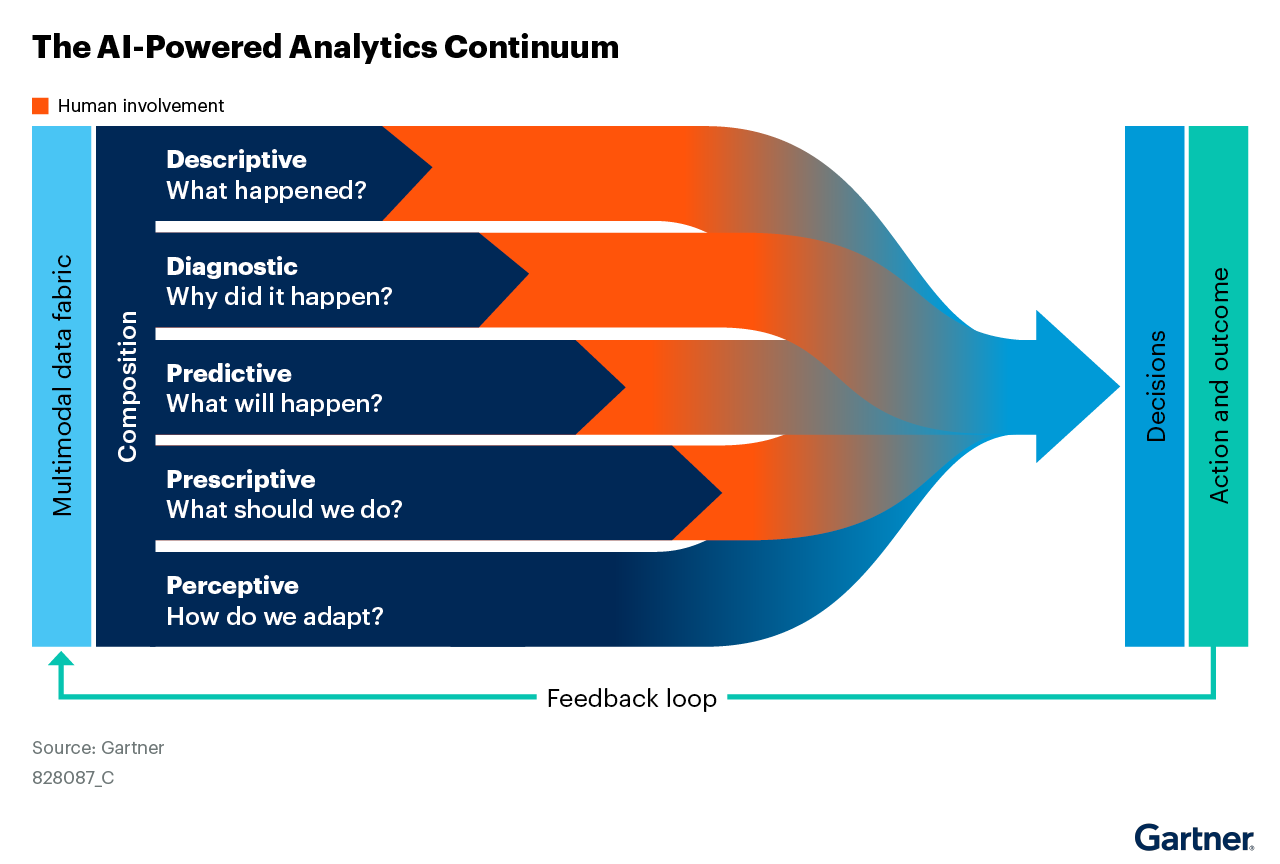
Traditional analytics answers questions like:
- What happened?
- Why did it happen?
- What will happen?
- What should we do?
Perceptive systems go one step further. They understand situations, not just data points. They recognize patterns, constraints, goals, and trade-offs in real time and adjust actions accordingly (see Figure 1).
Think about the difference between:
- A GPS system that gives directions
- A self-driving car that takes you to your destination
Both use data. Both use AI.
But only one perceives the environment and acts autonomously.
That shift from insight to perception is what agentic AI is trying to achieve.
Context: The Situational Awareness Layer
So what gives an AI system situational awareness?
Context.
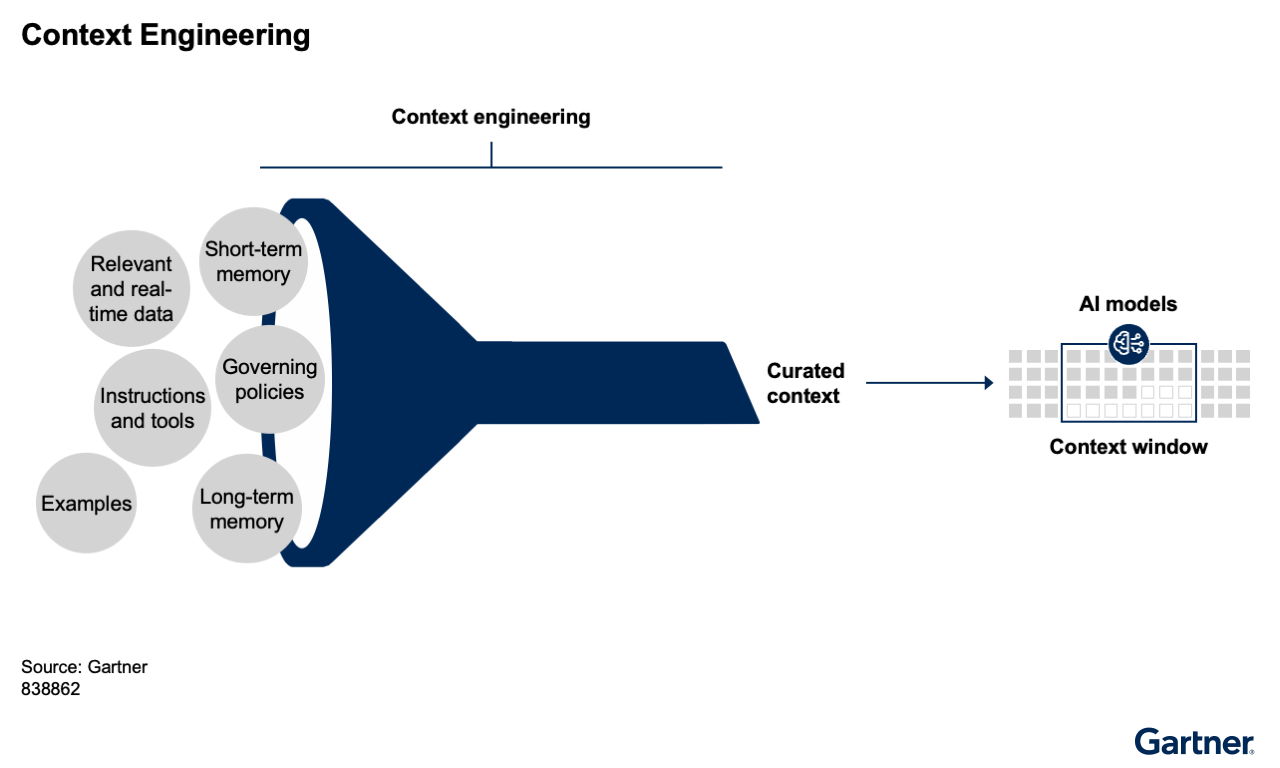
We have learned that prompt engineering alone is simply inadequate for agentic systems (see Lead the Shift to Context Engineering as Prompt Engineering Fades). Agents that reason, plan, and execute autonomously or semiautonomously need a dynamically managed context layer that includes:
- Instructions and goals
- Enterprise knowledge
- Tools and APIs
- Memory and past actions
- Operational state
- Policies and guardrails
- Data provenance and trust signals
In other words, context is not just documents in a vector database.
Context is the operating environment of the agent (see Figure 2).
A simple example illustrates this.
Imagine an AI agent managing inventory.
Without context, it sees:
Inventory is low. Order more.
With context, it understands:
Inventory is low, but demand is seasonal, a promotion starts next week, supplier lead time is increasing, and cash flow is constrained. Order a smaller quantity now and renegotiate delivery schedule.
Same data.
Very different decision.
Context changes the action.
This is why many early agent deployments fail. They are trying to deploy autonomous or semiautonomous agents without engineering the context layer first.
(see Context Engineering for Agentic AI; The 3 Core Components of the Context Layer for AI Agents, The 10 Deadly Mistakes That Turn Agentic AI Into a Costly Failure).
But Context Alone Is Not Enough
Even with perfect context, we still face a critical question:
How do we ensure agents make the right business decisions?
This is where decision intelligence (DI) becomes the missing bridge.
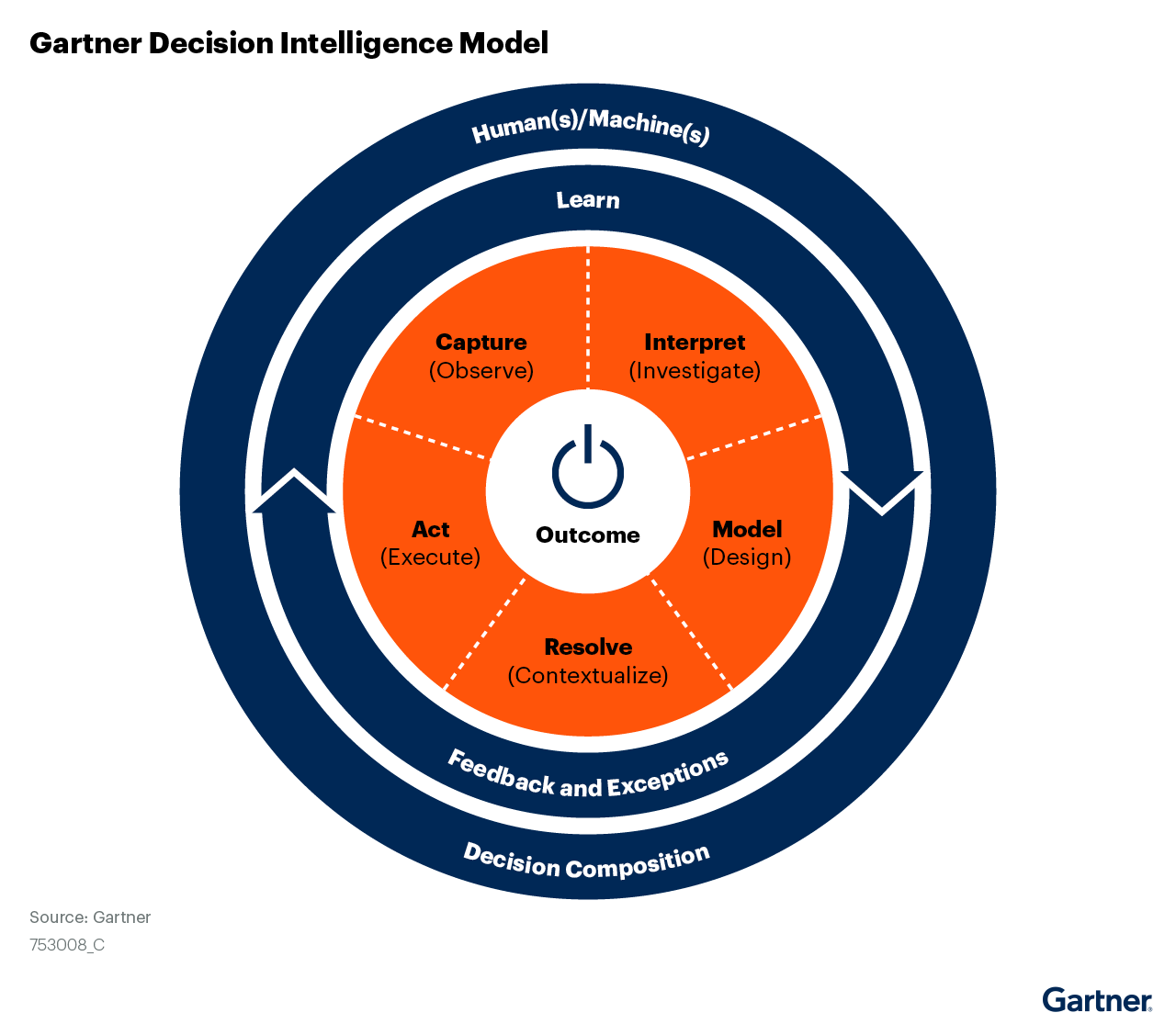
Decision intelligence is not just about analytics or AI models. It is about engineering decisions as assets. It explicitly models:
- How decisions are made
- What data is used
- What objectives are optimized
- What constraints exist
- How outcomes are measured
- How feedback improves future decisions
As agents move from being assistants to operational collaborators, the complexity and impact of their decisions increases dramatically. Without structured decision models, agents may optimize locally but harm the business globally.
For example:
An AI agent optimizing delivery routes might reduce transportation cost by 10%, but increase delivery delays and hurt customer satisfaction.
Another agent optimizing customer discounts might increase short-term revenue but destroy long-term margins.
Agents optimize what we tell them to optimize.
Decision intelligence ensures we tell them the right thing.
Frameworks like observe, orient, decide, act (OODA) or engineered decision models help digitize and operationalize decision flows so that agents operate within structured decision logic rather than improvising decisions from scratch (see Figure 3).
Context Provides the “What” and “Why.” Decision Intelligence Provides the “How”
When we combine context engineering with decision intelligence, we unlock true perceptive power.
- Context layer provides the situation, relationships, real-time signals, and constraints.
- Decision intelligence provides the decision models, optimization logic, trade-offs, and learning loops.
Together, they ensure that agentic AI does not just act autonomously, but acts:
- Consistently
- Transparently
- In alignment with organizational goals
- With learning and improvement over time
This is the foundation of perceptive agentic AI.
A Simple Way to Think About It
A useful analogy is this (see Table 1):
How Data Becomes Action in Agentic AI
Component | Human Equivalent | AI Equivalent |
Data | Senses | Sensors and data |
Context | Situational awareness | Context layer |
Decision intelligence | Judgment framework | Decision models |
Agents | Actions | Autonomous or semiautonomous execution |
Source: Gartner (April 2026)
Data helps systems see. Context helps systems understand. Decision intelligence helps systems choose. Agents help systems act.
Most organizations are currently focused on the first and the last.
The real value sits in the middle.
Advice for Data, Analytics and AI Leaders
My advice to leaders is simple:
Stop trying to deploy AI agents in a vacuum.
Instead:
- Engineer your context layer
- Model your critical business decisions as assets
- Then deploy agents to execute those decisions
- Capture outcomes and feed them back into the decision models
When you fuse decision intelligence with a strong context layer, you do not just get a better AI tool.
You unlock perceptive analytics and agentic systems that can safely and autonomously drive business outcomes.
The future of AI will not be defined by better models alone.
It will be defined by systems that can perceive situations, make sound decisions, and act autonomously.
And that future will be built on context and decision intelligence.
Analyst Bottom Line
Most organizations are trying to deploy agents before they understand context. And they are trying to automate decisions before they understand how decisions are made. This is backwards. First engineer context. Then engineer decisions. Only then deploy agents. Otherwise, we are not building autonomous workflows or enterprises; we are just creating “agent sprawl” and automating chaos faster.