Magic Quadrant for Data Center Outsourcing Services
3 November 2025 - ID G00831719 - 72 min read
By Biswajit Maity, DD Mishra, and 3 more
Data center outsourcing empowers organizations to delegate data center operations to expert third-party providers. This Magic Quadrant enables IT leaders to assess top vendors’ capabilities, ensuring secure, scalable, and cost-effective solutions aligned with business goals.
Strategic Planning Assumptions
By 2030, the number of mainframe end users will increase by 30% compared to 2024, due to sovereignty, deglobalization, and energy constraints.
By 2028, only 40% of all new data centers will rely solely on power delivered via the electricity grid network.
By 2027, eight out of 10 multinational organizations will have implemented a sovereign data strategy as part of their overall sovereign cloud strategy.
Market Definition/Description
This document was republished on 13 November 2025. For more information, see Gartner’s Corrections page.
Gartner defines the data center outsourcing (DCO) services market as a comprehensive suite of services that support deployment, consolidation, optimization, modernization and managed services. These services primarily cater to data centers, private clouds, edge computing, ERP hosting, mainframes or legacy systems, midrange systems, infrastructure modernization, network and security. Organizations with such environments engage with DCO service providers to enhance efficiency, improve agility, optimize costs, strengthen security — physical, data and cyber — and realize substantial modernization benefits.
Data center outsourcing refers to the strategic decision by organizations to delegate data center operations to a third-party service provider. Adopting this approach assists organizations with prioritizing their core business activities while capitalizing on the advanced technologies, operational expertise, best-in-class performance metrics and cost-efficiencies offered by vendors, compared to insourced best efforts.
Mandatory Features
Data center outsourcing services evaluate the leading service providers’ ability to deliver data center outsourcing. The mandatory features for this market are:
- Managed services for distributed systems: This involves managing data center services for systems mainly using Intel x86 technology, like Windows and Linux. It includes hosting and private infrastructure services in a provider’s data center, offering compute, storage and network resources. These services are tailored to support organizations in maintaining a dedicated cloud environment, either on-site or in a private data center.
- Data center network, storage and other equipment managed services: This refers to a provider’s ability to deliver a fast, secure, scalable and highly available infrastructure that supports the seamless operation and performance of compute, storage and application resources. It includes the management of data center network components such as switches and firewalls, disk and tape storage subsystems, and storage area network switches.
- Managed servers and virtualization: This refers to the provider’s ability to manage servers (Linux, Windows, etc.) and operate both physical and virtual server environments. It includes handling key responsibilities such as server deployment, configuration, patching, monitoring, incident resolution and performance optimization.
- Backup and recovery services: This refers to the managed solutions and processes provided by the providers to ensure the protection, retention and restoration of enterprise data and systems.
- Enterprise application and software services: This refers to the hosting and management of the underlying infrastructure needed to run business-critical applications, such as ERP and CRM. This includes compute, networking, OS, middleware and database layers, delivered through provider data centers or private cloud platforms.
- Professional services: This capability reflects the vendor’s ability to provide consulting and project management services to the end customer for management of data centers (DCs).
- Infrastructure modernization: This involves infrastructure modernization in outsourced data centers by replacing outdated hardware, optimizing energy efficiency and implementing software-defined solutions for greater flexibility. It also includes DC consolidation to reduce the number of physical data center facilities, IT assets and platforms within an organization to improve operational efficiency, reduce costs and modernize infrastructure. This includes adopting automated workload balancing and AI-driven resource allocation to enhance performance and reduce operational complexity.
- Infrastructure monitoring: This demonstrates the provider’s proficiency in delivering real-time visibility across infrastructure, networks, and applications, ensuring consistent performance, early issue detection, SLA compliance, system health tracking and ongoing optimization. It encompasses enabling proactive operations, improving operational efficiency and reinforcing the reliability of service delivery.
Common Features
The common features for this market include:
- Mainframe and midrange managed services: This includes the delivery of managed services for mainframes, midrange and other legacy non-x86 systems. Mainframe services include running secure, high-performance, reliable environments for critical business workloads.
- Data privacy and security: This includes leveraging technologies, processes and managed solutions to safeguard sensitive information, ensure regulatory compliance and manage data risks. It showcases the provider’s adherence to data privacy and security standards, such as the EU’s General Data Protection Regulation (GDPR), ISO 27001 and SOC 2 Type II. Providers prioritize security by embedding multilayered protection mechanisms. This includes proactive threat monitoring, compliance-driven security frameworks and managed security operations that ensure data integrity, regulatory adherence, and protection against evolving risks. Security services encompass everything from firewalls and intrusion detection to access management and real-time incident response.
- Disaster recovery (DR): DR is defined as:
- The use of alternative network circuits to reestablish communications channels if the primary channels are disconnected or malfunctioning
- The methods and procedures for returning a data center to full operation after a catastrophic interruption (e.g., including recovery of lost data)
This ability assures seamless business operations for organizations by making DR a crucial aspect of data center outsourcing. It includes DRaaS solutions offered by providers that facilitate organizations to back up critical IT systems and data, and recover them quickly in the event of a system failure:
- Edge computing: Edge computing is part of a distributed computing topology where information processing is located close to the edge, where things and people produce or consume that information. Edge computing optimizes for latency, bandwidth, autonomy and regulatory/security considerations. Edge-computing locations extend along a continuum between the absolute edge (where physical sensors and digital systems converge) and the “core” (the cloud or a centralized data center).
- Advanced AI/ML features: The ability to effectively utilize AI and machine learning (ML) technologies to automate repetitive tasks, proactively identify potential system issues, streamline resource usage, and improve overall data center performance. This leads to greater efficiency and minimized manual efforts.
- Network: This refers to a provider’s ability to deliver a fast, secure, scalable and highly available network infrastructure that supports the seamless operation and performance of compute, storage and application resources. It ensures that various systems, applications and cloud services can work together efficiently, facilitating optimal performance and user experience.
- Modern mainframe: Most leading providers in this market have expanded their mainframe services beyond supporting consolidated technologies, such as CICS, Db2 and JES2. These providers assist customers in adopting modern technologies, including GenAI, DevOps, ML, container applications and frameworks like Zowe. This enables organizations to maintain the relevance of mainframes and integrate them with newer, cloud-enabled environments.
- Mainframe as a service (MFaaS): Providers in this market are often also supporting consumption-based, as-a-service offerings for mainframe, midranges and other non-x86 systems. Vendors in this market enable customers to transition from capital expenditure (capex) to operating expenditure (opex) by hosting these systems in a colocation or other data center space owned or leased by the vendor.
- Other mainframe OS: Most mainframe and midrange vendors either focus on IBM z/OS (mainframe), IBMi or AS/400 (midrange), and one specific OS (i.e., only OpenVMS). Meanwhile, more-advanced vendors in this space cover the whole ecosystem, also supporting lesser-known OS and platforms, such as 21CS VSEn, IBM z/VM, Unisys ClearPath MCP and OS 2200, OpenVMS, and the like.
- Sustainability: This focuses on addressing the need for sustainable solutions, driven by growing data center usage. Providers are intensifying investments in environmentally friendly practices and aligning efforts with broader sustainability goals, including sustainable development goals (SDGs).
Magic Quadrant
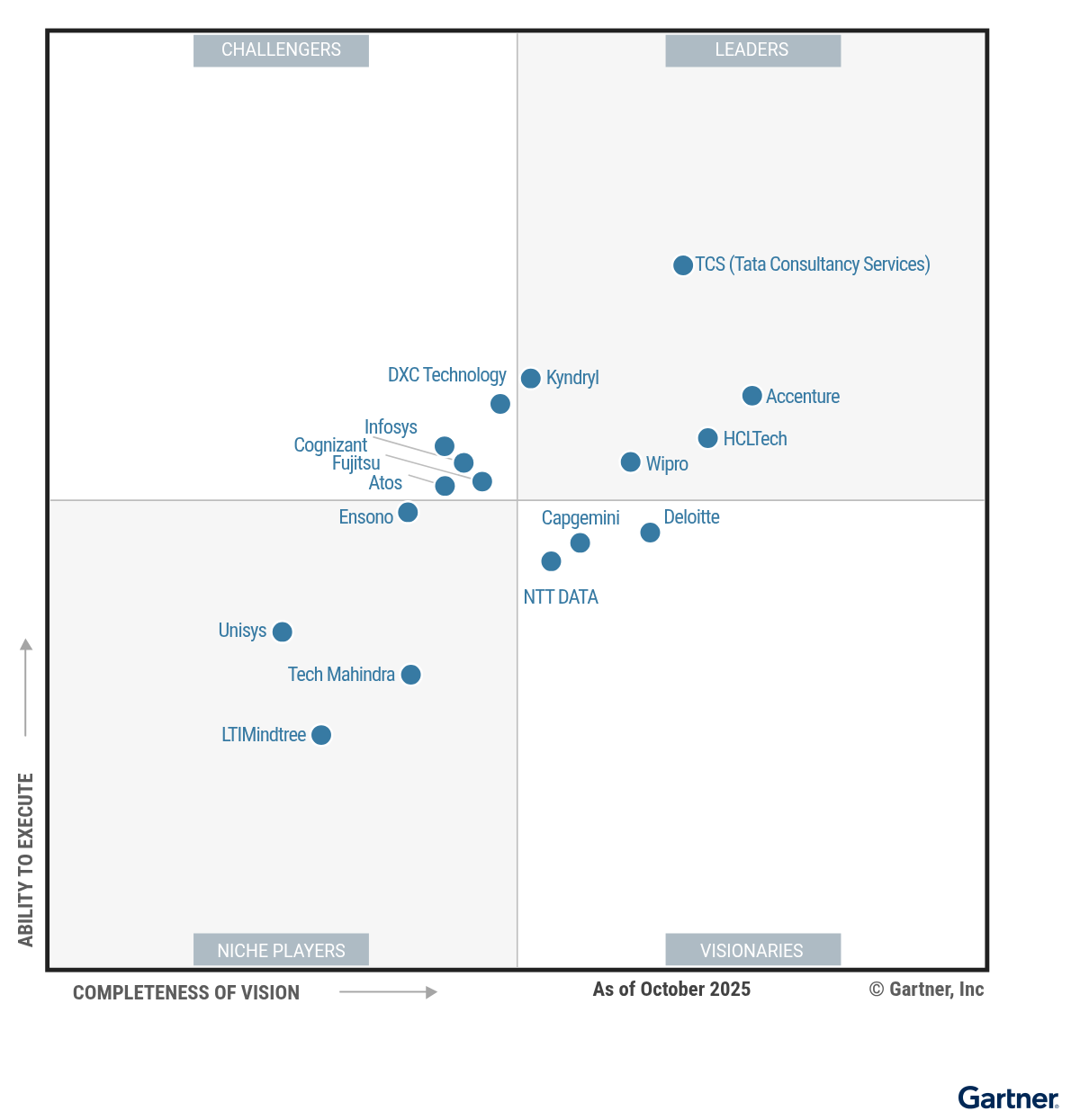
Vendor Strengths and Cautions
Accenture
Accenture, headquartered in Dublin, Ireland, is a Leader in this Magic Quadrant. This IT services company has more than 774,000 employees operating in over 120 countries. Gartner estimates that it has revenue of over $3.4 billion in DCO services, over 2,070 DCO services clients globally, and over 13,700 staff members dedicated to the practice. Of its DCO services customers, 35% are in North America, 35% are in Europe, 2% are in the Middle East and Africa, and 15% are in APAC, with 13% in the rest of the world. Accenture’s top three primary verticals are BFSI, manufacturing, and healthcare.
- Business-Outcomes Focus: Accenture uses outcome-based contracts to closely align its services with client business objectives by stitching together fees and measurable business outcomes, rather than just deliverables. This approach reflects Accenture’s commitment to shared risk, strategic partnership, and strong client relationships. Accenture’s value-realization tracking and 360° Value Meter go beyond traditional SLA metrics by providing a holistic view of business outcomes across financial, experience, talent, inclusion and diversity, sustainability, and client priorities.
- Midsize Enterprise (MSE) Expansion and Strong Industry Expertise: Accenture uses its consulting-led approach and deep industry knowledge to provide tailored solutions and address complex requirements for industries like finance, healthcare, and manufacturing. The company is strategically expanding its services for MSEs by using key acquisitions like Navisite to deliver specialized offerings.
- Proprietary AI and Tooling: Accenture is advancing data center outsourcing by developing proprietary AI platforms, like GenWizard, which automate workflows and improve incident resolution. In addition, tools such as myNav and Cloud Network Operator enhance cloud migration and unified management.
- High Customization Premium: Accenture’s tailored, transformation-led approach can increase costs compared to standardized offerings. Organizations seeking cost reduction without broader transformation may not make the most of Accenture’s capabilities, despite the premium to acquire them.
- Vendor Lock-In: Heavy reliance on Accenture’s proprietary platforms, methodologies, and ecosystem partnerships can increase organizational dependency, limiting flexibility and raising switching costs. This may make it challenging to quickly adopt new technologies or transition to alternative providers. Clients should carefully consider the potential vendor lock-in and ensure their long-term technology strategy maintains adaptability and independence to avoid future operational or strategic constraints.
- APAC Revenue Declined: Despite strong overall revenue growth, Gartner estimates that Accenture’s APAC revenue declined roughly 6%, and it maintains a limited presence in the region — APAC contributes only 7% of its overall DCO services revenue. Clients in APAC should carefully consider this and evaluate Accenture’s strategies for strengthening its regional business.
Atos
Atos, headquartered in Bezons, France, is a Challenger in this Magic Quadrant. This IT consultancy and system integrator company has more than 74,000 employees operating in over 70 countries. During the assessment year, it reported over $2 billion in DCO services revenue, over 2,030 DCO services clients globally, and over 8,500 staff members dedicated to the practice. Of its DCO services customers, 12% are in North America, 61% are in Europe, 4% are in the Middle East and Africa, and 10% are in APAC, with 13% in the rest of the world. Atos’ top three primary verticals are government and public sector, manufacturing, and BFSI.
- AI-Driven Innovation and Automation: Atos adopts an “AI/GenAI/agentic AI-first” strategy across all services, including developing its digital engineer automation platform. This enables transformative experiences, predictive maintenance, and fully autonomous managed service delivery, and positions Atos at the forefront of intelligent IT operations and modernization.
- Comprehensive Service Coverage and Integration: Atos offers a full spectrum of IT infrastructure services, from legacy on-premises to hybrid cloud, edge and network environments, all managed and orchestrated from a single source. Atos focuses on sovereign cloud services, AI, and connecting mainframes to cloud regions for faster performance. Its proprietary Atos Bridge platform enables deep integration, AI-driven visibility, and predictive analytics to align IT operations with business outcomes.
- Focus on Security: Security is a core focus of Atos, reinforced by zero trust architectures and compliance with evolving regulations like NIS2 and DORA. Atos infuses cybersecurity within each of its managed services offerings, rather than treating it as an external capability.
- Financial Instability and Restructuring: Atos encountered significant financial challenges, like declining revenue, high debt, and multiple profit warnings. To stabilize its financial position, the company embarked on major restructuring initiatives, including proposed sales of certain business units and new leadership. While these actions and the upgraded credit rating may ease concerns, clients should still conduct due diligence.
- Leadership Changes and Evolving Strategy: Frequent changes in senior leadership and board members contributed to strategic instability, making it difficult for Atos to consistently execute long-term plans. Clients engaging with Atos should understand the roadmap and the possible impact the changes may have, along with their short-term and long-term implications on the client’s current strategy.
- Service Quality Concern: Some Gartner clients have expressed concerns regarding Atos’ service quality, highlighting inconsistent project delivery, delays in transformation initiatives, and a shortage of skilled resources, and it holds a below-average Peer Insights score. Clients are encouraged to thoroughly assess Atos’ service quality assurances before entering into any engagement.
Capgemini
Capgemini, headquartered in Paris, France, is a Visionary in this Magic Quadrant. This global business and technology transformation company has more than 341,000 employees operating in over 50 countries. It reported over $1 billion in DCO services revenue, over 540 DCO services clients globally, and over 26,700 staff members dedicated to supporting the practice. Of its DCO services customers, 24% are in North America, 64% are in Europe, 1% are in the Middle East and Africa, and 8% are in APAC, with 4% in the rest of the world. Its top three primary verticals are government and public sector, BFSI, and retail and consumer goods.
- Specialized Industry Knowledge: Capgemini’s strong industry and application expertise enables tailored solution delivery across diverse sectors. It uses this knowledge to drive application modernization and offer relevant industry use cases, making it an attractive choice for clients seeking a strategic IT partner with deep industry-specific insights.
- Cloud and Modernization Focus: Capgemini maintains strategic partnerships with leading cloud hyperscalers and offers comprehensive transformation services. It has co-developed offerings such as the Azure Intelligent App Factory with Microsoft, sovereign cloud capabilities, and GenAI Google Cloud COE. Its modernization strategy leverages predictive insights, anomaly detection, auto-healing, and automated remediation across multiple service domains. Clients seeking workload hosting while performing cloud-native modernization will find Capgemini well-suited for their needs.
- Commitment to Sustainability: Capgemini shows a strong commitment to sustainability through sustainable data center solutions and comprehensive ESG assessments. It’s dedicated to achieving net zero by 2040 and transitioning to 100% renewable electricity by 2025 (already 98% achieved) across its operations. Clients with sustainability goals in their broader organizational objectives may find Capgemini suitable.
- Fragmented Global Operations: Clients with global operations have occasionally encountered challenges in achieving seamless support across onshore locations. Additionally, the layered nature of internal collaboration may introduce cost and delivery considerations that are not always immediately visible. Clients are advised to evaluate these structural interdependencies to ensure alignment with their delivery expectations.
- Limited Mainframe and Midrange Focus: Capgemini makes limited investments in IBM Z mainframes, usually within larger outsourcing or application engagements, and does not prioritize other mainframe or midrange systems. It mainly focuses its mainframe activities on application support or facilitating mainframe-exit initiatives.
- Service Quality Concerns: Gartner clients raised concerns regarding Capgemini’s knowledge transfer, operational stability, and integration, citing key issues in rigid resource onboarding and offboarding processes. Clients working with Capgemini should develop a clear roadmap for customer satisfaction and governance to address any gaps.
Cognizant
Cognizant, headquartered in Teaneck, New Jersey, is a Challenger in this Magic Quadrant. This consulting and technology services company has more than 343,800 employees, operating in over 35 countries. During the assessment year, Gartner estimated its DCO services revenue at approximately $1 billion, with over 515 clients globally and over 16,800 staff members dedicated to supporting this practice. Of its DCO services customers, 66% are in North America, 23% are in Europe, 2% are in the Middle East and Africa, 6% are in APAC, and 2% are in the rest of the world. Cognizant’s top three primary verticals are healthcare, BFSI, and manufacturing.
- Emphasis on Industry-Specific Solutions: Cognizant delivers tailored IT infrastructure solutions through over 120 industry-specific, plug-and-play cloud offerings, such as Stores 360 for retail and TriZetto for healthcare. Its vertical go-to-market strategy and strong industry partnerships enable sector-specific solutions with strict data security. Dedicated COEs in banking, healthcare, telecom and retail embed domain best practices, compliance frameworks (like HIPAA and PSD2) and prebuilt accelerators into its client engagements.
- Accelerating AI and Automation Capabilities: Cognizant showcases its focus on automation and modernization through its Neuro platform’s launch and adoption, including GenAI-powered Neuro IT Ops platform, Skygrade platform, and autonomous operations. These solutions enable automation, predictive maintenance and self-healing capabilities that drive operational efficiency.
- Strong Partnerships and Client Loyalty: Cognizant’s strategic alliances with global technology leaders, including NVIDIA, Dell, Cisco, and ServiceNow, facilitate co-innovation through dedicated labs and grassroots programs like Bluebolt. With a reported 99% client retention rate and 90% of its deals structured as outcome-based, Cognizant demonstrates flexibility and reliability in delivering high-quality services.
- Evolving Enterprise Systems Offering: Cognizant’s IBM mainframe support is evolving to match market shifts from mainframe exit strategies to treating the mainframe as a strategic platform. As the transition to MFaaS and modern mainframe is still in progress, customers should scrutinize if Cognizant already has the necessary capabilities to support their mainframe estate.
- Limited Geographical Capabilities: Cognizant still depends on the North American (NA) market, with Gartner estimating that over 70% of its DCO business originates from this region. Cognizant hasn’t diversified enough in other markets, making it more vulnerable to U.S. policy shifts in today’s uncertain environment. Clients outside NA should carefully examine Cognizant’s footprint in the specific locations they need on-site presence.
- Limited Focus on MSE Clients: Cognizant’s focus remains primarily on large enterprises, with only 3% of its client base coming from the midsize enterprise (MSE) segment. Clients in this category should closely evaluate Cognizant’s interest and capability to support their unique requirements before engaging.
Deloitte
Deloitte, headquartered in London, U.K., is a Visionary in this Magic Quadrant. This IT and professional services company has more than 470,000 employees operating in over 150 countries. Of its DCO services customers, 63% are in North America, 21% are in Europe, and 16% are in APAC. Deloitte’s primary verticals are government and public sector, healthcare, and retail and consumer goods.
- Robust Consulting Expertise: Deloitte’s strong consulting capability is a core differentiator in its data center outsourcing services and broader IT services portfolio. Its robust pool of consultants and support staff bring expertise that spans strategy, technology, operations, risk and industry-specific requirements. It offers full life cycle services from strategy and assessment through implementation, transformation and ongoing operations. Client organizations looking to hire DCO services from Deloitte can leverage its consulting capabilities to optimize IT operations, modernize infrastructure, integrate AI, and ensure regulatory compliance during their data center transformation journey.
- Strong Strategic Alliance: Deloitte’s “Silicon to Service” (S2S) and AI Factory as a Service initiatives, in partnership with leading technology vendors like NVIDIA, Dell and HPE, enable rapid deployment of advanced AI and data center capabilities that further solidify its reputation as a trusted transformation provider.
- Comprehensive Service Portfolio: Deloitte’s “DCO as a Service” model and the fully automated Ascend platform provide clients with flexibility, security and scalability. Its proprietary accelerators streamline delivery and enhance outcomes, like Deloitte’s data migration accelerator tool and AI-driven tools like GPU sizing and TCO calculators.
- Limited Mainframe Hosting: Deloitte primarily offers its mainframe services during mainframe exit projects, rather than options for long-term modernization or ongoing value. Organizations with large mainframe estates seeking a strategic provider for in-platform transformation should review their capabilities, as Deloitte’s capabilities in this area are very limited.
- Premium Pricing: Deloitte positions its DCO offering as a premium, high-value service, which may result in higher costs compared to competitors focused on commoditized or cost-optimized solutions. This premium approach may not align with organizations primarily seeking cost-efficiency.
- Limited Owned Infrastructure: Deloitte doesn’t own many data centers. This results in a heavier reliance on client-owned and third-party (colocated) data centers, which limits Deloitte’s direct control over infrastructure, potentially impacting responsiveness and agility in scenarios where direct ownership is a key client requirement or differentiator.
DXC Technology
DXC Technology, headquartered in Ashburn, Virginia, is a Challenger in this Magic Quadrant. This consulting and technology services provider has more than 120,000 employees operating across over 70 countries. During the assessment year, Gartner estimated DXC’s DCO services revenue at approximately $4.5 billion, with over 1,200 clients globally, and more than 24,800 staff members dedicated to supporting this practice. Of its DCO services customers, 22% are in North America, 42% are in Europe, 2% are in the Middle East and Africa, 27% are in APAC, and 6% are in the rest of the world. DXC’s top three primary verticals are BFSI, government and public sector, and manufacturing.
- Commitment to IBM Z Mainframe: DXC considers the IBM Z mainframe a strategic, long-term asset and is committed to supporting it by focusing on skilled talent, modern mainframe, ISV swap, MIPS optimization, and enhanced resiliency. This positions DXC as a strong provider for customers seeking to maximize their mainframe estate’s value.
- Strong Partner Ecosystem: DXC’s partnerships prioritize technical integration with hyperscalers, low-latency hybrid architectures, and an asset-light strategy. It collaborates with leading technology companies like AWS, Google Cloud, Microsoft, SAP, Dell Technologies, and others to support enterprise transformation, develop edge AI platforms for industrial applications, and invest in sovereign cloud solutions and regional partners to address data sovereignty requirements.
- Broad Global Reach: DXC’s robust global presence, supported by extensive delivery centers — especially in India — enables scalable service delivery. Serving more than 1,200 customers worldwide, DXC supports mission-critical operations across various industries. To further enhance its global capabilities and specialized expertise, DXC maintains six intelligent automation COEs to enable delivery of integrated, best-of-breed solutions tailored to client requirements.
- Revenue Challenges: DXC faces consistent revenue declines in recent quarters and years, indicating challenges in maintaining and expanding its client base in a competitive market. This may limit its investments capabilities, so clients engaging with DXC should get clarity on its roadmap that includes impacts from its fiscal situation.
- Challenges With Transformation: As DXC transforms its business model to focus on higher-growth areas, it may face internal challenges in retraining its workforce, developing new capabilities, and integrating new solutions with existing IT infrastructure. Existing clients should engage with DXC to understand any change in the roadmap and potential implications.
- Competitive Pricing: DXC has lost deals due to lack of competitive pricing, indicating challenges in highly price-sensitive markets. Gartner client feedback also highlights difficulty getting value for the money spent, so organizations seeking cost-competitive deals may find DXC’s services comparatively costly.
Ensono
Ensono, headquartered in Downers Grove, Illinois, is a Niche Player in this Magic Quadrant. This end-to-end IT infrastructure services provider has more than 3,800 employees operating across over 20 countries. During the assessment year, it reported approximately $870 million in DCO services revenue and over 230 clients globally. Of its DCO services customers, 74% are in North America, 23% are in Europe, and 3% are in APAC. Ensono’s top verticals include government and public sector, BFSI, energy and utilities, and manufacturing.
- Modern IBM Mainframe Solutions: Ensono provides a range of modern mainframe services, including cloud-connected solutions that enable seamless integration with AWS and Azure for hybrid environments. Its offerings encompass mainframe optimization, such as ISV swap, MIPS optimization, and in-platform modernization, along with robust DevOps support.
- Commercial Flexibility: Its Ensono Flex offering is a unique commercial and service model designed to provide clients with maximum flexibility as they modernize and migrate workloads across Ensono’s managed platforms. It helps clients modernize on their terms, reduces financial and operational risk, and supports innovation and agility. Its flexible, penalty-free model is particularly important for enterprises navigating complex, multiplatform transformations.
- Private Cloud Platform: Ensono provides a standardized private cloud platform available in both dedicated and multitenant configurations, offering features similar to local and regional cloud providers. It differentiates itself through greater customization, enterprise-grade expertise, and seamless integration with mainframe and midrange hosting.
- Limited Execution Beyond Mainframe Portfolio: Ensono excels in mainframe and mainframe modernization services; however, its offerings in areas such as ERP and data center (DC) modernization represent a smaller portion of the company’s overall revenue, with only 8% of deals focused on transformation. Clients seeking services beyond mainframe should conduct thorough due diligence to ensure Ensono’s offerings align with their long-term investment and support needs.
- Limited Non-IBM Mainframe Support: Ensono’s expertise centers on IBM Z mainframe and IBM Power systems, providing strong services and modernization support for these platforms. However, organizations utilizing other mainframes like Fujitsu, Unisys, NEC, or various enterprise UNIX systems may encounter limited support from Ensono. These clients should consider alternative providers with broader capabilities across diverse mainframe and midrange environments.
- North America Focus: Ensono’s business currently skews toward North America, which accounts for approximately 90% of its overall DCO services revenue. Europe contributes around 10%, while its presence in APAC generates just 1% of revenue. Clients with a global footprint should carefully assess Ensono’s capabilities and resources to ensure their needs can be effectively supported outside the U.S..
Fujitsu
Fujitsu, headquartered in Kanagawa, Japan, is a Challenger in this Magic Quadrant. This IT services and information and communications technology company has more than 113,000 employees operating in over 100 countries. During the assessment year, it reported over $1.4 billion in DCO services revenue, over 615 DCO services clients globally, and more than 1,550 staff members dedicated to this practice. Of its DCO services customers, 35% are in North America, 50% are in Europe, and 15% are in APAC. Fujitsu’s top three primary verticals are government and public sector, BFSI, and manufacturing.
- Strong Industry Solutions: Fujitsu excels in the public sector through strong governance and a customer-centric approach, prioritizing security and compliance. Clients value its Uvance industry-specific solutions, such as IoT for manufacturing and SCADA for utilities, and its robust compliance credentials, including ISO certifications and sovereign cloud. Fujitsu’s sovereign data centers ensure data privacy, regulatory compliance, and control, supported by regional expertise and secure cloud solutions.
- Midsize Enterprise Focus: Fujitsu demonstrates a strategic focus on midsize and small enterprises, which comprise 95% of its DCO client base. By delivering scalable infrastructure, flexible pricing, dedicated support, and built-in security, Fujitsu effectively meets their requirements for modernization, agility, and compliance, positioning itself as a strong partner in this market segment.
- Strong Sustainability Commitment: Fujitsu’s Uvance strategy prioritizes sustainability across its global hybrid IT and DCO services. The company emphasizes energy efficiency, climate-neutral operations, and advanced carbon management, delivering green data centers aligned to market trends and customer expectations. Data centers use renewable energy and offer secure, sustainable operations with transparent energy usage reporting.
- Relatively Low Consulting Maturity: Uvance Wayfinders is Fujitsu’s new global consulting business focused on technology-driven differentiation. Given its recent establishment in April 2025, clients should carefully assess Fujitsu’s global consulting capabilities versus their DCO needs and the outcome-based goals Fujitsu will contractually commit to.
- Evolving Business Model: Fujitsu’s global DCO services revenue declined by 12%, which the company attributes to an intentional shift in business strategy and portfolio mix toward consulting services, high-margin offerings, and cloud services. As part of this transition, Fujitsu reassessed its deals and closed several data centers in Europe, resulting in fewer managed facilities. Clients should review their own strategies and consider how Fujitsu’s shift may affect them.
- Cultural Influence on Operations: Fujitsu’s operations outside Japan continue to benefit from the influence of Japanese business practices, which can offer some unique strengths in global markets. However, CIOs should proactively consider how these approaches to customer account management, service delivery, and the globalization of the operating model are adapting to meet the distinct needs of Western markets, ensuring ongoing relevance and success.
HCLTech
HCLTech, headquartered in Noida, India, is a Leader in this Magic Quadrant. This IT technology solutions and services provider has more than 220,000 employees operating in over 60 countries. Gartner estimates that, during the assessment year, HCLTech generated over $2 billion in DCO services revenue, had over 640 DCO services clients globally, and had more than 10,700 staff members dedicated to this practice. Of its DCO services customers, 51% are in North America, 34% are in Europe, 1% are in the Middle East and Africa, 12% are in APAC, and 2% are in the rest of the world. HCLTech’s top three primary verticals are manufacturing, BFSI, and healthcare.
- Midrange Systems Support: HCLTech delivers project and managed services across more diverse midrange platforms than all over vendors in this Magic Quadrant. HCLTech appeals to customers relying on IBM i, IBM AIX, HP-UX, Oracle Solaris, VSI OpenVMS, Tru64 UNIX, or Tandem NonStop for their mission-critical workloads. Organizations with mission-critical legacy workloads can benefit from HCLTech’s technical expertise, comprehensive platform support, and experience in maintaining, modernizing, and ensuring continuity for complex IT environments.
- Deep Vertical Industry Expertise: HCLTech demonstrates strong industry expertise with tailored solutions like IFRS, AI-powered VisionX for logistics, CARE for healthcare, and BluGenie for telecom. These offerings accelerate deployment, enhance productivity and safety, reduce costs, and deliver faster time to value and measurable business outcomes.
- Driving Efficiencies Thorough Predictive Analytics: HCLTech emphasizes automation with its VisionX platform, integrating AI-driven insights and predictive analytics to enhance efficiency and reduce operational downtime. This intelligent suite enables proactive incident management, automated root cause analysis, and continuous process improvement.
- Service Quality Concerns: Some HCLTech clients report concerns about service quality, citing challenges like resources being stretched across multiple projects and difficulties in retaining experienced team members. Clients should actively monitor service quality, clarify resource commitments, and establish clear escalation processes to promptly resolve any gaps.
- Primary Focus on Large Deals: Although HCLTech claims to focus on MSEs, its approach is limited. It primarily focuses on large clients, who receive the majority of its resources and strategic attention. MSE clients should carefully evaluate HCLTech’s actual capabilities, delivery models, and willingness to prioritize their specific needs before selecting it as a preferred vendor.
- High Reliance on Subcontractors: HCLTech’s high use of subcontractors for its DCO delivery introduces potential risks around service consistency, control, and quality. It may also impact security, especially for sensitive workloads. Organizations with strict quality or compliance requirements should clearly define subcontractor roles and oversight before engagement.
Infosys
Infosys, headquartered in Bengaluru, India, is a Challenger in this Magic Quadrant. This digital services and consulting provider has over 300,000 employees operating in more than 56 countries. During the assessment year, it reported over $1.9 billion in DCO services revenue, over 165 DCO services clients globally, and more than 540 staff members dedicated to this practice. Of its DCO services customers, 53% are in North America, 26% are in Europe, 11% are in the Middle East and Africa, 7% are in APAC, and 3% are in the rest of the world. Infosys’s top three primary verticals are BFSI, telecom and media, and retail and consumer goods.
- AI-Enabled Industry-Focused Solutions: Infosys distinguishes itself through its focus on industry-specific solutions tailored to sectors’ unique needs. Its Finacle core banking suite, healthcare solution, and Infosys Equinox (a retail-centric offering) are prime examples. Infosys integrates AI, AIOps, and GenAI into its DC operations to provide predictive infrastructure analytics, automate self-healing for common issues, and analyze telemetry data for proactive incident management and capacity planning, reducing downtime and manual intervention.
- Strong Global Data Sovereignty and Compliance: Infosys supports data sovereignty requirements across regions (North America, Europe, APAC, Middle East, Africa) and offers robust compliance measures (GDPR, HIPAA), including in-region hosting, private cloud options, encryption, and transparent audit trails.
- Flexible Service Delivery: Infosys supports clients with a broad range of customization options, from standardized global offerings to fully custom solutions tailored for a single client, with a healthy distribution for these models across its client base. Its range of commercial models, including consumption-based, outcome-based, and OPEX savings models, also reflect this flexibility.
- Limited Mainframe Capabilities: Infosys’ asset-light DC model depends on third-party partners rather than owned infrastructure, with limited in-house mainframe capabilities. Its mainframe services are usually part of broader IT deals and rely on external expertise, which may reduce direct control and consistency compared to providers with stronger in-house infrastructure. Clients should consider this when evaluating mainframe-led engagements with Infosys.
- Large Enterprise Focus: Infosys’s DCO strategy focuses on large deals and clients, supported by dedicated deal advisors and analysts. MSE organizations should assess whether Infosys will be a good fit for their scope and size requirements.
- Improvement Delivery Challenges: Gartner client feedback indicates that Infosys is less proactive in offering process improvements and leveraging best practices from other projects. Clients report challenges in securing expertise and resource allocation. Organizations seeking continuous improvement and effective resource management should review Infosys’ contractual commitments and delivery capabilities.
Kyndryl
Kyndryl, headquartered in New York City, is a Leader in this Magic Quadrant. This infrastructure modernization and managed services provider employs over 73,000 professionals across more than 60 countries. During the assessment year, Gartner estimates the company generated over $4.5 billion in DCO services revenue. It supports more than 3,270 DCO services clients worldwide. Of its DCO services customers, 33% are in North America, 40% are in Europe, 1% are in the Middle East and Africa, 10% are in APAC, and 17% are in the rest of the world. Kyndryl’s primary industry sectors include BFSI, manufacturing, and telecommunications and media.
- Embedded Consulting Approach: Rather than building a separate consulting business, Kyndryl integrates advisory capabilities via Kyndryl Consult with managed services and partner technologies. This integrated approach enables it to deliver outcome-based IT engagements aligned with client IT objectives.
- Focus on IBM Mainframe and Midrange: Kyndryl offers a comprehensive portfolio of IBM Z and IBM Power services under its Core Enterprise and zCloud Services umbrella, managing over 6.1 million MIPS, 25 million CPW, and more than 7,000 mainframe practitioners. With broad investments and a robust service offering, Kyndryl is well-positioned to support customers seeking a provider to manage and evolve their mainframe and midrange platforms.
- Real-Time AI-Powered Platform: Kyndryl is actively investing in Kyndryl Bridge, an AI-powered platform that delivers clients real-time visibility into their IT environments. Unlike competitors who primarily market automation with limited uptake, Kyndryl integrates Bridge directly into its managed services to enable unified IT management. This approach enhances transparency and operational efficiency while also driving continuous innovation through advanced automation and actionable, data-driven insights.
- Legacy Challenges Persist: Kyndryl, formed from IBM’s divestiture, retains certain inherited rigidities like low-margin legacy contracts, complex operational processes, and reliance on legacy infrastructure. Despite ongoing improvements, Gartner clients express concerns about limited resource availability, high costs and complex pricing structures, and, in some instances, a lack of proactive service delivery. Clients should thoroughly evaluate these factors before deal execution.
- Limited Focus on Business Outcomes: Kyndryl continues to lead its engagements using technology-centric approaches rather than focusing on business outcomes, which may not resonate with clients who prioritize business results over technological solutions. Clients should thoroughly review Kyndryl’s roadmap to understand how they can maximize value from the engagement.
- C4i and Skytap Integration: Kyndryl’s plan to integrate Skytap with its established C4i offering is still in progress. Gartner clients report confusion about which solution to select, given significant feature overlap between the two.
LTIMindtree
LTIMindtree, headquartered in Mumbai, India, is a Niche Player in this Magic Quadrant. This IT services and consulting company has more than 84,000 employees operating across 41 countries. During the assessment year, it reported over $390 million in DCO services revenue, 340 DCO services clients globally, and over 5,000 staff members dedicated to this practice. Of its DCO services customers, 68% are in North America, 24% are in Europe, 3% are in the Middle East and Africa, 4% are in APAC, and 1% are in the rest of the world. LTIMindtree’s top three primary verticals are BFSI, energy and utilities, and manufacturing.
- Integrated Service Portfolio: Since merging LTI and Mindtree in 2022, LTIMindtree has integrated its strengths to offer a broader, more versatile service portfolio. It expanded managed services, advanced AI-driven innovation, and launched proprietary platforms like CloudXperienz and LTIMindtree AIOps platform, resulting in greater operational efficiency, revenue growth, and improved client satisfaction.
- Private Cloud Strength: LTIMindtree excels in private cloud services, which generate nearly 60% of DCO revenue. Its end-to-end solutions enable workload optimization, orchestration, disaster recovery, and cost management. This empowers organizations with full control, security, and operational excellence.
- Strong Client Relationships and Deal Momentum: Gartner client feedback highlights LTIMindtree’s consistently high customer satisfaction, with clients noting the company’s flexibility in handling project scope changes, effective collaboration with partners, and prompt responsiveness to their needs. This strong client focus is reflected in LTIMindtree’s business performance, with total DCO services revenue increasing by 17% and the addition of 40 net new DCO clients during the assessment period, and a robust deal pipeline supporting continued growth.
- Limited Platform Specialization: LTIMindtree demonstrates limited mainframe capabilities and does not prioritize mainframe or midrange systems within its core strategy. These platforms are generally managed only as components of broader outsourcing engagements, rather than as dedicated focus areas. Organizations seeking specialized expertise in mainframe or midrange environments may find LTIMindtree’s approach less tailored to these requirements.
- Lagging Automation Maturity: LTIMindtree’s overall automation maturity lags behind its peers. Its automation approach relies predominantly on open-source and partner tools, with limited evidence of advanced proprietary automation platforms or tools. Clients should thoroughly evaluate LTIMindtree’s automation capabilities, particularly when automation is critical to the engagement.
- North America Focus: LTIMindtree originates roughly 70% of its DCO revenue and 68% of its clients from NA. However, most of its DCO services staff are based in APAC, while only 4% of its clients are in that region. Clients seeking onshore or nearshore support should carefully assess LTIMindtree’s regional resource allocation and staffing models.
NTT DATA
NTT DATA, headquartered in Tokyo, Japan, is a Visionary in this Magic Quadrant. It serves as the IT services business of the Nippon Telegraph and Telephone (NTT) Group, with more than 197,000 employees operating across over 50 countries. During the assessment year, it reported $1.4 billion in DCO services revenue, more than 1,630 DCO services clients globally, and over 7,640 staff dedicated to this practice. Of its DCO services customers, 20% are in North America, 8% are in Europe, 16% are in the Middle East and Africa, 37% are in APAC, and 20% are in the rest of the world. NTT DATA’s top three primary verticals are government and public sector, BFSI, and manufacturing.
- Flexible and Wide Private Cloud Offerings: NTT DATA provides a wide range of private cloud offerings tailored to client needs, including dedicated, multitenant, on-premises, colocation, and data center options. Clients seeking vendors with robust on-premises solutions and seamless hybrid cloud integration — focused on transitioning from legacy systems to modern, containerized, and AI-ready infrastructures — are an excellent fit for NTT DATA’s capabilities.
- Operational Excellence and Innovation: NTT DATA leverages automation and AIOps to deliver significant operational efficiencies. Its structured approach to cloud migration and modernization, investment in private AI (GPU-aaS) and alternatives to VMware demonstrate a commitment to continuous improvement and technological advancement.
- Sustainability and Compliance Focus: NTT DATA deeply integrates sustainability into its strategy and service portfolio, including sustainable IT, applications, cloud, and data centers. It offers client-specific emissions reporting, energy-efficient facility designs, and alignment with global standards (like ISO 14001 and ESG frameworks) to help clients meet regulatory and board-level sustainability goals.
- Inconsistent Transition Quality: As NTT DATA continues to transform its regional operating model to a global operating model, clients may experience inconsistent service quality, maturity, and responsiveness, depending on their region and stage of transformation. Clients should establish clear SLAs, conduct regular performance reviews, maintain open communication with both regional and global teams, and closely monitor the progress of the transition.
- Pricing Flexibility Gaps: Clients indicate that NTT DATA’s pricing is often higher than anticipated, with additional fees and less contractual flexibility relative to competitors. Limited cost transparency has led to client dissatisfaction and, in some instances, contract attrition.
- Limited Mainframe Focus: NTT DATA’s mainframe services are a specialized part of its portfolio, rather than a primary revenue driver. While NTT DATA offers structured transition and transformation solutions to help clients migrate from legacy mainframe systems to modern, containerized, hybrid, and AI-ready environments, organizations with significant mainframe needs should carefully evaluate the company’s investment and expertise in this area.
TCS (Tata Consultancy Services)
TCS, headquartered in Mumbai, India, is a Leader in this Magic Quadrant. It’s one of the largest IT services companies in the world, with more than 612,000 employees operating across over 55 countries. During the assessment year, it reported over $3.7 billion in DCO services revenue, more than 1,140 DCO services clients globally, and over 25,300 staff dedicated to this practice. Of its DCO services customers, 45% are in North America, 27% are in Europe, 3% are in the Middle East and Africa, 18% are in APAC, and 7% are in the rest of the world. TCS’s top three primary verticals are BFSI, retail and consumer goods, and manufacturing.
- Accelerating AI Adoption: TCS moves beyond traditional DCO by embedding agentic AI, GenAI and AIOps across its infrastructure life cycle, enabling self-healing and proactive operations with predictive analytics for greater resilience and agility. With ongoing investment in innovation, recent initiatives like TCS AI WisdomNext and TCS SovereignSecure Cloud highlight TCS’ focus on advanced, secure, and automated DCO services.
- Focus on Business Outcome: TCS emphasizes commercial models that link infrastructure services to measurable business outcomes like agility, cost savings, and faster innovation. TCS focuses on outcome-based contracts instead of traditional service metrics, with 85% of its DCO deals reported as transformation-led. This approach increases accountability, speeds up transformation, and brings clear benefits through automation, AI-powered insights, and strong operational processes, resulting in long-term value for clients.
- Emphasis on Mainframe: TCS provides extensive modern mainframe capabilities, emphasizing GenAI-assisted modernization with IBM watsonx and TCS MasterCraft to enable DevOps integration and intelligent automation. TCS is the only vendor in this Magic Quadrant to highlight its ability to enable container workloads on z/OS via zCX that bridge traditional and emerging mainframe technologies.
- Workforce Transition Risk: TCS actively advances automation initiatives and leverages agentic and GenAI capabilities, which may lead to workforce adjustments as the company shifts from labor to technology-based delivery models. Clients should engage with TCS to understand and prepare for potential labor changes that may impact their engagements.
- Talent Retention and Skills Availability: Attrition rates across the IT services industry have shown a gradual increase. This, combined with rapid technology shifts like GenAI and evolving market expectations, creates challenges in maintaining a steady supply of skilled talent. While TCS bridges the demand-supply gap with large-scale reskilling initiatives, clients should carefully assess skilled talent’s availability when planning and executing transformation projects with TCS.
- Service Portfolio Complexity: TCS’ portfolio growth introduced complexity in orchestration, migration, and ongoing management. The portfolio’s multiple solutions and proprietary technologies may make it difficult for customers to navigate and select the most suitable options.
Tech Mahindra
Tech Mahindra, headquartered in Pune, India, is a Niche Player in this Magic Quadrant. This IT services company has more than 150,000 employees operating across over 90 countries. During the assessment year, it reported over $525 million in DCO services revenue, more than 80 DCO services clients globally, and over 15,000 staff dedicated to this practice. Of its DCO services customers, 38% are in North America, 27% are in Europe, 14% are in the Middle East and Africa, and 20% are in APAC. Tech Mahindra’s top three primary verticals are BFSI, telecom and media, and manufacturing.
- Focus on Industry Solutions: Tech Mahindra’s DCO services strategy emphasizes industry-specific solutions through pre-engineered templates tailored for sectors like telecom, manufacturing, healthcare, and BFSI. These blueprints enable Tech Mahindra to address unique regulatory, operational, and compliance requirements, accelerating deployment timelines and reducing risks linked to sector-specific challenges.
- Digital Twin Integration: Tech Mahindra employs digital twin technology in its data center outsourcing operations to create virtual models of physical infrastructure. These digital twins enable real-time performance benchmarking, predictive maintenance, and scenario testing before changes are implemented in production environments. Tech Mahindra’s integration of this technology is progressive among the competition.
- Strategic Partnerships:Tech Mahindra focuses on its strong alliance network of over 40 partners, including leading hyperscalers, OEMs, and ISVs. These collaborations drive co-innovation and joint solution development, granting early access to emerging technologies like AI-powered infrastructure. Tech Mahindra stands out with its agentic AI platform, TENO built with NVIDIA, Ops amplifAIer for AI-powered IT operations, TechM VerifAI for safe and ethical AI use, a dedicated IBM Cloud Practice, and Hybrid BlazeTech for smooth private and multiplatform management.
- Siloed Team Structure: Tech Mahindra’s DCO services use dedicated teams for specialized client support in each major vertical — telecom, BFSI, healthcare/life sciences, and manufacturing. However, this siloed structure can cause duplicate effort, inconsistent practices, and limited cross-industry learning, as each vertical has separate leadership and teams.
- Low Client Retention Rate: Tech Mahindra’s client retention rate stands at 73%, significantly lower than the 85% to 99% typical of its key competitors. This lower retention rate may indicate challenges in maintaining long-term client relationships, something organizations should carefully review before finalizing any long-term deals.
- Limited Transformation Engagements: Eighty-two percent of Tech Mahindra’s deals are cost-led, and only 18% are transformation-led. This indicates that most of its client engagements focus on operational efficiency and cost, rather than large-scale digital transformation. Organizations seeking a provider for transformation-led initiatives may find Tech Mahindra’s experience and focus in this area limited.
Unisys
Unisys, headquartered in Blue Bell, Pennsylvania, is a Niche Player in this Magic Quadrant. This IT services company has more than 15,900 employees operating in over 110 countries. During the assessment year, Gartner estimated its DCO services revenue at over $340 million, with more than 340 DCO services clients globally, and over 2,360 staff members dedicated to this practice. Of its DCO services customers, 48% are in North America, 33% are in Europe, 18% are in APAC, and 1% are in the rest of the world. Unisys’ top three primary verticals are government and public sector, BFSI, and travel and transportation.
- Security and Compliance Focus: Unisys offers strong expertise in operating secure and compliant data center environments, particularly for clients in highly regulated sectors like government and finance. Its cybersecurity approach spans from strategic advisory and compliance to real-time threat detection and remediation. With a strong emphasis on resilience, Unisys is enhancing its portfolio with zero trust architectures and advanced recovery solutions.
- Unisys Mainframe Experts: Unisys is a leading provider of project and managed services for its ClearPath mainframe systems, managing over 1 million MIPS — 96% of its total MIPS across Libra and Dorado systems. Clients operating on OS2200 or MCP environments benefit from Unisys’ comprehensive support, which includes infrastructure and application management, as well as robust modernization capabilities.
- Emphasis on Automation: Unisys differentiates itself using its Intelligent Operations methodology powered by AI-led, unified service management solutions and services. This enables centralized control, predictive uptime, real-time monitoring, and automated service delivery across diverse environments. The approach reduces manual interventions, improves incident resolution times, and enhances reliability to support clients’ digital transformation and operational efficiency goals.
- Lack of Support for IBM Enterprise Systems: Unisys does not own IBM mainframes for its clients and provides only limited support, with just 4% of its total MIPS attributed to IBM systems. Unisys relies on partners for broader IBM mainframe or midrange needs, so organizations seeking support for these platforms should carefully assess Unisys’ capabilities.
- Organizational Restructuring: Unisys recently underwent a reorganization and leadership changes that may influence its future roadmap and strategy. Clients must engage with Unisys to evaluate potential impacts on operational stability, service evolution, staffing requirements, transition, and outcomes to ensure sustained alignment with Unisys’ advancing capabilities and strategic objectives.
- Limited Outcome-Based Engagements: Unisys reports only 5% of its DCO deals as outcome-based compared to its peers. Organizations should carefully evaluate Unisys’ approach, as outcome-based agreements are critical for managing risk, cost, service quality, and compliance — especially when clients require contractual alignment to measurable business outcomes and tangible value.
Wipro
Wipro, headquartered in Bengaluru, India, is a Leader in this Magic Quadrant. This IT, consulting and business process services company has more than 230,000 employees operating in over 60 countries. During the assessment year, it reported over $1.9 billion in DCO services revenue, over 1,240 DCO services clients globally, and over 12,500 staff members dedicated to supporting this practice. Of its DCO services customers, 55% are in North America, 30% are in Europe, 2% are in the Middle East and Africa, 10% are in APAC, and 3% are in the rest of the world. Wipro’s top three primary verticals are BFSI, telecom and communications, and energy and utilities.
- Comprehensive and Flexible Service Portfolio: Wipro delivers a comprehensive data center outsourcing and IT infrastructure portfolio that covers modernization, cloud solutions, disaster recovery, and managed IoT/edge services. Its strength lies in customizing solutions to diverse client requirements and supporting sustainability through the AIMZero suite for CO2 footprint assessment and IT decarbonization. Additionally, Wipro’s extensive data center network and partnerships with providers like Equinix and AT&T enable it to offer tailored hosting and private cloud solutions that address specific regional needs and compliance requirements.
- Innovation and AI-Driven Operations: Wipro integrates AI (including GenAI-powered infrastructure copilots, AIOps, and agentic AI blueprints) to drive automation, advanced incident analysis and operational efficiency. Significant R&D investments — 12% of revenue over three years — and platforms like Private Cloud as a Service and Enterprise AI Platform demonstrate Wipro’s commitment to delivering modern, optimized IT services.
- Consulting-Led Growth: Wipro actively collaborates with hyperscalers, OEMs, and startups through joint go-to-market initiatives, COEs, and partner funding to expand market reach. Its consulting-led approach, strong sales performance, and emphasis on growing large accounts position Wipro as a trusted advisor and growth provider.
- Leadership Changes and Strategic Uncertainty: Wipro’s leadership changes and strategic realignments may impact its operating model and project direction. Existing clients should engage with Wipro to understand possible impacts on its ongoing roadmap and clarify how these changes could affect current and future initiatives.
- Rising Staff Turnover: Over recent years, Wipro’s attrition rates exceeded 15%, which may impact service continuity and increase training costs. Persistent talent shortages — especially for specialized skills in cloud, cybersecurity, AI, and mainframe — pose ongoing challenges that could affect client confidence in delivery stability for long-term outsourcing engagements.
- Price Competitiveness: Wipro’s DCO business is experiencing cost pressure and diminishing margins. Intense, competitive bidding and higher pricing compared to competitors has led to lost deals, making Wipro less attractive to cost-focused clients.
Vendors Added and Dropped
We review and adjust our inclusion criteria for Magic Quadrants as markets change. As a result of these adjustments, the mix of vendors in any Magic Quadrant may change over time. A vendor's appearance in a Magic Quadrant one year and not the next does not necessarily indicate that we have changed our opinion of that vendor. It may be a reflection of a change in the market and, therefore, changed evaluation criteria, or of a change of focus by that vendor.
Added
Not Applicable as this is a new Magic Quadrant.
Dropped
Not Applicable as this is a new Magic Quadrant.
Inclusion and Exclusion Criteria
The service provider must demonstrate that it delivers data center outsourcing (DCO) services as a sole source, direct provider, even if it does not own the data center infrastructure. This excludes providers that rely entirely on partners or subcontractors for service delivery.
The service provider must manage data center delivery capabilities in at least two of the three major regions: North America, Europe, and Asia/Pacific (excluding Japan, and The Chinese mainland).
The service provider must manage and demonstrate at least $250 million in annual global revenue from DCO services (excluding revenue from pure hosting, colocation, or unmanaged cloud services). At least 50% of the provider’s DCO services revenue should come from external clients and not from its own organization or affiliated entities.
The service provider must manage to meet the following revenue thresholds in at least two of the three regions: North America, Europe, and Asia/Pacific:
- $100 million in North America
- $80 million in Europe
- $50 million in Asia/Pacific
Providers must demonstrate presence in mainframe managed services, with proven delivery capabilities and active client engagements. A minimum of 10,000 MIPS (million instructions per second) managed across all client environments is required.
In addition, the provider must rank among the top organizations using the customer interest indicator (CII) defined by Gartner for this Magic Quadrant. CII is a Gartner indicator that is calculated using a weighted mix of internal and external inputs that reflect Gartner client interest, provider customer engagement, and provider customer sentiment using publicly available data.
Excluded from this analysis are service providers that:
- Deliver data center services mostly or entirely through partners or subcontractors.
- Focus exclusively on pure hosting services, such as colocation or simple/dedicated hosting. Also those that take a purely rental approach to data centers or deliver pure cloud capabilities (like hyperscale providers).
Honorable Mentions
Dell Technologies — Dell Technologies is headquartered in Round Rock, Texas, and is a technology company with more than 108,000 employees operating across over 170 countries. The company offers DCO services, supports enterprise applications and private cloud environments, and provides cloud migration and data center consolidation services. Additionally, Dell Technologies delivers AI, data, and security managed services, ensuring clients have access to cutting-edge solutions in these critical areas. However, Dell Technologies does not offer mainframe and midrange services. Dell Technologies is suitable for clients with significant private cloud requirements. It is a good fit for modernization deals involving data center transformation, cloud, and hybrid infrastructure. Gartner observed that Dell Technologies has established strong partnerships and alliances to support its growth.
Global Technology Solutions Group — Global Technology Solutions Group (GTSG), headquartered in Charlotte, North Carolina, is a consulting, integration, and managed services firm primarily serving North America. GTSG provides DCO services, offering end-to-end consulting, implementation, and managed services on IBM mainframe, public cloud, and distributed systems. The company recently introduced a distinctive VMware exit solution. However, GTSG does not directly provide hosting services or own data centers. GTSG is well-suited for midmarket to Fortune 100 organizations in North America seeking a strategic provider to support complex and critical workloads. Gartner has observed that GTSG holds a strong record of customer satisfaction.
Hexaware Technologies — Hexaware Technologies is headquartered in Navi Mumbai, India, and is an information technology and consulting company with more than 31,000 employees operating across over 28 countries. It supports over 160 DCO services clients globally, with more than 2,100 dedicated staff in this practice. Hexaware serves a wide range of industries, including manufacturing, banking, hi-tech products and platforms, life sciences and healthcare, financial services, insurance, retail, consumer, professional services, telecom and utilities, and travel and hospitality. It offers comprehensive DCO services, supports enterprise applications hosting and private cloud environments, and provides cloud migration and data center consolidation services. Additionally, Hexaware offers mainframe modernization and infrastructure modernization services. Its total DCO services revenue is approximately $235 million.
Orange Business — Orange Business is headquartered in Paris, France, and is an information technology and communications services provider with more than 29,000 employees operating across over 220 countries and territories. Gartner estimates that it supports over 1,200 DCO services clients worldwide, with more than 300 dedicated staff in this practice. Orange serves a diverse range of industries, including banking and financial services, manufacturing, healthcare, and retail. It offers comprehensive DCO services, supports enterprise applications and private cloud environments, and provides cloud migration and data center consolidation services. However, it does not typically offer traditional mainframe hosting or MFaaS as a core offering. Its total DCO services revenue is over $160 million.
Rackspace Technology — Rackspace Technology, headquartered in San Antonio, Texas, is a leading multicloud solutions and IT services provider with over 5,800 employees across 120+ countries. Supporting over 5,900 clients globally with 2,500 dedicated DCO staff, Rackspace serves industries such as financial services, healthcare, retail, manufacturing, and public sector. Rackspace offers comprehensive DCO services including enterprise application hosting, managed private cloud, cloud migration, and data center consolidation. Its PaaS capabilities include Kubernetes, container orchestration, and GPU-accelerated workloads. While mainframe modernization is not a core focus, Rackspace is recognized for modernizing legacy IT and enabling cloud-native transformations. DCO services revenue is approximately $910 million, serving midmarket to enterprise clients with annual revenues of $300 million and above.
T-Systems — T-Systems, headquartered in Frankfurt, Germany, is a subsidiary of Deutsche Telekom (DT) with over 26,000 employees across more than 26 countries. Supporting over 500 clients globally and employing 2,000 dedicated DCO staff, T-Systems serves industries such as healthcare, automotive, manufacturing, public sector, public transport, retail, logistics, financial services, and defense. T-Systems offers comprehensive DCO services, including enterprise application hosting, managed private cloud, cloud migration, data center consolidation, edge computing, disaster recovery as a service (DRaaS), mainframe solutions, and infrastructure modernization. Additionally, it provides data center relocation, data center refresh, optimization, and consolidation projects for customers. T-Systems is a multicloud provider particularly well-suited for private cloud-based deals, especially for European companies within the DACH region looking for increased sovereignty.
Evaluation Criteria
Ability to Execute
Gartner evaluated the providers based on the quality and efficacy of the processes, systems, methods and procedures that enable each provider’s performance to be competitive and effective while positively affecting revenue, retention, and reputation. We also evaluate providers on their ability to capitalize on their vision, their success in doing so, and their regional footholds in terms of resources, coverage, seamless delivery, and ability to meet clients’ requirements.
A description of each category is provided below, followed by the relevant weights reported in the table.
Product/Service (High) — Vendors are evaluated on their service delivery capabilities and the breadth of their service offerings. Special consideration is given to their practice area profiles, defined critical capabilities, service definitions, effective resourcing, and transition management.
Key aspects include:
● Practice area profile and critical service capabilities, with a focus on:
- Overall DCO services revenue, client numbers, and staff allocated in the region
- Data center location, ownership (vendor, client, or third party), and size, as well as control center location and size
- Changes in management team and organizational structure
- Capabilities in distributed systems, mainframe, enterprise applications, midrange services, and sovereignty
- Private cloud services
- Infrastructure modernization
- Disaster recovery and business continuity planning
- Infrastructure monitoring
- The features, depth, and overall automation culture within the vendor
● Core services and SLAs, with a focus on:
- Management of SLAs, including the delivery of core digital and ancillary data center services such as full facilities management, remote management, on-site customer support, capacity and configuration planning, and data center consolidation and modernization
- Typical SLAs offered, along with procedures for defining, reviewing, measuring, and reporting SLAs
- Penalties or incentives tied to SLAs, including customer satisfaction metrics
● Resourcing and transition management:
- Tools and methodologies used for data center consolidation and modernization
- Recruitment, training, and retention practices for qualified staff, with attention to key skills and competencies
- Client feedback regarding their experiences with transition projects
Additionally, we solicit feedback from each vendor’s reference customers regarding product and service capabilities — covering all phases from evaluation and contracting to planning and transition — and incorporate these insights into our overall assessment.
Overall Viability (High) — Vendors are evaluated on their overall viability, which reflects the financial strength, strategic commitment, and operational resilience of their DCO services business. This assessment considers the health and success of the DCO services business and the vendor’s ability and likelihood to continue investing in innovation, infrastructure, and service delivery to meet evolving client needs.
Key aspects include:
- What is the financial health of the vendor, including overall profitability, revenue diversification, market reputation, and stability in the IT services sector?
- How does the vendor’s DCO business perform in terms of revenue contribution, growth trajectory, and profitability within the vendor’s broader service portfolio?
- What has been the vendor’s volume and revenue growth in DCO over the past 12 months, and how has managed capacity (e.g., MIPS, servers) expanded during this period?
- How much revenue has the vendor generated from migration, transition, and modernization projects, and how do these projects demonstrate its role in modernization strategies?
- What are the vendor’s client retention rates and customer satisfaction scores?
- How strong and stable is the vendor’s leadership team, and what investments are being made in developing skilled talent, certifications, and operational maturity?
- What is the vendor’s strategic vision for DCO services, and how effectively is the execution roadmap aligned with current and emerging market trends?
Sales Execution/Pricing (Medium) — Vendors are evaluated on their capabilities across presales functions and the effectiveness of their supporting organizational structure. This includes an assessment of teams responsible for deal management, pricing strategy, and scope definition. We also consider the vendor’s flexibility in negotiating critical contractual terms such as liability limits, security, confidentiality, data privacy, and exit provisions. Additionally, we evaluate the vendor’s track record in being shortlisted and winning both traditional RFI/RFP engagements and more agile aka dynamic sourcing opportunities. Client feedback is also gathered to understand their experiences with the vendor’s negotiation approach and pricing practices.
Market Responsiveness and Track Record (Medium) — Vendors are evaluated on their ability to respond promptly, adapt to change, remain flexible, and achieve competitive success as new opportunities arise, competitors act, customer needs shift, and market dynamics evolve. We also consider each vendor’s track record of responsiveness. Additionally, we seek client feedback regarding their vendor’s flexibility, commitment to continuous improvement, and capacity for innovation.
Marketing Execution (Low) — Vendors are evaluated based on the clarity, quality, creativity, and effectiveness of their programs designed to communicate the organization’s message. These programs aim to influence the market, promote the brand and business, raise product awareness, and foster a positive association with the product, brand, and organization in the minds of buyers. This mind share may be achieved through a combination of publicity, promotional efforts, thought leadership, word of mouth, and sales activities.
Customer Experience (High) — Vendors are evaluated on their ability to deliver a positive, results-oriented customer experience throughout all stages of engagement. This includes the quality of interactions between vendors and buyers, technical and account support, adherence to service-level agreements, and the effectiveness of supporting programs such as user groups, tools, and customer success initiatives. The assessment considers overall customer satisfaction with both service delivery and relationship management, drawing on multiple sources including Gartner Peer Insights, direct client feedback, and secondary research. Vendors were expected to actively encourage client participation in Peer Insights, aiming to secure at least 20 reviews for DCO services in each major region — North America, Europe, and Asia/Pacific — by 15 July 2025. Data collected from 1 May 2024 to 30 April 2025 was analyzed, along with publicly available Net Promoter Scores (NPS) from Gartner-approved sources. Analyst evaluations also incorporated insights from client engagements and observed market behavior to ensure a comprehensive understanding of customer sentiment and experience.
Operations (Medium) — Vendors are evaluated in this category based on their ability to achieve their objectives and fulfill their commitments, including contractual service delivery obligations to clients. Assessment factors include the quality of the vendor’s organizational structure, the skills and experience of their teams, relevant programs, productivity, cost-efficiency, and other mechanisms that enable the vendor to operate effectively and efficiently on an ongoing basis. We referred to the operational metrics in RFI, which we gathered from vendors to arrive at a conclusion, in addition to taking a collective opinion of Gartner analysts based on various inputs collected during the Magic Quadrant process as well as our observation from various client interactions.
Ability to Execute Evaluation Criteria
| Evaluation Criteria | Weighting |
|---|---|
Product or Service | High |
Overall Viability | High |
Sales Execution/Pricing | Medium |
Market Responsiveness/Record | Medium |
Marketing Execution | Low |
Customer Experience | High |
Operations | Medium |
Source: Gartner
Completeness of Vision
Gartner evaluates service providers on their ability to articulate logical statements convincingly about current and future market directions, innovations, customer needs, and competitive forces. Ultimately, we rate providers on their understanding of how they can exploit market forces to create opportunities for their organizations. Completeness of Vision comprises eight main categories.
A description of each category is provided below, followed by the relevant weights reported in the table.
Market Understanding (Medium) — This refers to a vendor’s ability to understand customer needs and effectively translate them into relevant products and services. Vendors with a strong market vision actively listen to customer demands and use that insight to shape or influence market trends through innovation and strategic direction.
Key aspects include:
- How clearly does the vendor articulate a forward-looking vision for DCO services that aligns with evolving customer needs and broader industry trends?
- What strategies has the vendor defined to differentiate itself from major competitors, such as through innovation, proprietary IP, or excellence in service delivery?
- How does the vendor demonstrate a customer-centric mindset, including mechanisms to collect feedback and co-create tailored solutions with clients?
- How effectively does the vendor anticipate and respond to market shifts, and is this supported by proactive service evolution or recognized thought leadership?
Marketing Strategy (Low) — Vendors are assessed on their ability to articulate their position in the market and their competitive differentiation, and to communicate these messages clearly and consistently, both internally and externally to a bimodal audience.
Sales Strategy (Medium) — This refers to a sound strategy for selling that uses the appropriate networks, including direct and indirect sales, marketing, service and communication. It includes having partners that extend the scope and depth of market reach, expertise, technologies, services, and the vendor’s customer base.
Key aspects include:
- What is the balance between pursuing traditional RFI/RFP-led opportunities versus engaging in agile, co-solutioning deals with clients?
- What sales strategies does the vendor employ to align its go-to-market approach with rapidly changing buyer behaviors, and how does it tailor messaging across verticals and customer sizes?
- How does the vendor make sure its value message stays clear and consistent across different regions and sales teams?
Offering (Product) Strategy (High) — Vendors are evaluated based on the breadth, depth, quality, and uniqueness of their service roadmaps in this market. This includes managed services for distributed systems, mainframes, midrange systems, servers and virtualization, enterprise applications, automation, modernization, disaster recovery as a service (DRaaS), infrastructure monitoring, and contracting. This assessment focuses on their approach to product development and delivery, emphasizing market differentiation, functionality, methodologies, and features that align with both current and future requirements.
Business Model (High) — Vendors are evaluated on their ability to design, execute, and scale a sustainable DCO services business proposition. This criterion assesses how well vendors balance client-specific needs — such as modernization and business outcomes — with standardized, industrialized service delivery focused on cost-efficiency and margin protection.
Key aspects include:
- What is the vendor’s high-level business model for DCO services, and how does it align with its overall corporate strategy?
- How does the vendor balance client-specific requirements with standardized, cost-efficient service delivery?
- How is the vendor’s account and service management structure designed, including escalation paths and issue resolution mechanisms?
- How is the vendor’s global delivery model structured?
Vertical/IndustryStrategy (Low) — Vendors are evaluated on their strategy to allocate resources — including sales, product development, and specialized skills — to address the unique needs of individual market segments and industry verticals. This criterion examines how effectively vendors tailor their DCO services to meet the distinct requirements of various industries.
Key aspects include:
- In which key industries has the vendor established a strong presence with its DCO services?
- How does the vendor demonstrate vertical-specific expertise and align its DCO offerings with industry-specific business processes?
- Which industry use cases or client success stories illustrate the vendor’s ability to deliver differentiated DCO services?
Innovation (High) — Vendors are assessed on the level of investment in the future of their business. This criterion includes aspects such as the deployment of engineering resources (especially for automation), investment in personnel training and certification, labs, innovation hubs, partnerships, and alliances.
Key aspects include:
- What investments is the vendor making to sustain and enhance its vision for innovation in DCO services?
- How does the vendor deliver innovation to both existing and new customers (e.g., through co-solution, labs, proofs of concept [POCs], or innovation hubs)?
- How many new offerings has the vendor introduced in the past 12 months, and how many are currently in the development pipeline to address emerging client needs?
- What global alliances or strategic partnerships has the vendor formed with other technology or service leaders to foster innovation?
Geographic Strategy (Medium) — Vendors are assessed on their strategy to direct resources, skills, and offerings to meet the specific needs of geographies outside their “home” or native region. This includes approaches taken either directly or through partners, channels, and subsidiaries, as appropriate for each geography and market.
Key aspects include:
- What is the vendor’s strategy to deploy resources, skills, and offerings tailored to specific client needs in each geography?
- What is the percentage of revenue distribution across key geographies?
- Does the vendor operate directly in each region, or through partners, channels, or subsidiaries?
- What are the vendor’s investment and expansion plans in emerging or underserved markets?
- How are infrastructure consolidation efforts influencing the delivery landscape in different regions?
- What partnerships does the vendor have with product and service vendors to enhance value, deliver end-to-end solutions, or drive local innovation?
- How does the vendor manage geopolitical risks, data residency rules, and compliance requirements across various geographies?
Completeness of Vision Evaluation Criteria
| Evaluation Criteria | Weighting |
|---|---|
Market Understanding | Medium |
Marketing Strategy | Low |
Sales Strategy | Medium |
Offering (Product) Strategy | High |
Business Model | High |
Vertical/Industry Strategy | Low |
Innovation | High |
Geographic Strategy | Medium |
Source: Gartner
Quadrant Descriptions
Leaders
Leaders perform skillfully. They have a clear vision of the market’s direction (digital transformation, cloud-first, intelligent automation, agile operations, and their own ecosystem) and develop competencies to maintain their leadership. They shape the market rather than follow it. This year, the Leaders quadrant includes Accenture, HCLTech,Kyndryl, TCS, and Wipro.
Challengers
Challengers execute well today but have a less well-defined view of the market’s direction. They need to be more aggressive in outlining and communicating their strategy for the future. This year, the Challengers quadrant includes Atos, Cognizant, DXC Technology, Fujitsu, and Infosys.
Visionaries
Visionaries have a clear vision of the market’s direction and focus on providing services to meet future market needs. They need to improve their ability to deliver and to penetrate the global market. This year, the Visionaries quadrant includes Capgemini, Deloitte, and NTT DATA.
Niche Players
Niche Players focus successfully on a particular service, a limited number of geographical markets or both. This narrow focus may affect their ability to outperform or innovate. This year, the Niche Players quadrant includes Ensono, LTIMindtree, Tech Mahindra, and Unisys.
Context
The DCO services market is accelerating to go through changes, due to advances in AI, global economic shifts, geopolitical pressures, and growing concerns about digital sovereignty. As demand for data centers grows, companies and governments are investing more and focusing on securing their digital infrastructure. Over the coming year, AI and automation will be at the core of this evolution, with organizations ramping up investments in AI-ready infrastructure and managed services to support GenAI, agentic AI, and advanced analytics workloads. The market is shifting from traditional cost-focused engagements to outcome-driven and flexible service models, with a heightened focus on security, compliance, and data sovereignty, as well as sustainability and green IT imperatives. The technical differences between providers are now very small, but some differentiation in delivering business value remains, particularly as demand grows for industry-led approaches, deeper specialization, and product-centric strategies. Two major themes are now shaping the growth of data center services: the need for digital sovereignty, where organizations want more control over their data, and the rise of AI-driven data centers, which require new technologies and approaches to handle advanced computing needs.
Sustainability requirements are playing an increasingly important role, with providers demonstrating varying degrees of maturity in this area. Throughout research for this Magic Quadrant, we observed that while providers are eager to drive transformation, their demonstrated capabilities remain fragmented. The Magic Quadrant assesses the Ability to Execute and Completeness of Vision of 17 DCO services providers, offering critical analysis to help SPVM leaders — as well as CIOs and I&O leaders — select the right provider for DCO service contracts that support essential business functions and objectives.
Market Overview
Gartner estimates that the combined global DCO services revenue of the 17 providers featured in this Magic Quadrant assessment was approximately $35 billion in 2024, which represents 21% of Gartner’s overall assessment of end-user spending of $165 billion for DCO services globally for 2024. This is inclusive of colocation, hosted and private infrastructure, managed services for cloud and edge environments, and managed services for traditional data center environments (see Forecast: Services, Worldwide, 2023-2029, 3Q25 Update).
The DCO service market, which has been established for decades, is now undergoing a significant transformation as client expectations evolve, new technologies emerge, and the push for modernization intensifies. Despite the widespread emphasis on public cloud solutions, organizations continue to rely on traditional DCO services to support many critical workloads. Clients now increasingly demand cloud-like agility and consumption-based pricing, even for legacy workloads, while prioritizing robust security, regulatory compliance, and data sovereignty due to rising cyberthreats and stricter regulations.
This market also incorporates mainframe capability. The mainframe remains overwhelmingly dominated by IBM. IBM’s mainframe business continues to expand, with installed MIPS doubling every five years over the past decade and a half, a testament to the platform’s enduring relevance. This growth is fueled by enterprises realizing that mainframe exit strategies are rarely feasible and often result in operational setbacks (see Reduce IBM Mainframe Technical Debt Without Risky Exit Strategies). IBM’s ongoing investments in advanced hardware and software further solidify its leadership. Nonetheless, the market faces persistent challenges related to mainframe-specific skills and perceived high costs, as these platforms require specialized expertise that is not easily transferrable from other IT environments. As a result, organizations are increasingly seeking MSPs with robust IBM mainframe expertise and a strong understanding of modern mainframe technologies to help evolve and maintain the relevance of their mainframe environments within a hybrid IT landscape.
Key trends shaping the shift in the DCO services market are as follows:
- Stronger emphasis on data security, regulatory compliance, and data sovereignty
- Growing emphasis on sustainability and ESG commitments
- Demand for generative AI and advanced data processing capabilities
- Emerging decentralized edge computing requirements
- Accelerated advancements in infrastructure and automation, shifting the approach from reactive to proactive
- Increased demand for flexibility and agility
- Shift from traditional cost-focused engagements toward outcome-driven engagements
Stronger Emphasis on Data Security, Regulatory Compliance, and Data Sovereignty
As cyberthreats become more sophisticated and regulatory landscapes more complex, data security and compliance have become top priorities in data center outsourcing decisions. Organizations are seeking partners who can provide robust security frameworks, ensure compliance with global and local regulations, and address data sovereignty requirements. This includes implementing zero-trust security models, automated compliance reporting, and localized data storage to meet jurisdictional mandates. Amid global uncertainties and rising geopolitical tensions, organizations are prioritizing data sovereignty to reduce reliance on external cloud providers and comply with stricter local regulations. This is driving the adoption of sovereign data strategies, especially in regions like Europe, the Middle East, and Asia, to ensure alignment with local data protection laws. Providers who can demonstrate strong capabilities in these areas are increasingly favored, as clients look to mitigate risk and protect sensitive information in a distributed, hybrid environment.
Growing Emphasis on Sustainability and ESG Commitments
Sustainability is one of the key considerations in the selection of DCO providers. Organizations are under mounting pressure from regulators, investors, and customers to reduce their environmental footprint and demonstrate progress on ESG goals. This is driving demand for data center solutions that prioritize energy efficiency, renewable energy sourcing, and carbon-neutral operations. Providers are responding by investing in green technologies, transparent emissions tracking, and sustainable facility design. Organizations are not only looking for cost-effective and reliable services, but also for partners who align with their long-term sustainability objectives.
Demand for GenAI and Advanced Data Processing Capabilities
The proliferation of generative AI and advanced analytics is reshaping data center requirements. Organizations are investing in infrastructure that can support the high computational demands of AI workloads, including specialized hardware such as GPUs and TPUs. The need for rapid data processing, model training, and real-time insights is driving the adoption of AI-ready platforms and managed services tailored to AI life cycle management. As generative AI becomes integral to business operations, DCO providers must offer scalable, secure, and high-performance environments capable of supporting these next-generation applications.
Emerging Decentralized Edge Computing Requirements
The rise of edge computing is creating new demands for decentralized infrastructure. As enterprises deploy more IoT devices and pursue real-time analytics, there is a growing need to process data closer to its source. This requires the expansion of micro and modular data centers at the edge, supported by robust connectivity, localized management, and enhanced security. Edge computing enables low-latency processing for applications such as autonomous vehicles, smart manufacturing, and connected healthcare. DCO providers must adapt by developing expertise in distributed infrastructure management, supporting seamless integration between core and edge environments, and ensuring consistent governance and compliance across all locations.
Accelerated Advancements in Infrastructure and Automation
The DCO market is experiencing rapid technological progress, particularly in the areas of infrastructure modernization and automation. Providers are increasingly leveraging advanced automation tools, artificial intelligence, and orchestration platforms to streamline operations, reduce manual intervention, and deliver higher levels of service reliability. These advancements are enabling predictive maintenance, self-healing systems, and real-time monitoring, fundamentally changing how data center services are managed. As automation becomes more sophisticated, organizations benefit from improved operational efficiency, faster incident response, and the ability to scale services dynamically to meet evolving business needs.
Increased Demand for Flexibility and Agility
Organizations today operate in highly dynamic environments that require IT infrastructure to be adaptable and responsive. This has led to a growing demand for DCO service models that offer greater flexibility and agility. Organizations are seeking solutions that support rapid scaling, seamless integration with hybrid and multicloud ecosystems, and the ability to shift workloads as business priorities change. Adaptive service models — such as consumption-based pricing, modular offerings, and vendor-agnostic management — are becoming the norm, empowering organizations to respond quickly to market shifts, regulatory changes, and new technological opportunities.
Shift From Traditional Cost-Focused to Outcome-Driven Engagements
The traditional focus on cost savings as the primary driver for outsourcing is giving way to a more strategic, outcome-oriented approach. Organizations are increasingly prioritizing business value, innovation, and measurable outcomes when selecting DCO service partners. This shift is reflected in the move toward contracts that emphasize service quality, business continuity, and transformation results, rather than just operational cost reductions. Providers are now expected to deliver tangible business benefits — such as improved customer experience, faster time-to-market, and enhanced digital capabilities — making outcome-driven engagements an inherent requirement of the modern DCO service landscape.
Market Evolution
The data center outsourcing (DCO) market is undergoing significant changes as organizations reassess their IT strategies to maximize the value of technology investments. This has led to increased adoption of hybrid and multicloud environments, modernization of legacy systems, and greater use of automation through infrastructure as code.
Flexible, consumption-based service models like everything as a service (XaaS) and data center as a service (DCaaS) are gaining popularity, offering scalable and on-demand resources (see Hype Cycle for Infrastructure and Operations, 2025). Security and compliance remain critical, with organizations strengthening cybersecurity frameworks, adopting zero trust measures, and exploring sovereign cloud solutions to address data privacy concerns. Sustainability is also a priority, as companies implement energy-efficient solutions and transparent carbon management to meet environmental goals. Many organizations are evaluating the impact and true ROI of GenAI on their business operations to drive agility, efficiency, and long-term value.
The market has also seen a notable shift following Broadcom’s acquisition of VMware, with many organizations seeking alternatives due to changes in licensing and pricing models (see A Guide to Choosing a VMware Alternative in the Wake of Broadcom Acquisition). This has prompted organizations to consider migration paths such as moving to alternative hypervisors, adopting containerization, and leveraging cloud platforms for scalable infrastructure.
In this rapidly evolving landscape, vendors are refining their strategies to deliver greater business value. They are embedding AI and automation into service delivery, modernizing infrastructure, prioritizing sustainability, and offering modular, consumption-based solutions. Strategic partnerships, talent upskilling, and co-innovation are central to their approach, enabling them to remain adaptable and future-ready. The overarching vision is to deliver secure, resilient, and outcome-focused infrastructure services that support digital transformation and operational excellence.
Note 1: Geographies
This Magic Quadrant covers all geographies, as defined below:
- North America (NA): The combination of Canada and the U.S.(excluding Brazil)
- Europe: The combination of Western and Eastern Europe:
- Western Europe: Austria, Belgium, Denmark, Finland, France, Germany, Greece, Ireland, Italy, the Netherlands, Norway, Portugal, Spain, Sweden, Switzerland and the U.K.
- Eastern Europe: Albania, Bosnia and Herzegovina, Bulgaria, Czech Republic, Croatia, Estonia, Hungary, Latvia, Lithuania, North Macedonia, Moldova, Montenegro, Poland, Romania, Russia, Serbia, Slovakia, Slovenia, Türkiye and Ukraine
- Asia/Pacific (APAC): Asia/Pacific includes the regions of Greater China, mature Asia/Pacific and emerging Asia/Pacific. Japan and The Chinese mainland are excluded from this analysis because they exhibit different characteristics as a market for outsourcing and are treated separately by most buyers. Gartner’s standard groupings of the three regions within Asia/Pacific are as follows:
- Greater China: Hong Kong, Taiwan
- Mature Asia/Pacific: Australia, Singapore, South Korea New Zealand
- Emerging Asia/Pacific: India, Indonesia, Malaysia, Thailand
- Rest of Asia/Pacific: Bangladesh, Pakistan, the Philippines, Sri Lanka and Vietnam
- Rest of World (ROW): All other countries of the world
Ability to Execute
Product/Service: Core goods and services offered by the vendor for the defined market. This includes current product/service capabilities, quality, feature sets, skills and so on, whether offered natively or through OEM agreements/partnerships as defined in the market definition and detailed in the subcriteria.
Overall Viability: Viability includes an assessment of the overall organization's financial health, the financial and practical success of the business unit, and the likelihood that the individual business unit will continue investing in the product, will continue offering the product and will advance the state of the art within the organization's portfolio of products.
Sales Execution/Pricing: The vendor's capabilities in all presales activities and the structure that supports them. This includes deal management, pricing and negotiation, presales support, and the overall effectiveness of the sales channel.
Market Responsiveness/Record: Ability to respond, change direction, be flexible and achieve competitive success as opportunities develop, competitors act, customer needs evolve and market dynamics change. This criterion also considers the vendor's history of responsiveness.
Marketing Execution: The clarity, quality, creativity and efficacy of programs designed to deliver the organization's message to influence the market, promote the brand and business, increase awareness of the products, and establish a positive identification with the product/brand and organization in the minds of buyers. This "mind share" can be driven by a combination of publicity, promotional initiatives, thought leadership, word of mouth and sales activities.
Customer Experience: Relationships, products and services/programs that enable clients to be successful with the products evaluated. Specifically, this includes the ways customers receive technical support or account support. This can also include ancillary tools, customer support programs (and the quality thereof), availability of user groups, service-level agreements and so on.
Operations: The ability of the organization to meet its goals and commitments. Factors include the quality of the organizational structure, including skills, experiences, programs, systems and other vehicles that enable the organization to operate effectively and efficiently on an ongoing basis.
Completeness of Vision
Market Understanding: Ability of the vendor to understand buyers' wants and needs and to translate those into products and services. Vendors that show the highest degree of vision listen to and understand buyers' wants and needs, and can shape or enhance those with their added vision.
Marketing Strategy: A clear, differentiated set of messages consistently communicated throughout the organization and externalized through the website, advertising, customer programs and positioning statements.
Sales Strategy: The strategy for selling products that uses the appropriate network of direct and indirect sales, marketing, service, and communication affiliates that extend the scope and depth of market reach, skills, expertise, technologies, services and the customer base.
Offering (Product) Strategy: The vendor's approach to product development and delivery that emphasizes differentiation, functionality, methodology and feature sets as they map to current and future requirements.
Business Model: The soundness and logic of the vendor's underlying business proposition.
Vertical/Industry Strategy: The vendor's strategy to direct resources, skills and offerings to meet the specific needs of individual market segments, including vertical markets.
Innovation: Direct, related, complementary and synergistic layouts of resources, expertise or capital for investment, consolidation, defensive or pre-emptive purposes.
Geographic Strategy: The vendor's strategy to direct resources, skills and offerings to meet the specific needs of geographies outside the "home" or native geography, either directly or through partners, channels and subsidiaries as appropriate for that geography and market.