
The State of Customer Experience Innovation, 2016: Customer Analytics Gets Critical
Customer analytics has become the hottest technology investment area. IT leaders supporting customer experience must prioritize the right mix of investments for their organization, amid a huge and often bewildering array of alternatives.
Key Findings
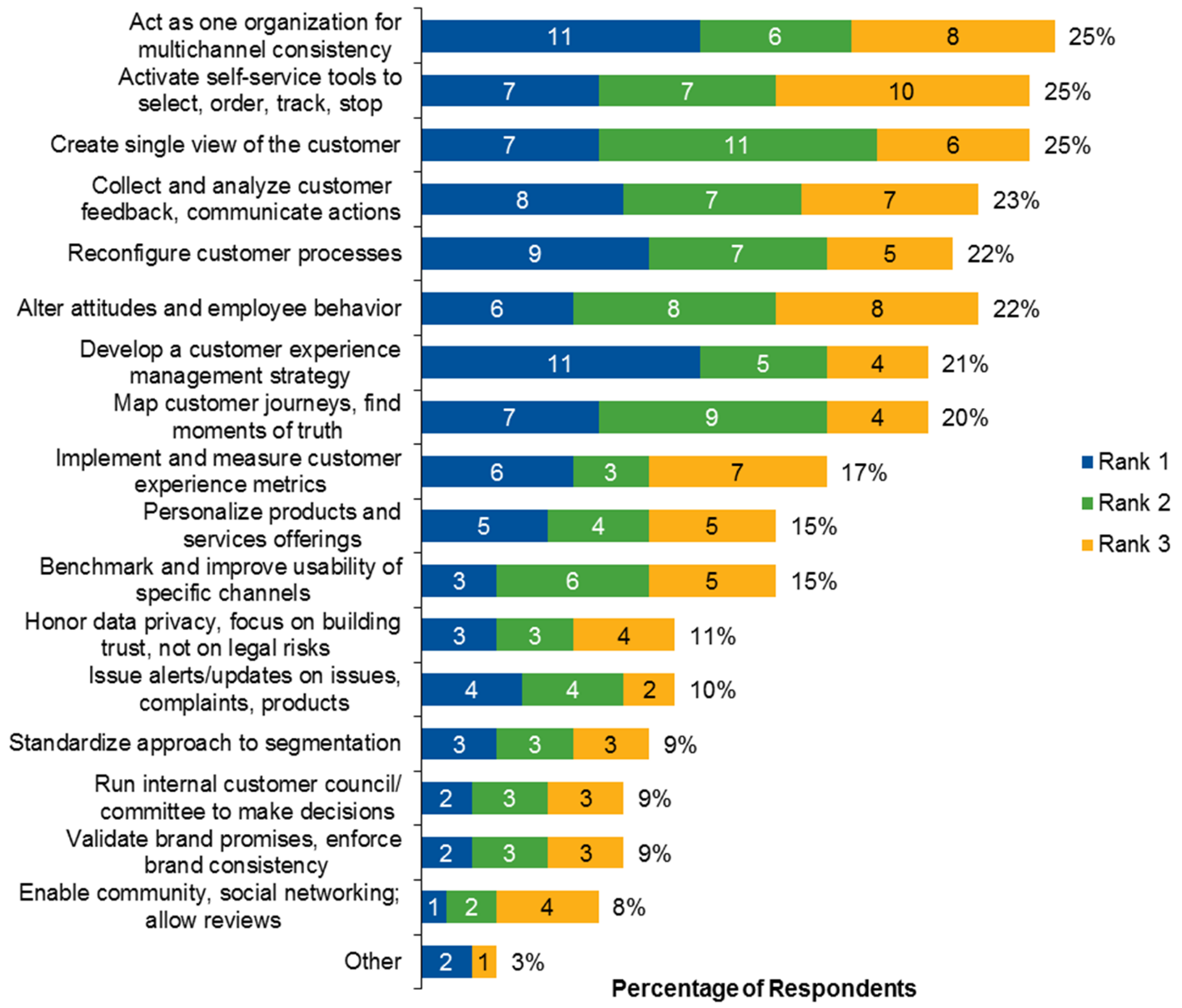
- A global Gartner study of customer experience improvement projects shows the greatest impacts in 2015 were achieved through projects that addressed multichannel orchestration, self-service and creating a single view of the customer.
- Customer analytics has become the most critical technology investment for CX improvement.
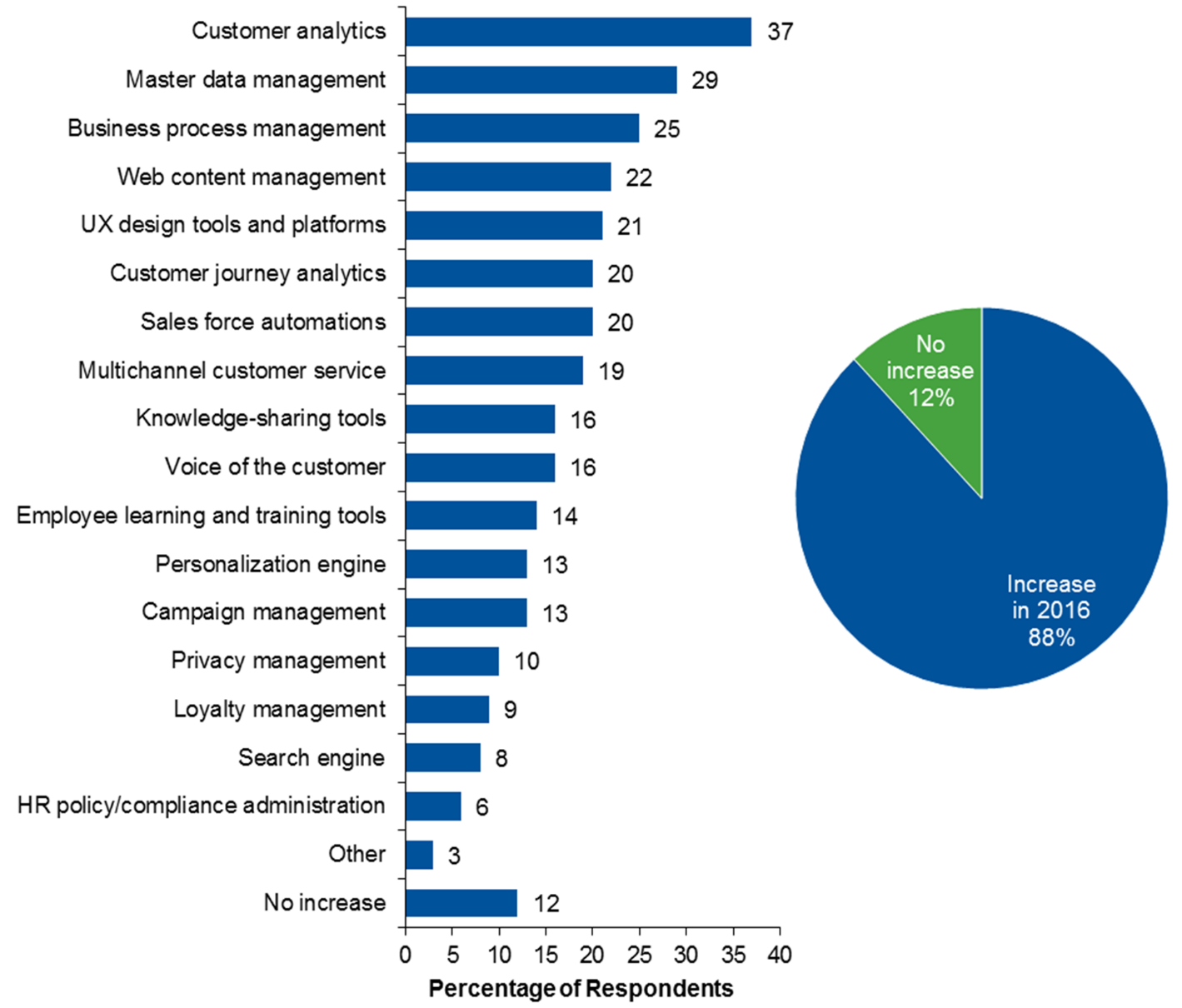
- Eighty-eight percent of sample organizations plan to increase CX technology investment during 2016.
- Organizations are still not gaining any greater visibility of ROI on CX improvement projects. Metrics have become a priority – but measuring CX remains a challenge for many.
Recommendations
IT leaders supporting customer experience should:
- Assess and prioritize the CX improvement projects that are most critical to your own organizations' circumstances, challenges and potential business impact, working with formal CX leadership and/or cross-functional stakeholders. Focus on key projects – don't get distracted by the size and complexity of the CX challenge. CX is a continuous journey of improvement rather than a fixed destination.
- Re-examine your organization's customer analytics roadmap. Predictive and prescriptive analytics are key to turning customer insight into action, and lagging behind the adoption curve will leave your organization at a disadvantage.
- Use a mix of different metrics to measure different aspects of CX and turn the numbers into dollar values, where possible, in order to cement consensus across the organizational silos and demonstrate clear benefits to the business in terms everyone understands.
Strategic Planning Assumption
By 2018, 50% of agent interactions will be influenced by real-time analytics.
Survey Objective
Customer experience (CX) has become a top priority for CEOs, who are driving increasing investment into projects that improve the experience of customers interacting with their organization.
The objective of the study was to understand what categories of CX improvement projects are being undertaken by a panel of 222 organizations worldwide, how those projects are measured, and what makes them successful.
In February 2016, Gartner conducted a global online survey of 222 business and IT leaders involved with CX initiatives within their organizations. Participants were comparable to those polled in a 2015 survey, and they were screened using the same questions and drawn from a similarly composed member panel.
The survey sample base reflects the Gartner client base, and participants were from a mix of organizational roles: primarily IT-focused (45.5%), a blend of IT and business roles (45.5%), and primarily business-focused (9%). Please refer to the Methodology section for further details.
Data Insights
Highest-Impact CX Improvement Projects for 2015: Multichannel, Self-Serve and Gaining a Single View of the Customer
The highest-impact customer experience improvement projects in 2015 were achieved through projects that addressed multichannel orchestration, self-service and creating a single view of the customer, according to the survey results. In addition, projects that involved customer experience strategy and "acting as one organization to ensure multichannel consistency" were ranked No. 1 by more respondents (11%) than any other project types.
The results are illustrated in Figure 1.
Figure 1. Most Impactful Customer Experience Projects in 2015
n = 204; Base: Excluding don't know. Percentages may not add up to total percentages shown due to rounding.
Question: Of the following customer experience improvement projects in 2015, which were the top three, in order, in terms of positive impact to customer experience for your organization? Summary table for ranks 1 through 3.
Source: Gartner (May 2016)
Collecting and analyzing customer feedback remained an important priority in 2015, even though these types of projects were not top-ranked in terms of impact on customer experience in this year's study. Many organizations are instead feeling the urgency of gaining deeper insight from the market by digging into the data they are getting back from their customers. At the same time, many organizations turned their attention to self-service tools that make it easier for their customers to interact with their organizations.
Each organization has a unique set of customer experience challenges and opportunities. Organizations need to understand the combination of improvement projects that are most critical in their current context, bearing in mind these often span departmental boundaries and require top-level executive sponsorship to bridge the silos and ensure all parts of the organization are positively engaged in the process. For example, a state government's priorities could involve making sure that basic public information, forms and contact data on its websites and in printed information are accurate, consistent across departments and policies, and easily accessible to citizens. By contrast, a budget airline's biggest immediate priority might be offloading overwhelming volumes of contact center traffic onto other channels by introducing self-service capabilities or introducing a virtual customer assistant.
Trying to tackle too many problems at once tends to lead to failure. It is better to focus on those that will deliver high impact for the business and provide a springboard for future improvements. IT leaders supporting customer experience need to assess and prioritize the CX improvement projects that are most critical to their own organizations' individual circumstances and challenges. Focus on key projects – don't get distracted by the size and complexity of the CX challenge: CX is a continuous journey of improvement rather than a fixed destination.
Customer Analytics: The Most Critical Technology Investment
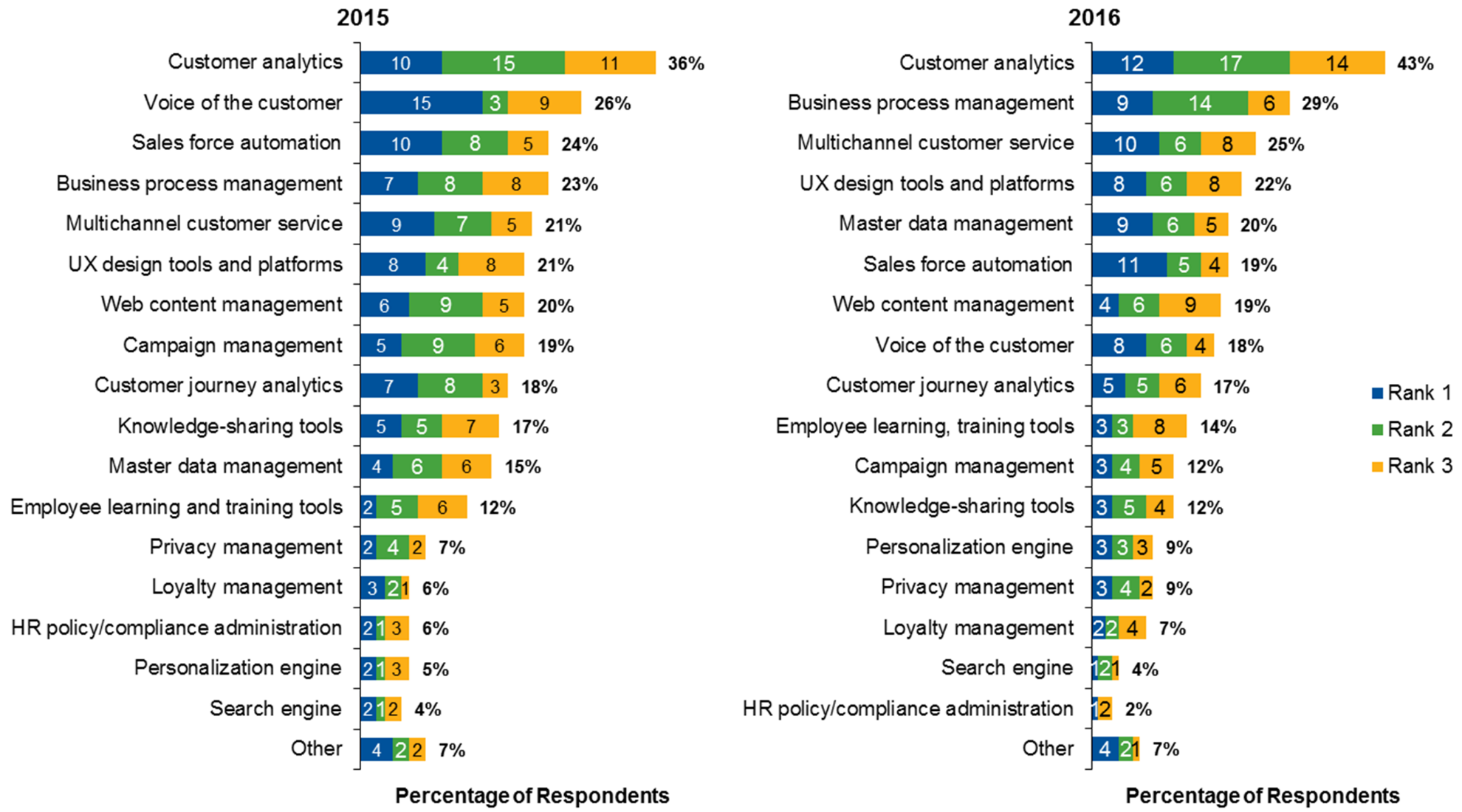
Customer analytics has become the most critical technology investment for CX improvement projects. In 2015, 36% of organizations considered customer analytics a crucial investment, and this is expected to rise to 43% in 2016 (see Figures 2 and 3).
In 2015, the voice of the customer (VoC) and salesforce automation ranked as the second- and the third-most crucial technology investment, respectively, for improving customer experience. In 2016, the priority shifted to business process management and multichannel customer service. This shift in priority illustrates how organizations are increasingly focused on operationalizing the customer insight they have gained through VoC solutions: They are doing this by generating predictive and prescriptive analytical insights based on customer behavior, improving business processes and multichannel customer engagement.
Figure 2. Crucial Technology Investments for 2015 and 2016
n = 193 (2015), n = 192 (2016). Percentages may not add up to total percentages shown due to rounding. Question (Q13): Which, if any, technologies were/are critical investments for your organization's customer experience improvement projects during 2015 and 2016? Summary table for ranks 1 through 3. Source: Gartner (May 2016)
As we move forward into 2016, the 36 percent of organizations that ranked customer analytics in their top three technology investments in 2015 has increased to 43% (see Figure 2). Additionally, as shown in Figure 3, 37% or organizations flagged increased investment in customer analytics in 2016, the highest increase of all the improvement projects.
It is also worth thinking about the less frequently cited projects at the bottom of these charts. Projects related to HR administration, privacy management and employee training tools may not rate as highly as other investments; however, they have a critical impact on CX outcomes. Employees have a huge impact on customers' perceptions of dealing with a brand, none more so than in a services business or government department. The fact that training elicits low technology investments should not obscure their importance to IT leaders, since the best technology projects can be held back by intractable people and cultural problems that often reach across the organizational silos.
Eighty-Eight Percent of Organizations Plan to Increase CX Technology Investments
Eighty-eight percent of participating organizations said they would increase CX technology investment during 2016, as illustrated in Figure 3. Customer analytics was the top category cited for investment increases. This reflects the growing maturity of organizations and the increased sophistication of CX improvement projects. Once organizations have instituted a systematic collection of customer feedback, the next step is to mine that data in order to model and generate responses such as the next best offer, explore upsell opportunities, or to build a more granular understanding of your customers.
Figure 3. Expected Increase in Investment From 2015 to 2016
n = 192
Question: Which, if any, of these technologies do you expect your organization to increase investment in for 2016 (versus investment in 2015)?
Source: Gartner (May 2016)
Given these results, organizations should re-examine their customer analytics roadmap to ensure they are not getting outmaneuvered by competitors. Predictive and prescriptive analytics are key to turning customer insight into action, and lagging behind the adoption curve could well leave your organization at a disadvantage.
CX and RoI Metrics Still Challenge Many Organizations
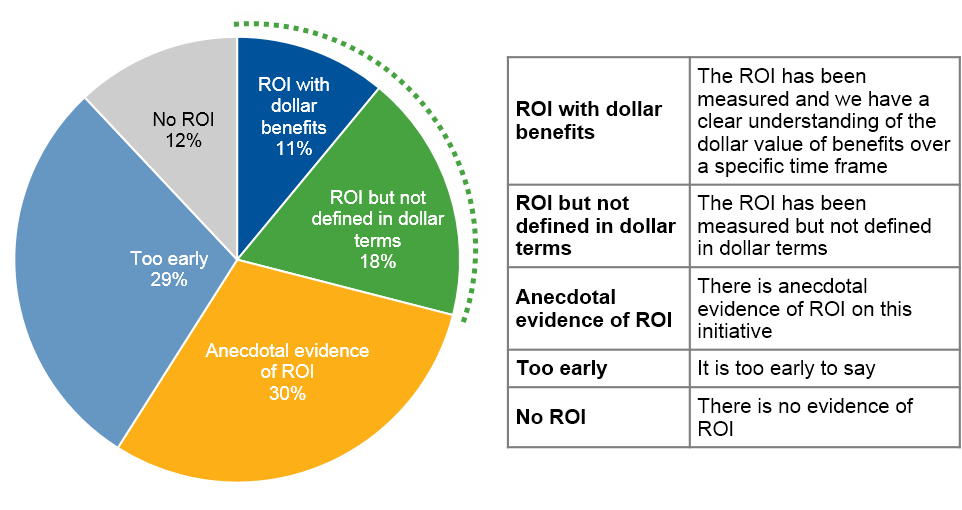
The survey results show that organizations are still not gaining any greater visibility of ROI on CX improvement projects. Metrics have become a priority – but measuring CX remains a challenge for many. Only 29 percent of organizations were able to attribute some form of ROI to their CX improvement projects in 2015, slightly above the 28% reported the previous year. The breakdown of the responses is shown in Figure 4.
Figure 4. RoI CX Metrics
n = 222
Source: Gartner (May 2016)
It is recommended that organizations (including governments) use a variety of different metrics in order to evaluate customer experience, and these metrics include quality (fulfilment of brand promise), satisfaction, loyalty and advocacy.
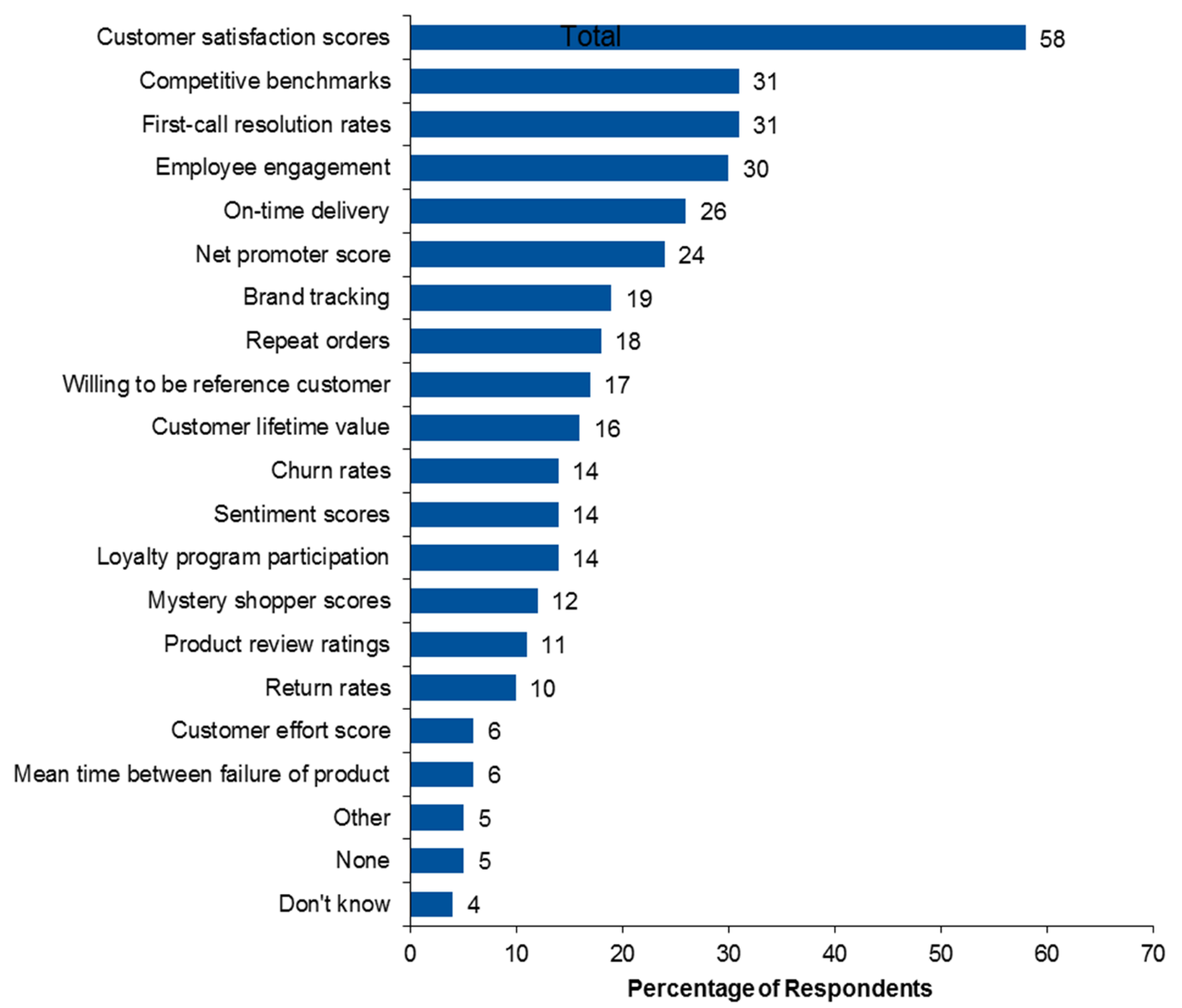
As illustrated in Figure 5, the majority (58%) of organizations reported using customer satisfaction scores as one of their CX metrics. This percentage is notably lower than last year (68%). Overreliance on one particular metric can be dangerous. Customer satisfaction (CSAT) alone does not provide a complete picture of customer experience since it does not measure attributes such as loyalty or advocacy. Metrics also tend to fluctuate from year to year, for no immediately apparent reason beyond the vagaries of changing customer expectations. Using a variety of different metrics provides insight into what might be causing those fluctuations. Anomalous fluctuations in metrics affect even the best-performing brands from year to year. Tying employee incentives to a narrow range of metrics can also be problematic, since they may result in fluctuations in compensation that are at odds with business results and overall customer satisfaction.
The other notable result is that employee engagement has leapt into importance as a CX metric. This is a very positive recognition of the critical role that employees play in delivering good customer experiences.
Figure 5. Measuring Customer Experience
n = 222
Question: To the best of your knowledge, how does your organization measure customer experience?
Source: Gartner (May 2016)
We recommend CX leaders use a mix of different metrics to measure different aspects of CX and turn the numbers into dollar values, where possible, in order to cement consensus across the organizational silos and demonstrate clear benefits to the business in terms everyone understands.
Methodology
The research was conducted via an online survey 17-24 February 2016 among Gartner Research Circle Members – a Gartner-managed panel composed of IT and business leaders. In total, 222 members participated. Members qualifying for the survey were either responsible for CX initiatives, working on CX initiatives, and/or impacted by such initiatives and knowledgeable about the CX-specific projects conducted in 2015.
The breakdown of the survey sample by job-role is shown in Figure 6.
Figure 6. Survey Respondents by Job Role

Source: Gartner (May 2016)
As shown above, our survey sample includes a mix of IT managers and executives from different business groups. As such, the results need to be understood with this mix of participants in mind. Marketers tend to favor CX projects related to customer-facing and marketing functions while IT managers are more concerned about projects and back-end process improvements that address CX through technology solutions. We combine the results for the different groups here to obtain a more robust sample size, recognizing that the findings, particularly in the area of project priorities, would be different if the sample included more CX and business/marketing leaders.
Definitions
Gartner defines customer experience as "the customer's perceptions and related feelings caused by the one-off and cumulative effect of interactions with a supplier's employees, channels, systems or products."
Evidence
The survey was developed collaboratively by a team of Gartner analysts covering customer experience, and was reviewed, tested and administered by Gartner's Research Data Analytics team.
