Car Manufacturers Embrace New Challenges with Digital Empowerment
The Best Path towards Digitalization for Automotive Industry under VUCA Environment
Car Manufacturers Embrace New Challenges with Digital Empowerment
The Best Path towards Digitalization for Automotive Industry under VUCA Environment
In recent years, the global automotive industry has entered a phase of rapid digitization, while facing unprecedented uncertainty. On the one hand, under the impact of “black swan events” such as resurgence of COVID-19 pandemic and uncertainty in international situation, the global automotive industry is facing multiple challenges in supply chain, manufacturing, and sales. On the other hand, due to the momentous changes in the industry, new phenomena such as new mindset in car manufacturing, new technology development and application in mass production, new business model creation and consumption upgrade are constantly emerging, all impacting or reshaping the traditional industrial structure. Facing such a complex situation full of uncertainty, it is an important matter for the automotive industry to quickly improve the ability of enterprises to adapt to changes and resist risks.
Digitization has become one of the primary approaches for car manufacturers to improve their resilience and combat risks and uncertainty.
For car manufacturers, the essence of digitalization lies in two aspects: product digitalization and enterprise digitalization (enterprise management/business/industrial chain). In terms of product digitization, they need to innovate business models, increase revenue streams enabled by digital products and services, expand profitability and, to a certain extent, buffer the impact on revenue caused by disruptions in the supply chain and sales chain through improving the digitization of products. In terms of enterprise digitalization, they need to optimize the collaboration within the enterprises as well as the supply chain and distribution system by digital means to realize asset digitization and modularization, to reduce cost reduction and increase efficiency in each segment and enhance the overall sustainability and growth capability of the enterprises. Digital transformation has become more and more important in the post-epidemic, unpredictable world, and car companies have launched cross-border cooperation in various business segments.
It has become a key approach for car manufacturers to realize comprehensive digitalization by building their digital capabilities based on the cloud base. The integration of clouds, channels and terminals enables the real-time data transmission and processing among consumers, partners, and car manufacturers, which would result in the integrated corporate management, the integrated operation of user lifecycles, and the integrated collaboration of the upstream and downstream of the industrial chain.
At present, cloud services for the automotive industry exhibit five major trends as follows.
- Cloud Nativeness and Agility: As the digital transformation of car companies enters the most difficult phase, the combination of software, hardware, and Internet brought by emerging brands has remodeled the business of the industry. Currently, there is an urgent need for technical agility and cloud-native technologies and data in all aspects of the automotive industry, including marketing, IoT, back-end R&D and manufacturing, and single sign-on IDCs can no longer meet the demands.
- Data Compliance and Security: In recent years, the state has been strengthening the regulation on data security. With the advancement in digitization, data is indispensable for car manufacturers in terms of development and iteration technology and product, corporate strategy and decision making, digital marketing and many other aspects, which puts forward more and more stringent requirements for end-to-end security and data security. As the technological framework becomes ever more complex, it is urgent to strengthen the security management of IT facilities and the cloud.
- Deep Integration of Technology and Business: After the rapid development in recent years, the automotive industry’s demand for cloud services has also evolved from basic and general capabilities to the integration of IaaS, PaaS and even SaaS designed for the characteristics of the industry and the needs of different scenarios. For example, autonomous driving, as the core R&D scenario of massive data computing, has become an exclusive channel to integrate the computing and storage network infrastructure, data compliance and security, cloud-native PaaS, big data, and AI algorithms, and has become indispensable for car companies.
- Flexible, Open and Continuous Evolution: With the accelerated development and iteration of new energy vehicles and ICVs and the continuous development of products and services, cloud services, as the basis for innovation, need to be flexible, open and scalable to integrate reliable and stable infrastructure and connect the rich industrial ecosystem, so as to provide an open platform for the co-creation of upstream and downstream partners, offer tools and services to meet the needs of the industry, and enhance the innovation of car manufacturers.
- Independent Digital Business: In the wave of global digitalization, data capabilities have become the core competitiveness of car manufacturers. Given the requirements of the country for new digital infrastructure and IT application and innovation, domestic car companies need to develop their own data infrastructure and application systems to achieve independent control of massive data assets concerning people, vehicles, equipment, management, R&D, autonomous driving, etc. They need to transform into data-driven enterprises based on applicable, manageable, and transparent data.
Meanwhile, cloud service providers are no longer just cloud technology suppliers of car companies; they have become strategic partners who work with the manufacturers to develop new mindsets for digitalization, new management systems and new models for talent training to realize orderly and thorough digital transformation.
With such a philosophy, Tencent takes the stance of a co-builder, providing digital toolkits for car companies while exploring the best path of digitalization with them.
The report will focus on the following five key aspects of digital transformation: autonomous driving cloud, intelligent IoT cloud, digital marketing, workplace collaboration, and intelligent parks, and will also discuss how to build a security system and cloud base to support the digitalization in the above fields. In a world full of risks and uncertainties, we hope to work with enterprises within the industrial chain to explore the optimal approach to digitalization, enhance the resilience of the automotive industry to cope with uncertainties and risks, as well as enable safer and more efficient production and management, more user-friendly connectivity and services, and more innovative and intelligent products for the car manufacturers.
Integrating Autonomous Driving R&D Process on Cloud
Background and Challenges
Autonomous driving is a fruit of the deep integration of the automotive industry and the latest technologies, such as AI, IoT and HPC. As the main orientation of the development of intelligent and connected vehicles (ICV), it has become a strategic focus for many countries that wish to lead the way. As a global leader in autonomous driving, Tesla has gained widespread consumer recognition for its autopilot and full self-driving capability. According to its 2021 financial report, Tesla delivered 936K electric vehicles worldwide, an 87% increase year-on-year. Taking a global view, the U.S. is setting the pace for the development of autonomous driving, and China has initially established a complete autonomous driving industrial chain.
Gartner has made the following predictions about the development of autonomous driving:
- “By 2025, AV robotaxis will have expanded to 100 cities, signaling the end of personal car ownership in metropolitan areas.
- By 2025, more than 15% of newly produced vehicles will have SAE L3 or higher autonomous driving hardware capability, up from 0.1% today.
- By 2030, autonomous trucks will make up more than 10% of new heavy-class over-the-road truck sales.”1
“Autonomous vehicles have the potential to change transportation economics, cutting operational costs and increasing vehicle utilization. In urban areas, inexpensive fares and high quality of service may cannibalize private car ownership. Road safety will also be increased as the AI systems will never be distracted, drive drunk or speed. Additionally, autonomous features on privately owned vehicles allow the occupant to engage in productive or recreational activities, while the vehicle handles the driving. While self-driving passenger cars are getting most of the attention these days, the technology can also be applied to vehicles that transport goods”.2
The autonomous driving industry enjoys an early start in China, with technology giants and startups carrying out ambitious exploration and long-term practice in different L2-L4 autonomous driving technologies, but their products have not been mass-produced until recent years. Chinese automakers, led by emerging brands, are gradually moving from R&D to mass production and beginning to promote autonomous driving as a product highlight to consumers.
Regardless of which mass production program they choose whether taking a step-by-step approach starting with Advanced Driver Assistance Systems (ADAS), or advancing marketing and R&D at the same time to realize L4 autonomous driving; whether undertaking independent R&D, partially independent R&D, or adopting solutions from suppliers, car manufacturers all face the following challenges.
1. Policy and Regulatory Compliance
China has been leading the way in recent years in developing laws and regulations for data security and privacy protection. In 2021, the Cyberspace Administration of China and other regulatory authorities launched a package of laws, regulations and standards for vehicle data, which put forward clear and strict requirements for data security level, data transmission, data storage and processing and other aspects.
The types of data collected by autonomous vehicles cover GPS, video, and point cloud, with high data accuracy and a large collection range. Based on these characteristics, regular self-driving data would be characterized as surveying and mapping data. Besides, as the collected video data contains vehicles and pedestrians on the road, the license plate numbers and face data are defined as private data.
The classifications set high compliance requirements for autonomous vehicles’ data collection, processing, and storage.
2. Storage and Computing for Big Data
Autonomous driving R&D needs to be underpinned by vast amounts of data, and the development of L2 autonomous driving requires massive of data in driving tests and scenarios. The higher level of autonomous driving boosts the industry’s data processing capability to a new level, with data volumes processed in petabytes and top-grade GPU clusters. Such a storage and computing cluster requires extensive capabilities and experience in terms of construction, management, maintenance, updates and iterations:
- Data centers have to meet the Grade-3 Protection requirements for data storage and processing.
- Data centers face big challenges in supply chain, operation and maintenance, data processing efficiency, etc.
- It is very costly and time-consuming to build cloud data centers.
According to Gartner’s estimation:
“By 2025, production autonomous vehicles (SAE Level [L] 3 through L5) will analyze more than 4TB of sensor data per hour but upload less than 1% of that data to the cloud.”3
3. Urgent Need for Toolchain Improvement
Autonomous driving R&D is inseparable from data-centered toolchains, which constitute the various parts of closed data loop, including comprehensive management of data, privacy computing, data annotation, perceptron training algorithm, control algorithm for simulation, etc.
- Toolchains are not yet well adapted to the cloud
- Most of the software built with older toolchains is difficult to use in SaaS level, preventing it from displaying its actual value
- With insufficient AI capabilities and low automation in the R&D, it is difficult to effectively reduce costs
Tencent Autonomous Driving Cloud: Connecting All Links for Autonomous Driving R&D and Significantly Improving R&D Efficiency
In order to do something well, one needs to make good preparations. Tencent Autonomous Driving Cloud focuses on providing comprehensive and data-centered services for the research and development of autonomous driving technologies. In addition to providing Tencent’s own R&D capabilities and services, the system also extensively integrates excellent solutions in the industry, effectively connecting all aspects of autonomous driving R&D covering data collection, storage and labeling, perceptron training algorithm, simulation and evaluation, returning mass production data and data operations, providing a full-stack solution for OEMs, travel companies, autonomous driving R&D companies and other enterprises inside the industrial chain.
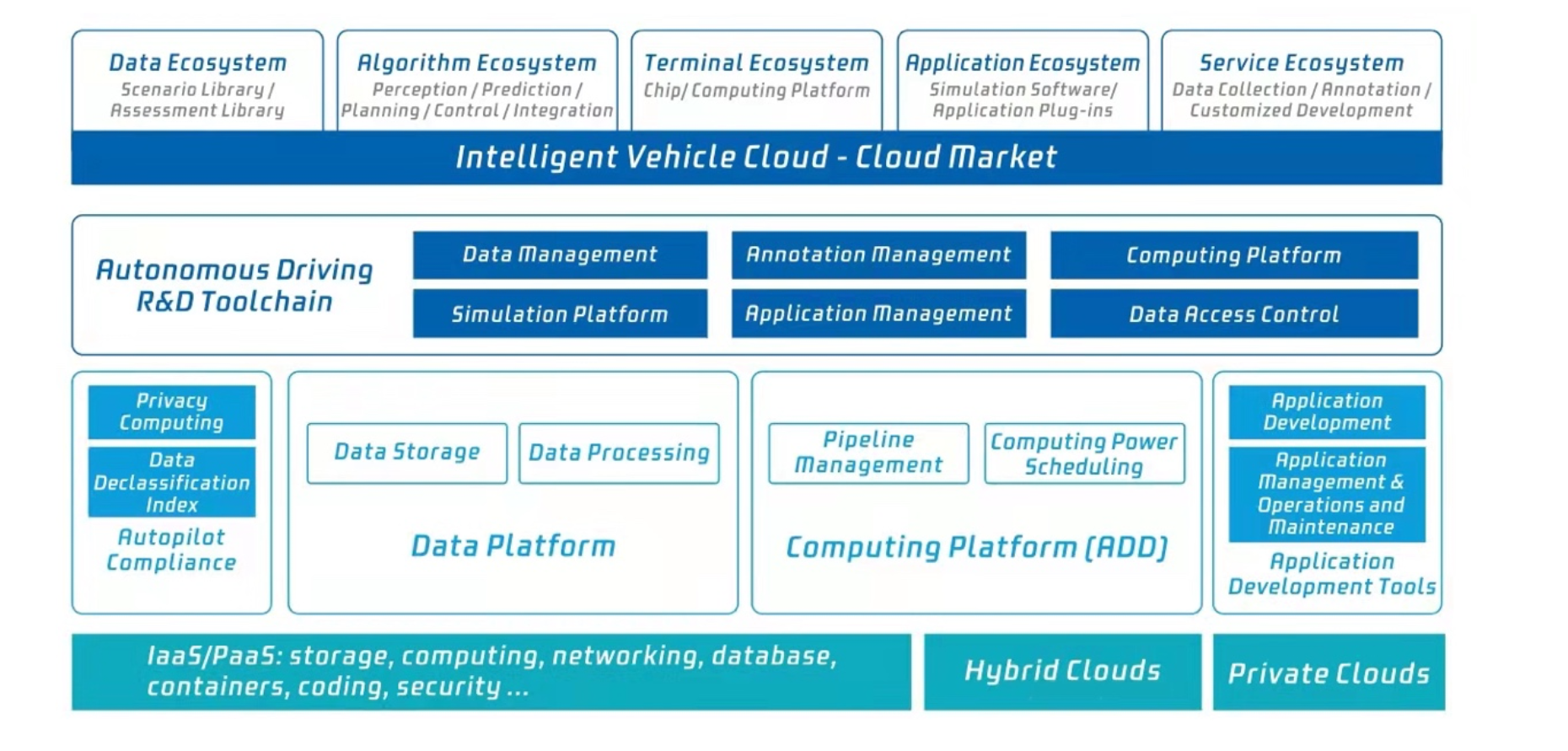
1. IaaS Level
According to the current national policies and standards for autonomous driving and intelligent vehicles, the underlying architecture of autonomous driving clouds needs to meet the following standards.
- The clouds for sensitive data storage as defined by the state needs to be physically isolated from the public network and should be managed and maintained by companies with appropriate qualifications.
- Relevant data needs to be classified and graded, with proper storage and management in compliance with laws and regulations.
- Access to sensitive data needs to be initiated by the compilation room via a dedicated line or encrypted channel.
Therefore, Tencent has launched the TCE for Autonomous Driving that fully meets the strict requirements of relevant policies and standards.
When building an autonomous driving cloud, companies often face challenges in the selection of technology solutions. If building private clouds, they confront problems such as long R&D cycle (8-10 months) and high investment (tens of millions of yuan). Tencent recommends that enterprises adopt a hybrid cloud solution with both dedicated clouds and private clouds, leveraging their complementary capabilities to maximize value.
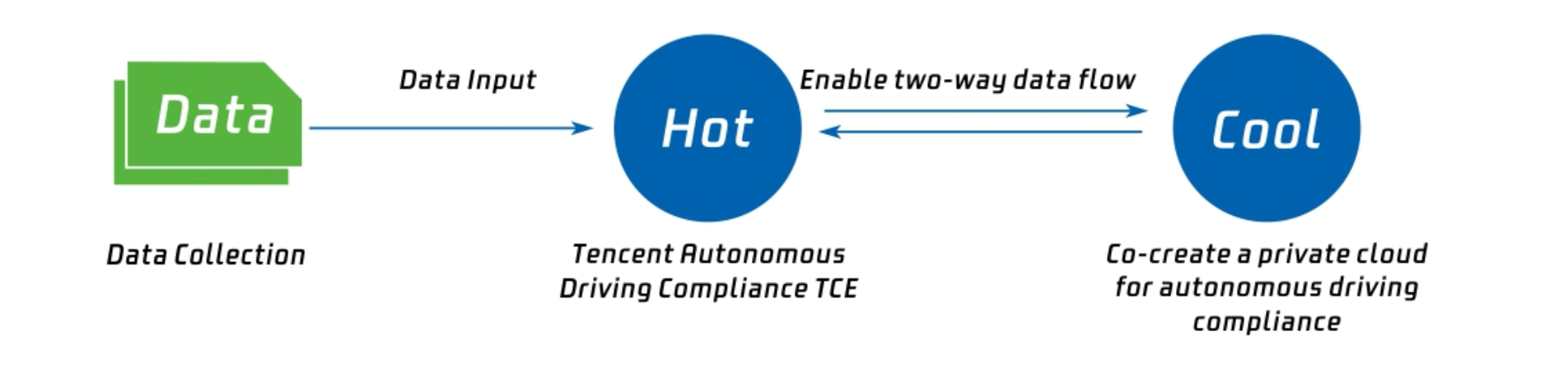
First, the collected data enters the dedicated cloud to undergo a series of operations including data value extraction and algorithmic training, giving full play to the advantages of cloud resources and efficiency; then, after effective data processing, it is further compressed and screened to synchronize the cold data and archived data to the local private cloud to realize data storage cost reduction.
2. PaaS Level
The PaaS level provides the cloud with special technologies to meet needs in storage, computing and big data processing. Tencent Autonomous Driving Cloud selects different storage technologies at the PaaS level in response to the characteristics of autonomous driving in terms of data storage and computing, optimizes the server configuration, provides adequate products and services for high concurrency and high throughput.
3. SaaS Level
Tencent provides a series of products, functions and services that are most needed for autonomous driving, such as data collection, data annotation tools and services, simulation, simulation scenario library, simulation evaluation system construction and algorithm iteration; meanwhile, we build comprehensive industrial ecosystems together with leading enterprises of the industry in the fields of scenario library construction and multi-engine aggregation simulation.
Five Key Capabilities of Tencent Autonomous Driving Cloud
- Efficient Data Management: efficient data retrieval and management, fast retrieval of petabytes in seconds, data screening, 80% reduction in the construction time of Corner Case dataset, and a perfect tagging system to improve data retrieval efficiency.
- AI-Based Data Recognition: relying on Tencent YouTu Lab, which focuses on Visual AI, the Autonomous Driving Cloud introduces automated annotation based on images and point clouds for more effective data annotation.
- Highly Automated Scenario Construction: including automated scenario exploration, scenario construction in minutes, real-world scenarios, and full compatibility with OpenX.
- High-Performance Storage: TCE provides extensive storage services for objects and files with a focus on the performance requirements for data reading and writing and data storage costs under different autonomous driving R&D scenarios, easily realizing efficient management of tens of millions of files.
- Powerful Scheduling for Cloud Computing: it ensures the efficient operation of all aspects in autonomous driving R&D.
Case 1: Autonomous Driving Cloud Created with A World-Leading International Technology Company
About the Cooperation
One of the world-leading autonomous driving solution providers has collaborated with Tencent to create an AI infrastructure platform, covering functions such as data management, workflow management, model management, annotation management and other R&D efforts for autonomous driving. The platform will serve the R&D of L3-and-above autonomous driving services for leading car companies.
In order to adapt the functions of its self-driving software to the unique characteristics of roads in China and to comply with China’s data regulations, the technology company partnered with Tencent to build an autonomous driving cloud featuring Tencent Cloud’s compliance services for autonomous driving, laying a solid foundation for car manufacturers’ R&D practices. The first use case is developed based on the perceptron algorithm with Chinese data. Future use cases will include, but not limited to, autonomous driving algorithm testing, verification, hardware-in-the-loop simulation, mapping services for production, and many other aspects.
Results
- The data management platform makes data use more convenient and efficient, while the agile development platform can effectively shorten the cycle of autonomous driving R&D.
- The flexible infrastructure will support the implementation of multiple processes covering algorithm development and simulation testing.
- The unified account, unified authentication and unified authorization platform improves the overall management and use efficiency of the system.
- Tencent ensures complete compliance throughout the data lifecycle, including data collection, data upload, and data processing and application, based on the requirements by relevant government authorities for the autonomous driving R&D
Building a Safe and Efficient Connectivity Platform
Background and Challenges
With the increase of the proportion of intelligent and connected vehicles (ICV), intelligent and connected platforms have become a necessary infrastructure for the digital transformation of car manufacturers. However, due to their isolated and functional positioning, the older intelligent and connected platforms faces problems such as excessive dependence on suppliers for iterative updates, low efficiency in access to ecosystem-based services, difficulty in effective use of data and insufficient independence and controllability, etc. At the same time, these platforms are not scalable enough to meet the demand for cloud-based data storage and computing of smart cars.
Therefore, it has become a common demand of car manufacturers to build an independent, scalable intelligent and connected platform with high security that can also serve the data applications upward.
Tencent Intelligent and Connected Platform: Helping Car Manufacturers Build an Independent and Advanced Platform with Cloud-Native, Modular Design and Open Source
Based on industry needs, Tencent combines its superior capabilities in cloud services, IoT, and ecosystem-based services with its own rich practices and experience to create the solution for intelligent and connected platforms. Featuring high security, high performance, scalability and agility, the solution supports public, private and hybrid clouds, and can meet the construction requirements of intelligent and connected platforms of different scales for different infrastructures.
The solution is modularly designed based on Tencent’s cloud-native capabilities, addressing the ack of flexibility of traditional intelligent and connected platforms and effectively supporting the application of the whole platform or module-based applications.
In addition, to promote openness and co-creation in the industry, Tencent is ready to launch an open source program to make basic intelligent and connected components open source, in the hope of promoting the development of the entire field, realizing shared independence, cost reduction and broader integration.
Cell Phone and On-board Unit Connection
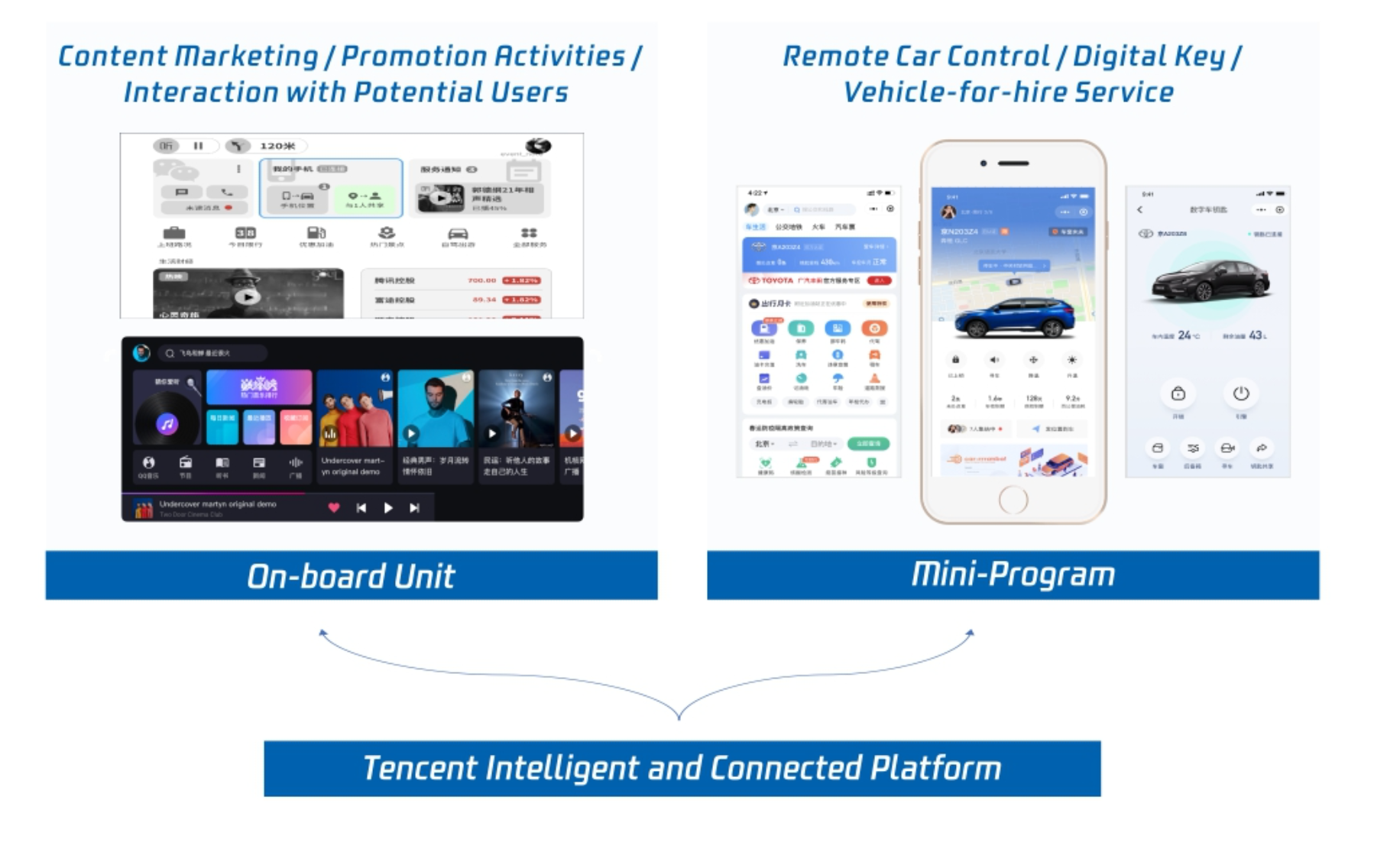
By connecting the intelligent and connected platform with Tencent Mobility Mini-program, functions such as remote car control by cell phone and digital key can be easily accessed, allowing users to enjoy the convenience while enabling manufacturers to enjoy the benefits from the ten million daily active users of the Mini-program and significantly reduce their cost of attracting new customers.
The Tencent Intelligent and Connected Platform can also be connected with Tencent applications on the on-board units to playing an active role in content marketing, promotion activities and interaction with potential users.
Intelligent and Connected Data Application
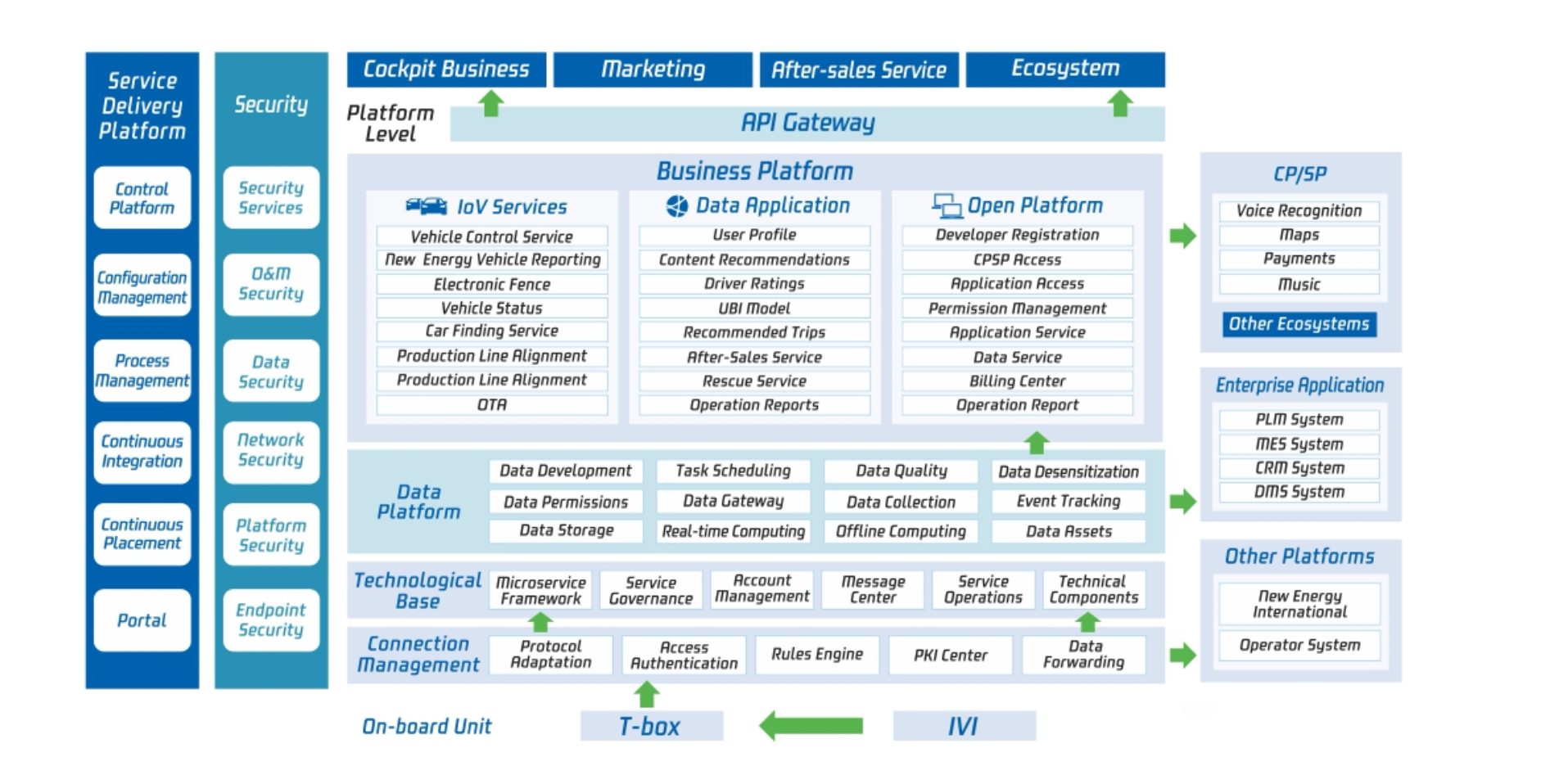
The purpose of collecting in-vehicle data through the intelligent and connected platforms is not only to meet the requirements of regulations and vehicle condition monitoring, but also for the continuous exploration and innovation in IoV data applications.
The user-centered data processing and application solution by Tencent Smart Transportation provides existing data applications for cockpit, after-sales and marketing; the tools of the solution can also meet customer’s needs for data-driven business innovation.
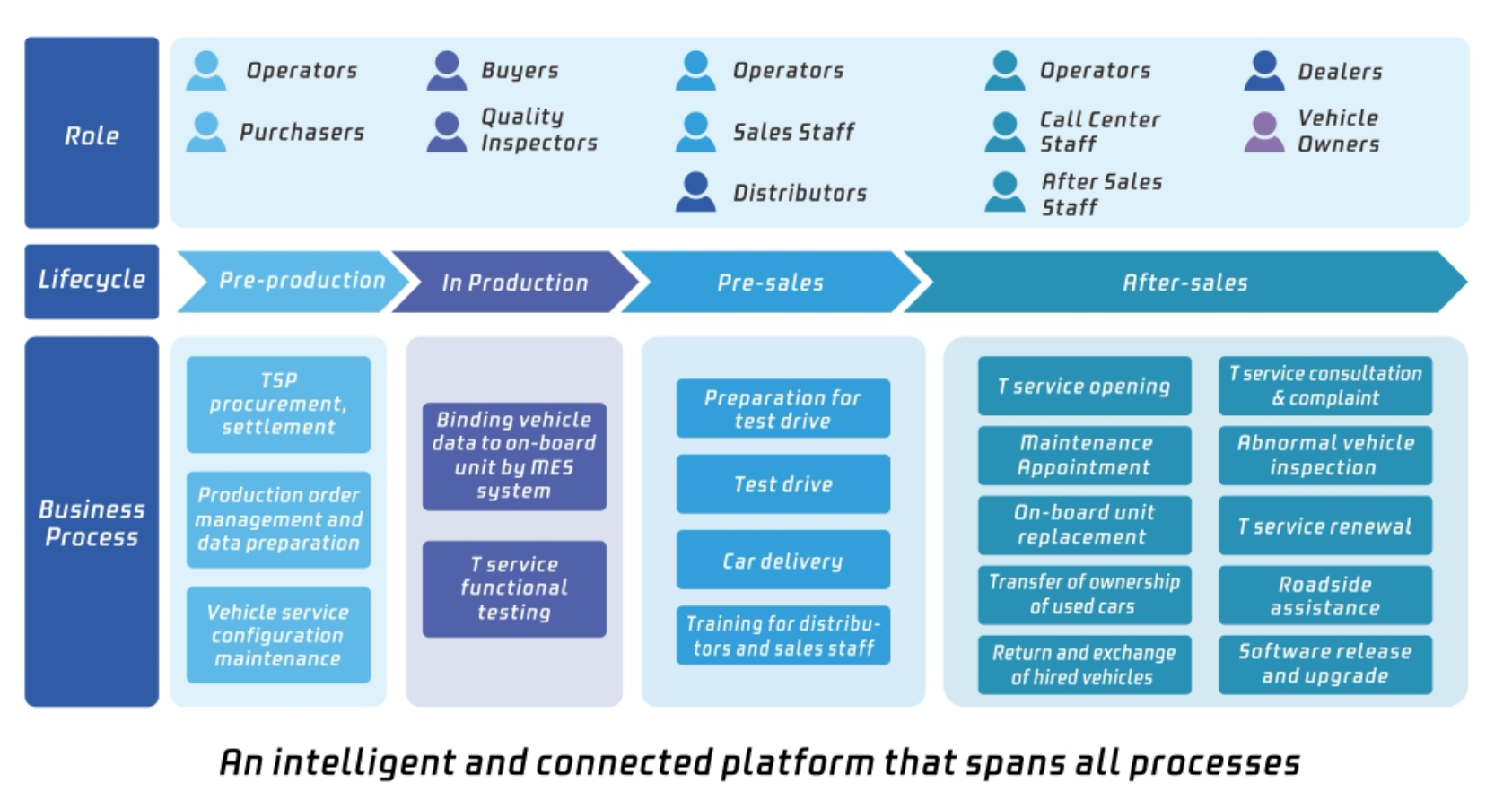
Case 2: GAC Group’s Intelligent and Connected Platform
About the Cooperation
In cooperation with Tencent, GAC has created its intelligent and connected cloud, an ecosystem with a mix of intelligent and connected center and IoV services. Focusing on serving the car manufacturers, the intelligent and connected center is serving as the dedicated cloud by leveraging big data, high concurrency and microservices; the user-oriented IoV service platform brings together the IoV and Internet resources to create an ecosystem for people, vehicles and social life, providing customers with high-quality services and supporting IoV applications and Internet-based marketing. The platform establishes a high-frequency connection between GAC and its customers by providing customers with the best IoV services and the most effective communication and interaction, increasing customer stickiness, providing potential opportunities for potential marketing and new businesses, and increasing user delight while creating value for them.
Results
The platform was launched in June 2019 to help GAC provide ever better services for its hundreds of thousands of customers.
- In response to the increase in the number of connected vehicles and the demand for cloud computing, the platform enables elastic scalability to effectively support business development, strengthen the refined management of resources, and enhance the efficiency of resource use.
- The platform effectively improves the access efficiency of ecosystem-based services and significantly improves the user experience of car owners by continuously introducing high-quality services.
- The platform has an industry-leading hybrid cloud architecture that balances security and openness, effectively supporting the development of GAC’s intelligent and electrified business and effectively safeguarding the security of the cloud.
Enabling Smart Industry Park with Digital Twin
Background and Challenges
The management of automobile industrial park usually needs to deal with multiple work scenarios, including administrative services, manufacturing and assembly, and confidential design, while safeguarding the security and compliance operations of thousands of people. Potential security risks are becoming increasingly prominent along with complex work scenarios and the management of many staff, in particular, the more extreme situations during the pandemic. Traditional security means such as video surveillance, with features such as passivity, reliance on manpower and traceability difficulties, are insufficient to respond to ever-changing emergencies in a timely manner; because they cannot analyze large amounts of data, making it difficult to detect risks in advance and to obtain evidence.
In response to the situation, the car manufacturers have a strong demand for digital transformation and intelligent management and operation, expecting to fix information silos inside the companies, solve the problems of isolation, complexity and confusion of competence in each business system, and realize the centralized control of competence and application; solve the pain points in traditional operation and maintenance, overcome the problems caused by the lack of monitoring and early warning and integrated management of different business systems, the lengthy response and processing cycle of failures, and the time-consuming fault location.
Tencent Weiling Smart Park Solution: Digital Twin for Smart Industry Parks
Based on the digital space, Weiling creates a new digital ecology in the automotive industry, improving the employee experience in terms of efficient operation, smart office and healthy space, as well as helping customers in the automotive industry to truly realize digital transformation and data assetization.
Weiling integrates the big data analytics capability (BDAC) with the parks on the basis of the digital characteristics of the park space to create wisdom parks, so that the buildings can respond and make decisions intelligently; at the same time, through data accumulation and linkage, the parks are empowered with AI algorithms, enabling continuous evolution of park services.
The solution empowers buildings with IoT, BIM and GIS integration. With the capabilities of AI, it realizes intelligent warning beforehand, timely alerting during incidents, and efficient traceability afterwards. Compared with the passive, manpower-based security and protection and inefficient retrieval in the traditional video monitoring system, Tencent Instavue transforms the management process from passive to active, and designs products with the aim of efficiency improvement. Whether in parks, office buildings, or industrial production areas, Tencent InstaVue can flexibly apply the required AI algorithms according to the actual scenarios, effectively solving the challenges faced by different scenarios and truly realizing smart parks.
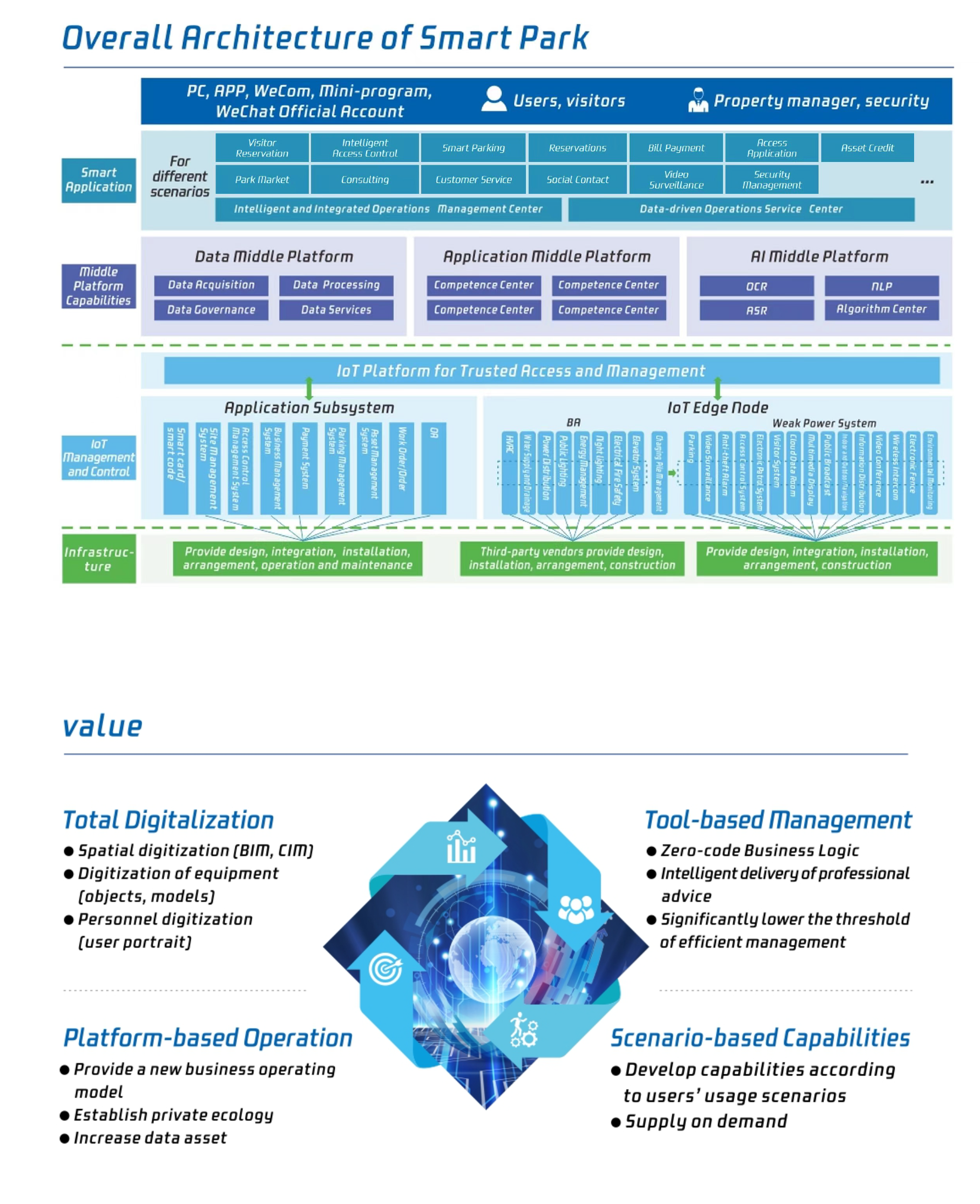
Product Architecture
Weiling Smart Park includes modules such as iPaaS, IoT gateway, graphic data conversion, full domain data model, business & service assembly, big data service & intelligent algorithm, engine for lightweight model, graphic platform, micro service & model warehouse, logic chain assembly, business application assembly and graphic application assembly. The modules work together to support the modular production of various complex applications, integrate data from different fields, spatial data and IoT data, and rapidly establish business applications and graphic applications through modular microservices and applications to meet the demands of different digital and intelligent scenarios.
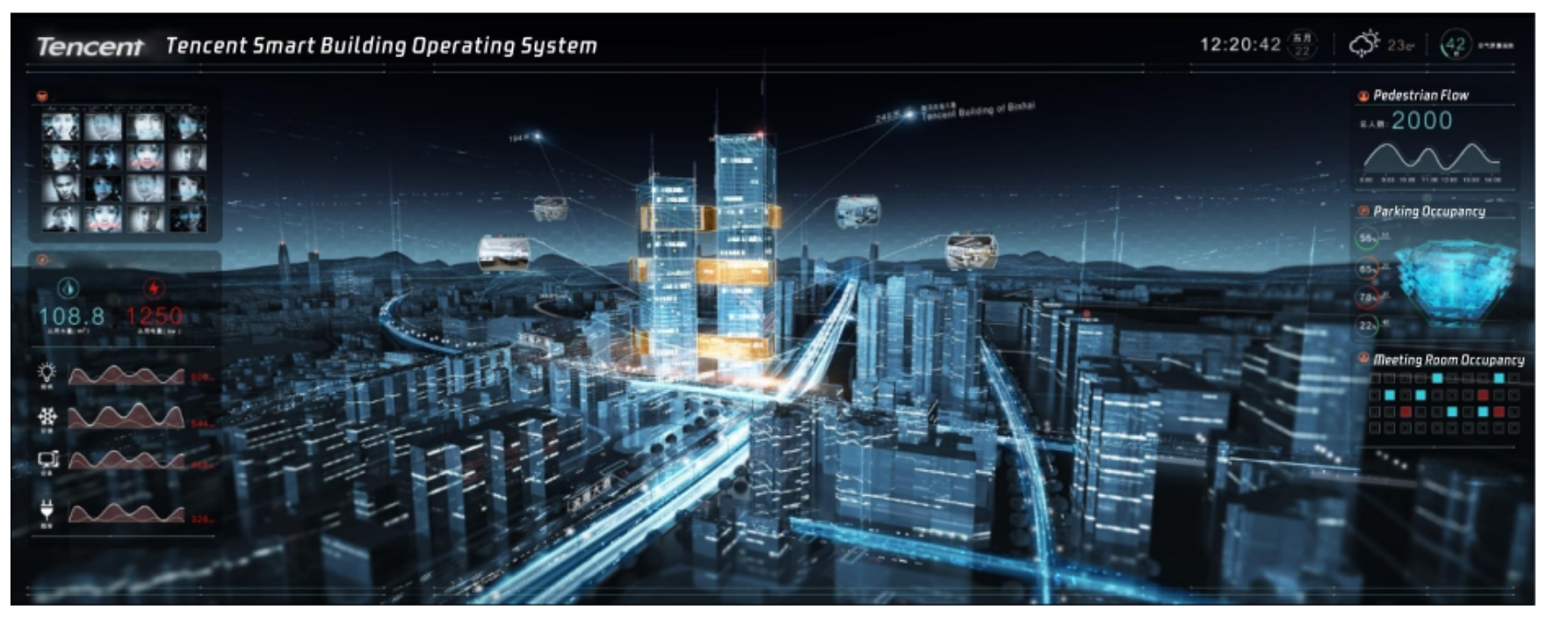
Based on Weiling IoT system’s capabilities in digital space and BIM, we create a 3D intelligent building management platform which connects people, machines, things and environment, integrates important data, statistical information, early warning and alarm information on parts and events, and assist operation control and evaluation and emergency command and integrated emergency response. The solution enables intelligent management of building operations and improves management and decision-making efficiency.
Establishing a Full User Life-Cycle Sales Operation System
Background and Challenges:Profound and irreversible changes are taking place in the habits of consumers, the marketing models of car manufacturers, and the interactions between consumers and car manufacturers, leading to the inevitable digital transformation of automotive marketing. As a main consumer group of automobiles, Gen-Z is more willing to complete the car purchase online. According to the new marketing insights of the auto industry jointly by Boston Consulting Group (BCG) and Tencent, more than 90% of Gen-Z consumers spend more than 4 hours online to compare car purchase options, and their time spent in 4S stores has dropped to 30%~40%.
In the car market slump, the quantity and quality of car manufacturers’ leads are both declining, and the business cooperation between OEMs and dealers is facing multiple challenges. Car manufacturers are in urgent need of digital transformation for marketing model to efficiently capture more first-hand customer equity. In addition, the interaction between consumers and car manufacturers has changed from the one-way advertising of the latter to interactive communication between both sides. The digital transformation of the marketing model will provide high messaging efficiency for the closed-loop communication, and a comprehensive communication scenario for both sides.
According to Gartner research:
“Marketing technology remains a critical priority for CMOs, even as marketing’s portion of the overall budget has decreased. Martech remains the largest share of marketing budgets, with Gartner’s 2021 CMO Spend Survey showing a slight increase in martech’s share to 26.6% in 2021.”4
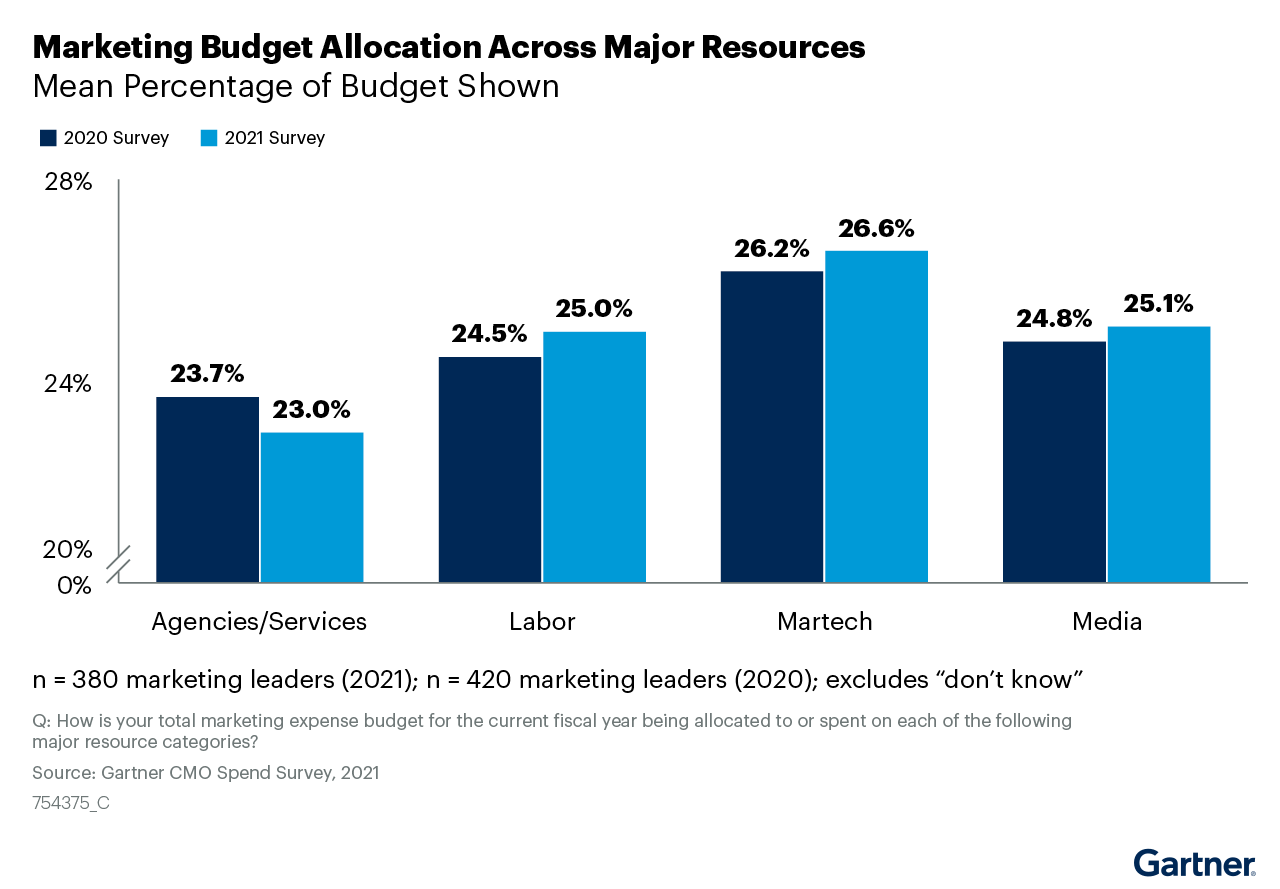
Tencent’s Digital Marketing Solution: Connect the Public and Private Traffic and Build a Lifecycle Marketing and Operation System for Users
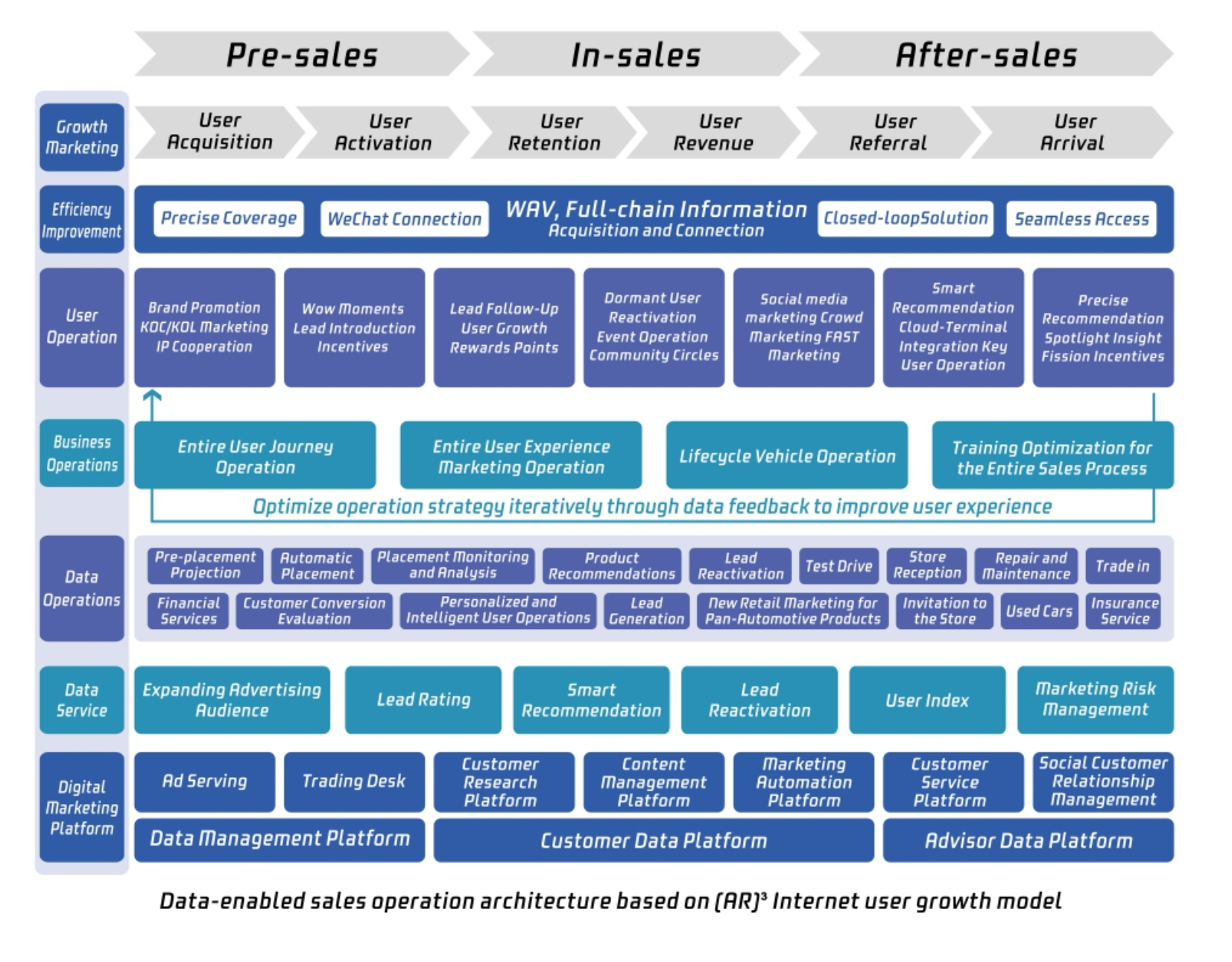
Based on the current marketing environment, industry background and transformation challenges in the auto industry, Tencent puts forward the (AR)³ Internet user growth model, which enables the connection of public and private traffic through the six key stages encompassing pre-sales, sales and post-sales: user acquisition, activation, retention, conversion, dissemination and store visits, and builds a digital platform covering the entire system to realize data-empowered sales operations.
Tencent’s digital marketing connects public and private traffic through the One ID system to build an integrated system for the entire user lifecycle. It integrates the digital, social and media public traffic before sales, connects private traffic from official websites, official WeChat accounts, apps, mini programs and official online shops during and after sales, and obtains all-domain traffic and increase customer equity with the One ID system. Based on the solid foundation created by the One ID system integrating user data property, Tencent digital marketing has built a perfect sales operation architecture and empowered user-centered digital marketing of car manufacturers with data. The architecture takes Customer Data Platform (CDP) as the core, and builds a data-driven marketing operations model for private traffic based on the information acquisition and connection capability of the Tencent WAV. Through data feedback, we can iteratively optimize user operation strategies, improve user experience, and achieve accurate and efficient marketing.
Moreover, Tencent also owns digital capabilities such as Tencent Cloud Xiaowei and NFTs to support car manufacturers create a new-age user experience. By integrating industry-leading AI technologies such as NLP, ASR and TTS and joining Tencent's rich content and service ecology, Tencent Cloud Xiaowei polishes platform features for livestreaming, shopping guide and intelligent customer service scenarios for car manufacturers, helping them to develop intelligent, image-based, and vividly interactive AI and realize the evolution from “virtual assistant" to “intelligent assistant”.
Tencent has created an NFT solution for the automotive industry based on national certification. At its core is a high-quality aPaaS application platform with out-of-the-box simplicity, enabling companies to quickly launch their NFTs. At the same time, the solution possesses robust openness and extensibility; it can be embedded in a variety of platforms such as WeChat mini programs, APPs and H5 pages for brands. Zhi Xin Chain, the platform for Tencent NFT, has been certified by the state and endorsed by multiple authorities, whose mode, platform, and technology are all in compliance with current laws and regulations.
Case 3: SAIC-Audi WeCom Marketing Middle Platform
In the first year of the strategic cooperation between Tencent and SAIC-Audi, they focused on three major orientations, namely user experience improvement, lead volume improvement and order conversion, through cooperation and co-creation. In 2022, the two companies will enter a new cooperation phase, and SAIC-Audi’s WeCom marketing middle platform will be upgraded to version 2.0, with intelligent AI, open platform and B-side product and service enhancement as the breakthrough direction, focusing on the communication between customers and consultants, creating good services for C-side colleagues and developing marketing assistant for B-side consultants by Tencent’s capabilities in collaboration.
First, we build a marketing knowledge center through Tencent’s AI expertise to help consultants quickly find the content required by customers and provide efficient services. Besides, we focus on the hot spots and concerns of communication between the two sides and quickly iterate services and processes to meet customer needs. Secondly, With WeCom’s ecological iteration and customer service, we help brands connect directly with users through multiple channels; we will launch integrated operation services for car terminal, cell phone terminal and cloud terminal, to uncover the lifecycle value of users. Finally, in the cloud marketing services by Tencent for SAIC-Audi, we maintain the platform-based integration of service and data and adhere to our C-terminal optimization ideas to optimize product experience and provide good marketing support for B-terminal consultants through usage analysis and effect feedback.
SAIC-Audi realizes efficient and multi-dimensional connection with users through intelligent services, strengthens the direct-to-customer (DTC) system, breaks the barriers between the brand and customers with intelligent data analysis, keeps abreast of customer need needs, and adjusts services in a timely manner. Based on WeCom, the enterprise integrates customer service, voice, intelligent employee IDs and other services to create a new retail model with online and offline integration; while meeting the C-side customer needs, it simultaneously improves the B-side consultant experience and creates the best marketing assistant.
Case 4: FAW-VW NFTs
During the Chinese New Year 2022, Tencent Smart Transportation and FAW-VW launched the NFT New Year marketing campaign based on Tencent NFT Solution. We quickly developed and released NFTs for 995 annual users of FAW-Volkswagen App through our speedy construction of aPaaS platform and created exclusive “Annual User Commemorative Coins” for them. Each coin has a 3D image with unique shape and meaning. Moreover, FAW-Volkswagen also provided limited-edition painted vehicle NFTs through blind boxes, Hub stores, and creative products for its users, which perfectly combined technology with the elements of the Year of the Tiger, attracting users with bright colors.
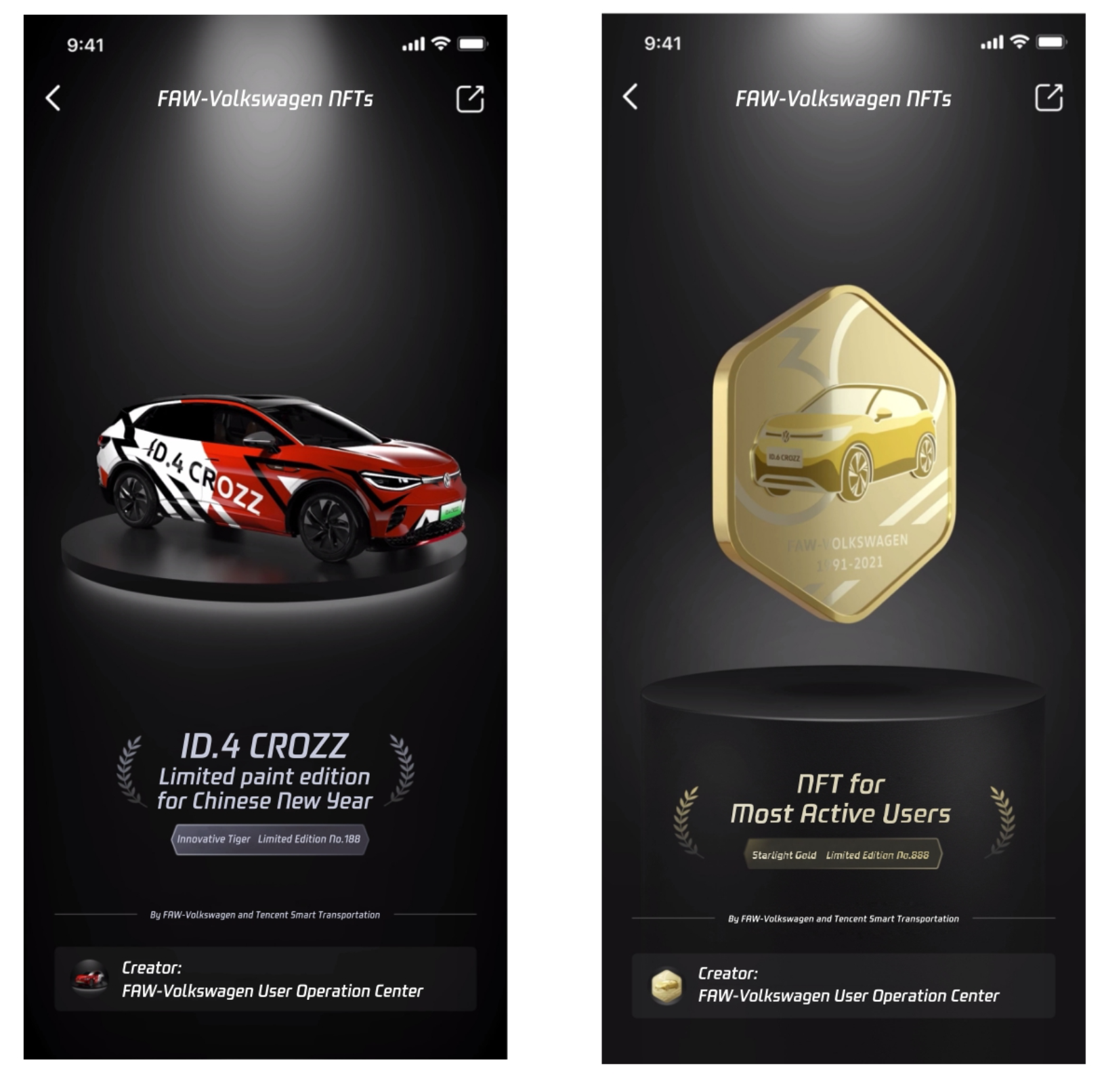
Compared with the traditional user incentive, each NFT has a unique identification (NTF ID), which is unchangeable forever. The combination of digital technology and collectibles maximizes the value of both, making it an effective means to attract user participation. The collectibles possess uniqueness, artistic value and collectability. Through the digital technology, they can be distributed to the online platforms to enjoy a broader social network and more possibilities. Users can forward the campaign in their WeChat Moments with one click to increase their chances of getting NTFs. With the help of Tencent NFT Solution, the campaign has greatly increased users’ willingness to participate and share, involving over 330,000 people in total.
Creating Integrated Digital Workspace
Background and ChallengesThe COVID-19 pandemic has had a huge impact on the automotive industry and deepened the anxiety of managers in car companies about continuous organizational growth. As the company continues to expand, efficiency is difficult to be guaranteed; the closed system makes it difficult for management demands to reach all levels quickly and effectively; the existing organizational capacity fails to adapt to the rapid changes of employees and business; and it is challenging for business innovation and transformation. Meanwhile, staff at different levels have different needs for corporate governance: junior managers are concerned about the progress of concrete tasks; middle managers focus on collaboration and communication across teams and improvement of team performance; decision makers expect to establish a benign business management system where strategic goals and policies can be put in place.
As Gartner reports:
“The pandemic exposed the weaknesses of manufacturing companies as they were quickly forced to respond to disruption. For these asset-intensive organizations, agility is something of a major strategic importance due to their greater inertia. Factors like a complex geopolitical “chessboard,” natural disasters, pandemics and financial instability create an increasingly unpredictable future. This means manufacturing companies must build a reset strategy that redefines their structure, processes and governance in a bid to build greater foresight and agility to quickly adapt to changing conditions.”5
In their research, Gartner had the following Key Findings and Strategic Planning Assumptions –
“Key Findings -
- Digital friction caused by multiple, siloed, digital work experiences and organizational attachments to in-person styles of work have significantly contributed to employee fatigue and burnout.
- Organizations have implemented the technology components of a digital workplace framework but few have improved employee experience or advanced digital dexterity.
- Keeping pace with the advancing capabilities of technology requires digital dexterity to be elevated for all, necessitating an employee-centric approach, a shift that mirrors that achieved for customer experience.
Strategic Planning Assumptions
- By 2025, 15% of information and communication will be algorithmically promoted or demoted.
- By 2024, 30% of voice services users will be provisioned through their workstream collaboration and meeting platforms instead of traditional telephony services.
- By 2025, over 80% of organizations will use accessibility as a key criterion for digital workplace technology investments — up from 20% in 2021.
- By 2025, massive generational shifts will force 75% of organizations to adapt their hybrid work strategies to include demands for radical flexibility.”6
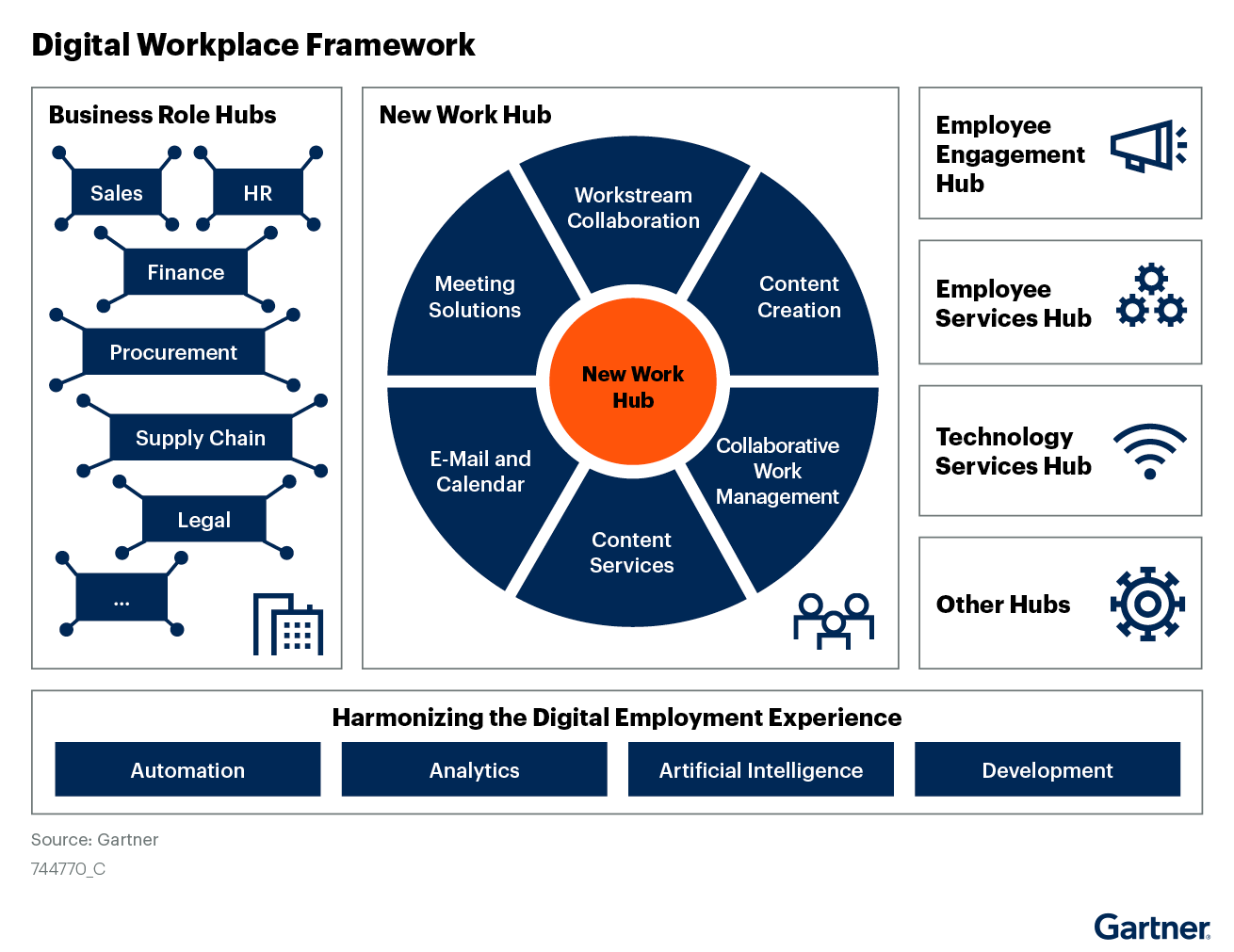
In this regard, we suggest that enterprises take values as the basis, digital technology as the support point, and customer benefits as the orientation, to practice “people-centered” digital transformation approach and build a new enterprise system driven by “collaborative workplace”(OA) and “collaborative ecology”. Collaborative workplace refers to building sustainable organizational abilities from employees’ willingness and ability, so that every employee can be responsible for a certain matter, and communicate and collaborate with other staff on specific tasks. Collaborative ecology refers to the customer-centered approach which aims to deliver better products and services to customers. Enterprises should make business decisions based on customer needs, drive external cooperation across enterprise departments, and advance business online.
WeCom Tools for a Collaborative Workplace: Connect with Online Meeting and Document Tools to Meets Various Collaborative Needs
WeCom is positioned as an exclusive liaison tool for enterprises to communicate internally with employees to promote efficient collaboration, release employee productivity and significantly improve internal business efficiency; externally, it can liaise with industry chain and partners to better serve C-end consumers and promote efficient cooperation of the whole industry chain; at the same time, it connects WeChat users to help enterprise clients cultivate loyal consumers in the well-growing SCRM market.
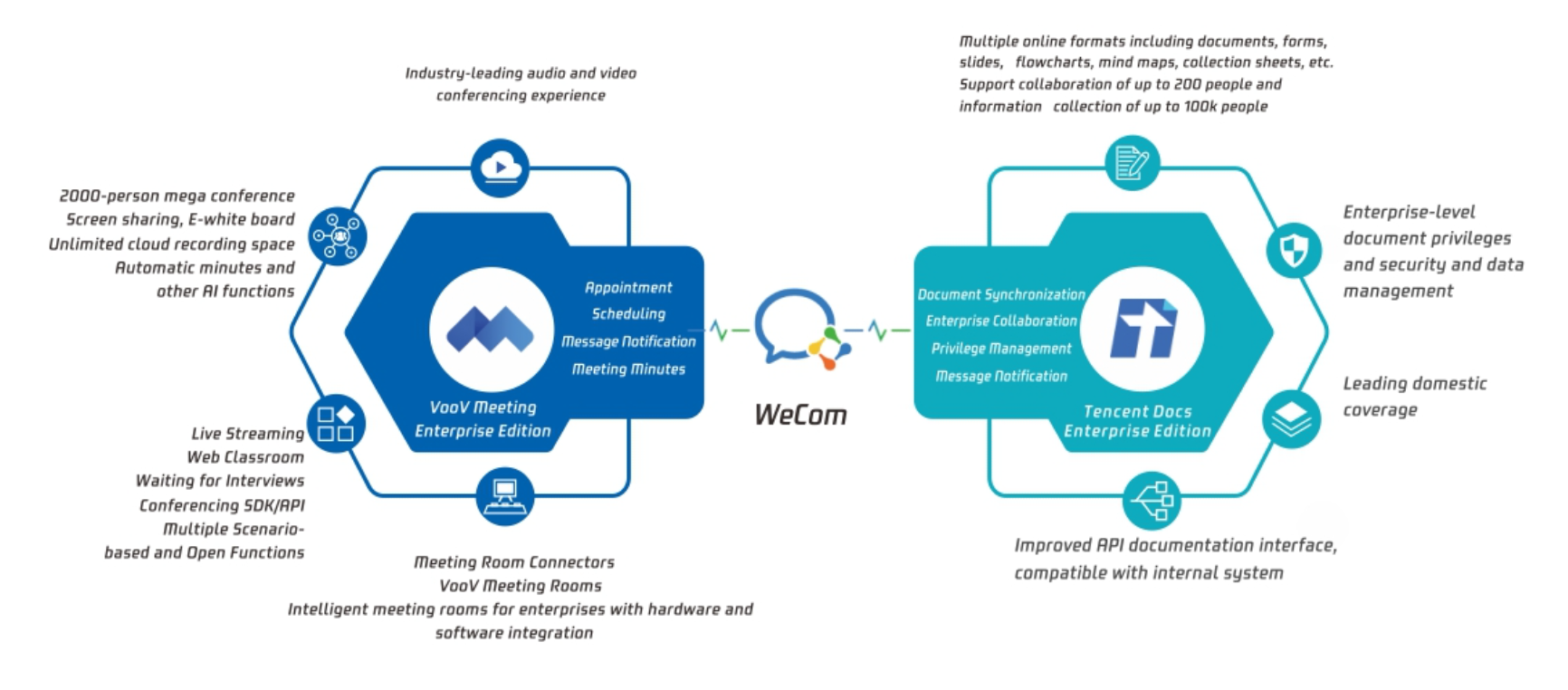
The newly released OA tools based on WeCom 4.0 integrates the cloud-based document, online meeting, calendar and mail tools to meet the multiple collaboration scenarios for employees.
The document tool shares the rich and stable functions of Tencent Docs, supporting collaboration of 200 people and mega-level information collection of 100k people. It provides a variety of ready-to-use scenario templates; you can invite colleagues, WeChat customers, and upstream and downstream partners to jointly edit and check the document; you can also @ members in the document, and notifications will arrive in a timely manner in the form of WeChat/enterprise WeChat messages, allowing members to freely make comments and modifications.
The online meeting tool maintains the high-definition, stable and smooth conferencing service experience of VooV Meeting. It provides functions such as booking meetings, hosting meetings, screen sharing, document presentation, meeting recording and automatic meeting minutes, etc. You can invite colleagues, WeChat customers and upstream and downstream partners to join meetings with one click. Users can join online meetings via WeCom, VooV Meeting, WeChat Mini Program or phone.
The mail tool is based on Tencent Exmail’s powerful management capabilities. It allows instant messaging, forwarding emails to chats, initiating group chats with one click, and writing emails that can @ members within the enterprise; it also has features such as automatic classification, approval and schedule emails. With world-class anti-spam and anti-virus strength, it safeguards the security of emails at home and abroad.
The calendar tool has the function of effective meeting organization and public calendar management, and supports inviting related people to join the agenda. Through the calendar, you can quickly check the availability of colleagues and book audio and video conferences and meeting rooms; you can also initiate group chats with one click and automatically create meeting minutes templates; you can also create public calendars to unify team schedules.
In addition, WeCom also features a variety of built-in OA tools covering attendance, approvals, and reporting to meet the basic needs of enterprises, and a wealth of third-party tools to meet advanced business needs.
Ensuring In-Depth Security System Throughout Cloud-Channel-Device Integration
Background and Challenges
The digital transformation of the automotive industry has brought new challenges to enterprise security. First, the cloud IT infrastructure has been largely developed, transforming the IT architecture from traditional data centers to hybrid cloud architecture with a sharp increase in system complexity. Second, the smartness and self-driving functions of cars have increased the number of in-vehicle systems and expanded exposure to potential risks, making security issues lurking in all aspects. Finally, the digitization of user journey has brought new threats to user operations, corporate private domains and data security.
In response to potential security issues in the automotive industry, corresponding laws, regulations and industry standards have been developed at home and abroad, which also impose higher requirements on automotive companies for security compliance. For example, UNECE WP.29 defines 7 types of vehicle information security vulnerabilities and requires car manufacturers to put efforts into process control. EU’s General Data Protection Regulation (GDPR) makes strict requirements for user data integrity, confidentiality and informed consent, as well as the way and boundaries of using personal data. China’s Data Security Law, Network Security Law and Personal Information Protection Law also make clear provisions on data classification and grading, boundaries of data protection and utilization, network security hazards and basic principles of personal information protection and has issued regulations on penalties.
“UN Regulation No. 155 (UN R155) mandates automakers to set up a cybersecurity management system that can thwart a specific list of cyberthreats, forcing them to build greater control and visibility across the supply chain and vehicle operations in aspects related to cybersecurity.
Until recently, the level of cybersecurity applied to each vehicle depended purely on each OEM’s willingness to protect customers and avoid bad publicity from cyberattacks, as end customers are often unwilling to pay a lot for cybersecurity. However, UN R155 is changing automotive cybersecurity forever, as it is the first international vehicle cybersecurity regulation, and has been adopted by more than 60 countries. This means that OEMs will be liable for cybersecurity vulnerabilities in vehicles that receive type approval after July 2022 in the EU (if they fail to comply with the regulation). Other countries, like Japan, are also in the process of enforcing this regulation. UN R155 is the work of the U.N. Economic Commission for Europe’s (UNECE’s) WP.29 workgroup, the World Forum for Harmonization of Vehicle Regulations.”7
Tencent’s Integrated Security Protection System: Helping Automotive Enterprises Build Complete Competencies to Comprehensively Safeguard Network and Data Security
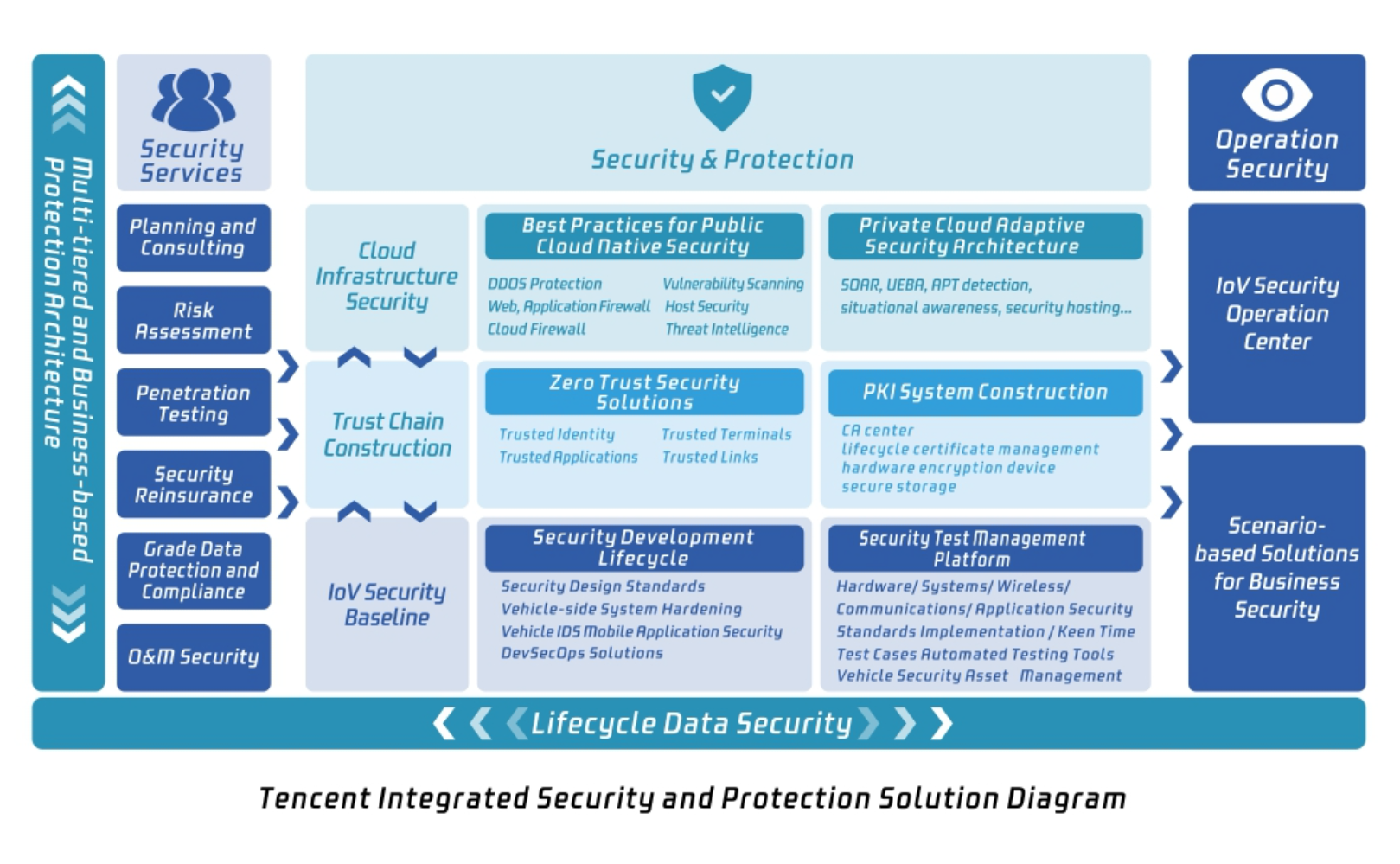
Targeting the security problems faced by the automotive industry, Tencent’s integrated security solution provides a thorough security system covering the cloud, channels and terminals, as well as expert-level security services and a closed-loop security operation, to comprehensively guarantee the security of the user journey and the vehicle.
1. Foundational Security
Public Cloud Security: Best Practices for Cloud-Native Security
In the face of the rapidly growing demand for cloud security, Tencent Security has built a comprehensive cloud-native security system around five dimensions, including security governance, data security, application security, computing security and network security, based on its more than 20 years of experience in the field. Through the baseline detection capability built into Tencent's security products, security risks existing in public clouds are comprehensively detected, defended and disposed of, and technical retrospective analysis of security incidents is conducted to reinforce the car manufacturers’ own security and protection system.
Private Cloud Security: SOC-centric Adaptive Security Framework
Designed for security operations and risk management, Tencent SOC builds a closed loop of visualized operations with security detection as the core and event analysis and Tencent threat intelligence as the focus. It can conduct in-depth detection for external attacks and internal potential risks faced by car manufacturers, and provide timely security alerts for OEMs. It enables a closed loop where the network-wide security status is knowable, visible and controllable by conducting multi-dimensional analysis of massive data for timely warning and making intelligent disposal of threats in real time.
Workplace Security: Zero Trust Security Solution
Tencent’s Zero Trust Security Solution is based on the company's many years of best practices, which combines multi-factor authentication, terminal protection and dynamic access control to fully realize identity, terminal and application trustworthiness. Tencent Zero Trust Security System safeguards access to internal business and data of car manufacturers, ensures user identity security, device security and application security, establishes trusted access links, continuously evaluates user requests, follows the principle of authorization minimization, significantly reduces the attack surface, and improves security management effectiveness.
2. Security in the Internet of Vehicles (IoV)
Tencent follows the philosophy and principles of Security Development Lifecycle and Shift Security Left in the vehicle development phase, and strongly supports car manufacturers for early security intervention and security control. Tencent's DevSecOps solution integrates best security practices in application development security coding standards, security design requirements, and software component management to help car manufacturers comprehensively improve the security resilience of their applications.
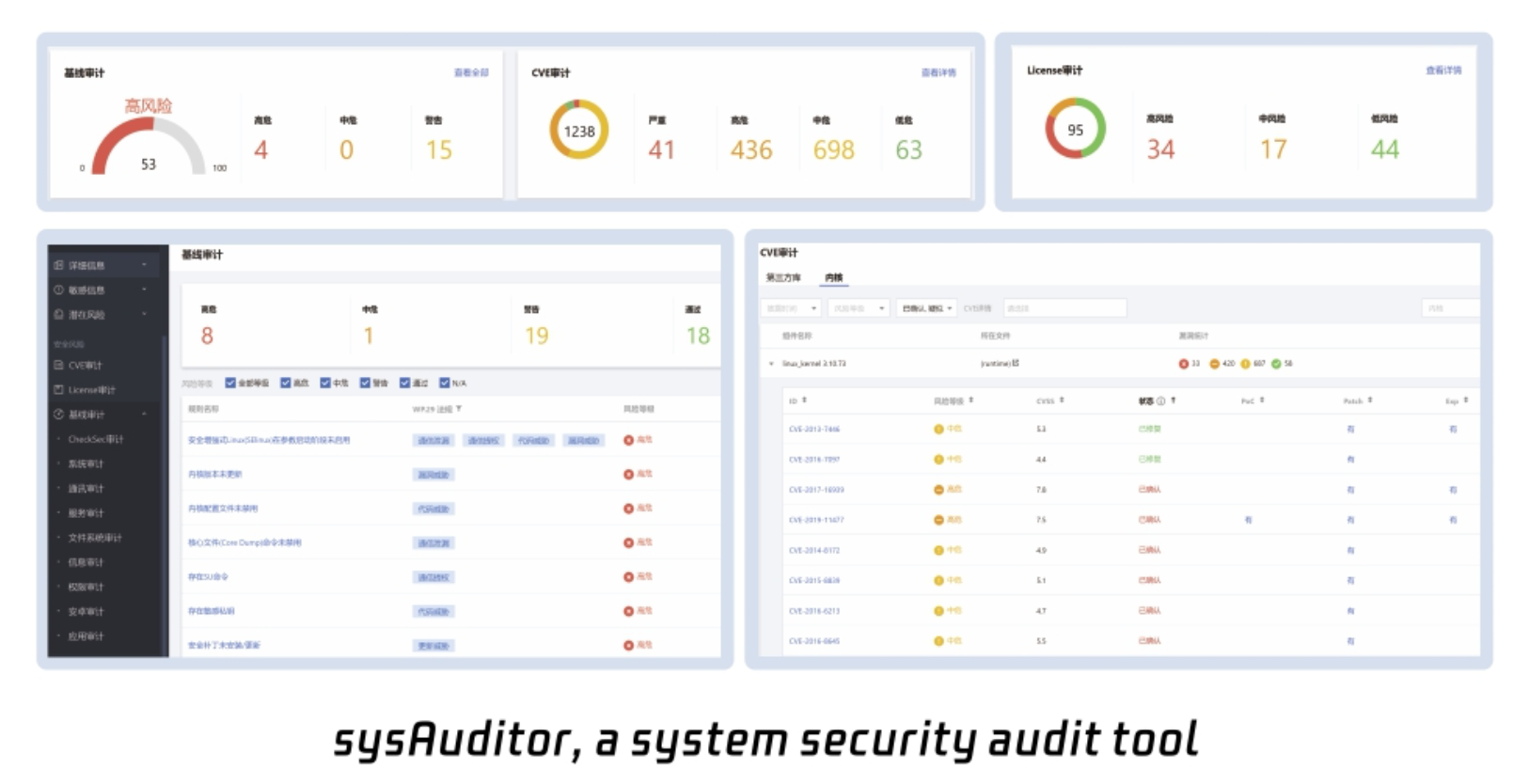
During the testing and verification phase, Tencent Keen Security Lab’s sysAuditor, a system security audit tool, supports systematic security baseline auditing, vulnerability auditing, and open-source license auditing to capture attack chains, sensitive information, and other security threats, thus facilitating car manufacturers to reduce threat processing costs, improve testers’ safety protection, and build competitive security capabilities.
In addition, to address the problems faced by car manufacturers such as ambiguous regulatory requirements, tedious and time-consuming testing work, and inconvenient test project management, Tencent’s IoV Safety Test Platform, leveraging on the company’s experience in IoV security, can provide targeted test case sets and the tooling of some test cases to realize automated testing, enabling car manufacturers to solve information security compliance problems.
3. Business Security
IoV Security Operation Center
Tencent’s IoV Security Operation Center offers one-stop, visualized and automated IoV security operation and management for car manufacturers based on Tencent SOC’s powerful capabilities in security analysis and operation and its in-depth understanding of security threat in IoV, which covers pre-security prevention, event monitoring and threat detection, and post-security response and disposal, forming a closed loop of security operation and management, and improving the security threat detection and disposal capabilities of OEMs in IoV.
Business Security Solutions
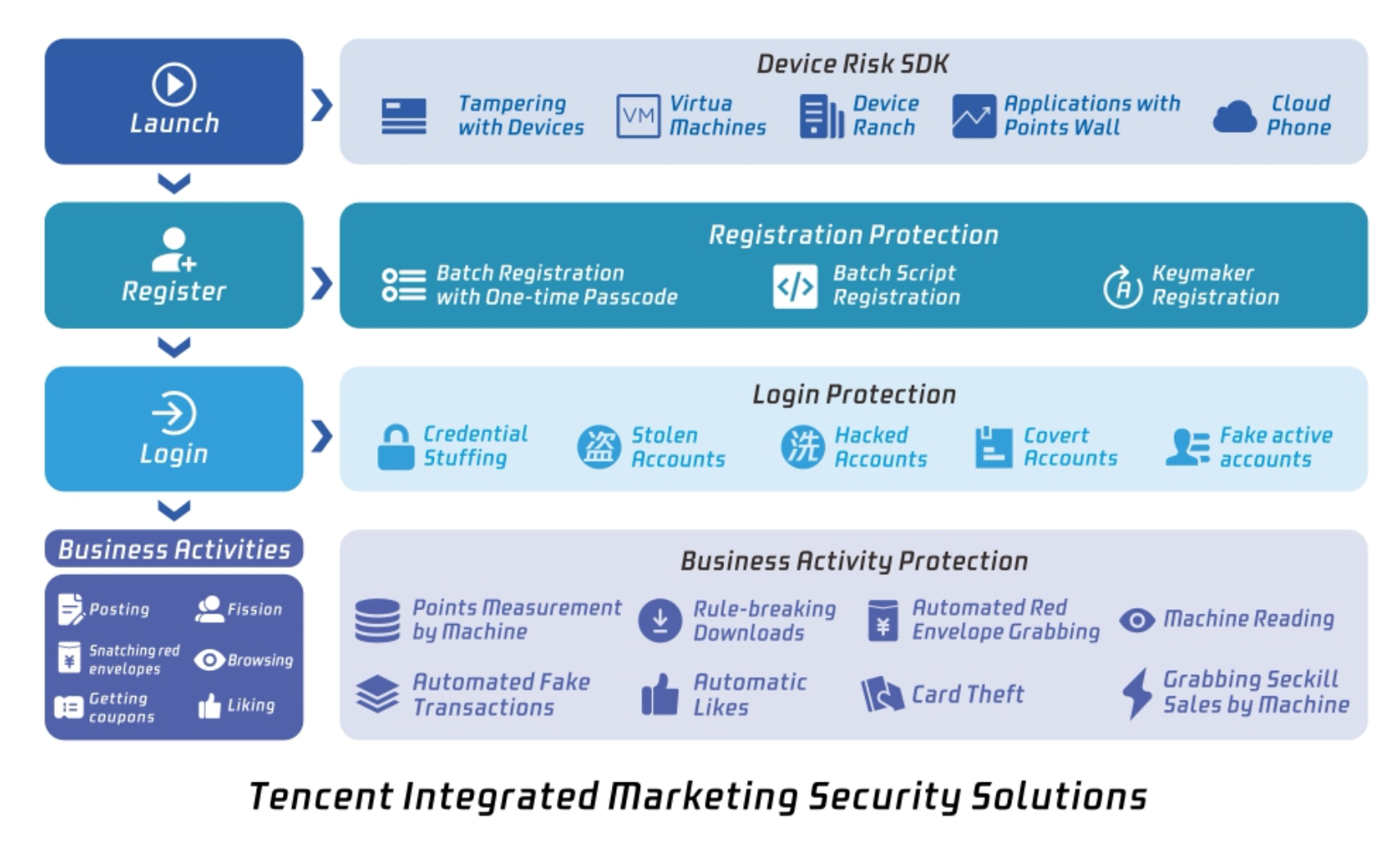
- Marketing Risk Management
In response to the black industries existing in marketing activities, T-sec MRM solution identifies and intercepts malicious requests through exclusive risk management models and AI algorithms to precisely combat groups that exploit loopholes and take advantage of them. Meanwhile, it determines appropriate handling mechanisms based on risk assessment to protect the rights and interests of real users and improve the efficiency of resource use. With the help of T-Sec MRM solution, the authenticity of the OEMs’ recovery data is greatly enhanced, the effectiveness of data operation is multiplied, and a comprehensive marketing closed loop is formed.
- Financial Risk Management
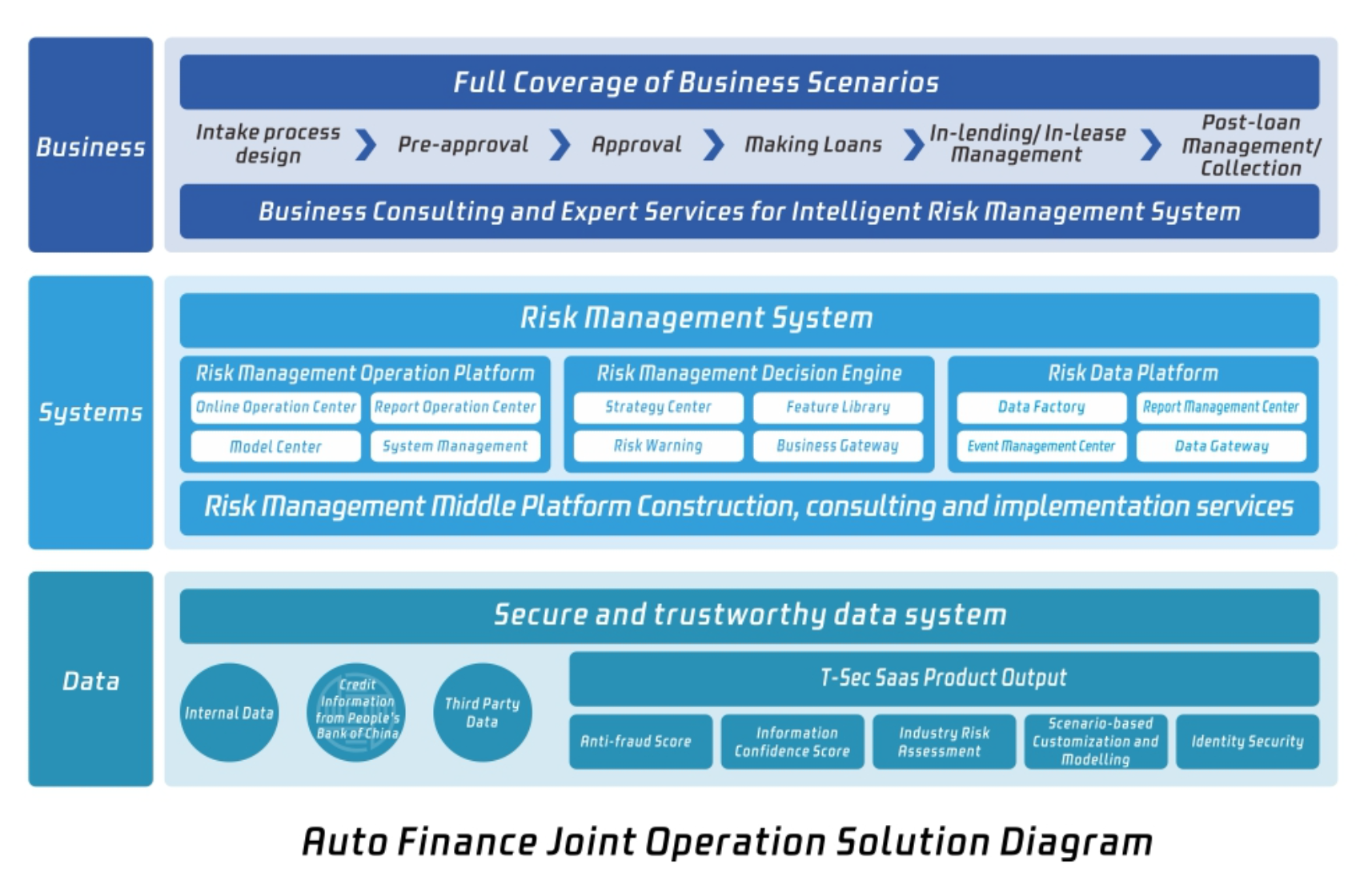
Based on Tencent's technology, data, risk management and operation capabilities, T-Sec solution has built a comprehensive joint operation solution for auto finance in response to the current needs and pain points of the auto finance market. The solution creates a comprehensive end-to-end independent risk management system and provides a full range of services in system, data, risk management and operation to help customers quickly improve their capabilities and enhance their market competitiveness. It also features such advantages as customization, uncoupling, white box , and local deployment, and supports different business stages such as cold start, warm start, optimization and upgrade of existing business, helping customers to quickly realize online, intelligent and differentiated risk management and operation.
Services Provided by T-Sec Auto Financial Joint Operation Solution
- Product Service: product design, full design and development of online customer service system
- System Services: operation platform, intelligent decision engine, data platform
- Risk management services: construction and optimization of a comprehensive risk management system, joint modeling, expert consulting
- Data Services: data products and services, internal data governance
4. Security Services
Tencent’s professional security teams provide security consulting, penetration testing, grade data protection and compliance, network protection, security training, and other security services to ensure that car manufacturers have the right security solutions for each segment, enable them to identify potential security threats, and improve their security and protection capabilities.
Tencent has industry-leading expertise in planning and risk assessment for the automotive industry, enabling risk assessments for the entire IoV architecture of car companies. According to the potential security risks listed in UNECE World Forum for Harmonization of Vehicle Regulations (WP.29) R155, Tencent puts forward appropriate security requirements and design standards in terms of hardware security, security activation, security development, storage security, privilege management security, log security and other dimensions, and assists car enterprises in risk assessments of browser components adopted by mainstream operating systems of on-board units to discover possible security vulnerabilities.
In terms of penetration testing, Tencent has set up professional security teams such as the Keen Security Lab to concentrate on information security issues brought about by new technologies and intelligent connections. It has implemented ICV security penetration tests for several car manufacturers and assisted them in repairing and reinforcing security vulnerabilities in a systematic manner.
Case 5: SAIC Integrated Security and Protection Project
Tencent and SAIC have launched in-depth cooperation in various fields such as network security standards, offensive and defensive technologies and security operations for intelligent connected vehicles (ICV), jointly creating a “network security base” integrating vehicle security, cloud security and other fields.
For ICVs, the two companies have launched comprehensive cooperation around full-cycle vehicle network security development, covering new model architecture risk assessment, vehicle system reinforcement, vehicle penetration testing, detection tool platforms, etc.; compliance testing and penetration testing have been conducted for several SAIC’s models under development, uncovering and repairing the security vulnerabilities found to ensure the overall network security of brand models.
In addition, the two sides have jointly incubated several automated security testing and analysis products such as binary firmware, embedded systems and mobile applications. The core technical indicators of the products are industry-leading, completely independent and controllable, solving the pain points in compliance testing, supply chain security and security OTA for car manufacturers.
For cloud security, Tencent Security In the field of cloud security, Tencent Security has created a multi-tiered security system for SAIC with the combination of Cloud Workload Protection (CWP), Network Traffic Analysis System (NTA) and Platform Security Governance (PSG). NTA allows monitoring and analysis of network traffic in multiple directions, intercepting and blocking malicious traffic, and achieving all-round monitoring of network intrusion. CWP provides security and protection for hosts on the cloud, covering asset management, security baseline, host protection, and virus detection. PSG realizes automated blocking of attacks against network security and closed-loop processing of network security event response, which shortens security response to seconds.
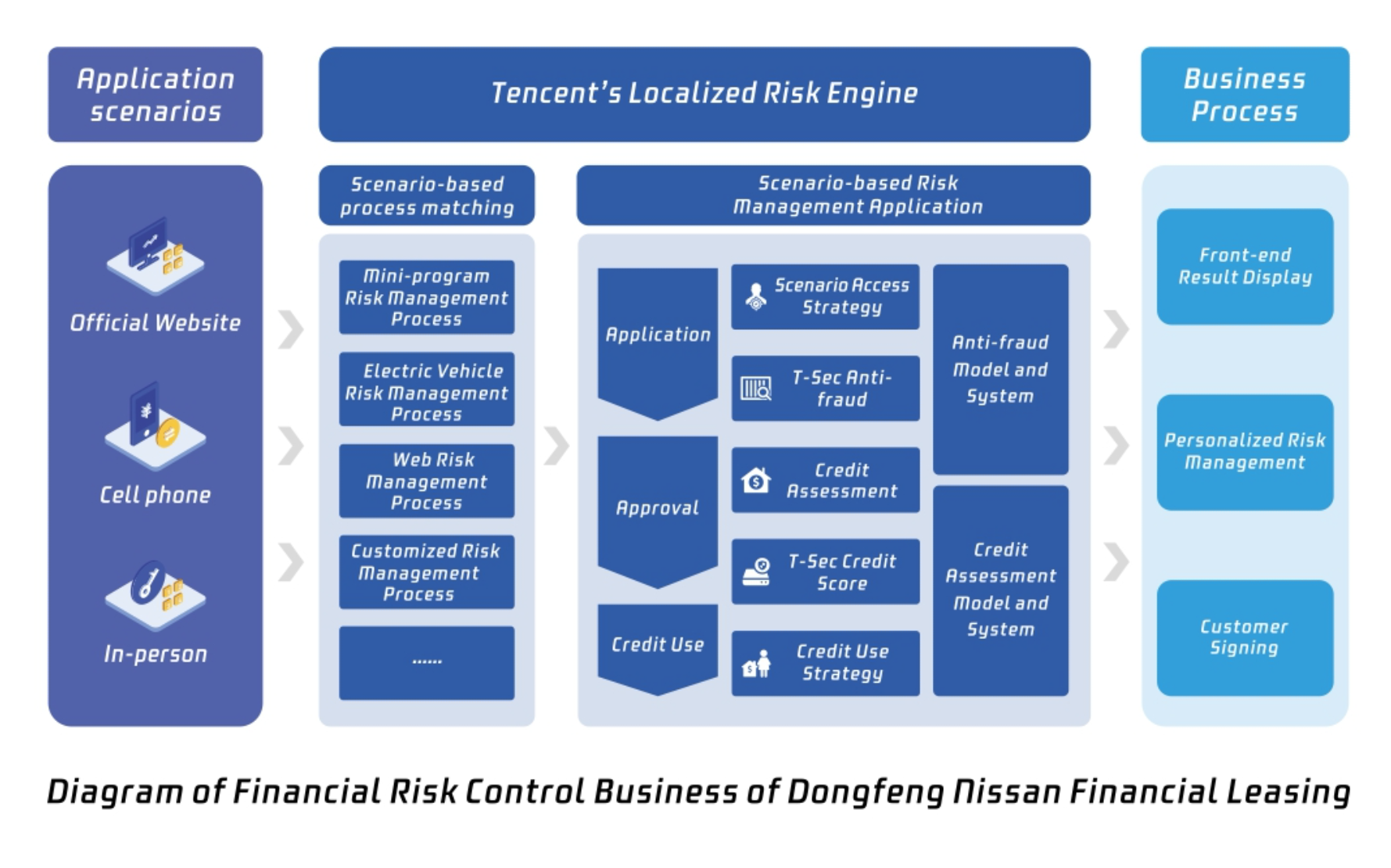
Case 6: Dongfeng Nissan Financial Leasing’s Financial Risk Management Project
Tencent Cloud Fintech Solutions provides assistance in various aspects including cloud computing, big data and AI to help Dongfeng Nissan Financial Leasing improve its core capabilities in financial risk management modelling and process management.
Based on its risk management competence, Tencent takes corporate financial business scenarios into consideration and provides a variety of solutions, such as accurate marketing (customer acquisition), anti-fraud (pre/in-lending), face verification (identity authentication), video interview (risk management), and post-lending collection (collection), to help the customer quickly build and improve its service capabilities in different scenarios.
In the cooperation with Dongfeng Nissan Finance Leasing, we customized the localized risk engine and risk control process for the customer by sorting out their business scenarios and processes and leveraging our cloud fintech solutions. It has greatly improved the case acceptance rate, while reducing the bad debt rate and significantly improving the financial performance of the company. In the POC phase, we improved the overall accuracy of the risk engine by more than 30% compared to previous with the combination of historical data and model testing. So far, Phase I has been launched for more than 4 months, providing support to overall business value of about 300 million yuan, significantly improving economic efficiency. The comprehensive cooperation plan for Phase II is under verification and implementation.
Constructing a Technically Robust Cloud Foundation
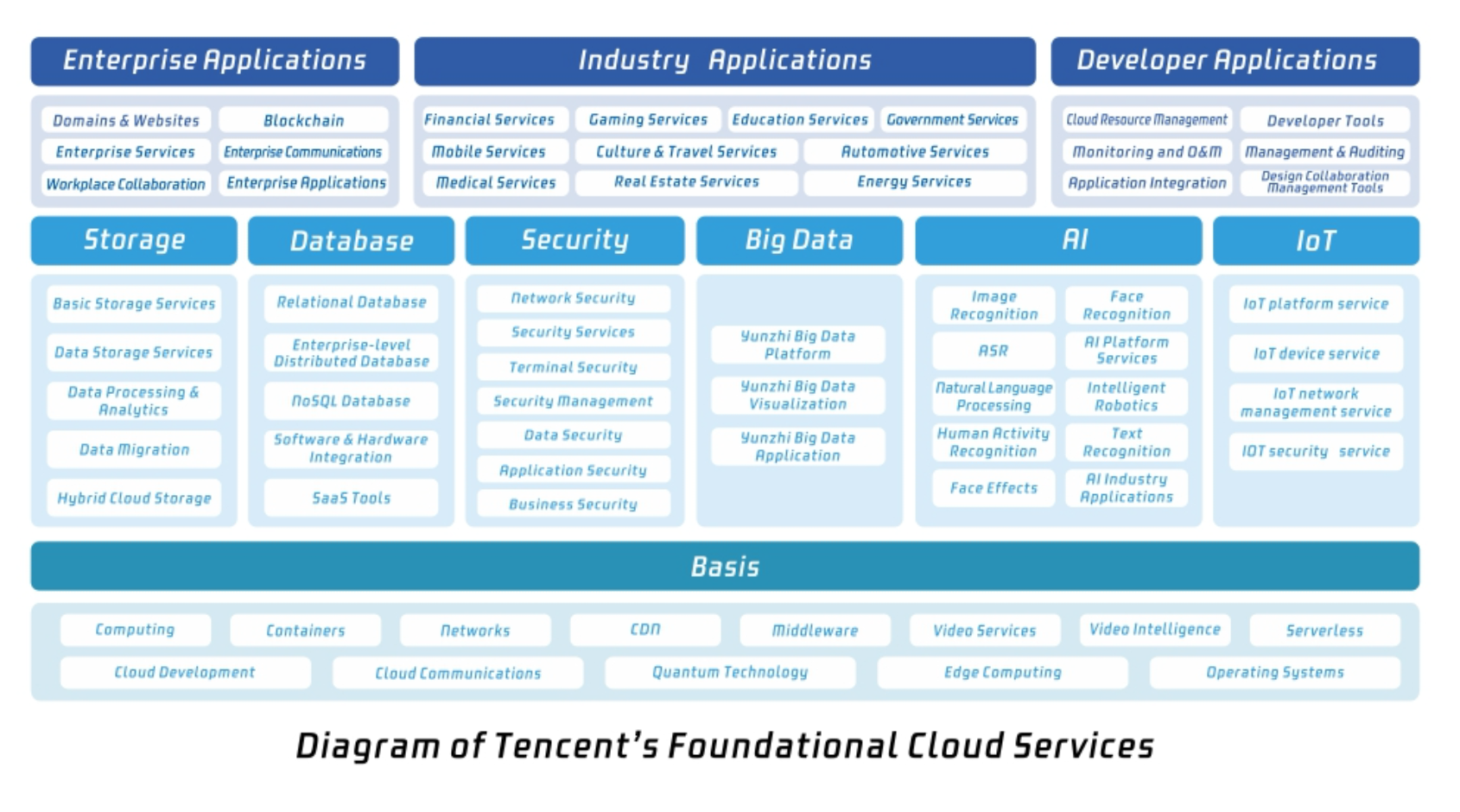
1.Tencent’s Foundational Cloud Services
Tencent’s cloud data centers are based in 68 available areas in 27 regions around the world, and more than 10 edge cloud nodes are extended in second- and third-tier cities in China, reaching out to car companies nationwide to meet their needs. Tencent has a comprehensive presence in the fields of IoV, digital marketing and manufacturing, forming a series of cloud products and solutions that can meet the needs of different car manufacturers in all aspects.
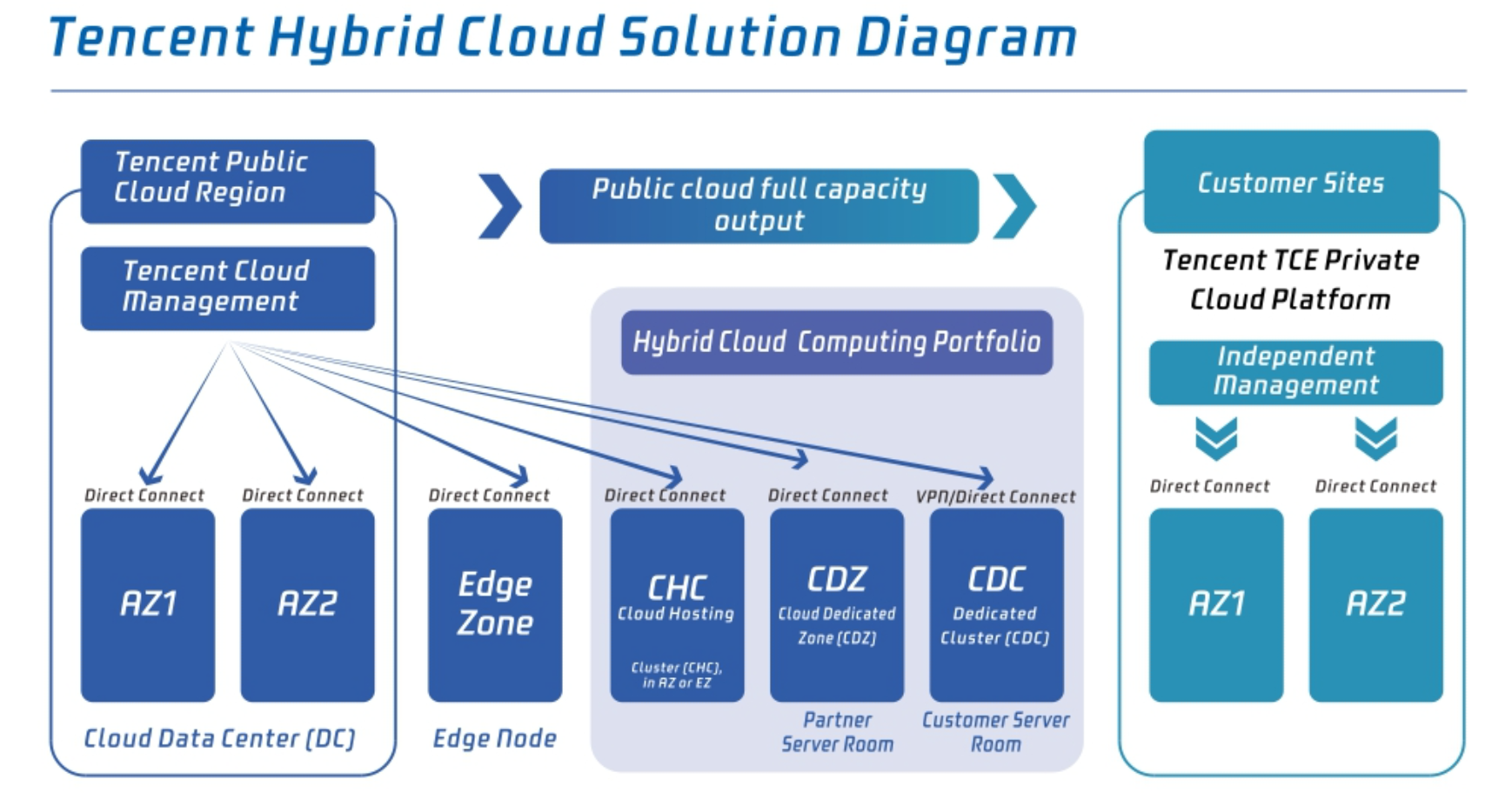
2. Hybrid cloud Solution: Making Cloud Solutions Extendable and Ubiquitous with All-Round Coverage of Computing Power
With the advancement of the Industrial Internet, Tencent Cloud has extended the coverage of cloud solutions limitlessly with hosted hybrid cloud products such as Cloud Dedicated Zone (CDZ), Cloud Dedicated Cluster (CDC) and Tencent Cloud Enterprise (TCE), which provides flexible and open interfaces for low latency applications, data security and compliance scenarios in factories and R&D bases. It features advantages such as rapid deployment and application, as well as zero maintenance and light asset operation. For scenarios with high compliance such as autonomous driving and map cloud, as well as scenarios with confidential enterprise data, Tencent can provide private cloud TCE products covering multi-PaaS with high security.
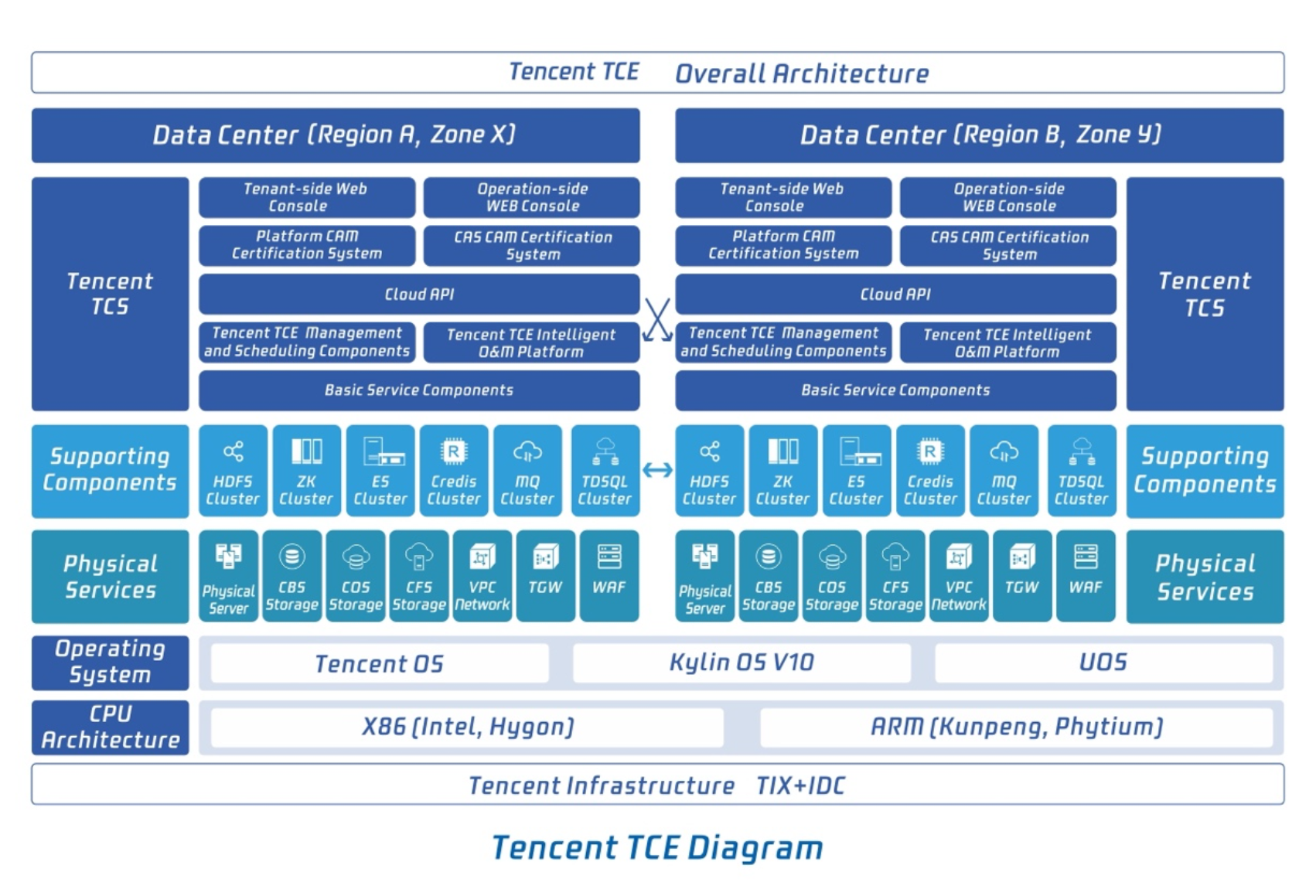
Tencent TCE: An Exclusive Base for Digital Transformation
Industry demand: For digital transformation of car companies, the upper-level business transformation requires simultaneous upgrading of infrastructure. Meanwhile, the construction of a dedicated cloud is the necessary way to upgrade the infrastructure based on considerations such as independence and controllability, data security and long-term usage.
Highlights of Tencent’s Solution: It provides a one-stop solution for rapid automated deployment with integration of rich IaaS and PaaS products, including server room, network, server, operating system, unified application deployment and other basic management functions. The solution boasts a resilient architecture that can simultaneously support development, testing and O&M for different departments, with a flexible tool chain to support continuous integration and release. It also supports elastic delivery, enabling automated integration, automated deployment and dynamic scaling.
Co-Creating an Open and Innovative Ecosystem
Facing an era of VUCA (volatility, uncertainty, complexity, and ambiguity), it is more necessary for us to build a new industrial ecosystem with openness and flexibility to strengthen industrial synergy, co-create new value with all market players, explore new development paths, and fight together against the potential risks brought by uncertainty.
Tencent is committed to serving as a “digital assistant” and “co-builder “for the automotive industry, providing digital toolboxes and connectors for market players, and offering an open ecosystem for industrial integration. After continuous exploration, incubation and management and operation, Tencent Intelligent Mobility has built a complete, stable, and multifaceted ecosystem for the industry. With its strong alliance with market participants, it can meet the digital needs of the entire automotive industry in research, production, supply, marketing and service.
Backed by Tencent’s multiple ecosystems, Tencent Intelligent Mobility is deeply involved in programs such as Tencent Qianfan and Tencent Start; it has also initiated the TIME program for collaborative innovation together with car manufacturers, software and hardware suppliers, universities and institutions from the industry and academia.
Robust technical capabilities, intrinsic security, industrial symbiosis, and flexibility and openness are the four main features and outstanding advantages of Tencent’s open ecosystem. Partners in the system can enjoy Tencent’s technologies, products, platforms, marketing tools and other resources to enhance their capabilities, broaden their access to resources, and gain rapid growth. The cooperation between car companies and Tencent can promote innovation in the intelligent mobility industry on all fronts, enabling them to share the fruits of industrial development. By integrating into Tencent’s open ecosystem, car manufacturers can not only satisfy their demand for digitalization of the industrial chain, but also realize one-stop connection with the intelligent mobility industry, so that they can always keep a finger on the pulse of industry innovation and explore the value of the industry deeply.
1-3 Gartner Inc., Emerging Technologies and Trends Impact Radar: Autonomous Vehicles, 5 August 2021,
4 Gartner Inc., Demystifying Marketing Technology Integration, 9 November 2021, G00749165
5 Gartner Inc., Innovation Insight for Composable Business for Manufacturers, 1 April 2021, G00741768
6 Gartner Inc., Predicts 2022: Digital Workplace Is Foundational for Employee Experience, 6 December 2021, G00757855
7 Gartner Inc., How Automotive CIOs Can Lead a Successful Cybersecurity Implementation and Comply With WP.29 UN R155, 18 June 2021, G00750819
Source: Tencent