
Cloud Responsibly: Why Cloud Computing Needs Data Protection
Implement a cloud data protection plan so your business can experience the benefits of cloud computing. Reliable backup, rapid recovery and enterprise search mean data is available when people need it.
Cloud computing is attractive to organizations who use data for business decisions that impact customer satisfaction, revenue generation and regulatory compliance.
According to Gartner Research, “Through 2020, cloud will be used for use cases that impact most organizations’ core business operations.”1
With key operations in the cloud, organizations can’t have any downtime due to data availability issues. Whether the issue is a natural disaster, an outage or human error, you need fast, reliable and comprehensive data recovery.
Remember – a move to the cloud still requires data protection. While the public clouds are very secure, don’t confuse high availability with data protection strategy. Your cloud contracts state that you are responsible for managing and protecting your data, applications, virtual machines, big data sets and other cloud computing workloads.
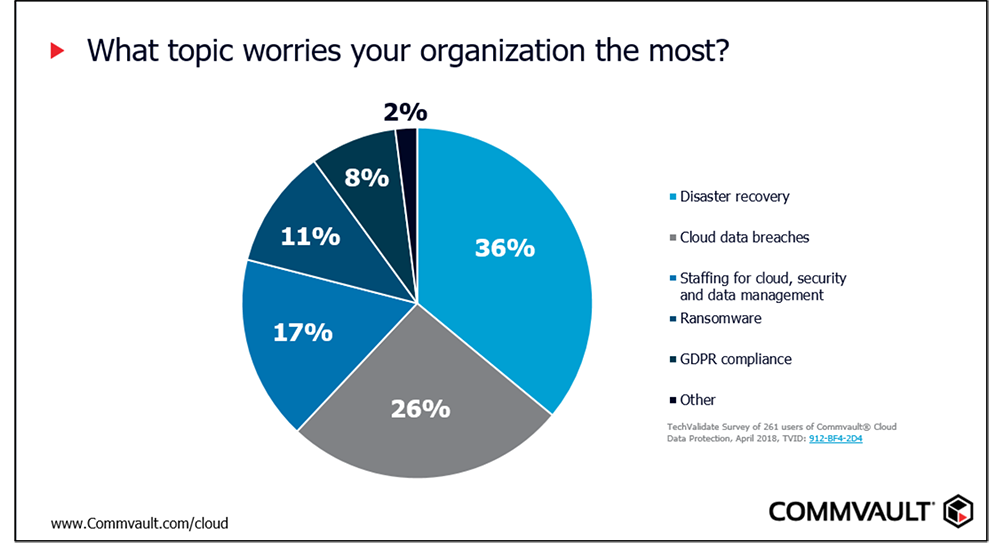
Proper recovery readiness requires that you have proper data protection across your cloud and on-premises environments. This includes consistent tests of your data recovery capabilities and IT staff who are empowered to move, manage and use data where and when the business demands.
Cloud Responsibly: Include Data Protection in Cloud Computing
The speed, flexibility and availability of cloud computing drives many organizations to actively reduce their data center footprint and adopt cloud. In fact, “Gartner research shows that by 2020 about half of infrastructure as a service (IaaS) is expected to be deployed via public cloud and one-third will be deployed on-premises.”1
Data in-flight and at rest also needs data protection. Workloads born in the cloud still need a backup and recovery strategy. SaaS applications need comprehensive data policies that align with your corporate standards.
When you have a clear data protection plan, you can more effectively take advantage of cloud computing. You can choose to backup cloud-native applications and databases within the same cloud, to another cloud region or to a different public cloud. With cloud backup and recovery, you can flexibly and quickly recover back to an on-premises environment, to another cloud or to another cloud region.
Developing a Cloud Data Protection Plan
Start developing a cloud data protection plan to help your business see more advantages of cloud computing.
One first step is to work with your IT services partner. Whether you are working with a global systems integrator, local IT services partner or your managed services provider, discuss a cloud data protection plan that fits your business goals.
A critical step is choosing a data protection partner that has both native integration to your cloud or clouds of choice as well as tight alignment with your existing on-premises storage choices. When you have a data protection platform that has the breadth and depth of support for your current and future data storage choices, you have more flexibility to deliver on today’s demands and grow into the one, three and five year changes that will naturally occur in your organization’s technology landscape.
Prepare for the Data Protection Challenges of Today and Tomorrow
Another key step in your plan is to talk with key stakeholders in your organization about their changing data demands. Is the IT team involved in the SaaS technology purchases made by marketing to better target key customers? Is there an integration planned between your ERP and your marketing platform to gain a 360 view of the customer? What tools will customer support be using in the next few years to provide live chat or voice assist when your customers need help?
Understanding the changing landscape of your business environment helps you prepare for future data protection needs. Ensure your data protection platform has two key strategic elements.
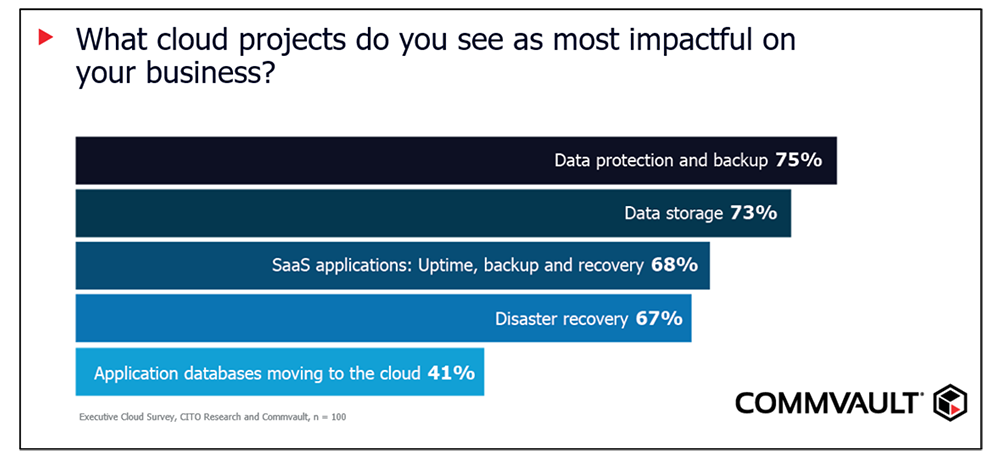
First, your data protection vendor should have a strong pattern of supporting the applications, databases, virtual machines and data types that you support today, whether they live in the cloud or not.
Second, your data protection vendor should be constantly iterating to support new technologies critical to today’s data demands, like big data sets and SaaS-based applications. Many of your core business technologies – from ERPs and payroll systems to electronic health records (ERH) and project management tools – are moving to a SaaS delivery model. Make sure that you are able to backup and recover emerging technologies to extend your data protection investments.
Invest in Automation, AI and Orchestration to Ease IT Staffing Challenges
Surveys continually show today’s IT teams are asked to juggle more demands with fewer people. In a tight hiring market, look to technology to streamline the workload.
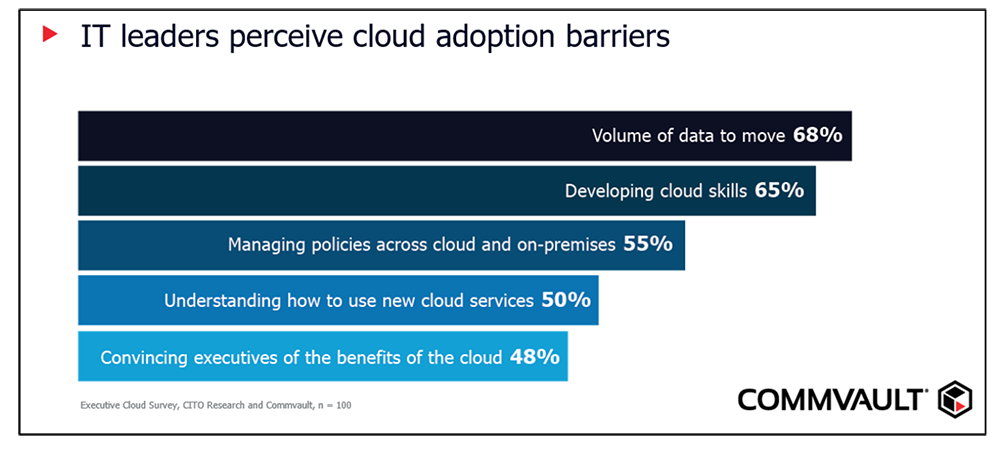
In recent research, 65% of surveyed IT leaders said developing cloud skills was a cloud adoption barrier.2 Adopting technology that can streamline and automate cloud adoption is essential.
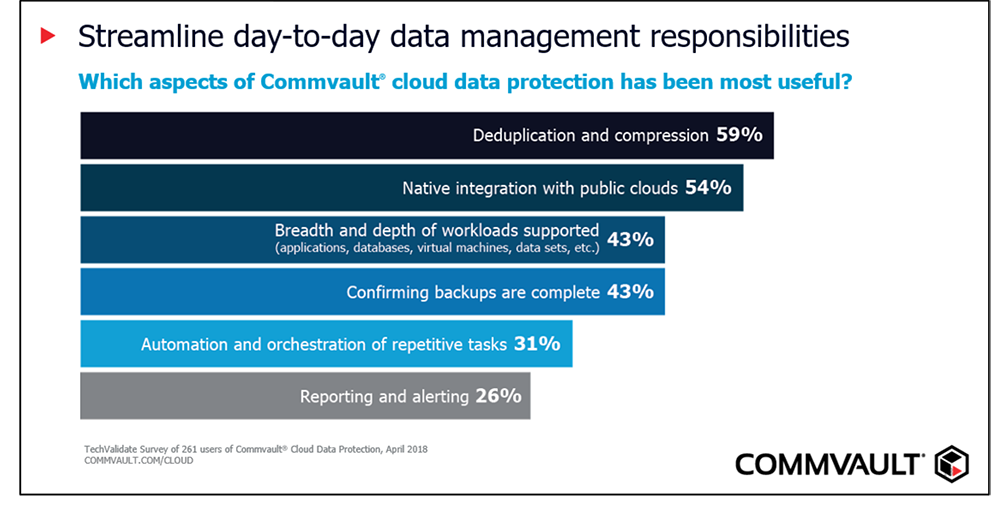
For cloud migration and data management jobs, ensure you have a data protection platform that includes native integration with clouds. When your data protection technology can natively interact with a cloud, more processes can be streamlined, without additional infrastructure.
While some vendors use complex and expensive cloud gateways to move data to the cloud and other vendors require a virtual appliance in the cloud to receive the data, more cost-effective data protection software directly integrates with the public clouds so you can write data directly to them. If you don’t have to purchase gateways or appliances, you can keep IT costs down and streamline administration. Your work is easier when there is just one interface for on-premises and cloud data management.
Stop toggling between interfaces, writing scripts for cloud migration processes and spending time creating cloud storage for backups. Take advantage of advanced data protection technology to speed the process.
Native cloud integration and automation are especially critical during a disaster recovery process. When your data protection platform has automated cloud provisioning, you can spin up disaster recovery testing whenever you need it. In the past, organizations paid for monthly co-location space for disaster recovery testing. Now, with automated disaster recovery cloud provisioning, pay only for cloud capacity when you need it. Spend your cloud budget just for a day or two of disaster recovery exercises, then turn off the cloud storage until you need it again.
In an actual disaster recovery situation, your data protection software should employ push-button processes to spin up cloud storage, data and policies. The data protection platform should also enable you to meet multiple, different RTO and RPO targets with fast, reliable disaster recovery across cloud providers – in one cloud, in multiple cloud regions or across public clouds.
Organizations taking advantage of data protection platforms with built-in artificial intelligence (AI) may also have a better chance of preventing a disaster. One data protection platform with AI can detect anomalies in the data infrastructure using file activity, change rates and even anomalies that occur in the platform’s operations. These alert IT to a potential threat or issue that may put the business at risk.
Streamlining the work of IT, integration with your ITSM platform could even automate backup and recovery processes. This integration of vital systems could speed service delivery and reduce IT headaches.
Automation, orchestration and AI help IT teams meet the business requirements for speed and flexibility when it comes to data availability.
Cloud Responsibly with Comprehensive Cloud Data Protection
When you cloud responsibly your organization can move to the cloud for data agility and cost benefits, while also enforcing your consistent data protection policies.
Cloud responsibly means that an organization is being smart and thoughtful about managing data protection, backup, rapid recovery, search and availability of workloads in cloud and multi-cloud environments.
Cloud responsibly is a term adopted by Commvault after years of cloud data protection conversations with our customers, channel partners, cloud alliance partners, systems integrators and managed service providers, all of whom are focused on ensuring continuous data availability.
The comprehensive Commvault data protection platform can empower your IT team with flexibility to manage data across multi-cloud environments and on-premises. Commvault software allows you to move, manage and use data across diverse cloud and on-premises environments – all from one data management platform.
Commvault aligns with IT organizations of all sizes, plus service delivery partners and cloud technology vendors, to help ensure IT leaders are ready for the future of cloud computing.
Learn how to take advantage of cloud computing in this Gartner report Predicts 2019: Increasing Reliance on Cloud Computing Transforms IT and Business Practices, then speak with Commvault about your cloud and on-premises data protection requirements.
1 Gartner, Predicts 2019: Increasing Reliance on Cloud Computing Transforms IT and Business Practices, Yefim Natis, David Smith, Ed Anderson, Sid Nag, Neville Cannon, Rene Buest, 13 December 2018 ID
2 Executive Cloud Survey, CITO Research and Commvault, n = 100
Infrastructure Availability and Recovery Primer for 2019
On-premises, cloud and hybrid IT environments all need reliability, availability, resiliency and recovery. Learn what technology, tools and skillsets are needed in today’s environments.
Cloud Computing Primer: 2019
Discover what is on the horizon for cloud computing, especially as more organizations adopt a cloud first approach.
4 Starting Points for Digital Business Transformation
Digital business transformation is a big job. Four diverse case studies illustrate how CIOs can drive successful transformation projects.
Experience Commvault Cloud Data Protection
Ready to try Commvault cloud data protection in your environment? Download a 30-day trial.
Assess Your Data Protection Needs
Evaluate your current backup solutions against the requirements of a comprehensive cloud and on-premises data protection platform. Access A Checklist for Cloud Data Protection.
Learn more – visit the Commvault cloud data protection website for reference architectures, demos and white papers.
