
Delivering the Digital Banking Experience Primer for 2016
Digital banking transformation must focus on three key components in 2016 – enhancing customer experience, driving internal efficiencies and creating value in new ways through an ecosystem of people, businesses and things.
Scope
Bank customers' lives are increasingly digital, with technology enabling better-informed decision making, and this makes the digital banking experience a critical competitive differentiator.
Gartner's research in this area focuses on enabling CIOs to:
- Improve net profits through digital transformation (for example, by improving efficiency and creating new digital wallets for growth), which many digital initiatives have so far failed to accomplish.
- Support and leverage an ever-expanding digital banking ecosystem of people, businesses and things in order to create value in new ways.
- Find new ways to adapt to digital disruption driven by new market entrants and new types of value creation (for example, collaborative consumption).
Analysis
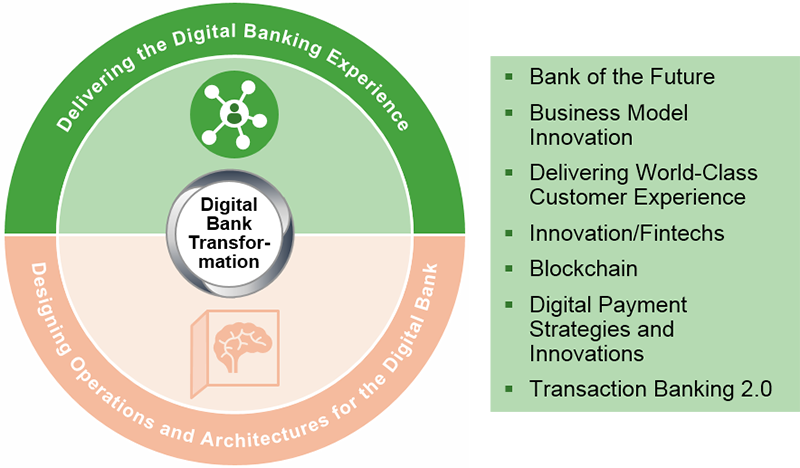
Figure 1. Delivering the Digital Banking Experience Overview
 Source: Gartner (March 2016)
In recent years, banking has been subject to unprecedented forces powering change and realignment, challenging many fundamental industry principles. Banks must reimagine the ways products and services are designed, built and financed, as well as the way they are delivered to and consumed by customers across all industry sectors. Basic pricing and benefits accrual principles will be swept aside. Customers' expectations will change fundamentally as they recognize that emerging financial tech providers can better address some of their requirements.
Banks' core ability to arbitrage across information, currencies, individuals, organizations, geographies and time will be undermined by the emergence of a digital ecosystem made up of advisors, peer-to-peer platforms, networks and technologies like the blockchain. Regulators and governments will be pervasive in shaping the future of the industry, and banks will need to adapt their approaches to regulatory relationships that are too often adversarial. Many banks' organizational structures will also need to be reconsidered, especially in IT, because traditional formats and approaches will frequently prove unsustainable. Equally, many fundamental operating models based on increasingly unsustainable cost models will need to change.
Digital disruption is positive! Opportunities will emerge. Trust-based services and solutions will be needed in many customer sectors, as will services around privacy and data security. Success will increasingly be defined by world-class digital customer experience and accessibility and the ability to engage the customer at a contextually appropriate stage in the decision-making process. This new digital age offers technologists opportunities to emerge from the IT shadows and begin defining future success and differentiation for their banks.
Top Challenges and How Gartner Can Help
Bank CIOs and line-of-business leaders will be able to use Gartner's digital banking research to address the challenges they face in organizing and operationalizing for digital banking, delivering world-class customer experience and planning for the future of banking.
Gartner's research in these topic areas will address the critical digital banking transformation issues that our clients are dealing with, and will take into account the reality that geographical and cultural issues will play a significant role in terms of the applicability of many solutions. Our research will also consider opportunities for banks to deliver world-class customer experience across both digital and analog channels, through which customers will continue to engage with them. Finally, we will address the many factors that will shape the future of the industry, offering a line of sight to what the industry may look like in the years ahead.
The bank of the future: What challenges will the banking industry face in the next 10 years?
The competitive threat from digital "megaproviders" like Amazon, Apple and Google, and from other emerging financial technology providers, is ever-present and growing. However, CIOs can leverage the opportunities those competitors bring to the market in areas such as information and analytics, social connectivity, and scalability to transform their existing business models and enhance customer experience.
Planned Research
- Developing and executing a digital banking strategy
- Innovating and adapting to digital business patterns and new business models
- Defining the digital ecosystem and "fintech" development
- Exploring the evolution of the blockchain
- Defining banking use cases for the Internet of Things
- Analyzing the CEO and CIO surveys for 2016
How can banks deliver world-class customer experience?
Even in an increasingly digital world, face-to-face interactions remain a key part of sales and delivery across the entire financial services ecosystem. CIOs will need to address the challenges associated with cost, efficiencies and processes to ensure that these interactions are effective and profitable, and that they enhance digital interactions. However, as clients increasingly interact via digital channels (for example, mobile and Web), banks will still need to keep loyalty levels high and ensure that the customer experience is completely satisfactory.
Planned Research
- Identifying the role of mobile and contextual technology in the customer ecosystem
- Exploring the role of a digital or data information broker in the ecosystem
- Using mobile, social and wearables to create new value in face-to-face interactions
- Deploying technologies that make the branch more relevant to digitalized customers
- Identifying "cool" emerging trends in financial services
How is innovation channeled to banks, and what's the role of fintechs?
Today, innovation is very fast, and it is becoming intrinsically embedded into the banking business. Not innovating often means quickly lagging behind the competition. For this reason, the most technology-dependent segments of the financial industry face the challenge of innovating at a faster speed than the market. This implies the acquisition of external technology companies such as the fintechs or developing internal innovation labs.
Planned Research
- Magic and myths of the blockchain with particular focus on bitcoins and the role of fintechs
- Understanding Alphabet and Google and their impact in the banking industry
How can digital payment innovations drive digital banking transformation?
The terms "digital wallet," "mobile wallet" and "mobile payments" are overused, and most current deployments in these areas fail to align with existing and future customer demand. Customers expect payment innovations to support prepayment and postpayment activity, as well as account management capabilities. Most banks' current product and business development are also unbalanced, overemphasizing payment origination and transfer solutions. The main issue is the starting point. CIOs and digital leaders should begin by thinking in terms of digital wallet and payment functionality, not solutions.
Planned Research
- "Think Digital Wallet Functionality First, Your Customers Do" – Exploring the changes in customer demand for digital payment services
- Toolkit: Gartner Digital Wallet Functional Model – Developing frameworks and Toolkits to create a roadmap for prioritizing digital payment and wallet functionality and related services
- Hype Cycle for Digital Banking Transformation, 2016 – Aligning digital banking and digital wallet strategies
- Evaluating financial technology payment startups that accelerate bank innovation and product development cycles
How is the blockchain technology transforming transaction banking business?
Blockchain technology has the potential to create new business ecosystems, disintermediate infrastructure players and/or enable the creation of new infrastructure needs. Bank CIOs need to understand these implications to integrate this new technology into their digital strategy on both their front and back ends.
Planned Research
- Integrating blockchain technology to shape transaction banking processes
- Distributed transaction services impact appraisal
- How to analyze existing use cases and what might be relevant for your bank
- Redefining transaction banking services to make it possible to become a digital commercial bank and ensure alignment with commercial customers' processes
How can we enable transaction banking with a digital banking approach?
New digital technologies such as analytics, cloud services and presentation layers for different channels, coupled with new entrants offering integrated services – that traditionally were managed silos within a bank organization – require a more flexible componentized platform to cope with the digital demand.
Planned Research
- What is relevant for trade finance and supply chain finance integration
- Transaction banking platforms market scan
Related Priorities
Table 1. Related Priorities
| Priority | Focus |
|---|---|
| Designing Operations and Architectures for the Digital Bank | Banks' operational technologies and architectures play a key role in the business-critical shift to digital banking. |
| Modernizing Insurance Core Systems | Effective modernization strategies are required to achieve operational efficiencies and enable digital insurance. |
| Transforming Into a Digital Insurance Company | As digital insurance becomes a top focus of property and casualty (P&C) and life insurers, CIOs must contribute to and build effective strategies that will transform the entire value chain. |
Source: Gartner (March 2016)
