The 60 Smartest Companies Thriving Post-pandemic
Preface
AIoT, one of China’s strategic emerging industries, has experienced a boom in recent years. Referenced five times in China’s 14th five-year plan, IoT is set to play an indispensable role in China’s Internet and manufacturing strategies and the transformation of the Chinese economy.
Zhejiang Zhongqi Industry Inc., a subsidiary of China Communications Construction Company, a Fortune 500 firm, is a leading investor and operator of future industrial parks in China. The parks we built and manage faced mounting pressures due to growing industrial clusters and resident needs. Faced with this issue, we considered whether we should add equipment and manpower as we have done in the past, or if we should instead pivot to advanced smart platforms employing AIoT devices for dynamic control and management. After much research we decided to operationalize a smart digital platform and provide tailored value-added services, which have gone a long way to boost park management and operation.
In a world still grappling with the pandemic, it is more important than ever to establish IoT-based smart management systems covering all scenarios in industrial parks. Such systems go beyond basic needs in the day-to-day operation of industrial parks to provide more targeted services in talent, finance, business incubation, and administration.
The 60 Smartest Companies Thriving Post Pandemic offers a deep insight into the current state and prospects of the IoT industry, and a useful perspective to learn and embrace IoT technologies. Looking forward to the next decade, we expect to see the continued robust growth of the IoT industry across the world. This report, I believe, will help to speed up digital transformation which is already in full swing across China, and unlock the tremendous potential of IoT.
Kong Xiangjun
Chairman of Zhejiang Zhongqi Industry Inc.
We live in an era marked by constant advancement in technology. From the internet to IoT and AIoT, innovative technologies are shaping our life in a profound way and unlocking the demand of human beings. More than a year into the pandemic, smart transformation of traditional industries has become a prevailing trend.
Only those who are in the game can change the game. LEDVANCE, with a proud history of over 100 years in lighting, has stayed open and innovative and put people first as we embrace new technologies. In keeping with the trend of the times, we have rolled out new technologies and applications such as big data, adjusted HCL lighting algorithm, AI, IoT, LightShield photocatalyst lighting, and TruWave full-spectrum lighting. Empowered by these technologies, our products can meet market trends and demand.
It is people, not products or systems that technologies seek to connect. Technology-driven applications can only truly deliver when they satisfy people’s needs. LEDVANCE believes in the value of healthy light and pursues an “intelligence plus health” strategy. We are committed to bringing state-of-art technologies, including LightShield photocatalyst lighting, TruWave full-spectrum lighting, and BIOLUX human centric lighting systems, into homes, offices, industrial, commercial, educational and medical settings.
With a commitment to each and every user, we expect the report 2021: The 60 Smartest Companies Thriving Post Pandemic, to provide consumers and industries an insight into the value of digital and smart transformation and smart technologies which are already part of our life. Sincerely, we recommend this report to you.
LEDVANCE is convinced that AIoT brings more than technological changes, but ultimately brings a convenient and enjoyable user experience and will create a better, interconnected world.
Zhang Peng
LEDVANCE Global Vice President and China CEO
By MOMAX
The epidemic broke out and ravaged the world. Changing the consumption, life and work patterns of consumers. Under the normal state of the epidemic, consumer demand for products such as smart air purifiers, smart light bulbs, and disinfection products has greatly increased. To meet the needs of consumers and cater to the changes in the market demand, "Smart" and "Internet of Things" have become the new survival rules of the market. The epidemic has undoubtedly led to the development of smart home devices, turning crises into opportunities, and has gradually become a market trend in the post-epidemic era.
MOMAX is the world's leading AIoT and consumer electronics brand, committed to building an artificial intelligence ecosystem. MOMAX products attach importance to consumers' user experience and product quality and are committed to integrating technology into the quality of life. In the face of the severe epidemic of the new corona-virus, in response to the government's implementation of epidemic prevention, "installing air purification equipment" in restaurants, hotels, etc. has become a widely adopted solution in the market to strengthen epidemic prevention measures.
As an early adopter of leading IoT smart devices, MOMAX has further deployed additional smart devices after the outbreak of the COVID-19 pandemic, including Ultra-Air Plus IoT UV Hot & Cool Purifying Fan. So far, MOMAX has applied this solution in over 40,000 products to ensure 24 hours a day indoor air circulation, bringing a cleaner and fresher accommodation environment for everyone.
I am very honoured to be the preface author of "The World’s 60 Smartest Companies in the Post-Pandemic Era". We are moving towards a comprehensive Internet of Things era, and the demand for smart life is constantly escalating. With the changes in consumer lifestyles, smart homes are also constantly innovating in the process of digital transformation. It also cites that IoT developers will play a huge role in leading the industry. The white paper pointed out the trend of the industry. We are also committed to building an innovative smart home ecosystem, using innovative technology and improving living standards to become the world's leading smart city. I suggest you read it.
John
MOMAX CEO
I. How Has COVID-19 Accelerated the Trend of Smartization?
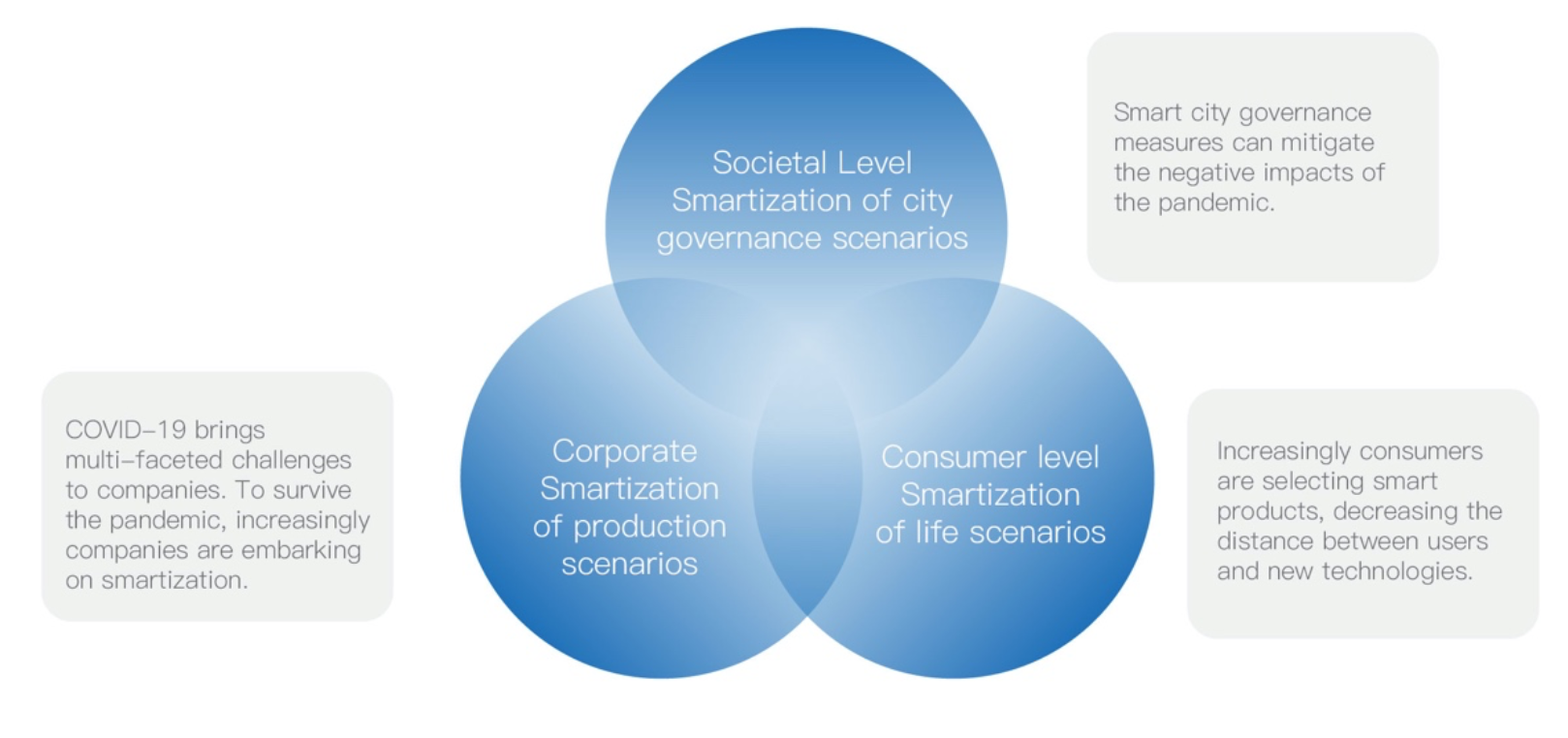
COVID-19 has taken a heavy toll on the world, catalyzing changes in the way governments operate, companies grow, and people live. In the transition to the new normal, the trend of smartization is unstoppable. The reason is that smartization has become one of the solutions for mankind to mitigate the negative impacts of the pandemic. At the individual level, smartization can improve the life, health, and safety of people, helping to restore the normal life order. From a business perspective, smartization is an indispensable means for companies to survive the pandemic. At the societal level, smartization is a “booster” for city governance and an effective way for governments to manage the pandemic.
Fig. 1: How has COVID-19 has Accelerated the trend of Smartization
Source: IBV
1. More people are turning to smart products to maintain a normal life and interpersonal relations, thus accelerating the smartization of life scenarios.
In order to control the pandemic, physical distance between people has to be increased, making it difficult for them to have face-to-face communication and maintain interpersonal relationships. As such, more people are turning to smart products. The use of new technologies bring people together in another sense. The Internet helps maintain social relations between people, restoring part of the life order.
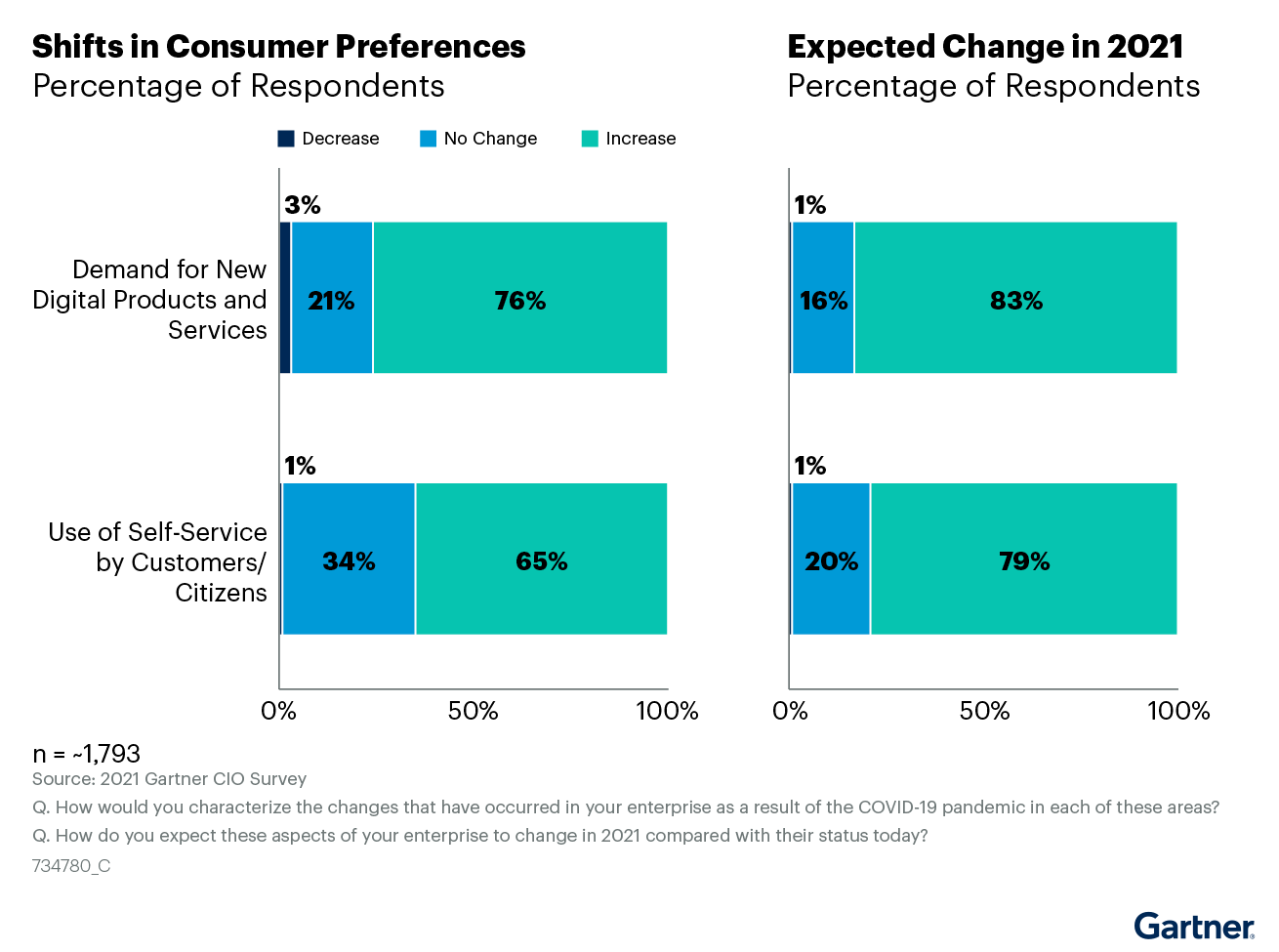
According to Gartner report, The 2021 CIO Agenda: Seize This Opportunity for Digital Business Acceleration: “Not surprisingly, 76% of survey respondents say that demand for new digital products and services increased in 2020. Even more respondents (83%) say that it will increase in 2021. Sixty-five percent report an increase in the use of self-service by customers or citizens in 2020, and 79% forecast an increase for 2021. Hardly any respondents report a decrease now or expect one in the future. This is a watershed moment. There is no going back to the way business used to occur.”1
Fig. 2: The Shift to Digital Will Persist 2
In order to fight the pandemic, people are spending an increasing amount of money on contact-free smart devices like smart lights and smart speakers. Smart security products and air cleaning products, such as air purifiers and fresh air systems, have gained greater popularity in particular.
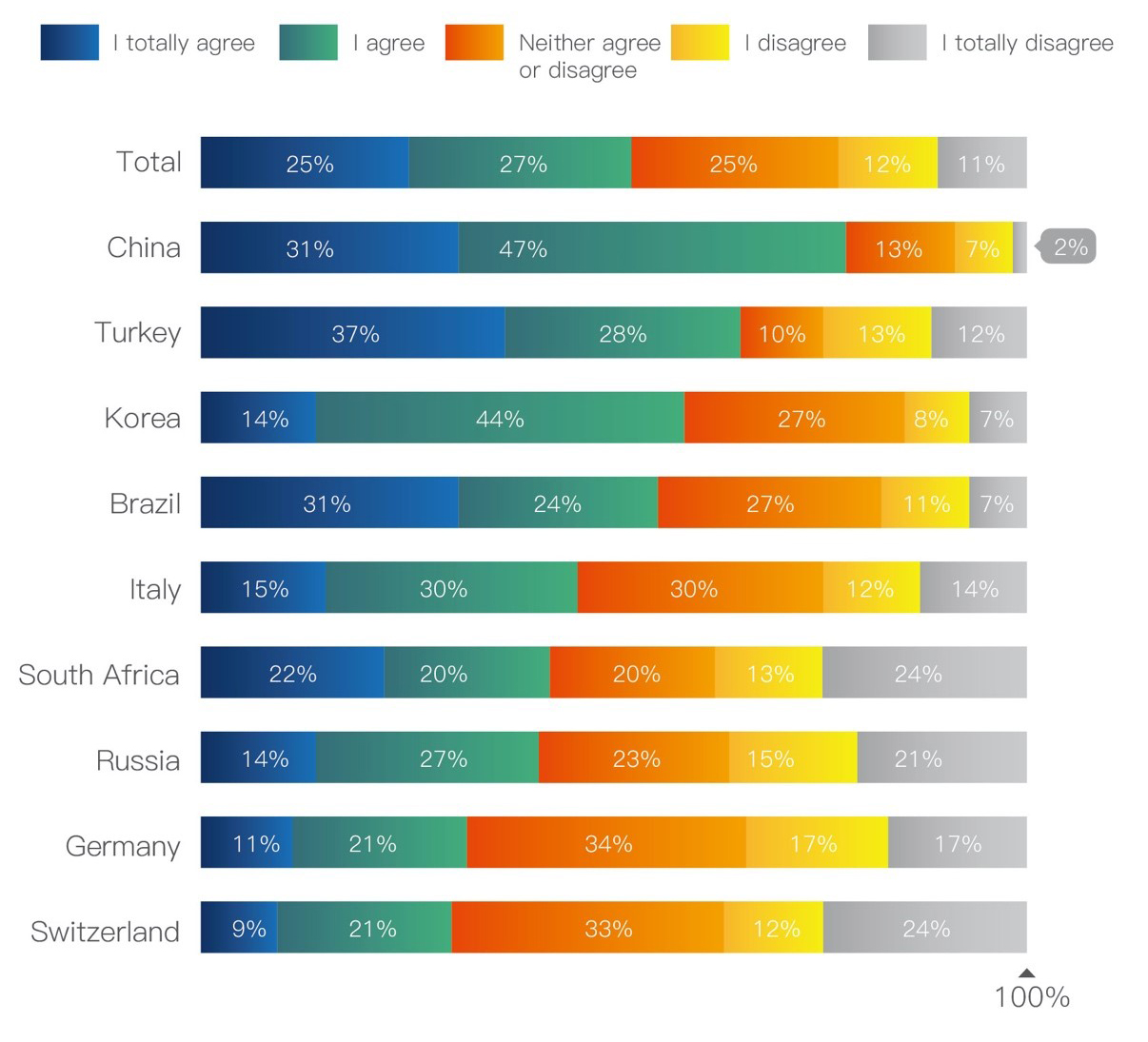
When it comes to consumption, driven by home quarantine, consumers around the world have shifted from offline shopping to online shopping. According to a report of the United Nations, after the outbreak of the pandemic, “consumers have shifted to online shopping.” The top five countries in this regard are China, Turkey, South Korea, Brazil, and Italy. Meanwhile, e-commerce has grown rapidly across the world. In 2020, online retail accounted for as much as 19% of all retail sales, up from 16% in 2019.
Fig. 3: Consumers in Emerging Economics saw Greatest Shifts to Online Shopping
Source: United Nations
It can be observed that people’s basic needs, including those for shopping, social networking, and entertainment, etc., are increasingly satisfied through the Internet. The line is blurred between the physical world and the virtual world. It can be imagined that with 5G, AR, VR, and other technologies, the way people live and produce will be further digitalized. The era of Metaverse underpinned by virtual reality may have come.
With their life spanning physical and virtual spaces, people’s overall needs have also changed. One of the defining features of the age of Industrial Internet is the consumer-oriented reorganization of the entire industrial chain. The digitalization of consumers’ lives and their preference for smart products have considerably improved the competitiveness of companies that provide smart products, thus compelling companies to strengthen their own research capacity and leading to the smartization of all industries.
2. Smartization is an effective solution for companies to survive the pandemic, making the smartization of production scenarios a trend for the future.
The resurgence of the pandemic and the decline of the real economy have led to more company bankruptcies. Persistent losses and difficulties in maintaining old business models have forced companies to come up with new ways to stay afloat. Smart transformation is a solution favored by most businesses. Specific measures to promote smart transformation include stepping up investments in technology, allowing employees to work from home, and introducing flexible work schedules.
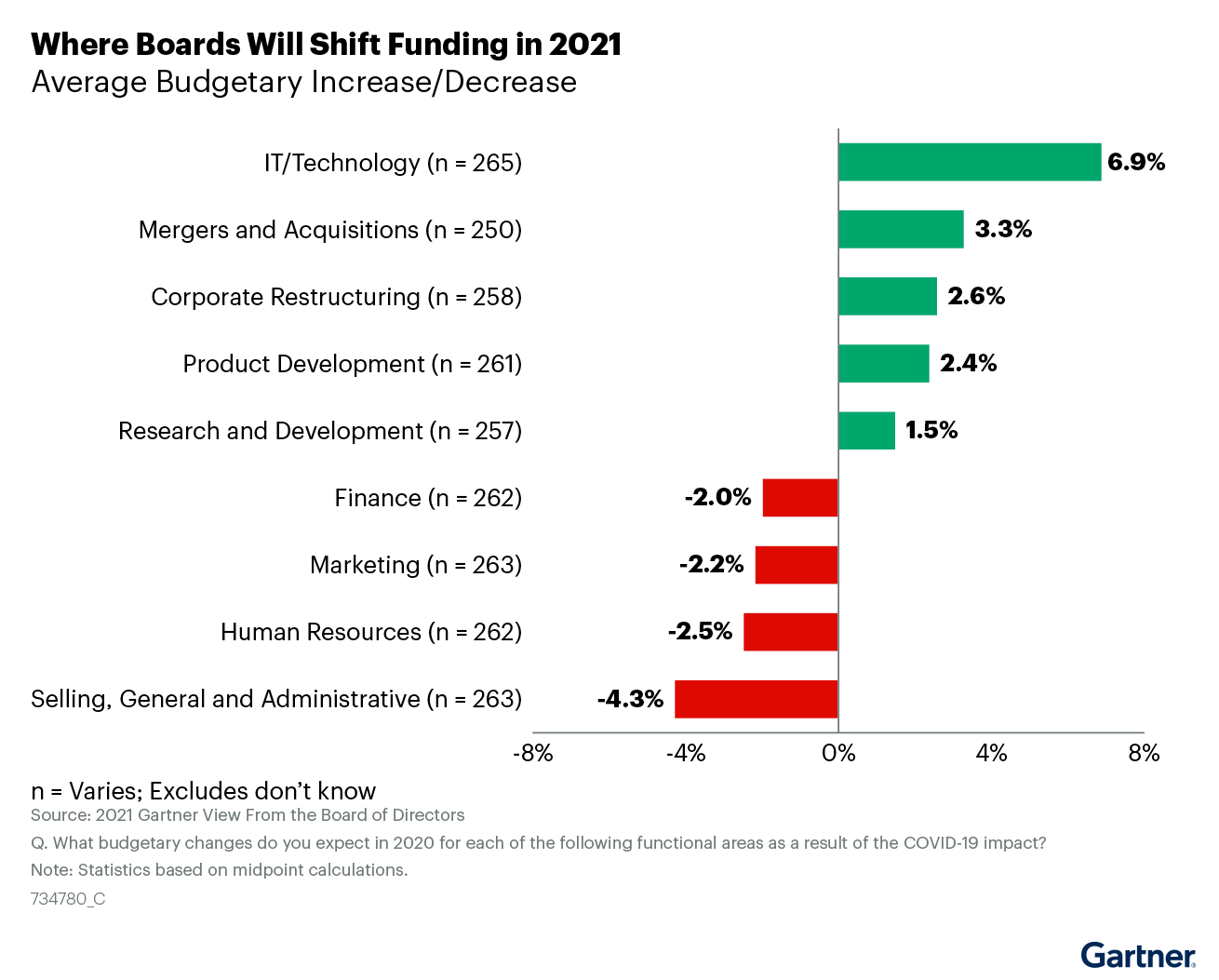
According to the 2021 Gartner View From the Board of Directors Survey, fielded May through June 2020, directors plan to increase spending on IT and technology by an average of 6.9%. That number includes spending across the enterprise, not just in the IT organization, and directors may not be exact in their numbers. Nevertheless, the result shows that boards will put real resources behind digital acceleration. That money will come at the expense of other corporate functions, such as sales (in-person selling doesn’t work in a pandemic), HR, marketing and finance.1
Fig. 4: Where Boards Will Shift Funding in 20213
Source: Survey Analysis: Board Directors Say Pandemic Drives Increased Investments in IT
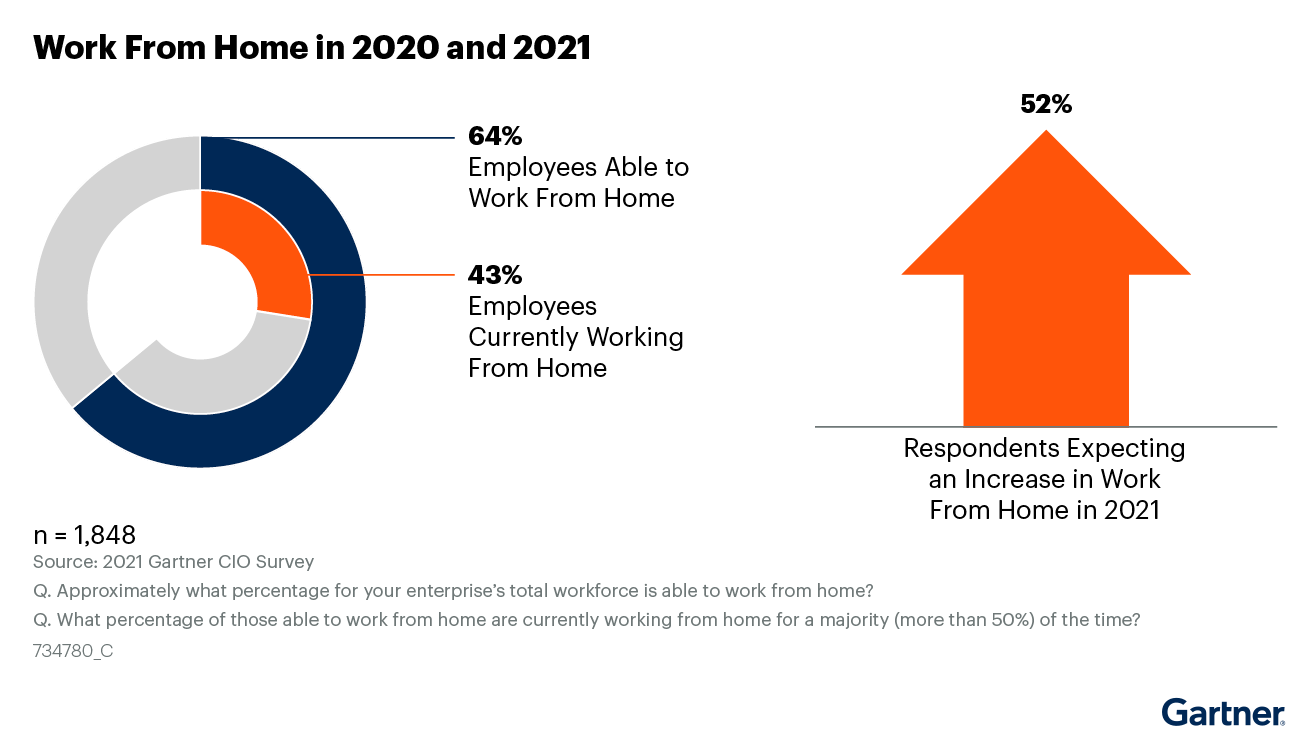
As the pandemic is a fluid situation and without a clear end in sight, CEOs have come to realize that it’s extremely hard to maintain the traditional office model and that new flexible work schedules should be introduced. As a result, more and more companies allow employees to work from home. Gartner states… “ according to the 2021 Gartner CIO Survey, 64% of employees are now able to work from home, and two-fifths actually are working from home (see Figure 5). Many CIOs managed to get thousands — maybe even tens of thousands — of workers set up remotely in scant weeks.”3
Fig. 5: Work from Home in 2020 and 20213
At the same time, AMI (ambient intelligence) has become a “helper” in coping with the pandemic. Devices equipped with perception, control, and decision-making capabilities are instrumental in the digitalization of various scenarios, thus triggering network effects.
3. Governments are accelerating efforts to build smart cities to deal with the challenges of COVID to city governance.
The transmission rate of COVID-19 has brought severe challenges to city governance in all countries. The coronavirus spreads much faster in cities than in the suburbs, especially in large, densely populated areas. The best way to deal with the pandemic is to use technologies to build smart cities and keep the coronavirus at bay without affecting the normal operation of cities.
In the battle against COVID-19, there have emerged a number of successful smart city solutions, such as the disinfecting drones widely used in Chinese cities. Public spaces and vehicles are disinfected by drones multiple times a day to help stop the spread of the virus. Another common solution in China is the remote temperature monitoring system, which, based on AI, can quickly identify people with abnormal body temperature within crowds and then automatically notify medical institutions and government organizations.
Singapore is also a leader in smart city development. Since the outbreak of the pandemic, it uses safe distancing robots to monitor the distance between people. When people get too close to each other, it will be detected by the robot’s sensors, which will remind people to keep a safe social distance. Residents can also go online anytime to check the heat map of the city, provided by the government, to keep updated on crowd size at each public area and avoid overcrowded spaces.
Based on current observations, the effectiveness of different cities’ measures against the pandemic is in positive correlation to their degrees of smartization. Inspired by successful cases, more and more governments are embarking on smart transformation. Investment in smart cities has continued to grow.
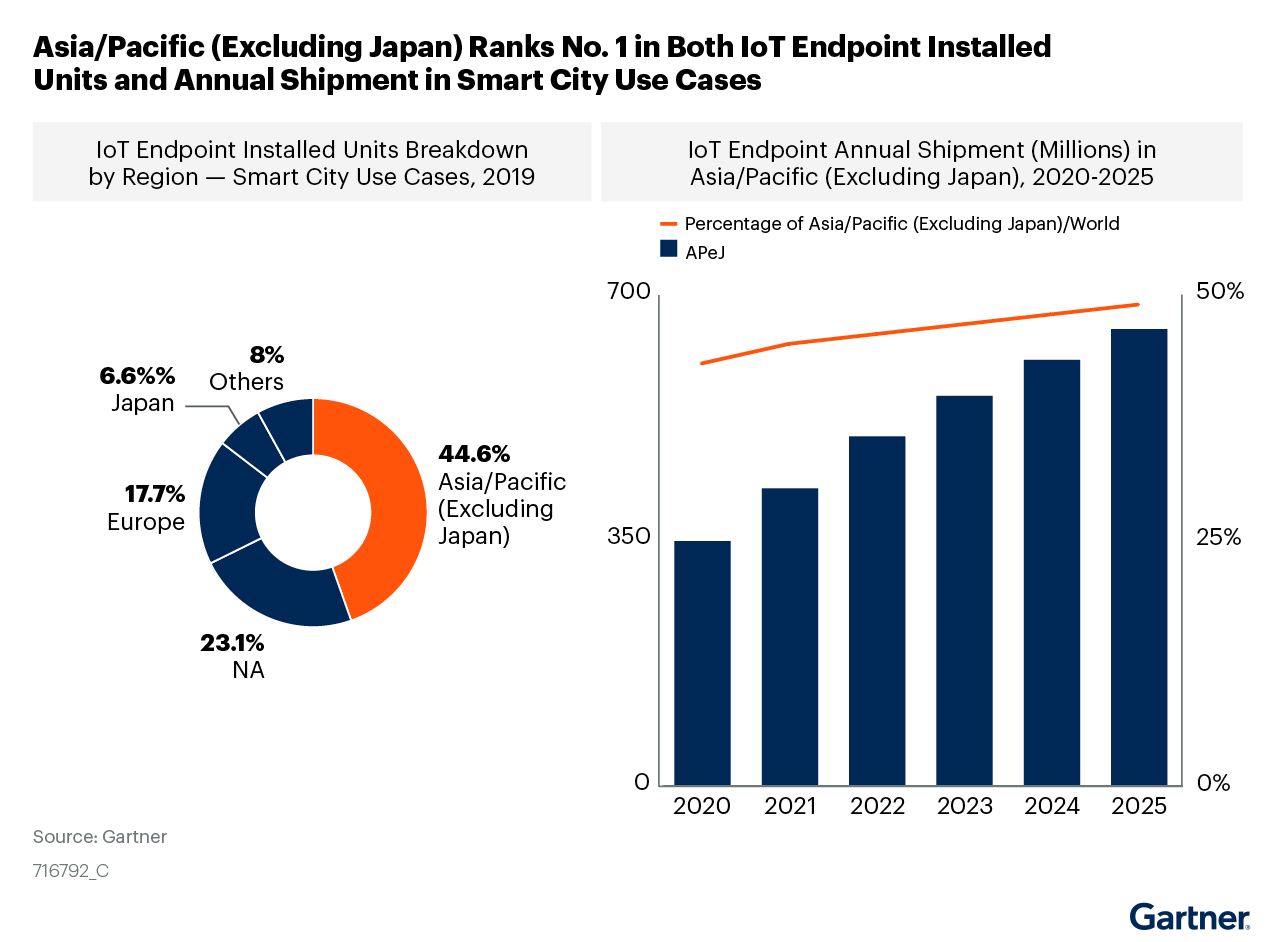
According to “Gartner’s IoT Forecast Database shows that the Asia/Pacific (excluding Japan) region ranks No.1 in both the IoT-endpoint-installed units and annual shipment in smart-cities-related use (Figure 6). Backed by positive government support and a fast-growth urbanization rate, cities in the region are betting big on IoT and data analytics to drive efficiencies, improve public safety, and enhance competitiveness and economic growth.”4
Fig. 6: Asia/Pacific (Excluding Japan) Ranks No.1 in Both IoT-Endpoint-Installed Units and Annual Shipment in Smart City Use Cases4
Source: Gartner
1,2,3 Gartner Inc., The 2021 CIO Agenda: Seize This Opportunity for Digital Business Acceleration, 18 October 2020, G00734780
4 Gartner Inc., Market Trends: Smart City IoT Deployment Trends in Asia/Pacific, 24 April 2020, G00716792
Source: Tuya