The 60 Smartest Companies Thriving Post-pandemic
Smartization in Different Industries During the Pandemic
As COVID-19 continues to take a heavy toll on the global economy, companies are faced with a variety of problems, among which the most severe challenges are strains on cash flow, disruption of supply chains, and pressure from the prolonged pandemic control. In addition to changing business strategies, digital transformation—or smartization—is an option to cope with the current predicament. A considerable number of enterprises have adopted smart practices during the pandemic. In so doing, they have not only survived the crisis, but also promoted the digital transformation of the entire industry. It is worth noting that during the pandemic, not some but many companies have chosen smartization to get out of the woods. The all-scenario intelligence revolution is thus in full swing.
Across industries, corporate smartization is focused on four areas: the use, research, and development of smart hardware, the upgrade of management systems, the development of remote collaboration platforms, and digital means for pandemic control and prevention. These practices have four defining features: focus on consumer demand, reduction of in-office work, focus on the collection, analysis, and application of core data, and pursuit of long-term sustainable development during the pandemic.
Fig. 1: Development Orientations and Characteristics of Corporate Smartization
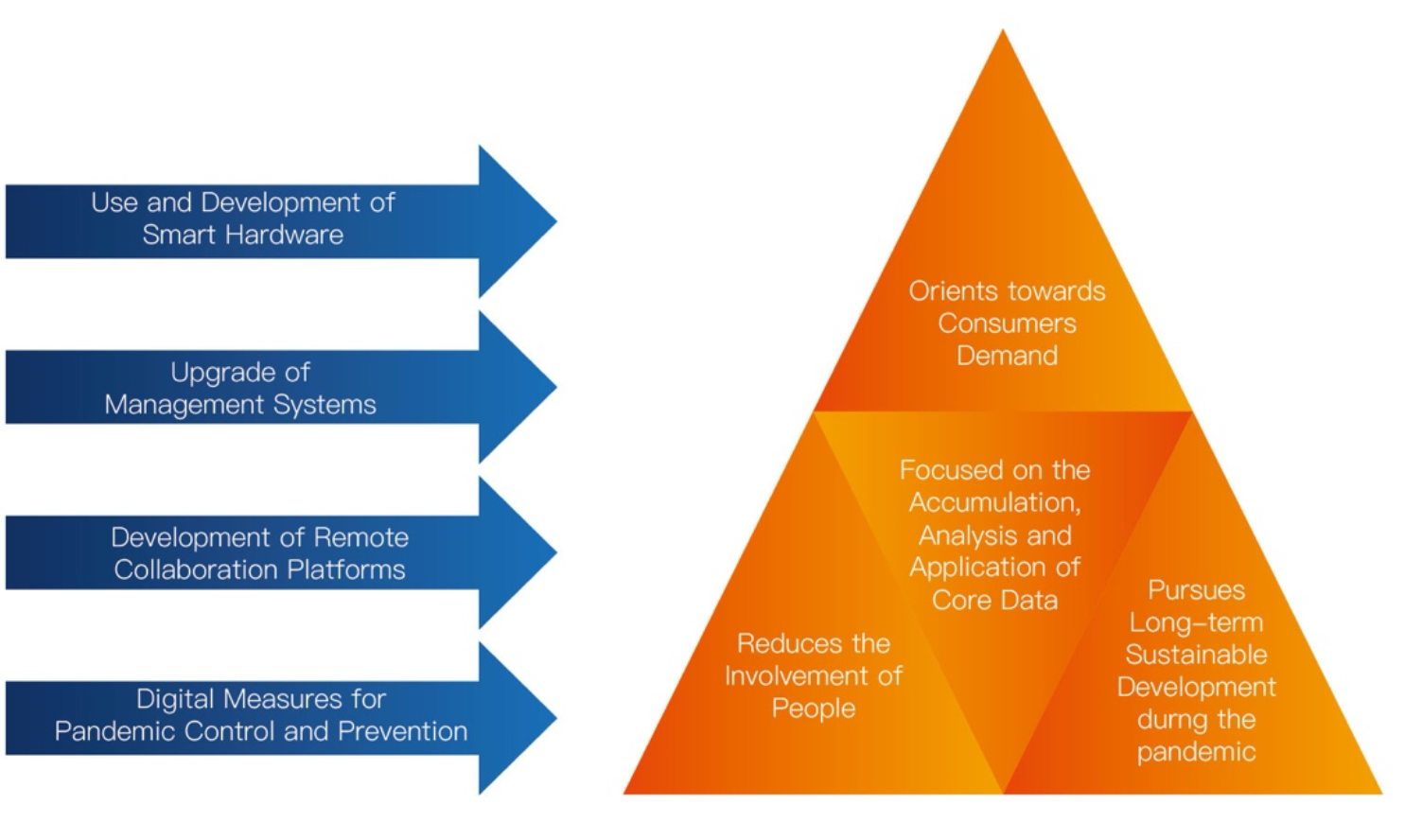
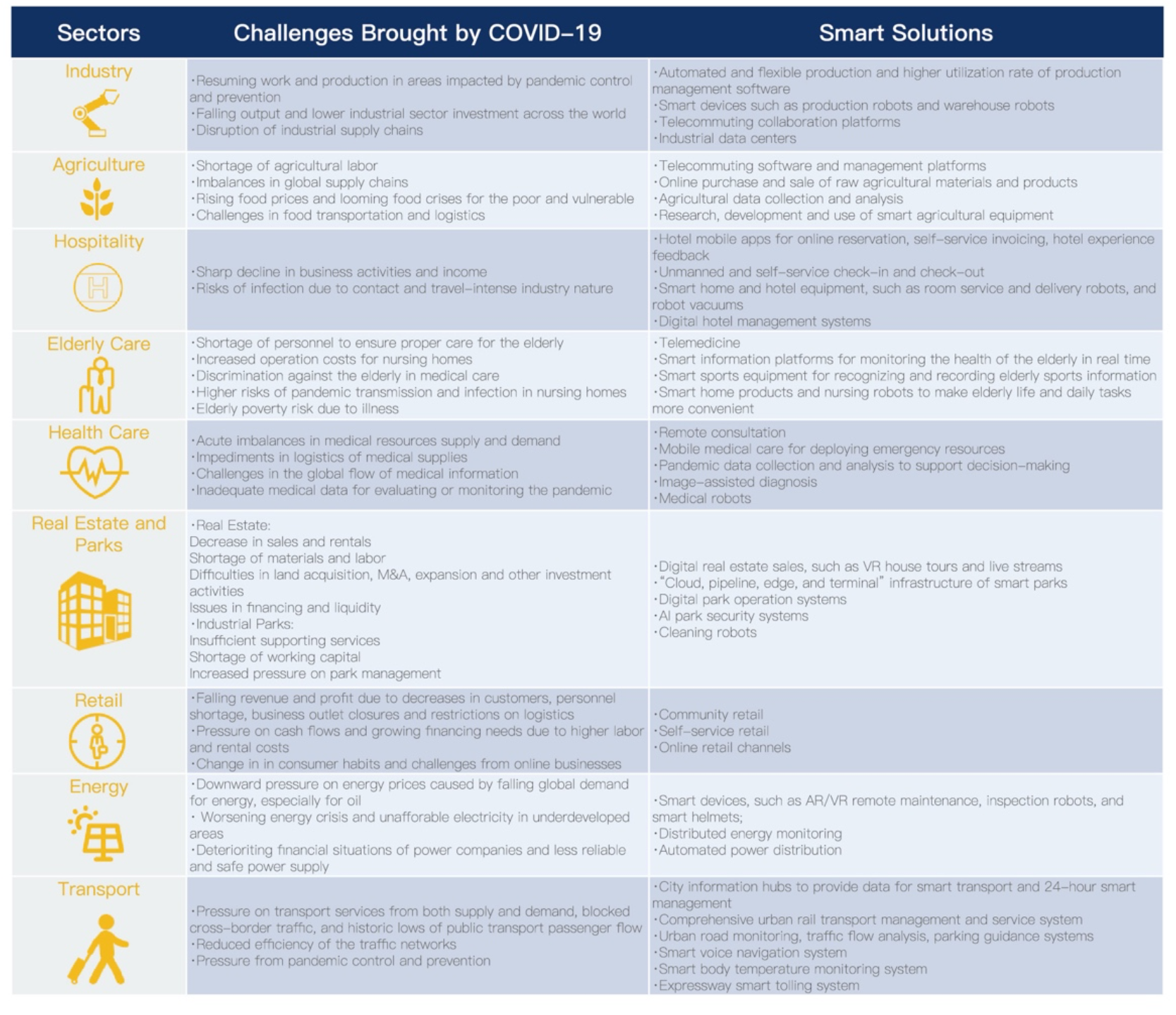
Fig. 2: Challenges and Practices of Companies in Different Industries during the Pandemic
1. Agriculture
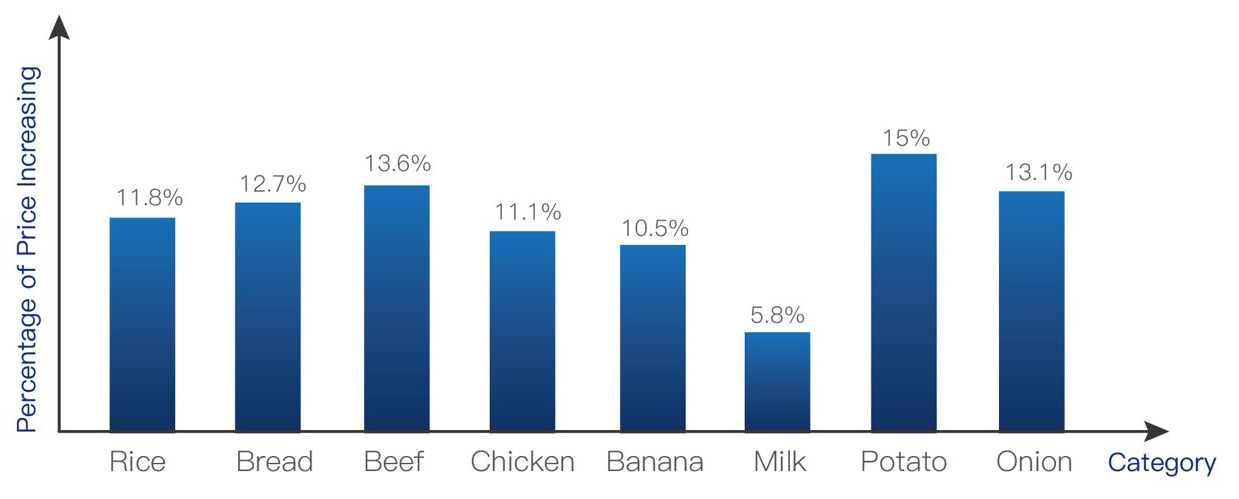
After countries closed their trade ports, it was difficult to keep the global agricultural supply chains open, threatening food security and nutrition of the general public, especially those stricken by poverty and the most disadvantaged groups. According to a survey by the Food and Agriculture Organization of the United Nations, compared with 2020, global food prices went up in 2021, with the price of rice up by 11.8% and that of bread by 12.7%. At present, the prices of major foods are at risk.
Fig. 3: Price Increases of Major Foods after the Outbreak of The Pandemic
(From February 14, 2020 to August 12, 2021)
Smart agriculture is one of the ways to cope with the food crisis. The online circulation of agricultural raw materials and products is becoming a common practice. Grain producers that originally had reliable suppliers began to purchase raw materials from e-commerce platforms; more and more producers started selling agricultural products online.
In addition, encouraged by the United Nations, capable countries have focused on the accurate collection and analysis of agricultural data for making informed food-related decisions to overcome the pandemic.
What’s more, smart agricultural equipment has seen rapid development. Unmanned agricultural vehicles, automatic harvesting robots, and smart incubators are among the commonly used devices. While liberating manpower to a great extent, such devices boost the refined, efficient, and sustainable development of agricultural production, help agricultural producers establish traceability systems, and improve the global agriculture and food safety.
1. Industry
With the escalation of the pandemic, strict transportation and mobility control measures have been adopted in all countries, making it difficult for industrial supply chains to stay open. Industrial output therefore dropped. Some countries have even experienced negative growth. At the same time, investors have reduced their investment in industry, putting both large and small enterprises under the stress of tight cash flow. With the resurgence of infections, the resumption of in-person work and production in enterprises depends on pandemic prevention and control, and it is still unknown as to when the normal production order will be restored.
In order to cope with the negative impacts brought by the pandemic, industrial enterprises in various countries have accelerated their own smartization drive towards Industry 4.0. Industrial smartization is a new stage in the information-based development of modern industry; it is industrial digitization combined with stronger capabilities in information management, smart forecasting, and smart decision-making. This digitization is mainly applied in the following areas: supply chain management (supply chain selection, inventory management, scheduling, replenishment, and other decisions), production process optimization (smart monitoring, smart control, smart diagnosis, smart decision-making, and smart maintenance), production safety management (early warning and environmental safety monitoring), and quality control and fault diagnosis (locating abnormal parameters and assisting in fault analysis).
Currently, industrial smartization mainly involves the following areas: optimization and upgrading of various production management software, deployment of smart devices such as production robots and warehouse robots to reduce human involvement in the production process, use of remote office collaboration platforms, and establishment of industrial data centers.
3. Energy
The impact of the pandemic on energy is persistent and far-reaching , the crisis caused the global energy demand to drop by about 5% in 2020, with oil demand estimated to go down by 8% and coal consumption to decrease by 7% in 2020.
It is worth noting that the decline in oil demand may be prolonged. With falling demand, investment in energy has also plummeted. The financial situations of power companies in most countries have deteriorated during the pandemic and the reliability and safety of power supply is being threatened. The most disadvantaged groups bear the brunt, and 100 million people can no longer afford electricity services due to economic hardships according to the assessment of the International Energy Agency (IEA).
Smartization in the energy sector remained its infancy during the pandemic. Enterprises mainly use smart devices, such as inspection robots and smart safety helmets. Meanwhile, new technologies also enable organizations to monitor energy dynamics at any time and realize automatic power distribution. It is anticipated that in the near future, smart devices for renewable energy, power data centers, Internet of Energy, and digital platforms will be the priorities.
4. Real Estate and Industrial Parks
According to Deloitte’s research, the pandemic has affected the real estate industry in four ways:
- Decrease in sales and leasing. During the pandemic, most cities took measures to control crowds in public areas. In some countries, online signing and filing channels and even the issuance of pre-sale permits were suspended, pulling real estate sales into stagnation.
- Construction costs went up due to the shortage of construction materials, difficulties for construction personnel to resume work, and restrictions on logistics and transportation.
- In some areas, bid invitations, auctions, and listings have been suspended, making it impossible to carry out due diligence and affecting land acquisition, M&A, and expansions of real estate enterprises.
- Fewer financing channels and rising financing costs hit the real estate industry, straining the cash flows.
At present, smart practices are mainly concentrated in sales in the real estate industry, such as house tours facilitated by virtual reality (VR) and livestreams. Digitalization in other aspects is still at a low level. However, many real estate developers, such as China Overseas Property and Vanke, are already exploring the use of smart hardware to reduce costs and increase efficiency.
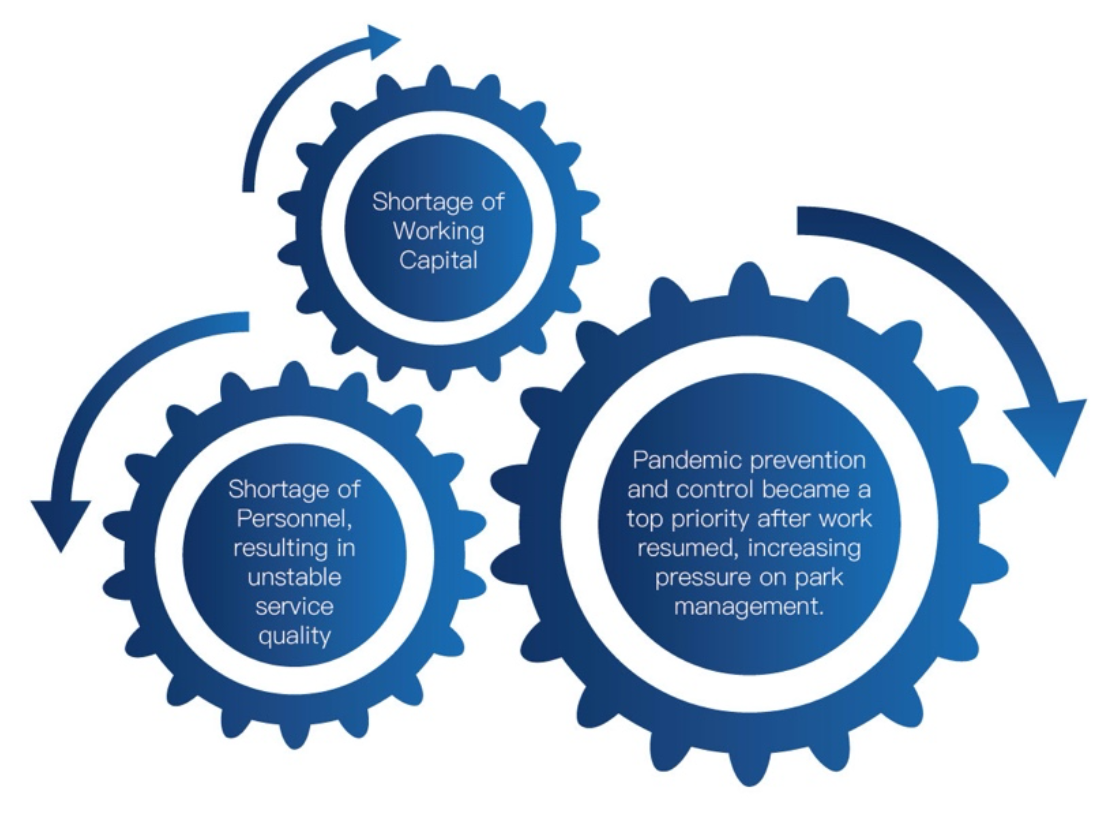
The impacts of the COVID-19 pandemic on industrial parks are three-fold: 1. Shortage of working capital; 2. Shortage of personnel, resulting in unreliable service quality; 3. In the resumption of work and production, COVID-19 prevention and control is of utmost importance, which increases pressure on park management.
Fig.4: The Impacts of the Pandemic on Industrial Parks
Source: IBV
To tackle these challenges, some industrial parks have turned to smart solutions. More investments are made in building “cloud, pipeline, edge, and terminal” IoT infrastructure for smart parks, and smart service robots are used to strengthen the digital operation of the parks.
5. Retail
The impacts of the pandemic on the retail industry, especially the offline retail economy, are obvious. The pandemic has made it difficult for consumers to go out shopping and for employees to work normally, and resulted in restrictions on logistics and transportation, which have had negative effects on the short-term revenue of the retail industry. Retailers still have to pay salaries and rents, resulting in tight cash flows and growing needs for financing. In addition, people have shifted from offline to online, which will have a far-reaching impact on brick-and-mortar retailers.
To survive the pandemic, retailers are accelerating the smartization process in the following three ways: building integrated marketing systems by developing online sales channels and using tools including third-party platforms and mini programs; reducing labor costs by focusing on self-service retail and developing unmanned, self-service devices; and exploring new sale channels by prioritizing community retail to develop online communities.
6. Transportation
The pandemic has hit the transportation industry particularly hard, not only grinding global transport services to a sudden, unprecedented halt, but also causing severe shortages in both supply and demand. The passenger flow of public transportation has dropped to the lowest level in history and cross-border traffic had been effectively suspended. Traffic restrictions have made transport networks inefficient and transport companies have suffered from draining cash flows. As vehicles are high-risk spaces for the spread of the coronavirus, the pressure of pandemic control and prevention will persist.
During the pandemic, regions with integrated urban data centers understandably had better traffic control because data centers provided data support for 24-hour smart management. Transport companies are all accelerating their own digitalization by developing and using integrated management and service, monitoring, and traffic flow analysis systems. What’s more, in order to reduce the risk of infection, people chose connected private mobility options, such as smart scooters and smart motorcycles.
7. Health Care
The health care industry is on the frontline in the fight against the pandemic, which has exposed the weaknesses in health care systems:
1. Most countries are faced with imbalanced supply and demand of medical resources. 2. Although the pandemic hit the whole world, the global flow of medical information has not been smooth and is beset with challenges. 3. Most COVID vaccines need refrigeration and cold chain transportation, but the logistics networks of many countries cannot meet the demand, causing vaccines to spoil. 4. The collection and utilization of pandemic data is also a challenge. Many countries fail to collect enough data for the government to make informed anti-pandemic decisions, which threatens the safety of people’s lives and property.
During the pandemic, the smartization of the health care industry has been accelerated with a stronger momentum. Smart medical solutions have become the “secret weapon” in the fight against the pandemic. For example, remote consultation technologies help doctors view patients’ digital videos, medical images, and other data from a distance, enabling them to understand patients’ conditions in a comprehensive way and give remote guidance, thus utilizing the limited medical resources to the maximum extent. The collection and analysis of pandemic data helps doctors identify key factors of influence and build pandemic development models, thus contributing to source control, prevention, and precise treatment. In addition, smart devices such as contact-free environmental sensors, disinfection robots, treatment robots, body temperature monitoring robots, and unmanned delivery robots have all played important roles in controlling the pandemic and treating patients.
8. Elderly Care
The world population is aging at an unprecedented pace. In 1950, the elderly only accounted for 8% of the total population. However, it is estimated that by 2050, the proportion of the elderly in the total population will hit 21%, which will exceed the proportion of young people for the first time in history.
The pandemic has fully revealed the challenges in the elderly care industry. Middle-aged and elderly people are more susceptible to the coronavirus and are also at high risk of becoming critically ill. However, during the pandemic, most countries have witnessed a shortage of elderly care service personnel, making it difficult for the elderly to receive proper care. Many nursing homes went bankrupt, burdened by higher operating costs from more employees and drugs.
Meanwhile, the concentration of elderly people in nursing homes led to high risks of infection. Both Italy and the United States saw outbreaks in nursing homes. Furthermore, the elderly are often discriminated against because of their age when receiving medical treatment. This is especially true when a country’s health system is overstretched by the pandemic and the elderly are often left unattended to. Even if they can stay healthy, many elderly people face economic difficulties due to the global economic downturn and are unable to support themselves.
In order to solve these problems, it is imperative to have a smart elderly care industry. Many countries have already made great efforts in this regard, such as using elderly care robots and nursing robots to provide services to the elderly while maintaining a safe social distance.
9. Hospitality
The hospitality sector was one of the hardest hit industries. To combat the pandemic, strict restrictive measures were taken in various countries. The tourism industry of most countries suffered a devastating blow. In less than a year, more than 150,000 hotels have closed business Globally.
According to STR’s survey, the number of hotels built globally (except in Europe) went down in 2021, with that in the Asia-Pacific region dropping by 3.4% and that in the Americas falling by 11.6%. Europe is an exception with the number of hotel rooms increasing by 26.9%. This means that most hotel operators around the world are not optimistic about whether they can recover from the pandemic in the short term.
In order to avoid infections, a considerable number of companies have carried out smart reforms to reduce losses. For pre-check-in and post-check-in periods, most companies have begun to develop their own hotel mobile apps or have provided online room reservation, automatic refunding, self-service invoicing, and other services through third-party platforms. During the stay, unmanned and self-service check-in and check-out services are favored by guests. Meanwhile, more and more hotels are beginning to use smart home and hotel devices, such as transport robots, robot vacuums, and smart speakers.
In hotel management, it became the mainstream in the industry to use digital management tools. Generally, CMS (Central Management System) platforms have been adopted to collect operational data and provide data support for decision-making. Through CRS (Central Reservation System), PMS (Property Management System), and CRM (Customer Relationship Management) platforms, specific solutions are provided for problems encountered by the clients.
From the digital practices in the above nine major industries, we have observed three major trends:
(1) Passive smart devices are widely used and sophisticated active smart hardware has become increasingly mature. Most smart hardware is passive, but the iterative upgrading of active smart hardware is making progress. A case in point is Singapore’s security robots that monitor distances and elderly care robots that can serve the elderly in a considerate way. This is made possible by technological advances, and prompted by labor shortages caused by the pandemic.
(2) Ambient intelligence has proved to be extremely valuable in tackling public health crises and is expected to be widely applied across industries. In the fight against the pandemic, contact-free sensors in hospitals can fully inform doctors of the subtle changes in patients, thus improving the accuracy of diagnoses while preventing doctors from getting infected. Meanwhile, there are more and more products of ambient intelligence adopted in the elderly care industry to ensure that the elderly lead independent and high-quality lives. It is anticipated that ambient intelligence will be applied in more fields.
(3) Virtual reality has become a priority target for all industries and the era of “Metaverse” is dawning. Virtual reality has not only become a trend in the fight against the pandemic, but also a priority for different industries. The remote observation and guidance system of 5G VR intensive care units (ICU) can not only ensure that patients receive the best treatment, but also avoid exposing doctors and nurses to danger. Family members can also visit patients remotely through the system to relieve their stress. Media practitioners have also made attempts to conduct immersive live reports through augmented reality (AR) equipment. What’s more, the VR house tour system is popular across the world with the number of service providers soaring in such countries as Singapore, New Zealand, the United States, and China. With more digitalized production and life scenarios, a “world of digital inclusion” is taking shape and the “Metaverse” is penetrating into our life and production at a speed much faster than expected.
Source: Tuya