
Magic Quadrant for Meter Data Management Products
Selecting the right MDM product in a rapidly maturing technology market shaped by global trends like IoT is a challenge for CIOs focused on digital utility transformation. To help CIOs and IT leaders understand vendors’ capabilities and deployment risks, we have updated the MDM product positioning.
Market Definition/Description
The market considered for this Magic Quadrant consists of utilities seeking products for managing metered consumption data. Metered data managed in these products can be used across the enterprise and shared with customers, partners, market operators and regulators. For the purpose of this Magic Quadrant assessment, meter data management (MDM) products are IT components of the advanced metering infrastructure (AMI). These products are responsible for cleansing, calculating, providing data persistency, and disseminating consumption and event data obtained from meters installed on delivery points.
MDM products can contain a subset of meter asset information, or even some premise, topology or customer information. However, the key data being tracked is metered commodity consumption and meter-related events, regardless of the type of commodity metered, type of meter, communication technology or collection device (aka headend).
Although implementations may vary, MDM should support the following key functions:
- Collecting data (from headend devices)
- Managing commands (such as remote connect/disconnect)
- Validating, editing and estimating (VEE) meter reads
- Managing exceptions
- Managing events (such as “last gasp,” aka power-off notification [PON])
- Estimating invalid or missing reads
- Profiling scalar meter reads
- Calculating billing determinants
- Aggregating meter reads
- Tracking meter inventory (but not managing the entire meter asset life cycle)
- Supporting AMI deployment
- Providing data to centrally managed data hubs in some competitive market structures
- Providing data to utility applications, such as customer information systems (CISs)
- Providing information directly to end users (utility personnel and end customers alike)
- Supporting additional functions such as prepayment, load profiling, outage determination, or distribution management and planning support
- Supporting consumption data analytics such as revenue protection analysis and distribution asset analysis (transformer load management)
All subsectors of the utility industry (electricity, gas and water) should be interested in MDM products because companies in each segment deliver a metered commodity at the customer’s premises. They all need metered consumption data in a variety of business processes, such as meter to cash (M2C), load forecasting or distribution asset planning and design, and network operation.
MDM market requirements are shaped by needs in the electric utility segment, which has higher complexity in managing commodities. Due to its potential to support energy efficiency programs and address supply security concerns, AMI deployment in the electric utility sector is often mandated by regulators. It also results in the need to acquire and store higher granularity and larger volumes of consumption data. That makes AMI, and MDM as its component, much more adopted in the electricity subsector, and forces vendors to pay more attention to electric utility needs. Because commodity volatility is a more significant issue for electric utilities, MDM requirements for water and gas utilities tend to be less complex. Effectively, they are subsets of MDM requirements for electric power utilities — from functional and performance/scalability. These solutions are more focused on providing meter reading cost reduction or an indication of asset malfunction (such as leakage) with larger meter reading intervals.
Following a rush of MDM deployments in the U.S. triggered by the Smart Grid Investment Grant (SGIG) program in 2009, U.S. utilities have been focused on getting business value out of the consumption data stored in MDM. Consequently, many utilities are looking for meter data analytics solutions. This has spurred activities in the adjacent smart meter analytics market that are aimed at leveraging consumption data to improve analytical insights into multiple business areas. Examples are energy theft detection, outage determination and asset failure avoidance.
Many MDM vendors have expanded their offerings to include smart meter analytics. However, we do not consider that capability to be a basic requirement of an MDM product. Although analytics capability is not included in this Magic Quadrant assessment, we consider the ability to support meter data analytics as one of the product requirements. That can be achieved by offering off-the-shelf APIs and data ingestion routines for smart meter analytics solutions. See the Context section for further discussion of MDM’s role as a platform for consumption data analytics.
The MDM market has matured, with an increased number of utilities considering the replacement of initially deployed solutions. Buyers now have a better understanding of their needs and have realistic benefits expectations that they can better align with the capabilities that products can offer. Consequently, that created some pricing pressure and in some cases resulted in switching MDM products that were initially deployed during the AMI “gold rush” in early 2010.
Another indication of market maturity is the fact that this year we have not seen new entrants in the market or noticed significant change in vendor positioning compared to the previous year. Consequently, we will most likely in the future continue monitoring MDM market development via the Market Guide document type instead of the Magic Quadrant.
Magic Quadrant
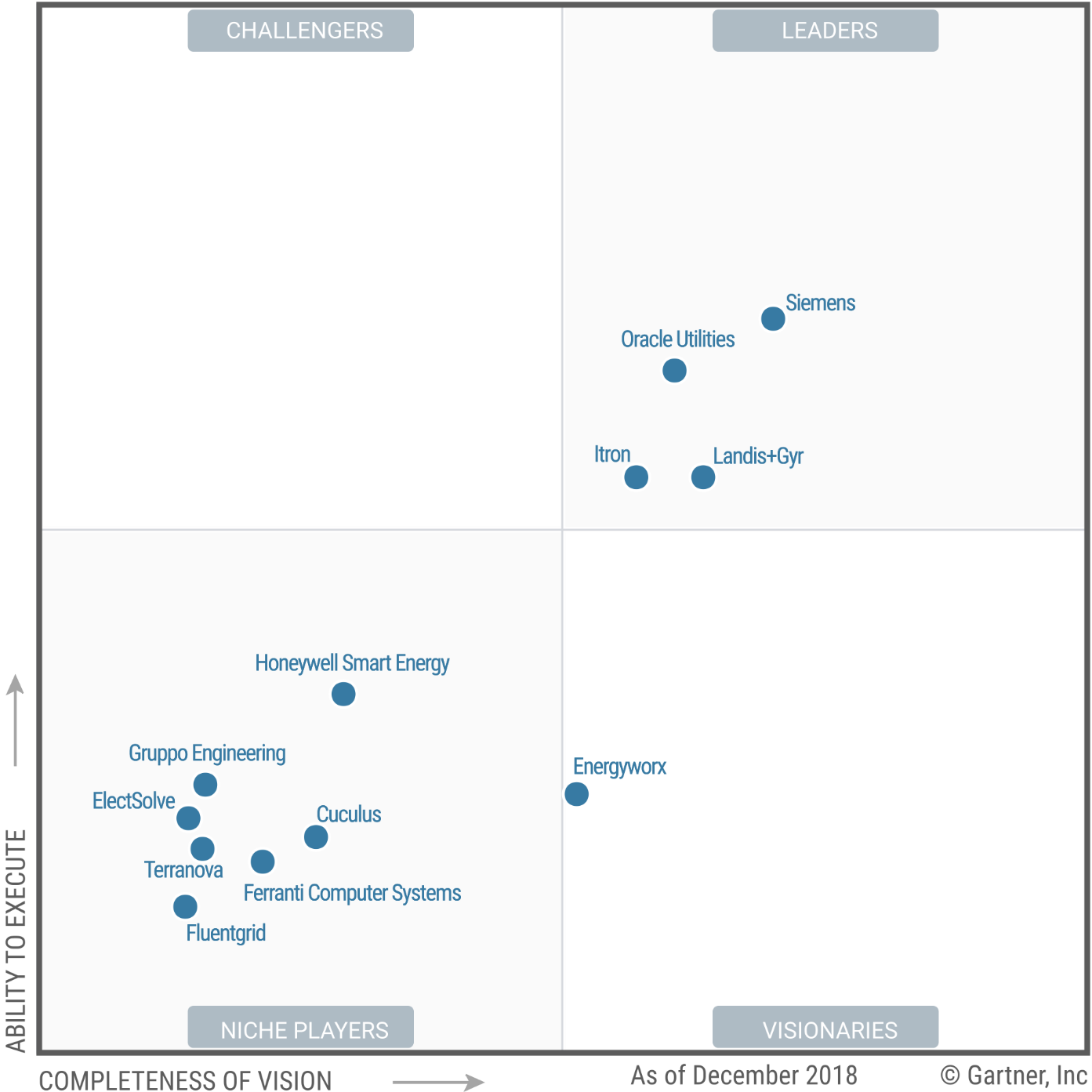
Figure 1. Magic Quadrant for Meter Data Management Products
Source: Gartner (December 2018)
Vendor Strengths and Cautions
Cuculus
Cuculus, a privately held company headquartered in Ilmenau, Germany, provides an MDM solution via its smart energy platform, ZONOS. In addition to MDM functionality, ZONOS supports advanced metering and communication management needs (aka advanced meter management [AMM]). The ZONOS system can be provided as AMM only and can be interfaced with third-party MDM. ZONOS can be also used by utilities for home energy management and energy efficiency programs as well as to support broader Internet of Things (IoT)-related initiatives such as electric vehicle (EV) charging and distributed energy resource (DER) management. It has additional modules such as EventFlow and ReportPlus for event processing and reporting, respectively. In addition, the product is easily extendable to support traditional handheld meter reading via its MobileRead module. ZONOS is offered as SaaS or on-premises on Linux with Oracle and MySQL Enterprise relational database management systems (RDBMSs).
Cuculus has nine ZONOS MDM sites in production, with more than 416,000 meters in total (all of which are interval meters). The largest site in production is the Dubai Electricity and Water Authority (DEWA) in the United Arab Emirates (UAE), with 340,000 meters (with 12 values being read every 15 minutes).
Strengths
- Customers have reported a high satisfaction rate with ZONOS’ platform stability, availability and disaster recovery. They also praised the API-based connectivity options provided by ZONOS’ MDM.
- ZONOS can address the needs of network operators and energy retailers in unbundled markets, as well as utilities in integrated energy markets. It can also be used as a platform for supporting M2C, market settlement and home energy management.
- ZONOS’ meter data collection module supports more than 100 different meters (multiutility). It can be used as a stand-alone AMM product or a module integrated with ZONOS’ MDM.
Cautions
- Some references that Gartner contacted considered the ZONOS built-in reporting capabilities to be limited and said they could be improved.
- ZONOS’ MDM references rated product functionality and out-of-the-box configurability lower than other products were rated by their references.
- Cuculus has increased the number of meters that are in production on its client sites. However, it still has the smallest installed base (measured by the cumulative number of meters for which data is collected in ZONOS’ MDM) among all the vendors reviewed in this market.
ElectSolve
ElectSolve, a privately held software vendor headquartered in Shreveport, Louisiana, markets its MDM product uCentra to municipal utilities and electric cooperatives in the U.S. In most cases, the product is delivered via the company’s affiliation with Hometown Connections, a subsidiary of the American Public Power Association. uCentra is frequently preintegrated with several products offered by vendors aligned with Hometown Connections.
In addition to consumption data, uCentra has the ability to store supervisory control and data acquisition (via SCADA historian) sensor data, meter event data and GIS connectivity data. Consequently, uCentra acts as an operational data management system, or an instance of an Industrial Internet of Things (IIoT) platform. Additional modules can be used for data analytics (such as line losses, revenue protection and voltage analysis), event management, and to support functions such as settlement and load profiling. As part of its MDM offering, ElectSolve provides CentraVU as an optional customer engagement module that can be added as a consumer energy portal. uCentra is based on the Microsoft technology stack (.NET, Windows and SQL Server), but also provides some functionality on the Linux platform (such as external customer engagement via CentraVU). ElectSolve has 5.5 million electric/water/gas meters in production as part of 209 MDM accounts (90% of which are interval meters). The largest implementation site in production is Great Lakes Energy, with 130,000 meters and approximately 90 million reads/month.
Note: In October 2018, ElectSolve was acquired by demand-response provider IPKeys. Per the company announcement, the goal was to achieve the synergistic merger of secure demand response and an MDM platform for the public power and rural utilities sector. Because this acquisition occurred after the MDM Magic Quadrant data collection period, the impact of this acquisition is not assessed in this research.
Strengths
- ElectSolve has one of the highest product satisfaction ratings among all vendors in this market, with particular praise from references for its accurate estimation capabilities.
- uCentra achieved the highest score for its integration capabilities among all vendors evaluated in this research.
- uCentra provides an operational view of multiple field devices, including distribution SCADA. It can be used as a vertical industrial IoT platform by smaller utilities, particularly those looking for a simpler and less expensive solution than the ones offered by large industrial IoT vendors (such as GE or Siemens).
Cautions
- References noted some issues with upgrading as well as longer-than-expected time for some customization work.
- ElectSolve references also noted concern regarding product graphing capabilities.
- With the exception of one implementation in Japan, uCentra has not been implemented outside the target market region (North America). Thus, it has not been proven in production in more advanced energy markets.
Energyworx
Energyworx, headquartered in Houten, the Netherlands, is a privately held company that provides MDM SaaS. Its MDM customer base is composed of Western European and North American utility companies, energy retailers and service providers. The company has had a U.S. office since 2015, and currently has a half-dozen clients in the U.S.
Energyworx’s MDM product is offered as a data aggregation, validation, persistency and analytics cloud service on a platform as a service (PaaS) environment such as Google Cloud. Energyworx MDM is part of its Energy Data Diversity Intelligence Engine. In addition to MDM, Energyworx offers its Datalab environment with advanced analytical capability, including anomalies detection and machine learning. Energyworx also provides several business-ready solutions, such as energy deal analytics, unbilled revenue, and hot sockets detection. It also provides open API, which makes it suitable for markets in which metering data is provided via a data hub, and has been used in the microsynchrophasor environment with subsecond sampling intervals. Energyworx has opened its MDM and encourages external developers (both system integrator [SI] partners and clients) to develop its analytics use cases based on a variety of consumption metering and IoT data sources.
Twenty-three companies currently use Energyworx’s MDM SaaS in production, with a cumulative total of 9.8 million meters, 78% of which are interval meters. The largest Energyworx MDM site has 600,000 meters in production at a large Dutch utility.
Strengths
- Energyworx’s cloud offering and pay-per-use pricing make its MDM product attractive to companies (such as energy retailers) looking for fast deployment without significant upfront capital expense.
- References continue to rate the product’s flexibility, performance and analytics capabilities as high.
- The native cloud architecture and tools (Jupyter Notebook and Python) help Energyworx to support rolling updates with no customer downtime, which allows faster time to market for new features.
Cautions
- Although Energyworx has achieved good MDM market traction, its small company size and a limited set of SI partners continue to be impediments to growth and expansion into other markets.
- Energyworx’s MDM is offered exclusively in a multitenant cloud environment. Consequently, the solution is not appropriate for buyers looking for an on-premises implementation.
- Some references noted issues with Energyworx delivering on committed time for new features.
Ferranti Computer Systems
Ferranti Computer Systems is a privately held software company headquartered in Antwerp, Belgium, that offers an integrated metering and billing product called Metering and Contract Management System (MECOMS). MDM is the foundational component of MECOMS, which provides an integrated solution for utility billing, MDM, portfolio management, and market-related process support modules.
MECOMS is built on top of the Microsoft Dynamics solution. The product contains the Smart Metering Communication Bus, which provides the integration infrastructure for handling the large data volumes created by AMI and other edge devices. The majority of Ferranti MDM solutions are implemented as part of an integrated M2C environment rather than as stand-alone MDM products. The largest implementation of the MECOMS MDM product is Fluvius, a Belgian utility formed in 2018 by the merger of Eandis and Infrax. Fluvius has 4.6 million meters (87% of which are read annually). There are 44 MECOMS MDM installation sites, with a cumulative total of 25 million meters; however, only 5% of these are interval meters.
Strengths
- MECOMS offers support for big data on a standard hardware platform, leveraging Microsoft technologies such as Reactive Extensions and HDInsight.
- Some customers gave high praise to MECOMS’ MDM product flexibility and stability.
- Ferranti has an extensive set of implementation partners, and leverages Microsoft’s network to extend its presence outside its native market. The dedication of the Ferranti team that provides back-end support for projects run by Ferranti partners has achieved high praise.
Cautions
- Due to its integrated metering and billing functionality, MECOMS is not the best solution for utilities seeking a stand-alone, best-of-breed MDM.
- MECOMS’ product performance and ease of use continue to record the lowest score among all rated MDM products.
- Some references reported concerns with the products monitoring and audit traceability capabilities, and access to technical expertise postimplementation.
Fluentgrid
Fluentgrid, formed in 2001 under the name Phoenix IT Solutions, is a publicly owned, India-based software solution provider focused on utility sector needs. It offers utility products and services that currently serve Central and South Asia and EMEA. Its MDM offering, Fluentgrid Meter Data Management System (MDMS), contributed to 11% of its corporate revenue in the 2017 through 2018 fiscal year.
Fluentgrid’s MDMS product is a foundation of Fluentgrid’s Smart Grid offering. In addition to MDMS, the Smart Grid product contains the Unified Head End System (UHES) and Network Monitoring System (NMS) for managing meter reading and the communication network. The product can be installed on-premises but it is also ready for cloud deployment.The Smart Grid product suite also contains functional modules for demand response, outage monitoring, peak load management, reporting and grid analytics, and grid control.
Fluentgrid’s MDMS is implemented at seven utility companies in India and Afghanistan, with a cumulative total of 6.95 million meters (404,000 of which are interval meters). The largest MDM instance is the Indian-based Andhra Pradesh Eastern Power Distribution Company, with more than 5.85 million meters (nearly 50,000 of which are interval meters). With exception of two larger implementation (more than one million meters) most of Fluentgrid MDM implementations are in the order of thousands to tens of thousands of meters.
Strengths
- Fluentgrid’s MDMS has been tested and validated as part of the IBM Solution Architecture for Energy and Utilities Framework (SAFE).
- Contacted references continue to rate their overall experience with the vendor as high.
- MDMS is offered on multiple DBMS platforms (Db2, Oracle and SQL Server) and multiple operating systems (UNIX/Linux and Windows).
Cautions
- Fluentgrid’s MDMS is not in production in developed energy markets. Consequently, there are no indications that it can be configured for the more complex use cases in the utility markets of Europe and North America.
- Although vendors have run lab scalability testing, Fluentgrid’s MDMS scalability has not yet been proven based on the largest implementation site in production (number of interval meters).
- A limited market presence and a niche regional focus with the lack of certified global partners continues to challenge Fluentgrid in its attempt to successfully enter new markets.
Gruppo Engineering
Gruppo Engineering is a privately held Italian IT product and services provider. The utility sector contributes approximately 12% of the vendor’s overall revenue from all sectors, mostly from SI and consulting activities.
Gruppo Engineering’s MDM product, Net@SIU-MDM, is offered as a stand-alone module of its large M2C offering, Net@Suite, where it supports consumption data needs for billing and settlement. In addition, the product supports consumption data needs for network operation and planning, as well as home energy management offered via Gruppo Engineering’s Home EnergIA offering. Net@SIU-MDM runs on UNIX/Linux, Windows and Oracle Database, as well as Cassandra for Home EnergIA.
The largest installation site is Italgas SPA, with 8 million meters read monthly. Net@SIU-MDM has been implemented in 87 utilities, with a cumulative 20 million meters (as part of an overall M2C solution), 25% of which are interval meters.
Strengths
- Gruppo Engineering’s focus on Italian gas and water utilities makes Net@SIU-MDM well-positioned to address specific regional market requirements.
- Net@SIU-MDM’s references have given high ratings to the vendor team’s capability to follow regulatory requirements and respond to them in a timely manner.
- Gruppo Engineering’s references (from the Italian market) gave high scores for product performance and functional completeness.
Cautions
- Some clients have expressed concern over the lack of visibility in the product roadmap and a perceived lack of innovative proposals for new features.
- Net@SIU-MDM does not support or process event-related notification, which is one of the core market requirements for electric utility MDM deployment.
- While references were generally positive in relation to Gruppo Engineering and NET@SIU-MDM, some concerns were expressed over the product’s business intelligence (BI) and analytics competencies, which are perceived as lagging modern capabilities.
Honeywell Smart Energy
Honeywell entered the MDM market in January 2016 via the acquisition of Elster, a provider of metering and advanced energy monitoring hardware and software solutions. Elster, in turn, added MDM capability to its offering via the EnergyICT acquisition in 2009. Honeywell MDM is now offered via the Honeywell Smart Energy business unit.
Honeywell’s MDM offering, EIServer, originated as an energy management platform for large commercial and industrial (LC&I) customers, and as a meter data collection and management solution for utilities. It now includes multiple functions, such as calculation of complex billing determinants, demand response and load forecasting. EIServer runs on Oracle Database and UNIX/Linux or Windows operating systems.
In 2015, Elster launched its next-generation smart grid solution Connexo, and started developing its new MDM offering as an application of the Connexo platform — Connexo Insight. The Honeywell acquisition has initially slowed the Connexo development/deployment. According to the vendor, both EIServer and Connexo are evolving under the larger Honeywell Smart Energy “Connected Utility” software offering. At the time of this research, the company was unable to report any Connexo customer in full production.
The largest EIServer MDM implementation is Hydro-Québec, with more than 4 million interval meters. The EIServer MDM solutions in production contain more than 36 million meter points, including solutions implemented by both utilities and LC&I customers. Eighty-five percent of the meter points that are in production on EIServer are interval meters.
Strengths
- EIServer has an optional integrated meter data collection solution that supports more than 200 meter protocols.
- EIServer can be deployed as a toolbox or a commercial-off-the-shelf (COTS) product, or it can be hosted with a prepaid license fee or as a subscription-based SaaS.
- EIServer is used by nearly 500 licensed customers across different utility types and various industries, thereby proving its adaptability to unique market demands.
Cautions
- Honeywell Smart Energy MDM received a low rating for the product or service value provided for the money spent. In some cases, the upgrade cost and effort were equivalent to the new implementation.
- ElServer’s MDM implementation tends to take the longest time compared to other vendors’ MDM products. The configuration and integration complexity is high and continues to receive low scores.
- The company communication (or a lack of it) regarding the future of its MDM product (such as Connexo replacement/migration from EIServer) as well as overall organizational structure, although somewhat improved, is causing some uncertainty.
Itron
Itron is a large, publicly traded technology and service company. It provides a wide range of metering and data collection products, software solutions and services to utilities globally. Examples include solid-state meters for electricity, water, gas and heat, as well as data collection/communication systems such as automated meter reading (handheld, drive-by and fixed network) and AMI technology. Itron continues to add new capabilities in MDM adjacent areas, such as IoT communication (Silver Spring Networks) and demand response/energy management (Comverge), through an active acquisition strategy.
Itron Enterprise Edition Meter Data Management (IEE MDM) is a data management solution for interval, register and event data for residential, commercial and industrial customers. IEE MDM is part of the IEE suite of products, which supports a variety of analytics use cases as well as customer engagement and curtailment management. It is available on UNIX/Linux and Windows platforms, as well as Oracle Database and SQL Server. Itron is evolving IEE MDM as a cloud-based microservice on Microsoft Azure, and has recently ported IEE to support the SAP HANA platform.
Itron has 91 utility companies using IEE MDM in production, totaling more than 39 million meters (75% of which are interval meters). The largest implementation site is Southern California Edison, with 5 million interval meters in production.
Strengths
- IEE MDM is a mature product with a broad functional scope and robust validating, editing and estimating (VEE) capabilities. Users have reported a high level of satisfaction with Itron MDM functional readiness for different types of utilities.
- Itron is the leading provider of utility metering solutions, with a large global installed base to which it can offer an integrated AMI/MDM solution. Customers highly value its ability to scale when processing a large amount of interval meter reads.
- Itron continues the movement toward aligning its offering with a general-purpose IoT architecture, though most of the IoT activities are related to other parts of the Itron AMI technology stack (communication, nonmeter sensors/devices and headend).
Cautions
- Itron continues to receive a low score for its implementation services and delivery services, particularly for its implementations and local support outside North America.
- Itron references reported issues with product complexity and integration capabilities, which have resulted in the longest MDM implementation among all vendors.
- References rated the out-of-the-box configurability of the MDM product relatively poorly. They also complained about product quality, as they find a number of defects per each new release.
Landis+Gyr
Landis+Gyr is a publicly traded global provider of metering and energy management solutions. It entered the MDM market through the acquisition of Ecologic Analytics in 2012. The Landis+Gyr Gridstream MDMS supports event analysis to improve outage detection and theft detection, and can also support prepayment rollouts.
Gridstream MDMS is offered as part of an integrated Landis+Gyr AMI solution or as a stand-alone best-of-breed product. It runs on UNIX and Linux platforms using Oracle Databases. The product is offered via on-premises (own/operate) SaaS and a fully managed service model. The company is evolving its MDM product toward a vertical IoT-layered intelligence (system, local, edge) platform for a digital distribution grid.
Landis+Gyr has 39 Gridstream MDMS implementations, with a cumulative 38.39 million meters in production (78% of which are interval meters). The vendor’s largest MDM installation instance in operation is Tokyo Electric Power Company (TEPCO), with 27 million meters.
Strengths
- Landis+Gyr’s R&D investment resulted in one of the largest patent portfolios covering the MDM space. In 2018, the company increased its investment in aligning the Gridstream AIM technology stack with general purpose IoT.
- References continue to find Landis+Gyr’s MDM product to be robust, dependable and scalable, and they find the company to be collaborative and easy to work with.
- Landis+Gyr Gridstream has a multitenant architecture that is fit for SaaS and cloud deployment.
Cautions
- Estimation rules are quite comprehensive; however, if they are not configured properly, they may result in a large volume of exceptions. Consequently, this can negatively impact the efficiency of Gridstream MDMS VEE automation, and exception management is reported to be an issue by some references.
- According to reference feedback, while Landis+Gyr responds well to significant issues, response to less severe issues could be improved.
- Landis+Gyr references gave a low rating to Gridstream’s MDM support for analytics as well as the product’s ability to be customized.
Oracle Utilities
Oracle is a large, publicly traded IT provider that offers an MDM product via Oracle Utilities, its utility-industry-focused organization. Oracle Utilities Meter Data Management (MDM) is a Java-based application that is designed as a stand-alone product. Oracle Utilities also offers its MDM as a SaaS offering, Meter Solution Cloud Service (MSCS). MDM is frequently sold bundled with Oracle Utilities’ Customer Care and Billing (CC&B) Customer Information System (CIS) product. In addition to its stand-alone MDM product, Oracle provides a database-level integration of MDM and CIS in its new C2M product.
Oracle Utilities MDM is part of the Oracle utility metering solution portfolio, which also offers:
- Vertical integration bus — Smart Grid Gateway
- Device management module — Operational Device Management
- Meter-related service order automation product — Service Order Management
Oracle Utilities MDM is offered on Oracle DBMS and on UNIX/Linux and Windows platforms, with web services that facilitate integration with other enterprise applications. Its web tier and application service tiers can be deployed in clustered environments to provide high availability.
The largest installation site is a U.S. utility with 8.3 million meters. Gartner estimates that Oracle Utilities MDM is in production in close to 60 utilities globally, totaling more than 55 million meters (approximately 64% of which are interval meters).
Strengths
- Oracle Utilities MDM’s SaaS architecture provides multitenancy capabilities in the database tier and in the application tier via containerization. This provides customers with operational benefits of multitenancy while retaining a single instance experience.
- Oracle Utilities MDM supports advanced analytic use cases based on machine learning such as meter-to-feeder phase verification and EV detection.
- References rated the Oracle MDM product quality higher than other references rated their vendors’ product quality.
Cautions
- References continue to report that Oracle Utilities’ MDM solution is expensive, despite the fact that Oracle has simplified its pricing structure. They also complain that the vendor is hard to work with during contract negotiations.
- Some Oracle references contacted by Gartner found that problem resolution continues to be long and laborious, despite the fact that they perceive the vendor to be responsive to their needs.
- References rated Oracle MDM’s ease of upgrade lower than other references rated their vendors’ product upgrades.
Siemens
Siemens, which is headquartered in Munich, Germany, is a large global provider of technology and solutions in the utility sector. Siemens has been offering metering products and services for a number of years, but it entered the MDM market through its acquisition of eMeter in 2011. Siemens’ MDM product, EnergyIP MDM, is built on the EnergyIP platform, which is used for multiple applications that leverage consumption and event data. EnergyIP platform, including MDM, is offered globally to utility companies in diverse energy markets, and provides different commodity services (electricity, gas and water).
EnergyIP operates in a UNIX/Linux-based environment with Oracle Database. To address the need to store an increased volume of IoT data (in addition to smart metering data) in a single platform, in 2018 Siemens introduced Cassandra as new database option and Kafka as the internal messaging bus. These new options, in addition to improving the ability to process data streamed from the host of new devices, enable EnergyIP to be efficiently run in a cloud environment.
EnergyIP is also offered as an application suite on MindSphere, the Siemens industrial IoT platform, and leverages MindSphere data ingestion, analytics and security services. EnergyIP is an extension of the MindSphere offering, and is designed for utilities and the broader energy industry.
EnergyIP is used by 75 utilities in production, with 80 million cumulative meters. More than 70% of the operational meters in Siemens’ MDM are interval meters. The largest installation site is a Canadian company with nearly 4.2 million hourly meters.
Strengths
- In addition to its core MDM functionality, EnergyIP has evolved in a platform for Siemens’ (and its partners’) commercial application portfolio. It can support a variety of applications such as demand response and market transaction management, and is increasingly being used to support use cases in low-voltage network operations.
- Customers expressed high satisfaction with the product functionality and configurability, and they also rated Siemens implementation services very high.
- Siemens has a strategic, although nonexclusive, partnership with SAP in the MDM sector. EnergyIP is included as an MDM product of choice on SAP’s price list, and is resold by SAP.
Cautions
- References continue to rate product quality relatively low and think that Siemens should do a better job of internally testing new EnergyIP releases.
- Siemens EnergyIP MDM got a relatively low score for ease of upgrade. In some instances when upgrading from MDM version 7.x to 8.x, the duration could take up to 18 months.
- Due to the product pricing pressure in the MDM market and a challenging upgrade path to 8.x, Siemens has lost some of its early implementation sites to other MDM vendors.
Terranova
Terranova is a privately held Italian software provider founded in 2000 and headquartered in Florence, Italy. From its inception, the company’s focus has been on developing remote metering and corresponding software solutions for gas distribution companies in the Italian market. Subsequently, the offerings were extended to cover distribution and retail needs in the electric and water utility sectors. Since 2011, Terranova’s minority owner (40%) has been Pietro Fiorentini, a supplier of equipment and systems for natural gas regulation and metering.
Terranova offers MDM capabilities within its product, TAMM (marketed in Italy under the name RETIAMM). TAMM also provides management capabilities for different communication networks (including Narrowband IoT [NB-IoT]), meter device management, headend functionality, and a prepayment module — TPS. TAMM is offered on the Windows platform with multiple databases, including Oracle and SQL.
TAMM is implemented in 44 sites with a cumulative total of 8.63 million meters, only 35% of which are interval meters. In 2014, Terranova started expanding in the European and Asian markets; however, the vast majority of its clients are Italian gas distributors. The largest implementation site is AP Reti Gas, with 207,000 meters.
Strengths
- TAMM covers broad functionally beyond MDM, including meter management, network provisioning and management, and prepayment.
- TAMM supports 109 types of meters from 40 different manufacturers. Customers find that TAMM’s capability to support new types of meters is one of its attractive features.
- References praise TAMM’s ease of use and configurability to fit their needs, particularly in the Italian gas utility market. They also find that its COTS delivery model — with upgrades included with their maintenance and support fee — is useful for their operations.
Cautions
- A reference contacted by Gartner reported Terranova support to be too slow and inadequate for their needs.
- Terranova does not yet have a robust SI partnership program.
- Terranova received the lowest score among MDM vendors for the contract negotiations and ranked low for pricing and contract flexibility.
Vendors Added and Dropped
We review and adjust our inclusion criteria for Magic Quadrants as markets change. As a result of these adjustments, the mix of vendors in any Magic Quadrant may change over time. A vendor’s appearance in a Magic Quadrant one year and not the next does not necessarily indicate that we have changed our opinion of that vendor. It may be a reflection of a change in the market and, therefore, changed evaluation criteria, or of a change of focus by that vendor.
Added
No vendors were added to the 2018 version of this Magic Quadrant.
Dropped
Following its acquisition by Hansen Technologies, Enoro was dropped from the 2018 version of this Magic Quadrant for not providing the data to prove it met our inclusion criteria.
Inclusion and Exclusion Criteria
To be considered for inclusion in this research, vendors must offer MDM software products that support all key components of energy consumption data life cycles. Those are cleansing, calculation, persistency, and dissemination to external systems and users. MDM must support the traditional use of metering data, which includes billing, load research, market data exchanges/settlements and network asset analysis. MDM solutions must be scalable to support the interval meter reading granularity required for the deployment of demand-response programs and energy efficiency programs in residential markets.
Additionally, in order to be included in this research, vendors must have:
- At least three implementations in production
- An estimated license fee revenue threshold of at least $1 million generated during the previous 12 months from new MDM product sales
For this assessment, 12 vendors met our inclusion criteria.
Evaluation Criteria
Ability to Execute
This axis evaluates MDM software application vendors on the quality and efficiency of the processes, systems, methods and/or procedures that enable their performance to be competitive, efficient and effective. These vendor attributes should positively affect revenue, retention and reputation. Software application providers are judged on their ability and success in capitalizing on their vision. Our evaluation of a vendor’s Ability to Execute is based on the following criteria:
- Product or Service: This criterion is the breadth, strength and availability of the vendor’s products that compete in and serve the MDM market.
- Overall Viability: This criterion involves product quality and consistency, and the vendor’s financial strength, including the continued investment in MDM software.
- Sales Execution/Pricing: This criterion involves the capabilities of presales structures and management activities, including pricing and negotiation, as well as the overall effectiveness of sales channels.
- Market Responsiveness/Record: This criterion is the ability to meet and respond to changing market dynamics.
- Marketing Execution: This criterion is the market share (and mind share) of a vendor’s MDM product in the global utility market.
- Customer Experience: This criterion is the ability to provide technical and relationship support and services that drive customer satisfaction during the initial implementation and software upgrades.
- Operations: This is the structure that is put in place to meet organizational goals and commitments, and make it possible to scale to respond to market dynamics.
Table 1 lists the relative weighting of various criteria in terms of a vendor’s Ability to Execute in this market. For utilities seeking MDM software, a vendor’s Ability to Execute is primarily a combination of factors driven by product functionality, architecture and performance. It also includes the ability to meet customer expectations during product delivery and operation.
Table 1. Ability to Execute Evaluation Criteria
| Evaluation Criteria | Weighting |
| Product or Service | High |
| Overall Viability | High |
| Sales Execution/Pricing | Medium |
| Market Responsiveness/Record | Medium |
| Marketing Execution | Medium |
| Customer Experience | Medium |
| Operations | Medium |
Source: Gartner (December 2018)
Completeness of Vision
This axis evaluates MDM application vendors on their ability to convincingly articulate logical statements about current and future market directions. It includes messages about innovation, customer needs and competitive forces, in addition to how well they map to Gartner’s perception of the market. MDM application providers are rated on their understanding of how market forces can be exploited to create opportunities for the provider. Our evaluation of Completeness of Vision is based on the following criteria:
- Market Understanding: This criterion involves competitive differentiation, market knowledge and mechanisms for customer feedback, combined with the ability to articulate market direction and aligned product direction.
- Marketing Strategy: This criterion is the ability to present a product and service offering aligned with market requirements, combined with a succinct go-to-market strategy and messaging.
- Sales Strategy: This criterion is the vendor’s ability to work with customers through its sales force, channel partners and sales tools.
- Offering (Product) Strategy: This criterion involves the strength of R&D, the capability in product design and the ability to offer image stability.
- Business Model: This criterion includes the soundness and logic of the underlying business model and value proposition.
- Vertical/Industry Strategy: This criterion is the ability to provide a product and service for markets with a different market structure and core focus.
- Innovation: This criterion is the ability to have investment resources, expertise or capital for consolidation, defensive or pre-emptive purposes in order to address emerging market needs.
- Geographic Strategy: This criterion involves having an established presence and market approach in home markets and globally.
For an emerging software market such as MDM, Completeness of Vision is determined through the combination of a good market understanding and the right go-to-market strategy. This is indicated by innovation and level of R&D investment required to meet the new needs in diverse utility markets. Table 2 lists the relative weighting of the various criteria regarding each vendor’s Completeness of Vision in this market.
Table 2. Completeness of Vision Evaluation Criteria
| Evaluation Criteria | Weighting |
| Market Understanding | High |
| Marketing Strategy | Medium |
| Sales Strategy | Low |
| Offering (Product) Strategy | High |
| Business Model | Low |
| Vertical/Industry Strategy | Medium |
| Innovation | High |
| Geographic Strategy | Low |
Source: Gartner (December 2018)
Quadrant Descriptions
Leaders
Leaders in this market are normally included on shortlists for MDM products for all types of utilities worldwide. They should perform profitably, grow their revenue and have a presence in all major markets. Their functionality must be above-average, and their technology and scalability must be leading-edge. They must offer an MDM product that supports the functional needs of utilities operating in multiple market structures (integrated and unbundled). Leaders should support customer-related, asset-related and market-related consumption data use.
Leaders in this market must pair advanced technology with broad offerings, rich functionality and the capability to configure their solutions to different needs. They must be able to offer their solutions on-premises and in the cloud. They should also be able to demonstrate the financial viability needed to fuel R&D to support new technology requirements. These include web services and service-oriented architecture, cloud deployment technologies (such as Cassandra and Kafka), enterprise service bus (ESB) integration, IoT alignment, and advance analytic support such as AI and ML. In addition, Leaders must enable meter consumption data sharing across functional silos in utilities.
This year, four vendors are in the Leaders quadrant for the MDM market. They are the same vendors that were leaders in 2017 Magic Quadrant for Meter Data Management Products. In December 2013, Itron and Siemens (then called eMeter) attained Leader status, having come from different backgrounds. Itron’s MDM product is part of the vendor’s overall AMI solution offering (meters, communication, headend and MDM). Siemens’ MDM is an example of a best-of-breed product and an IT platform coming from a vendor with a predominantly operational technology focus. Both vendors have managed to develop viable and functionally rich products that have enabled them to replicate their initial home market successes globally, and thereby retain their Leader status.
In 2014, Oracle Utilities entered the Leaders quadrant for its market understanding and consistent marketing execution. In 2015, Landis+Gyr joined the ranks of MDM Leaders based on a combination of market understanding and successful market traction, as well as investment in new product capability.
Challengers
Challengers in this market show good execution, but may lack a focus on functional or technological innovations, which restricts their desirability. Although they have good capabilities and performance (in sales and growth), they may not be targeting all segments or geographies of the utility industry. Despite good performance, Challengers may have a more limited vision for their own functionality or technology directions. Clients with a conservative approach to business will find lower-risk options in this sector.
No vendors have been rated as Challengers in this year’s Magic Quadrant.
Visionaries
Visionaries have unique functional or technical offerings, but they also have constrained capabilities in geographic or financial terms. Visionaries are characterized by their ability to anticipate market transformation. Examples would be increased analytical functionality or integration, optimization of commodity management, energy efficiency, or support for network operation. Clients that have a tolerance for risk and are seeking a differentiating product should consider vendors in the Visionaries quadrant.
Energyworx is rated as a Visionary in this year’s Magic Quadrant due to its commitment to delivering MDM in a cloud as a SaaS offering. It has also made consumption data easily accessible via API so that users can create their specific analytical algorithms and support advance analytic capabilities such as machine learning via its Datalab offering.
Niche Players
The majority of vendors in this market are clustered in the Niche Players quadrant. Vendors are classified as Niche Players because of one or more factors, including:
- A relatively small installed base
- A relatively narrow functional footprint
- A lack of global presence
- An inability to assess long-term viability because of nontransparent or poor financial performance
With the exception of Honeywell Smart Energy and Ferranti Computer Systems, which both have global reach, the majority of Niche Players have limited geographic reach (Cuculus, ElectSolve, Fluentgrid, Gruppo Engineering and Terranova). Most of them also are challenged by a narrow market focus, low market traction or, in some cases, concerns about product and corporate viability.
Context
The market segment considered for this Magic Quadrant consists of utility companies seeking software solutions that can be used across the enterprise to manage metered consumption data. The solutions should also be able to share consumption data with external users — customers, partners, market operators and regulators.
Utilities have traditionally used meter data primarily as an input to the monthly billing and settlement process. Energy companies that are planning to use metering data to support business improvement initiatives in the commodity management area must significantly extend the functionality of traditional revenue-cycle-oriented metering systems. Getting higher-resolution data and making it easier for (and more quickly available to) a broader set of users require a new breed of technical solutions. These solutions include methods of disseminating consumption information to internal and external users or to applications, with ever-shorter data acquisition sampling intervals.
The increased visibility into consumption data can support better network infrastructure utilization, and can help include consumers in energy markets. Consequently, in the past decade, metering technologies have gained more attention, driven by policymaker initiatives on the national level. The new metering approaches are perceived as an effective way to promote energy efficiency and better utilization of the utility asset. As such, they result in deferred investment in the new generation and delivery infrastructure, with subsequent societal and environmental benefits.
These new requirements elevate metering from a component of the revenue-processing life cycle (M2C) to an enterprise function. Metering systems must now support multiple uses of consumption data in other key process life cycles, such as asset management, commodity management and customer management. In addition, MDM products must be able to dynamically share consumption data with external entities. That should be done to support data exchange among participants in a competitive energy market ecosystem. In addition, consumption data will be needed to enable the digital transformation of the sector by integrating the digital technologies deployed by customers at the edge of the grid.
Market Overview
MDM Market Drivers
The intense focus on metering technology is pushing AMI market adoption globally. Utility companies operate in different market structures with different business focuses and diverse regulatory drivers. This creates different types of metering systems that are focused on providing:
- Asset-related benefits (for integrated utilities and network companies)
- Customer/market-related benefits in competitive retail markets (such as the Nordic and Benelux regions)
- Commodity-focused benefits in markets driven by energy sustainability and supply security concerns (mostly in the U.S.; Ontario, Canada; the U.K.; Germany; and Australia)
As an AMI IT component and separate IT product category, MDM tends to lead AMI adoption. Many utilities perceive MDM as a more mature, less expensive and, consequently, less risky technology selection than, for example, AMI communication or meter technology. In addition, MDM is a reasonable approach to put the data management infrastructure in place before the smart metering comes alive. For that reason, entering the AMI area “MDM first” appears to be the prevailing strategy for utilities.
MDM can also be used as a metering data consolidation platform that can reduce the integration complexity between multiple metering and billing systems under the following conditions:
- The utility company has multiple metering technologies and vendors as a result of mergers and acquisitions (M&As).
- A diverse service territory requires multiple metering providers because of different communication technology needs.
- Utilities end up with multiple billing systems because of M&As.
In these cases, MDM can provide immediate tactical business benefits, while utilities wait for technology to mature in order to reduce deployment risk and safely achieve more strategic benefits.
In addition to these consolidation needs, some utilities go with MDM-first deployments if they seek a platform outside of legacy CISs to support energy efficiency initiatives. This can include economic demand response (such as critical peak pricing) or advanced end-user consumption presentment and notification functions. Lately, we see more utilities using MDM as a platform to achieve business benefits via consumption analytics, particularly in asset utilization optimization areas. Some utilities have gone beyond that, levering AMI as a proxy for distribution SCADA to improve observability of their distribution network or improve situational awareness.
As a consequence of MDM pulling ahead of the remaining AMI components, we see that it has moved out of the Trough of Disillusionment and is ascending the Slope of Enlightenment.This is a phase when successful implementations are common, and are followed by case studies that can attest to benefits realization. Additionally, more mature service offerings for product delivery are being developed (in many cases by external partners), which, consequently, reduces the risk of product failure.
MDM as a Consumption-Data-Analytics-Enabling Platform
Following “smart metering” deployment in the U.S. and worldwide, many utilities now have a large amount of consumption data, basic service supply quality measurements and event notifications in MDM. The push to leverage smart metering data and justify costly investments in AMI has resulted in the fast adoption of advanced analytics in the utility sector. This has spurred the development of numerous use cases along utility core business process life cycles (asset, commodity, customer and revenue).
Driven by AMI proliferation in the utility sector, consumption data has moved from its traditional, compartmentalized use in the M2C process to being a critical enterprise IT asset. By changing meter data refresh rates from once a month to 15-minute intervals, utilities are now gaining insight into energy consumption closer to the “real time” of many business processes. This has opened new possibilities for novel analytical use cases, and made advanced analytics one of the main technology focus areas in the sector. With reduced latency of consumption data, utilities are now able to move from reporting analytics, such as quarterly uncollected revenue reports, toward predictive and even prescriptive analytical models. By combining AMI-obtained fine-granularity consumption data and operational information with distribution network connectivity, weather, consumer demographic and other relevant information, utilities can obtain insight into current asset operating conditions. In more detail, consumption information correlated with other information can provide better insight into customers’ consumption patterns, as well as changing customer behaviors, including identifying operational anomalies.
A number of MDM vendors (such as Siemens, Oracle Utilities, Landis+Gyr and Energyworx) have extended their products to provide analytical capabilities. Those are primarily for revenue assurance, outage notification and transformer load management. Lately, we are seeing the emergence of innovative use cases that leverage machine learning capabilities. To achieve that, on some occasions vendors have built particular functional modules — in some cases inside their MDM products. However, MDM products are transactional, aimed at providing VEE, data persistence and dissemination functions, and are not the ideal platforms for analytical processing.
Many utilities — particularly those with smaller IT budgets and limited access to technical resources — are looking for external providers to help them derive benefits from meter data analytics. To address those needs, several vendors are now offering cloud-based smart metering analytics. Examples are Oracle DataRaker, Itron Analytics on the Microsoft Azure cloud platform, Silver Spring Networks’ (now owned by Itron) UtilityIQ, SAS, Vitria and C3. In addition, a number of traditional professional services providers in the utility sector have focused their offerings on helping utilities to unlock the value of MDM-stored consumption data.
Impact of IoT on the MDM Market
Utility companies have traditionally used proprietary vertical systems to address requirements for process control and grid operations. Several decades ago, ahead of other sectors, utilities started to develop vertical solutions for remote sensing and control (such as SCADA). The utility sector also led in the development of vertical platforms that could support data ingestion, persistency and dissemination of remotely sensed data for energy management system (EMS) algorithms. In the past decade, the proliferation of smart metering also created vertical solutions for remote meter data acquisition, as well as MDM as platforms for operational algorithms.
The utility industry has not yet fully embraced the general-purpose IoT, and instead favors niche vertical solutions with deep domain expertise. Although utility metering systems are built as specific industry solutions, architecturally those vertical solutions are aligned with current IoT reference architecture.
The global focus on IoT innovation and subsequent advances hold promise for the utility industry. General-purpose IoT platforms help enable utilities to optimize core business processes and digital transformation by leveraging new algorithmic business capabilities developed in other sectors. Due to larger addressable markets — and, consequently, larger R&D funding — the price performance of IoT solutions is improving faster than utility vertical solutions. By switching to general-purpose technology, utilities will be able to leverage IoT platforms, tools and algorithms to go beyond traditional control and process optimization functions. IoT also makes cloud computing and partnerships with third-party providers more attractive. Third parties can help to address the lack of internal skills and accelerate the time to market.
Vendors in the smart metering space are already showing signs of moving into the IoT space or aligning their technology strategies with IoT trends.
Examples are:
- Silver Spring Networks (now part of Itron) and Terranova on the AMI communications side
- Itron’s Riva offering on the smart metering side
- Landis+Gyr expanding MDM to become a platform for time series data from a variety of industrial sensors on the data storage/persistency side
In addition, some of the general-purpose providers, such as Honeywell, have entered the space, though their IoT strategy in the MDM market hasn’t been clearly communicated yet.
The competition for market dominance between vertical solutions and general-purpose IoT platforms has started, and it will be an interesting one to watch in the years ahead.
Evaluation Criteria Definitions
Ability to Execute
Product/Service: Core goods and services offered by the vendor for the defined market. This includes current product/service capabilities, quality, feature sets, skills and so on, whether offered natively or through OEM agreements/partnerships as defined in the market definition and detailed in the subcriteria.
Overall Viability: Viability includes an assessment of the overall organization's financial health, the financial and practical success of the business unit, and the likelihood that the individual business unit will continue investing in the product, will continue offering the product and will advance the state of the art within the organization's portfolio of products.
Sales Execution/Pricing: The vendor's capabilities in all presales activities and the structure that supports them. This includes deal management, pricing and negotiation, presales support, and the overall effectiveness of the sales channel.
Market Responsiveness/Record: Ability to respond, change direction, be flexible and achieve competitive success as opportunities develop, competitors act, customer needs evolve and market dynamics change. This criterion also considers the vendor's history of responsiveness.
Marketing Execution: The clarity, quality, creativity and efficacy of programs designed to deliver the organization's message to influence the market, promote the brand and business, increase awareness of the products, and establish a positive identification with the product/brand and organization in the minds of buyers. This "mind share" can be driven by a combination of publicity, promotional initiatives, thought leadership, word of mouth and sales activities.
Customer Experience: Relationships, products and services/programs that enable clients to be successful with the products evaluated. Specifically, this includes the ways customers receive technical support or account support. This can also include ancillary tools, customer support programs (and the quality thereof), availability of user groups, service-level agreements and so on.
Operations: The ability of the organization to meet its goals and commitments. Factors include the quality of the organizational structure, including skills, experiences, programs, systems and other vehicles that enable the organization to operate effectively and efficiently on an ongoing basis.
Completeness of Vision
Market Understanding: Ability of the vendor to understand buyers' wants and needs and to translate those into products and services. Vendors that show the highest degree of vision listen to and understand buyers' wants and needs, and can shape or enhance those with their added vision.
Marketing Strategy: A clear, differentiated set of messages consistently communicated throughout the organization and externalized through the website, advertising, customer programs and positioning statements.
Sales Strategy: The strategy for selling products that uses the appropriate network of direct and indirect sales, marketing, service, and communication affiliates that extend the scope and depth of market reach, skills, expertise, technologies, services and the customer base.
Offering (Product) Strategy: The vendor's approach to product development and delivery that emphasizes differentiation, functionality, methodology and feature sets as they map to current and future requirements.
Business Model: The soundness and logic of the vendor's underlying business proposition.
Vertical/Industry Strategy: The vendor's strategy to direct resources, skills and offerings to meet the specific needs of individual market segments, including vertical markets.
Innovation: Direct, related, complementary and synergistic layouts of resources, expertise or capital for investment, consolidation, defensive or pre-emptive purposes.
Geographic Strategy: The vendor's strategy to direct resources, skills and offerings to meet the specific needs of geographies outside the "home" or native geography, either directly or through partners, channels and subsidiaries as appropriate for that geography and market.
