2021 Global AI+IoT Developers Ecosystem
Tuya Smart, the leading global AI+IoT platform #interconnectivity
4.1 Developers are playing a key role in driving the industry
Developers are playing a key role in driving the industrial ecology of IoT.
IoT device in smart internet era combines the virtual internet world with the real physical world, which is different from the era of PC internet and mobile internet when PC and smart phone are the major carriers and products are mainly composed of codes. The highly variable application scenarios and different kinds of hardware devices make it extremely difficult for technological companies to develop IoT device on its own. Instead, it requires the participation of tens of millions of IoT developers to develop the customized products catering to the needs of each client.
According to forecasts, by 2023, the number of part-time developers in China will be double compared with that in 2019, increasing to 3.6 million from 1.8 million with a compound annual growth rate of 12.2%. By 2020, about 15% of client experience applications will realize hyper-personalization through continuously combining various data with innovative reinforcement learning algorithm.
IoT developers, who are usually regarded as the service provider for a certain project, could be smart hardware manufacturer, development team or individual developer, including product manager, UI designer, software engineer, hardware engineer as well as test engineer. As it is highly collaborative to develop smart hardware, without the support from toolkit and platform, individual developers can hardly finish the whole process on their own.
Statistics from Evans Data Corporation show that there were 23 million developers in the world in 2018, of which more than 2 million focused on IoT. It is expected that the overall number of developers will reach to 27.7 million in 2023, and the proportion of IoT developers will further increase with the fast expansion of the industry.
Greg Gorman, head of the IoT developer’s ecosystem in IBM, once stated that “ the research scopes of IoT developers are relatively wide and cover many technological fields including security, internet service, systems engineering, cloud programming, software structure and embedded development”. Developers with compound skills will be increasingly important in the project. Currently, developers in IoT areas generally possess one or several key skills in the following areas.
1. Hardware Development
The core of IoT is device connection, including digital-priority device connected with other devices (machine to machine), or physical-priority device that implant embedded circuit in sensors, both of which require the knowledge in hardware design. Device design includes process and storage functions. Device can be equipped with microcontroller or more detailed SoC, the latter combining more modules (CPU and I/O device) with integrated circuits.
2. Internet Connection
Connection is another key feature of IoT. It enables the device to communicate with other device and application and service operating in cloud. Internet design and management remain the basic skills in IoT, considering the large number of connected devices and the possible impact brought by internet design and decisions.
3. Big Data and AI
By means of data mining, modeling, statistics, developers can train AI system, which can be used to predict analysis in sensor data streams in real time, or to make decisions automatically in response to incoming data and can be applied to historical data to identify the patterns or anomalies in data. Currently, numerous connected devices using AI to help conduct real-time analysis are available in the market and there is a rising trend in widespread adoption. For example, the smart thermostats, such as Nest, use AI to learn user temperature preferences and adjust energy usage accordingly.
4. Application Design and Development
Applications provide users with an interface for interacting with IoT devices and using data, which are usually developed in high-level languages, such as Java, Swift, and Node.js. Application development is not an easy task and the developers mastering the relevant skills will be more popular in the market. Developing applications can also produce a marked role in constructing automatically, deploying, managing and operating the open platforms for IoT applications. For example, Tuya IoT cloud development platform can be completed produced by the APP in five minutes.
5. Security Compliance
Internet security remains the key issue in any discussion about IoT. Since IoT devices are easily influenced by the security flaws, developers attach great importance to internet security. Thus, security engineering skills are of great importance, including threat assessment, encryption to ensure data integrity, insurance of network architecture and application security, event monitoring, activity logging and threat intelligence.
The reason why developers are so important is that they are the cornerstones of the industry. Therefore, the flow of developers determines the success of the industry ecology.
In the era of mobile Internet, one of the main reasons why Apple and Android can rapidly emerge and surpass Nokia, a superpower of feature phones, is that they have formed their respective ecosystems by gathering developers through app store and successfully developed a wide range of applications. At this stage, Internet companies attracted developers into their own platforms and ecology by using Open API and open source. For example, Google provided API of Google Map for other website services to call, and also built Google Code to provide its open source projects to developers, which eventually attracted a large number of highly sticky developers.
In the early days of the mobile era, six ecosystems were in competition, including Apple, the Smartphone leader, Linux-based Android, BlackBerry, the first choice for businessman in North America, HTML5 launched by W3C, the development platform crossing Apple and Android operating system , and Microsoft Windows Phone. The reason why Apple and Android stood out is having more developers. The first consideration for developers is the user base and monetization, followed by the demand degree for technology:
- Which platform has the most users and is most likely to succeed to launch App?
- Are the development tools easy to learn and use?
- Is the technological development advanced? Is it possible to lead the technology development of the next generation and become a long-lasting general technology field?
The following "competitive barrier" is actually the Matthew effect driven by competition among various companies. The more developers an ecosystem attracts, the more applications it will produce, which will bring better service to customers. This will attract more customers to use the application and encourage more developers to join the ecosystem to share the dividends. The number of developers in the world is limited. The ecology of the company or technology they decide to join will decide the competitive barrier of developers ecology.
To some extent, developer’s ecosystem in IoT industry is facing the same situation. IoT developers would also consider some key questions. Which platform covers the largest number of users and communication treaties, produces the most commercial returns and convenient development tools and infrastructure. Whether the platform’s technology can lead the trend and be applied in the long run. Platform that can to solve the above problems will undoubtedly attract more developers.
As developers are becoming increasingly important, more technology companies tend to develop “developer relations”, which means to create a dynamic third party developer ecosystem by conducting two-way communication with developers and the project demanders. A healthy and dynamic developer ecosystem lay a solid foundation for the success of IoT platform.
Open platform and open source ecology are particularly important to establish developer relations. For this reason, technology giants have spared no effort in this regard. Microsoft purchased Github for 7.5 billion US dollars and Google was the leading investor of Gitlab with 100 million US dollars, making Gitlab's valuation more than 1 billion US dollars. Tencent Cloud has invested 100 million US dollars into Coding. All these actions aimed to attract more developers into their own sphere of influence.
Warner. Hans, CTO of AWS once expressed his view about developer on AWS summit, “AWS has always been willing to establish a modern framework for software development by collaborating closely with software developers instead of telling client what tools they need.” As the world’s biggest cloud service provider, AWS has established a close cooperative relation with Tuya, which is a global AI+IoT developer and the first choice for many IoT developers in using cloud services. Besides, Alexa ecosystem developed by Amazon has also contributed to the rapid development of consumption IoT industry.
Starting as an operating system company, Microsoft was once criticized and negatively perceived by developers due to the non-open source and closed nature of the Windows system. Therefore, it has always attached great importance to grow the developer ecosystem. In addition to acquiring Github, the world's largest code storage website and open source community, Microsoft has also increased its investment in the open source field, which has gradually changed the attitude of the developers toward it in recent years.
AIoT development platforms such as Tuya having been rising for several years, have also dedicated to incubating the developer ecology based on their own characteristics and improved the infrastructure through the long-term promotion of common industry standards and the provision of global cloud services. What’s more, it has also continued to optimize the development framework and kits to meet the three major needs of developers including data storage and analysis, device connection management and application development at the same time, and provide comprehensive support from hardware, cloud, OS to SaaS to maximize the convenience of platform tools.
Tech giants are trying to touch developers with affectionate emotions and it is the best reflection of the key role of developers in the IoT ecosystem. For the ecosystem, if the platform can provide open source or open capabilities to solve their pain points, the high-value developers can become core ones through community operation and interaction with developers. The developers will be loyal to and fond of using corporate tools and products. In this way, they can complete development in high quality and become the best spokesperson and communicator of the platform.
In general, the rapidly increasing IoT developers are not only participants and promoters of the new technology era, but also valuable and limited resources. Development platform that can attract the largest number of developer users in non-standardized fields , that is developer ecosystem, can build their own barriers, therefore replicating the success of Apple and Google in the mobile Internet era.
4.2 Open platform will become the main driving force of the industry
When the AIoT has become the opportunity of the era that is hard to ignore, the enterprise chief intelligence officers begin to take the return on investment (ROI) of entering the AIoT market into consideration. The value of the AIoT platform is that it can centrally manage decentralized and fragmented IoT applications and provide greater flexibility in cross-industry deployment. Choosing a right IoT platform is a key strategy for large and medium-scale enterprises to develop sustainably in the commercial market.
Under the circumstances, the open platform emerges at the right moment. It originated from the open technology platform, and gradually developed into a one-stop develop pment platform covering functional interfaces, development tools, SaaS solutions and market channels after attracting a large number of developers.
The most important role of an open platform is to prevent developers from reinventing the wheel by offering open sources and open techniques, so that enterprises that lack R&D capability or an individual can quickly obtain technical skills. In this way, the open platform improves industry efficiency and cultivates the next industry leader.
What is an open platform?
In the internet era, packaging and releasing web services as a series of machine-readable data interfaces for third-party use is called OpenAPI. The platform that provides OpenAPI is known as an open platform. Through the open platform, developers can not only process complicated data interactions, but also use the development platform as an operating system to develop various applications.
The AIoT open platform mainly provides technical interfaces and opens standardized technical tools.
With the publication of open platform API or function, external developers can quickly acquire platform capabilities without editing the source code of the software system. Many large e-commerce platforms, such as Amazon, Taobao, and Youzan, have adopted this model that merchants could entirely leverage the functions and resources of the platform to set up online shops without developing by themselves.
The AIoT industry is similar to e-commerce. Taking Tuya Smart’s open AIoT cloud development platform as an example, the platform opens up various cloud services including OpenAPI. The services cover general capabilities of core scenarios such as device control, intelligent homes, and smart scenes, and integrate the PaaS capabilities of vertical industry such as intelligent security, intelligent commercial lighting, intelligent community, intelligent hotel and intelligent apartment. Based on Tuya Smart’s existing Paas capabilities in the vertical industry, developers could directly leverage platform resources to establish an intelligent city, intelligent business, and intelligent industry rapidly.
In the AIot industry, diversified user requirements are barely fulfilled by a standard solution of a single company, therefore third-party development is needed. So that’s why the developer plays an important role in AIoT ecosystem. One of the critical factors that Apple and Android surpassed and defeated Nokia, the leader of the feature phone market, and Microsoft, the king of the PC era, in the smartphone era is relying on open source and application stores to gather tons of developers to meet the needs of all kinds of users.
Taking Tuya Smart as an example, in addition to its open technical interfaces, it provides developers with an efficient AI+IoT development platform, allowing them to develop a featured App, which can control intelligent hardware in ten minutes. Besides, developers can directly connect different types and brands of intelligent hardware without bridging different communication protocols based on the fundamental logical layer of Tuya Smart’s platform. Among them, the cloud development platform further improves the development efficiency of AIoT developers, not only meeting the top three developer requirements including data storage and analysis, device connection management, and application development, but also providing multi-layer supports such as hardware, cloud, operating system (OS), and Saas, etc..
Types of participants in open platform
According to the attributes of enterprises, there are five major types of enterprises entering into AIoT open platform:
The first is cloud service providers. When the growth of the mobile network slows down and the fad of industrial network surges, these providers hope to extend their network advantages of accumulated techniques, business, and ecosystem to IoT. Currently, they mainly provide base layer computing resources and application enabling platforms.
The second type is telecom operators, virtual network operators, and communication equipment manufacturers, etc. Its original core business is to connect users. However, these complacent businesses lost the once-in-a-lifetime chance of the mobile network era, putting themselves into “dumb pipe” dilemma. For this type of enterprise, the IoT is a crucial opportunity to get rid of “dumb pipe”. Connection management and application support are the main two services.
The third type is software solution providers focusing on enterprise applications, having expertise in design, production, management, and operation. They have been in the industry for a long time and equipped with rich software development and service experience. Under the fad of the Internet of Everything, they expect to integrate with this new opportunity to provide better service and enhance service efficiency. In this condition, companies transform the industry experience into data models or tools by establishing platforms, and offer application development platform services.
The fourth type is traditional enterprises in a vertical industry. Companies utilize their own understanding and experience of the industry to create a vertical platform. After accumulating sufficient data, data realization is the key point of their deployment. That is essentially different from the IoT companies’ model that creates a platform first then collects data later.
The fifth type is start-ups. Since they are optimistic about the IoT future development potential and have software and hardware experience related to industry segmentation selection, some companies choose to leverage past industry experience to build platforms that serve customers. Although they are under pressure to survive, at the current stage lots of start-up businesses are SaaS solution companies instead of stand-alone selling platforms, and their services are extended to some segments that are hard to reach by general-purpose platforms. Hence, these start-ups have unique advantages to survive in the market.
Value analysis of open platform
At the emergence stage of the AIoT industry, a great number of companies chose to build their own platforms until influential platforms were developed. Yet, establishing self-developed platforms has greater technical difficulties, involving hardware, firmware, operating system, data storage, communication channel, cloud service, edge computing, back-end service, and other techniques, which are hard to bare for many small and medium-sized enterprises.
For small and medium-sized enterprises, bearing greater pressure of revenue and survival, facing lower-than-average net margin and financing difficulties, which directly shorten the average lifespan of these enterprises. The decentralized nature of the industry causes a huge technical gap between entities. Besides, the scale of developers is under the growing phase and still very limited, plus the Siphon Effect of talents from the leading companies, causing self-developed platforms even more difficult to realize for small and medium-sized enterprises.
For large enterprises, the biggest reason why self-developed platforms are not definitely effective is its closeness. The ideal IoT platform has features of massive connection, high availability, high replication, and high degree of standardization, while the reality is that the problems of limited connections, high degree of project customization, and insufficient degree of standardization still exist. Those problems affect user experience and hinder the scale-up development of the AIoT industry.
In addition to technical issues, even though the hardware companies claim that their self-developed IoT platform is an open ecosystem, the potential competitive pressure still exists, including competition between vendors of the same type of platform, and competition between platform vendors and clients who might build a self-developed platform in the future. Besides, homogeneity in IoT techniques would cause the problem of reinventing the wheel and the capabilities provided by each platform are similar. Eventually, the platforms need to rely on the ecosystem to form competitive barriers.
Now the industry has two deployment strategies under this circumstance. One is to keep implementing the “closed” strategy like the iOS system. Enterprises set key points by deploying IoT and expand to all aspects to reach a closed-loop IoT. The obvious feature of the strategy is that the enterprise fully controls the production rights of all developers under its IoT platform to develop products that fully comply with its development strategy. The benefit of this strategy is that the enterprise can improve user experience greatly, and improve customer stickiness, and customer loyalty through a “full-pack of intelligent hardware”. However, the strategy has low deployment efficiency, so it cannot cover all relevant IoT fields rapidly.
The other one is the “open” strategy like the Android system. The system opens up its platform to let various hardware vendors join with no charge and allow users to control intelligent devices through the portal provided by the platform. The benefit of this strategy is that the enterprise can deploy IoT system rapidly at a low cost to form an ecosystem.
In December 2019, Amazon, Google, and Apple jointly announced a working group alliance called “Connected Home over IP (CHIP)” to develop and create an internet protocol smart home standard. The goal of CHIP is to increase compatibility and coordination among smart home devices and provide a better user experience. For developers, the standard simplifies the development process and reduces the cost. Manufacturers only need to add the new protocol on top of the original structure to adapt voice services of multiple platforms at once instead of adapting one by one.
Although the emergence of CHIP makes it possible to break the barrier of communication protocol, CHIP is an alliance among industry leaders instead of a platform. Either for consumers or manufacturers, a third-party is needed to integrate cross-brand and cross-category smart products. In the early years, the role was played by a system integrator which customized smart home appliances from different brands and combined them into a whole-house smart system to provide limited solutions for end-users. Nowadays, third-party open platforms emerge in the upstream industry chain, developing rapidly based on its neutral property. In addition to provide functional interfaces and development tools, the platforms have a critical contribution to break the barriers among different brands and communication protocols.
Tuya Smart is one of the typical representatives of third-party open platforms. It has explicit platform positioning “Neutral, Open and Third-party” since its establishment. Tuya Smart launched “Powered by Tuya (PBT)” ecosystem a few years ago and popularized in the industry. PBT is an interconnected smart sign. The products with the sign can be controlled by a unified App that can also control other products of different brands and categories rather than using multiple Apps of different brands. The reason why PBT products with different brands can be controlled by the same App is that they are connected to Tuya Cloud. One of the reasons why the PBT product ecosystem grows so fast is that smart home devices with any communication protocol can be connected to Tuya Cloud.
With the gradual expansion of the influence of the open platform, we can gather more industry resources and realize a co-creation ecosystem. After boosting the implementation of industry standards, the industry ecosystem can even be established. Different roles in the open platform, including hardware manufactures, module manufacturers, platforms providers, software developers, and system integrators, jointly promote the AIoT industry to accelerate commercialization and scale development.
The open platform provides base layer operating system, basic development environment and tools, cloud service resources, and market channels, and allows related enterprises who involved in the ecosystem to leverage its resources to enrich their products and gain more chances to promotion. In this way, it will facilitate the progression of the overall industry and open platforms will become the main driving force of the industry.
4.3 Convergence of cutting-edge technologies and IoT
In the era of internet of intelligence, technologies are either developed in series, evolved complementarily, or integrated with pioneer technique to commercialized industry, rather than developed independently. We believe that the IoT products in the future will have a complex system that keeps incorporating revolutionary technologies like 5G, Internet of Things (IoT), Artificial Intelligence (AI), Cloud Computing, Big Data, etc. Nowadays emerging infrastructures such as AI + IoT = AIoT and Blockchain+ IoT = BoT accomplish functions that standalone IoT can’t achieve.
In this chapter, we will focus on converging leading technologies and IoT as well as their commercialized application.
1. Multimodal Deep Learning is breaking through with development of AIoT
It’s obvious that AI enables IoT intelligence, and there are three aspects of AIoT: data, algorithm and computing power. Data is composed of multimodal heterogeneous data from IoT nodes. In terms of algorithm, multimodal deep learning is gradually mature.
Modality is a biological concept proposed by Helmholtz, a German physiologist. Creatures receive information from their sensory organs and experience. For example, humans have visual and auditory modalities.
Now AI is well-developed in recognizing a single text, image, or voice, and is more advanced at recognizing voiceprint, fingerprint, or iris. This approach that uses a single sensor and a single algorithm to solve a task is called "single modality".
However, the situation becomes more complicated when AI needs to deal with more than two types of modality data source, namely “multimodal”. How to do integrated modeling from multimodal data becomes an issue, which we called “heterogeneous gap”. At the current stage, the computing system is far less accurate than the human brain in processing multimodal data, nevertheless problems such as mapping quality, alignment compatibility and noise interference in multimodal deep learning have been progressively addressed, and some simple multimodal applications are arising.
Figure 1. Multimodal data processed by AI multimodal perceptional technique
| Text | ||||||||
|---|---|---|---|---|---|---|---|---|
Gesture |
Intelligent sensor |
Voice |
multimodal heterogeneous data |
AI multimodal perception engine |
Multimodal semantic understanding |
Emotion understanding |
Behavior understanding |
Scenario understanding |
|
Video |
Image |
|
|
Multimodal human-machine interaction |
Multimodal input |
Multimodal output |
|
To date, there are several research directions of multimodal deep learning such as multimodal representation learning, multimodal alignment, multimodal mapping and multimodal co-learning, to resolve mapping and quality issues of multimodal data.
Figure 2. Research directions of multimodal deep learning
| Multimodal deep learning | Multimodal representation learning | Digitizing semantic information to real-valued vectors from multimodal data, and creating mapping relationship among different modalities |
|---|---|---|
| Multimodal mapping | Mapping information of specific data modality to another modality. It has already applied to speech synthesis, image and video captioning, cross-modal indexing, etc. | |
| Multimodal alignment | Identifying the corresponding relations between elements from different modalities to improve the accuracy of multimodal representation |
|
| Multimodal co-learning | Transferring knowledge from informative modality to uninformative counterpart to assist the learning of each modality |
IoT devices can collect three types of heterogeneous data sources: 1. voice interaction: semantic understanding, voice command, etc. 2. machine vision: human faces, shapes, environmental objects, etc. 3. multi-dimensional sensor: temperature, speed, infrared signal, etc. With the integration of the three perceptions, the IoT system can utilize vision, audition and other sensory organs (gustation, tactile sense, and emotional understanding) to better serve users rather than just recognize objects and do voice interaction.
There are some preliminary applications of convergence of multimodal perception and IoT in an enclosed space. For instance, a smart screen device could adjust/control brightness, volume and content through voice, vision and other sensors to select proper content for minors. Starting from temperature and humidity sensor, vision and voice command, a smart air conditioner could provide a temperature control solution based on the number of people and space layout. At a virtual conference, the program can do camera auto-tracking and facial recognition as well as auto noise reduction according to the speaker’s voice and image data.
2. Convergence of blockchain and IoT to solve IoT security and trust issues
Blockchain is a leading-edge application of decentralized data storage, peer-to-peer network, consensus protocol and cryptographic algorithms in computer science technology. It is equipped with features such as decentralization, transparency, openness, autonomy, immutability and anonymity.
Major countries around the globe place emphasis on Blockchain. The Central Political Bureau of the Communist Party of China held the 18th workshop on progression and trends of blockchain on October 24th, 2019. President Xi emphasized that blockchain is a core technology that leads to innovation and boosts technology development as well as industrial transformation. According to recent data, the United States is by far the biggest blockchain market, followed by Western Europe and China.
To apply blockchain, which is a virtual digital technology, to the real economy, the convergence of IoT technology is inevitable. The current centralized trust management mechanism of the IoT network would benefit from a decentralized approach of blockchain to resolve security and trust issues. It can be said that blockchain and IoT need and strengthen each other, the applications such as supply chain management, industrial network and IoT payment are role models of implementing virtual to reality to accelerate industry development.
Data is the key to the convergence of blockchain and IoT, firsthand data source created from IoT and blockchain is a trusted IoT data pool. At present, the Internet of Things network is based on centralized trust management data, and data privacy protection, traceability, security and credibility are all facing challenges. Blockchain technology starts from replacing the traditional centralized data storage model to solve the problem of data being vulnerable to be attacked and tampered. At the same time, the blockchain platform also provides data transactions and data confirmation services.
In addition, decentralized coordination between IoT devices enables future growth of IoT device accesses to provide “centralized services”, which would bring cost and capacity challenges to the fore. Now, all parties are exploring how decentralized blockchain IoT (BoT) coordinately supports IoT entities such as IoT server, gateway and terminal. By allocating one or more blockchain IoT nodes (BoT nodes) and decentralized applications (dAPP) on an IoT entity, the IoT entity is connected to the BoT nodes through dAPP to achieve coordination.
Besides, it achieves digital identity authentication and adds the identity to the chain in the IoT world. Digital identity is a unique numeric code that is condensed by real identity information of a user and the device, for query, identification and authentication. Based on the cryptographic technique and the secure algorithm of blockchain, the digital identity authentication within the IoT environment becomes more efficient and secure. Every digital identity of a user or a device will keep receiving reliable authentication service after being certified by a professional institute and added into the chain.
The last part is the trust of network collaboration. At the current stage, IoT is majorly applied by telecom carriers and enterprise internal network, and among networks, there are isolated data islands. It is difficult to establish an effective trust mechanism when it comes to collaborating among multiple carriers and organizations. Yet features of blockchain such as distributed framework and equal participants will offer an opportunity to establish a low-cost trust mechanism to equally benefit from data as a business asset.
With regard to the application of BoT, we notice that not only conventional IoT fields, such as infrastructure of smart city (transportation, municipal administration and intelligent utilities), intelligent manufacturing, environmental monitoring and internet of vehicle are powered by blockchain to enhance security and data reliability, but also supply chain finance, payment and health care are deeply penetrated by BoT application.
3. Digital twin utilizes IoT to create a virtual replica in the real world
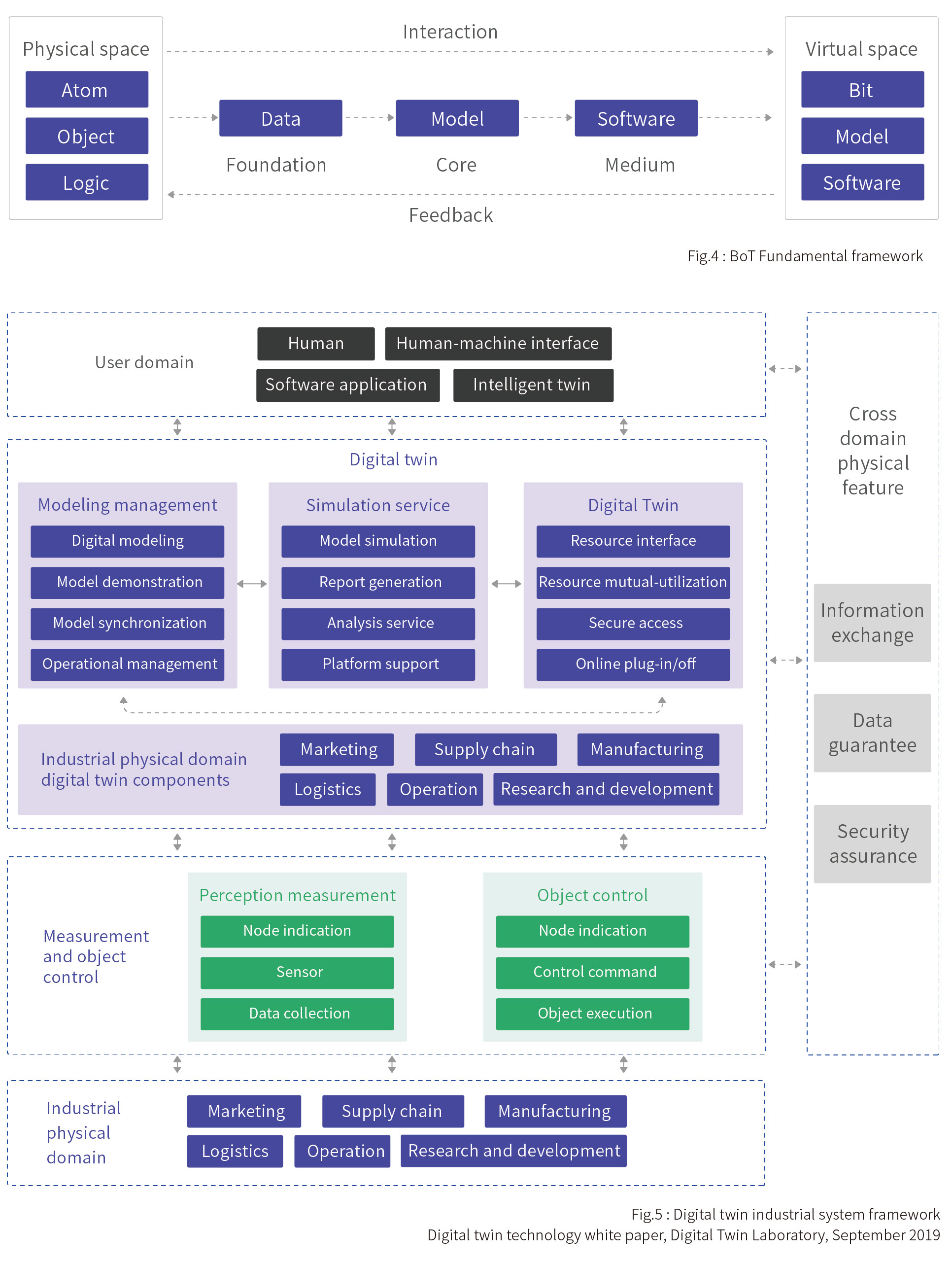
Digital twin refers to a virtual copy of the physical world by using sensor updates, physical models and fleet history integrated with multi-science, multiphysics, multiscale to simulate reality. It is obvious that there are two sides to the perceptual world: the digital twin represents virtual and simulation technology, while IoT stands for physical techniques. If IoT is the first step of perceiving the real world, then the digital twin is the process of digitalizing the real world.
Figure 4 Digital Twin Fundamental Concept Model
| Interaction | ||||
|---|---|---|---|---|
| Physical space | Virtual space | |||
| Atom | Data | Model | Software | Bit |
| Object | Foundation | Core | Medium | Model |
| Logic | Software | |||
| Feedback | ||||
Although the concept of digital twin was introduced by Professor Michael Grieves of the University of Michigan in 2002, the technique has only been applied on a small scale for a long time. To expand the scope of digital twin applications, it must be supported by real-world medium and massive corresponding techniques. We discovered that with the gradual maturity of base layer complemental technique like IoT and corresponding techniques such as cloud computing, big data, IoT and AI, in-depth development and larger-scale application of digital twin have begun to accelerate.
That digital twin can reinforce IoT, a base layer complemental technique, is that it could establish analysis and prediction of the whole picture based on limited data and information by modeling and simulating the real world in a virtual space. Digital twin has greatly improved the complexity and operational efficiency of IoT management platform and ecosystem, as well as increasing the efficiency of IoT device deployment.
Figure 5. Digital twin industrial system framework
Source: Digital twin technology white paper, Digital Twin Laboratory, September 2019
In terms of application, the digital twin concept is first applied in manufacturing and IoT application in manufacturing is also in a leading position. Hence, the best current practice of digital twin and IoT applications is in the manufacturing industry, for example, product development and design, intelligent manufacturing and additive manufacturing.
In addition to the manufacturing industry, the management efficiency issue of urban governance (intelligent campus, intelligent transportation and intelligent city) and business services (marketing, logistics and after-sales service) will be addressed accordingly. Especially in improving the overall operational efficiency of managing three-dimensional urban space, digital twin city will gradually mature with the establishment of basic IoT sensing networks and communication networks in urban space. Once a real-time connection between the digital world and the real world has been established, the physical urban life cycle will be digitalized, modelized and visualized for the governor. Municipal administration, transportation, security, public affairs, etc. will be featured with timeliness of sensor monitoring, interactivity of information transmission, scientificity of development policies and intelligent control and management.
4. Brain-computer interface may profoundly change the relationship between human and machine
Brain-computer Interface is a pathway between the human brain and external devices such as intelligent hardware and network, it enables signals from the brain to directly interact with a computer and composes a bidirectional closed-loop control. The brain sends a command to control an external device and the external device gives feedback to the brain, which allows the brain to adjust control strategy in real-time to maintain system stability. There are four steps to achieve the consequence: signal collection, decoding, encoding and feedback.
Figure 6 Basic structure of brain-computer interface
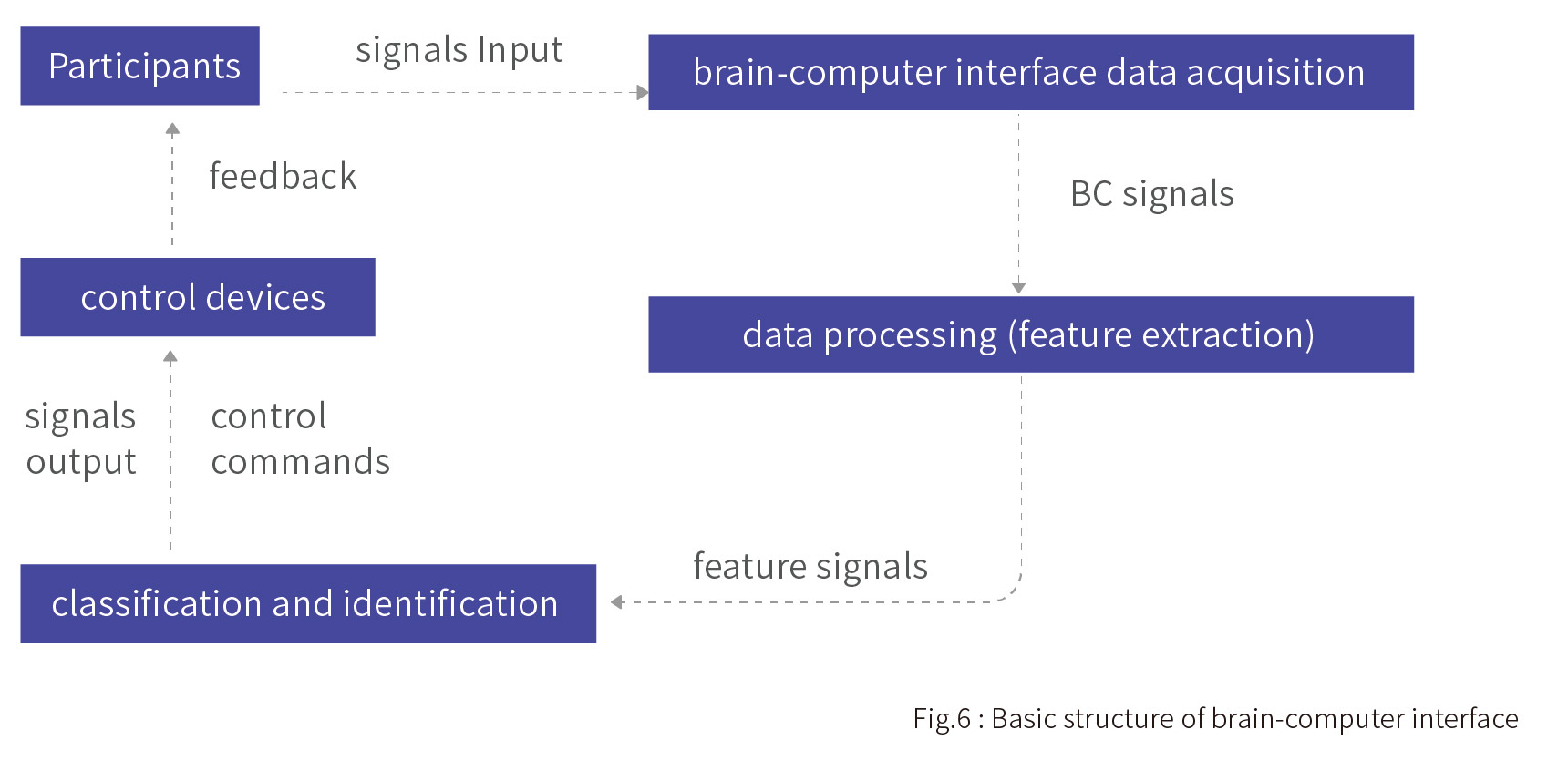
There are two types of Brain-computer interface, invasive and non-invasive, depending on how the information was collected. Invasive brain-computer interface implants electrode array into the brain by surgery to detect neuronal activity and encode the relevant information. Non-invasive brain-computer interface uses an external device in contact with the scalp to detect signals of the brain. In 2020, both approaches have achieved major breakthroughs as a result of the efforts that academia and technology companies have made.
Neuralink is the representative in the field of invasive brain-computer interface, and the company revealed the latest generation of brain-computer interface product: a coin-sized chip that can be implanted into the brain and a precision robot to surgically install the chip underneath the skull. The chip can read brain activity and pulse, and also transmit the data wirelessly. The surgical robot makes the implanting process much easier and safer.
In the non-invasive brain-computer interface field, BrainCo showcased the human brain intelligent operating system (Brain OS) and two pre-research products at Harvard University on August 27, 2020. There is no need to implant a chip. Participants only put on a wearable device so it can collect and process electroencephalography (EEG) and electromyography (EMG). Regarding the two pre-research products, one is to use brain wave imaging technology to restore the picture seen by the human eye or imagined in the brain, the other one is using an EMG control system to collect EMG signals of the forearm muscle group to process and determine participant’s intention.
The ultimate goal of the brain-computer interface is to enhance human capability. It is possible to integrate signals from human brain with IoT network devices to achieve a new generation of Brain-machine IoT (BMIoT) through a brain-machine interface (BMI) whether it is an invasive or non-invasive brain-computer interface. Human beings might be able to interact with intelligent devices through their minds, that would tremendously alter the relationship among users, smart home, vehicle system and smartphones. Brain controlling everything will no longer be a scene in science fiction films.
5. Quantum technology has the potential to profoundly impact IoT in terms of computing power and security encryption but has greater uncertainty
On October 17th, 2020, The Central Political Bureau of the Communist Party of China held the 24th workshop on research and prospect of quantum technology to emphasize the importance and urgency of quantum development and reinforce its strategic planning and system layout.
There are three aspects of quantum technology: quantum computing, quantum communication and quantum measurement. Among them, quantum communication exploits the quantum superposition state or quantum entanglement effect of microscopic particles for information or key transmission, which enables two main methods: quantum teleportation and quantum key distribution. Quantum computing is the most challenging goal of quantum technology, and it has been deemed as the top point of the next generation of the information industry.
Quantum computing is the core development of next-generation computation to improve computing power when Moore’s Law is about to fail. Quantum computing uses a quantum qubit as a basic computing unit and uses physical properties such as quantum superposition states and entangled states to achieve an exponential increase in computing power.
To implement quantum computing, quantum computers and quantum algorithms are the two most important parts. In terms of quantum computers, Google, IBM, Intel and other industrial companies are actively engaged in joint researches on key technologies with academic institutes, with the main focus on superconducting quantum computing.
However, the commercialization of superconducting quantum computers still has a long way to go.
Figure 7. Superconducting quantum computing current status
| Institution | IScale | I2-qubit gate fidelity | ITechnical advantage |
|---|---|---|---|
| Google + UCSB | 72(22) qubits | 99% | Advance in micro fabrication, quantum software and hardware; better technological skills |
| MIT + MIT Lincoln Lab | 5(5) qubits | 99% | Advance in micro fabrication, quantum software and hardware; better technological skills |
| IBM | 50(20) qubits | 96% | Advance in micro fabrication, quantum software and hardware |
| TU Delft + Intel | 49(8) qubits | 96% | Advance in micro fabrication, quantum software and hardware |
| Yale University | 4(4) qubits | 99% | Advance in micro fabrication, quantum software and hardware; focus on bosonic qubits |
| rigetti | 50(20) qubits | 95% | Advance in micro fabrication, quantum software and hardware |
Source.Quantum computing development white paper, CCID, September 2019
It should be noted that although the computational speed of quantum computers is faster than classical computers theoretically, it is fundamentally different from classical computers in terms of logic and readout methods, thus specific algorithms are needed to realize the logical operations.
While the majority of the computational problems have not had superior quantum algorithms than their classical counterparts, theorists have developed efficient quantum algorithms for some specific problems, such as prime factor decomposition (Shor algorithm), disordered search (Grover algorithm), and solving special linear equations within logarithmic complexity (HHL algorithm).
Particularly, the HHL algorithm not only satisfies the computational requirements in AI such as fitting, inference and optimization but simply requires a small-scale quantum computer with 50-100 qubits to demonstrate its supremacy. Hence, it has been considered as a key point to break through the bottleneck of AI computing power utilizing quantum computing.
At the current stage, the convergence of quantum computing and IoT has not been studied much yet. The promising direction is leveraging quantum computing to achieve the computational acceleration of specific AIoT algorithms.
4.4 The Widespread Adoption of the ToB Industrial Internet of Things (IIoT)
The Internet of Things (IoT) is a typical niche market with the feature of fragmentation. As an empowering technology, it almost has been tested and adopted in various industries.
Different from the rapid development of the Consumer Internet of Things (CIoT), the IIoT is still exploring the large-scale application although it started earlier. The industry standards of Internet of things are not unified, and the integration, accuracy and cost performance of the overall solution need to be improved, which also restricts the popularization of IIoT to some extent.
Generally speaking, on the one hand, there is an apparent negative correlation between economic values generated by the IoT and “population density” within the application scope. In these specific areas with "low population density", if markets are mature, general volume and price insensitive, the IIoT is easier to popularize.
On the other hand, the widespread adoption of the IIoT in commerce is related to whether its clients have the willingness and ability to pay at the same time. As for clients’ demands such as compliance, risk avoidance, efficiency improvement and cost reduction, the IIoT is expected to play an important role in asset management and hedging.
In summary, in the Chinese market, the willingness of paying for IoT services is based on demands in this order: compliance>risk avoidance>increased efficiency> cost reduction. The development path of applying new technologies in China is usually from serving governments(G), businesses(B) to customers(C). Industries such as civil affair management, energy (including electricity and fossil fuels), traffic-related fields (including vehicles, transportation and logistics), real estate, communications (including communication devices and telecommunications companies) have the stronger ability to pay.
The Negative Correlation Between the Economic Values of the IIoT and “Population Density”in Specific Areas
Common communication networks require high population density, but it is not the case for the application of the IoT. Due to the low population density in vast territories, clients always tend to use the IoT to reduce time and economic cost caused by traffic. Or they hope to realize self-service operations to reduce business and labor costs by decreasing unstable influences from migration.
Taking China as an example, common communication networks serve 99% of the population within a relatively small territory (around 30% of the territory based on relevant data). The remaining territory and 1% of the population are the important reason why clients are willing to pay. Due to the low returns of investment, companies are not willing to offer services to the remaining territory and the 1% of population with low prices. In China, governments and state-owned enterprises pay for services offered to these users. In theory, it is a better solution to use the IoT to serve them.
Figure 8. Progress of New-built 3G/4G Base Stations by China’s Three Major Telecommunications Companies (Ten Thousand Stations)
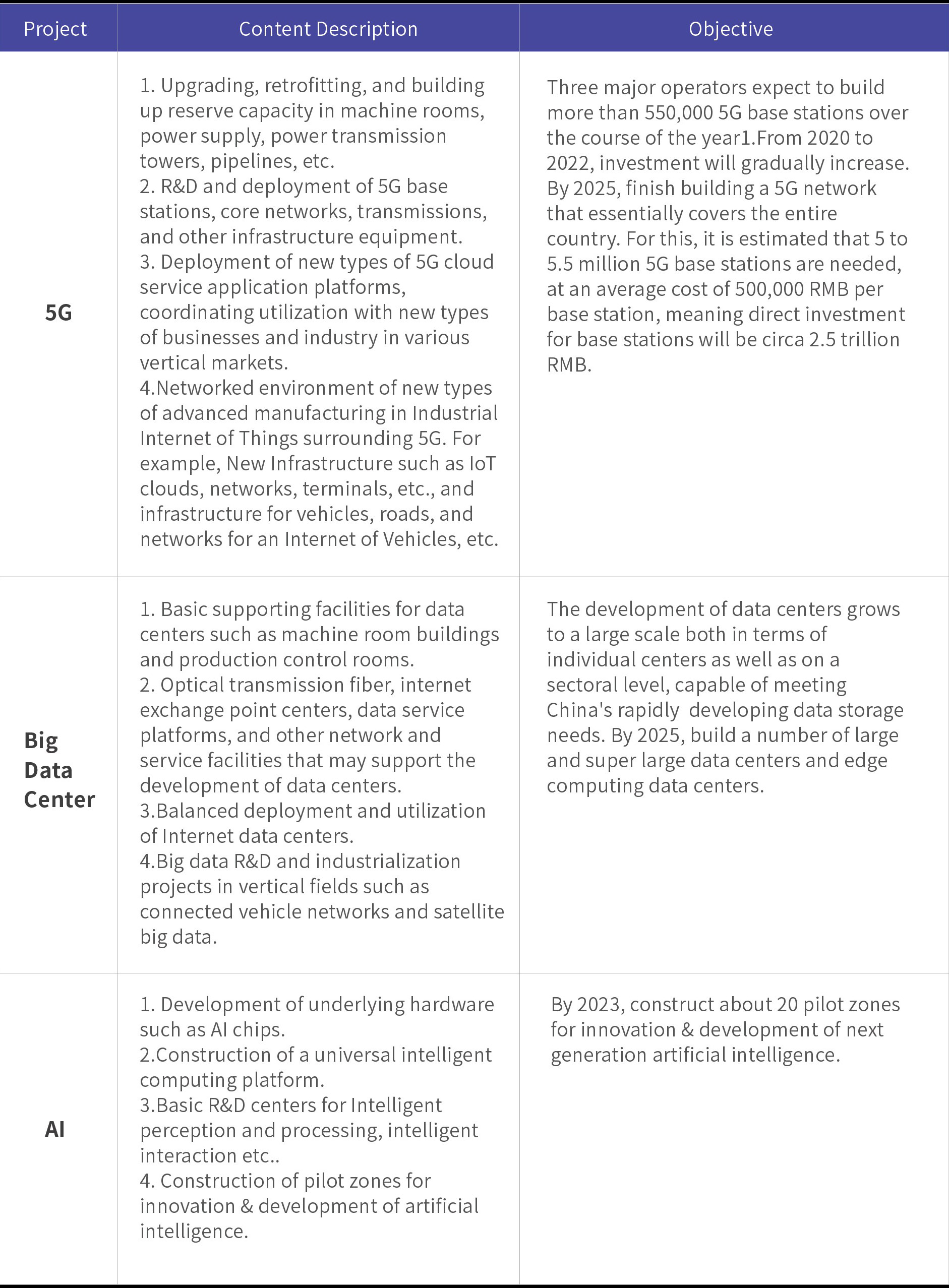
Source: Wind, Guosen Securities Economic Research Institute
Taking the smart water meter industry as an example that has been rapidly promoted in recent years . According to calculation, the costs of manual water meter reading in many regions including Shenzhen are lower than that of full application of smart water meters. There is a negative correlation between costs of manual water meter reading and population density. Instead, in some remote mountainous areas with low population density, the IoT generates more direct economic values. Taking the project of “Internet Plus Village Water Supply” in Pengyang County in Ningxia as an example in 2018, it has built around 40,000 IoT testing devices through three years, covering 7000 km of water supply networks in the whole county. Finally, this project has achieved a reduction of 50% in management, a decline of 1.2 million yuan in annual costs of human labor, a drop of 50% in operation and maintenance costs, and a decrease in the county pipe network leakage rate from 40% to 20%.
Figure 9: Calculation of The Market Size of Water Meters in China from 2010 to 2021 (Unit: One Hundred Million yuan)
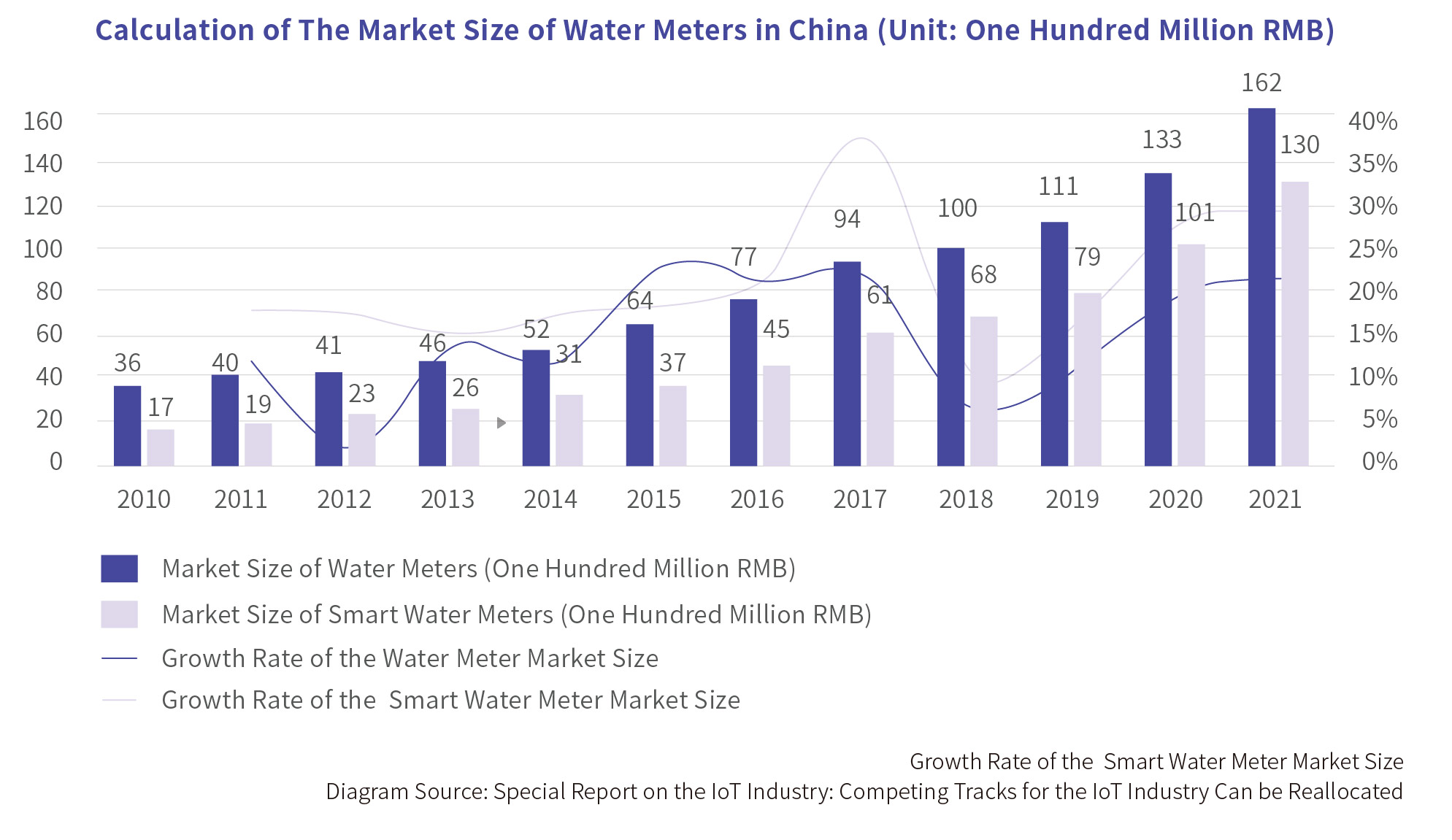
Data Source: Intelligence Research Consultation, Ningbo Water Meter Co., Ltd. Prospectus, Analysts from Guosen Securities Economic Research Institute
The Willingness of Paying for IoT Services: Compliance>Risk Avoidance>Increased Efficiency>Cost Reduction
In recent years, many IoT application cases take “cost reduction and efficiency improvement”and “income increasing and expenditure decreasing”as their marketing points. However, in practical applications, the payment for compliance and risk avoidance is likely to be generally higher than that for cost reduction and efficiency improvement.
Compliance includes direct or indirect compliance with government regulations and internal rules of organizations. It is easier to understand the direct obedience. For example, some government agencies require smoke detectors to be internet-linked. Also, in some big companies, only some senior staff have the access to designated servers. As for the indirect obedience, it can be commonly seen that some companies in the industry manage themselves through some IoT technologies,and other companies have to follow the compliance.
Risk avoidance mainly includes liability hedging and asset hedging. As for liability hedging, for example, shopping malls need to make sure that water and air are not poisonous and electric power and heating companies need to guarantee people’s safety when people use their services. Generally speaking, these accidents are often caused by external reasons. As for asset hedging, for example, companies need to prevent the theft from their important assets and protect their IT systems. Costs caused by these accidents are usually higher than those of using a new technology or service. Also, these accidents will have a significantly negative impact on the career of the responsible person.
In the practical business environment, compliance and risk avoidance can be converted. Risk avoidance driven by negative incidents, will be required to convert into compliance when negative impact becomes large enough.
“Income increasing and expenditure decreasing”and“cost reduction and efficiency improvement”can only been achieved after completing the application of the IoT, therefore, it takes a relatively high amount of time and energy to persuade customers to accept the IoT. On the whole, clients in a mature, large and price insensitive market, are more willing to use the IoT to increase revenue, decrease expenditure, and improve efficiency. As mentioned above, in low population density areas or scenarios, the IoT is more likely to play the role of "reducing costs and increasing efficiency", especially the latter role.
According to actual orders, most of big companies have urgent demands in risk avoidance and internal compliance and they prefer to pay for the customized solutions in the current Chinese market. It is possible to increase revenue, decrease expenditure, and improve efficiency through customized products and services, or through relatively standard industry solutions.
Several Fields of the Widespread Commercial Application of the IoT in Vertical Markets
From an abstract perspective, the application fields of the IoT include asset management, remote management and predictive maintenance.
1. Asset management
Assets consist of tangible and intangible possessions and resources that are important to the business development, including large-scale engineering equipment in construction, fleets of the logistics companies, pipelines of oil and gas companies, transmission lines of electric companies, server chips of operators rooms and goods of retail companies. Almost all companies will invest a certain amount of human, material and financial resources in asset management, but through the IoT, they can achieve more efficient inspections of safety and compliance, improve management efficiency and reduce management expenses. Generally speaking, there appears to be a close relation between the payment ability of customers and the prices of assets.
2. Remote management
The objects of remote management include both assets and personnel. In the movement scenario is the remote management for personnel required and in low population density areas is the remote management for assets necessary. For example, it is necessary for the logistics industry to use remote management of drivers to avoid driving fatigue and traffic accidents. Taking the IoT solutions to power distribution as an example, managing equipment remotely with the IoT approach can accurately locate malfunctions in the first time without requiring repairs.
3. Predictive Maintenance
The shutdown of important equipment can cause huge economic losses to enterprises. Therefore, predicative maintenance technology has been used in these industries and scenarios for a long time by using relevant sensors, which aims at examining the real-time performance and status of equipment and understanding the functions of equipment so as to offer corresponding maintenance solutions in time. In recent years, predicative maintenance systems have been adopted in more fields apart from aviation and rail traffic.
Exploration of the Widespread Commercial Application by the IoT in Vertical Markets
As for the actual payment capacity, industries such as government affair management, energy (including electricity and fossil fuels), traffic-related fields (including vehicles, transportation and logistics), infrastructure and real estate, communications (including communication devices and operators) have the stronger ability to pay and serve as an important driving force in the innovation and application of the IoT.
1. Government Affair Management
As for smart government affair management, the commercial scale of internet-linked cameras has been developing fastest. According to Sunrise Big Data, in 2019, the number of global security cameras reached to 400 million, which is expected to be 550 million in 2020 and 800 million in 2021.
As for intelligent fire protection, smoke alarms need to be internet-linked. In May 2017, the Fire Department of the Ministry of Public Safety and Security proposed that “If the automatic fire alarm system is installed, it shall be connected with the remote monitoring system of urban fire protection”. In cities with relatively high GDP, there are other typical IoT projects such as intelligent traffic (intelligent parking lots and smart traffic management), public utilities (intelligent lighting) and environmental surveillance.
2. Energy
The energy field is one of the main forces to explore the large-scale application of the IoT, which is applied in almost all business links. With regard to the electricity generation, some companies has been trying to realize predictive maintenance by means of the IoT in recent years and several projects concerning has been launched in 2020. As for the electricity transmission, smart cameras have been widely used in the power system, such as real-time monitoring and alarm for pipeline leakage. As for the electricity consumption, it has been showed that 490 million smart electricity meters have been installed in current electricity grids and some of them can interact with the external devices. The new energy charging pile will also be equipped with the communication function, which will be the main force of application increment in the IoT in the future.
3. Traffic-related Fields
In the traffic-related fields, the IoT is typically applied in asset management and remote management. Asset management focuses on managing the operation status of transportation vehicles and remote management focuses on monitoring and providing services for drivers, together to achieve the risk avoidance for both asset and personnel, efficiency improvement, cost reduction, etc.
The IoT has been used for asset management for a long time. For example, predicative maintenance is typically used for airplane engines and the high-speed railway.
Freight is a typical example of the remote management application. Data shows that there are more than 10 million freight vehicles and 30 million transporters in China. The number of accidents in the Chinese road freight industry is 3.7 per million km, which is around 37 times that of the United States. With the application of the IoT, the traffic on the road can be monitored by ADAS cameras, which can detect the dangerous driving behavior of drivers. In future, with the widespread use of V2X Internet of vehicles(IoV), traffic-related fields will be the most potential market of the IoT.
4. Infrastructure and Real Estate
The IoT has been applied in the infrastructure field for many years. For example, there are 200 to 300 bridges in China equipped with IoT sensors to monitor their conditions, with costs ranging from 1 million to 10 million yuan. The Humen Pearl River Bridge has attracted much attention this year. At the beginning of its design, GPS displacement, strain real-time, long-term deformation, overload and other monitoring systems have been added to monitor the bridge safety.
As for real estate construction, in 2018, the number of functional elevators in China reached to 6.2783 million. More elevators have been linked to the IoT, which has laid a foundation for businesses such as elevator media and advertisement, indoor delivery by robots and elevator insurance. Meanwhile, the number of smart community has been 164,400 with 790 million urban population in China. In 2020, the bidding and procurement of smart communities are gradually increasing with the joint promotion of local governments, developers and properties. In the field of commercial real estate, IoT companies offer energy-saving solutions to keep winning clients.
5. Industry
In fact, In addition to the above fields, the IoT has been used most widely in the industrial field. The field hopes that the detection and control solutions based on the IoT can further strengthen predicative maintenance to improve machine operation efficiency and reduce operation downtime, so as to reduce costs and increase efficiency.
However, startups in the IoT field usually get revenues of around tens of millions yuan and the growth rate of the annual revenues is 2-3 times. Many enterprises are still in the loss, and a few companies' income level is more than 100 million yuan. The Textile IoT has attracted lots of investment in recent years, but it is not sure the amount of return investors can get from their investment.
6. Retail
The retail sector, being highly expected by the IoT, hope to improve the cost-effectiveness and customer experience in stores by means of the IoT. Lots of large major chain supermarkets have used digital labels. Although vending machines are popular as the new retail , few companies in the industry chain are making money. The retail industry has low profit rate, so it is relatively sensitive to prices. That means it is not easy to achieve a wide application of the IoT in a short term. With the IoT, the retail companies can record customers’preference and create a data funnel similar to online shopping, which depends on optimizing the input-output ratio of products and services of the IoT.
The IIoT is definitely valuable. Over the past several years, the application of RFID and digital labels have gained the real intelligentization in the retail industry for the first time.
However, the wide application of the IIoT still faces some challenges. There is a negative correlation between the cost efficiency of the IIoT and population density. The IIoT is not cost-effective in the areas with low population density and in this case, governments and non-profit organizations will pay for IIoT services. In the unmanned or less humanized scenarios, the marketing points of cost reduction and efficiency improvement are not attractive to clients because low-cost human labor is sufficient in labor markets under the background of global migration. Therefore, IIoT companies need to discover more application scenarios with client’willingness and capacity in payment into consideration.
4.5 Industrial Internet Platform Empowers Manufacturing Upgrading
Overall Situation of Industrial Internet Platform
In the past three decades, the global Internet industry has been growing exponentially, giving rise to a number of tech giants with high market value, such as Microsoft, Amazon, Facebook, Google, Alibaba, and Tencent. Currently, as traditional industrial manufacturing is plagued by rising costs and diminishing margins which calls for urgent transformation of the entire industry, the development of Internet is entering a new stage - the industrial Internet.
International giants led by GE, Siemens, SAP, PTC have joined the race with different strategies, using their edges in technology and products to capture territory in the battle of industrial transformation.
Chinese companies such as Haier, Sany Heavy Industry, China Aerospace Science and Industry Corporation, Foxconn, Xuzhou Construction Machinery Group are also taking actions to follow the trend, embarking on a new journey of industrial digitalization and intellectualization. Ten “cross-industry and cross-sector” platforms have emerged as a result of their efforts.
Under the leadership of these leading companies, the main forces of various subdivision fields also continuously participate in the transformation process, playing a part as the precious “third pole” in industrial Internet.
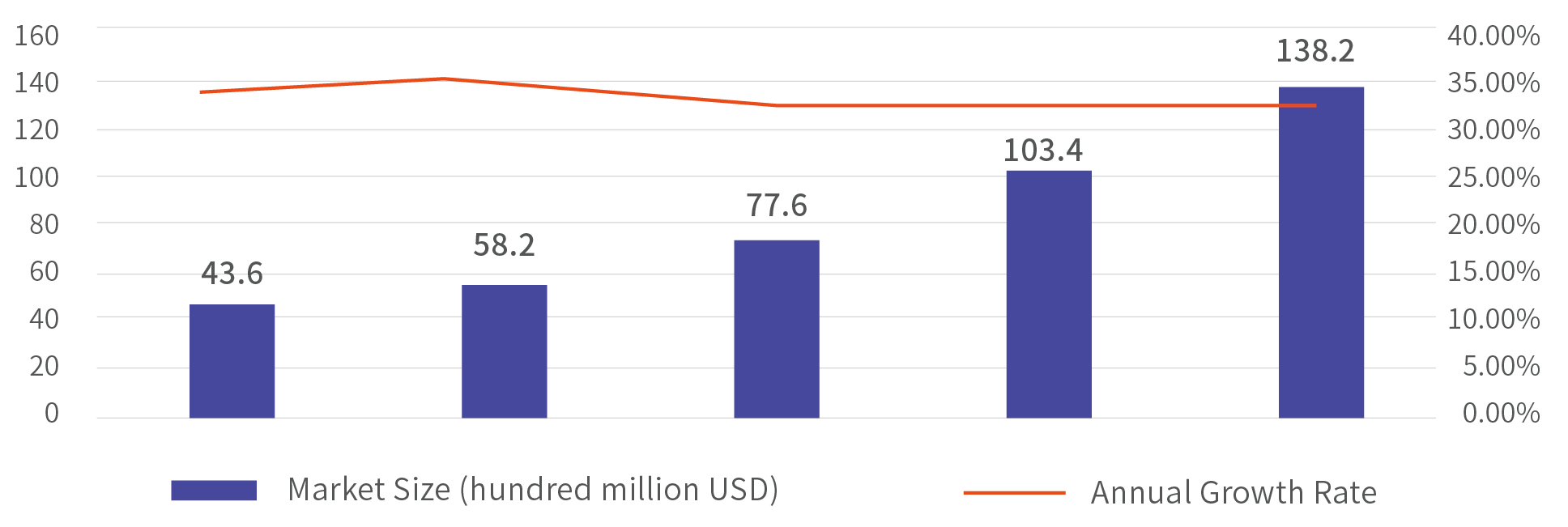
The global industrial Internet platform market continues to show rapid growth. According to MarketsandMarkets, the world’s second largest market research institution, the global industrial Internet platform was valued at over USD 4.36 billion in 2019. Driven by preferential policies and market forces that accelerate materializing application scenarios of industrial Internet platform, its market value is expected to reach USD 13.82 billion in 2023, with a compound annual growth rate of 33.4% from 2019 to 2023.
Nevertheless, right now, industrial internet platform is still in the early stage of development, and it has a long way to go before it reaches maturity.
Figure 10. Market Size and Annual Growth Rate of Global Industrial Internet Platform
Source: Compiled by Chinese Institute of Electronics
Such considerable market size and opportunities will definitely attract more players from various industries. As the bond among industrial total factors, total value chain and total life cycle, how does industrial Internet coordinate industrial chains, allocate resources, reduce costs, and predict future changes through insight?
As a “new industrial base”, the industrial Internet platform is the top priority of the industrial Internet industry by connecting equipment and applications.
According to the latest data of 2020 from China Academy of Industrial Internet, by June 2020, China has over 70 industrial Internet platforms with industrial and regional influence, with 40 million sets of equipment connected to the network; the number of industrial APPs has exceeded 250,000; in total, industrial Internet platforms have served nearly 400,000 industrial enterprises.
At the same time, China’s “new infrastructure” projects also add momentum to the development of industrial Internet, making it a popular field for innovation and entrepreneurship, and promoting its in-depth integration with various industries. So far, industrial Internet has been applied in multiple industries such as home appliance and 3C, automobile, petrochemical, iron and steel, clothing, machinery, etc. New models and forms of business are constantly coming up, including network-based collaborative manufacturing, management and decision optimization, remote O&M, mass customization, with the goal of cutting costs, improving efficiency and optimizing industrial chain.
When we trace its origin, we can find that the idea of industrial Internet originally originated in the United States, Germany and other western countries, where it is more often known as the Industrial Internet of Things, and the connectivity of devices and equipment is emphasized.
What’s different is that in the Chinese context, “industrial Internet” has wider connotations. It includes industrial mechanism and knowledge graph, focuses more on the service side of industry, and sets the collaboration of industrial chains and the creation of industrial ecosystem as the goal. At present, it is thriving in China with the nation’s unique institutional advantages. Moreover, the COVID-19 epidemic in 2020 has inspired more enterprises to explore new paths of promoting digitalization, networking and intellectualization.
In addition, the complexity of the industrial Internet platform’s technology system, the diversity of application scenarios, and the variety of user needs indicate that the transformation and upgrading of industrial manufacturing can never be accomplished by a single enterprise alone, nor by a few enterprises together. For application in each industrial scenario, it requires the transformation and upgrading of the entire industrial ecosystem.
Four Types of Participants in Industrial Internet
Home to many well-known industrial Internet platform providers, Europe, America and Asia are the focal areas for the development of industrial Internet platforms. In general, there are four main types of participants, namely manufacturing enterprises, industrial equipment providers, industrial software and service providers and information and communication enterprises.
In Europe and the United States, most industrial Internet platforms are developed by industrial equipment providers and industrial software and service providers.
For example, industrial equipment providers mainly include GE, Honeywell, Cisco, ABB, Siemens, Schneider Electric, and Rockwell, etc. GE created the Predix platform, and in 2018, it expanded its digital business with launch of USD 1.2 billion industrial Internet software company, setting Predix, asset management, manufacturing execution systems and other digital business as an independent division; during Hannover Messe 2016, Siemens launched the open IoT operating system MindSphere; ABB Group launched ABB Ability, an industrial IoT platform offering integrated solutions for industry, electricity, transportation and other vertical markets.
In terms of industrial software and service providers, major players include SAP, PTC, Amazon and Microsoft. SAP’s Leonardo IoT is “a key and comprehensive technology enabler for industrial IoT and Industry 4.0 by facilitating digital transformation”, which allows its customers to collect information from machines, products, supply chain, consumers and other sources; since 2013, through a series of strategic M&A, PTC has gradually built up an end-to-end industrial Internet platform, integrating Axeda, ColdLight, Vuforia and Kepware and other products into ThingWorx platform.
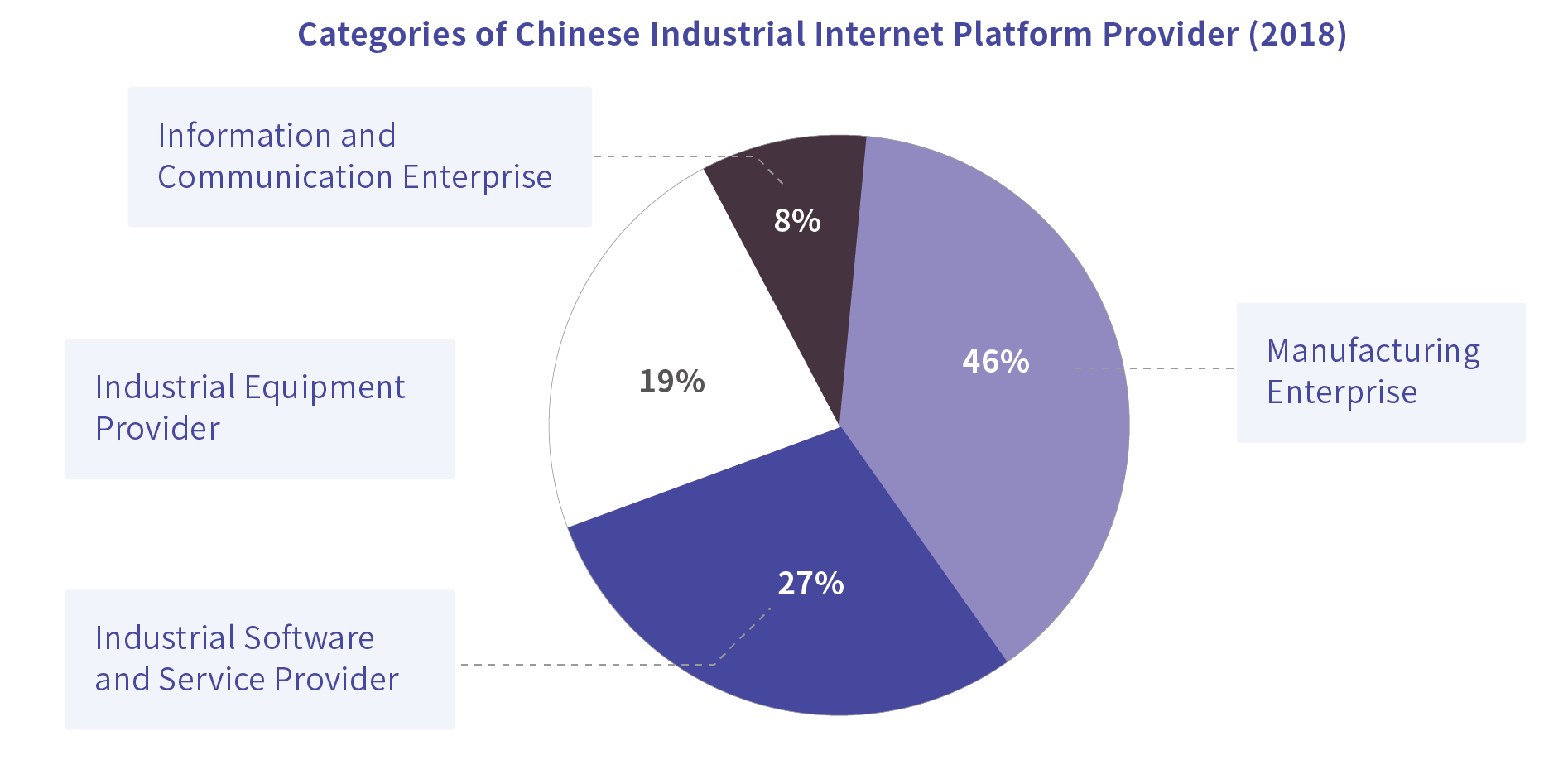
In China, however, nearly half of the local industrial internet platforms are developed by manufacturing companies. According to China Academy of Information and Communication Technology and other publicly available data, in 2018, 46% of domestic industrial internet platform providers were manufacturing companies, 19% were industrial equipment providers, 27% were industrial software and service providers, and the remaining 8% were information and communication companies.
Figure 11. Categories of Chinese Industrial Internet Platform Providers (2018)
Source: China Academy of Information and Communication Technology and publicly available data
Among industrial internet platforms developed by manufacturing enterprises, Haier’s COSMOPlat features the mass customization model, and the platform completed two rounds of funding in 2020, raising tens of millions of RMB in each round. Foxconn Industrial Internet Co.,Ltd., a subsidiary of Foxconn, introduced Fii Cloud. PCITC launched ProMACE, an industrial Internet platform that expands the group’s business from petrochemical and coal-based chemical to salt-based chemical, fine chemical, biochemical and other segments.
As for industrial software and service providers, Inspur has created Yunzhou Industrial Internet, with Inspur Cloud ERP and Quality Code as its core competency. UFIDA developed Smart Industrial Internet Platform in 2017 to help industrial enterprises achieve lean manufacturing and smart manufacturing.
Among Chinese industrial equipment providers, Sany Heavy Industry incubated IRootech Technology, the entity behind ROOTCLOUD industrial IoT platform. China Aerospace Science and Industry Corporation founded CASI Cloud in 2015 as the division for industrial Internet platform, which developed INDICS, an industrial Internet platform featuring cloud manufacturing. XCMGInformation, a spin-off of Xuzhou Construction Machinery Group founded in 2014, independently developed the Hanyun Platform in 2016.
Meanwhile, information and communication enterprises such as Huawei, Alibaba, Tencent, Tuya Smart are behind some of the industrial Internet platforms on the market. Tencent Cloud’s WeMake, for instance, covers the whole business lifecycle from research, production, supply, sales to service, combines their own industrial know-how with that of other partners within the ecosystem, and offers customized solutions for industrial enterprises.
Application Practice of Industrial Internet Platform
Compared to the traditional Internet, industrial Internet is more reliant on a particular industry, and only when the platform is closely coupled with the specific manufacturing process, can it generate more value and serve all aspects of industrial manufacturing.
In general, manufacturing process can be divided into two categories: discrete manufacturing and process manufacturing.
Discrete manufacturing, which mainly includes 3C home appliances, automobile transportation, clothing manufacturing, etc., are all done at one station before the next station is connected through a series of interruptible processes to finally realize the output of the product.
In process manufacturing, such as the production of iron and steel, petrochemicals, coal-based chemicals, salt-based chemical, pharmaceutical, electricity, and cement, raw materials are subject to a series of physical and chemical reactions and converted into finished product, and the process is irreversible and continuous.
The application practice of industrial internet platforms in production process is mainly concentrated in industries with higher level of underlying digital technology and more emphasis on quality, energy efficiency and environmental protection. Through effective management of various production factors including equipment, production lines, workshops, as well as various functional departments, the on-site response time and productivity are improved, quality is raised, and costs are reduced.
1) Discrete manufacturing
At present, the application of industrial Internet platform in discrete manufacturing industry is mainly concentrated in vertical markets such as 3C home appliance, automobile, and food and beverage. Industrial Internet platform is used to pool the resources of various players in the industrial chain and value chain, promote transformation in business and innovation in business model, optimize resource allocation, create synergy through collaboration, and ensure the rapid update and iteration of products.
3C Home Appliance
China’s Midea, Haier, Hisense, Changhong, TCL, Fotile, Gree and other Chinese enterprises have successively become the “Smart Manufacturing Comprehensive Pilot” Projects of the Ministry of industry and Information Technology of China. Among them, more enterprises have been selected for demonstration programs at provincial and municipal level. Meanwhile, based on extensive expertise and rich experience in the appliance manufacturing industry, Haier, Midea and Siemens have incubated their own industrial Internet platforms respectively, which offer integrated solutions covering the whole process from user interaction, module procurement, smart production, precision marketing, smart logistics, and smart services to end users’ smart life.
At present, Haier’s COSMOPlat has built 15 smart interconnected factories around the world, covering the production of air conditioners, refrigerators, washing machines, water heaters, dishwashers, range hoods and other products. Midea Group established a subsidiary Midea Cloud as the entity for its industrial Internet platform M.Iot and IoT services. TCL set up Getech, providing external mart manufacturing services. IoT platforms specialized in smart home also began to set foot in industrial Internet. In the first half of 2020, Tuya Smart launched an industrial Internet platform “Cloud Manufacturing” that is specially designed for the manufacturing industry, with the aim of helping IoT factories to reduce failure rate of equipment, and raise yield and productivity. So far, the platform has been adopted by over 5,000 manufacturing enterprises.
Automobile Traffic
The automobile industry presents a scenario where resource matching and collaboration involve more data and require more complex analysis. Volkswagen, BMW, Toyota, Ford and other well-known international auto companies, have been combining their own advantages in auto manufacturing, parts and components, automation and IoT with platforms developed by Siemens, Bosch and ABB, so as to fully integrate and better manage the data and businesses on the automobile industry chain and value chain.
Meanwhile, Chinese automakers such as SAIC, Dongfeng and FAW have also entered into partnership with platform providers such as XCMG Information, CASICloud, Inspur and UFIDA to build platform-based ecosystem around leading enterprises, linking upstream and downstream players, and actively exploring innovative application of industrial Internet platform in auto manufacturing.
Volkswagen uses Siemens’ MindSphere platform to connect and integrate the data from mechanical equipment and production systems of 122 factories, and to improve and standardize production systems and processes based on the platform’s big data analysis. On July 9, 2020, Beijing New Energy Automotive Co., Ltd. and Siemens signed a framework agreement for cooperation, joining hands to build a high-end smart manufacturing base and smart innovation studio, and exploring the application of industrial big data and cloud applications based on Siemens’ MindSphere platform.
2) Process manufacturing
For the process manufacturing industry with large production scale and heavy asset equipment, such as steel, petrochemical and so on, the industrial Internet platform offers equipment and product management services throughout the entire life cycle and makes online status monitoring, fault detection and diagnosis and predictive maintenance of industrial equipment and product status.
Steel
In recent years, application of industrial Internet platform in the steel industry has gradually materialized. Siemens, Schneider Electric, IBM, Microsoft and other platform providers have formed industry-specific knowledge base and model library, and partially applied industrial Internet platform in single aspect such as equipment condition monitoring and optimization, and fault detection and diagnosis. In China, HBIS, Baosteel and JISCO have been actively experimenting with remote O&M based on industrial Internet platform. By working with platform providers such as Inspur, Huawei and Bonc, they have preliminarily realized remote monitoring, fault diagnosis and gained support in other services.
In order to detect and report equipment failure in real-time and minimize downtime, JFE Steel introduced the recovery support system to its production lines in all six steel production bases in China. Based on IBM’s Watson, the system is specially designed for steel plant, enabling maintenance personnel for quickly and effectively search for the previous cases and relevant information needed for recovery and speed up repair.
Development Prospects of Industrial Internet
Currently, industrial Internet is rapidly penetrating into various industry segments. Meanwhile, it is noteworthy that industrial Internet platform is a complex with both industrial technology and information technology, and therefore building a platform requires solid support in basic technology. As few companies reside at the intersection of key technology and the targeted industry, collaboration with different platforms has become the dominant trends.
For instance, ABB Ability works with Microsoft’s Azure to leverage the latter’s capacity in cloud and big data for cloud storage, centralized management and rapid processing of ABB’s data in equipment O&M. ABB Ability also adopts IBM Watson’s AI function to analyze real-time images captured in the manufacturing process to identify defects.
The extensive participation of enterprises across the world has accelerated the development of the entire industry and ecosystem of industrial Internet, but the uneven quality of technological innovation has brought new problems.
European and US’s enterprises have been leading the world in graphical modeling of thing model, highly available and scalable architecture, machine learning modeling, new AR/VR with human-machine interaction, etc., while China is still in want of breakthroughs in indigenous core technologies. The gap in technological capability and efficiency between enterprises from different parts of the world is even wider when it comes to a particular scenario.
The integrity of developer community and ecosystem built by various platforms around the core of industrial Internet also varies, so does the training system for interdisciplinary talent. The development of industrial Internet platform is iterative and incremental. It is also a long-term process that requires constant and considerable investment for both preliminary platform building and later promotion. In China, expenditure for platform building is covered mainly by the enterprise itself or government subsidies, and as a large number of small and medium-sized enterprises face financial pressure, the critical task of platform building is far from accomplished.
In terms of application, right now, industrial Internet is mainly adopted for equipment condition monitoring. However, the core of the manufacturing industry lies in the innovation of the value chain, which takes shape along the product’s life cycle. Industrial Internet should be made full use of to connect different links on the value chain, including “research, production, supply, sales, and service”, and to realize the fundamental business goals of improving quality, reducing cost, and increasing efficiency.
In terms of business, platform enterprises should take into consideration not only the technology evolution and product generalization, but also how to delve into the field based on the different characteristics of vertical industries, and they also need to think how to build and promote a cross-industry and cross-sector ecosystem, and whether to convert to the business model of “software as a service”.
With stronger foundation of equipment, production lines, factories and digital capability, leading enterprises in various subdivisions are dominating the application scenarios of platforms, while small and medium-sized enterprises are still exploring. As platforms grow rapidly and are used in more industries and scenarios, the existing academic qualifications and vocational education system cannot meet the personnel demand from platforms, and countries across the world will be confronted with the severe challenge of the lack of interdisciplinary talent.
As industrial Internet platform quickly evolves from an abstract idea to materialized projects, innovation and competition around these platforms will intensify. In 2021, based on actual demand, all kinds of platform providers will promote ongoing innovation in platform technology, functional iteration and business model, and eventually, a few will stand out as the leader, guiding the future development of the industry.
4.6 New Infrastructure Will Accelerate the Development of AIoT Industry
During the outbreak of COVID-19 pandemic which began in early 2020, new products and technologies, such as AI infrared temperature measurement equipment, smart positioning, smart mask and smart community have emerged rapidly. The demands for smart devices that are intelligent, contact-free, remote-controlled, and interconnected from the government, enterprises and consumers have been growing explosively. Obviously, under the New Normal, “new infrastructure” is going to become the mainstream of 2021.
1. “New Infrastructure” Will Transform the Technological Advances into Productivity
In the past decade, China has made digital economy as a national strategic priority by putting forward a series of significant development plans including the Outline for the National IT Application Development Strategy, the National Information Technology Plan and the Guideline on Emerging Sectors of Strategic Importance during the “13th Five-Year Plan”. The construction of new infrastructure, represented by 5G, IoT, industrial internet and new energy, has been highlighted. From this year’s Report on the Work of the Government, the construction of new infrastructure is an important strategy to expand domestic demand and promote accelerated transformation of the economic growth model, aiming to transform technological advances into productivity, then into economic growth, so as to boost consumption, improve people’s livelihood and adjust structure.
The digital economy has become an important way to release the new economic energy, increase effective investment and stimulate new consumer demand.
In the first quarter of 2020, the value added of information transmission, software and IT services increased by 13.2% year on year. The new forms of business bucked the trend with growth, which shows that the digital infrastructure is urgently needed to increase economic growth.
On the March 4th, 2020, at a meeting of the Standing Committee of the Political Bureau of the CPC Central Committee, decision-makers stressed that the government will speed up the construction of major projects and infrastructure that have previously been planned, and will accelerate the construction of new infrastructure projects related to 5G networks, data centers and AI. By that date, 13 provinces and regions, including Beijing, Hebei, Shanxi, Shanghai, Heilongjiang, Jiangsu and Fujian published their 2020 investment list with plans for prioritized projects, of which 8 provinces announced the planned investment budge, a total of 33.83 trillion yuan (about 4.85 trillion U.S. dollars.)
At the press conference held on April 20, 2020, for the first time, Wu Hao, the head of the department of high-tech industry of the National Development and Reform Commission (NDRC), clarified the three aspects of “new infrastructure”:
The first aspect is information-based infrastructure on new generation information technology, such as telecommunication infrastructure exemplified by 5G, IoT, industrial internet and satellite internet; new technological infrastructure exemplified by AI, cloud computing and blockchain; computing infrastructure exemplified by data centers and intelligent computing centers.
The second aspect is converged infrastructure, referring to the deep application of technologies including internet, big data and AI to support the transformation and upgrading of traditional infrastructure, such as intelligent transportation infrastructure and smart energy infrastructure.
The third aspect is innovation infrastructure that supports scientific research, technology development and product development and serves for the public good. It includes key infrastructure projects for scientific technology, science and education and product innovation. With technological innovation and industrial transformation, the meaning of the new infrastructure will be broadening.
In China, in order to thoroughly implement the plan of building the new infrastructure and speed up the development of the mobile IoT, the Ministry of Industry and Information Technology (MIIT) issued Notice by the General Office of the Ministry of Industry and Information Technology of Furthering Advancing the Comprehensive Development of the Mobile Internet of Things (hereinafter referred to as the Notice), clarifying the requirements from the perspectives of network building, its scale, module price, data migration and application development.
According to the Notice, The evolution trend of the technical standards and industrial pattern of global mobile IoT shall be accurately grasped, the migration and network switching of 2G/3G IoT business shall be promoted, an integrated ecosystem of mobile IoT in which NB-IoT (narrow-band IoT), 4G (including LTE-Cat1, i.e. 4G networks of Speed Category 1) and 5G develop in a coordinated manner shall be established, and on the basis of deepening coverage of 4G network and accelerating the construction of 5G networks, NB-IoT shall be used to meet the needs of most low-speed scenarios, LTE-Cat1 (hereinafter referred to as “Cat1”) shall be used to meet the needs of medium-speed networking of things and voice, and 5G technology shall be used to meet the networking needs of higher speed and low delay.
By the end of 2020, general coverage of NB-IoT networks in main urban areas of cities above the county level and in-depth coverage in key areas shall be realized; the number of mobile IoT connections shall reach 1.2 billion; the convergence of prices of NB-IoT modules and 2G modules shall be promoted, and new IoT terminals shall be directed to migrate to NB-IoT and Cat1; a group of NB-IoT application benchmarking projects and NB-IoT application scenarios of million-level connections shall be created as well.
2. “New Infrastructure” Cannot Be Built Without the IoT
The seven areas of new infrastructure are 5G networks, ultra-high voltage, inter-city transportation and inner-city rail systems, new energy vehicle charging stations, big data centers, artificial intelligence, and the industrial internet, all of which cannot be developed without the IoT technology.
Among them, 5G-enabled IoT is expected be with low latency, high speed and connectivity. In this way, the IoT could evolve together with the 5G network; the deployment and operation of ultra-high voltage and new energy vehicle charging stations requires the distributed IoT monitoring and management. As for the railway system and big data centers, data collection, real-time monitoring and dispatch can only be done on the interconnected IoT devices. The AIoT (AI+IoT) is going to improve application layer technologies, perfect user experience and increase efficiency in data collection and analysis. The building of industrial internet industry platforms also relies on the “connectivity” of the IoT. Energy and transportation infrastructure also needs the IoT empowerment.
Figure 12. Contents and objectives of the “New Infrastructure Plan”
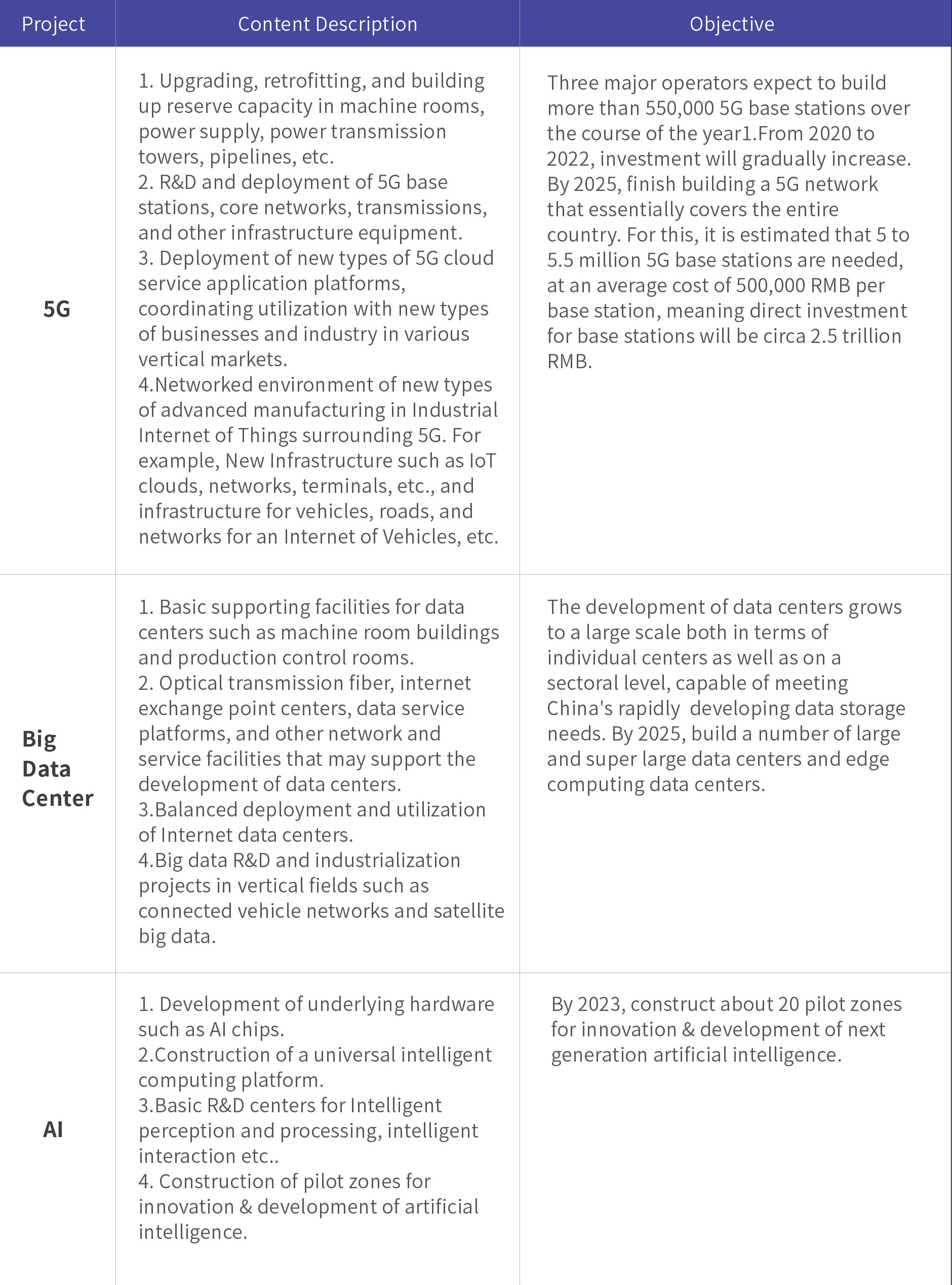
Source: White Paper on the development of “New Infrastructure Construction”, Research Institute for Information Technology of the CCID Think Tank, March 2020
5G network is a solid foundation of the development of “new infrastructure” and the IoT. The date, June 6, 2020, is the first anniversary for the Ministry of Industry and Information Technology to issue 5G business licenses to 4 major operators in China. According to Lu Chuncong, deputy director of the Information and Communications Administration of the MIIT, the basic telecommunications companies in China have built more than 250,000 5G base stations, with over 36 million 5G users. By the date of September 17th, the number of 5G base stations has exceeded 500,000 with approximately 100 million devices connected to 5G networks. China is expected to build more than 600,000 5G base stations by the end of the year, covering cities above the prefecture level in the country. By the end of August, China has more than 110 million users having already signed up for 5G plans.
The gradual rollout of 5G technology provides huge space for the AIoT industry to grow. Those associated industries, including smart living, smart city, car networking, telemedicine, big data and smart factory will make smart devices omnipresent. According to the statistics issued by the MIIT, by the end of February, the number of IoT end users has exceeded 1.04 billion, increasing by 15.54 million compared with the end of last year.
“5G+IoT” model played an important role in fighting against the pandemic. With the 5G-enabled online healthcare system, hospitals across the country could provide medical services such as remote group consultations, radiology diagnosis remotely, remote diagnosis, and fever consultation, allowing medical experts in Beijing to give guidance on treating the patients to doctors in Wuhan “face to face” but with an actual distance of 1200 kilometers; “5G+unmanned vehicles for helping with COVID emergency”, adopting the information technologies such as the IoT, machine learning, biometric identification and clouding, can be brought to key places and units including stations, hospitals, schools and communities to disinfect the streets or provide healthcare services; China Electronics Technology Group Corporation, together with SF Express, successfully delivered valuable medical supplies to doctors and nurses in Wuhan Jinyintan Hospital with drones.
3. “New Infrastructure” Boosts the Development and Application of AIoT
Some experts summarized that the demands and requirements of the “new infrastructure” would push the improvement of the IoT in several ways as follows:
- Continuous improvement of AIoT capabilities
Improve the foundation network construction of 5G, industry-specialized network setting, MEC and other related capacities construction, full network control and the supply of 5G chip modules; improve the underlying infrastructure of the industrial internet, including identify resolution platform, Edge Network and industrial platform; improve the construction of data center or application platform; improve the operation efficiency and data analysis ability combined with AI technology, and solve trust problems and improve data security with block chain. - Promote the transformation of traditional facilities and development of new ones by AIoT
IoT can be applied to transform the traditional facilities. Smart city, smart healthcare, smart transportation, smart park, smart agriculture, smart policing and smart retail requires intelligent upgrading traditional infrastructure, fix the weak links in rail transportation and cold chain logistics; strengthen weak areas in the industries of nuclear power, UHV, charging stations, hydrogen fueling station and lithium battery innovation; strengthen the weak points in sewage and garbage treatment; management of the old park and upgrade its system. As for developing new facilities, contact-free supporting facilities such as drones, unmanned distribution system, unmanned factory, unmanned system in prevention and control of COVID-19, supporting facilities for the newly emerging industries such as photovoltaics, biomass energy, green heating. - 3. Promote the establishment of AIoT educational institutes and R&D institutes
Looking at all links on AIoT, from the practical applications of the sensor, the chip to the IoT, and the convergence of IoT and AI, a lot of R&D institutes, educational institutes, innovative organizations and centers for talent development have been founded. Many enterprises also set up their own R&D centers to overcome the hurdles limiting IoT, develop chips, censors and networking modules. The favorable government policies on the new infrastructure will provide more incentives for companies to invest in research to a certain extent.
At present, under the stimulation of the COVID-19, and on the basis of increasingly innovative policies, technologies and business models, 2020 has become the first year of IoT Era, and the market for AIoT also continues to grow.
Comments
“With the convergence of technologies, adding intelligence to edge devices is the most logical step forward – APARA compliments Tuya Smart in taking the lead to postulate the next chapter of Smart City architecture.”
– Ms. Shanlynn Lee, APARA President
“IoT security is valued by the consumer and now more than ever. The strength of the Alliance is drawn from leading members like Tuya, who provide world class security at the scale needed for the consumer and the commercial IoT industry. Regulations are coming to clear the noise out of the market but by working together now, ioXt and Tuya improve consumer confidence, increase adoption, and guide global regulators.”
– Brad Ree, Co-founder and CTO of ioXt
“There is a new word that has been born for about 1-2 years, that is, AIoT is a combination of two core technologies: IoT and AI, many key developers are interested in developing products and services. Collaboration with companies that have solutions are the choices – IoT and AI technologies to achieve country development in all dimensions, such as talent and manpower skills enhancement, and development of digital infrastructure.”
– Niti Mekmok, President of Thailand IoT Association
“This research will definitely provide a better understanding of the sector and its perspectives, discussing the most challenging issues of the industry, specifically in this critical moment in which everybody is wondering how the pandemic will affects the future of the world, including the application of new technologies that is increasingly accelerating in our lives.”
– Luis Diego Monsalve Hoyos, Ambassador of Columbia
“Related to the Internet of Things (IoT), there are significant advances that will enhance productivity, stands of living and will open new avenues for business and interactions all over the world. I was very impressed by the technology displayed by Tuya and developers will contribute to enhance the trade and commerce between countries.”
– Amb. Carlos Giralt Cabrales, Consul General of Mexico(Guangzhou)
“As the Representative of Singapore’s manufacturing sector, the SMF is happy that Tuya is producing a White Paper on AloT which will enhance SMEs worldwide towards preparing for challenges and achieving sustainable growth in a competitive environment. SMF looks forward to a rewarding partnership with Tuya Smart and to collaborate together to drive growth for businesses worldwide.”
– Mr. Douglas Foo, President of Singapore Manufacturing Federation
“As the Sino-EU Technology Innovation Cooperation platform, we are pleased to see that Tuya is taking lead on the global AIoT ecosystem building. IoT is no longer a new word to us, however, how to build the real connected ecosystem, integrate all those different parties globally, and be intelligent is still something we are exploring. This White Paper on Global AIoT Developers Ecosystem is no doubt inspiring and insightful that we can find answers to some critical questions.”
– Athena Wang, Operation Director Asia Pacific Region
“Chile’s National Policy on Science, Technology, Knowledge and Innovation intends to enhance the scientific- technological ecosystem by adopting advanced digital technologies. InvestChile welcomes top foreign AIoT companies, like Tuya Smart, whose purpose and solutions are aligned with our national aspiration.”
– Juan Pablo Garnica, Investment Promotion Director
“The Internet of Things (IoT) creates completely new business potentials by networking products of an increasingly smart nature. Whole industries including mobility, health and manufacturing are being fundamentally altered.
By enabling newly emerging business models and the development of disruptive IoT solutions, Tuya Smart is a true global leader and shaper of the ongoing digital transformation.”
– Lukas Huber, Deputy CEO & Executive Director China; Greater Zurich Area AG Switzerland
“This white paper illustrated the clear trends of IoT development and consequent massive opportunities coming along with this new AIoT era. Sweden, together with other Nordic countries, is the pioneer both concerning AIoT innovation capability and market readiness. As the world leading player, Tuya Smart has already been active in Swedish market, and playing a critical role in its transformation.”
– Dr. Bin Zhu, Director, Invest Advisory
“Japan is currently accelerating its digitalization, Connected Industry, and other areas, and various technology accelerators are being used throughout Japan to promote the integration of foreign companies, Japanese companies, and Japanese R&D institutions, including in the AIoT field. Companies like Tuya are welcome in Japan to bring new energy and potential to the Japanese AIoT industry. The white paper provides a wealth of information on usage scenarios, security, and unified standards that will be of great value to both Chinese and Japanese companies working to transform and upgrade their manufacturing industries.”
– Kyungho Jin, Investment Director of Japan External Trade Organization(Beijing) (JETRO)
“As China enters the digital era, the digitalization process across the country and in various industries is in full swing, but it also faces many confusions and problems. To solve these problems, enterprises and society need to work together to create a suitable environment for development. Tuya is taking the lead, innovating in the field of IoT, and creating the right environment for the industry at the same time. This white paper not only introduces the detailed status of AIoT industry development, but also analyzes the common problems and discusses the ways to solve them, providing inspirational guidance and practical suggestions for CIOs working on the front line. We look forward to the facts, perspectives, and working paths contributed in this white paper becoming a magic bullet for all CEOs, CIOs, and CXOs on their way to innovation!”
– Xingguo Zhang, COO of China Hospitality Technology Alliance (CHTA)
“With the rapid development of AI and the IoT,as well as the integration of AIoT into various industries, this is an important change and opportunity for the fiercely competitive lighting industry, which will also provide more industrial added value and development space for the lighting industry caught in involution. The future has come, we need to focus on the lighting industry, and actively embrace change. There is a poem: With the wheel of history passing, there will always be a lush new green grass next to the grass.”
– Qidong Wen, Deputy Secretary of China Association of Lighting Industry
“2021 White Paper on Global AI+IoT Developers Ecosystem presents the current status and development trends of the global AIoT market with a large amount of detailed data, provides specific analysis and case studies for each major industry segment, and accurately describes the application features of the Zigbee Interoperability Standard in door locks, lighting, electricians, and other scenarios.”
– Ruiyun Shang, representative of Zigbee Alliance China
“We believe that the future development trend of the IoT industry is to move from the current fragmented and closed model to a borderless and open ecological model. In the future, we hope to sincerely cooperate with all partners on the Tuya platform to build a more open and intelligent ecological environment.”
– Zhuo Chunlei, General Manager of Consumer Ecological Product Division, Lenovo China
“In the AloT era, Tuya provides a stable, efficient, and intelligent platform for smart homes in the Japanese real estate market. We believe that together we can create a new era for Japan's smart industry.”
– Taiko Ogawa, Chairman of the Board, Okura Co., Ltd.
“It is expected that this white paper will not only provide guidelines for technology transformation and upgrading for enterprises, but also promote excellent AIoT projects so that more enterprises will have a model to follow in their technological innovation and practice.”
– Hantao Ge, Chief Researcher of IoT Industry, Deputy Director of Strategic Planning and Research Department, Telecommunication Technology Labs, China Academy of Information and Communications Technology (CAICT)
“In the era of Internet of Everything, AI+IoT has brought infinite possibilities for industry development. 2021 White Paper on Global AIoT Developers Ecosystem is a highly recommended book that clearly describes the development of the industry and fully analyzes the current dilemma. With the push of various new technologies and policies, the industry will take a new leap forward, let's wait and see.”
– Jincai Yang, Honorary Member of the European Academy of Sciences, Arts and Humanities, President of Shenzhen Security Industry Association
“The development of the AIoT industry requires a diversified, abundant and stable developer ecosystem, a neutral and open development platform also required. Haier is willing to work with partners in the industry to build an interoperable development ecosystem, create a seamless interactive all-scene smart home and a better future together.”
– Ye Wang, Haier Smart Home Vice President
“Bluetooth has always focused on providing developers with full-stack, fit-for-purpose wireless solutions in all key areas, so as to enable simple and secure device connectivity. We believe that only with a large, mature, and innovative development ecosystem could ensure commercial availability of connectivity in the future. We are looking forward to it with the whole industry together.”
– Lori Lee, Bluetooth SIG APAC Senior Marketing Manager
Source: Tuya