Rise to the Challenge and Reap the Benefits
Life Sciences Organizations Need to Reimagine Their Customer Management Strategy
In the race to offer a fully personalized customer experience (CX), life sciences leaders are looking at new technologies to drastically improve healthcare professionals (HCP) and patient journeys which have long suffered from the industry’s technology lag. The goal is to adopt the frictionless and modern experience recognized by other CX-focused industries.
While 50% of life sciences professionals say that their organization’s investment is going toward new technology to improve customer experiences, as PwC has remarked, “Companies won't be able to solve their CX problems with technology alone.”1,2 To overcome data silos and disconnected messaging across channels, life sciences companies need to adopt a customer experience management (CXM) strategy – which “may be the single most important investment a brand can make” according to Forbes – and combine it with a technology stack that supports a customer-first approach.3 Companies that adopt a CXM platform will benefit from a unified data model, omnichannel capabilities, and a 360° view of customer insights enabling the adopters to come out on top in a post-COVID landscape.
If you are a Chief Digital Officer (CDO), Chief Information Officer (CIO), Marketing Director, or Commercial or Medical Affairs leader interested in understanding the challenges as well as the opportunities in closing this gap to elevate customer and patient experiences, this publication is for you.
Omnipresence Content
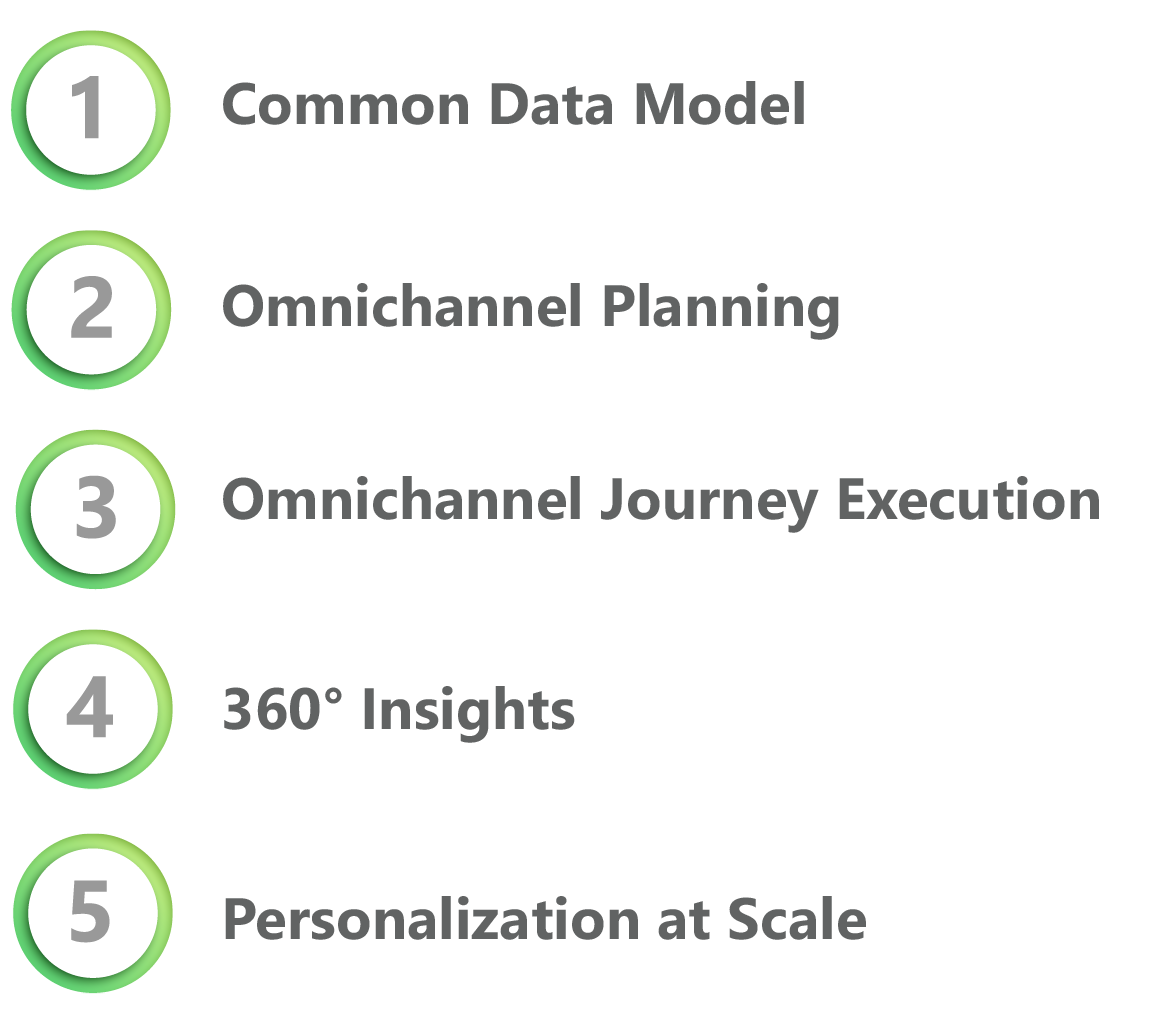
Pillars of Customer Experience Management
CXM-driven strategies and solutions will go well beyond the typical personal and non-personal transactions that are still the norm in life sciences in 5 specific ways:



Market Guide for CRM in Pharmaceuticals and Biotechnology
24 November 2020
CRM usage in pharma and biotech is expanding beyond traditional use cases, with greater focus on holistic customer engagement programs and advanced analytics. CIOs should use this Market Guide in identifying notable solutions that increase their business agility and field sales effectiveness. [...]
Hype Cycle for Life Science Commercial Operations, 2020
06 August 2020
This Hype Cycle helps life science CIOs identify and prioritize the most strategic and relevant technology investments to transform the commercialization of therapeutic products. CIOs should use this research to understand the business value, maturity levels and adoption rates. [...]