Rise to the Challenge and Reap the Benefits
Life Sciences Organizations Need to Reimagine Their Customer Management Strategy
Despite the urgent need to adapt to the change in HCP and patient expectations through digital investments, not all investments in technology are considered successful. In fact, more than 4 out of 10 senior leaders across industries believe that the impact of their business' digital transformation has been limited.4 When those projects were considered successful, 72% of organizations ran into new obstacles that could affect their future growth.5 Life sciences organizations fared no better. Although many are pushing toward digital advancements, the gap between customer expectations and satisfaction with the experiences they receive is still large and reported as 25% in the healthcare sector and 22% in pharma.2
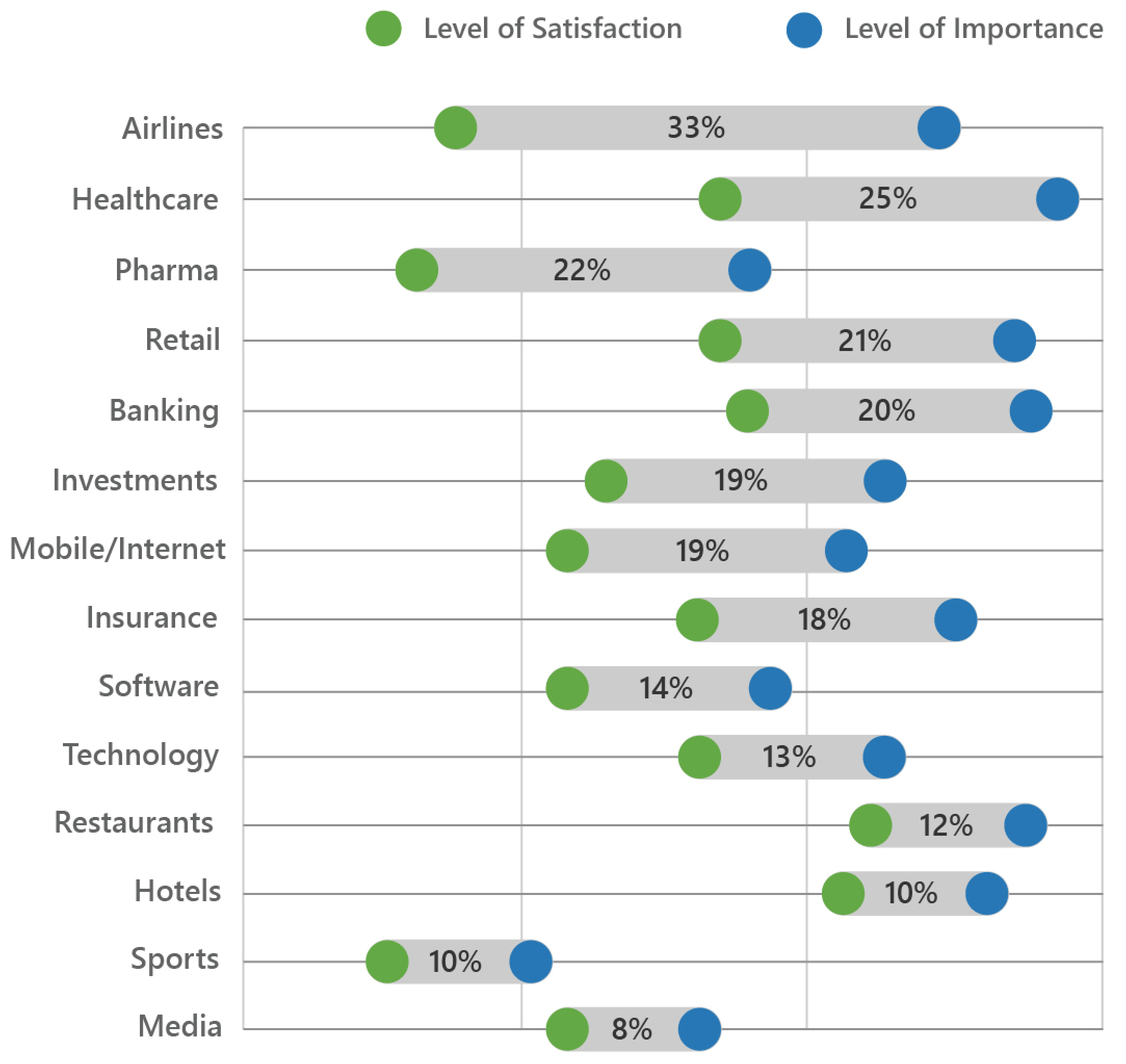
Q: When it comes to making purchase decisions, how important is customer experience in each of the following industries? Generally speaking, how would you rate the customer experience in each of the following industries today?
Source: PwC Future of Customer Experience Survey 2017/18
Although a digital transformation project can play a part in elevating the CX, a cautionary tale emerges. The lesson for life sciences organizations is that merely implementing a multitude of transactional technologies such as customer relationship management (CRM), virtual meeting tools, marketing automation system, and other such technologies individually in the name of customer centricity may not be enough. Although each of these spends may enable a particular set of transactions with customers, they may not empower employees to make the overall experience they provide to be more seamless, intelligent, and meaningful.
All About CX
The impact a CX strategy can have on an organization's bottom line is well known from extensive studies. Most industries are witnessing a binary shift, from a brand-centric transactional focus to a customer-centric experiential approach. According to Forbes, the number of organizations competing on CX has nearly doubled.6 Think of class leaders such as Amazon, Tesla, Ikea, and Mastercard who are all benefiting fiscally from delivering a satisfactory CX end to end. In fact, companies with superior customer experiences bring in 5.7 times more revenue than competitors who are lagging in this area.6
With 84% of firms aspiring to be CX leaders, Gartner named CX the “New Competitive Battlefield”.7,8 A recent report states that companies delivering superior CX:
- Grew revenues 5 times faster than their competitors with inferior CX9
- Have customers willing to pay a higher price for products and services6
The impact of a CX-oriented strategy is clear in life sciences. McKinsey & Company surveyed 600 physicians and found that prescribers satisfied with their customer journey were twice as likely to prescribe a medication than their dissatisfied peers.10
Average likelihood to prescribe vs satisfaction with customer experience, %
(n = ~600 prescribing immunologists in France, Germany, UK, and US)*
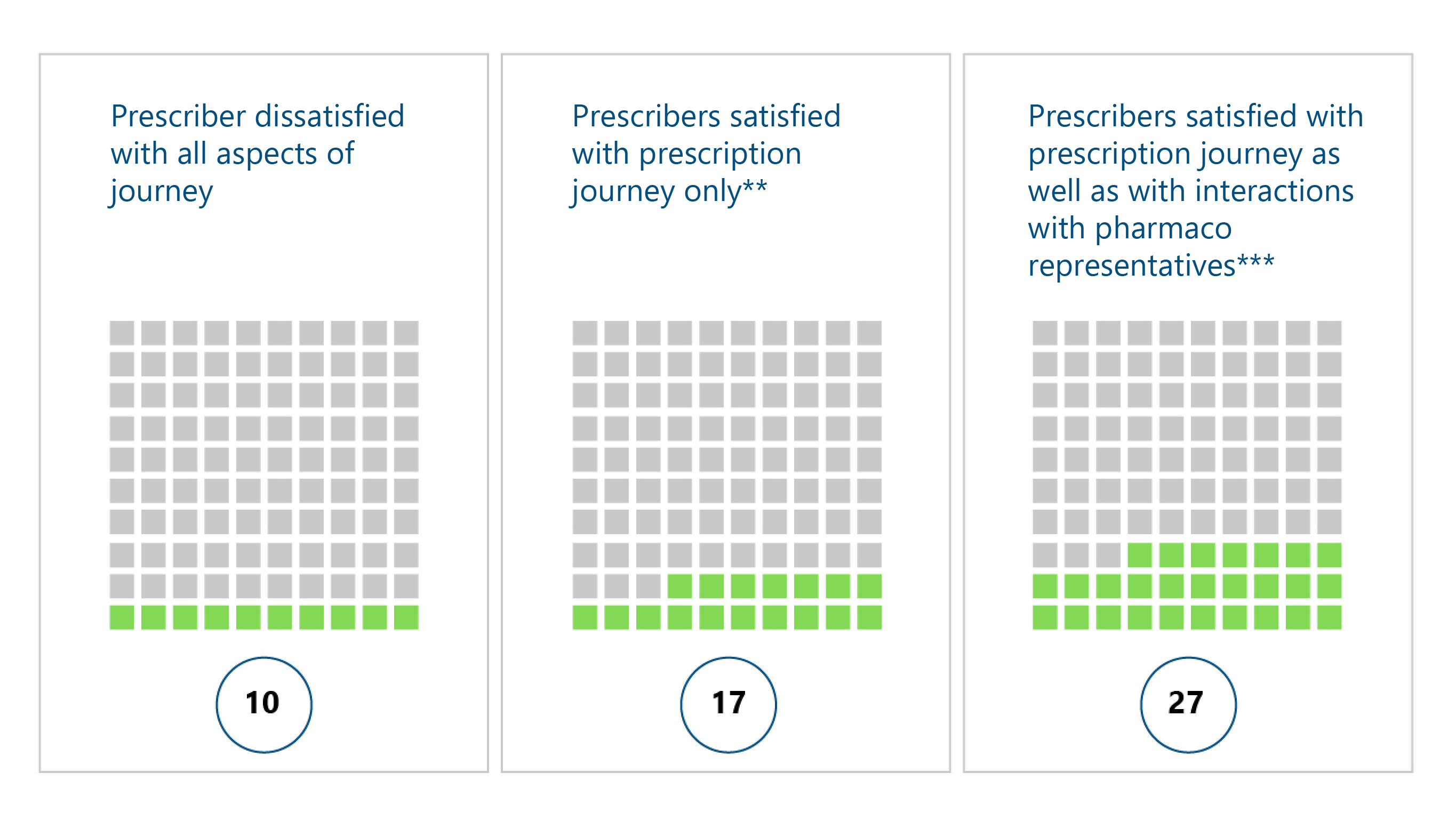
*Based on a cluster-level analysis linking prescriber satisfaction, as indicated by survey responses, to prescription likelihood, calculated as the average number of patients on a given drug divided by the total number of patients within the prescriber's cluster.
**Interactions with patents from diagnosis and prescription to monitoring and follow-up.
***Including approach to acquiring and developing medical and scientific knowledge.
Not only that, but better CX is also needed for life sciences organizations to deliver important information and communications about their products to healthcare practitioners because it leads to:
- Increased number of engagements
- Improved opinion and understanding of the products
- Increased willingness to digitally engage11
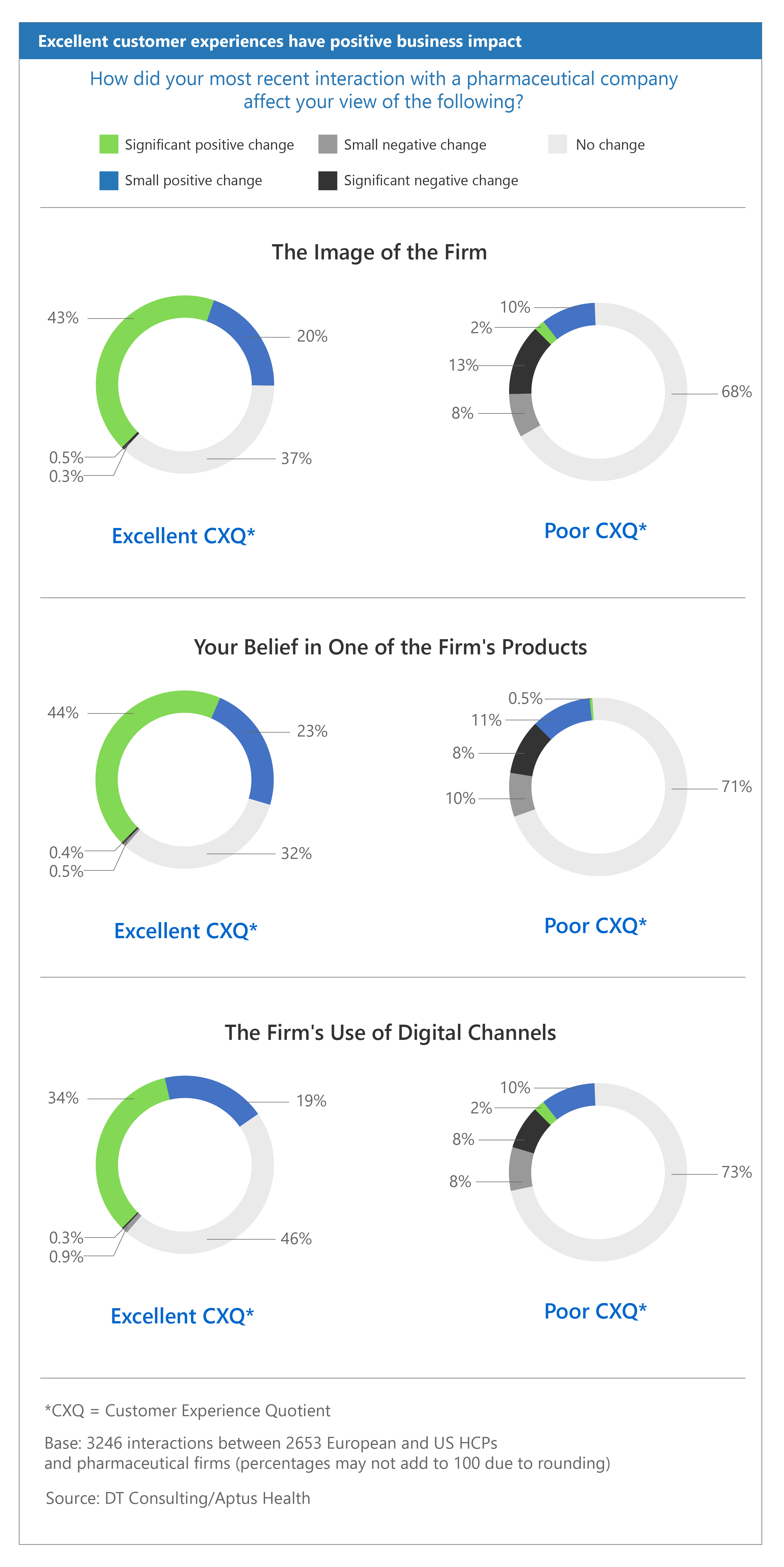
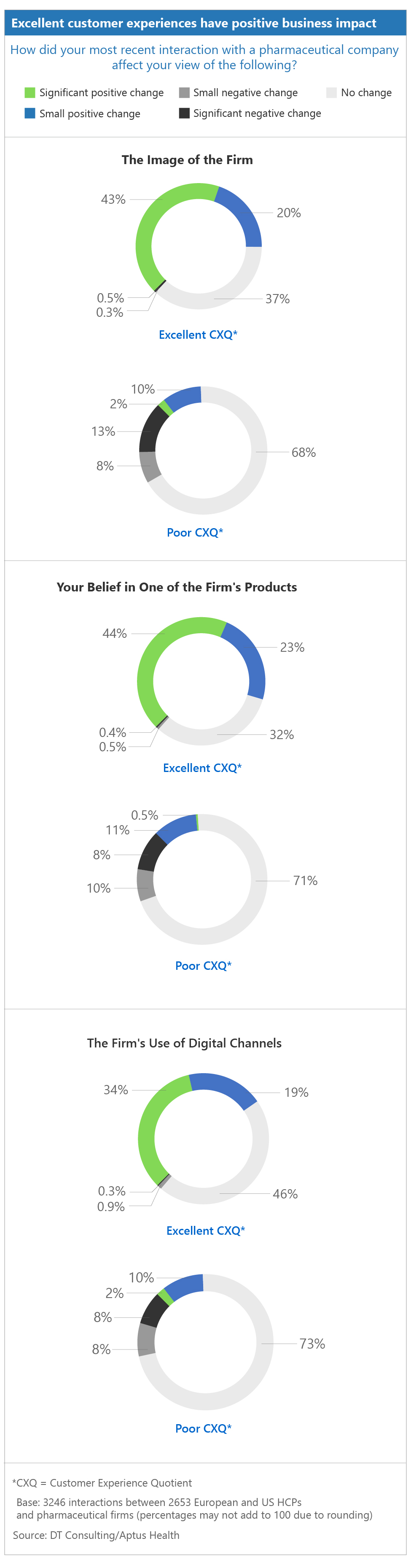
The effects of better CX extend to the patient community as well. According to a recent survey by Accenture, 76% of patients believe that research-based organizations have a responsibility to provide services that complement their products and as a result, 85% of the organizations are raising their investment in patient-centric capabilities.12 What this means is that delivering better CX to practitioners and patients can enable life sciences organizations in their core mission of creating better health outcomes. This is because in addition to being a research machine, every life sciences organization is also a communications and information machine that must be able to provide the right information, at the right time, in the right way to the intended patients and practitioners so that they may correctly use the products they bring to market.
Source: Omnipresence
