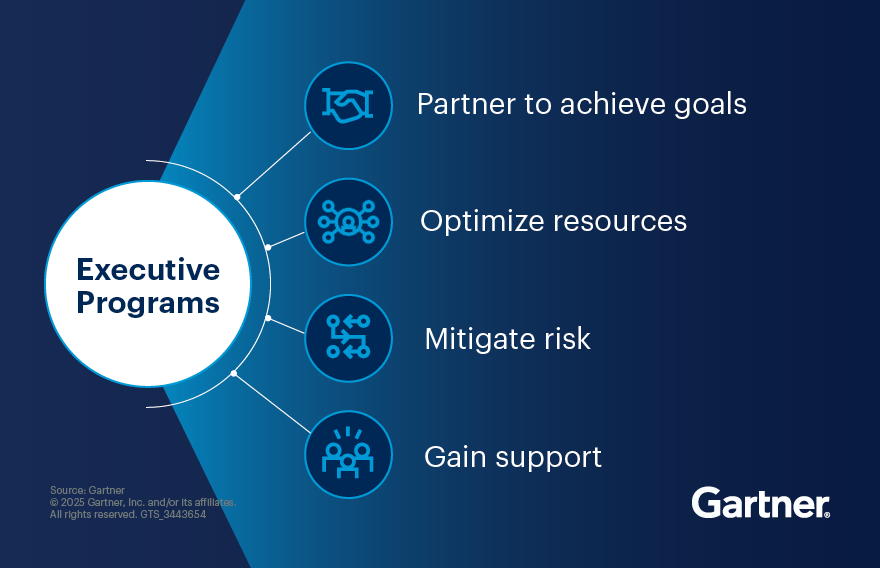
Gartner Executive Partners accelerate your time to impact as a senior leader. Each Executive Partner is a seasoned professional with years of experience in a role like yours. Each gives you faster, easier access to custom strategic guidance, bespoke tools and exclusive peer connections — all designed to help drive your business and personal goals.
- Gartner client? Log in for personalized search results.
Gartner Executive Partners
Meet our Executive Partners
Gartner has more than 700 Executive Partners. Meet three of them.
Markus Elsbroek
Chuck Price
C.J. Lombardo
Markus Elsbroek
Gartner Senior Executive Partner
20+ years of CIO experience in Germany, with expertise in the banking and insurance industries
- Streamlined IT strategy development by leveraging Gartner insights for strategic alignment
- Crafted a comprehensive IT transformation roadmap, enhancing operational efficiency
- Elevated organizational IT maturity through targeted capability assessments and improvements
- Fostered strategic partnerships by aligning IT initiatives with business goals

Chuck Price
Gartner Executive Partner
CEO and CIO expertise
- Conducted AI maturity workshops to align capabilities with strategic objectives
- Used Gartner tools to assess IT maturity and develop strategic roadmaps
- Built trust-based client relationships, offering a safe space for strategic discussions

C.J. Lombardo
Gartner Senior Executive Partner
Analyst in AI and IT leadership
- Developed a reusable AI literacy and use case prioritization program for organizational scalability
- Enhanced client understanding and strategy alignment through personalized insights and Gartner tools
- Strengthened client relationships by fostering open dialogue and maximizing Gartner offerings

How Gartner Executive Partners work with you to tackle your top priorities
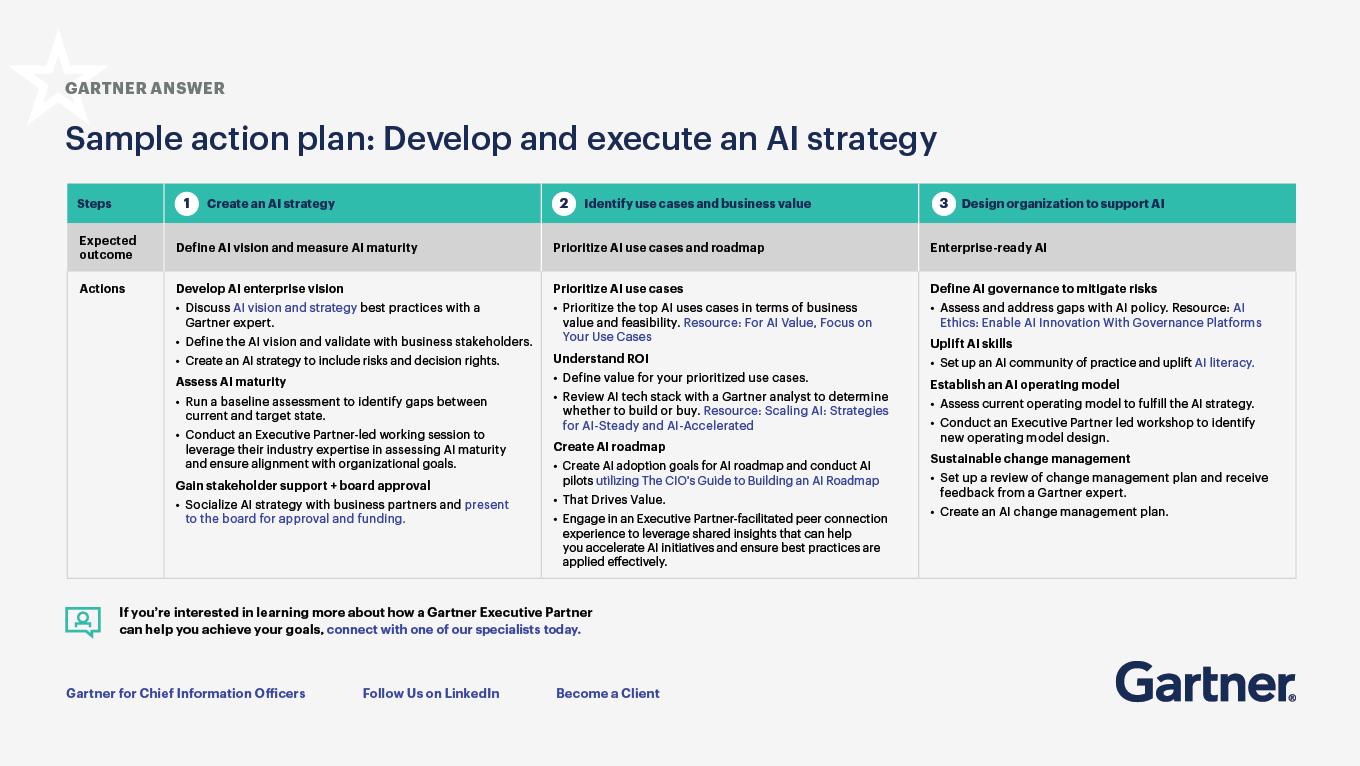
Executive Partners support your journey with analyst insights, action plans and strategic guidance at every phase of an initiative.
Gartner Executive Partner Stories



The benefits of Gartner Executive Partners

Achieve mission-critical priorities with personalized guidance
Work with a seasoned Executive Partner (EP) who understands your role and responsibilities, providing role-focused guidance to help you solve mission-critical priorities and accelerate decision making.
Leverage real-world experience to reduce risk
Benefit from your EP’s extensive experience and insights, helping you make informed decisions, avoid mistakes and design effective teams that drive faster business results.
Accelerate strategy execution
Receive ongoing support from your EP to swiftly implement strategies and action plans, ensuring timely achievement of organizational goals.
Enhance leadership and strategic impact
Focus on the right strategies and develop leadership and soft skills to enhance your professional journey, with guidance on creating impactful communications for executive presentations.
Maximize Gartner resources and peer connections
Engage in monthly consultations to leverage Gartner analyst opinions, peer insights and proprietary tools. Connect with peers and participate in events to expand your network and perspective.
Adapt to changing priorities with agile support
Receive ongoing support to address shifting goals and priorities, with recommendations on Gartner tools and benchmarks to develop actionable plans.
Drive stronger performance on your mission-critical priorities.