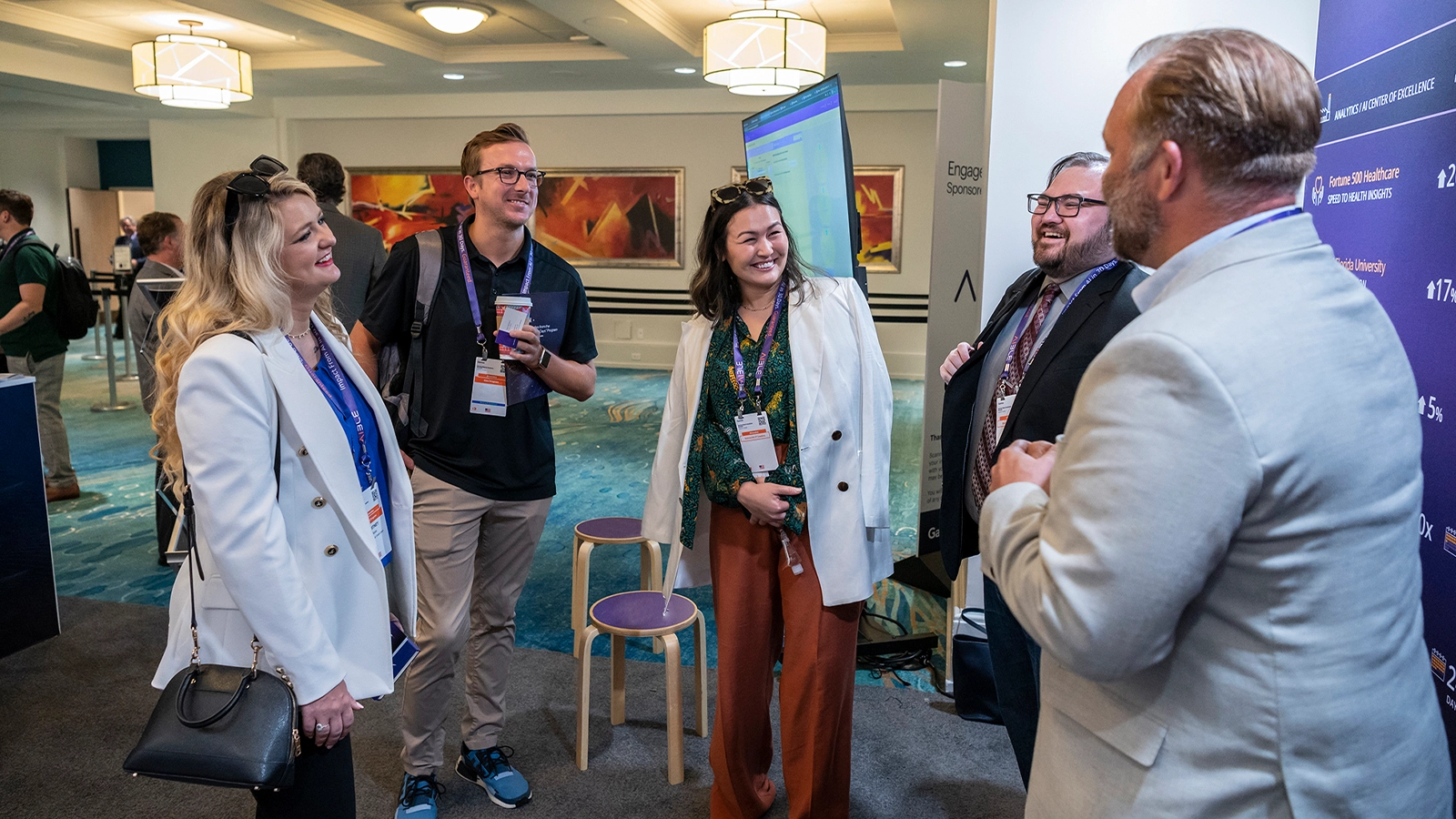
2026 Conference Highlights

Build What's Next: Marketing Leadership in the Age of AI

Discover key insights from the 2026 conference, including how to accelerate marketing’s AI advantage, how to become a genius digital marketing brand, the future of personalization and more.

Join us at the Gartner Marketing Symposium/Xpo, June 7 - 9, 2027 in Denver, CO.
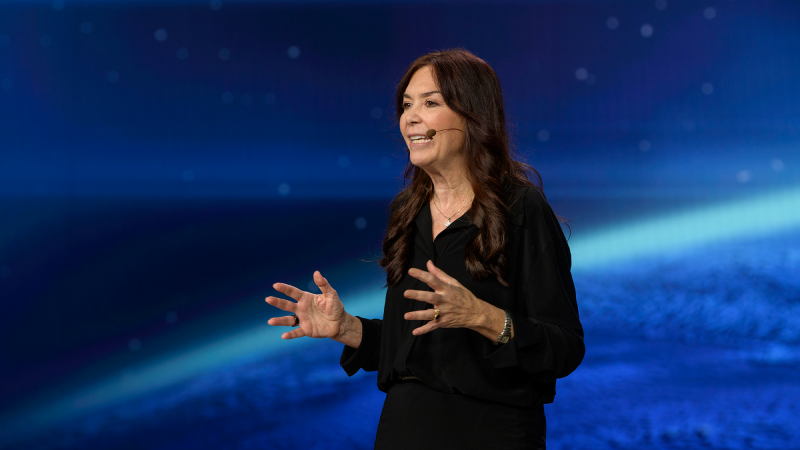
Session Highlights

  • “AI is no longer a marketing experiment. It is now a defining force shaping customer engagement, team performance and the role of the CMO.” 

  • “Like any other big initiative, learning AI and turning it into a competitive advantage takes time. Shifting from AI curiosity to AI competence is how AI can enable marketers to better differentiate their brands.”

  • “There are three stages to AI maturity:

    • Curious: when you are building foundational AI literacy and basic skills; 

    • AI competent: when you are doing and investing more in AI and facing higher business expectations as a result; 

    • AI confidence: when you begin adapting and linking skills together and implement agents into campaigns and budgets.”

  • “The final stage of AI proficiency isn’t a final destination. It’s a state of being…and it’s the start of what’s next: using AI in marketing to drive real growth.”

  • “AI demands a new kind of CMO. The leaders who win will not be the ones using AI only for personal productivity, but the ones using it to shape new relationships with the CIO, CFO, HR and to position marketing as a stronger strategic partner across the enterprise.” 

  • “The role of the CMO is about to change fast: 65% of CMOs say advances in AI will dramatically change their role in the next two years.”

  • “Most marketing AI is still focused on productivity - time saved, cost efficiency, speed of delivery. That helps with cost pressure, but it doesn’t improve the decisions that drive growth.”

  • “Strategy creates more value than tactics - so AI has to move upstream into decision support.”

  • “Agentic AI changes the unit of work from task to decision. Marketing must evolve from a campaign factory into a learning system - one that makes decisions based on value, volume, lift, risk and signal readiness.”

  • AI creates value when it becomes a decision-support layer across marketing strategy, planning and execution - creating closed-loop learning where insights continuously inform decisions.”

  • “Every year we benchmark more than 1,000 brands on digital marketing performance, and the top 3% in each industry earn the title ‘Genius.’ Last year, only 33 brands made that cut.”

  • AI is magnifying the divide between leaders and laggards - driving up performance for those who are capable of using it, but making others fail faster.”

  • “Across the class of 2025, Genius brands were searched for 12x more than peers on Google, and received 18.7x more site visitors.”

  • While most brands pulled back on hiring marketers in 2025, Genius brands stepped up— targeting new roles to close skill gaps that block AI adoption, not on ‘more hands for more tasks.’”

  • “Genius brands hired 2.5x more dedicated marketing technology professionals than non‑Genius brands - and they’re prioritizing software and programming skills to increase digital dexterity.”

  • “LLMs have not killed business performance, but they have changed the way search performance looks. Marketers will need to stop relying on traffic alone and start judging search through the lens of business outcomes.”

  • “Brands need exploration strategies that support traditional search and AI-driven discovery.”

  • “AEO is not a replacement for SEO; it’s the next evolution of it. 

  • The brands that win will build on strong SEO fundamentals, then adapt their content and site structure, so answer engines can understand and surface them.” 

  • “There is no single, perfect metric to judge search marketing performance on. Now more than ever, marketers need a combination of KPIs to understand whether they’re doing well or badly.”

  • “AEO activities don’t replace SEO activities. AI tools support AEO, SEO and SEM performance growth.”

  • Only 15% of CEOs say the CMO has the level of AI-savviness they need in 2026. That gap is a risk - but it’s also an opportunity to lead.”

  • AI readiness moves faster than human readiness, and that mismatch is what makes value so hard to capture.”

  • “To find AI value, assess readiness across three practical areas: assessing technical capabilities, taking a hybrid approach to the vendor landscape, and understanding the hidden costs.”

  • “People - not technology - are the biggest bottleneck. Forty percent of marketing leaders say AI pilots have been moderately or significantly hampered by staff fears and anxiety.”

  • “The AI agent and the employee should enhance each other’s performance and skills - working together, they should achieve more than either could alone.”

  • “To sustain AI value, manage AI like a portfolio: align use cases to business cases, establish the right value metrics, and balance quick wins with transformation.”

  • “If you want to win in omnichannel, start with the customer journey, not the channel. The goal of marketing is to shape journey outcomes, not optimize a touchpoint in isolation.”  

  • “Stop obsessing about channels and start optimizing for platforms.”

  • “Your job is to manage a portfolio of platforms, allocating budget, attention and governance based on return, confidence, switching costs and concentration risk.”  

  • “As AI makes more decisions on content, bidding and channel choice inside platforms, marketers need guardrails, governance and dynamic resource allocation, so they can rebalance investments and capture channel arbitrage opportunities in real time.”

  • “To optimize your portfolio: start with the customer journey, optimize across platforms and fine-tune within each platform.”

  • “Nearly half of customers find personalized experiences creepy, irrelevant or both. The future of personalization starts with fixing the fundamentals.”

  • “Personalization has to shift from knowing what customers did to anticipating what they need next.”

  • “AI is essential to the future of personalization, but the near-term opportunity is not full autonomy. It is using AI to assist with targeting, journey creation, content generation and execution while marketers stay in control.”

  • “By 2030, the organizations that lead in personalization will be the ones that centralize and evolve their operating model, embed personalization across people, process and technology, and use AI and agents to scale execution responsibly.”

  • When personalization works, customers reward it by being more likely to pay a premium and buy more than they originally intended.”
  • “Forty-seven percent of consumers and 60% of B2B buyers say they consulted GenAI tools or chatbots for a recent purchase decision.”

  • “AI systems don’t experience your brand the way humans do. If your content is vague or overly clever, AI flattens it into something average.”

  • “To make your brand survive summarization, infuse AI-preferred content with brand style: use proprietary terms, quote wrapping, first-person expertise, and stylized schema content, so the AI has fewer generic words to swap in.”

  • “Modern AI ‘sees’ your images - so your hero images, captions and alt text can shape the adjectives AI uses to describe your products.”

  • “This is not about adding another channel. It’s about redefining brand stewardship. Brand is also how intelligent systems behave when no one from your company is in the room.”

  • “CMOs have superhero potential if they start leading CX as a strategic growth lever.”

  • “The first superpower CMOs have is their unique positioning to be a customer advocate and influencer because their teams have listening posts across the end-to-end journey.”

  • “CMOs’ second superpower is a market wayfinder. CMOs can accelerate the enterprise’s response to disruption, helping peers in the C-Suite navigate that volatility by shaping the enterprise’s understanding and response to disruptive forces.”

  • “The final superpower is market designer, which is how CMOs can unlock new revenue streams by sourcing innovative ideas from customer data.”

  • “AI gives marketers a powerful new way to turn noisy customer signals into foresight.”

  • The best marketing-led CX leaders are also market designers. They use customer feedback, sentiment and voice-of-customer analytics to uncover unmet needs, spot white space and shape new experiences that customers will value before competitors do.”

Save the date for 2027

Gartner Marketing Symposium/Xpo returns to Denver June 7 - 9, 2027.

Join us to uncover the latest marketing insights and solutions with anaylsts, peers and service providers to accelerate your business.

Sign up to get more conference information

Sign up to receive our latest updates on conference details and marketing news.

By clicking the "Continue" button, you are agreeing to the Gartner Terms of Use and Privacy Policy.

Contact Information

All fields are required.

Ready to register?

Secure your space now.