Sign in to search Gartner Research
Gartner
Current Users New Users

Newsroom

STAMFORD, Conn., April 2, 2009 View All Press Releases

Gartner Says SOA Is Evolving Beyond Its Traditional Roots

SOA Will Be Inevitable for Most Organizations, Despite Some High-Profile Failures

While service-oriented architecture (SOA) has been around for more than a decade, SOA is evolving to be a key enabler for some of the emerging technologies that enterprises use today and in the future, according to Gartner, Inc.

"SOA is evolving beyond its traditional roots in its remote-procedure-call style to encompass the forms of interaction found in representation state transfer, Web-oriented architecture and event-driven architecture," said Jess Thompson, research vice president at Gartner. "Additionally, SOA-enabled initiatives, such as software as a service (SaaS), business process management (BPM) and cloud computing, are increasing in popularity and adoption."

Despite the economic downturn, Gartner analysts said they do not anticipate a dramatic drop in SOA adoption.

"SOA underpins and enables initiatives aimed at cost reduction, such as SaaS or BPM, and we have noticed a growing interest around SOA from vertical industries like government and healthcare, which have been waiting for the technology and best practices to mature," Mr. Thompson said. "Furthermore, some SOA initiatives already underway are being accelerated because users want to experience the benefits of SOA sooner rather than later."

There have been horror stories about SOA projects failing and negative sentiment around the strategically oriented programs associated with the recession that have created a perception that the era of SOA is over. Projects that implement SOA often focus too much on the technology to be used, treat SOA as any other application development project, and overlook the need for project management. In fact, Gartner forecasts that through 2010, the lack of working SOA governance arrangements will be the most common reason for SOA failures.

"Governance is essential," Mr. Thompson said. "You need a central entity that ensures tight coordination throughout the project and disciplines the process of design of new services. Governance is needed for security, planned change and configuration management, testing, monitoring, and setting of quality-of-service requirements."

SOA is emerging from the Trough of Disillusionment within Gartner's Hype Cycle, and it is climbing the Slope of Enlightenment. Enlightenment comes as mainstream organizations begin to experience the benefits of a technology and to establish the best practices necessary to effectively use a technology.

"Good engineering principles such as those embodied in SOA are timeless," Mr. Thompson said. "Most packaged application vendors are re-engineering their products employing SOA to improve the flexibility and extensibility of the offerings, save money by eliminating duplicated functionality, and provide a more effective way of accessing the functionality of the products. Many companies' adoptions of SOA may be unplanned, the result of engaging in BPM or in SaaS, or deploying and using new packaged applications."

Additional information is available in the Gartner report "Q&A: An SOA Sanity Check in Difficult Times." The report examines the current state of SOA and where it is headed. The report links to additional Gartner reports focused on the key issues for the SOA industry. The report can be accessed on Gartner's Website at http://www.gartner.com/DisplayDocument?ref=g_search&id=914112&subref=simplesearch.

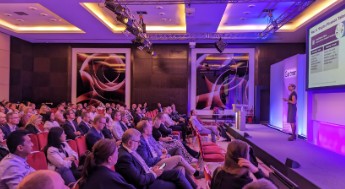
Analysts will further discuss the evolution of SOA at the forthcoming Gartner SOA & Application Development and Integration Summit 2009 in London on 24-25 June. For more information, please visit www.europe.gartner.com/soa

Contacts
About Gartner

Gartner, Inc. (NYSE: IT) is the world's leading information technology research and advisory company. Gartner delivers the technology-related insight necessary for its clients to make the right decisions, every day. From CIOs and senior IT leaders in corporations and government agencies, to business leaders in high-tech and telecom enterprises and professional services firms, to technology investors, Gartner is the valuable partner in over 13,000 distinct organizations. Through the resources of Gartner Research, Gartner Executive Programs, Gartner Consulting and Gartner Events, Gartner works with every client to research, analyze and interpret the business of IT within the context of their individual role. Founded in 1979, Gartner is headquartered in Stamford, Connecticut, U.S.A., and has 5,500 associates, including 1,400 research analysts and consultants, and clients in 85 countries. For more information, visit www.gartner.com.

Comments or opinions expressed on this blog are those of the individual contributors only, and do not necessarily represent the views of Gartner, Inc. or its management. Readers may copy and redistribute blog postings on other blogs, or otherwise for private, non-commercial or journalistic purposes. This content may not be used for any other purposes in any other formats or media. The content on this blog is provided on an "as-is" basis. Gartner shall not be liable for any damages whatsoever arising out of the content or use of this blog.

Gartner Webinars