As chief audit executives (CAEs) plan for 2026, continued uncertainty, growth and cost pressures loom. To sustain audit coverage and support their organization’s risk management objectives, CAEs have doubled-down on data analytics technologies and generative AI (GenAI) to get more depth, efficiency and insights out of their audit processes. Still, barriers remain before fully capitalizing on these technologies. 

Use the following insights to set your vision and function’s objectives.
PRIORITY 1

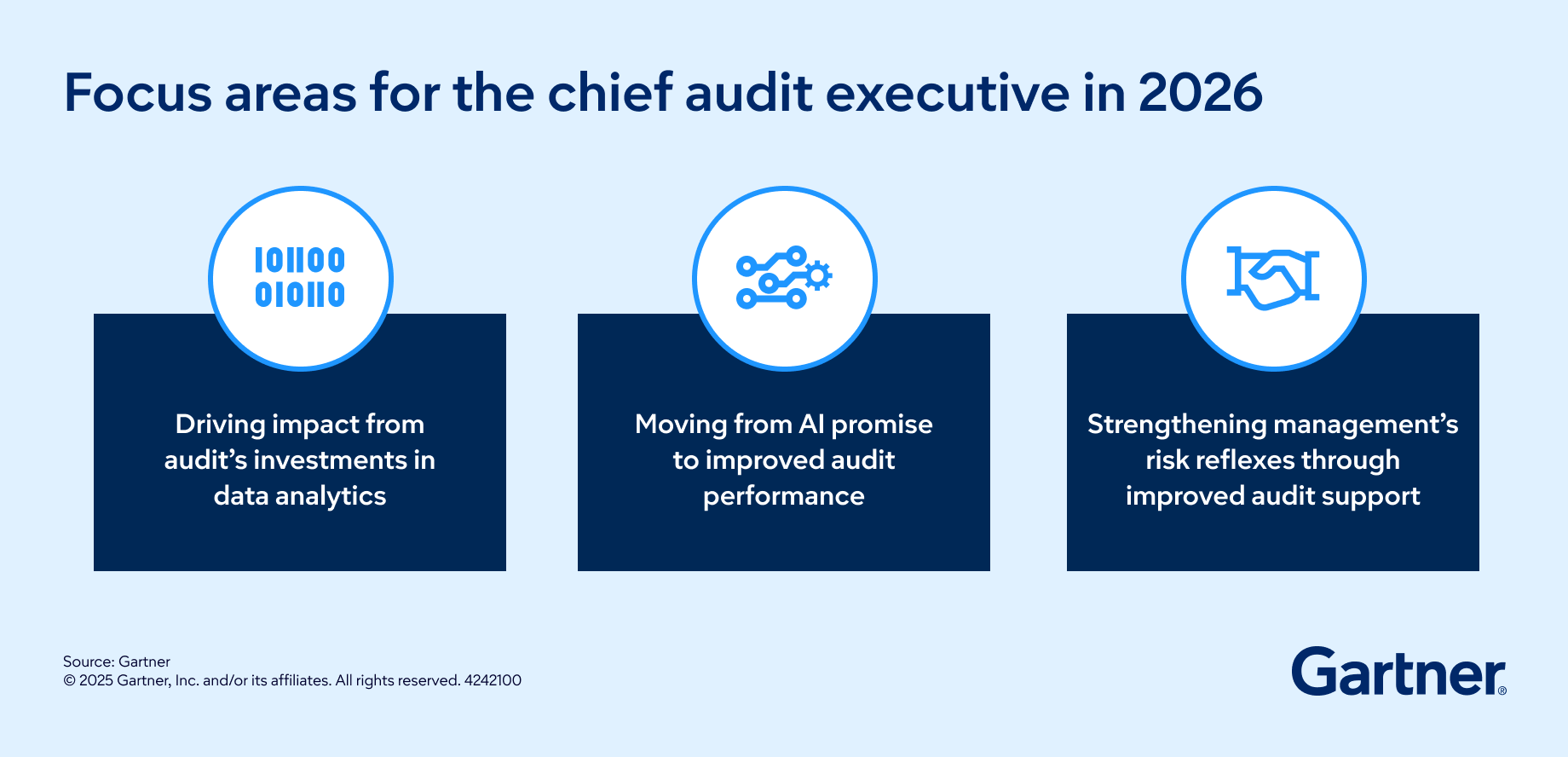
Driving more impact from audit’s investments in data analytics

Eighty percent of CAEs are unsatisfied with the impact of their analytics investments, adding more pressure to extract maximum ROI from existing resources and technology in a cost-constrained environment. Realizing value data and analytics continues to be the top strategic priority for CAEs in 2026, ahead of integrating AI into audit workflows.

Challenge for chief audit executives

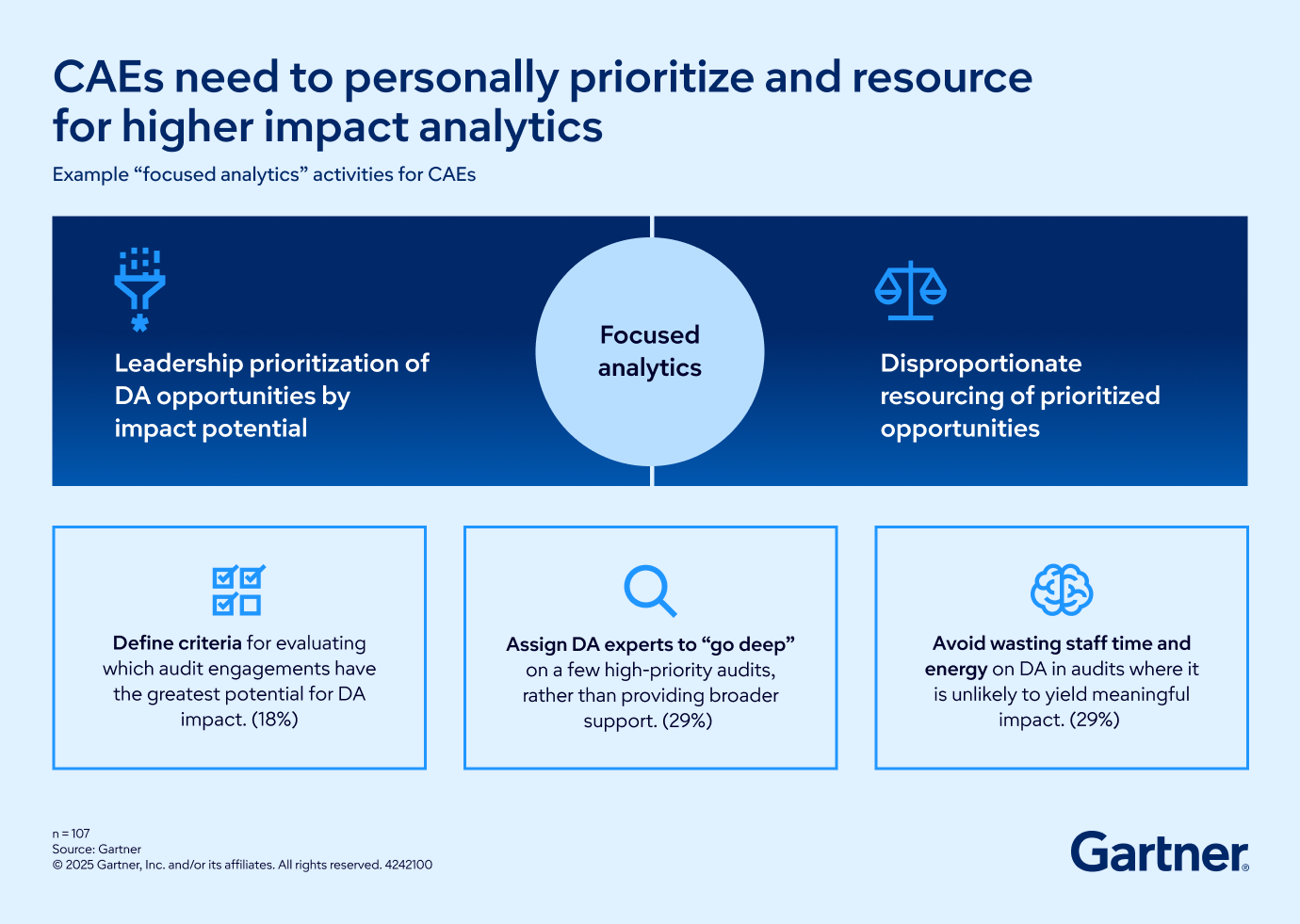
The current approach of encouraging auditors to use analytics in more audit engagements doesn’t lead to higher impact from analytics. In fact, impact drops when auditors use analytics in more than 75% of engagements.

Recommended actions

Take direct ownership of analytics prioritization, and ensure that high-potential opportunities receive the resources necessary to achieve transformative results.

PRIORITY 2

Moving from AI promise to audit performance

Audit functions are moving quickly to incorporate AI into workflows, but truly transformative results remain elusive. Only 38% of CAEs feel highly confident in their ability to embed GenAI into their audit function’s processes and methodology.

Challenge for chief audit executives

While audit teams were quick to adopt AI, insufficient data readiness, lack of technical development skills and the unavailability of specific technologies for use in the function are inhibiting value realization.

Recommended actions

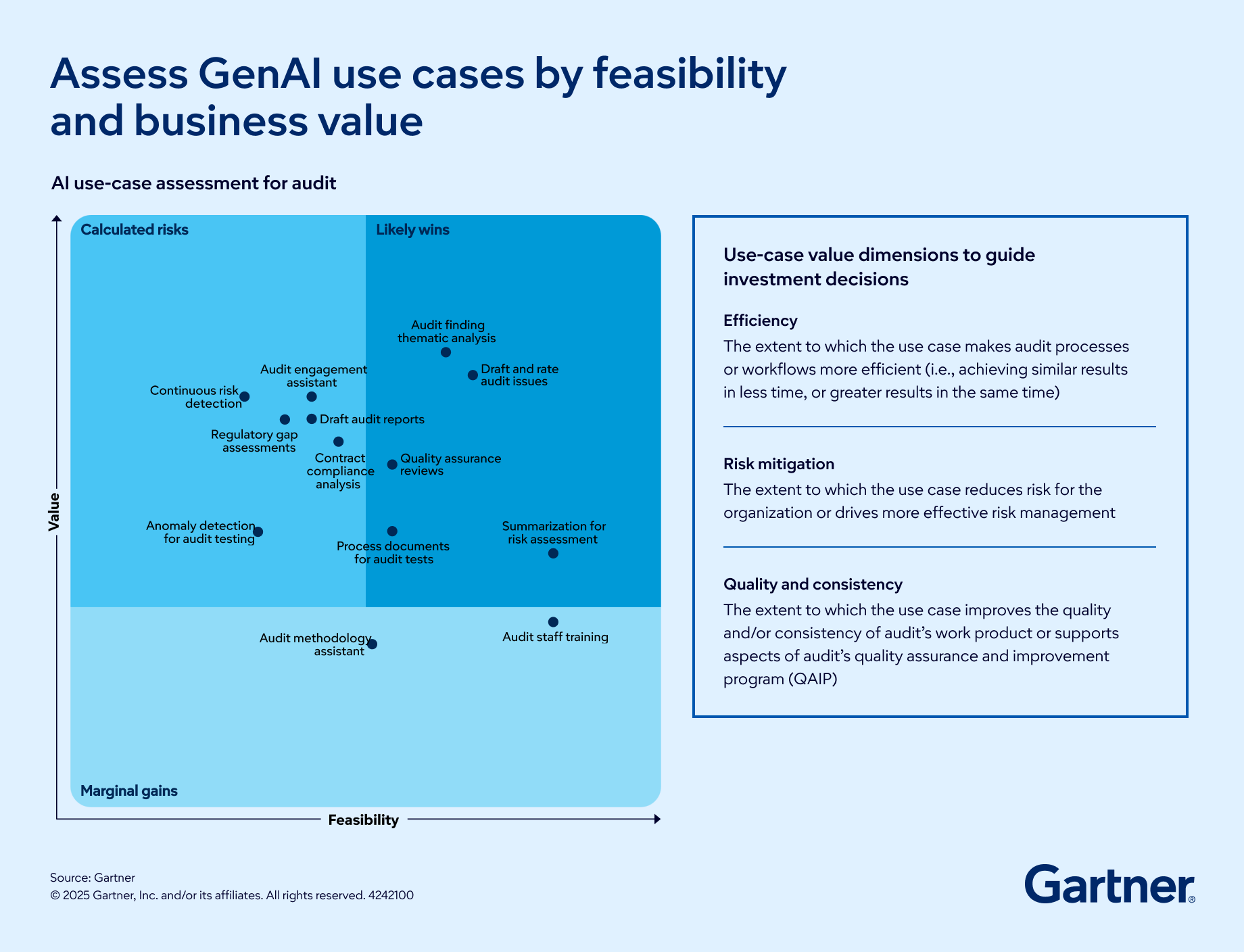
Develop a plan for AI use in audit. Assess use cases along specific dimensions of value and technical feasibility to determine where to pilot. Then, scale specific use cases for broader adoption, measuring results and reassessing impact along the way.

PRIORITY 3

Strengthening management’s risk reflexes through improved audit support

Organizations need stronger risk reflexes to respond and remain resilient in the current operating environment, but many risk-owners are unclear on what is expected of them.

Challenge for chief audit executives

CAEs spend a lot of time helping risk and process owners see the value of audit’s role and the significance of effective risk management, but understanding audit’s value doesn’t help management fulfill risk and control responsibilities any quicker or effectively.

Recommended actions

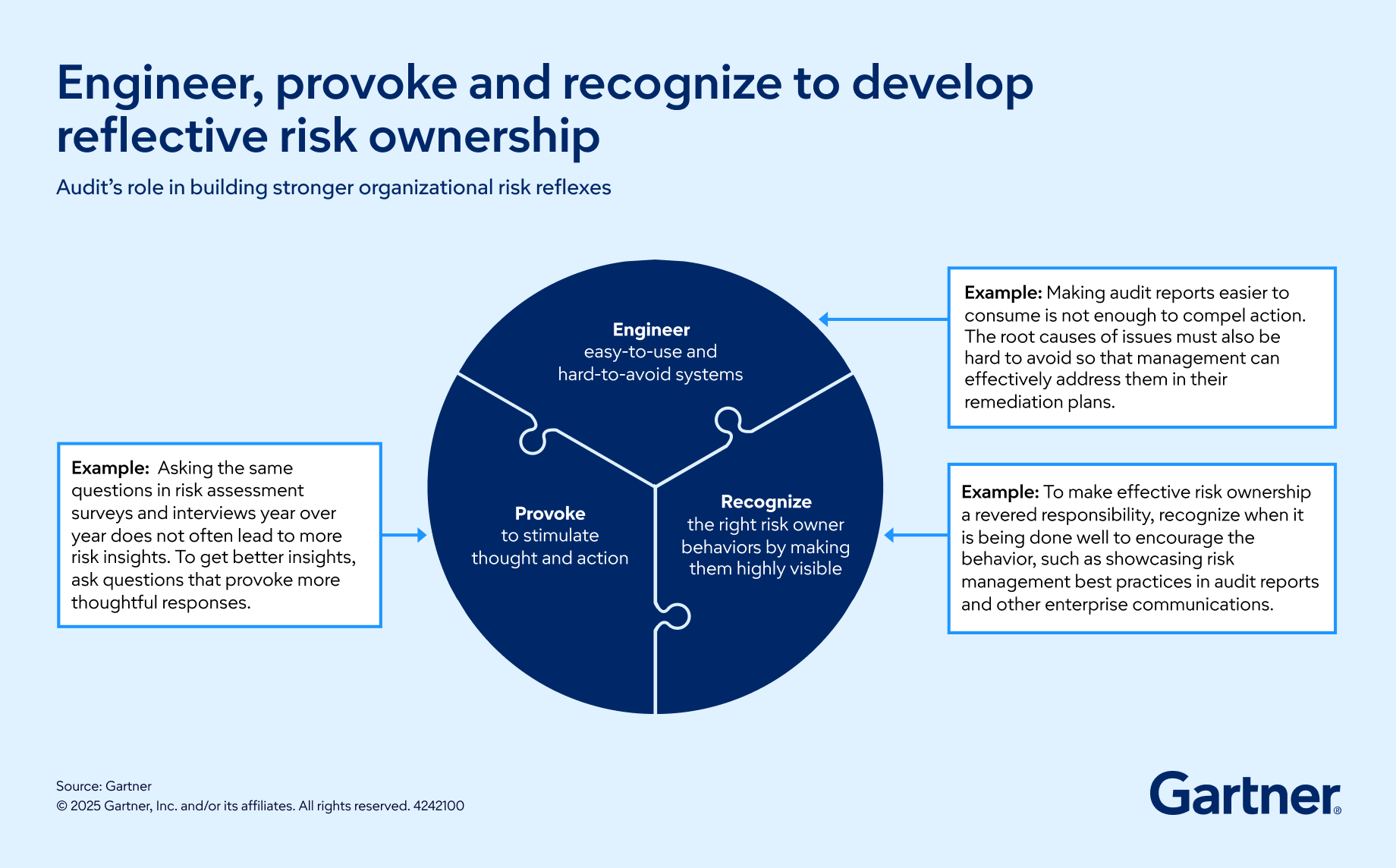
Enable stronger organizational risk reflexes by engineering systems that are both easy to use and hard to avoid. Promote better responses with more provocative questions that deliver more insights. Define, recognize and reward good risk ownership behaviors so expectations are visible and clear.​

Don’t navigate 2026 alone

Work with Gartner to gain clarity, confidence and a competitive edge through personalized guidance, peer-tested best practices and tools that accelerate your impact.