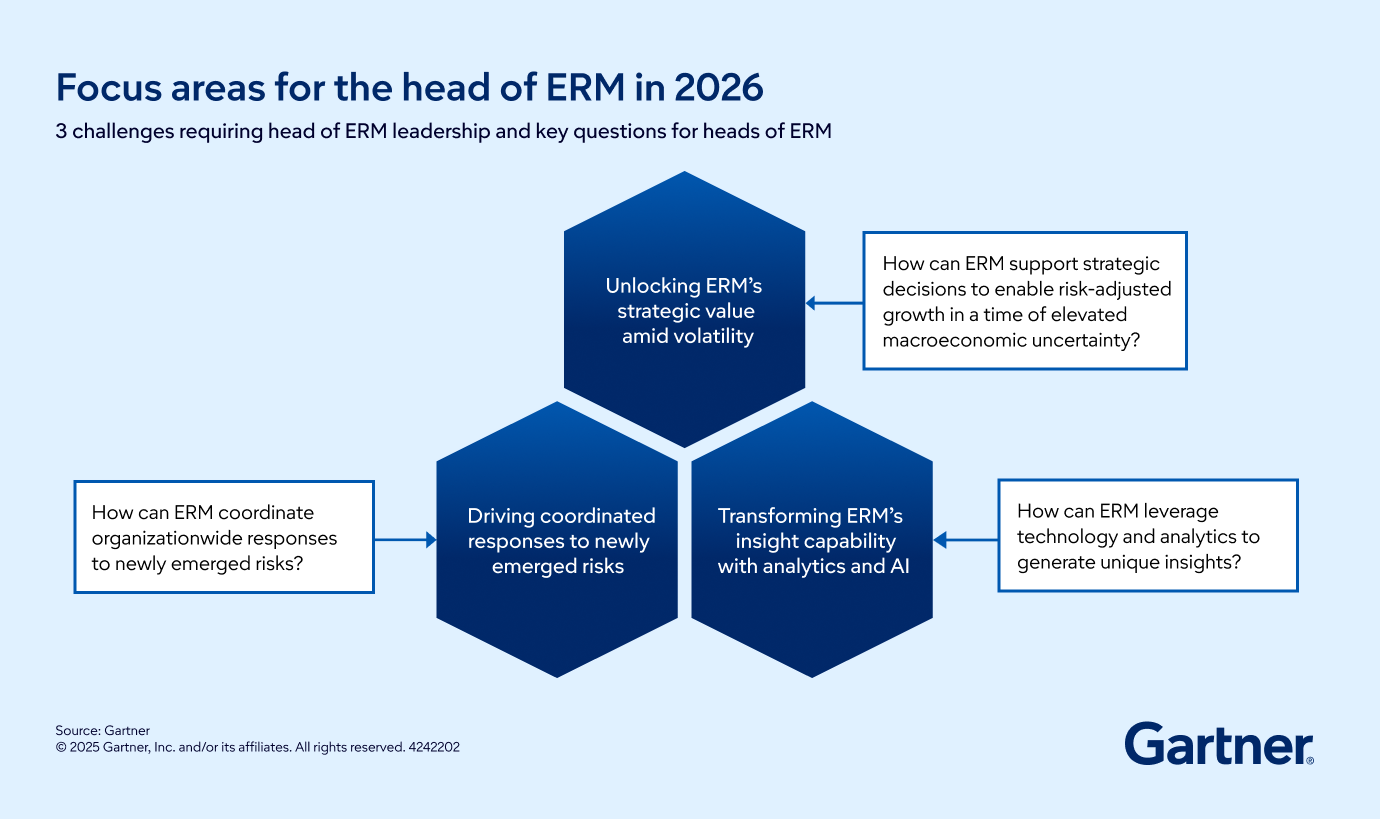
In 2026, as the potential for acute volatility lingers, organizations will look to enterprise risk management (ERM) to enable risk-balanced growth strategies. Heads of ERM must strengthen their programs’ contributions to strategy, improve responses to emerging risks and reorient risk analysis to focus on insight creation.

ERM leaders should consider three critical steps to increase their strategic value in the year ahead.
PRIORITY 1

Unlock ERM’s strategic value amid volatility

Exceptional volatility and uncertainty are complicating growth strategies, but organizational appetites for growth and risk remain strong.

Challenge for heads of ERM

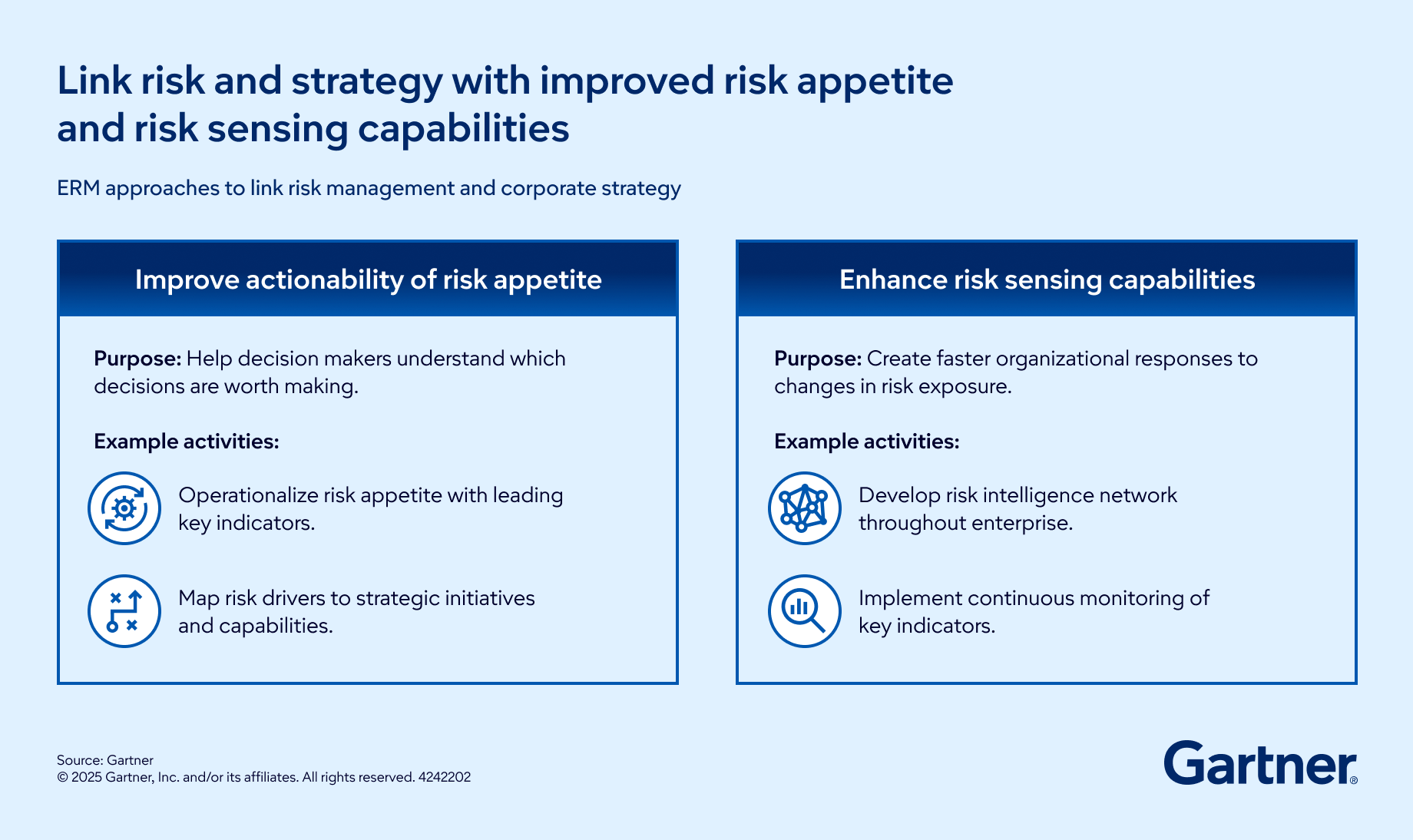
ERM programs typically prioritize risk performance over strategic enablement. They often focus on evaluating past risk responses instead of supporting future decisions.

Recommended actions

Link risk and strategy by improving the actionability of risk appetite and strengthening risk sensing capabilities.

PRIORITY 2

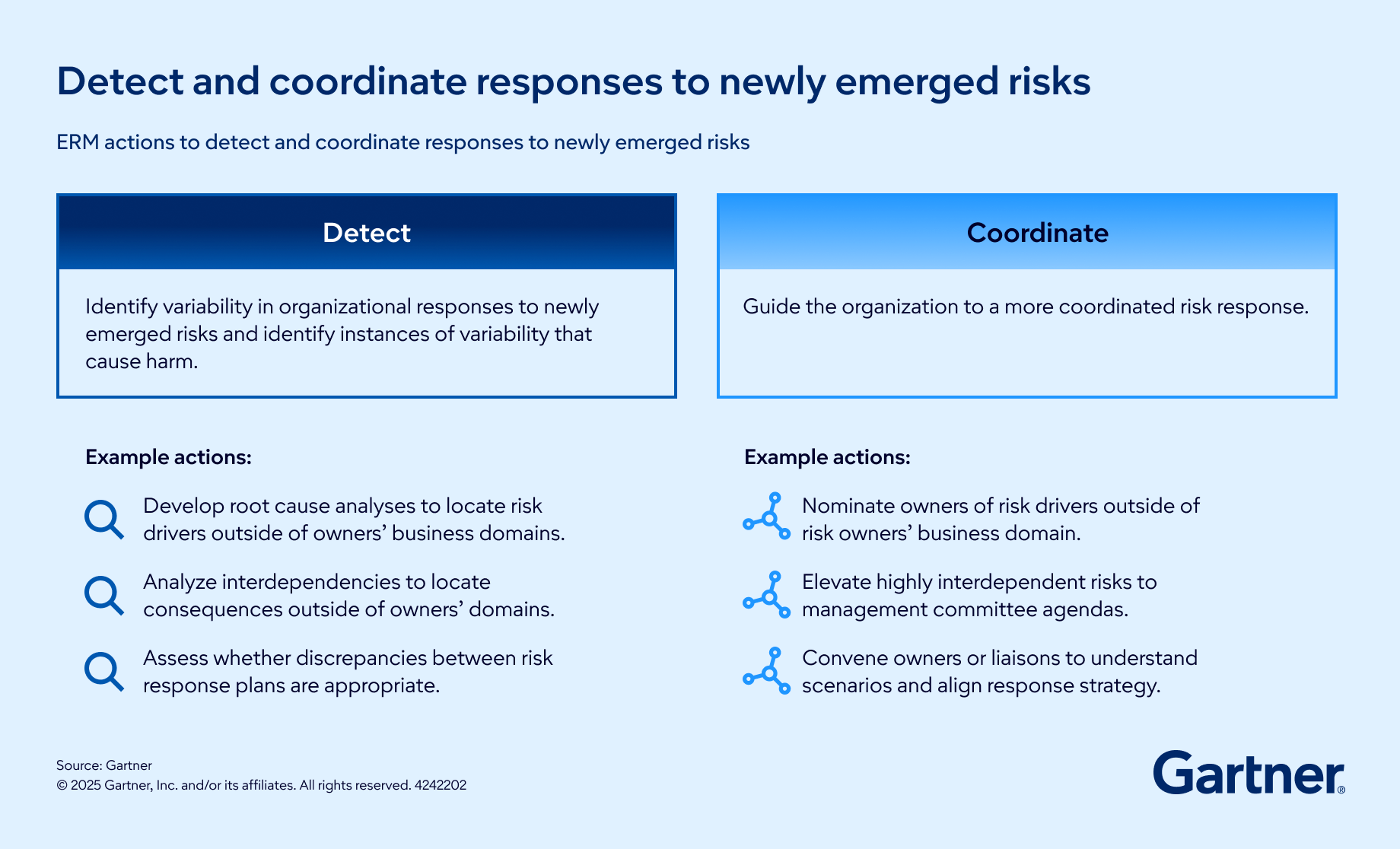
Drive coordinated responses to newly emerged risks

The velocity and volume of new risk exposures has increased. Furthermore, their consequences are increasingly complex and affect different parts of organizations at different times.

Challenge for heads of ERM

Broadly managing emerging risks like existing enterprise risks creates misaligned responses. The typical, centralized approaches to managing emerged, material risks leads to missing, wasteful or even harmful risk treatments.

Recommended actions

Respond to newly emerged risks by detecting harmful variability in responses and leading efforts to coordinate those responses.

PRIORITY 3

Transform ERM’s insight capabilities with analytics and AI

AI has elevated stakeholder expectations around the level of information available for decision making. This includes risk decisions.

Challenge for heads of ERM

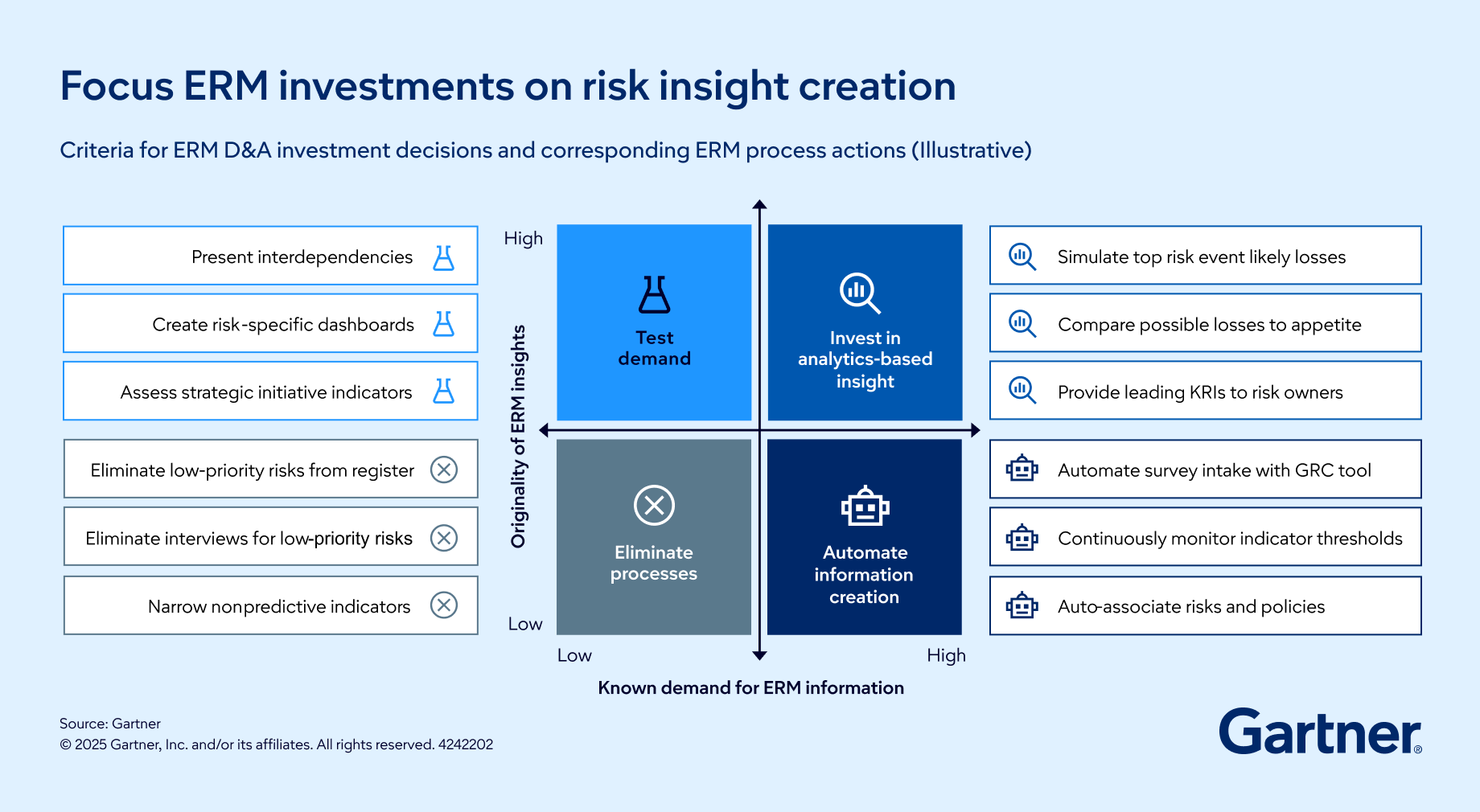
Deepening risk insights requires building an ERM technology and analytics capability. Throughout its existence as a corporate function, ERM has always been tasked with presenting qualitative information to risk committees. Building this capability requires both investments in analytics and demand sensing, as well as disinvestments or automation of routine information gathering.

Recommended actions

Focus ERM investments on risk insight creation by discovering and deploying analytics in high-demand areas, while disinvesting from activities with low insight demand.

Don’t navigate 2026 alone

Work with Gartner to gain clarity, confidence and a competitive edge through personalized guidance, peer-tested best practices and tools that accelerate your impact.