As FP&A leaders head into 2026, Gartner’s latest survey of over 200 CFOs reveals a landscape defined by strategic tension. Cost optimization remains a dominant priority, but more CFOs are shifting toward growth investments. At the same time, confidence in technology and talent-driven initiatives is waning, and resource constraints are intensifying.
Use these findings to pressure-test your agenda, prepare your executive team and deliver on your CFO’s priorities in 2026.
- Gartner client? Log in for personalized search results.
PRIORITY 1
Improve enterprise cost discipline while accelerating growth investment
FP&A leaders are at the center of the cost-growth tension. CFOs rank enterprisewide cost optimization as a top priority, yet capital allocation for growth also sits high on the agenda. This creates a challenging mandate: FP&A must help the organization hold the line on cost and cash while enabling investments that drive top-line outcomes. In an environment of economic uncertainty, this balancing act is critical to sustaining competitive advantage.
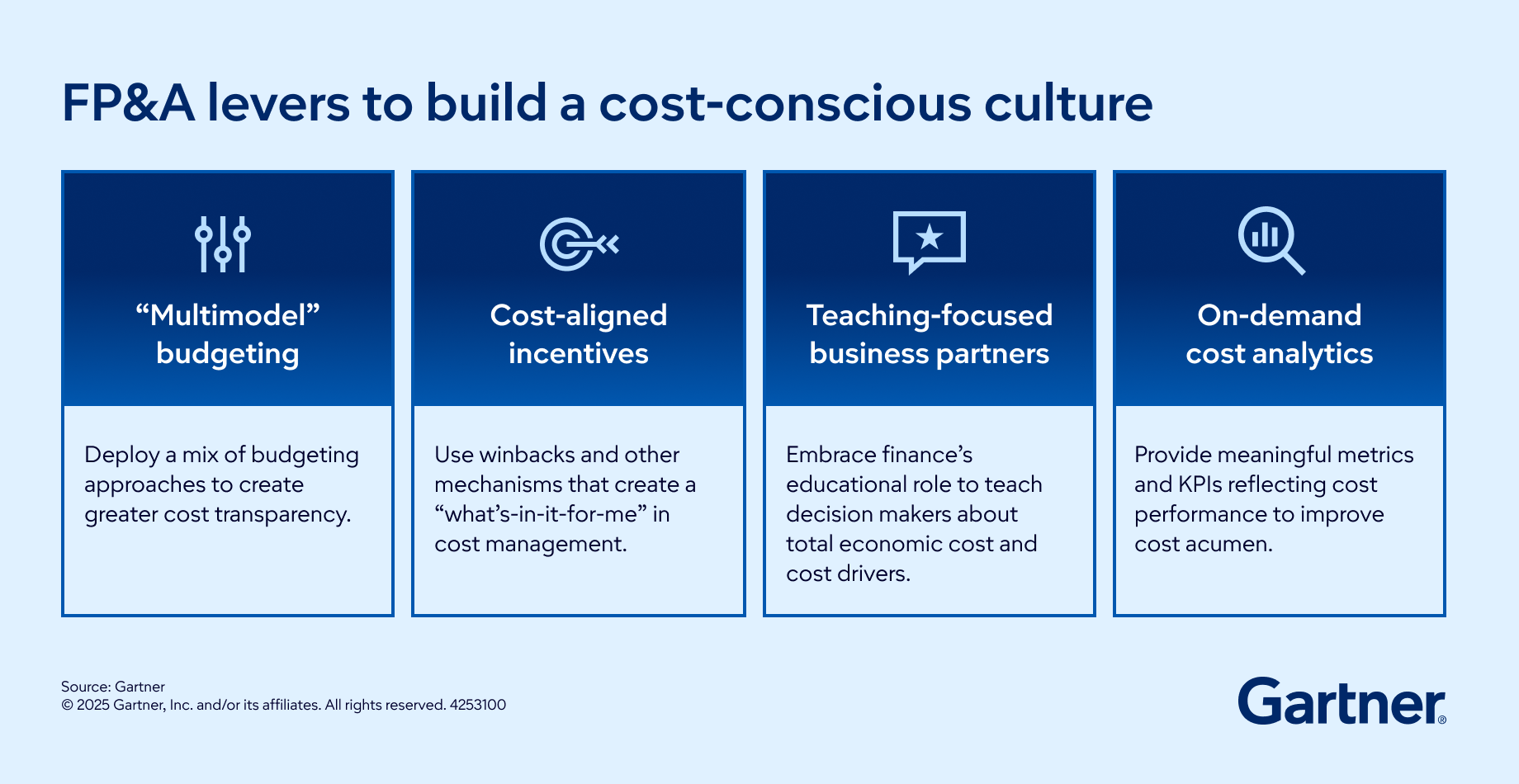
FP&A leaders should elevate the organizational cost dialogue beyond budget enforcement. Gartner recommends adopting strategic cost imbalance — overspending on differentiators while aggressively cutting commoditized activities. Aligning costs with intrinsic business differentiators — rather than market trends — drives 42% higher long-term value realization. FP&A can embed cost acumen and ownership across decision makers through multimodel budgeting, cost-aligned incentives, on-demand cost analytics and teaching-focused business partnering. These actions create a cost-conscious culture that sustains margin discipline while freeing resources for growth.
PRIORITY 2
Identify and scale high-value AI use cases in FP&A processes and analytics
AI is no longer just a back-office efficiency play — it’s a strategic lever for planning and decision making. While 84% of finance teams are deploying AI, only 4% are scaling it across the function. FP&A leaders face a critical barrier: moving beyond pilots to deliver enterprise-level impact. Without clear prioritization, AI initiatives risk stalling, leaving FP&A unable to meet rising expectations for speed and insight.
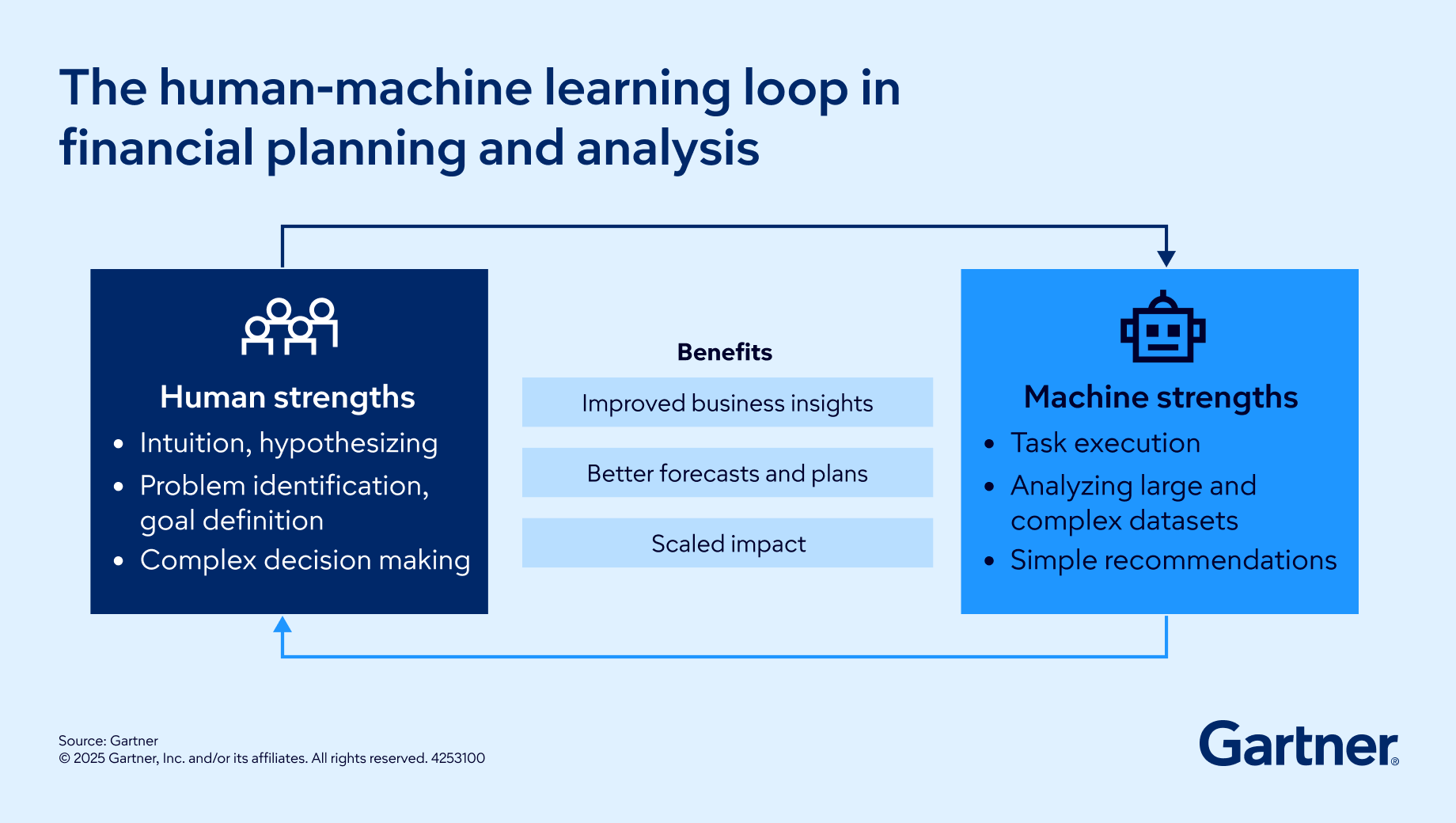
To address this challenge, FP&A leaders should focus on high-value AI use cases that complement human efforts to solve “diagnosis-resistant” business problems, like identifying drivers and decision points. Thinking of AI as a singular process automation tool will greatly limit its impact.
PRIORITY 3
Add new digital skills and roles to the team
Technology ambitions will fail without the right talent. AI is reshaping the finance workforce, shifting the traditional, bottom-heavy pyramid into a diamond by eliminating entry-level roles. FP&A leaders must prepare for this transformation by redefining roles and accelerating digital skill development. Without a proactive workforce strategy, FP&A risks losing critical tacit knowledge while falling behind on analytics capability.
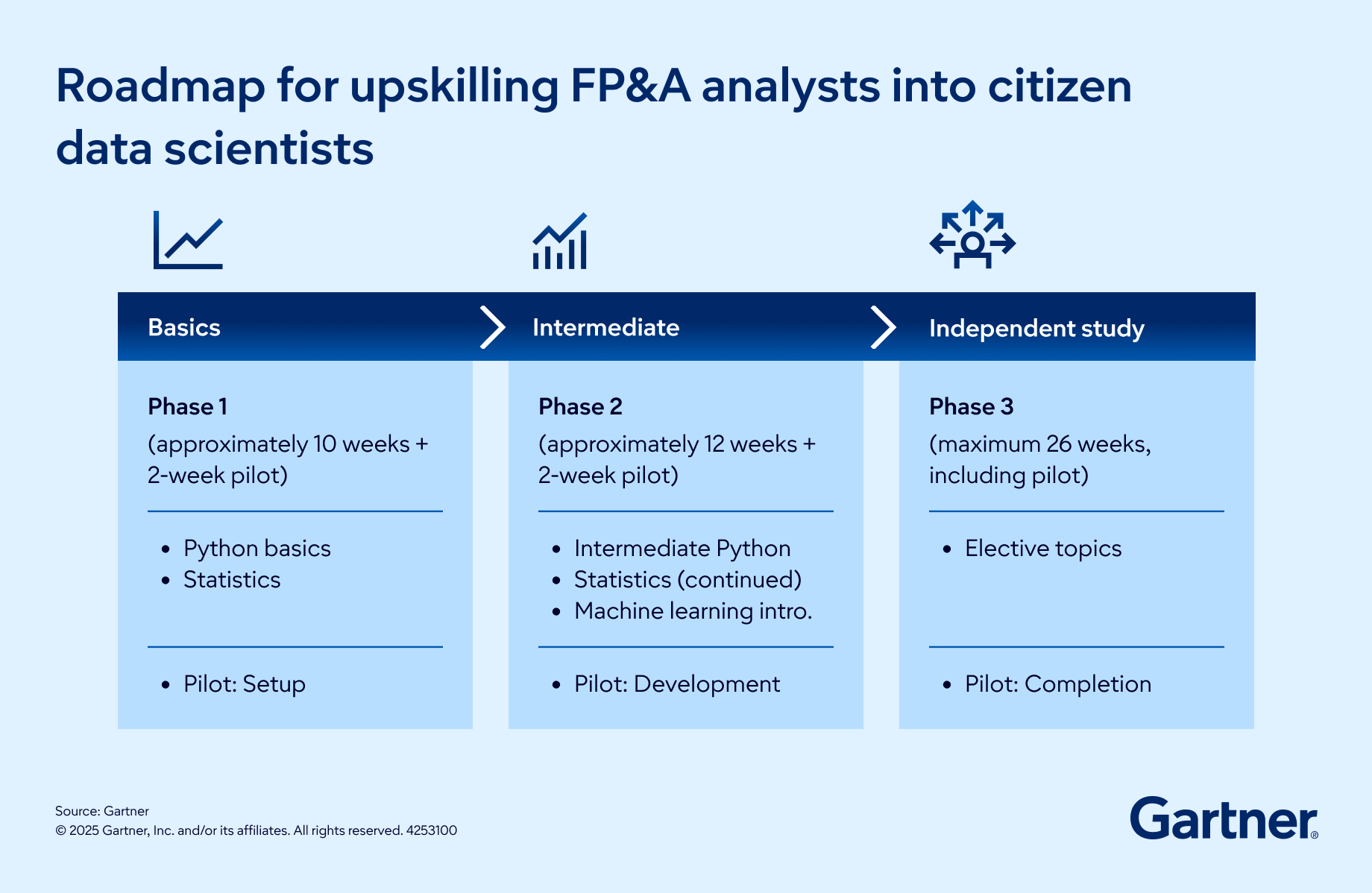
Gartner recommends upskilling FP&A analysts into citizen data scientists — finance professionals trained in Python, statistics and machine learning — who can take on model-building tasks that complement the work of traditional data scientists. Additionally, FP&A leaders must fundamentally rethink the composition of their teams by adding new roles, like AI product managers and knowledge engineers, as AI gets closer to becoming a core part of day-to-day finance operations.
Don’t navigate 2026 alone
Work with Gartner to gain clarity, confidence and a competitive edge through personalized guidance, peer-tested best practices and tools that accelerate your impact.