As corporate controllers head into 2026, Gartner’s latest survey of over 200 CFOs reveals a landscape defined by competing imperatives. Controllers are tasked with supporting CFOs in balancing cost pressures with growth ambitions, all while leading the shift to AI-first accounting.

Gartner recommends controllers prioritize three key actions to help strike balance between cost, growth and AI ambitions:

1
Identify and scale high-value AI use cases.
2
Redefine roles and skills.
3
Accelerate transformation with limited budget.

Use these findings to pressure-test your agenda, prepare your executive team and deliver on your CFO’s priorities in 2026.

PRIORITY 1

Identify and scale high-value AI use cases in accounting

AI adoption in finance is widespread, but scaling remains elusive. Only 4% of finance teams have moved beyond pilots. While knowledge management is a common starting point for finance teams getting started with AI, controllers should consider some less-established, high-feasibility use cases that demonstrate significant potential.

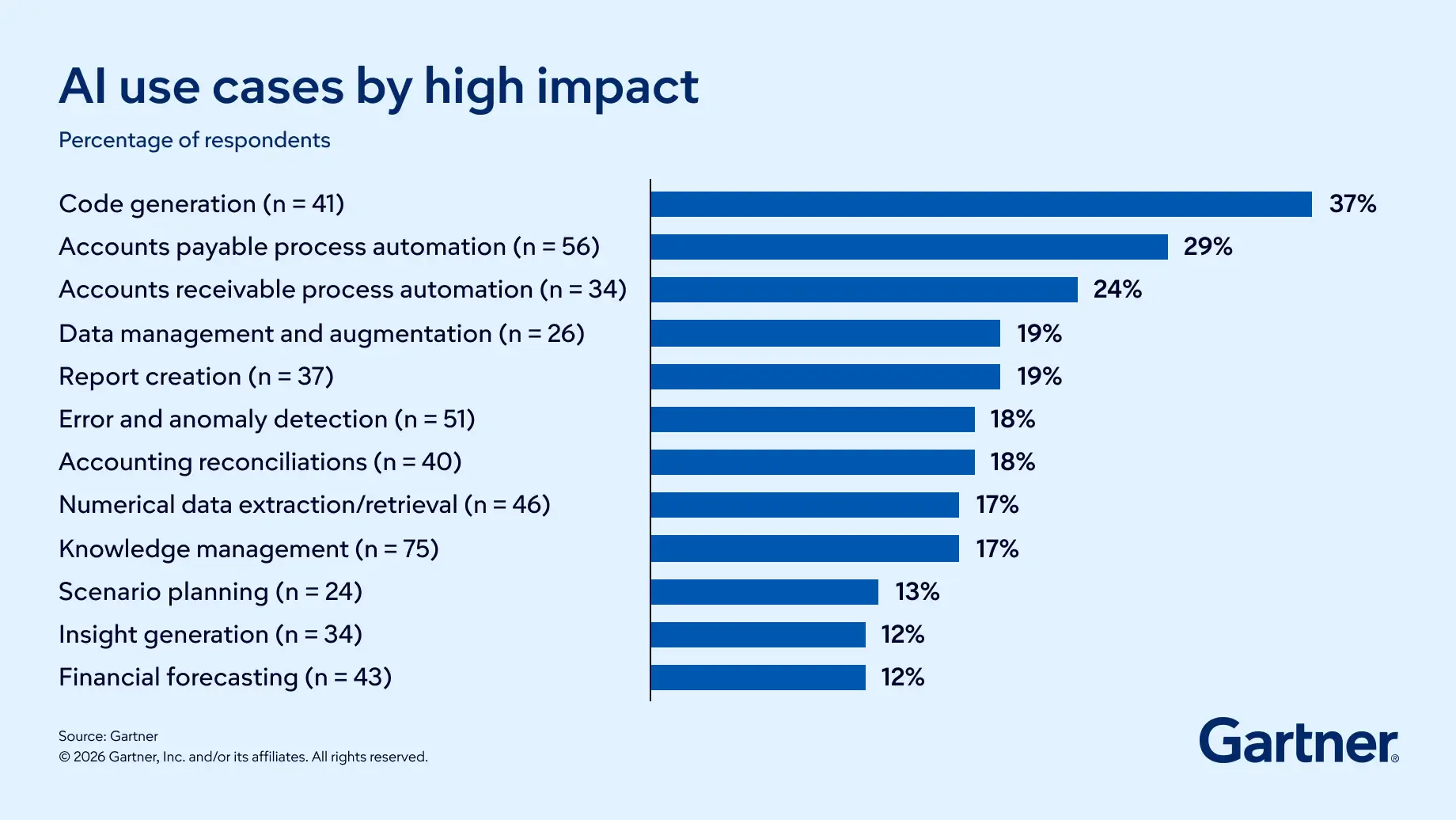
For example, 37% of finance teams using AI for code generation report a high impact, as it enables staff to find custom, high-leverage opportunities for increased automation and insight generation. Other high-feasibility, high-impact use cases include accounts payable automation and error and anomaly detection. Controllers can consult the Gartner AI Use Case Insights tool to identify additional opportunities for implementing underused, yet relatively easy-to-implement, AI use cases.
PRIORITY 2

Redefine roles and skills in the accounting team

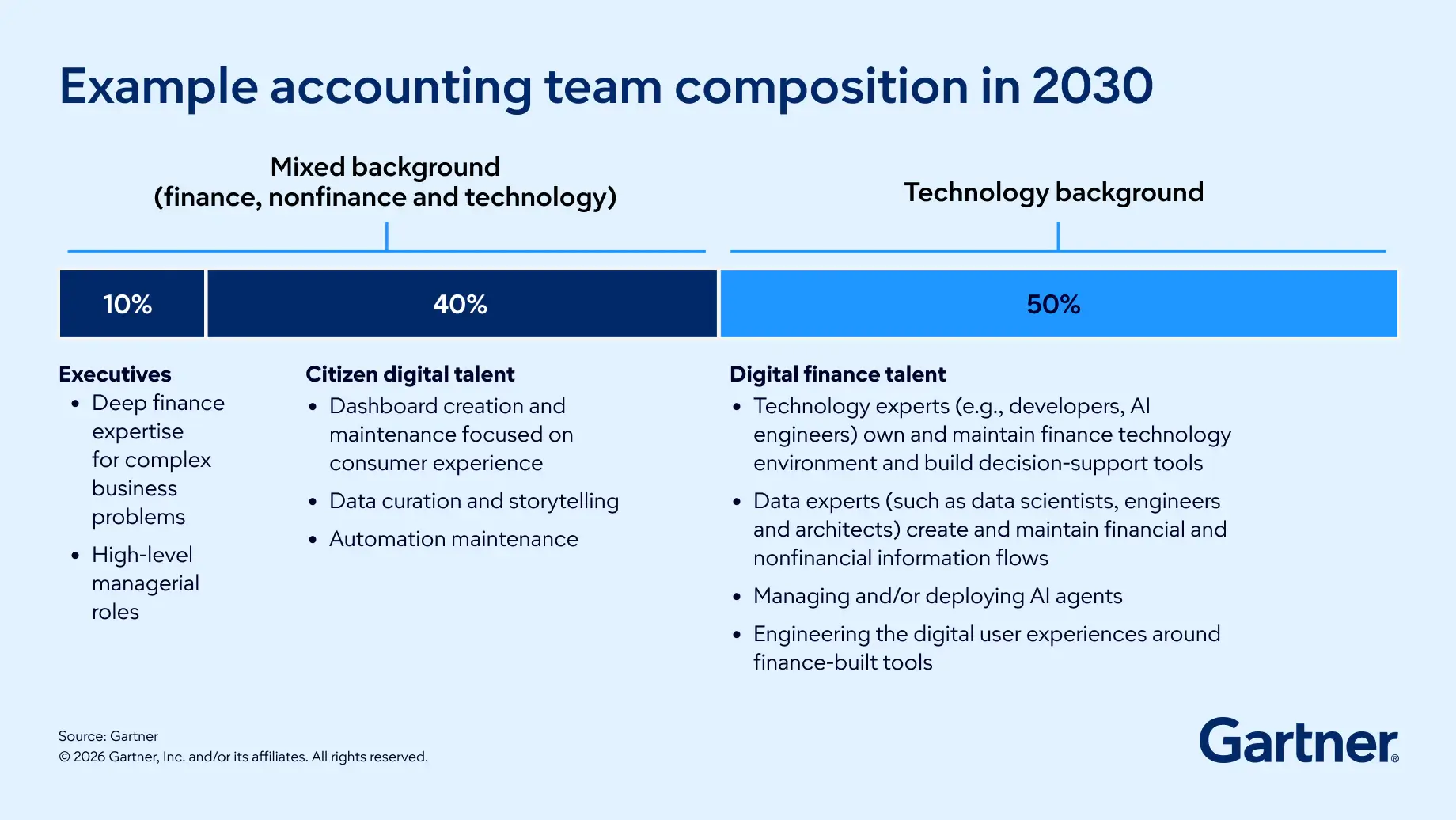
AI is reshaping the talent landscape, eliminating entry-level roles and shifting the traditional bottom-heavy finance pyramid into a diamond. By 2029, nearly one-third of finance roles will depend on human-AI collaboration. 

Controllers must act now to redesign job architecture and performance metrics that accommodate this co-dependence. For example, leading accounting teams are hiring technical talent from nonfinance backgrounds and investing in citizen digital talent programs to upskill existing staff. 

PRIORITY 3

Accelerate accounting transformation with a limited technology budget

Too many organizations are still trapped in an eight-plus-day accounting close, hindering real-time decision making. Cloud ERP delivers real promise for accounting leaders by enabling continuous recording, reconciliation and on‑demand reporting — the core ambitions of modern record-to-report (R2R) and autonomous accounting. However, many finance leaders experience regret following cloud ERP deployment due to unclear frameworks for vendor selection and post-go-live process improvement. 

To navigate the continuous change brought on by cloud ERP, Gartner recommends controllers take the following actions:

  • Establish business-led governance bodies.
  • Develop a roadmap with release dates and internal testing and training activities.
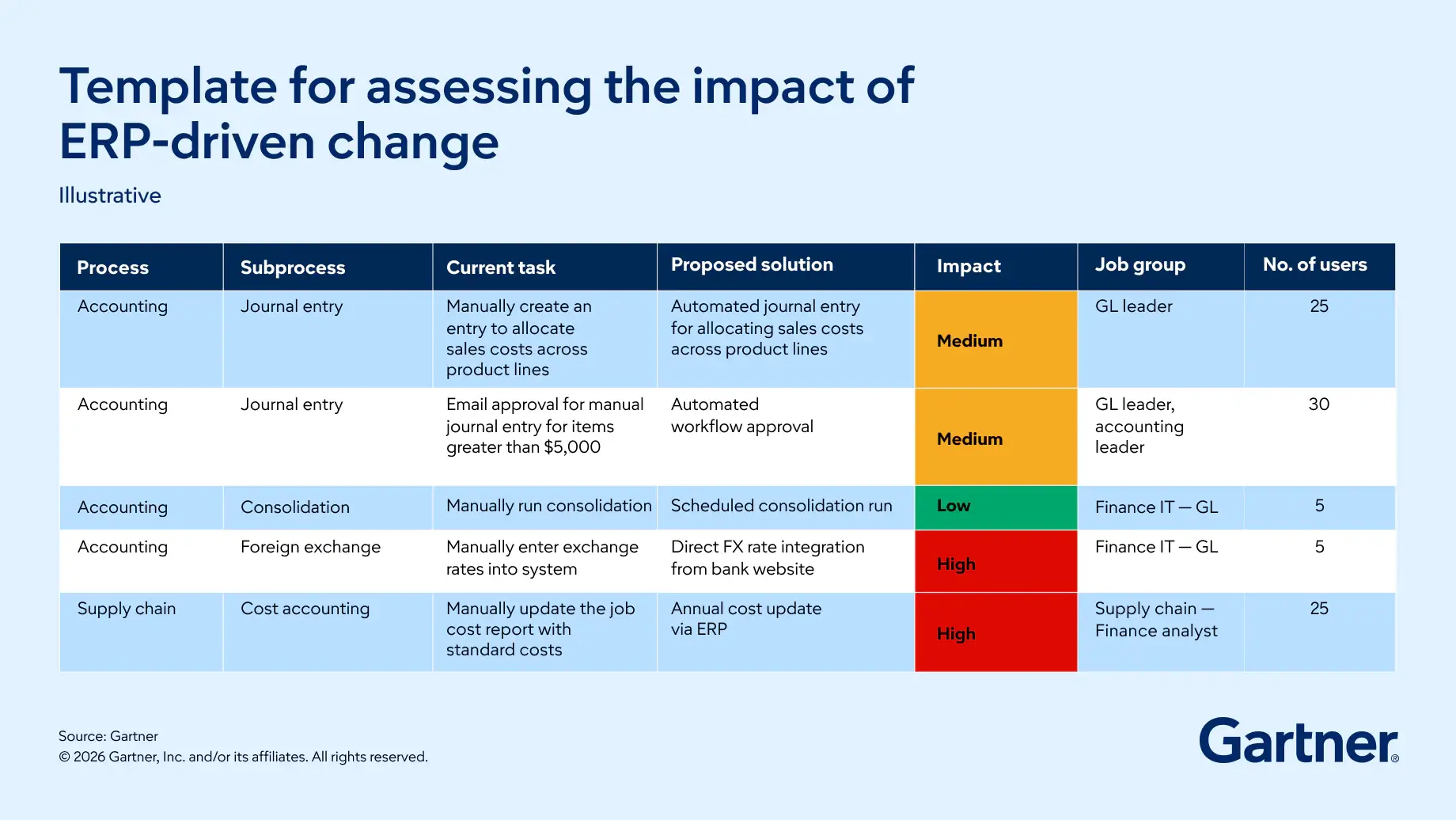
  • Conduct impact assessments for all ERP-driven changes.

Don’t navigate 2026 alone

Work with Gartner to gain clarity, confidence and a competitive edge through personalized guidance, peer-tested best practices and tools that accelerate your impact.