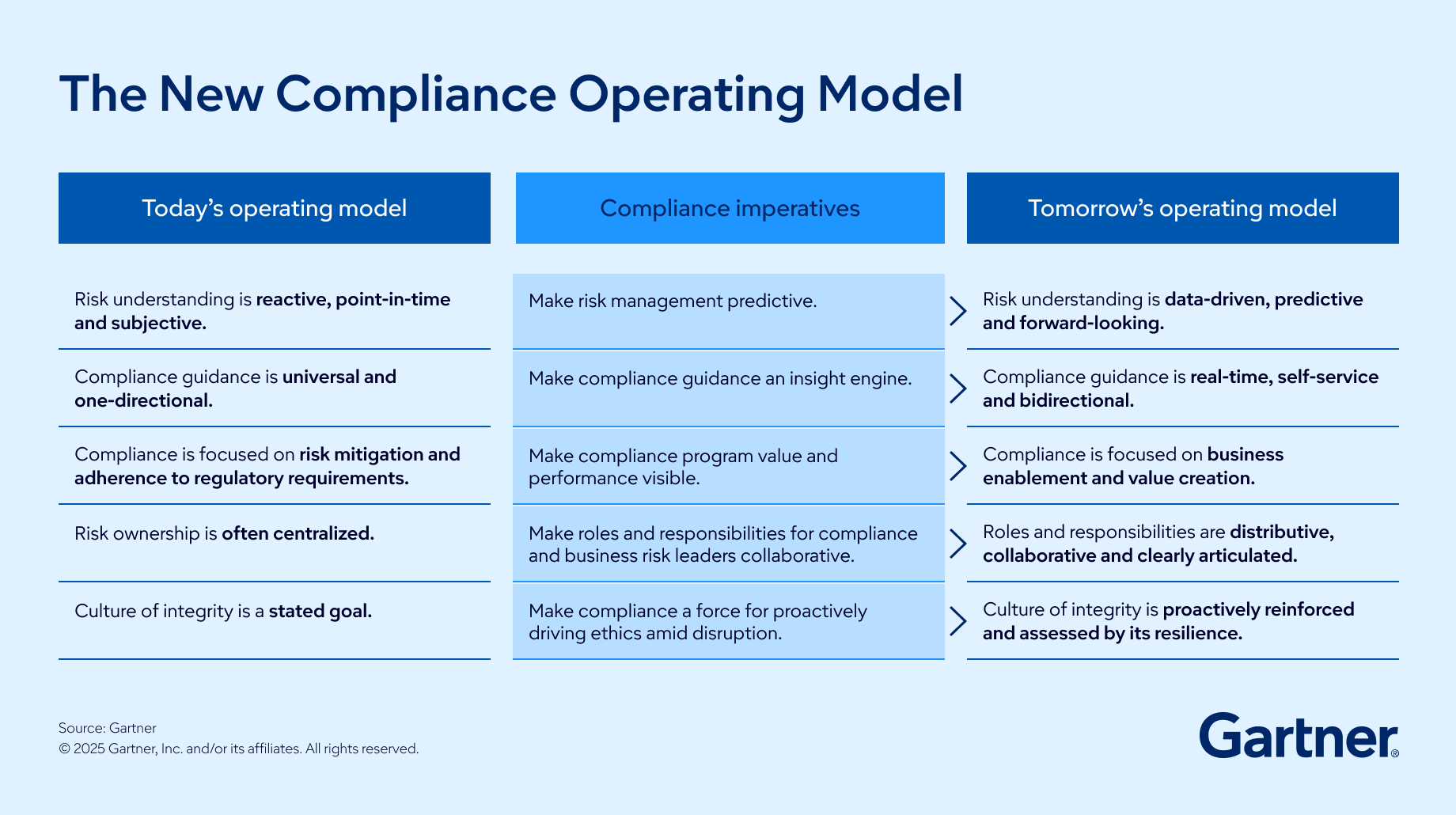
In a compliance environment defined by regulatory shifts, economic uncertainty and societal change, it’s clear traditional operating models are falling short. Static guidance, reactive risk assessments and centralized ownership can’t keep pace with emerging threats or contribute to business agility. 

The compliance operating model of tomorrow embraces predictive, data-driven insights and dynamic guidance. It also relies on clear, collaborative roles to transform compliance into a strategic driver of resilience and growth.

Use the following insights to set your vision and functional objectives in the year ahead.
PRIORITY 1

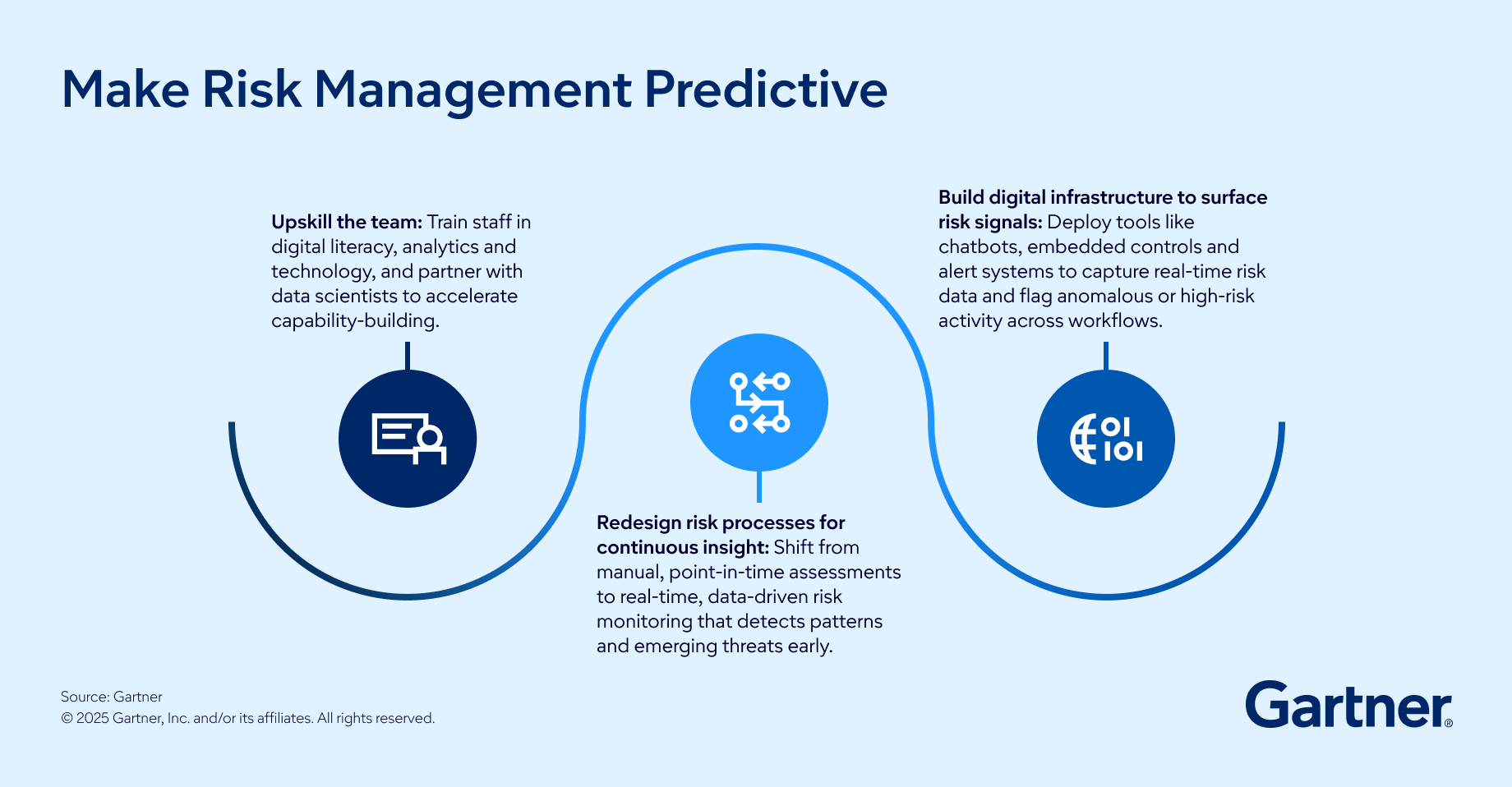
Make risk management predictive

Challenge for chief compliance officers

Compliance teams face structural challenges in predictive risk detection due to limited access to reliable data, insufficient technical capabilities and outdated manual processes. These barriers make it more difficult to identify emerging risks early, analyze large datasets effectively and move beyond subjective, point-in-time risk assessments.

Recommended actions

Redesign risk processes for real-time monitoring, upskill teams in analytics and technology, and build digital infrastructure to proactively capture and flag risk signals.

PRIORITY 2

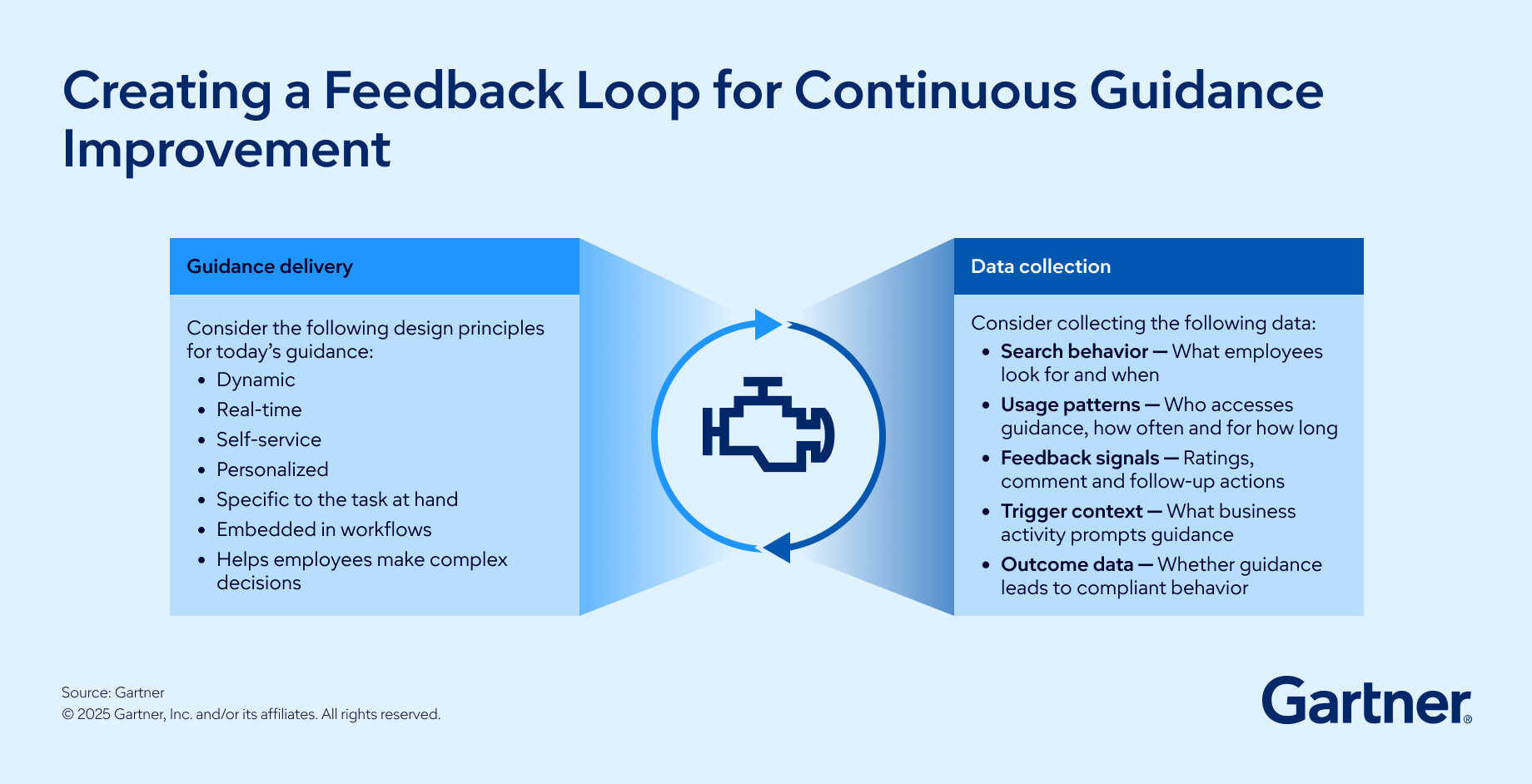
Make compliance guidance an insight engine

Challenge for chief compliance officers

Static policies quickly become outdated in today’s high-change environment, and employees expect real-time, tailored answers. Additionally, CCOs often miss opportunities to leverage guidance usage data as a means of influencing future compliance interventions and activities.

Recommended actions

Create dynamic, real-time guidance embedded in workflows and tailored to employee needs. At the same time, collect usage, search and outcome data to build a continuous feedback loop for improvement.

PRIORITY 3

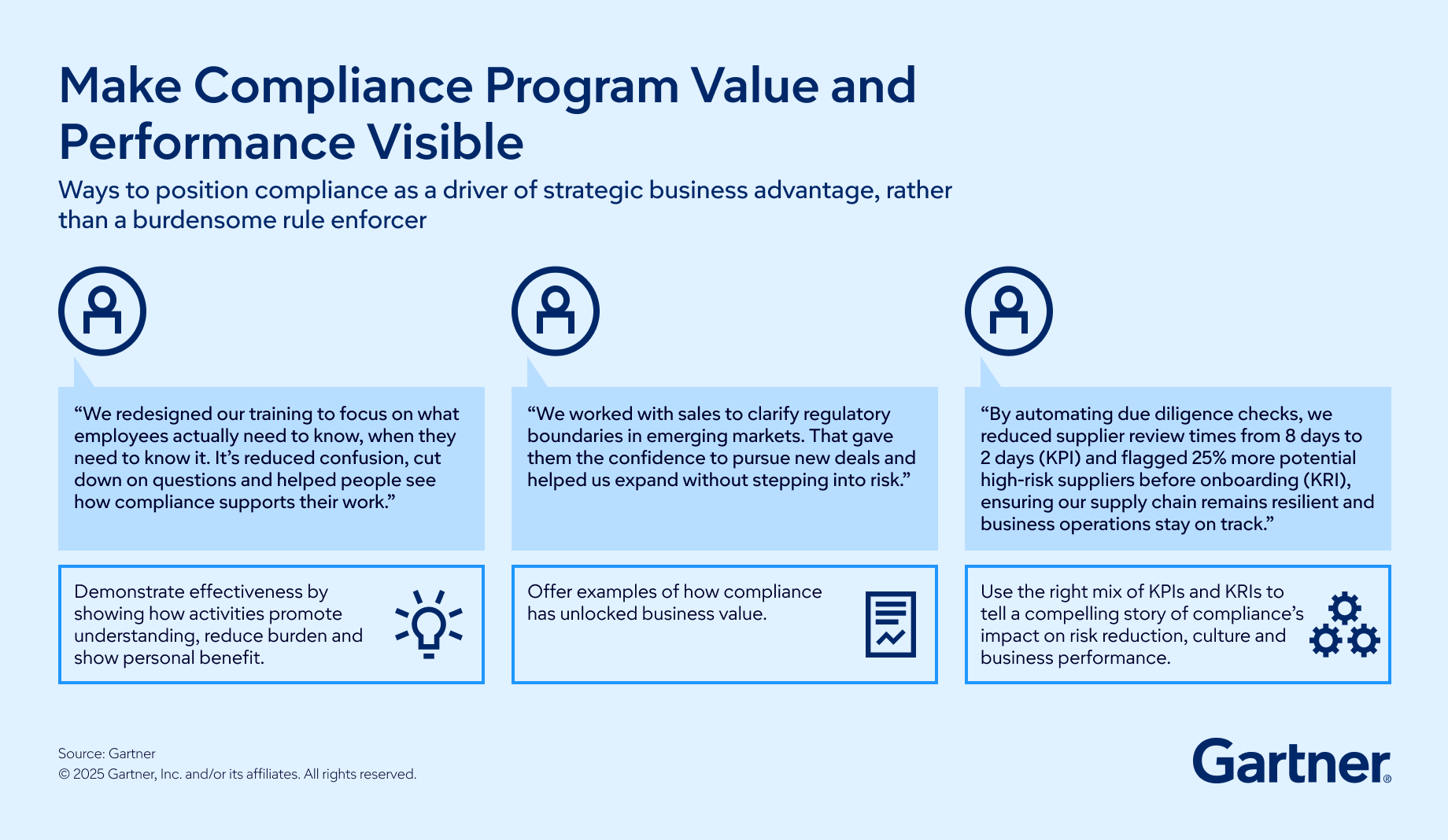
Make compliance program value and performance visible

Challenge for chief compliance officers

Compliance is often seen as burdensome or disconnected from workflows, and business leaders typically struggle to link compliance efforts to measurable business outcomes.

Recommended actions

Frame compliance as a strategic enabler. Demonstrate the effectiveness of compliance activities by telling compelling stories of risk reduction and performance improvement that are backed by a mix of KPIs and key risk indicators (KRIs).

PRIORITY 4

Make responsibilities for compliance and business risk leaders collaborative

Challenge for chief compliance officers

The disconnect between risk ownership expectations and reality creates blind spots that expose organizations to unmanaged risk. While compliance leaders believe business units should own risk monitoring, few business units actively engage in tracking risk indicators, leaving a critical gap in accountability and oversight.

Recommended actions

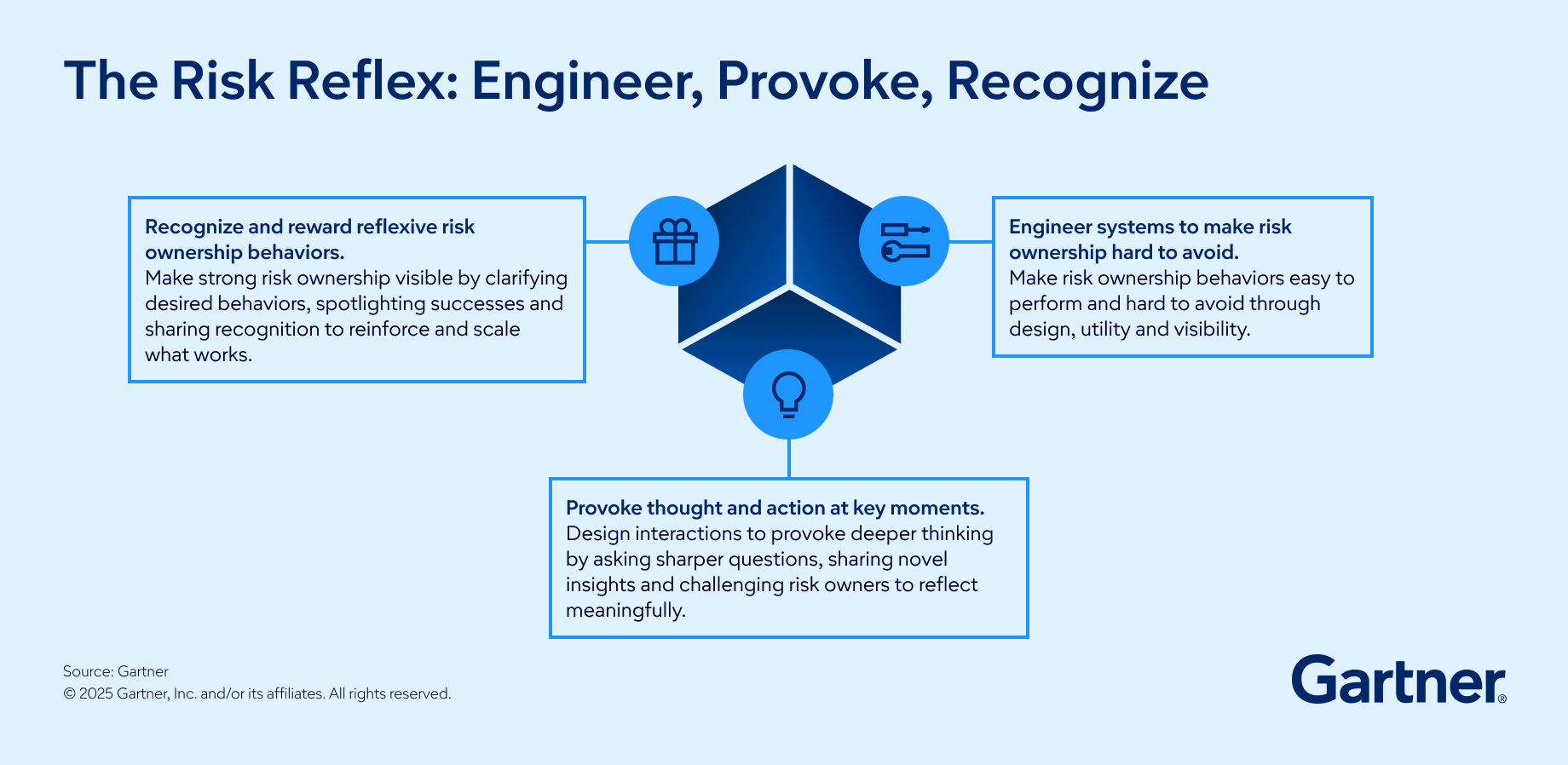
Engineer systems that make risk ownership easy and unavoidable, provoke deeper thinking at key moments, and recognize and reward behaviors that reinforce strong risk accountability.

PRIORITY 5

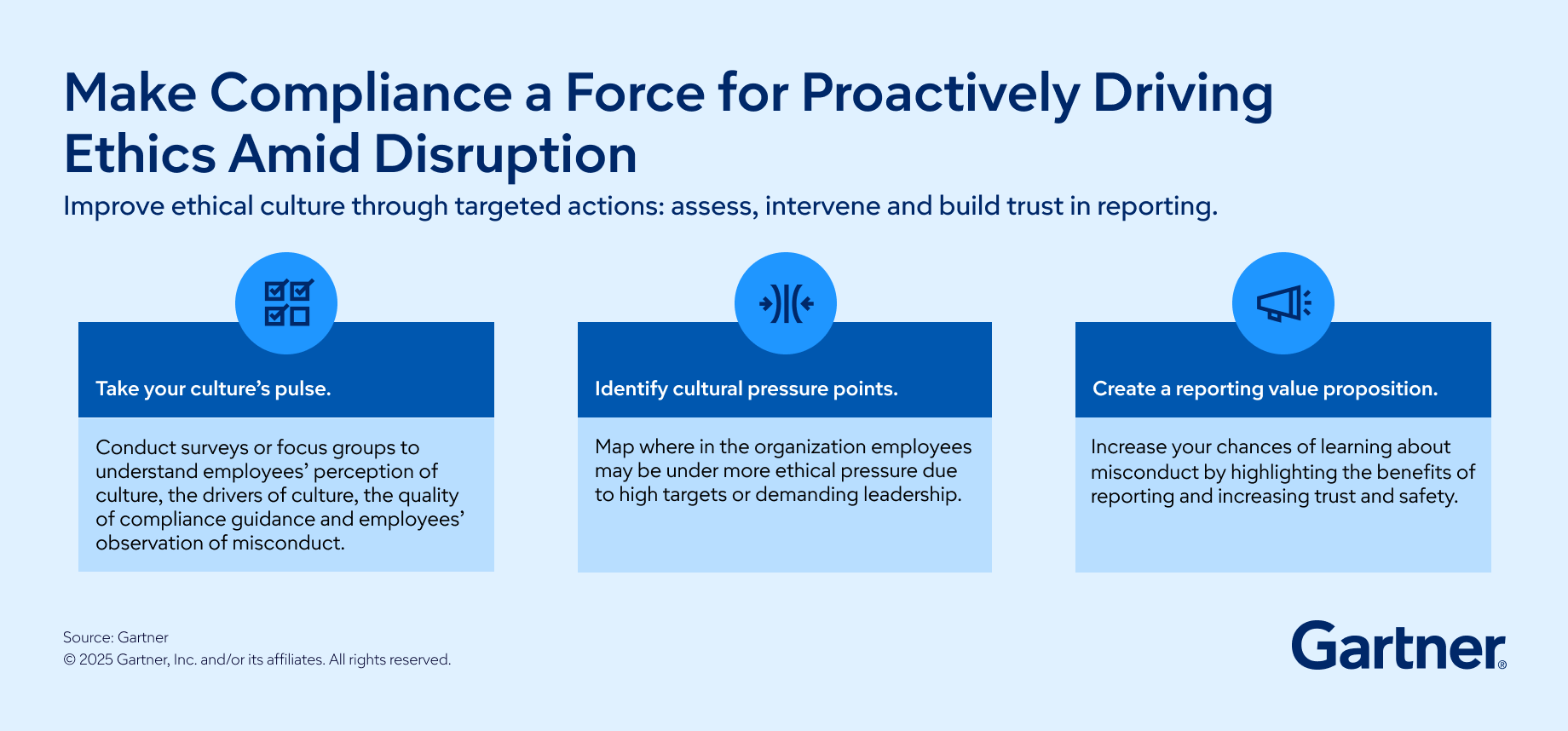
Make compliance a force for proactively driving ethics amid disruption

Challenge for chief compliance officers

From layoffs to leadership shakeups, organizational change is on the rise, which is likely contributing to higher levels of misconduct. Reporting remains stagnant, suggesting much misconduct goes undisclosed.

Recommended actions

Assess and strengthen ethical culture by surveying employee perceptions and mapping pressure points that heighten misconduct risk. Promote reporting through clear value propositions that build trust and safety.

Don’t navigate 2026 alone

Work with Gartner to gain clarity, confidence and a competitive edge through personalized guidance, peer-tested best practices and tools that accelerate your impact.