For chief product officers (CPOs) in 2026, the rapid evolution of AI, ongoing consolidation among AI vendors and other market forces are redefining product strategy, investment priorities and organizational collaboration. 

As the AI ecosystem consolidates, success will depend on framing product strategy around AI-driven value, empowering teams with the right talent and tools and ensuring seamless go-to-market execution.

  • Readiness gap: 62% of CIOs and tech leaders (the buyers) say their AI progress is “fair at best” — technology and people are not ready. 

  • Adoption lag: Half of CPOs report less than 30% of customers actively use AI features. 

  • Revenue reality: Nearly half of CPOs attribute current revenue growth to non-AI features. 

  • Consolidation wave: By 2029, 75% fewer GenAI players are expected as the vendor landscape consolidates around “companies to beat” (e.g., Microsoft, NVIDIA, Google).
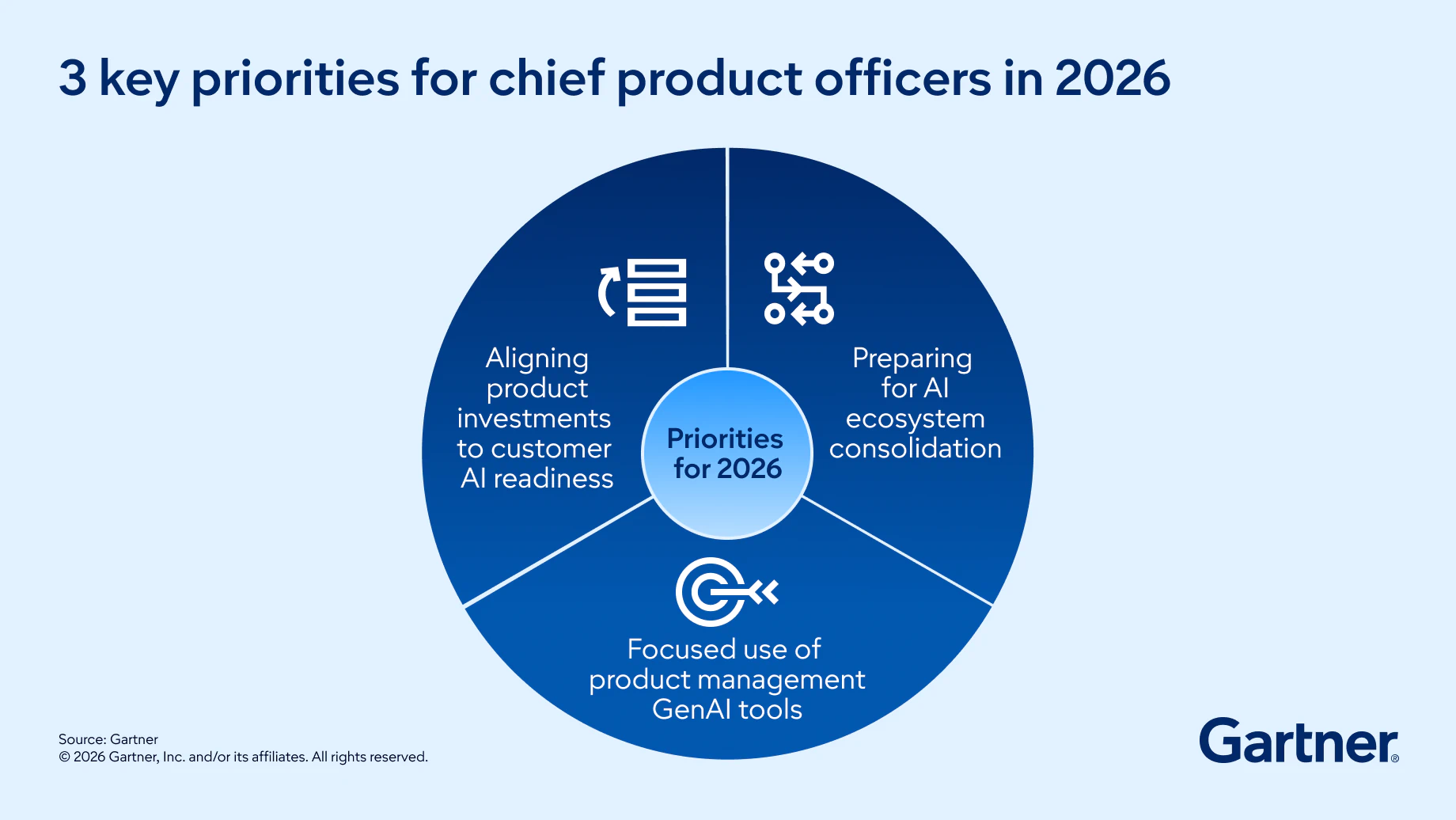
Strategic priorities for chief product officers in 2026:

1
Prepare for AI ecosystem consolidation.
2
Align product investments with customer AI readiness.
3
Focus on practical use of GenAI tools in product management.

PRIORITY 1

Prepare for AI ecosystem consolidation

The dynamic AI vendor landscape is accelerating consolidation. Customers and supply chains will be locked into ecosystems, such as region-specific AI data and regulatory environments. This will ripple down to CPO portfolios as demand for compatibility and interoperability rises.

CPOs need to ensure their products can integrate with the major players such as Microsoft, Google, AWS and NVIDIA. Now is the time to invest in flexible architectures and robust APIs to keep the product portfolio adaptable and future-ready. CPOs should anticipate AI stack consolidation and customer requirements for compatibility and interoperability within their chosen AI ecosystems.

PRIORITY 2

Align product investments with customer AI readiness

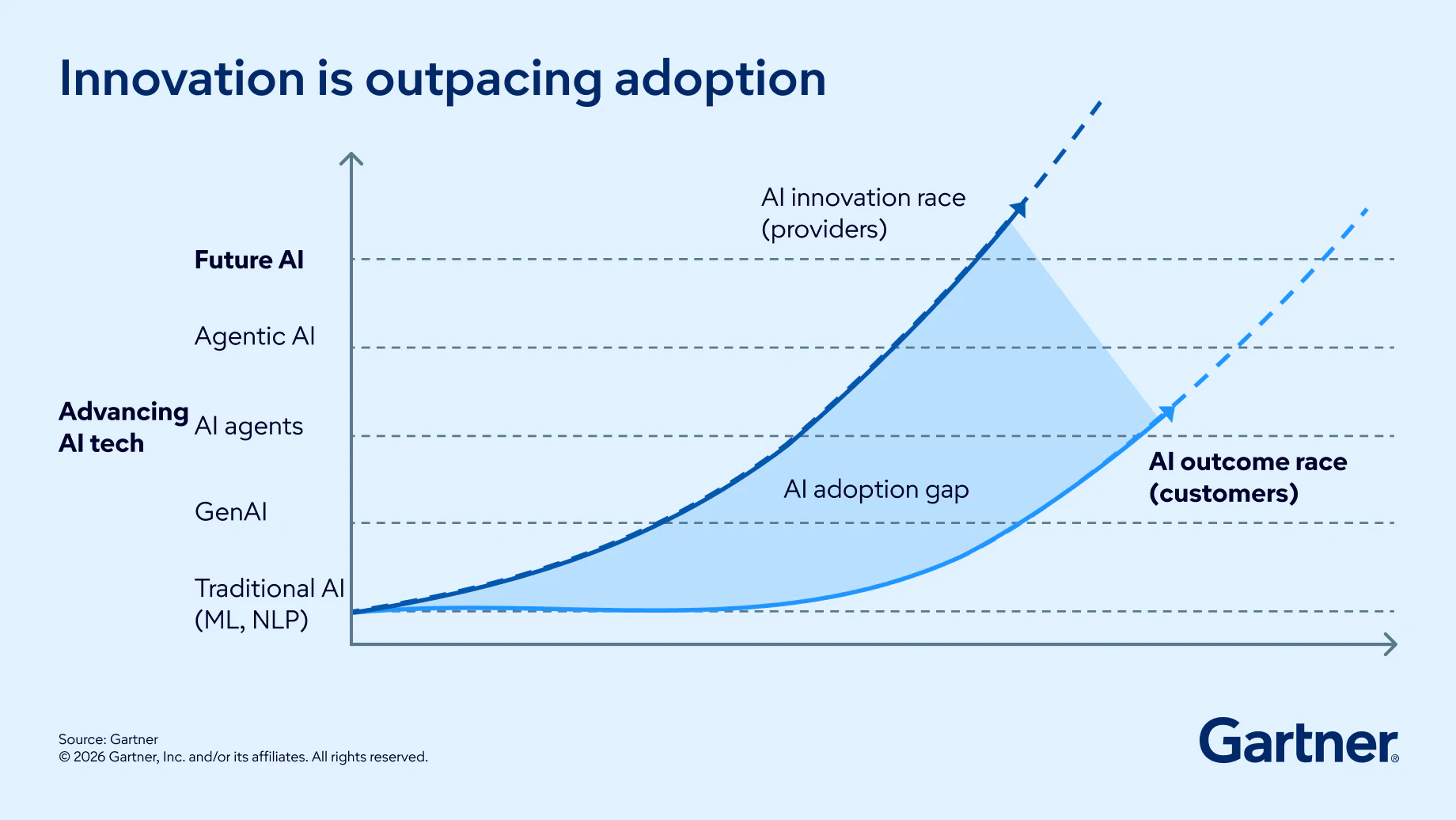
The gap between the pace of AI innovation and adoption is widening, fueling questions about ROI and valuation and stoking fears of an AI bubble.

In many cases, customers simply aren’t fully utilizing new AI features. CPOs should work closely with customers to co-create and test new AI use cases, ensuring their roadmap matches real-world needs.

CPOs must also balance investments across their portfolio. When a large share of revenue growth in 2026 is still associated with non-AI legacy products, CPOs need to make decisions on how to balance the distribution of funds toward:

  • Legacy products: Enhancing current revenue-generating user-active AI (and non-AI) capabilities
  • AI features generating revenue: Investing in improvements to AI compatibilities and interoperability to fuel customer adoption
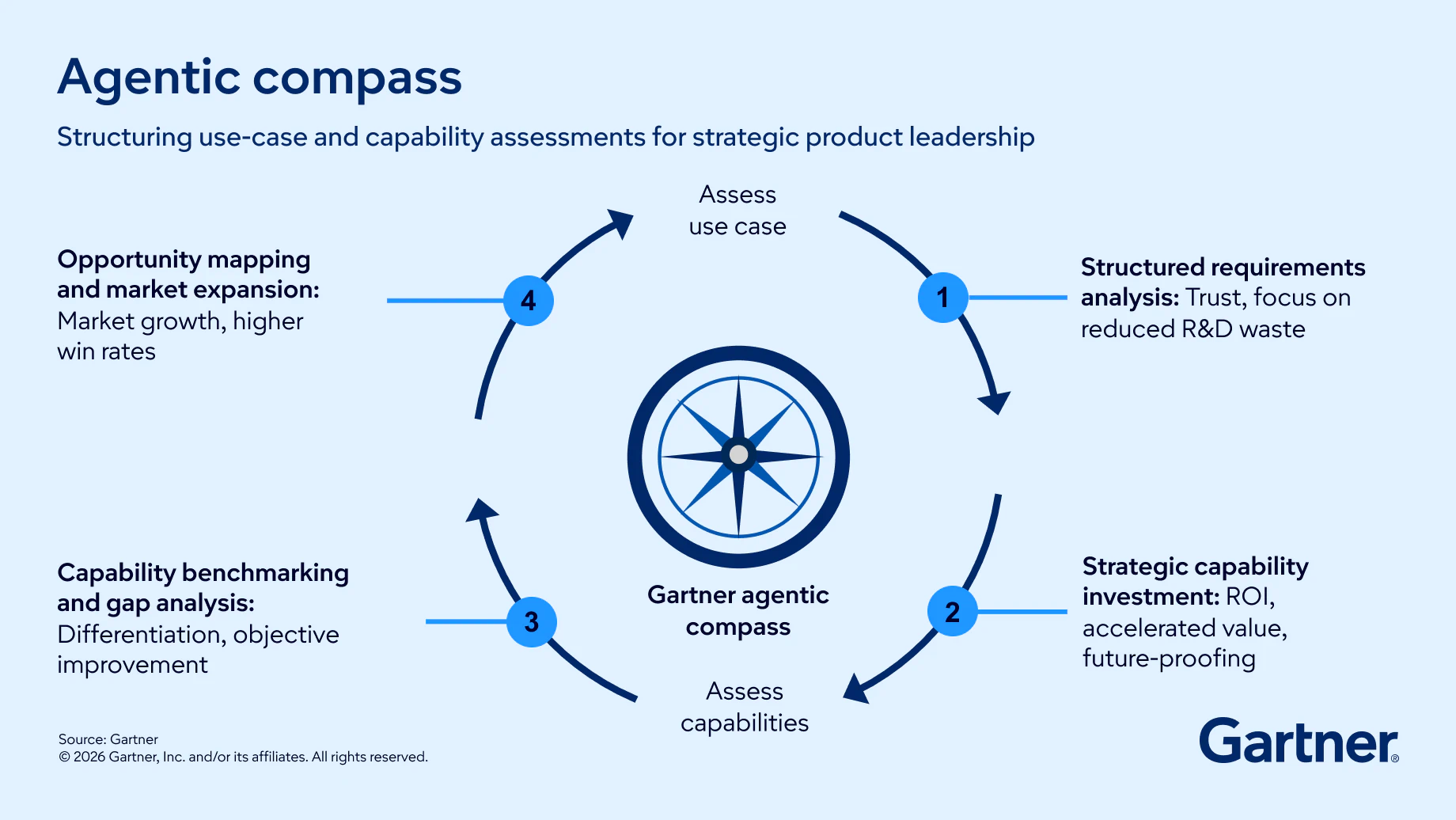
  • AI innovation: Planning for agentic AI by using a use-case assessment framework, such as the Gartner Agentic Compass, to focus investments

PRIORITY 3

Focus on practical use of GenAI tools in product management

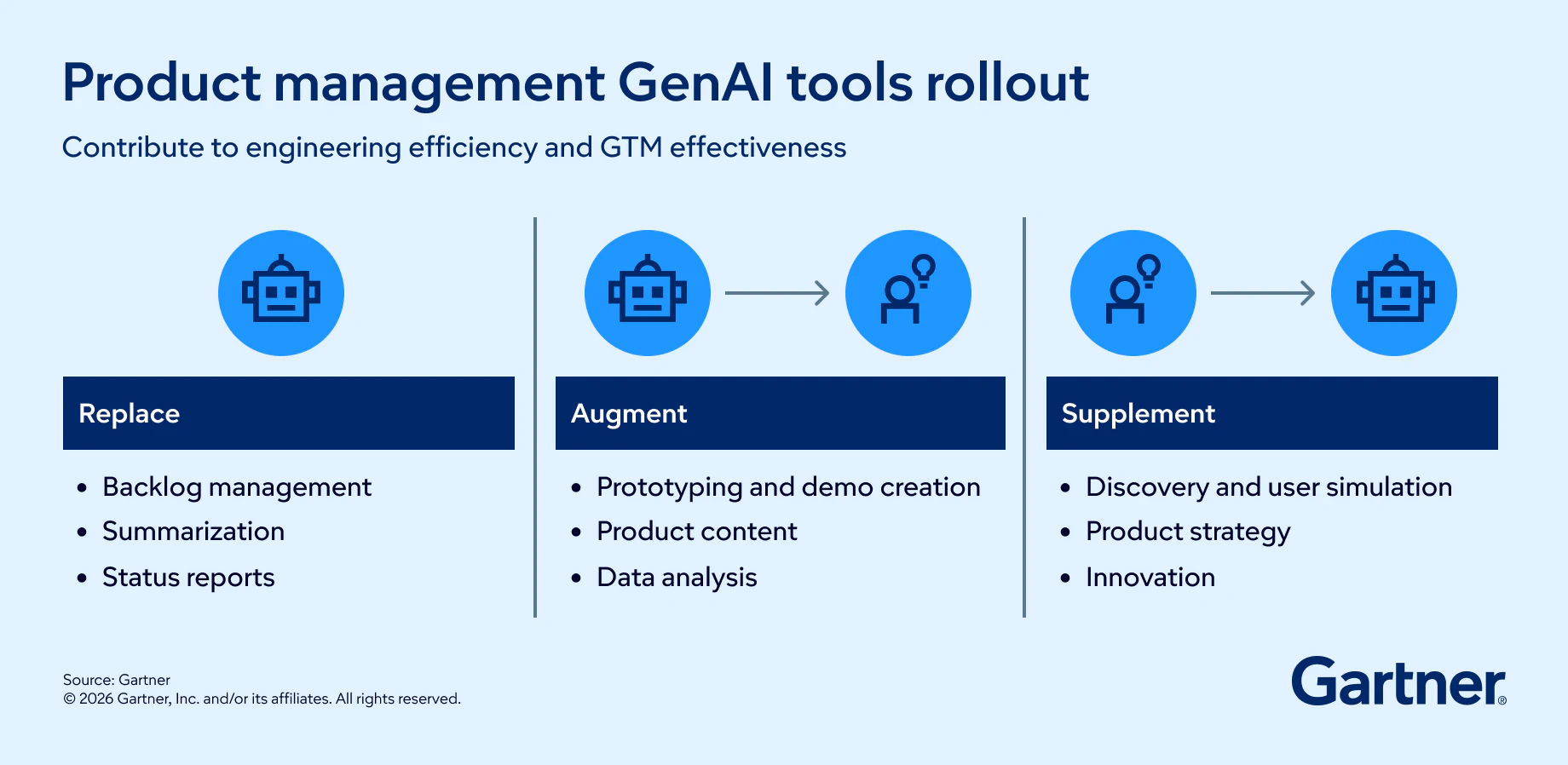
AI has moved beyond automating repetitive data analysis tasks and is headed toward autonomous product innovation. This transition impacts how Product Management and Engineering collaborate and experiment (e.g., vibe coding user stories), and how the product team supports demonstrating product value in GTM. 

In 2026, CPOs need to budget for tools, train staff and build collaboration processes to successfully implement GenAI for higher-effort, higher-creativity tasks — with bigger ROI, such as prototype and demo creation. 

Not every change needs to be a disruptive overhaul. By augmenting and enhancing existing processes, CPOs can achieve a series of sustainable, incremental wins.

The convergence of rapid AI innovation, market consolidation and shifting customer expectations means CPOs must align their plans with their organization’s strategic ambitions. A culture of experimentation, collaboration and continuous learning will help CPOs pivot as new leaders and regulations emerge — and keep product portfolios resilient and competitive.

Ready to lead your organization into the future?

Connect with us to get actionable, objective business and technology insights that drive smarter decisions and stronger performance on your mission-critical priorities.