In 2026, chief sales officers (CSOs) will contend with significant headwinds impacting their organizations’ growth ambitions. Increased productivity demands, a growing slate of change initiatives, demand for high-speed transformation and an emphasis on cost optimization all add to the uncertainty and confusion placed on sales leaders. 

These challenges are now amplified by the rapid rise of AI, prompting several questions among CSOs, including:

- Where should I expect AI to deliver ROI?

- How do I improve seller and buyer engagement?

- Which levers can I pull to improve seller performance?

Gartner recommends CSOs act on three priorities to effectively lead sales in the year ahead.
Top priorities for CSOs in 2026

1
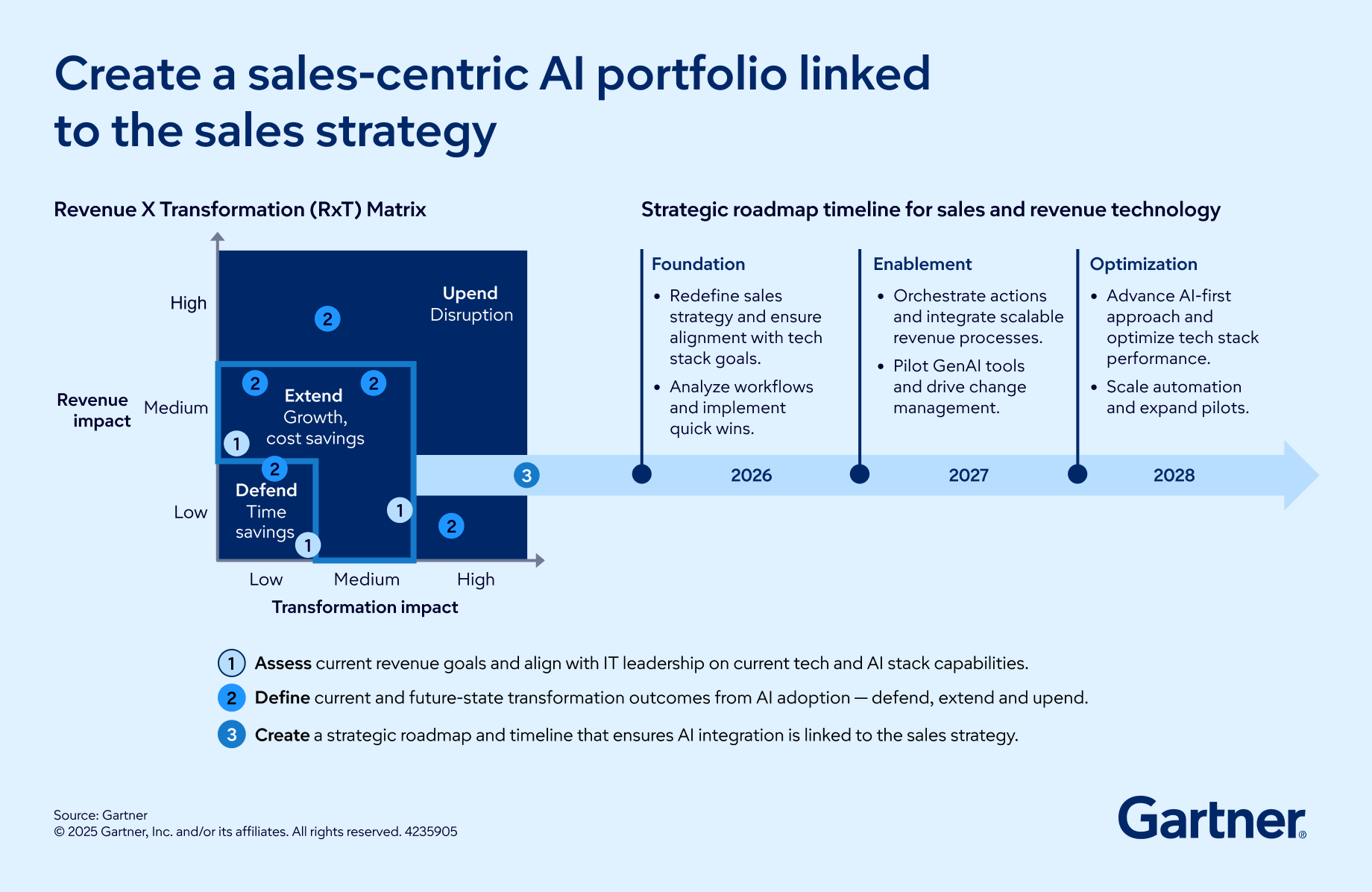
Create a sales-centric AI portfolio roadmap
2
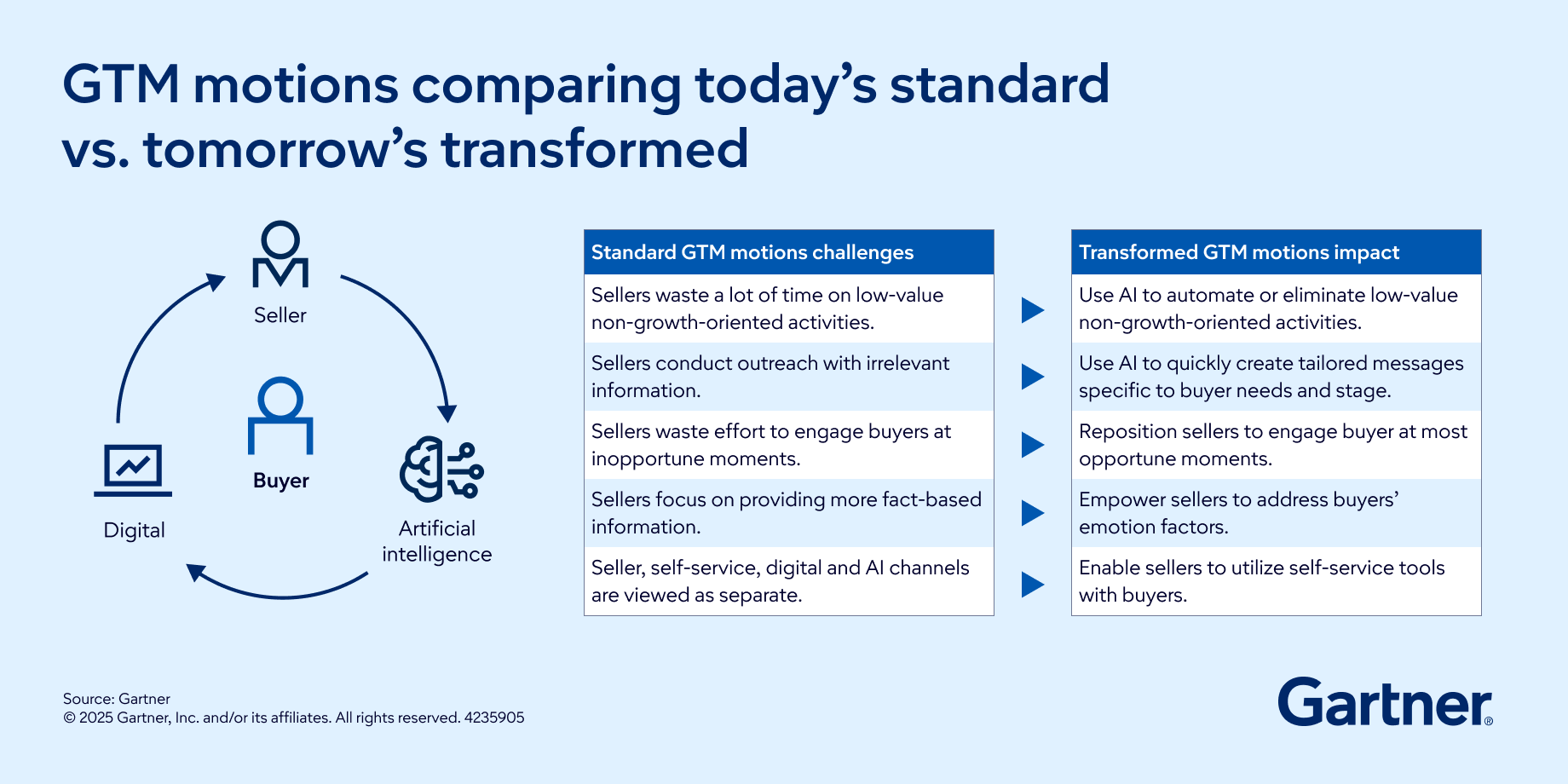
Transform go-to-market (GTM) motions to align with buyer preferences
3
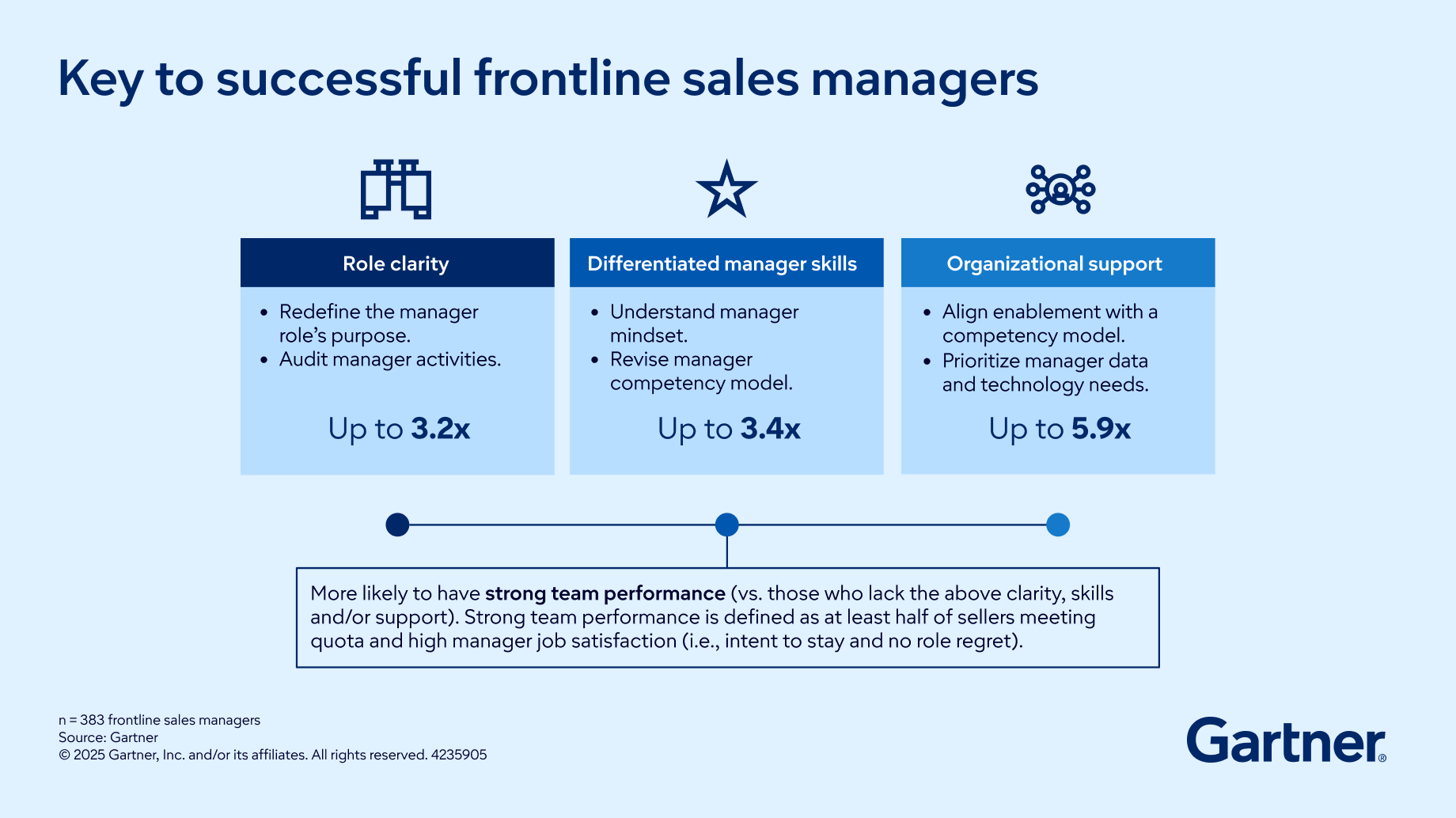
Maximize sales manager impact with role clarity and organizational support

PRIORITY 1

Create a sales-centric AI portfolio linked to sales strategy

Though more than 60% of sales teams are using GenAI, only one-third are seeing related productivity gains. Too few CSOs are engaged with sales-related tech stack initiatives.

To unlock the full value of AI, organizations should focus on building a sales-centric AI portfolio that is tightly linked to their sales strategy and business objectives.

This involves several key steps:

  • Assess current revenue goals and understand the organization's existing AI capabilities.

  • Define the desired AI outcomes — like defending current market position, extending capabilities or completely transforming sales approaches.

  • Develop a strategic roadmap for AI integration that positions AI as a productivity partner, rather than a tool.

  • Ensure all AI initiatives are aligned with the broader sales strategy so technology investments directly support business growth.

Sales success with AI ultimately depends on proactive CSO leadership, strategic alignment and a relentless focus on measurable results. By taking more ownership of AI initiatives, CSOs can bridge the gap between adoption and productivity, while driving a sustainable competitive advantage.

PRIORITY 2

Transform GTM motions to enhance seller and buyer engagement

More buyers are engaging with sellers less often and later in the sales process. Buyers are coming to engagements with more information, but more information and increased seller outreach can exacerbate declines in buyer engagement.

Position their sellers for success by placing them at the most opportune points to provide valuable and relevant insights and guidance during the B2B buyer experience in both digital self-service and seller-rep channels. 

Tailor systems of action to enhance an AI partnership for each sales role, optimally increasing productivity based on the workflows of different types of sellers.

Digital channels and tools remain crucial in B2B buying. When website content and digital tools are synchronized with the sales engagement strategy, they effectively qualify leads, educate current and prospective buyers, and address common objections.

Winning suppliers are significantly more likely to meet or exceed expectations compared to top sellers across B2B buyer emotional criteria, including making customers feel valued (87% meet or exceed), listened to and understood (87%), inspired (88%), and trusted (88%).

PRIORITY 3

Improve seller performance and maximize sales manager impact, using role clarity and organizational support

CSOs must evaluate several levers for improving seller productivity. The sales manager role is one of the most effective options for boosting seller productivity, but only 55% of CSOs say their frontline sales managers consistently meet performance expectations.

CSOs should take a step back, reimagine the sales manager role and invest at a similar level to how they invest in sellers. 

  1. Role clarity: When managers have clear expectations about what to focus on, what to deprioritize and what success looks like, they’re 3.2x more likely to have strong team performance. 

  2. Differentiated manager skills: Managers with differentiated skills, not just generic leadership skills, are 3.4x more likely to have strong team performance. Screen and hire sales manager candidates based on specific mindsets and competencies. 

  3. Organizational support: When managers are backed by the right technology, systems and cross-functional support, they’re nearly 6x more likely to have strong performance. Provide support to sales managers through tailored technology and enablement. 

If CSOs can design roles and systems correctly, they can dramatically improve both seller and team performance.

Don’t navigate 2026 alone

Work with Gartner to gain clarity, confidence and a competitive edge through personalized guidance, peer-tested best practices and tools that accelerate your impact.