AI’s rapid ascension is certainly impacting sales but not without uncertainty. Eighty-seven percent of sales leaders say CEOs and boards are pushing for AI adoption in hopes of productivity gains. But only 11% of CSOs succeed in maintaining those gains and transforming around them. 

Gartner recommends sales operations leaders act on three priorities to support CSO priorities in the year ahead:

1
Establish a strong AI foundation.
2
Reframe sales forecasting to be actionable.
3
Determine the least disruptive approach for transformation.

PRIORITY 1

Establish a strong AI foundation for maximum productivity

AI is no longer a differentiator for sales — it’s an expectation. CSOs are mandated to invest in AI to automate repetitive tasks, personalize customer interactions and optimize sales strategies for better performance. Sales operations leaders play a crucial role in defining and executing an AI roadmap that delivers measurable productivity improvements and stays ahead of industry trends.

Sales operations leaders need to navigate “AI motion sickness,” a combination of rapid changes, disillusionment symptoms typical of emerging technology, and increased awareness of existing weaknesses in data and processes inhibiting success with AI.

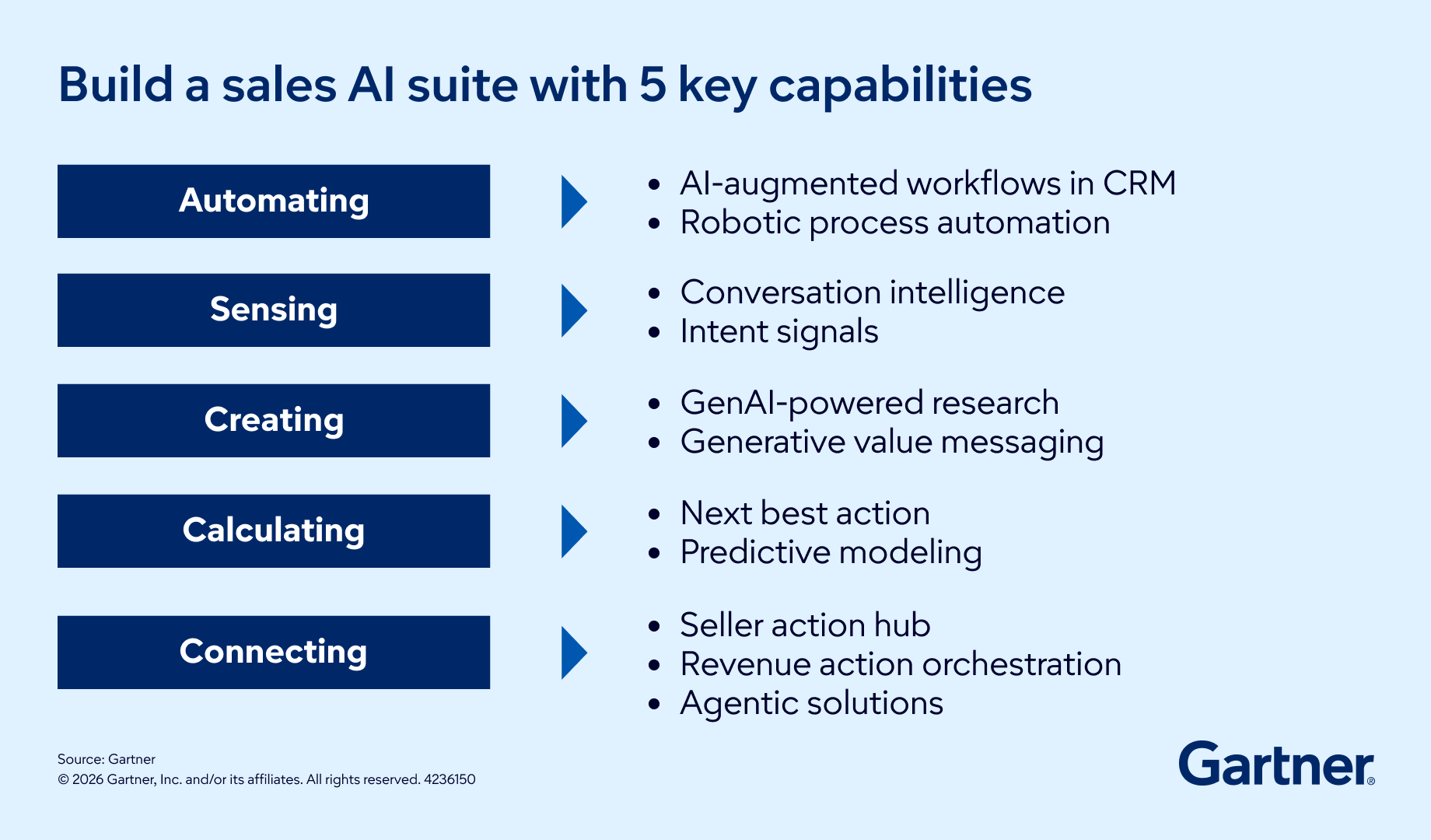
First, develop role-specific capabilities, organize relevant data and streamline processes. Then, strategically integrate the appropriate AI solutions, such as predictive analytics, automation tools, GenAI and AI agents.

PRIORITY 2

Reframe sales forecasting to deliver more than accuracy

The rise of AI has increased expectations for pipeline and forecast accuracy. In response to increased uncertainty, sales operations and CSOs are under pressure from the C-suite to provide more frequent and accurate forecasts. Requests for in-month status updates and projections are now routine but often unplanned.

Many CSOs are relying on 2000s-era techniques to improve pipeline and forecast accuracy, with a heavy emphasis on process compliance and basic predictive analytics. However, the rules and the goalposts have all changed.

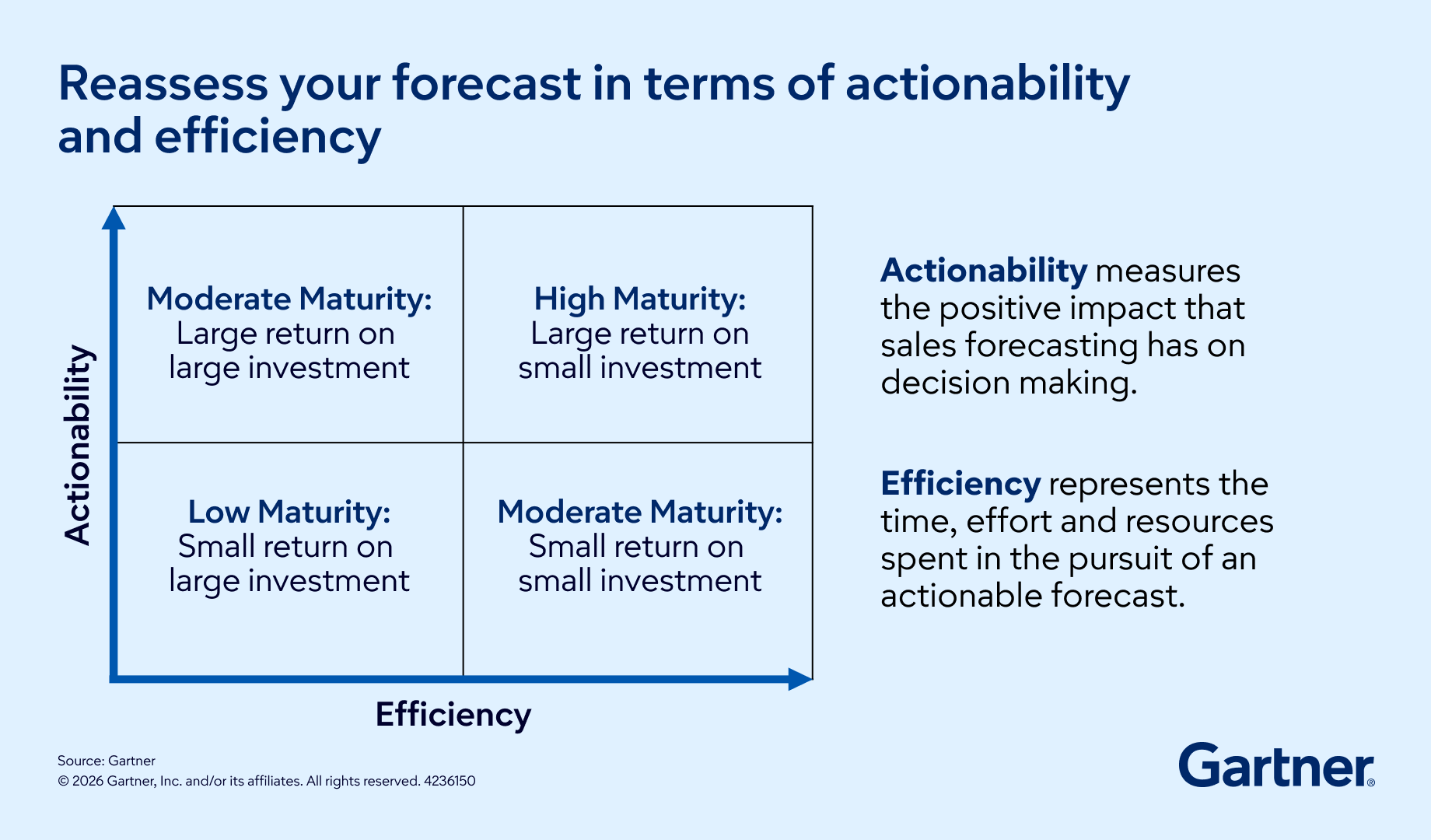
Instead, operations leaders should use AI to optimize how people, process, technology and data combine to deliver an actionable forecast without diverting time and attention from customer-facing activities.

PRIORITY 3

Determine the least disruptive approach for transformation

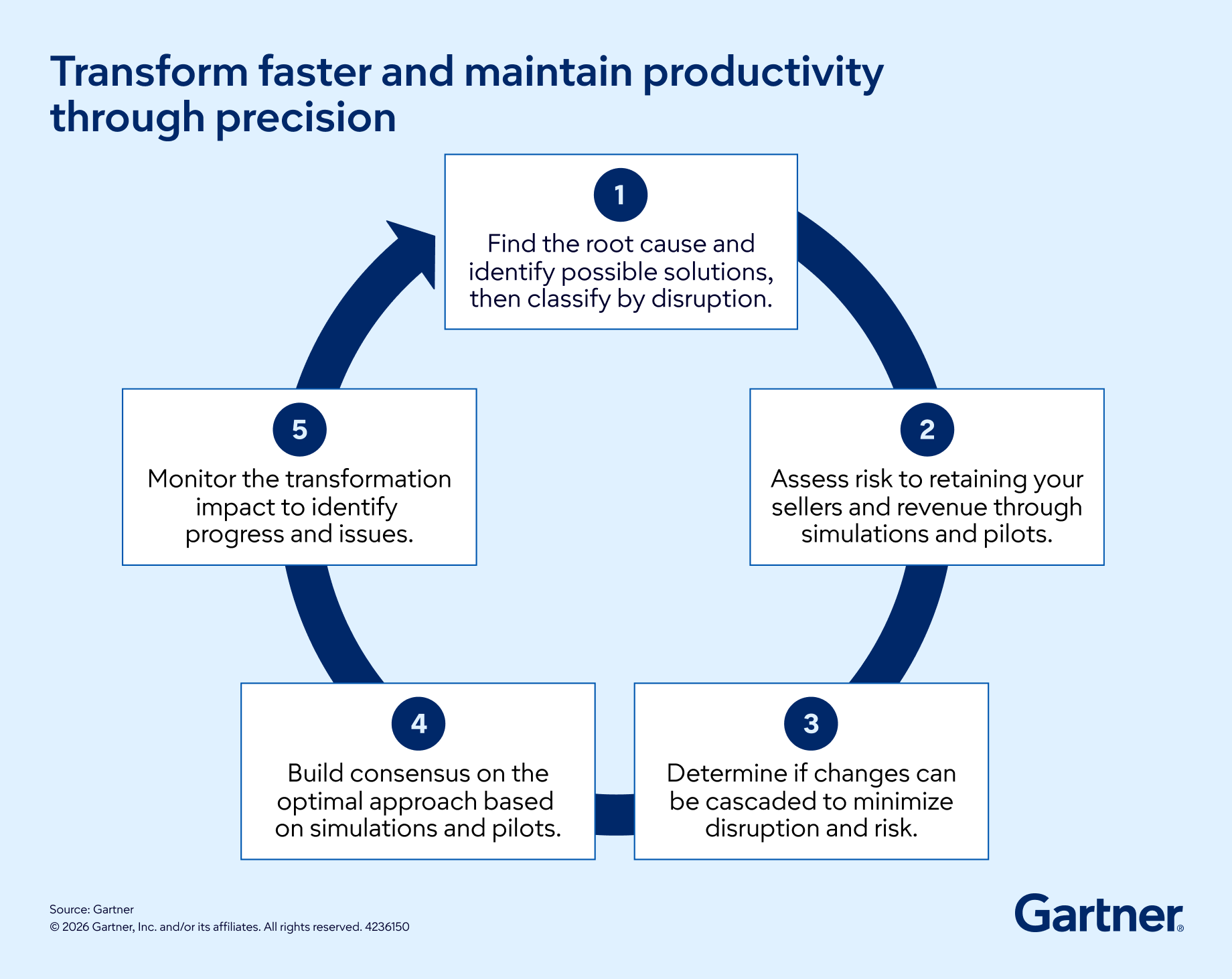
Expectations for sales operations leaders are to help the CSO to execute transformations more frequently, faster and with no effect on seller productivity. On average, sales organizations completed four transformations in the past two years. 

Only 11% of sales organizations were able to drive commercial success while executing a transformation. This creates an either/or scenario where sales operations is asked to focus on either the transformation or maintaining productivity, with productivity becoming the priority.

Gartner recommends sales operations leaders test, learn and selectively disrupt the sales team. Use scenario planning, simulations and pilots to determine the least disruptive approach to address the challenge or opportunity. This will require new analytics and the willingness to evaluate multiple options, along with transparency within the sales organization.
Don’t navigate 2026 alone

Work with Gartner to gain clarity, confidence and a competitive edge through personalized guidance, peer-tested best practices and tools that accelerate your impact.