Introduction

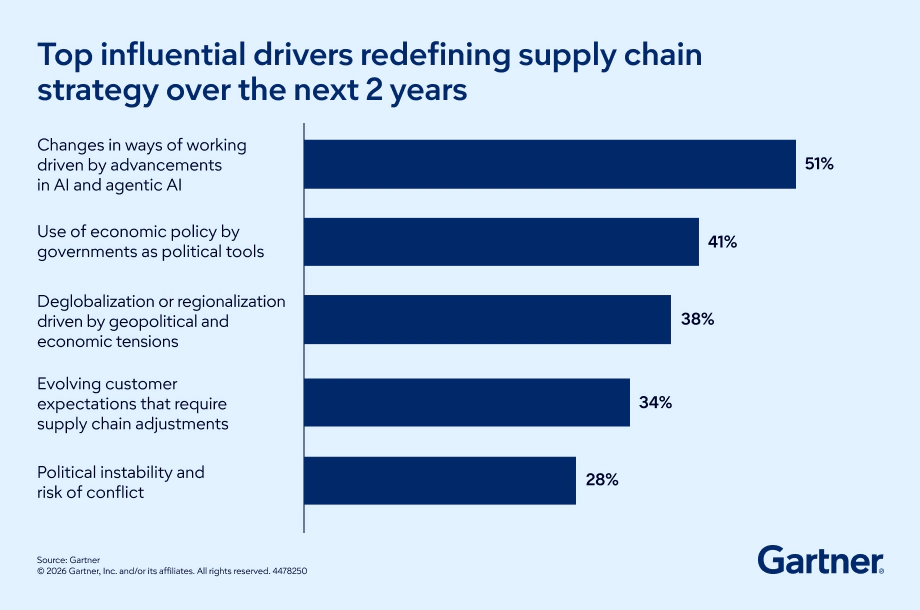
Supply chains as they exist today will struggle to maintain their effectiveness over the next two years. The supply chain landscape is being reshaped by forces that demand swift and strategic responses from chief supply chain officers (CSCOs). These supply chain reshapers — advancements in artificial intelligence, geopolitical instability and conflict risk, and evolving customer expectations — will fundamentally alter how organizations operate and compete in the future.

Some supply chain organizations are moving faster than others toward a competitive future state. What differentiates the leaders is how they respond to the forces reshaping supply chain. Leaders don’t wait for certainty to adapt to change; they actively influence the future and proactively rethink their ways of working. Among those that view AI-driven changes to work as a top driver of supply chain transformation, 81% of leaders are confident or very confident in their ability to address the impact of changes, while only 54% of the rest of respondents report the same.

The future of the supply chain is already here. Leaders are choosing where and how they will accelerate toward this new reality, offering a blueprint for others to follow. Gartner has identified three critical areas for CSCOs to focus on in 2026 to ensure their supply chains are future-fit.
3 strategic actions to transform supply chain for the future

1
Redesign processes and ways of working for AI-driven value.
2
Reimagine the workforce for a human-machine future.
3
Realign trading partner relationships for machine-enabled collaboration.

Action 1

Redesign processes and ways of working for AI-driven value

Organizations that redesign work itself — rather than just introduce new tools — are 2x as likely to exceed revenue goals and achieve sustainable competitive advantage in today’s supply chain landscape. (Source: 2025 Gartner Growth Ready Workforce Manager Survey)

Today’s supply chain

CSCOs are under increasing pressure to transform how supply chains are managed given the speed with which AI and geopolitical tensions are reshaping the business landscape.

The future supply chain

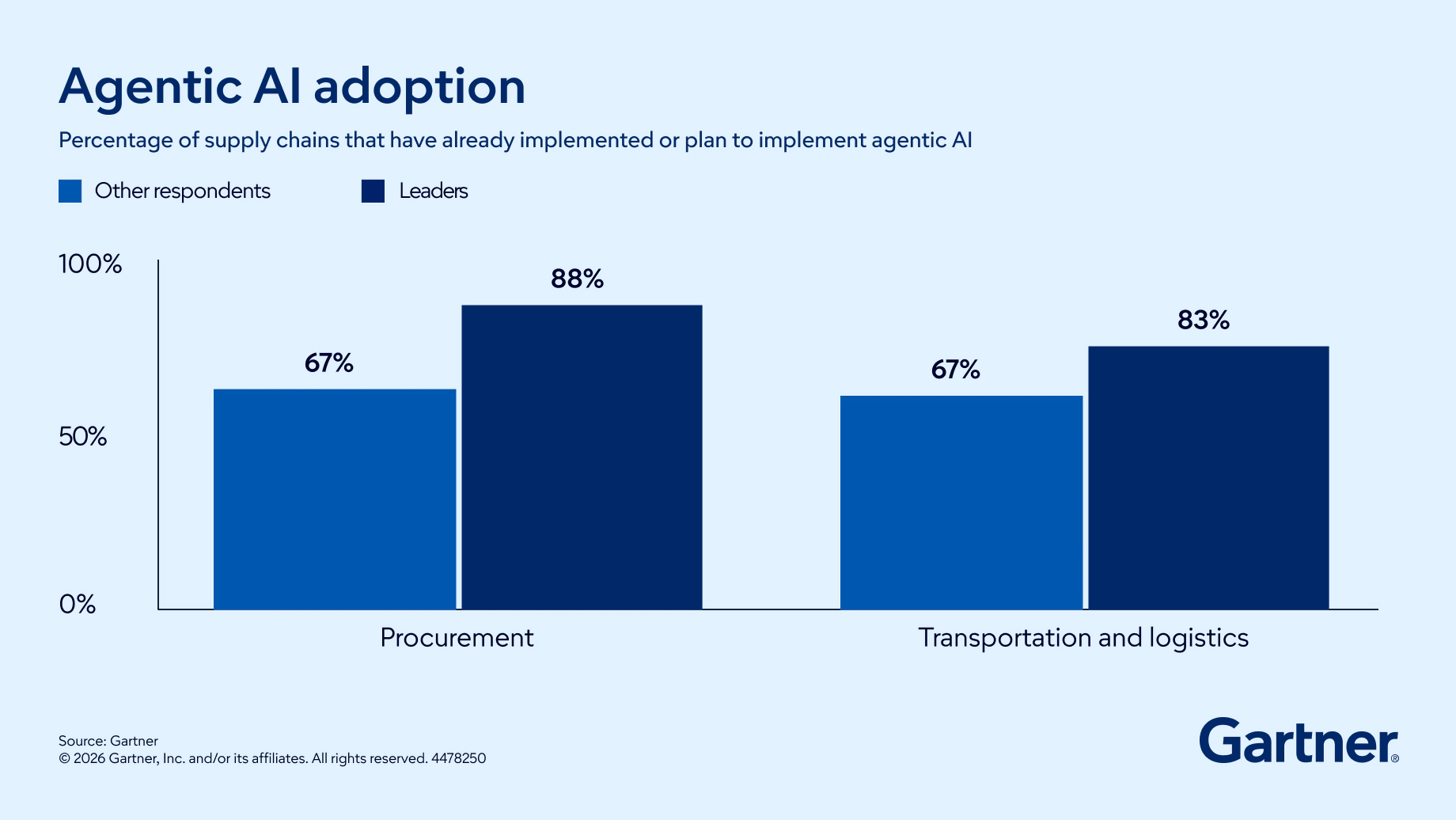
By 2028, leading supply chain organizations will have moved beyond merely optimizing or automating existing processes. Instead, they will redesign work at every level by strategically deploying generative and agentic AI to address critical business challenges, involving employees through a bottom-up approach.

The path forward

  • Pinpoint inefficiencies and inconsistencies in current supply chain processes. Redesign workflows in ways that leverage the power of AI.
  • Anchor AI initiatives in real business needs.

Action 2

Reimagine the workforce for a human-machine future

88% of supply chain leaders believe it likely or very likely that advancements in agentic AI alone will require new processes for future talent pipelines. (Source: 2025 Gartner Future of Supply Chain Survey)

Today’s supply chain

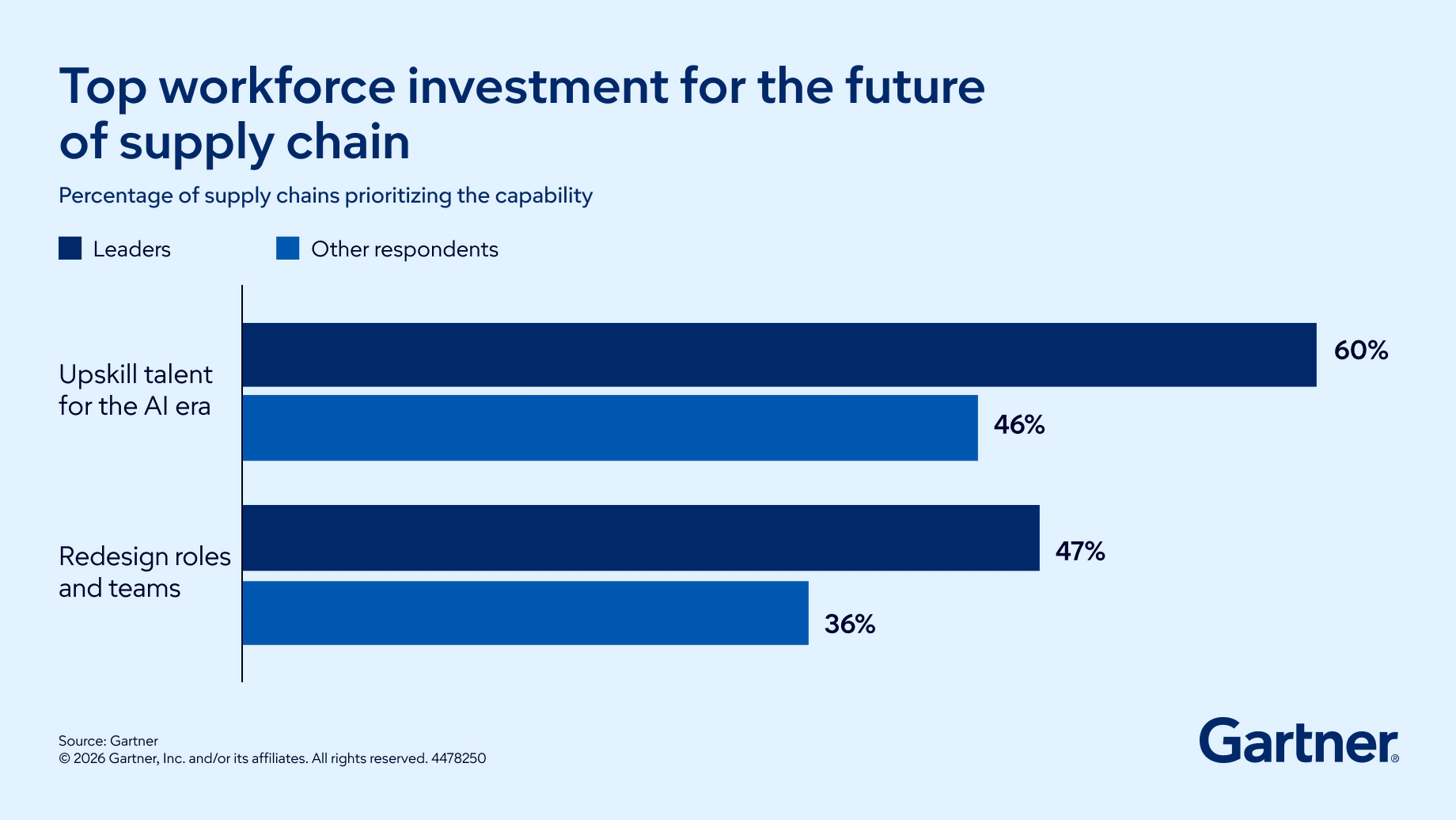
The introduction of AI and machines has upended how supply chain work gets done. Digital dexterity and AI literacy are now essential skills for all. This makes human-AI collaboration — which empowers experienced talent and accelerates skill development for less experienced workers — a critical investment.

The future supply chain

Future supply chain professionals will not be siloed, technology-enabled executors of tasks; they will be highly skilled in leveraging AI and automation to enhance customers’ experiences and support business needs. Alongside new processes, tools and responsibilities, new mindsets, skill sets and methods for mobilizing talent will be foundational in the supply chain of the future.

The path forward

  • Lead transformation with transparent, empathetic communication and strategic engagement.
  • Ensure organizational structures support employees with enabling and working alongside AI agents and robotics.

Action 3

Realign trading partner relationships for machine-enabled collaboration

76% of supply chain leaders have already implemented or plan to implement capabilities to automate interactions with machine customers. (Source: 2025 Gartner Future of Supply Chain Survey)

Today’s supply chain

As supply chains become more automated through AI and digital technologies, the need for more strategic collaboration with suppliers and customers increases. It’s crucial to identify which partners are most important and work to align your goals, incentives and data structures.

The future supply chain

Supply chain leaders will build up their suppliers’ digital maturity — and replace those who can’t keep pace. Furthermore, with routine interactions automated, there will be capacity to design out supply chain complexity through product and material innovation.

The path forward

  • Support strategic trading partners in developing the digital capabilities needed for machine-enabled collaboration.
  • Invest in deeper, trust-based partnerships with key suppliers and customers. This includes establishing longer-term agreements and shared data integration platforms.

Source: Supply Chain Executive Report

This content draws from the report “Future of Supply Chain 2026: Reshaping for a Machine‑Enabled Future.” Clients may view the full report on the client portal.

Explore more

Let’s navigate the future together

Collaborate with Gartner and access objective insights, exclusive peer networks and expert guidance that accelerates your impact.