Innovation In Action: Award-Winning Technology Case Examples

How Do Top Innovators Set Themselves Apart in Your Industry—and How Can You Learn from Them?

The Gartner Eye on Innovation Awards recognize organizations that set new technology standards for creativity, agility, and impact. Most organizations aspire to innovate, but only a select few achieve industry-leading results. 

Within this exclusive content, we explore the trends behind the award-winning innovations and 2026 industry-expert predictions, giving you the insights and inspiration to elevate your organization’s technology impact.

Emerging from 1,100+ submissions across multiple countries representing advanced manufacturing, banking & investing, communications service providers, education, government, midsize enterprises, power & utilities, and oil & gas, the 2025 finalists winners demonstrate how technology is transforming each sector and driving meaningful change.

Unlock case examples, innovation trends and 2026 predictions from Gartner industry experts to explore how leading organizations are setting the pace for innovation.

What You'll Learn

1
Industry Innovation Trends: Uncover key trends shaping each sector, revealing how top organizations are staying ahead.
2
Inspiration for the Future: Gain valuable 2026 industry predictions and insights to spark innovation within your own organization.
3
Meet the 2025 Finalists and Winners: Learn how these organizations are redefining excellence, driving change, and setting new standards of  technology success.

Industry Innovation Trends

A closer look at the forces driving industry evolution and the strategies behind staying competitive

This year’s finalists and winners have used new technologies in creative, practical ways to solve challenges, improve operations, and make a positive impact. Their projects show how innovation creates smarter, more connected organizations and communities.


Select Industry: 

Advanced Manufacturing Innovation Trends

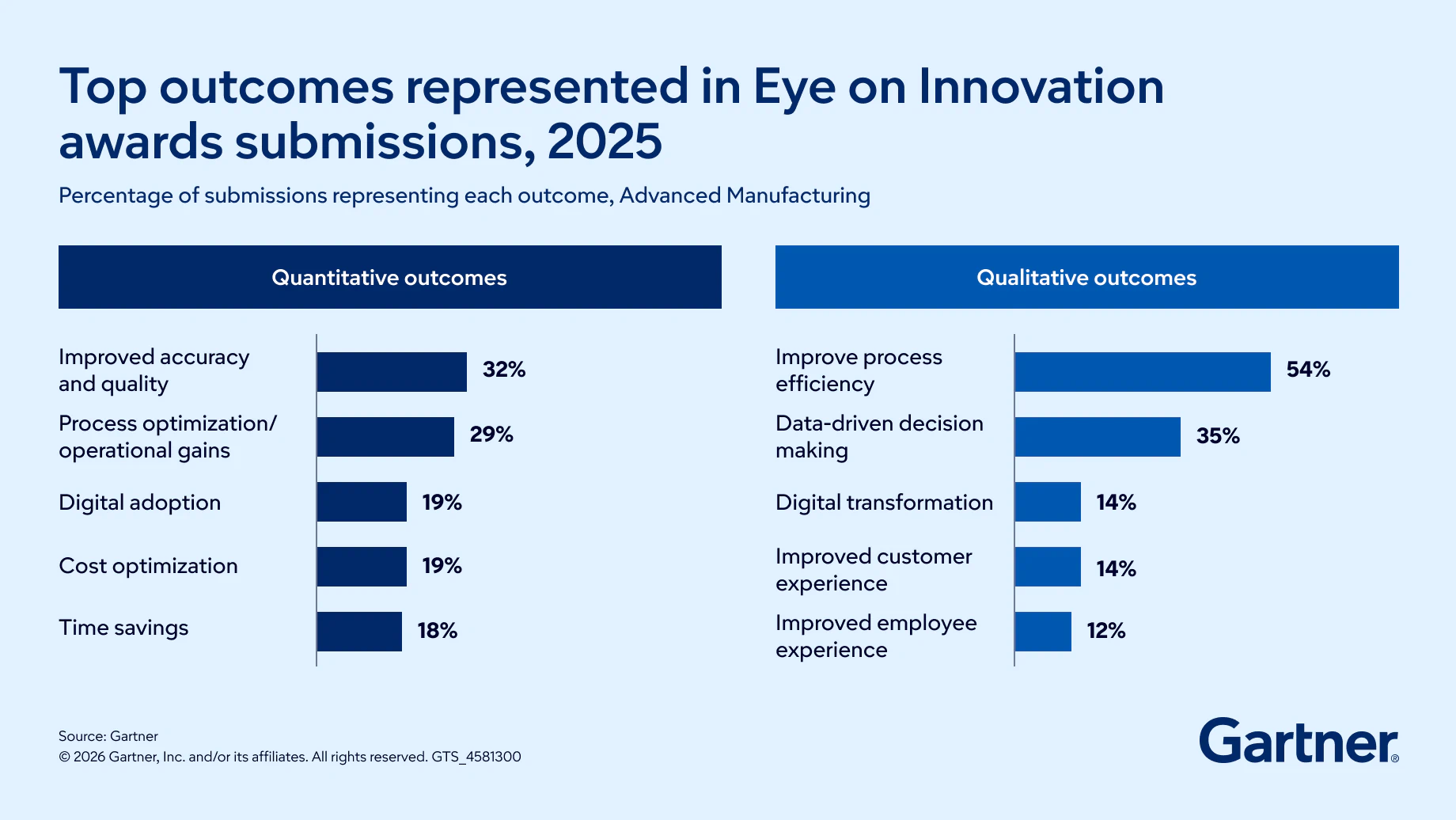
Advanced Manufacturing Top Outcomes for Eye On Innovation Awards

Intelligent Operational Optimization and Automation

Organizations are increasingly implementing systems that monitor operations in real-time and autonomously adjust parameters to maximize efficiency, quality, and output. This includes the adoption of intelligent manufacturing architectures and multi-agent AI platforms to manage high-mix/low-volume environments. These integrated solutions enable adaptive, automated decision-making across production lines, resulting in streamlined processes and improved operational performance.

Advanced Data Integration and Predictive Capabilities

There is a strong focus on creating and leveraging digital twins, centralized data environments, and advanced modeling to unify processes and enhance predictive capabilities. By integrating diverse data sources and deploying hybrid AI agent platforms—combining machine learning, NLP, Generative AI, and optimization algorithms—organizations can manage complex material flows, optimize global supply chain risks, and improve forecasting accuracy.

Sustainability, Human-Machine Collaboration, and Workforce Enablement

A key trend is the use of AI for complex environmental data analysis to support sustainability and compliance initiatives. Additionally, firms are integrating advanced human-machine interfaces and robotics to support large field operations and enhance employee interaction. These innovations foster a more collaborative and efficient workforce, while also driving progress toward environmental goals.

Explore Case Example Videos for 2025 Advanced Manufacturing Winners

Why These Innovations Matter

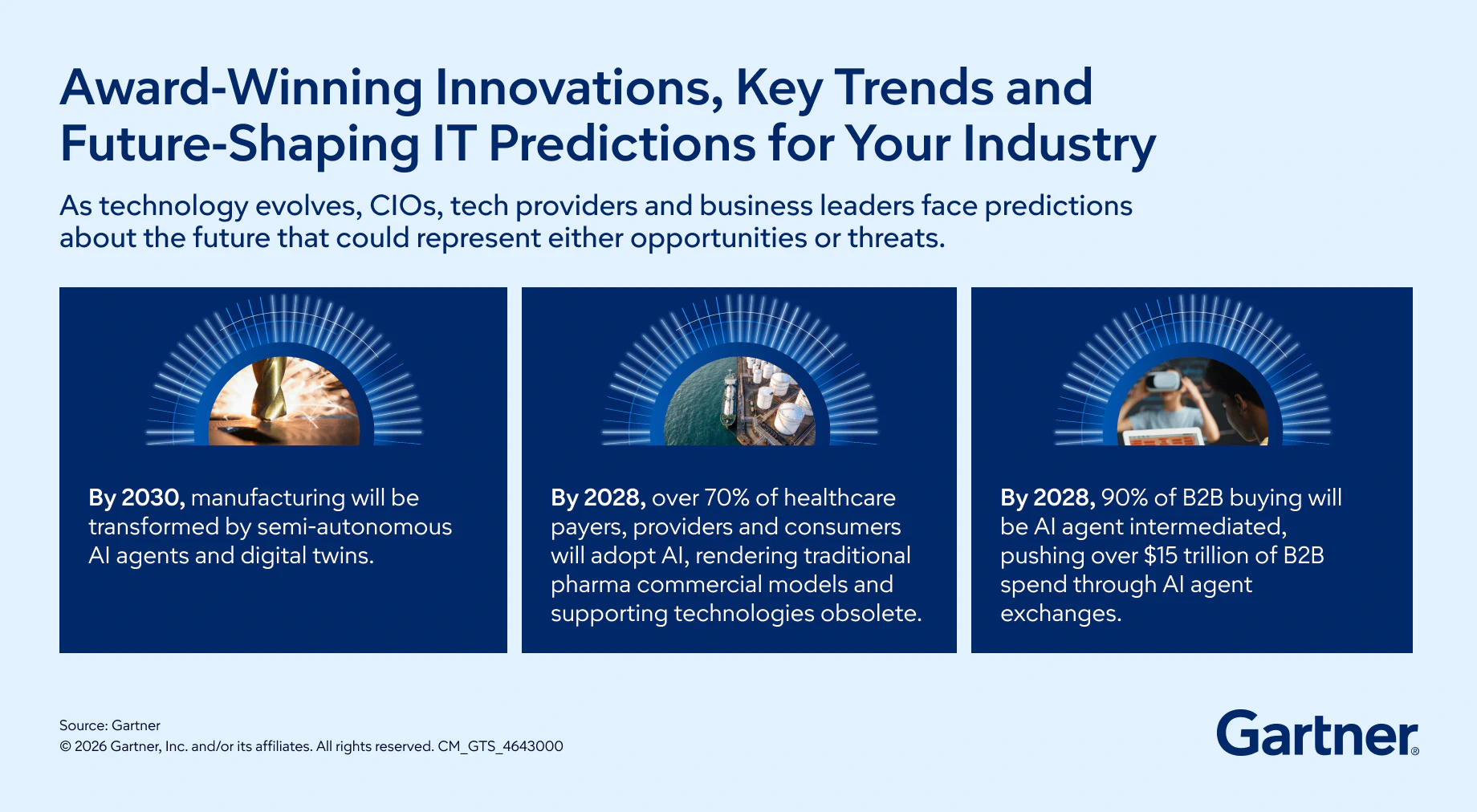
Gartner predicts that by 2030, manufacturing will be transformed by semi-autonomous AI agents and closed-loop digital twins. These technologies promise agility, but they also introduce escalating IT costs and new governance hurdles like machine-user pricing.

Future Proof Your Manufacturing Strategy — Watch the Manufacturing Predicts 2026: Digital Twins, AI Agents, and the Race to Autonomous Operations webinar

Banking & Investing Innovation Trends

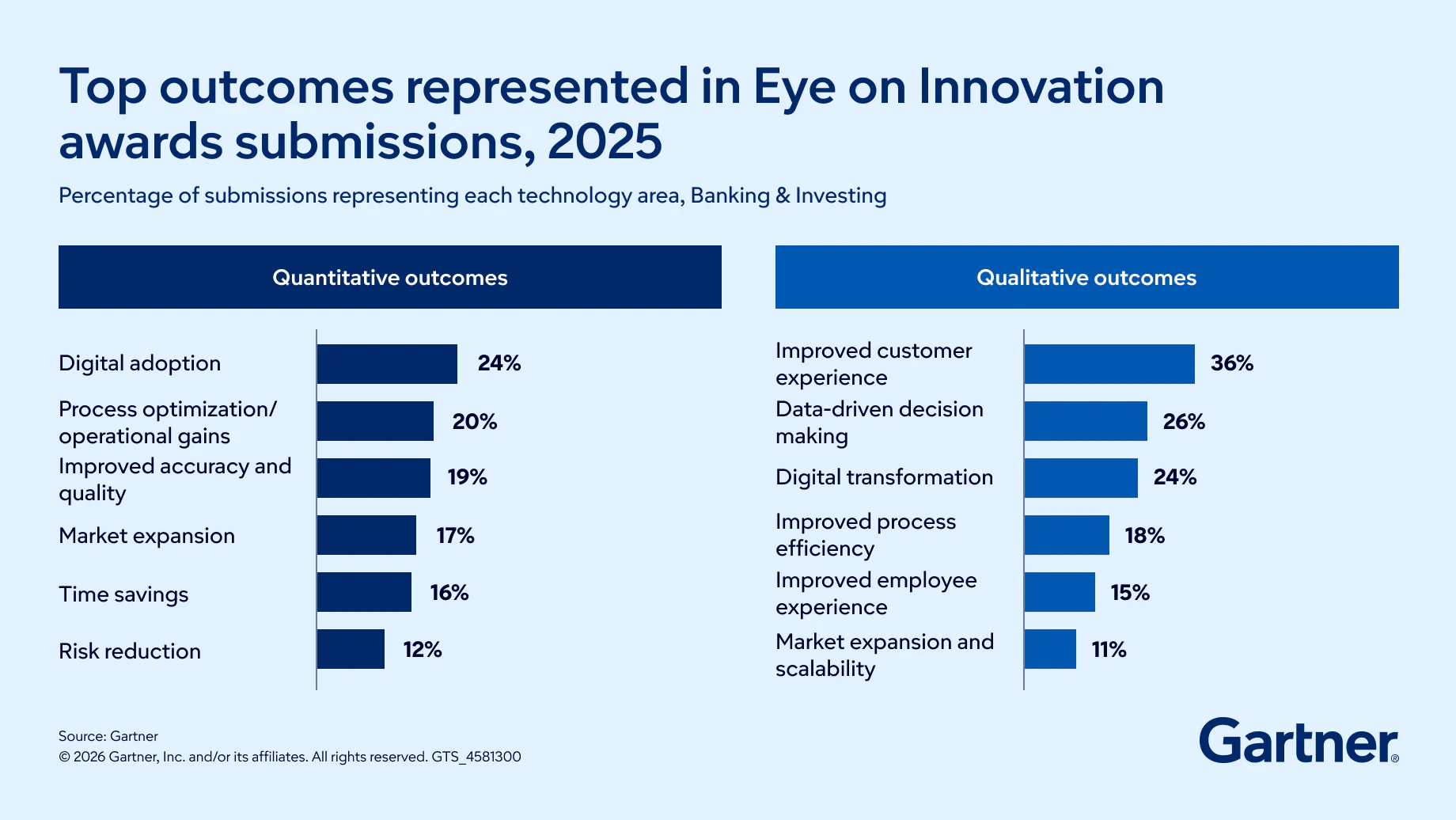
Banking & Investing Top Outcomes for Eye On Innovation Awards

Real-time Data Access and Integration

Multiple innovations focus on moving away from batch-processed or file-based solutions toward real-time or near-real-time data delivery, with some using blockchain technology.

Security, Trust, and Data Integrity Through Advanced Technologies

Several innovations prioritize enhancing identity verification, fraud prevention, and data privacy, often leveraging advanced technologies like blockchain and AI. Examples include decentralized digital identities for clients using blockchain, as well as a mobile app that utilizes AI to enhance authentication and fraud protection.

End-to-End Digital Transformation and Seamless Customer Journeys

Some submissions feature unified, digital ecosystems supporting entire customer journeys. Examples include a centralized digital real estate platform and a mobile app for warehouse receipt digitization, which connects all relevant parties in real-time.

Explore Case Example Videos for 2025 Banking and Investing winners

Why These Innovations Matter

Gartner client inquiries reveal that Financial Services CIOs are under mounting pressure to separate hype from reality as technology-led innovation accelerates. 

Discover Gartner Top Financial Services Predicts for 2026

Communication Service Provider Innovation Trends

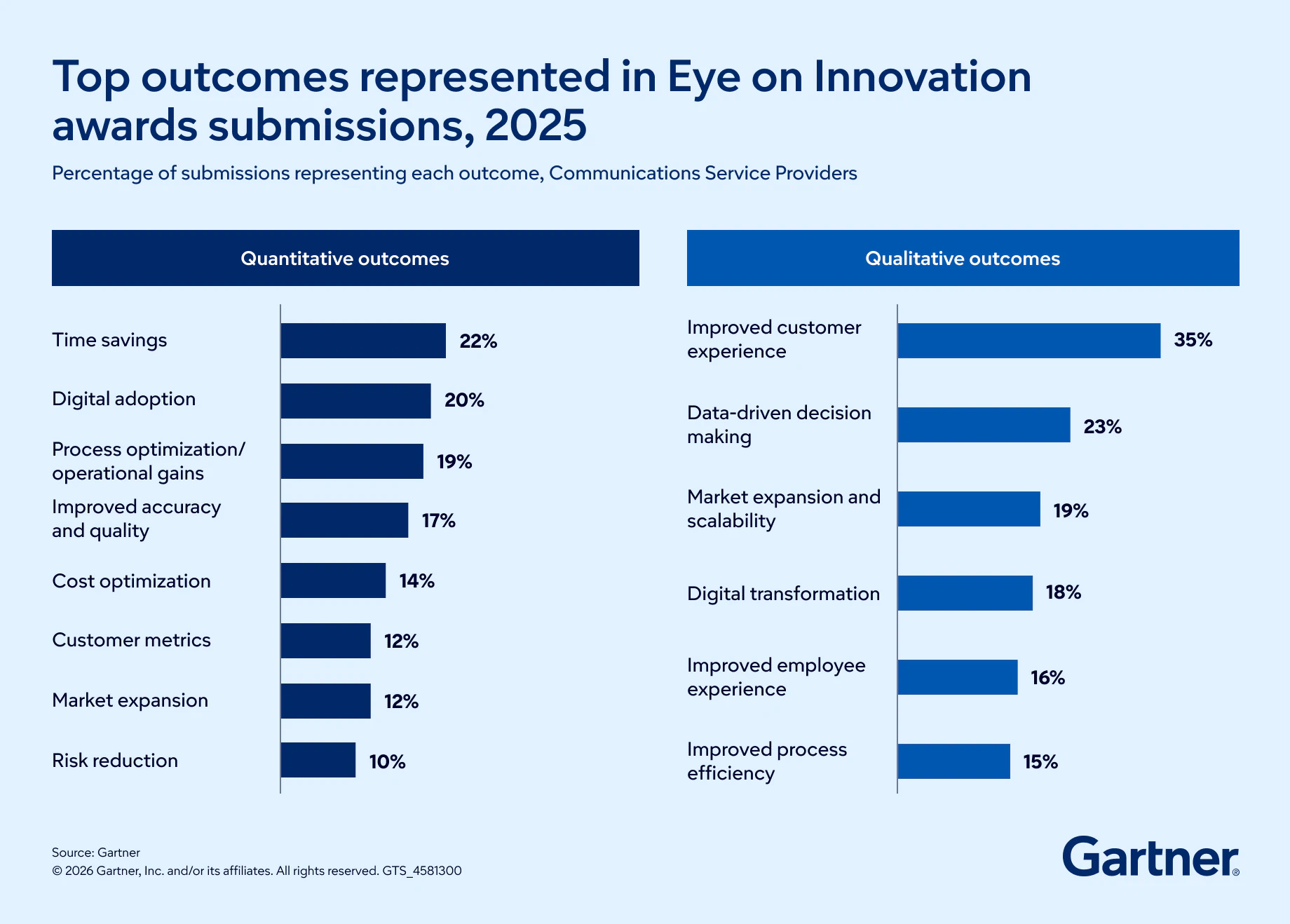
Communications Service Providers Top Outcomes for Eye On Innovation Awards

Intelligent Operational Optimization and Automation

Organizations are increasingly implementing systems that monitor operations in real-time and autonomously adjust parameters to maximize efficiency, quality, and output. This includes the adoption of intelligent manufacturing architectures and multi-agent AI platforms to manage high-mix/low-volume environments. These integrated solutions enable adaptive, automated decision-making across production lines, resulting in streamlined processes and improved operational performance.

Advanced Data Integration and Predictive Capabilities

There is a strong focus on creating and leveraging digital twins, centralized data environments, and advanced modeling to unify processes and enhance predictive capabilities. By integrating diverse data sources and deploying hybrid AI agent platforms—combining machine learning, NLP, Generative AI, and optimization algorithms—organizations can manage complex material flows, optimize global supply chain risks, and improve forecasting accuracy.

Sustainability, Human-Machine Collaboration, and Workforce Enablement

A key trend is the use of AI for complex environmental data analysis to support sustainability and compliance initiatives. Additionally, firms are integrating advanced human-machine interfaces and robotics to support large field operations and enhance employee interaction. These innovations foster a more collaborative and efficient workforce, while also driving progress toward environmental goals.

Explore Case Example Videos from 2025 Communication Service Provider Winners

Why These Innovations Matter

Gartner predicts that through 2027, GenAI and AI agent use will create the first true challenge to mainstream productivity tools in 35 years, prompting a $58 billion market shake-up.

Discover More Gartner Strategic Predictions for 2026 and Beyond

Education Innovation Trends

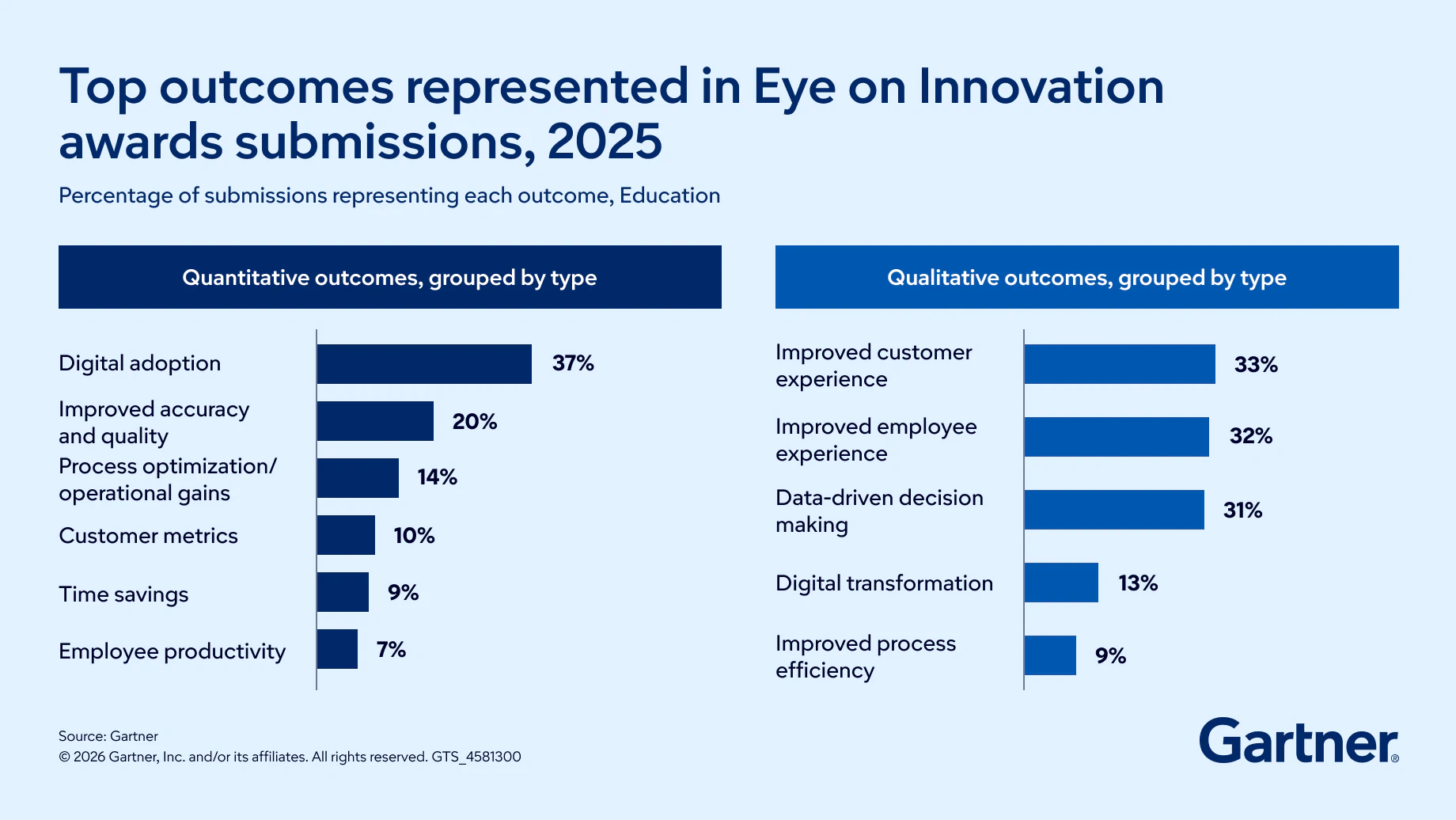
Education Top Outcomes for Eye On Innovation Awards

AI-Driven Personalized Learning and Engagement

Innovations are increasingly utilizing artificial intelligence and adaptive learning solutions to create personalized learning experiences. These technologies enable tailored guidance, real-time feedback, and unique learning pathways that adapt to learner needs. By analyzing user data and providing targeted support, AI-driven solutions help ensure that content and resources are relevant, engaging, and supportive for every learner.

Transformation through Collaboration and Integration

Innovations are driven by cross-functional teamwork, bringing together experts from IT, faculty, administration, and external partners to co-design and refine solutions. This collaborative approach enables rapid development and ensures that new technologies are closely aligned with institutional needs and leverage meaningful integration across the technology portfolio.

Business Capabilities, Culture, and Digital Adoption

There is a strong focus on leveraging innovative technologies — such as artificial intelligence (AI), cloud computing, and advanced analytics to improve business capabilities by automating routine tasks and reengineering core operational processes. By integrating diverse systems, data sources, and platforms, organizations are composing holistic digital ecosystems that break down silos, change the culture, and increase digital adoption.

Explore Case Example Videos from 2025 Education Winners

Why These Innovations Matter

Gartner clients inquiries reveal that Higher Education CIOs face a tough balancing act: deliver on bold 2030 strategies while managing cost pressures, talent gaps and legacy systems.

Discover How AI and Agility are Reshaping Higher Education: Join the Gartner Predicts for Higher Education 2026

Government Innovation Trends

Government Top Outcomes for Eye On Innovation Awards

Data Quality and Accessibility is Foundational

Successful innovation pilots, especially those utilizing AI, are built on good quality and accessible datasets. This includes the use of real-time data streams in several notable use cases, and efforts that use AI to extract and transform data.

AI Innovation Moves Beyond Just GenAI

Innovative success often comes from combining various technologies and leveraging mature AI alongside other tools (such as nongenerative machine learning with data and analytics capabilities).

Efficiency Savings Are Not the Only Success Factor

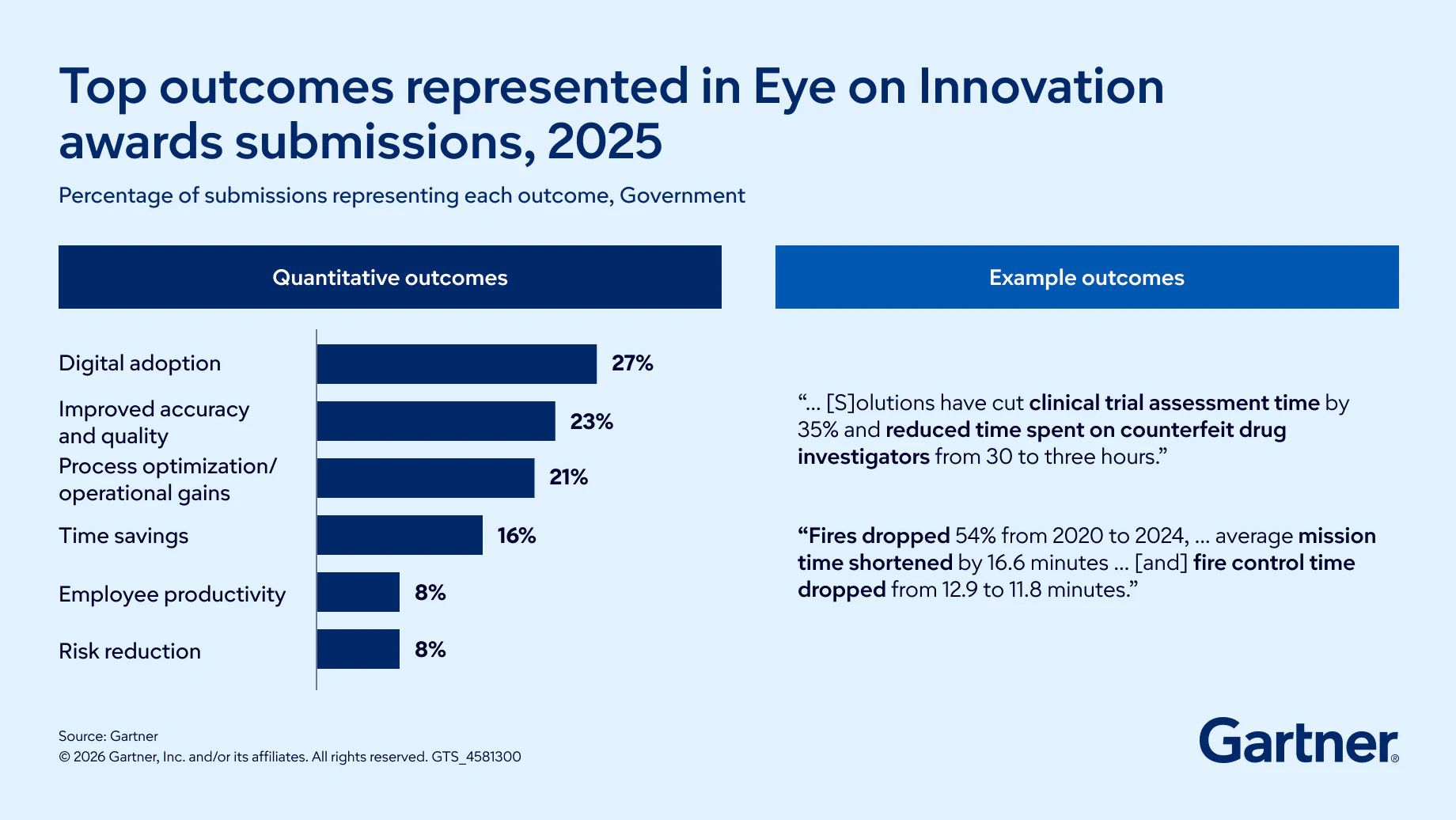
Many initiatives started by prioritizing operational inefficiencies, though when projects were seen through to completion and outcomes measured, citizen-focused improvements were deemed the most impactful outcomes achieved (such as improving accuracy and quality of services and digital adoption).

Explore Case Example Videos from 2025 Government Winners

Why These Innovations Matter

Gartner client inquiries reveal that as AI, quantum computing, and subscription-based services transform government technology, CIOs face growing pressure to manage AI adoption, operational risks, and digital sovereignty.

Stay Ahead in Government Tech, Watch Predicts 2026: AI Leads Government Technology Evolution and Requires Urgent Action

Healthcare and Life Sciences Innovations

Healthcare & Life Sciences Top Outcomes for Eye On Innovation Awards

AI-Powered Automation and Process Optimization

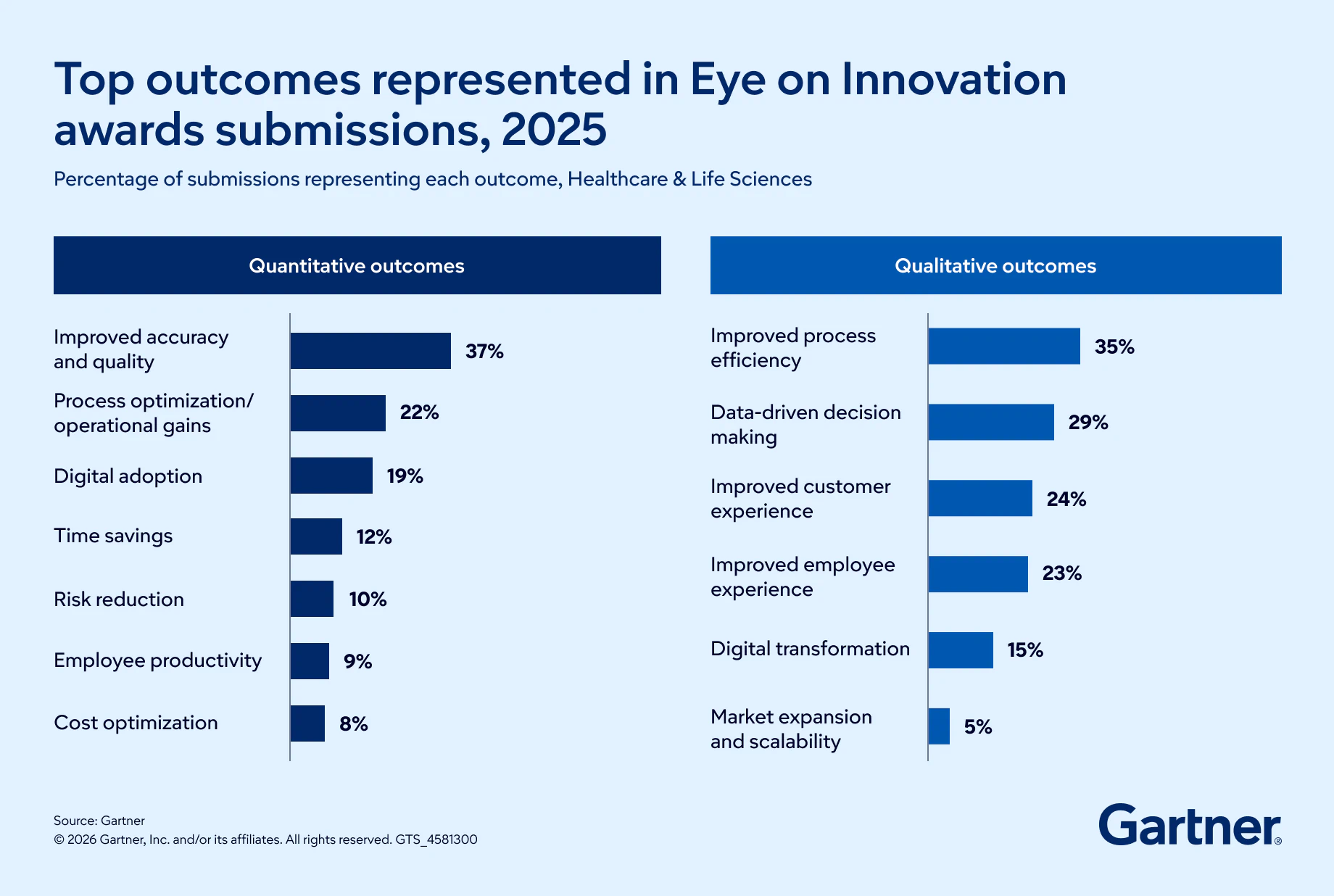
Across all three industry sectors, organizations are leveraging AI, machine learning (ML), and automation to streamline workflows, reduce administrative burden, and improve operational efficiency. This includes automating tasks such as claims processing, process documentation, scheduling, prior authorization, and risk prediction, which frees employees and clinicians to focus on higher-value tasks.

Personalization and Proactive, Data-Driven Interventions

There is a strong emphasis on using real-time data, predictive analytics, and digital platforms to deliver more personalized, anticipatory experiences. Solutions are designed to proactively identify risks, tailor recommendations, and guide individuals — whether a consumer shopping for a new healthcare provider or system or an active patient, member, or employee — toward timely interventions and better outcomes.

Enhanced User Experience and Engagement

Innovations consistently focus on improving the user experience (UX) through intuitive, mobile-first, and user-centric digital tools. Features such as AI-powered search, real-time notifications, multilingual support, and seamless integration empower users to access information, make informed decisions, and interact with systems more easily and effectively.

Integration and Collaboration Across Systems and Stakeholders

Many solutions highlight the importance of integrating disparate data sources, systems (like electronic health records and claims platforms), and stakeholders to create unified, scalable models of care and service delivery. This fosters better collaboration, coordination, transparency, and continuity across the healthcare and social care ecosystem.

Explore Case Example Videos for 2025 Healthcare and Life Science Winners

Why These Innovations Matter

Gartner Predicts that by 2028, over 70% of healthcare payers, providers, and consumers will adopt AI, rendering traditional pharma commercial models and supporting technologies obsolete.

Explore Strategies to Build Trust and Overcome ROI Barriers in Healthcare AI, Watch AI in Healthcare & Life Sciences: Gartner’s 2026 Predictions
Midsize Enterprises Innovations

Midsize Enterprise Top Outcomes for Eye On Innovation Awards

Solve Pain Points with Clear Objectives

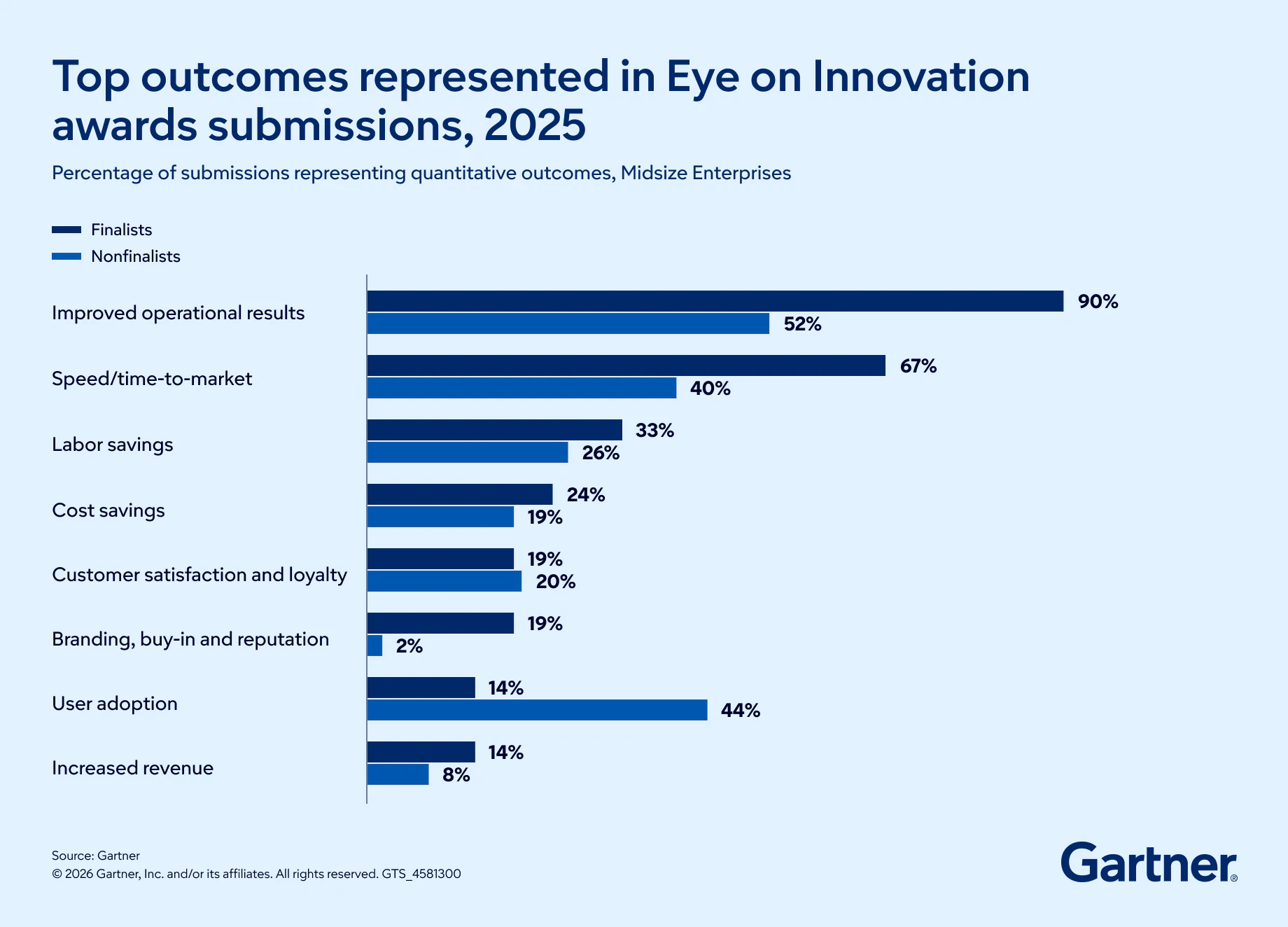
Finalists were more likely to be motivated by concrete customer needs (43% vs. 24%) or a poorly functioning business process (24% vs. 17%) and less likely to cite internal drivers like cost pressures (14% vs. 23%) and alignment with organizational mandates (0% vs. 9%).

Focus on Being AI-Savvy Rather than Analytics-Aware

Finalists were more likely to have utilized AI (86% vs. 54%), generative AI (52% vs. 35%), and large language models (57% vs. 29%) in their innovations. Finalists used machine learning in more sophisticated ways, often customizing and extending commercially available models, while non-finalists focused on more basic data and analytics like data consolidation, business intelligence, and off-the-shelf AI tools

Work Toward Value and Impact

Finalists were more likely to measure business impact directly through improved operational outcomes in specific business processes (90% vs. 52%) and faster time to market (67% vs. 40%), and were less likely to track intermediate metrics, such as user adoption (14% vs. 44%). 

Explore Case Example Videos from 2025 Midsize Enterprise Winners

Why These Innovations Matter

Gartner Predicts by 2028, 90% of B2B buying will be AI agent intermediated, pushing over $15 trillion of B2B spend through AI agent exchanges.

Stay Ahead with Gartner’s Predictions for 2026 and Beyond

Oil & Gas Innovations

Oil & Gas Top Outcomes for Eye On Innovation Awards

Intelligent Automation and Data-Driven Decision Making

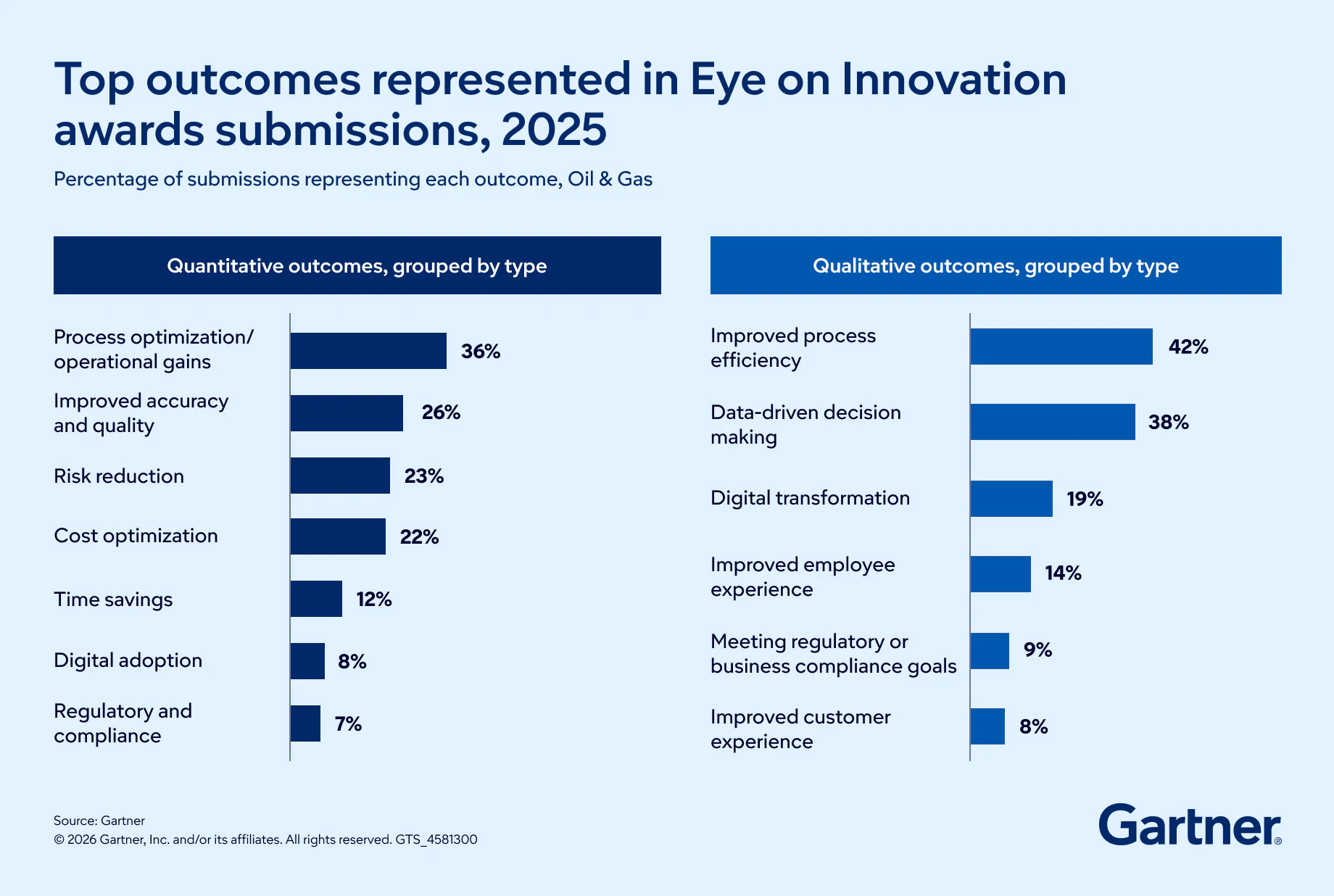
Organizations are continuing to deploy AI, machine learning, and advanced analytics to automate manual workflows, extract actionable insights from complex datasets, and enable predictive, evidence-based decision-making. These solutions empower organizations to move from reactive to proactive asset optimization strategies, accelerating processes and freeing up human expertise for higher-value tasks.

Digital Transformation and Operational Efficiency

Across the submitted innovations, there is a consistent drive to modernize legacy systems, unify siloed data, and establish digital platforms that streamline operations, enhance traceability, and reduce costs. By integrating technologies such as digital twins, immersive training environments, and real-time dashboards, organizations can optimize asset management, maintenance, and cross-functional collaboration.

Scalable Innovation and Sustainability

Another notable theme is the institutionalization of scalable, structured innovation frameworks and an emphasis on sustainability. Many solutions are designed to be repeatable, adaptable, and aligned with strategic business objectives—whether through reducing environmental impact, improving energy efficiency, or fostering a culture of continuous improvement and safe, inclusive learning experiences for diverse teams.

Explore Case Example Videos from 2025 Oil & Gas Winners

Why These Innovations Matter

Gartner predicts that in 2026, most Oil and Gas companies could have AI agents embedded in daily workflows. The opportunity is a step-change in operational efficiency. The risk is disruption, cultural resistance, and wasted investment.

Stay Ahead of the Curve — Watch The Gartner 2026 Predicts for Oil and Gas: AI in the Fabric of Work

Power & Utilities Innovations

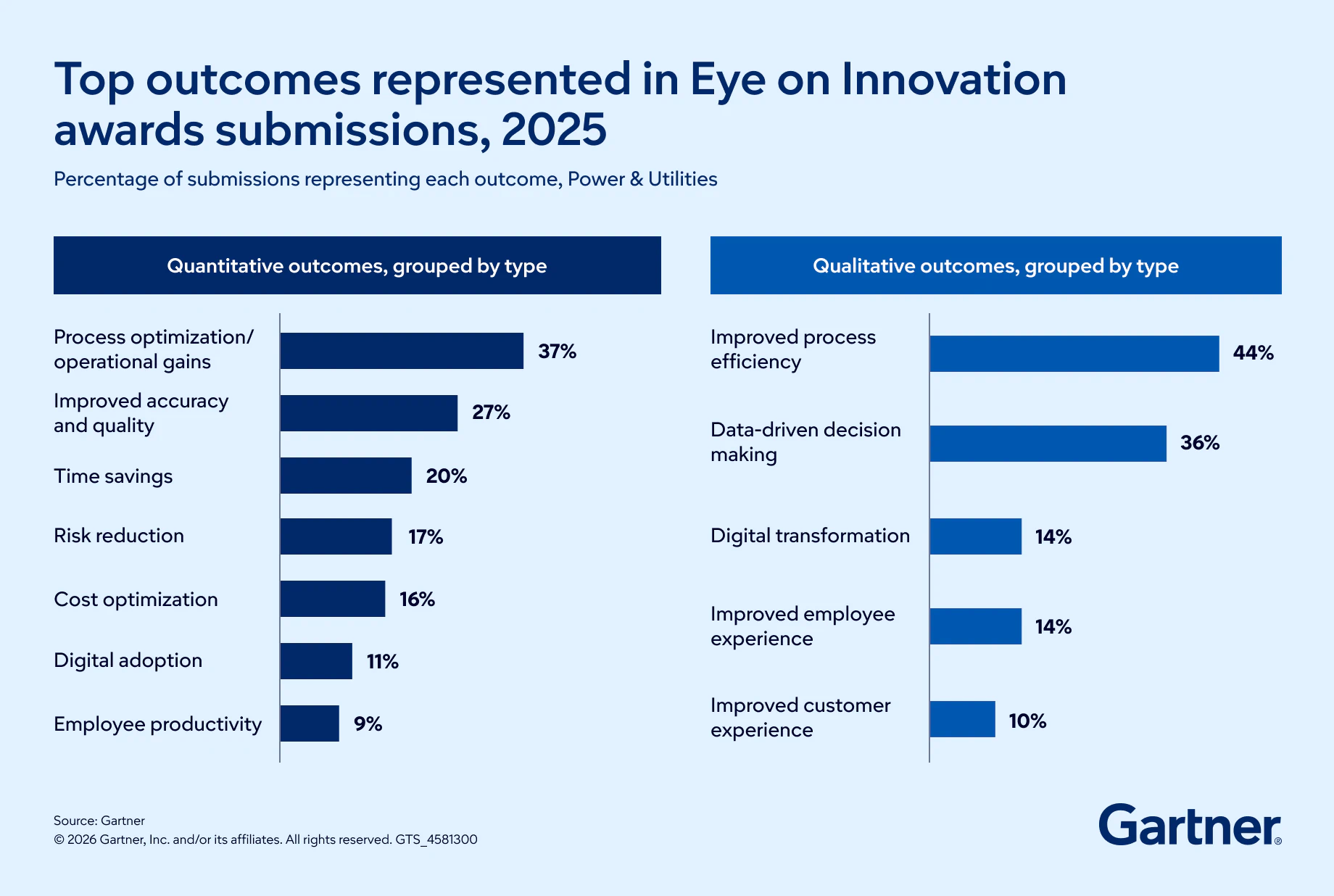
Power & Utilities Top Outcomes for Eye On Innovation Awards

Efficiency improvements

The key outcome that finalists sought to achieve through their innovations was making workflows more efficient. AI and GenAI are critical to these efforts to help organizations realize quantifiable efficiency gains from their technology investments.

Proactive risk management

Organizations are seeking not only to manage risks in real time, but also to address them proactively before they escalate into more serious issues. The ability to collect, manage, and analyze data allows organizations to augment human analysis to identify and mitigate potential risks.

Empowering stakeholders

Finalists are prioritizing solutions that democratize access to advanced technologies, enabling both customers and employees to actively participate in and benefit from innovation. From no-code AI platforms and interactive mobile apps to automated customer service and energy management tools, organizations are breaking down technical barriers, fostering engagement, and driving widespread adoption.

Explore Case Example Videos from 2025 Power & Utilities Winners

Why These Innovations Matter

Gartner predicts that through 2026, atrophy of critical-thinking skills, due to GenAI use, will push 50% of global organizations to require “AI-free” skills assessments.

Get Future-Ready with Gartner’s 2026 Strategic Predictions

Explore more