Audience preparedness may be the strongest defense against misinformation.
- Gartner client? Log in for personalized search results.
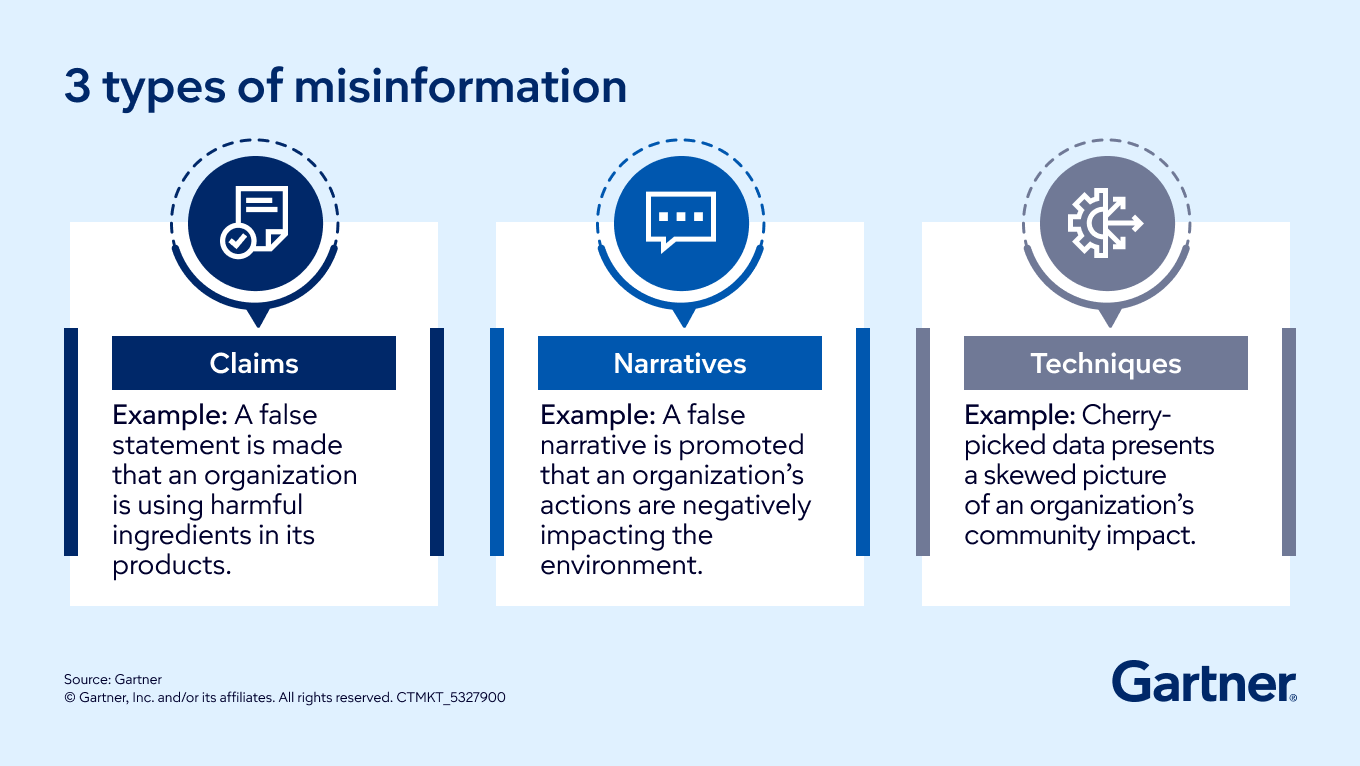

Shifting to a proactive approach toward misinformation
Most communications teams are equipped to respond after misinformation appears. The challenge is that by the time a false narrative gains traction, audience perceptions may already be forming. However, Gartner recommends a more proactive approach to combating mis/dis/malinformation (MDMI).
“Though a reactive stance against mis/dis/malinformation is sometimes unavoidable, CCOs should proactively use prebunking (preemptive debunking) when potential or emerging false claims and narratives are anticipated to negatively affect audience perceptions of the organization,” says Kelly McHale, Principal Analyst at Gartner.
You might also like this webinar: Managing Reputation Amid Truth Decay
Prepare audiences before misinformation spreads
Once people form beliefs, changing minds becomes difficult. That reality creates a challenge for communications teams that rely primarily on correcting misinformation after it has already spread.
By preparing audiences in advance, communications leaders can reduce the likelihood that misinformation shapes stakeholder perceptions in the first place.
Use warning, microdose and refutation
Effective prebunking messages contain three core elements that help audiences recognize and challenge misinformation before it gains traction. Gartner recommends including these three elements, first published by UNHCR:
- Warning: Alert audiences that they will likely encounter manipulated information.
- Microdose: Provide a weakened example of the anticipated manipulation.
- Refutation: Equip audiences to spot and disprove the manipulation.
Together, these elements encourage skepticism of anticipated false narratives while giving audiences the context they need to identify misleading claims when they emerge.
Identify opportunities before narratives take root
Prebunking is most effective when communications leaders can anticipate situations where misinformation is likely to emerge.
According to Gartner, CCOs should consider prebunking when:
- A major organizational change or announcement is planned
- A polarized issue is gaining traction
- An upcoming event or risk presents a clear opportunity for MDMI
Narrative monitoring, social listening and stakeholder intelligence can help identify these opportunities early. Instead of waiting for misinformation to spread, communications leaders can prepare audiences before narratives take hold and begin shaping perceptions.
Measure prebunking effectiveness
Prebunking is designed to influence how audiences respond to misinformation before false narratives gain traction. Communications leaders should evaluate whether their interventions improved stakeholder preparedness and reduced the impact of anticipated claims or narratives.
According to Gartner, organizations can assess effectiveness by monitoring:
- Audience sentiment related to the claim or narrative before and after a prebunking intervention
- Whether the anticipated MDMI affected the organization as expected
- How prominently the organization’s information appears in generative search results related to the claim or narrative
- How audience sentiment compares between incidents where prebunking was used and similar situations where it was not
These measures can help communications teams determine whether prebunking improved stakeholder resilience and reduced the influence of false narratives.
Misinformation FAQs
What is prebunking?
Prebunking (preemptive debunking) is a proactive communications approach that warns audiences about manipulative claims, narratives or techniques before they encounter them. Gartner says prebunking helps build mental defenses by providing warnings and counterarguments before exposure to misinformation.
Why is prebunking effective?
Prebunking primes audiences to recognize misinformation and refute it before it takes hold and shapes beliefs. By preparing stakeholders in advance, organizations can reduce the influence of false narratives when they emerge.
When should communications leaders use prebunking?
Gartner recommends considering prebunking when a major organizational change is planned, a polarized issue is gaining traction or an upcoming event creates a clear opportunity for misinformation to spread.
Attend a Conference
Accelerate growth with Gartner conferences
Gain exclusive insights on the latest trends, receive one-on-one guidance from a Gartner analyst, network with a community of your peers and leave ready to tackle your mission-critical priorities.

Drive stronger performance on your mission-critical priorities.