By Michael Uskert | September 18, 2020
CSCO Outlook for 2027: Cloudy With a Chance of Moderate Growth
October 09 2026


By Michael Uskert | September 18, 2020
As with any recent traumatic experience, we tend to view everything through that lens and it’s difficult for that bias not to strongly influence decisions.

The pandemic is a case in point. Had the same question illustrated in the chart below been asked a year ago, epidemics/pandemics would have barely registered.
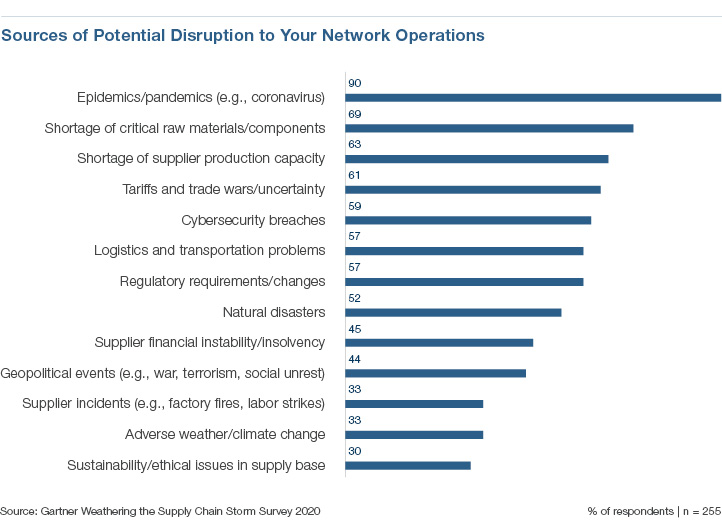
COVID-19 has spawned a host of articles that condemn the “cost-driven” supply chain and point out how the pandemic has exposed the hidden vulnerabilities of the global supply chain. Each time I read one I ask myself, “Did ‘purely’ cost-driven supply chains really exist within companies without them knowing the risks before the pandemic? Were the vulnerabilities really hidden?” The risks of sole sourcing have been known for years, as have the risks that come along with the ever-lengthening global supply chain. The idea of developing tailored supply chain responses by building in levels of resilience based on customer expectation through supply chain segmentation isn’t new. So, if these risks were known within the supply chain organization, what did the pandemic change? A realization that the risks accepted by the company weren’t consciously chosen across the C-level.
Beware the Whiplash
The awareness of risk inherent in supply chain operating model decisions has hit home for executives outside of the supply chain ranks. CEOs, financial analysts, TV talking heads and government officials are now discussing the negative impact of supply chain disruption, leading to calls to “nationalize supply chains” and headlines like “the global supply chain is dead.” In the past, the challenge had been to help non-supply chain executives understand the possible negative implications of reducing capacity and redundancy. Recent conversations with supply chain executives, however, illustrate a new issue — how to fix weaknesses requiring investment in resiliency without overinvesting.
Corporate Amnesia
“The notion of organizational resilience is not new: the ability of an organization to successfully confront the unforeseen has always been a core element of success. But because the numbers and types of threats that can undermine a supply chain are greater than ever, resilience has taken on even more significance in supply chain management.” This statement is certainly timely. But it wasn’t just penned. It was published by Yossi Sheffi in the October 2005 issue of Harvard Business Review’s Supply Chain Strategy.
Corporations are ready to spend because the pain is fresh in everyone’s mind. But depending upon how resiliency investments are put in place, they may not last long enough to make a difference. The push for profitability usually runs counter to initiatives to build resilience. Investing in something that costs more and is infrequently used tends to have a short life. In two or three years, when the pandemic is in the rear-view mirror, what will the response be when asked to squeeze another percent out of the bottom line?
Do it Right, Make it Stick
Gartner colleagues Kamala Raman, KC Quah and Stephen Meyer researched the key considerations needed to do this right and make the decisions stick. They identified six factors that should inform the right resilience strategy.
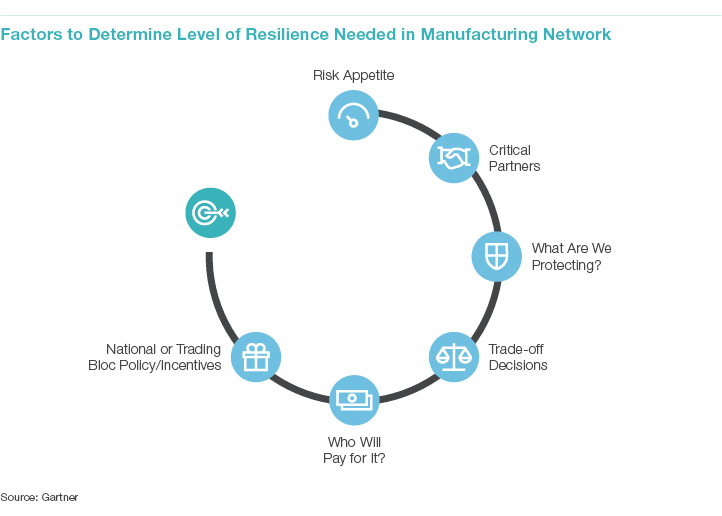
Consider the following factors:
A structured approach to considering resiliency, like the one above, as part of the periodic review of the supply chain operating model can keep the conversation balanced and top of mind in between disruptions.
Special invite: We are surveying leaders on this and other topics as part of our annual Future of Supply Chain survey. I invite you to participate by clicking on this link: https://surveys.gartner.com/s/future-of-supply-chain-2020
Michael Uskert,
Chief of Research,
Gartner Supply Chain
Michael.uskert@gartner.com
Beyond Supply Chain
Subscribe on LinkedIn to receive the biweekly Beyond Supply Chain newsletter.