By Michael Uskert | August 31, 2018
CSCO Outlook for 2027: Cloudy With a Chance of Moderate Growth
October 09 2026


By Michael Uskert | August 31, 2018
A recent trip to Starbucks to prepare for a briefing tour through Australia on the digitalization of supply chain unexpectedly coincided with a realization, creating a learning opportunity.
As I pulled out of the parking lot I stared at a Marsh Supermarket building. What digitalization lesson could possibly come from a supermarket, specifically this one? For those of you who are digital historians, the connection is likely apparent. On June 26, 1974, a Marsh store in a small U.S. town in Ohio became the first grocery store in the world to use a bar code scanner to check out shoppers.
So what became of this digital pioneer? Did it go on to lead the retail industry in the utilization of new and leading-edge technology? No. Unfortunately, after a number of beleaguered years, it went into liquidation in 2017 and no longer exists as a company.
This vacant building with a “for sale or lease” sign is a stark reminder that single technology leaps, no matter how significant, are not enough to prevent being rendered obsolete if progress isn’t sustained. When planning toward the future, it is easy to get distracted by the shiny objects that come along with the digital discussion. It’s cool to talk about drones, augmented reality, 3D printing, advanced robotics, autonomous vehicles, blockchain, the Internet of Things and so on. The list goes on and on and the pace of advancement does not seem to be slowing anytime soon. Technology will continue to change at a dizzying pace.
Focusing on the technology, however, is not the lesson. The lesson is that there is so much more on the path toward digitalization than the technology itself. If the focus is the technology, we run the risk of applying technology simply for the sake of applying technology which we know is a recipe for failure.
Recent research by colleagues Pier Manenti, Geraint John, Patrick Van Hull, and Beth Morgan found a common trait among organizations with a successful track record of sustained digital advancement. They invest heavily in building capabilities that allow themselves to test, choose, roll out and exploit technology that fits their business goals verses focusing on the technology first.
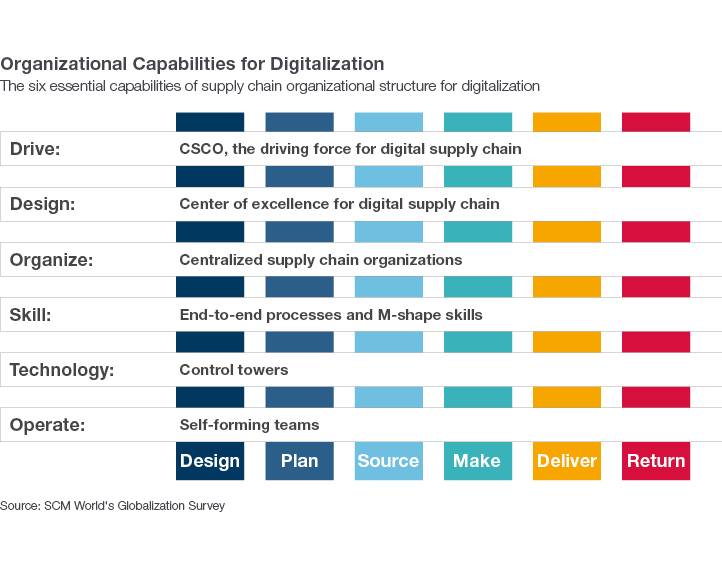
These organizations are different because they have invested in building six essential organizational capabilities:
That empty Marsh Supermarket building is a reminder that the only way to avoid being passed up by the rapidly changing technology is to have individuals and organizations that can adopt, adapt and exploit just as rapidly.
There’s more to the digitalization of supply chain than technology.
Mike Uskert
Managing Vice President, Supply Chain Research, Gartner
Beyond Supply Chain
Subscribe on LinkedIn to receive the biweekly Beyond Supply Chain newsletter.