By Kevin O'Marah | January 15, 2016
Navigating the Supply Chain AI Fog
September 18 2026


By Kevin O'Marah | January 15, 2016
Innovation powers growth and business legends like Thomas Edison, Henry Ford and Walt Disney are widely believed to have achieved riches and fame as genius inventors. This is only partially true. The staying power of their innovative energy was based on something available to us all.
In supply chain we call that thing “platforming”.
Platforming is the process of building product and process complexity into a scalable foundation in order to allow rapid and valuable innovation on things that the customer values and can see.
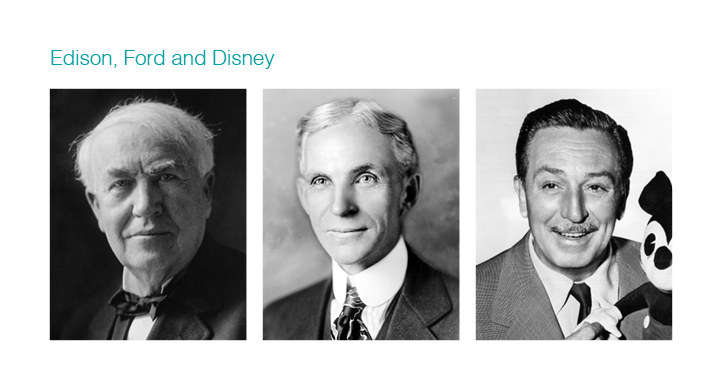
For Edison it was a system of electrification that gave birth to a cornucopia of home appliances.
For Ford it was the Model T with its vertically integrated plant, assembly line manufacturing and high worker wages that created an American car culture.
For Disney it was scalable characters like Mickey Mouse and the use of a Taylorist approach to art that gave us the modern entertainment industry.
In each case invention was only part of the story. Growth, and of course riches, came from building “the integrated system to design, develop and supply a family of products” underneath each great invention.
This definition of platform comes from a new white paper by Mike Burnette of the University of Tennessee and Cristian Negrescu of Mondelēz International. The research details how simplification, standardisation, scale and speed come together to make platforming a transferable supply chain strategy that works as well for Oreos as it does for aircraft.
For years I have heard supply chain strategists fret about complexity. SKU proliferation, configuration options and production variability all add cost to the supply chain. Too often, engineering-led creep in specification complexity or marketing-led creep in finished product variety ends up hurting overall profitability even if done with the best of intentions.
Cases in the SCM World library from Unilever, Fiat, Colgate-Palmolive and many others show consistently huge cost savings, time-to-market improvements and higher quality from such simplification efforts.
The trick is deciding which low-volume, margin-eroding variants to eliminate. And that’s where platform management comes in handy. SKU profitability profiles or bill of material analyses are tempting in their simplicity, but as tools are generally too blunt to do the job.
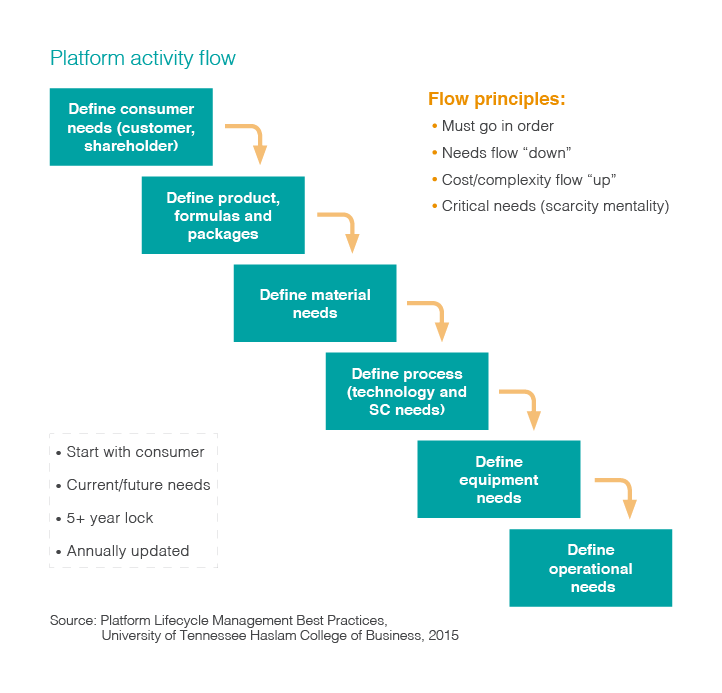
Platform management principles involve working backwards from customer needs through product design, material specs, production process architecture, equipment engineering and ultimately supplier networks to decide where complexity is worth building into the system.
IBM, Procter & Gamble and Harley-Davidson have shown that this can be done as a retrofit on an existing supply chain. Even better is when the supply chain is designed this way from the beginning. Inditex, for instance, has achieved great notoriety for its use of platforming in fashion apparel, as has BMW in automotive.
Volvo is in the midst of a radical rebuild of its global supply chain based largely on these principles and Mondelēz, which sponsored the Tennessee research, is currently presenting its “Lines of the Future” strategy to Wall Street analysts who are hearing plenty of good news about lower costs and better support for customer-driven innovation.
Edison, Ford and Disney are legends whose places in history might seem unattainable, but we have a worthy successor in the shape of Apple. The interesting thing about Apple’s use of platforming strategies as compared to Edison, Ford and Disney is that Steve Jobs’ product and marketing vision was all but lost until Tim Cook came along to build the supply chain platform.
Integrated supply chain, a concept hardwired into Cook during his time at IBM, allowed the company not only to start with customer needs, as Jobs had always done, but also then to drive the process all the way back into supplier relationships. Apple’s massive programmatic investments in equipment, software engineering and retail stores are a testament to its grasp of platforming.
Like Ford, Apple built a vertically integrated supply chain and eliminated complexity where it’s useless – thousands of finished goods varieties or dozens of redundant suppliers. Instead, Apple fosters complexity where it’s valuable to the customer: in apps.
The App Store offers 1.5 million apps. It did $20 billion of sales in 2015 with no inventory.
Now that’s a platform for growth.
Beyond Supply Chain
Subscribe on LinkedIn to receive the biweekly Beyond Supply Chain newsletter.