By Kevin O'Marah | June 19, 2015
CSCO Outlook for 2027: Cloudy With a Chance of Moderate Growth
October 09 2026


By Kevin O'Marah | June 19, 2015
Amazon’s plans to develop an Uber-like app will probably fade well before making an impact on the dizzyingly difficult world of omnichannel logistics. This week, The Wall Street Journal reported that Amazon is working on yet another twist to the complex last-mile e-commerce fulfilment problem – this time, by creating a mobile app that would be used like Uber, but for parcels.
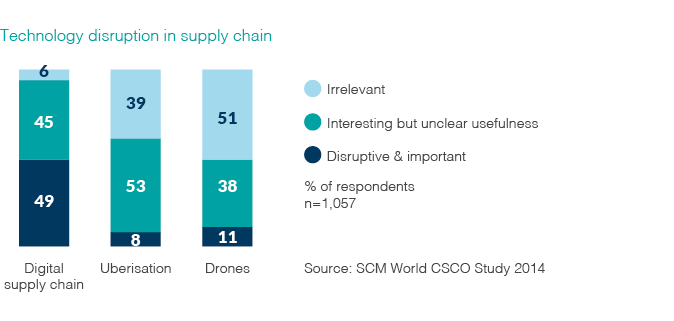
The idea isn’t any crazier than drones, but it’s really just a sideshow in CEO Jeff Bezos’ long game to win using the digital supply chain.
Worth a try…
Before completely dismissing the notion, let’s recognise why it’s worth a try. “Uberisation” in supply chain is a useful idea, offering, as it does, a natural way to improve utilisation of otherwise idle assets and labour. It’s happening in short-haul trucking already and is under discussion for a whole range of other asset-based services in the physical supply chain.
The best example may be Instacart, which is embraced by retailers like Whole Foods Market and Costco. Thanks to Instacart’s delivery service, these retailers gain incremental sales without adding any physical infrastructure, special inventory or dedicated labour. This is in stark contrast to most other e-commerce fulfilment options, including click and collect, fulfil from store, and classic distribution centre to home, all of which add operational complexity and cost.
…but ultimately self-defeating
The problems, however, are too big to skate over. First of all is the issue of reliability. Amazon’s most vital asset in the long run is consumer trust. As the ultimate collector of shopper demand information, Amazon is banking on our readiness to click “buy” without a second thought. It is the reason Amazon Prime is strategically critical and also why it is successful.
As for long-term potential to actually make profit, it is also essential to Amazon’s burgeoning content business. Betting the brand on a bunch of amateurs looks risky, especially considering how often stories emerge about Uber drivers molesting customers, or Airbnb hosts ruining someone’s holiday.
A second huge question surrounds legality and liability. UPS has been delivering to our doorsteps for decades. It’s obvious who’s accountable when something goes wrong and there’s no question about whether drivers have a commercial driver’s licence, adequate insurance or a toll-free number to call with problems. Plus, the periodic banning of Uber in cities around the world and the regulatory crackdowns on Airbnb show that firm legal foundations for these business models are not yet set.
This may be fine for start-ups positioning themselves as technology platforms, but it is hardly safe for an asset-heavy giant like Amazon.
The third problem is competition and channel conflict. For years now, Amazon has been kicking store-based retail’s ass. Gradually, however, the best are learning how to win. Nordstrom, REI, Lululemon Athletica, Burberry and a growing list across formats have figured out how to do omnichannel right, including leveraging the physical store. Shaving an hour or a dollar off the deal isn’t going work forever, as customer loyalty evolves around lifestyle-solution brands, instead of just fast and cheap.
What’s more, UPS and FedEx, which have been thrown under the bus by Amazon before, are not likely to embrace partnership with a customer that is actively undercutting their core business.
Bezos plays seven years in the future
So, is Amazon being stupid? Not at all. Bezos freely admits that he’d rather play the long game than compete in the now, or even in the near future. Everything Amazon does – from Prime, through drones, to winning Golden Globes for original television programmes – points to an endgame of making money from consumers addicted to the ever-expanding digital supply chain of the next decade.
It has persuaded us to share loads of personal preference data and built a monstrous content delivery network that includes Amazon Web Services in the cloud and Lab126 cranking out devices like the Kindle, which we carry in our hands.
As consumer spending continues to shift away from physical products and towards the intangible, Amazon’s big win comes from “shipments” of Breaking Bad, Fifty Shades of Grey, or Fast and Furious 7, which we will happily pay for, but which cost nothing to deliver.
Bezos has everyone watching the front door while he tunnels up through the floor.
Beyond Supply Chain
Subscribe on LinkedIn to receive the biweekly Beyond Supply Chain newsletter.