By Kevin O'Marah | April 17, 2015
Navigating the Supply Chain AI Fog
September 18 2026


By Kevin O'Marah | April 17, 2015
The huge buzz around the Apple Watch, the company’s latest ground-breaking product, has failed to provide an answer to the much pressing question of how the Cupertino giant did it again. Now that this can no longer be traced down to Steve Jobs’ raw individual genius, and with Tim Cook’s leadership – although brilliant – not seeming to offer the answer, the solution can only be found in how Apple is designed to consistently achieve innovation success. The Holy Grail of design for profitability has to do not only with design, technology and marketing: it’s got to do with supply chain too.
Clayton Christensen of Harvard Business School may be the most influential academic thinker in the world on the topic of innovation. His 1997 classic, The Innovator’s Dilemma, explains how good practices, like catering to existing customers and investing where profits look promising, can impede breakthrough innovation.
The solution, it turns out, depends on recognising and exploiting a third dimension of competition (beyond performance and time), which is “new customers and new contexts for consumption”. It’s not about continuous improvement at all, but instead is a matter of hoisting the entire business onto a new plane of opportunity. As such, it requires a completely different approach to organisation design.
SCM World has just finished an ambitious field study on innovation success rates and on why innovation leaders are so much better than the rest. Using data from 497 supply chain, engineering, operations and R&D executives, we were able to clearly link success with new product development and launch with three fundamental principles:
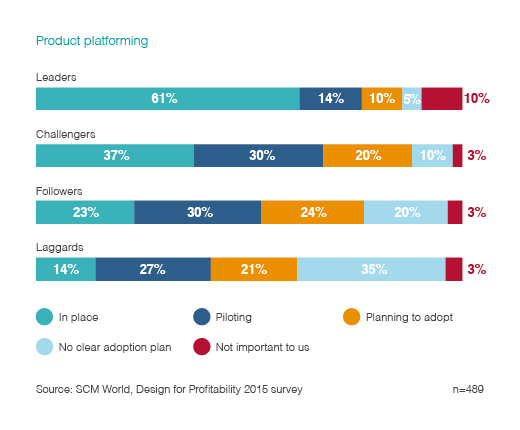
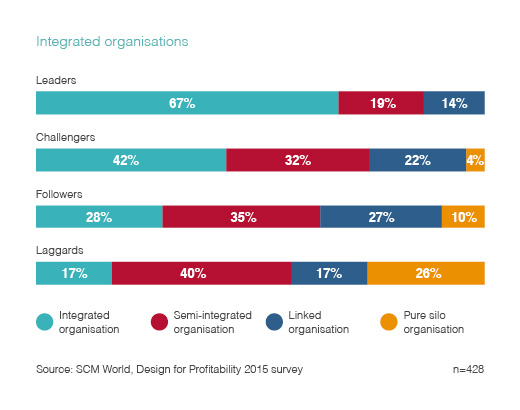
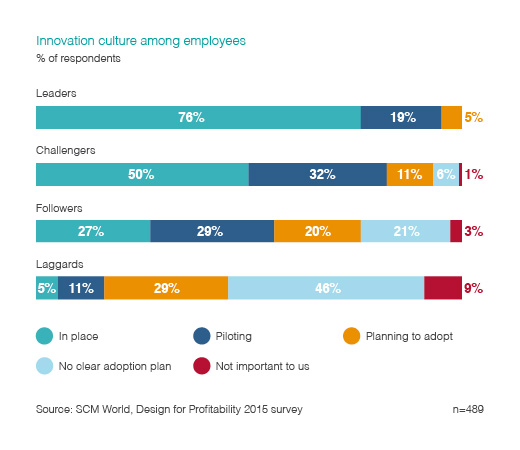
The takeaways are intuitive enough, and yet, only a third of companies overall claim to have these principles in place. Among the leaders we profiled, almost 70% were actively using them: great innovators do not rely exclusively on their product design folks to come with winning ideas.
Christensen’s basic idea of shifting the game onto another plane, with some combination of new customers and new use models, is what makes the Apple Watch exciting. The watch business is not much of a market mover on its own and, with initial versions tethered to iPhones, one might expect this innovation to have a limited run beyond the typical Apple fan-club frenzy. Pre-orders of 2.5 million units as of 15 April look like a smash hit, but compared to 20 million Samsung Galaxy S6 smartphones sold on pre-order, or 75 million iPhones sold in the last Q4, this is no big deal.
Or is it? That’s exactly the kind of thinking that creates the innovator’s dilemma in the first place. Worries about cannibalisation of existing product sales, risk-adjusted net present-value analyses of investments in marketing, or jealousy over the limelight – all contribute to companies’ inability to renew their innovation cycle time and again. Apple does it as a matter of religion, but also organisational strategy.
The Apple Watch is meaningful because it creates demand with completely new thinking. The partnership with IBM for health data analytics, the hiring of Angela Ahrendts from Burberry, the eight-country simultaneous market launch of the watch – all are part of setting the playing field for a new business that has no real competition at all yet. Analysts call the market “smartwatches”, with estimates of 28 million units sold in 2015, but what does this really tell you?
To students of supply chain, product development and organisational design at Apple offer the perfect case study in design for profitability. The Apple Watch is proof of the innovator’s solution.
Beyond Supply Chain
Subscribe on LinkedIn to receive the biweekly Beyond Supply Chain newsletter.