By Kevin O'Marah | January 05, 2018
CSCO Outlook for 2027: Cloudy With a Chance of Moderate Growth
October 09 2026


By Kevin O'Marah | January 05, 2018
The United States and United Kingdom are on similar paths away from the globalized, integrated, digital world economy that many pundits have long anticipated. In 2016 the U.K. voted for Brexit and the U.S. voted to “make America great again”. The unifying theme was all about slowing down the pace of change and, if possible, restoring lifestyles to a now bygone era.
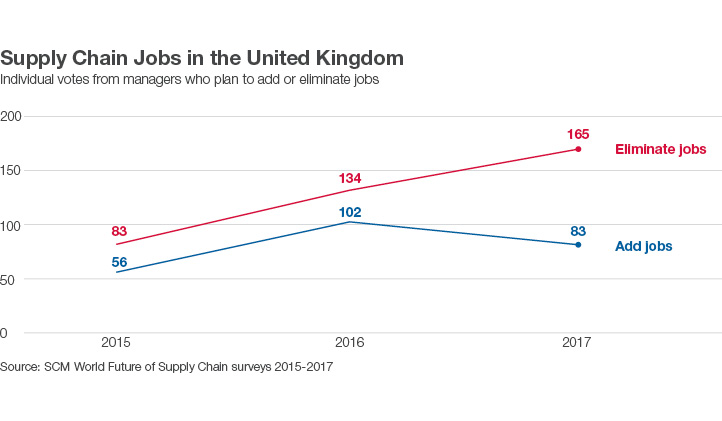
The Brits have paid. Imported materials cost more because of a weaker pound, property values are declining and big companies are rethinking their Eurocentric investments in production facilities as well as headquarters locations. SCM World data on supply chain hiring plans shows a distinct move away from the U.K. as a location from which to manage a global operation.
The U.S., by contrast, is still adding far more supply chain jobs than it is eliminating. Is it possible that even with declining support for free global trade the United States can thrive?
History Says No
Back in 1930 U.S. President Herbert Hoover signed what has since become known as the Smoot-Hawley Tariff Act. It was a politically generated piece of legislation that sparked a worldwide turn toward protectionism. The U.S. congress debated and haggled over hundreds of tariffs on specific products and commodities, deaf to the objections of both economists and financiers.
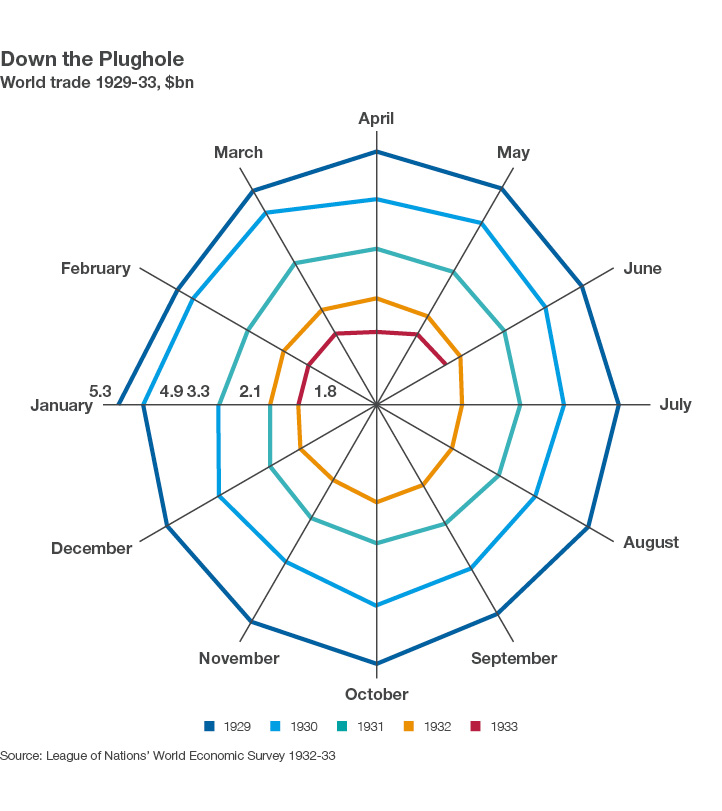
According to an article published by The Economist back in 2008, this Act “did most harm by souring trade relations with other countries”. Total world trade declined by two thirds in just four years as the Depression defined the 1930s.
Economists and bankers want free trade because they focus on macro movements of money. Politicians see it differently since they worry about micro movements of voter preference. With a surging U.S. stock market and accelerating economic growth one might ask whether the politicians have a point.
Are the Economics of Free Trade Unimpeachable?
Free trade makes sense in principle. 19th century economist David Ricardo’s theory of comparative advantage says that international trade benefits all parties by allocating work in ways that best employ a given country’s resources and technical knowhow. And yet, there’s a bit of gaming going on here, since in practice many countries cheat to gain a temporary edge.
Brazil, for instance, has forced significant investment in supply chain operations within its borders by erecting trade barriers that make its large market costly to serve from anywhere else. China too has built much of its export-driven economic growth on uneven trade practices that only recently have come under serious scrutiny. Every nation plays around the edges with these rules at least some of the time and usually to the benefit of some special interest.
The promise of free trade is that a rising tide will lift all boats, but the process takes time and short term losers won’t go without a fight. This implies that economic theory is missing something in its measurement of utility over time and that some people, maybe even most, would rather sacrifice the marginal productivity Ricardo posits in favor of stable lives.
Coping With Protectionism
From a pure supply chain perspective there are some important trends to consider when contemplating a potential pull-back from free trade. For one thing, the technology of manufacturing and distribution increasingly enable local-for-local supply networks. Advanced robotics, 3D printing and digital supply chains lend themselves to reduced reliance on cheap, distant labor.
Also important is the ongoing shift away from industrial, material-centric economies to information-based economies. Trade barriers work at physical borders by literally barring entry until the appropriate paperwork and fees have changed hands. Things work very differently when shipments happen over the cloud.
Finally, and perhaps most important, is the arrival of material abundance. Economics assumes that rational people will always choose more over less. But what if scarcity isn’t a problem? Rich societies in history have shown a penchant for preserving their cultural proclivities at the expense of pure growth. This might be said of Rome, Paris and now perhaps also London.
Fortress America could work if businesses can package an information-rich, personalized, locally sourced assortment of goods to sell. Consumers, however, will need to do their part by paying extra for the privilege.
Beyond Supply Chain
Subscribe on LinkedIn to receive the biweekly Beyond Supply Chain newsletter.