By Kevin O'Marah | October 21, 2016
Navigating the Supply Chain AI Fog
September 18 2026


By Kevin O'Marah | October 21, 2016
With change continually accelerating in supply chain, people crave a look over the horizon to see what’s coming next. At SCM World we have collected thousands of practitioner survey responses over the past five years in an effort to see what lies ahead.
Back in 2012, for instance, we correctly predicted changes in retail store operations, fulfilment centre design and direct-to-customer sales models. In 2013, we foresaw the impact of smart manufacturing and supply chain risk on the move to localised production. In 2014, we called out the shift away from process-centric S&OP and towards continuous, simulation-enabled control tower planning.
Now, in late 2016 with one week left on our annual Future of Supply Chain survey, we are looking forward to seeing where the supply chain community sees important change coming in the next few years.
Among the most interesting questions are:
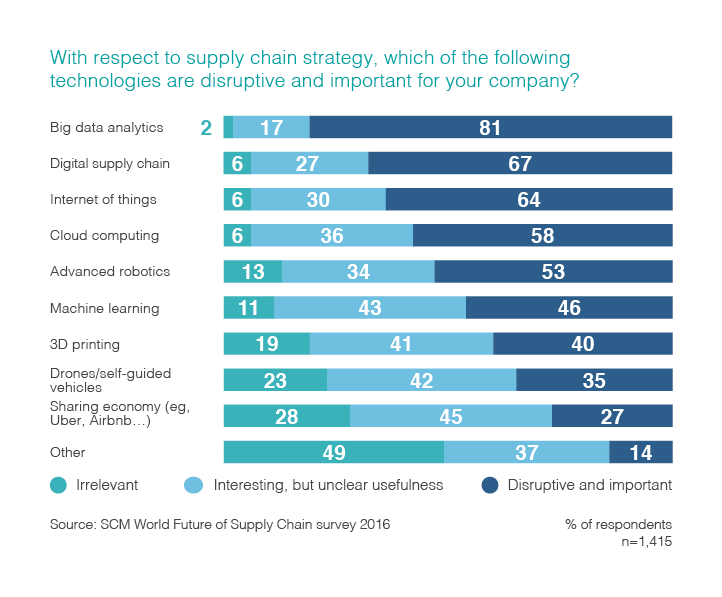
What technology disruptors deserve immediate attention? Having asked this question twice before, we’ve seen a huge interest in big data analytics and digital supply chain. The fastest growing, however, since 2014 are cloud, Uberisation, 3D printing and artificial intelligence. What’s hot going into 2017 and why?
 Where are the jobs going? We’ve previously collected data on countries’ prospects for supply chain investment, capacity additions and job creation. Last year, for instance, we saw supply chain positions in the United States being added at twice the rate they were being eliminated. Vietnam, Mexico and India had nearly a 10:1 ratio in adding new jobs versus eliminating them. France was by far the worst job loser among big economies. Where are the jobs going in 2017-20?
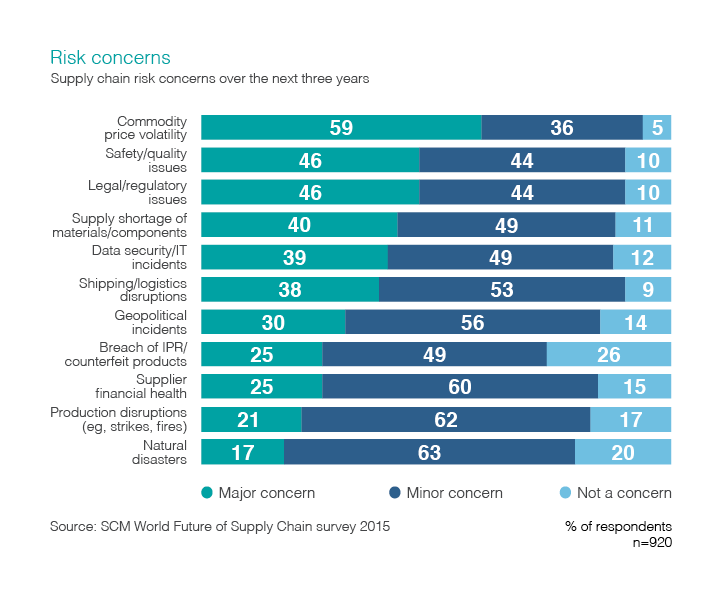
 What are the biggest risks facing supply chain leaders? Five years ago, supplier failure was dominant, but natural disasters had prominence on the heels of Japan’s earthquake and Thailand’s flooding. More recently, concerns are tilting towards commodity price risks with a surge in fears of geopolitical incidents.
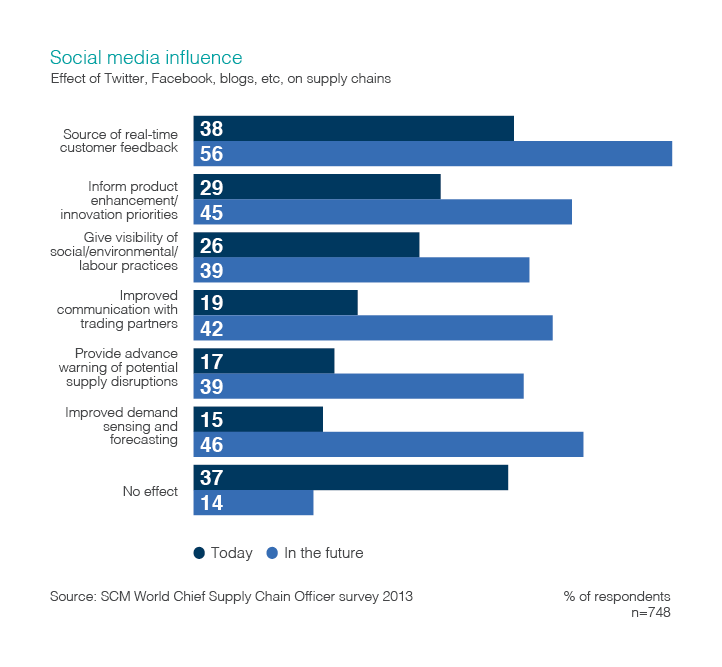
 What role does social media play in supply chain strategy going forwards? We asked this question twice (in 2012 and 2013) and saw a big drop in the share of respondents dismissing social media. Among the more important applications of social media we found were real-time customer feedback, forecasting hot products and informing innovation. Returning to this question now with Facebook, Twitter and Instagram all significantly more ubiquitous, where are supply leaders going with social media?
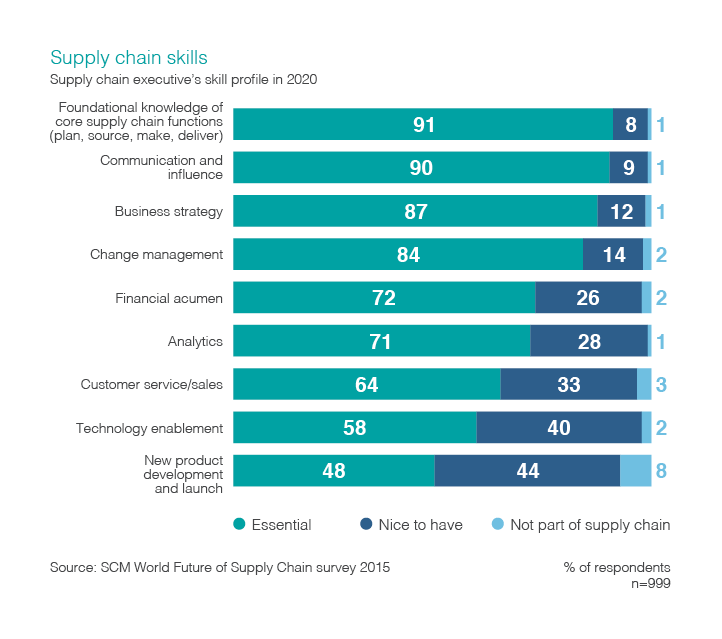
 What skill mix defines a great supply chain professional in 2020? We’ve asked variations of this question since 2011 and have seen a steady rise in the importance of soft skills like communication and influence, and change management. In fact, 90% of all respondents in 2015 declared that communication and influence is an essential skill, nearly tied with the foundational skills of plan, source, make and deliver. The trend points to supply chain as a career track to CEO. Does this continue in 2017?
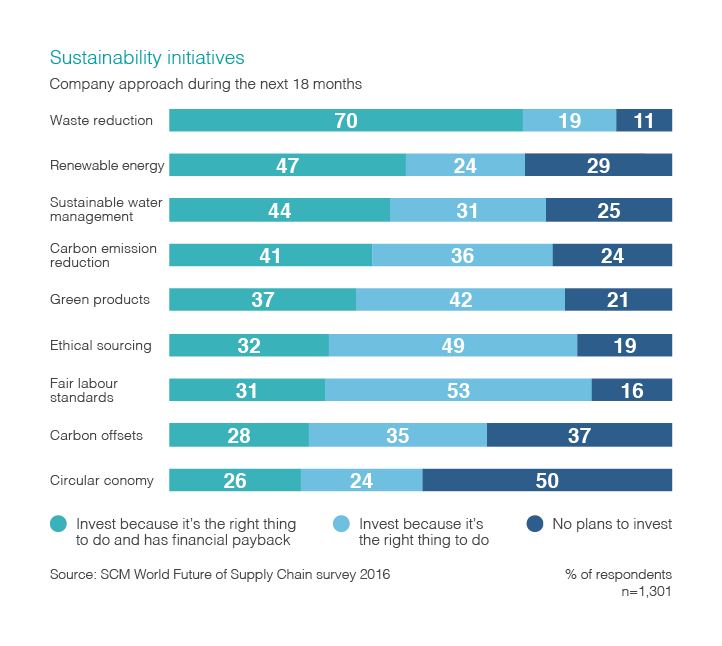
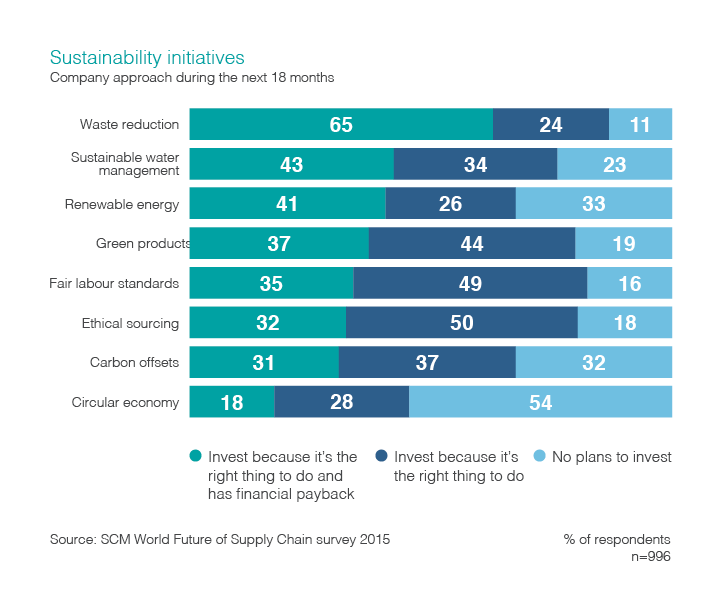
 What are supply chain leaders doing about sustainability? We’ve collected data on this topic extensively since 2011 and seen a rise in waste reduction, renewable energy, water stewardship and green products. A minority find these initiatives to be self-funding, but most do them anyway because “it’s the right thing to do”. How much progress are we making towards better business cases for sustainability? Is the initiative to drive sustainability in supply chains still strong?
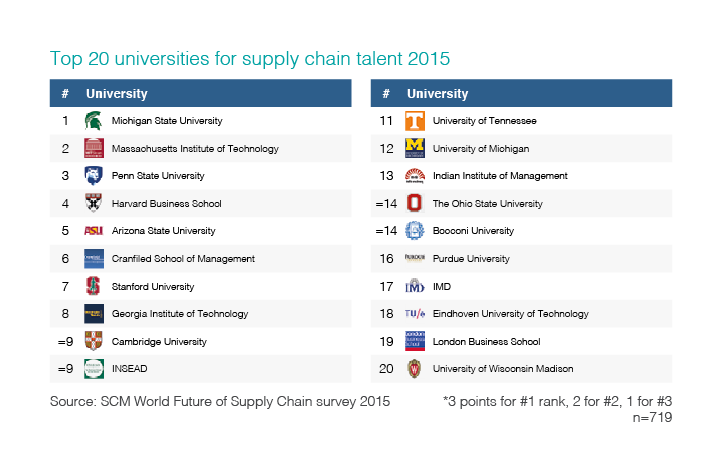
 Where are the next generation of leaders coming from? Talent management is a core topic for the SCM World community. One question we’ve asked repeatedly focuses on university hires. The phrasing is intentionally broad to allow respondents freedom to cite preferred universities, whether or not offer formal supply chain degrees are offered. Many have historically cited pure MBAs like Harvard and INSEAD or strong engineering programmes like Eindhoven and Carnegie Mellon.
 Supply chain is a field science
Rapid innovation has reshaped the supply chain profession. It’s increasingly critical to think like a business person, while still mastering the implications of an exploding set of technology enablers. Learning from peers has proven powerful in shaping the future of supply chain. This survey is a critical tool to help guide our work.
Please take ten minutes (if you haven’t already) to share your perspectives.
Beyond Supply Chain
Subscribe on LinkedIn to receive the biweekly Beyond Supply Chain newsletter.