By Wade McDaniel | September 06, 2024


CSCO Outlook for 2027: Cloudy With a Chance of Moderate Growth
October 09 2026


By Wade McDaniel | September 06, 2024
In February, we examined how the economic outlook for 2024 was shaping up and how chief supply chain officers were responding. The crowd was taking a glass-half-empty approach, with 50% projecting a recession in 2024 and 25% sitting on the fence, saying they didn’t know.
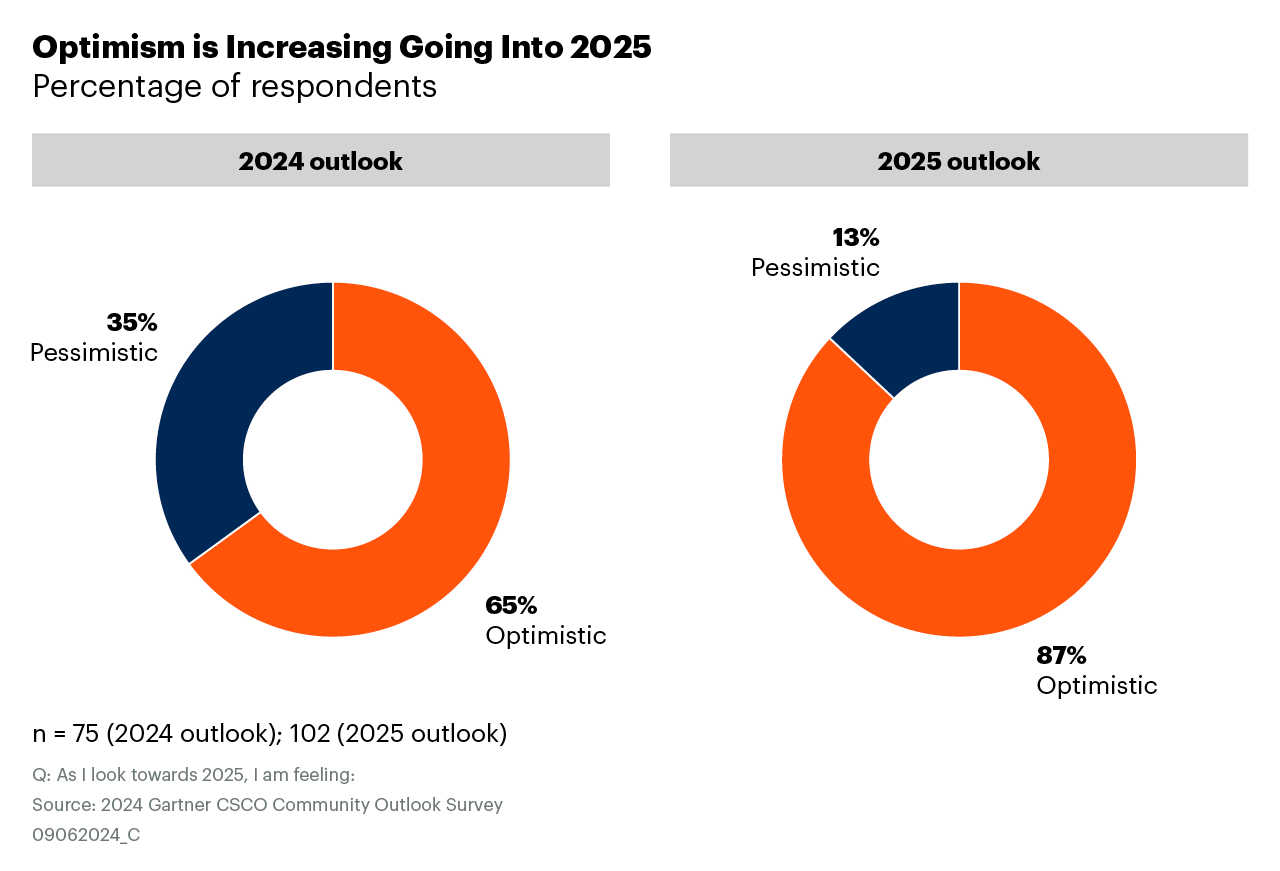
Fast-forward to September 2024, and the global CSCO community has a much sunnier outlook heading into 2025. Only 33% say there could be a significant economic slowdown or recession next year.
This might explain an overwhelming optimistic outlook for 2025 from the CSCO community.
The short answer is yes, probably so. And as is usually true, the longer answer is more nuanced.
Macroeconomic indicators through the second half of 2024 have been steady but slow. Core, consumer and wholesale inflation have been dropping into forecasted ranges, and central banks have started to ease interest rates.
Unemployment is starting to creep upward in the United States, but this is from an unsustainable low. Among the 38 countries in the Organisation for Economic Co-operation and Development (OECD), unemployment stands at around 5%, and the job market remains reasonably strong.
According to Deutsche Bank, global earnings grew more than 10% year over year through the second quarter of 2024.
Real GDP of the OECD has grown 1.8% year over year through the second quarter.
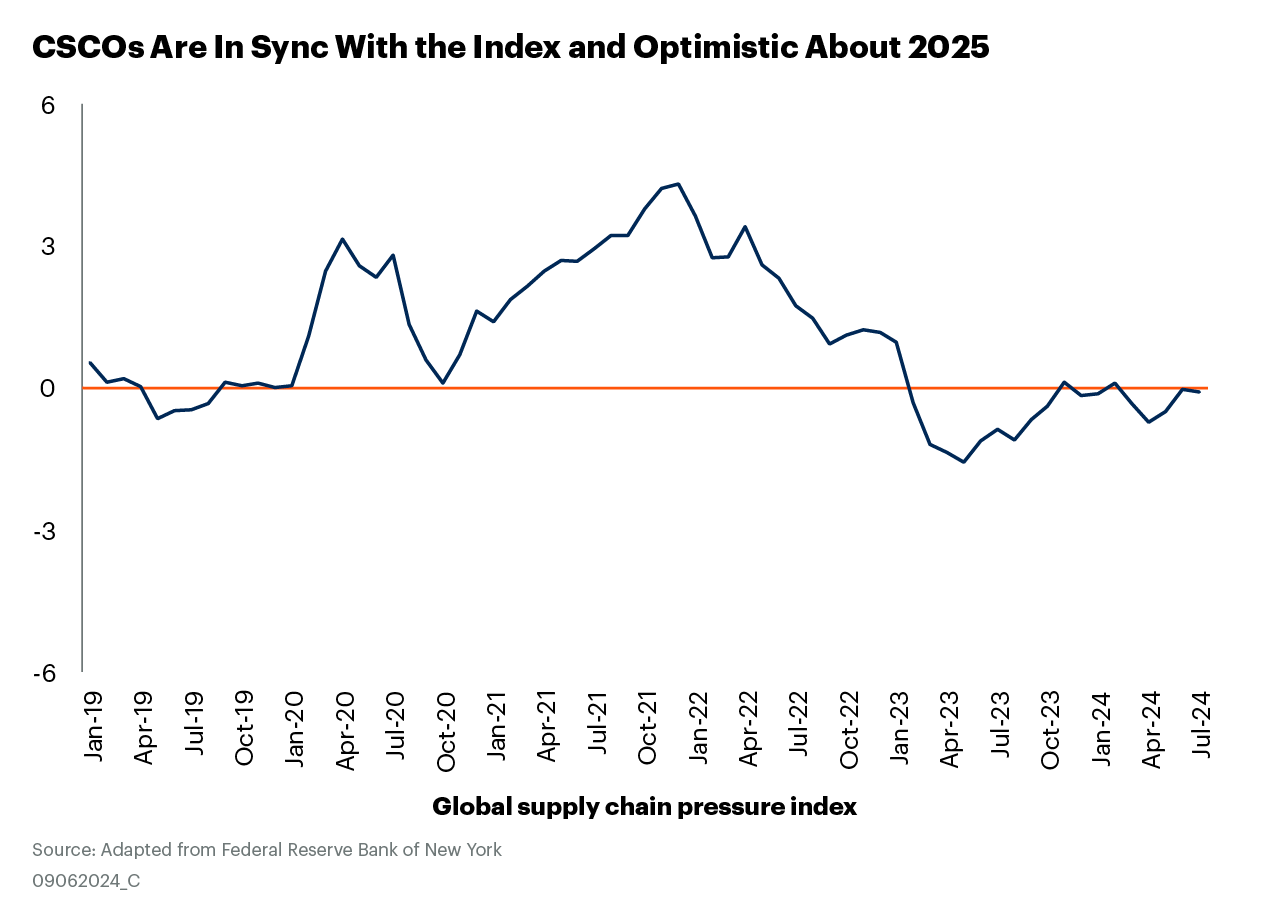
The U.S. Federal Reserve Bank of New York’s Global Supply Chain Pressure Index tells a story of balance and has been that way for about a year.
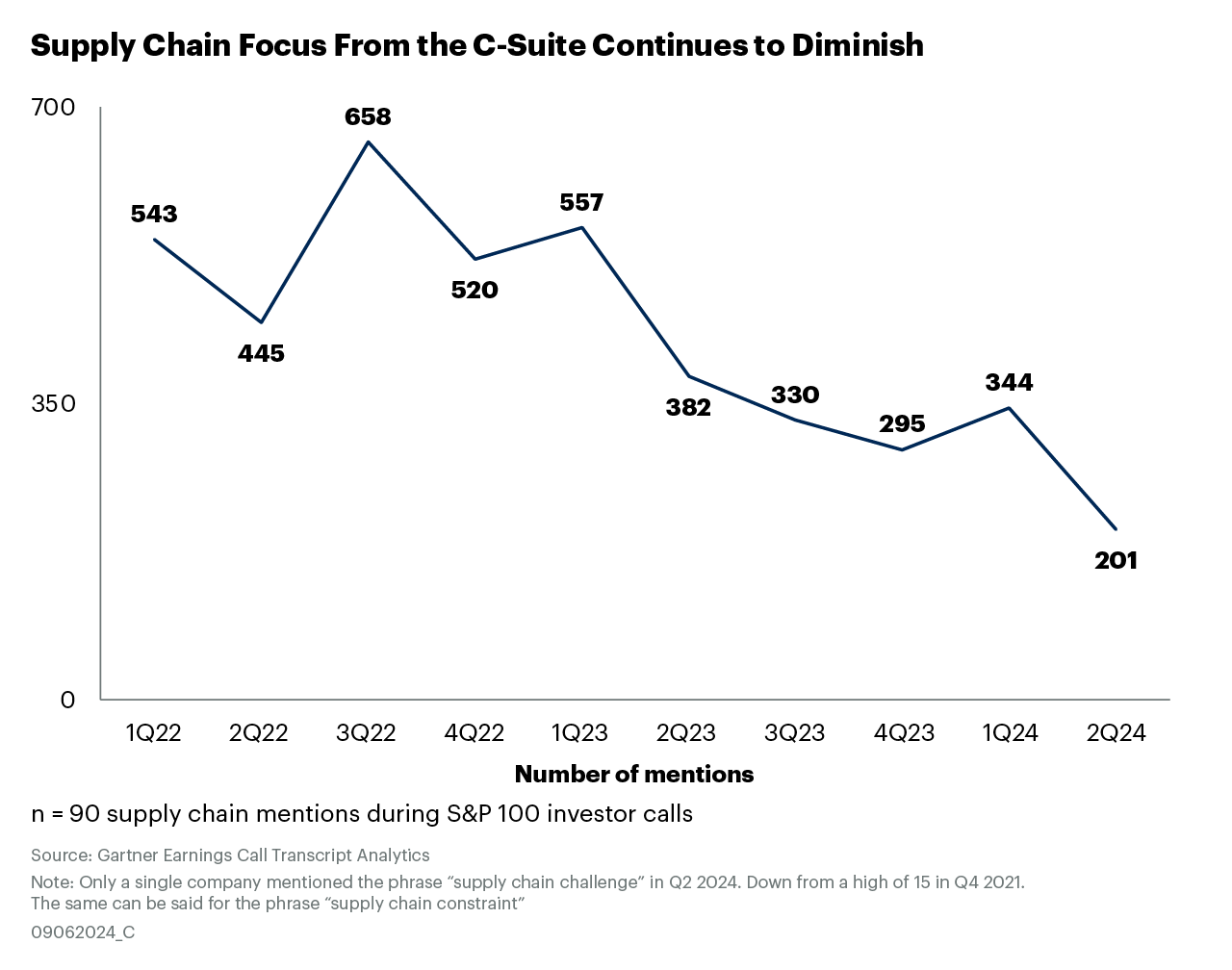
The C-suite isn’t mentioning their supply chain in earnings calls like they once did. When they do, it’s not about shortages and challenges; it’s about progress and success, for the most part.
I started looking hard for the downside here. What hidden gotchas lie waiting for CSCOs in 2025?
Let’s start with the manufacturing outlook from S&P Global Market Intelligence. The PMI* outlook at the end of July was 49.7, and the just released index for August is 47.9. Better than 50 is an improvement over the previous month, and this number has hovered above and below 50 for more than a year. So, could we expect a little slowing headed into 2025? Perhaps.
CSCOs have been tightening their inventory belts and looking to trim costs, but this is a fundamental charter for the profession. Their outlook for 2025 is little different than it was in 2024.
Could there be another unforeseen shock in 2025? Yes, probably. From what we hear, the community is saying it is planning for the unknown and making its networks more elastic and flexible.
Is there a forecasted economic downturn in 2025? No. Global GDP growth is forecasted to be around 3% — slow but growing nonetheless.
Finding a gotcha at the macro level isn’t that obvious.
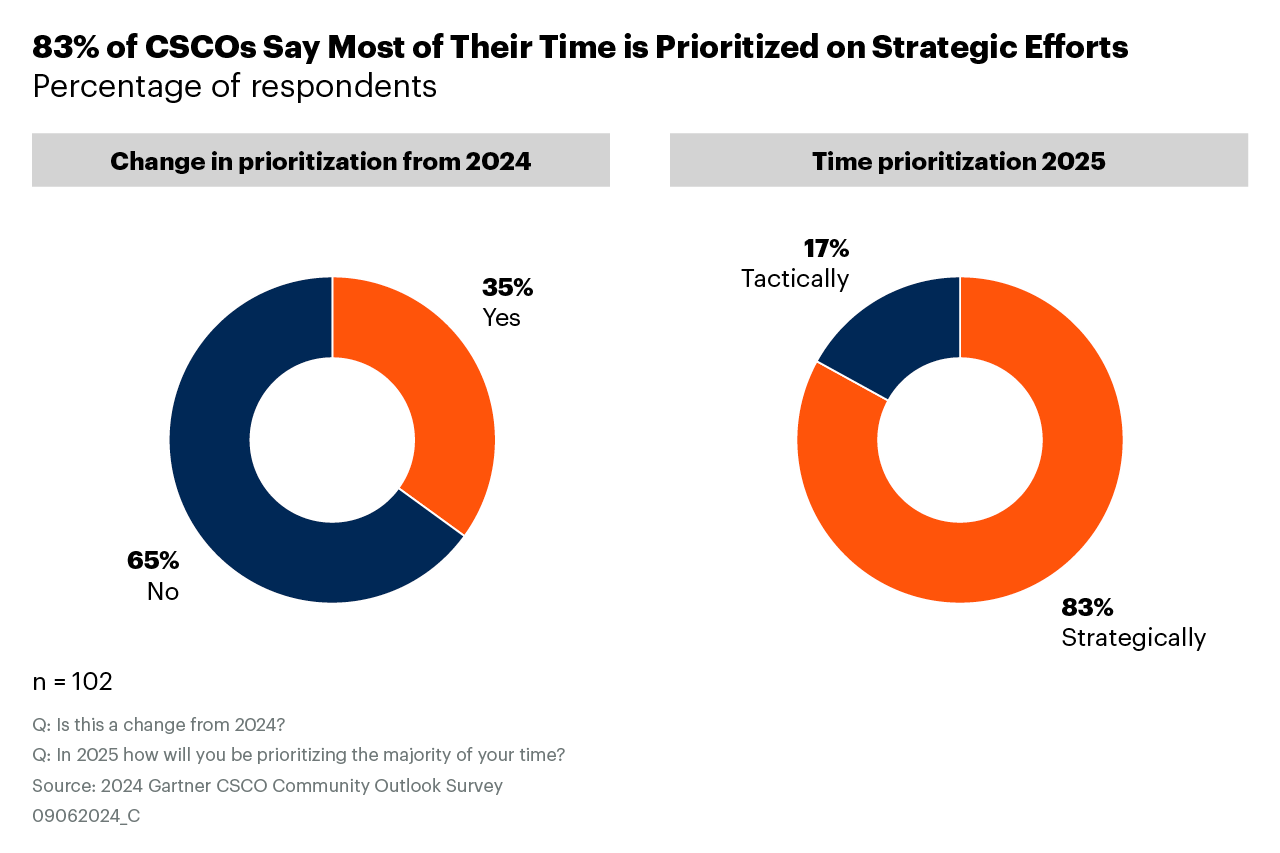
Most CSCOs let us know they will spend most of their time on strategic efforts, which isn’t much of a change from 2024.
The community is also telling us that its priorities have remained much the same over the past three years: digital development, strategy development and talent.
However, a few new data points need to be considered by CSCOs as they build on these three pillars.
CSCOs probably won’t find 2025 more challenging than 2024 on a macro level. But that doesn’t mean it is a year to catch a breath, regroup or coast along. Growth will be at a slower pace and more challenging. The community has placed a No. 2 priority on commercial growth over the next six months. Sorting out how to increase sales, not just enable them, might be the gotcha lying around the corner in 2025.
* Includes content supplied by “S&P Global Market Intelligence PMI”
Wade L. McDaniel
VP Distinguished Advisor
Gartner Supply Chain
wade.mcdaniel@gartner.com
CSCOs: build your 2025 Supply Chain Strategic Plan – Download Template
Welcome to the 2025 Gartner Future of Supply Chain Survey.
We invite you to share your views on the emergent role of supply chain scenario planning in a future driven by emerging trends and uncertain outcomes. This survey covers five sections: leadership assessment, future drivers, supply chain competitive characteristics, enabling capabilities and performance. As these emerging trends shape the future of the supply chain profession over the next three to five years, this survey seeks to enable our clients to strategically plan for organizational change.
The findings of this survey will be published for clients in Gartner’s annual Executive Report: Future of Supply Chain in January 2025.
Beyond Supply Chain
Subscribe on LinkedIn to receive the biweekly Beyond Supply Chain newsletter.