By Steve Steutermann | September 21, 2018
Navigating the Supply Chain AI Fog
September 18 2026


By Steve Steutermann | September 21, 2018
After great anticipation, our digital supply chain transformation research study results are in!
While the data confirms the majority of supply chain organizations struggle to drive digital transformation across their organizations, the good news is companies furthest along the digital journey have aligned their digital investments to customer and shareholder value.
Our research data is hot off the press and our analyst community is now fast at work synthesizing the data over the coming months to provide further insights. However, early key study findings indicate:
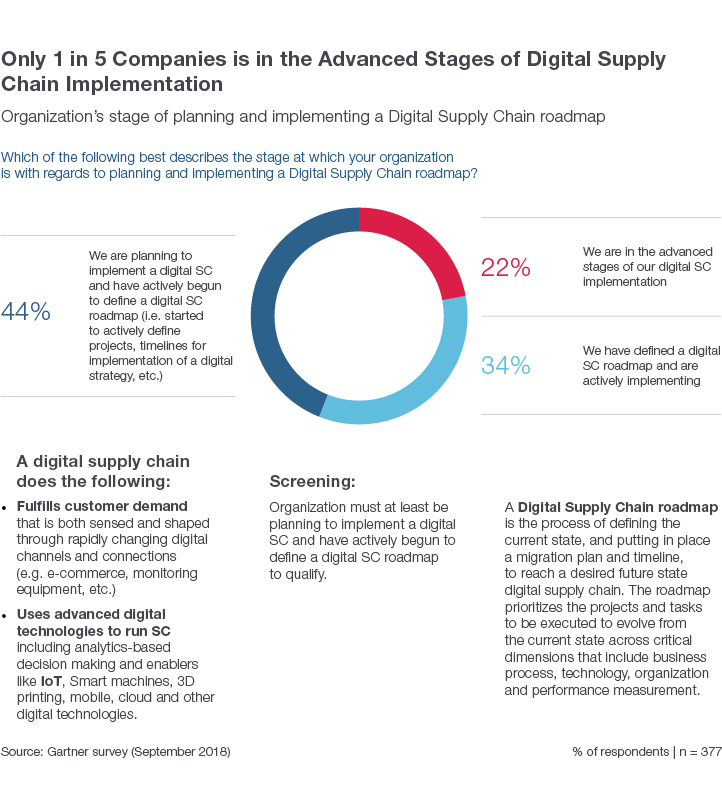
The findings are consistent with many discussions we have with supply chain leaders. I can generally categorize digital investment criteria/priorities in four broad buckets:
Identifying what to invest in and why, however, is only half the battle. The other half, and the more difficult half, is the ability to transform and support further innovation within the supply chain.
Study findings indicate that goals, governance, innovation and leadership play key roles in the most successful organizations pursuing digital transformation. So what are the supply chain leaders doing to drive success? The early data suggests:
Goals & Governance:
Innovation and Leadership:
My takeaway:
It’s not too late to get started on a digital journey or catch up, given that only 22% of organizations identify themselves as being in the advanced stages of digital supply chain implementation. The findings indicate that a digital roadmap should include both a short-term and longer-term vision. This enables the organization to integrate digital initiatives into supply chain processes to enable greater end-to-end capabilities, while seeking revenue growth through the establishment and support of new business models.
Effectively communicating vision, goals and priorities must not be underestimated. Ask yourself how effective your organization has been at communicating strategy. It might be time to invest in people, process or technology to strengthen your ability to communicate and influence internally.
The establishment of a strategic digital business planning process should be a priority, and the data suggests ownership is required. You have a problem if no one raises their hand to the question, “Who owns digital?” or you may have an equal problem if everyone raises their hand. The point is that leaders have established ownership of their digital roadmap to include sponsors, stakeholders and advisors.
Leaders are agile and willing to experiment. Their priority is to invest, learn and scale, knowing their original digital investments might change or be replaced by the continuing pace of technology.
Steve Steutermann, Managing Vice President, Gartner Supply Chain
Beyond Supply Chain
Subscribe on LinkedIn to receive the biweekly Beyond Supply Chain newsletter.