By Kevin O'Marah | January 30, 2015
CSCO Outlook for 2027: Cloudy With a Chance of Moderate Growth
October 09 2026


By Kevin O'Marah | January 30, 2015
Earlier this week, blizzard alerts caused Boston and New York to be put on lockdown. Although the Boston area registered 91cm of snow, New York was largely unaffected, save for the troubles caused by the lockdown to UPS deliveries, e-commerce fulfilment warehouses and anything else that moved.
Extreme weather is a hassle in the short term, of course, but in the long run it’s a golden opportunity that smart supply chain strategists – especially in grocery retail – should seize. Here’s why.
We survey thousands of supply chain professionals each year on risk management. Between 2013 and 2014 the second biggest jump in level of concern was over natural disasters, and although this risk factor still scores lower than things like customer demand volatility and safety incidents, it shows that we accept extreme weather as a rising worry.
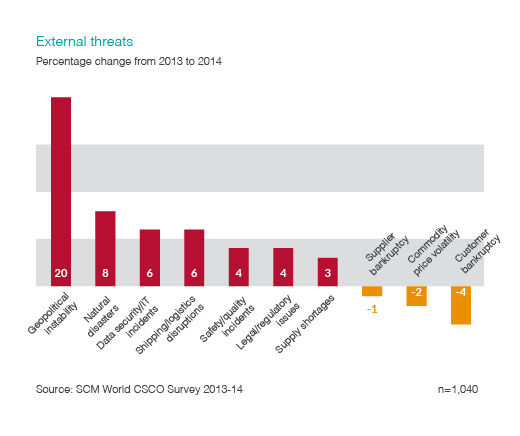
This prescience is no surprise. Weather patterns do seem to be bringing on more severe swings and, with ocean temperatures dramatically higher than long-term averages at the moment, anyone along the coasts can expect magnified storms.
Supply chain people work hard to forecast the future, and superstorms look like something we need to plan for.
When Hurricane Katrina blasted New Orleans back in 2005, it was a cataclysm for the region. A few big companies came off looking great, however. They included Procter & Gamble, whose Folgers plant was a beacon of calm and security in the mayhem, and both Walmart and Home Depot, whose heavy duty supply chains swung into action with clean-up supplies.
Ten years later, we have had another superstorm and round-the-clock news coverage included familiar images of supermarkets being mobbed by shoppers stocking up for what could have been days inside. People were buying milk, batteries, rock salt, beer and whatever else they deemed essential to “survive”.
This behaviour is fully predictable and, although grocery retailers stock up accordingly, as consumers go crazy most outlets go out of stock on many items. The scene is a relic of our pre-internet history that need not continue.
For all the jokes about weather forecasters being wrong, it is clear that meteorologists (as we now call them) are much better equipped today than they were 20 years ago. Weather data, in fact, is an increasingly useful independent variable in forecasting models for all kinds of supply chains.
Combine this input with consumer acceptance of subscriber e-commerce models like Amazon Subscribe & Save and emerging technology applications like predictive shopping, and we may have a winner.
Merchandise planners working with historical weather data against inventory volumes already create rough-cut forecasts for all locations and time periods. By offering a “storm-prep” subscription service to regular customers and combining aggregate demand for a given geography with individual orders, items could be staged for home delivery days or even weeks in advance.
Consumers may be willing to pay a premium for such service, while at the same time retailers would be able to stock much more accurately. In addition, store staffing levels could probably be reduced substantially.
Such an approach brings much more personalisation to the shopping experience, better preparation for demand spikes, and a way to build customer loyalty based – at least in part – on local knowledge and presence. As a response to Amazon, which aims to grab as much consumer demand as possible, this may be just what store-based retailers need to make a virtue of bricks and mortar.
What’s more, this need not only apply to groceries. Drugstores, home improvement retailers and even pet stores might all find consumers happy to order before storm season even starts and pay a premium for peace of mind.
More than two-thirds of retailers already operate – or are developing – direct-to-consumer fulfilment capabilities, so the infrastructure is there. A majority is also building larger, more automated DCs along with smaller, more local ones in response to the demands of digital consumers. This means that scale economies for low cost, plus proximity for high service levels are both part of the plan.
Extreme weather has huge impacts on consumer demand. For retailers stuck in the same blizzard, hurricane or heat wave, why not turn risk into opportunity? Consumers might love it.
Beyond Supply Chain
Subscribe on LinkedIn to receive the biweekly Beyond Supply Chain newsletter.