By Kevin O'Marah | February 14, 2013
CSCO Outlook for 2027: Cloudy With a Chance of Moderate Growth
October 09 2026


By Kevin O'Marah | February 14, 2013
First it was Tesco and a few other UK retail chains that felt the sting of shame when DNA tests revealed that some of their beef burgers contained ground horsemeat. Then, as the scandal expanded, supermarkets in continental Europe, including Carrefour, raced to pull products such as Shepherd’s Pie from their freezer sections. Now the news is abuzz with blame chasing its way back to a French meat processing company Spanghero that apparently mislabelled its frozen ground meat before selling it on to a string of dealers and processors, and ultimately consumers.
One could argue that grocery retailers are the victims in this case, having been duped by unscrupulous vendors with essentially fake beef. Perhaps, but a quote on television from Owen Paterson, environment minister in the British Government, says a lot about where accountability lies and who will suffer most: “…it’s down to retailers to convince their customers of the validity and quality of their products.”
Yikes! A sector already under pressure from fragmenting demand, courtesy of e-commerce, and one that traditionally operates with thin margins, suddenly has a new worry way up the food supply chain.
In a short report to be published later this month, we argue that supply chain executives in retail have a long way to go if they want to avoid problems like the horsemeat scandal from damaging their businesses. First, it is clear that supply chain is perceived to be far less important to the business in retail than it is in other industries.
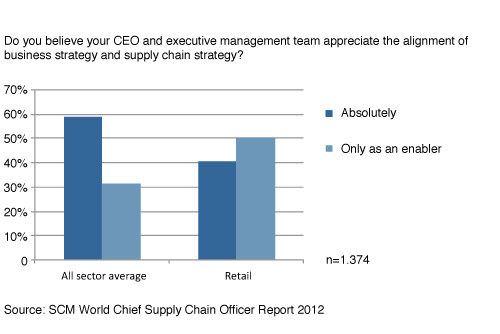
A few layers below this, however, one begins to see what’s wrong – namely, too much focus on the customer and too little on suppliers. Consider these facts:
If word of mouth is so important and, as Paterson says, retailers themselves must convince customers that what they sell is legitimate, how do they square these attitudes about upstream supply visibility? We talked recently with a practitioner from Tesco’s supply chain organisation who assured us that they had no problem getting an audience with the top supply chain executives at consumer goods companies. Maybe so, but are they using this influence effectively?
When the topic is conflict minerals the first companies to work back through the supply chain and assure that they’re getting what they were promised are the big hi-tech brands. Credit Intel and Hewlett-Packard with getting so far ahead of this that even the press can’t keep up. When the issue is fair labour standards it’s always the top apparel companies that move first and farthest – I can recall a conversation seven years ago with Nordstrom about sourcing organic cotton, or Gap, which went so far as to keynote a conference at Stanford five years ago on this issue. Nestlé, as I mentioned in this column a few weeks ago, and Coca-Cola have been pounding away at improving water use for years.
A little known fact is that Whole Foods Market’s most profitable store anywhere in the world is in London, right across Kensington High Street from a Tesco. Who thinks this scandal might drive a few well-heeled Londoners across the road for their weekly shop? I certainly do.
Kevin O’Marah
Chief Content Officer
SCM World
Please contact me directly with any comments, questions or suggestions. I welcome your feedback.
Beyond Supply Chain
Subscribe on LinkedIn to receive the biweekly Beyond Supply Chain newsletter.