By Wade McDaniel | April 19, 2024
![[ALT TEXT]](https://emt.gartnerweb.com/ngw/globalassets/en/supply-chain/blog/beyond-supply-chain/images/beyond-supply-chain-1904.jpg)

Navigating the Supply Chain AI Fog
September 18 2026


By Wade McDaniel | April 19, 2024
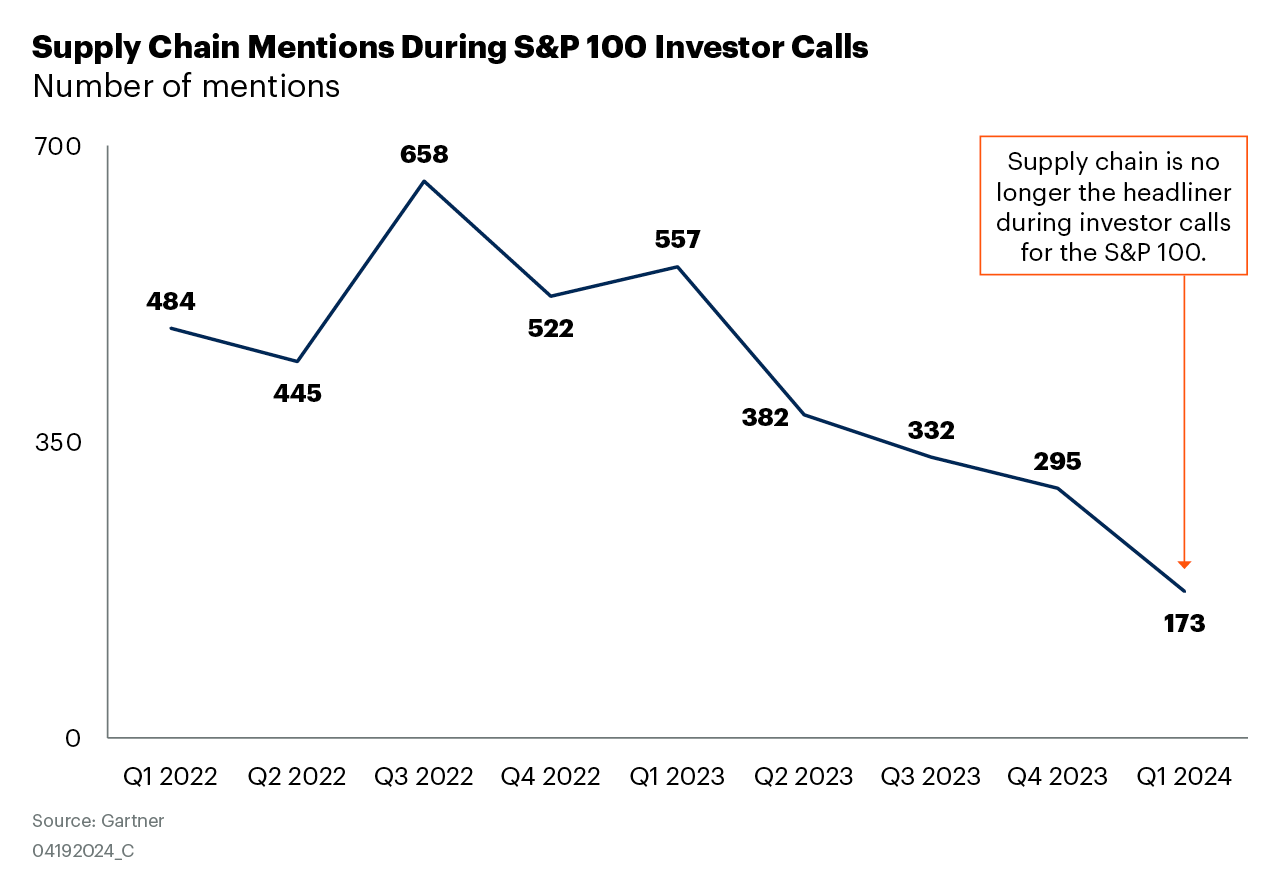
I know what you might be thinking: The pressure is coming off supply chain leaders, and their prominence in the C-Suite might be diminishing. And, yes, it’s true that supply chain is not talked about as much during investor calls.
But the real challenge facing CSCOs isn’t the possibility of waning power in the boardroom, it’s the looming lack of power from the electricity grid.
The widely held and long-term assumptions that there will always be an abundant supply of electricity and the means to get it to the point of use are now invalid.
The International Energy Agency’s Energy Analysis and Forecast 2024 to 2026 points out that electricity consumption from the AI and cryptocurrency sector could double by 2026. This would require more than 1,000 terawatt hours (TWh), roughly equivalent to the total electricity consumption of Japan.
In April of 2023, Gartner's Maverick research made some predictions about electricity consumption in digital technology (subscription required), which at the time seemed extreme. But looking back on it now, a mere year later, it’s becoming clear that it might not have been bold enough. Add the soaring demand for data centers together with transitioning to net-zero targets, and the energy crisis is becoming very tangible.
The challenge of transmission can’t be left unaddressed. The permitting process in the United States can take a decade or more. However, using “advanced reconductoring” can increase powerline capacity by 40% and take far less time. This technology has been widely used in other countries, but the U.S. is behind due to its fragmented utility systems.
The future calls for a mindset shift: from seeing energy as abundant to viewing it as a controllable resource. Regardless of what lies ahead, we must prioritize surfacing and mitigating energy risks. In response, Gartner research assembled an Energy Project Team (including my colleague Lauren Wheatly) from across practices to address these challenges in the medium term until 2030.
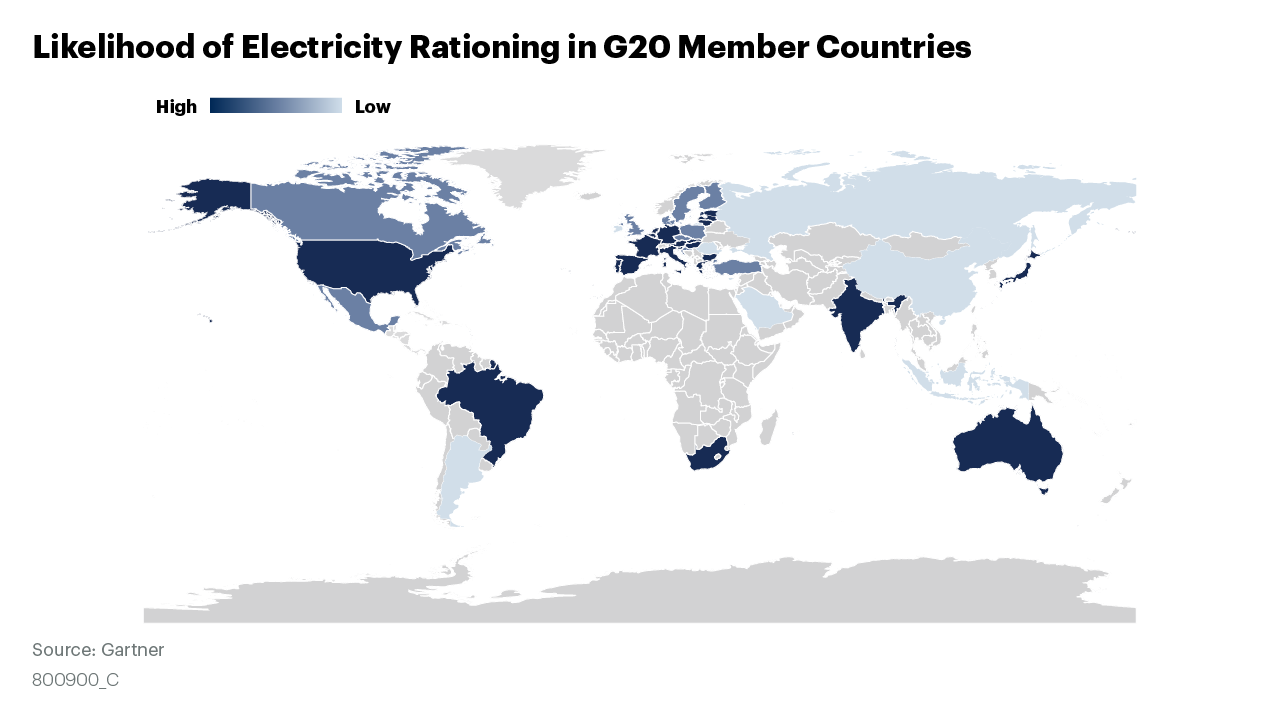
One of their conclusions is that by 2026, 50% of G20 (subscription required) members will experience monthly electricity rationing, turning energy-aware operations into either a competitive advantage or a major failure risk.
Supply chain leaders must build energy resilience into their operations wherever they are located. Government energy policy will vary widely, which can be even more extreme in the United States, where there are thousands of utilities and local regulatory bodies. Leaders will need to adjust their strategies accordingly.
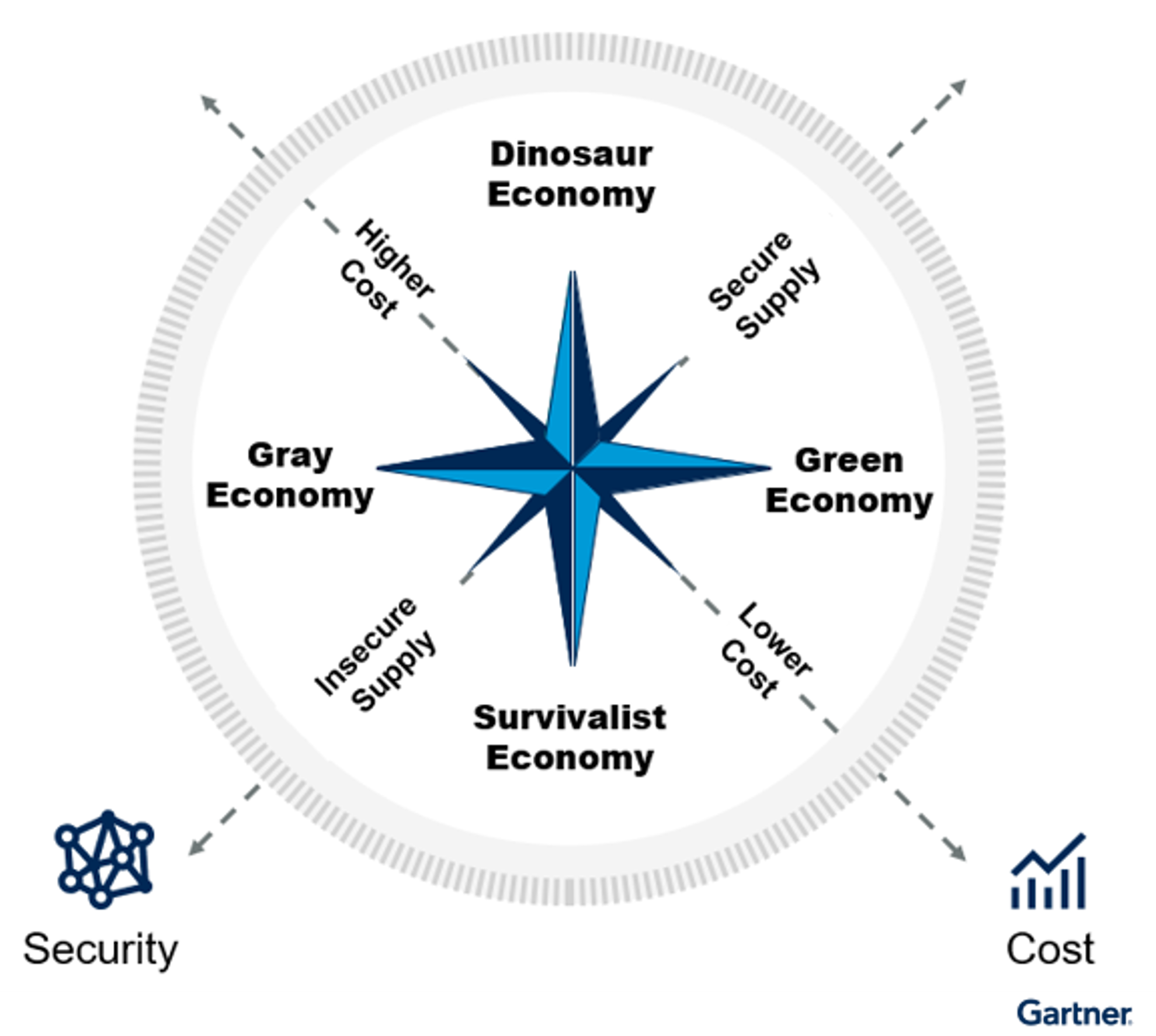
Dinosaur Economy — Energy supply is stable but costly, with minimal government cost-control measures. Businesses lack financial support for surging energy and operating expenses leading consumers to prioritize essential spending.
Green Economy — Energy is an affordable and secure resource, with a long-term separation of electricity and natural gas costs. Nations investing in low-carbon energy thrive and foster clean energy innovation. Commercial and domestic markets are subsidized. Infrastructure barriers to supply have been overcome through significant investment.
Survivalist Economy — Energy supplies face considerable vulnerability and constraints. These constraints are driven by factors such as geopolitics, grid investment or cost of capital. Efforts to encourage voluntary energy conservation across nations yield limited success, further straining the supply.
Gray Economy — Energy supplies are unreliable and constrained. While a comprehensive strategy to secure supply exists, it's undermined by nationalist agendas. Nations with stronger financial resilience, natural resources, and bilateral agreements fare better.
I think we can all agree that it will be challenging to forecast the precise course energy production and transmission will take in the next five to seven years. However, there are actions that CSCOs need to take now.
Anticipate — Assessment of partners and suppliers: Evaluate the financial and operational stability of partners, suppliers and customers to assess tolerance thresholds.
Mitigate — Establish a cross-functional energy taskforce: Form a team to lead initiatives, including developing scenario plans, collecting data and insights, monitoring energy usage, promoting innovation and collaborating with stakeholders.
Absorb — Energy efficiency measures: Reduce energy intensity by implementing energy-efficient practices.
Adapt — Exploration of energy self-generation: Review options for energy self-generation and seek partnerships for a more cost-effective energy supply.
Recover — Support for employees during blackouts: Develop and communicate plans for assisting employees affected by blackouts that disrupt their work.
Energy challenges and constraints will remain with us for most of our working lives, so we need to start discarding many of the assumptions we currently hold and replace them with the new reality. It’s time to start thinking differently about supply chain’s source of power.
Wade L. McDaniel
Distinguished VP Advisor
Gartner Supply Chain
Wade.Mcdaniel@gartner.com
Beyond Supply Chain
Subscribe on LinkedIn to receive the biweekly Beyond Supply Chain newsletter.