By Stan Aronow | March 08, 2024

Navigating the Supply Chain AI Fog
September 18 2026


By Stan Aronow | March 08, 2024
Last month, Gartner held an event for our COO and CSCO communities that included a talk by Harry G. Broadman, Ph.D., a former PwC chief economist, Harvard and John Hopkins professor, chief of staff, Presidents Council of Economic Advisors and U.S. Assistant Trade Representative. We specifically invited Broadman, because, in today’s world, it is impossible to discuss macroeconomic trends in the absence of geopolitical considerations, such as trade, regulation and international conflict.
In the context of supply chain, present and future risks weigh heavily on our business decisions. Tensions in the U.S.-China relationship and reaction to pandemic-era supply shortages have led many in the CSCO community to pursue geographic diversification in their supply networks.
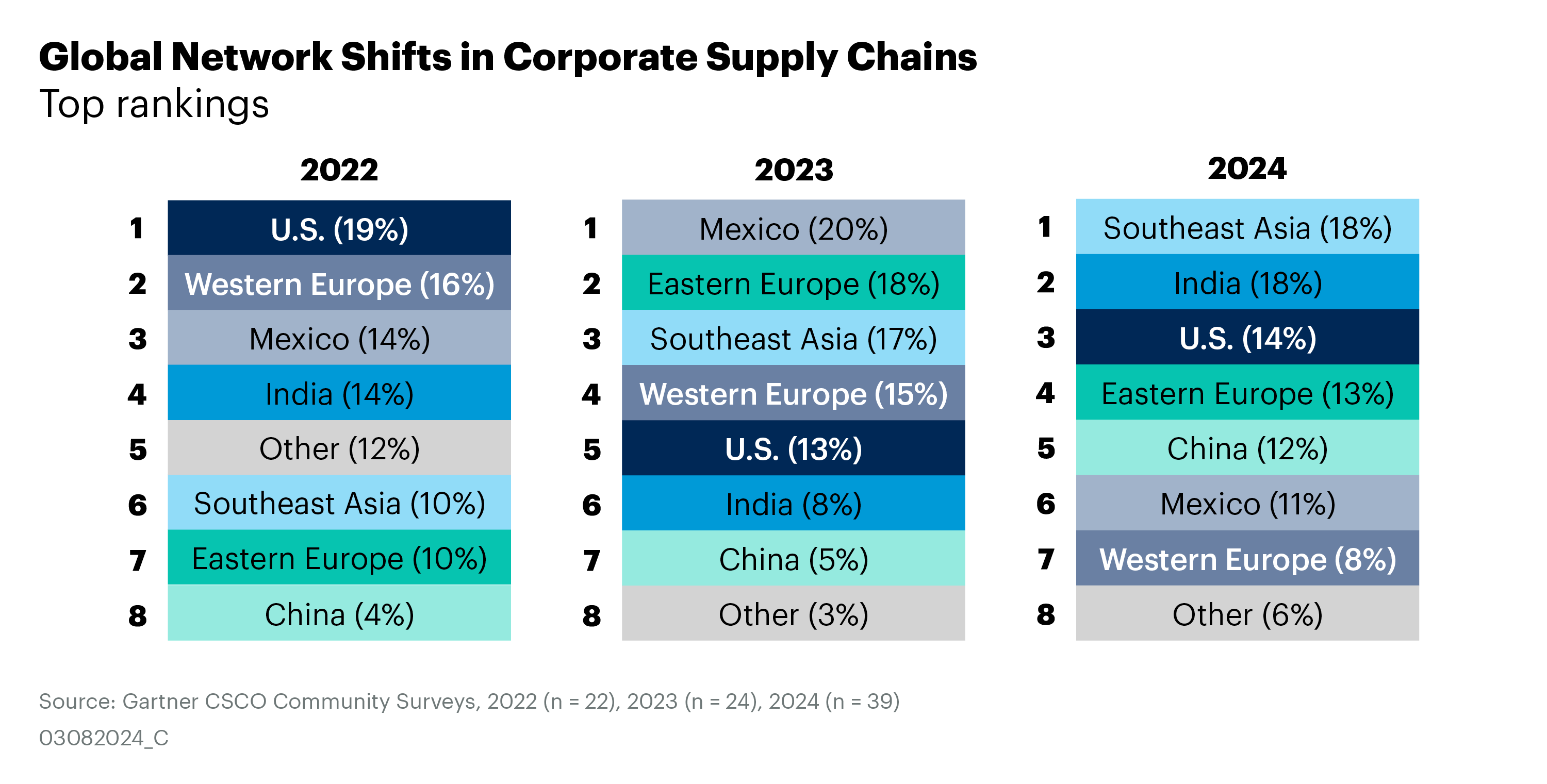
A resurgent focus on cost optimization has joined mitigating geopolitical risk as a key reason for shifting the network. More recently, we have seen a tilt eastward in the building of new supply capacity. In our 2024 CSCO Community Survey, Southeast Asia, India and Eastern Europe represented three of the top four locations cited as recipients of network moves.
The session with Broadman spanned key economic and geopolitical trends in Asia, Europe and North America, as well as the interplay between regions. He also shared perspectives on how supply chain leaders can incorporate these trends into their strategic plans.
Here are some key takeaways from the discussions at this event.
Stan Aronow
VP Distinguished Advisor
Gartner Supply Chain
Stan.Aronow@gartner.com
Beyond Supply Chain
Subscribe on LinkedIn to receive the biweekly Beyond Supply Chain newsletter.