By Stan Aronow | March 11, 2022
CSCO Outlook for 2027: Cloudy With a Chance of Moderate Growth
October 09 2026


By Stan Aronow | March 11, 2022
The collective fiscal and monetary response to the pandemic has supercharged global demand in many sectors, exposing a cascade of supply constraints and price inflation across materials, logistics and labor. S&P 1200 global companies have mentioned inflation and supply chain issues in their earnings calls more than 17,000 times in just the past two quarters alone.
Supply chain leaders say their boards and executive committees have supply chain disruption fatigue and want to know when the pain will end. COOs and CSCOs find themselves in uncharted territory where traditional indicators are no longer a reliable guide, and they are urgently seeking ways to better predict where markets go next.
A few weeks ago, Gartner held an event for our COO and CSCO communities that included a talk by macroeconomist, Professor Nick Bloom of Stanford University. If the supply chain situation was extreme on the day of the event (Feb. 22), we all know where it has gone since. Oil prices, along with many other commodities, are up more than 40%, significant air space and logistics capacity have shut down, and many Western businesses are embargoing or completely divesting from Russian markets. And for good reason — the Russian invasion of Ukraine is first and foremost a human catastrophe in its making and suffering. Gartner has publicly condemned the invasion and gathered resources that all members of the executive committee can use to navigate through this turbulent situation.
Beyond the near and medium-term impacts of the invasion, many questions remain for where the economy and supply chains go from here. As a gauge, we polled COOs and CSCOs at our macroeconomist event on their expectations for when the next recession will occur in the U.S. and Eurozone.
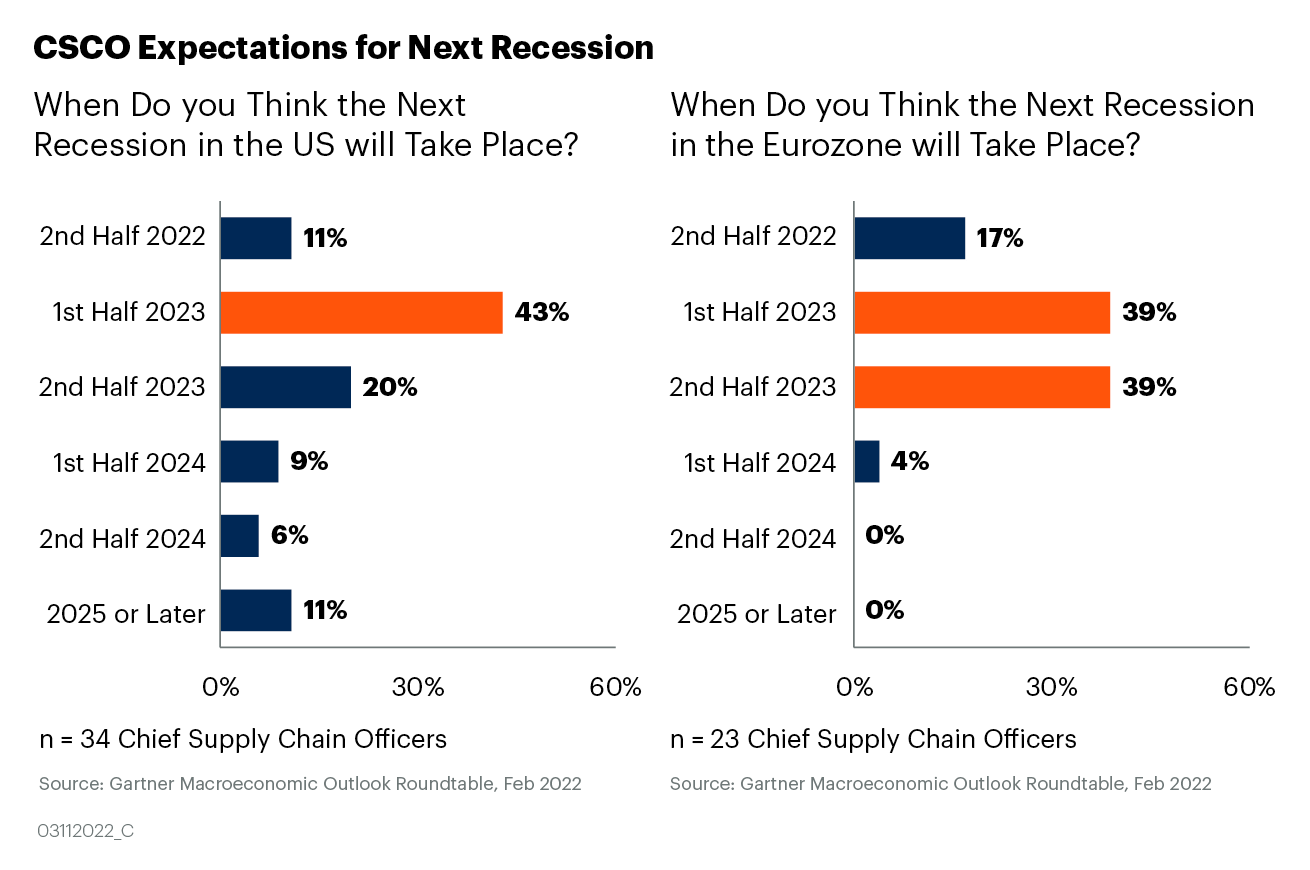
The most common prediction was next year, with the U.S. recession expected to come first, as the Federal Reserve raises rates and reduces money supply through quantitative tightening. The destruction of demand associated with an economic recession might just be what breaks the current inflationary cycle.
Here are some key takeaways from Professor Bloom’s presentation and the discussions that followed:
We look forward to the next gathering of our global COOs and CSCOs on April 26, for a virtual Leaders in Action event on “Defining the Secure Supply Chain,” co-hosted by Mark Bakker and team at HP Enterprise. In the meantime, we hope you all stay healthy and safe.
Stan Aronow
VP Distinguished Advisor
Gartner Supply Chain
Stan.Aronow@gartner.com
Listen and subscribe to the Gartner Supply Chain Podcast on Gartner.com, Apple Podcasts, Spotify and Google Podcasts

Beyond Supply Chain
Subscribe on LinkedIn to receive the biweekly Beyond Supply Chain newsletter.